Blauw Vuurtje

Tradition / Region: Dutch Mythology
Alternate Names:
Category: Flame


The Myth

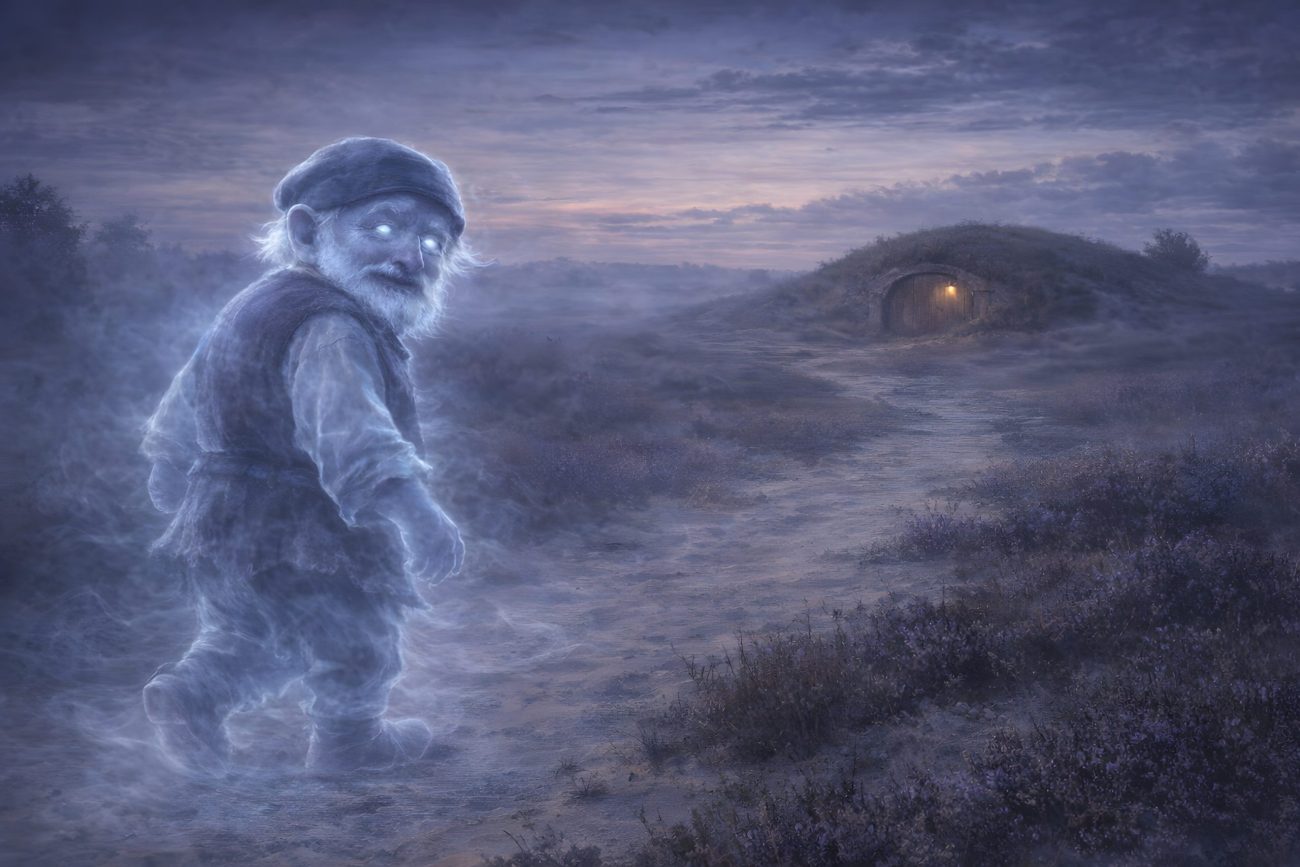
In the quiet places of Limburg and the Veluwe, small blue flames are said to appear at night. These are the Blauw Vuurtje, fire-elves that drift silently above the earth.

They hover only where treasures lie hidden beneath the ground. Their light is soft but unwavering, marking the spot for those who know how to read the signs. Yet the treasure is not meant for everyone.

Only a person of pure heart may dig where the blue flame floats. He must also know how to keep silent, for a single spoken word will cause the Blauw Vuurtje to vanish at once. If the flame disappears, the earth closes its secret again, and the treasure is lost forever.

Thus the blue fire waits patiently, glowing in the darkness, revealing riches only to the worthy and the wordless.


Gallery


Sources

Abe de Verteller. (2014). Van aardmannetje tot zwarte juffer: Een lijst van Nederlandse en Vlaamse elfen en geesten. In AbeDeVerteller.nl, from https://abedeverteller.nl/van-aardmannetje-tot-zwarte-juffer-een-lijst-van-nederlandse-en-vlaamse-elfen-en-geesten/

Interpretive Lenses

Religious Readings
  • Christian Ascetic Deep Dive
Philosophical Readings
  • Nietzschean Deep Dive
Psychological Readings
  • Jungian Deep Dive
Esoteric Deep Dive
  • Hermetic Deep Dive
Political / Social Readings
  • Marxist Deep Dive
Other
  • How to Invite The Blauw Vuurtje

Waterveulen

Tradition / Region: Dutch Mythology
Alternate Names:
Category: Horse


The Myth

Along the shores of the Zuiderzee near Volendam, it was said that a creature called the Waterveulen would sometimes rise from the sea. It appeared as a young horse, its body slick with seawater, its hooves shining as if made of wet stone. At dusk or in the quiet of evening, it would walk along the shoreline, watching the land from the edge of the waves.

The Waterveulen was said to take an interest in a young maiden known for her beauty. From the sea, it brought her gifts: small fish and offerings gathered from the water. The girl accepted these gifts, and over time she grew accustomed to the creature’s presence, meeting it again and again at the shore.

One day, the maiden mounted the Waterveulen. At once, it turned and ran into the sea, carrying her with it beneath the waves. The people watching from the shore saw the two disappear into the water and were never seen again.

From that time on, the Waterveulen was remembered as a being that emerged from the sea to lure humans away, leaving only the sound of the waves behind.


Abe de Verteller contributors. (n.d.). Van aardmannetje tot zwarte juffer: Een lijst van Nederlandse en Vlaamse elfen en geesten. In Abe de Verteller, from https://abedeverteller.nl/van-aardmannetje-tot-zwarte-juffer-een-lijst-van-nederlandse-en-vlaamse-elfen-en-geesten/
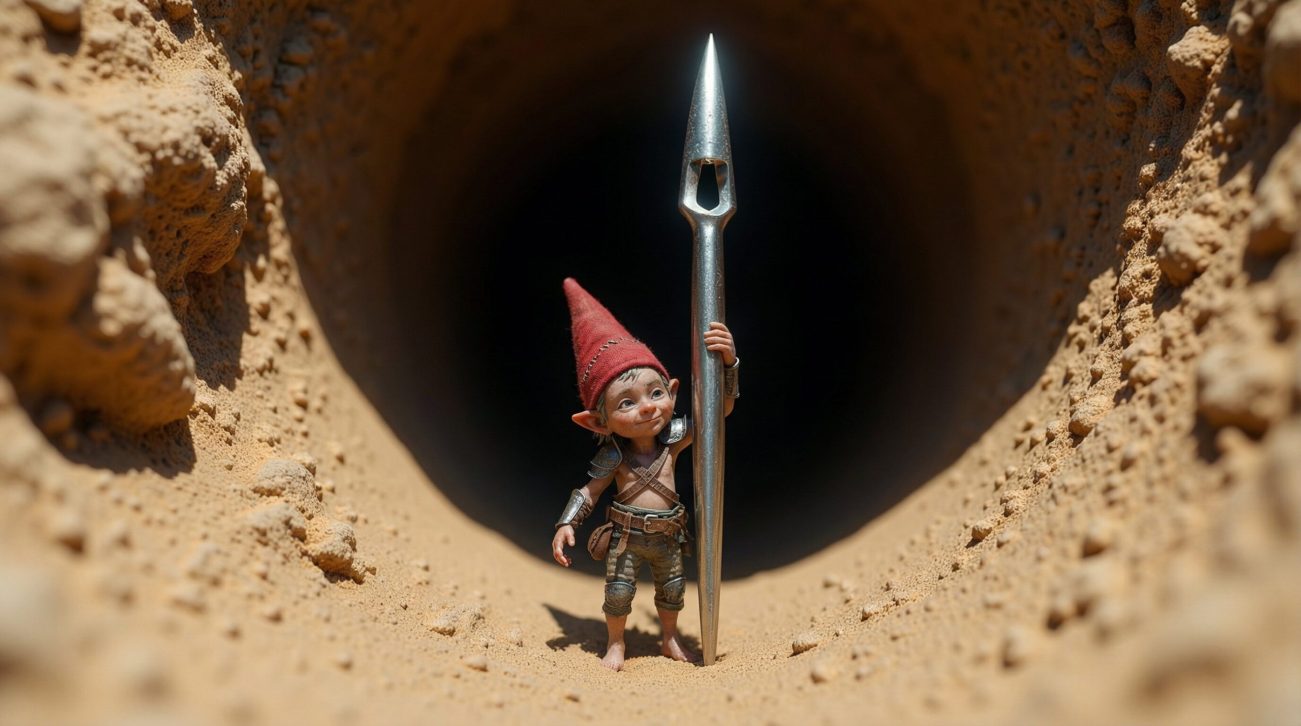

Klaas Vaak

Tradition / Region: Dutch Mythology, German Mythology
Alternate Names: Zandmannetje
Category: Spirit


The Myth

Klaas Vaak, also known as the Zandmannetje, is a figure believed to bring sleep to children. He is already mentioned in a poem from 1651, where it is said that he gently strokes people’s eyelids to make them yawn and fall asleep. In this early form, his presence is soothing and quiet, associated with the natural onset of sleep.

By 1767, the name Zandmannetje appears for the first time in a lullaby. In this version of the belief, Klaas Vaak causes sleep by sprinkling sand into people’s eyes, making them rub their eyelids. In the morning, the grains of sand are said to remain in the corners of the eyes as proof of his visit.

In a darker German version recorded in 1816, the Sandman is described as a frightening figure. Children were told that if they refused to go to bed, he would throw so much sand into their eyes that they would bleed from their sockets. He would then collect their eyes in a sack, carry them to the moon, and feed them to his own children. In this tradition, he becomes associated with the Man in the Moon and functions as a figure used to frighten children into obedience.

Like Sinterklaas, Klaas Vaak is sometimes said to enter homes through the chimney. While it is not known for certain whether the terrifying version of the Sandman was used in the Netherlands, the belief that Klaas Vaak visits at night to bring sleep was widespread and enduring.


Nachtwerkertjes

Tradition / Region: Dutch Mythology
Alternate Names: Werkgeesten (related)
Category: Spirit


The Myth

In Dutch folklore, Nachtwerkertjes are mysterious beings heard at night inside workshops and workspaces. When loud hammering, sawing, or other work noises are heard in the middle of the night—without any human present—it is said that the nachtwerkertjes are at work.

Their presence is believed to be a sign of what is to come. Hearing them foretells that there will soon be much work to be done, as if the spirits are preparing in advance. In the Zaan region, where windmills dominate the landscape, the sounds of nachtwerkertjes are specifically taken as a warning that a storm is approaching. Such storms often caused damage to mills, leading to extensive repair work afterward.

Thus, the nachtwerkertjes do not appear directly to people, but announce themselves through sound, acting as unseen workers whose nocturnal activity signals impending labor and disruption.


Zwanenjonkvrouw

Tradition / Region: Netherlands (Noord-Holland, Heemskerk)
Alternate Names:
Category: Swan maiden / nymph


The Myth

In Noord-Holland, people tell of the Zwanenjonkvrouw, a woman of extraordinary beauty who can take the form of a swan. She changes between swan and human shape by means of a magical swan shirt, known as her zwanenhemd. When she wears it, she becomes a swan; when it is removed, she remains human.

In many tales, a man discovers the Zwanenjonkvrouw while she is bathing and steals her swan shirt. Without it, she is unable to return to her true form. The man then forces her to become his wife, and she lives among humans, bound by the loss of her garment rather than by her own will.

For a time, she remains with him, but she never ceases to long for her swan shirt. When she eventually finds it again, she immediately leaves her husband without mercy and disappears, returning to her true nature and her former life.

In a legend from Heemskerk, the story ends more tragically. When the man chooses to abandon her in favor of an ordinary human woman, the Zwanenjonkvrouw falls down dead, her life ending the moment she is rejected.

Thus the Zwanenjonkvrouw is remembered as a swan-maiden bound by theft, marriage, and loss, whose fate is sealed by the recovery of her stolen form or by betrayal.


Interpretive Lenses

Religious Readings
Philosophical Readings
Psychological Readings
Esoteric Deep Dive
Political / Social Readings
Other