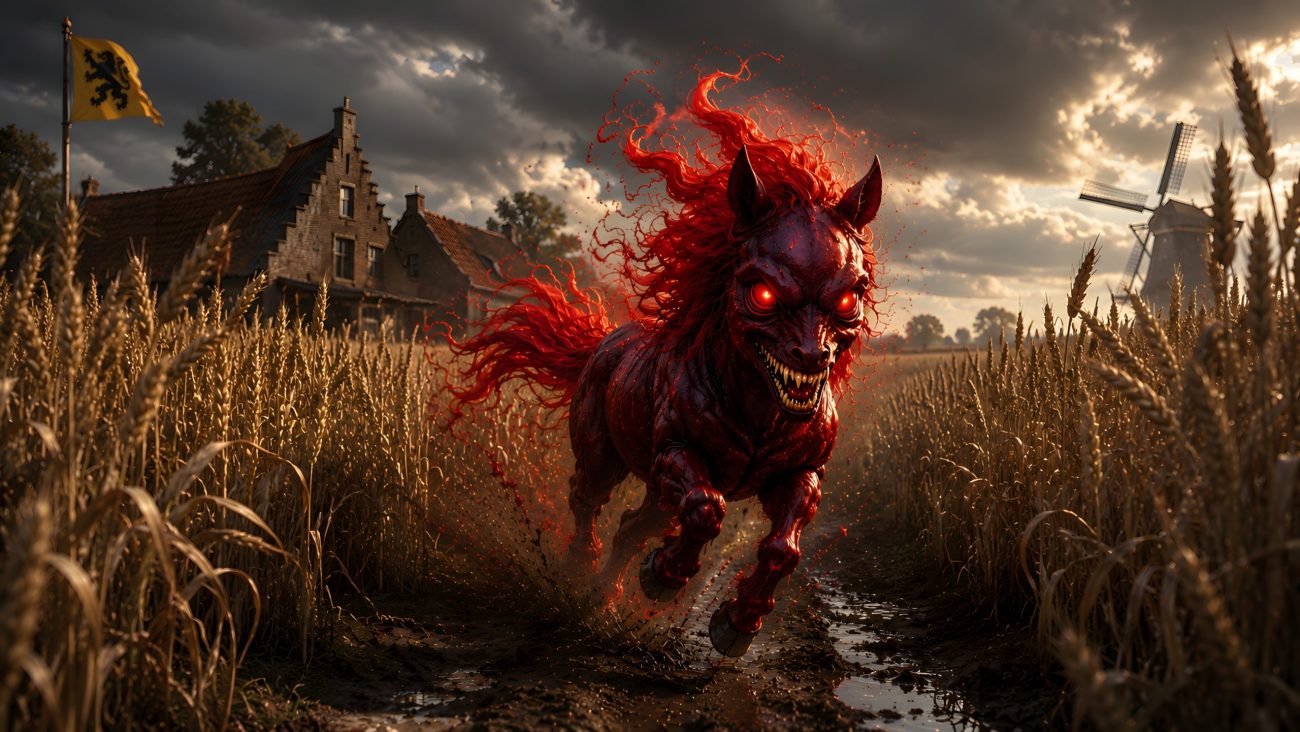
Kelpie

Tradition / Region: Scottish Mythology
Alternative names: Water Kelpie, Each-uisge
Category: Horse


The Myth

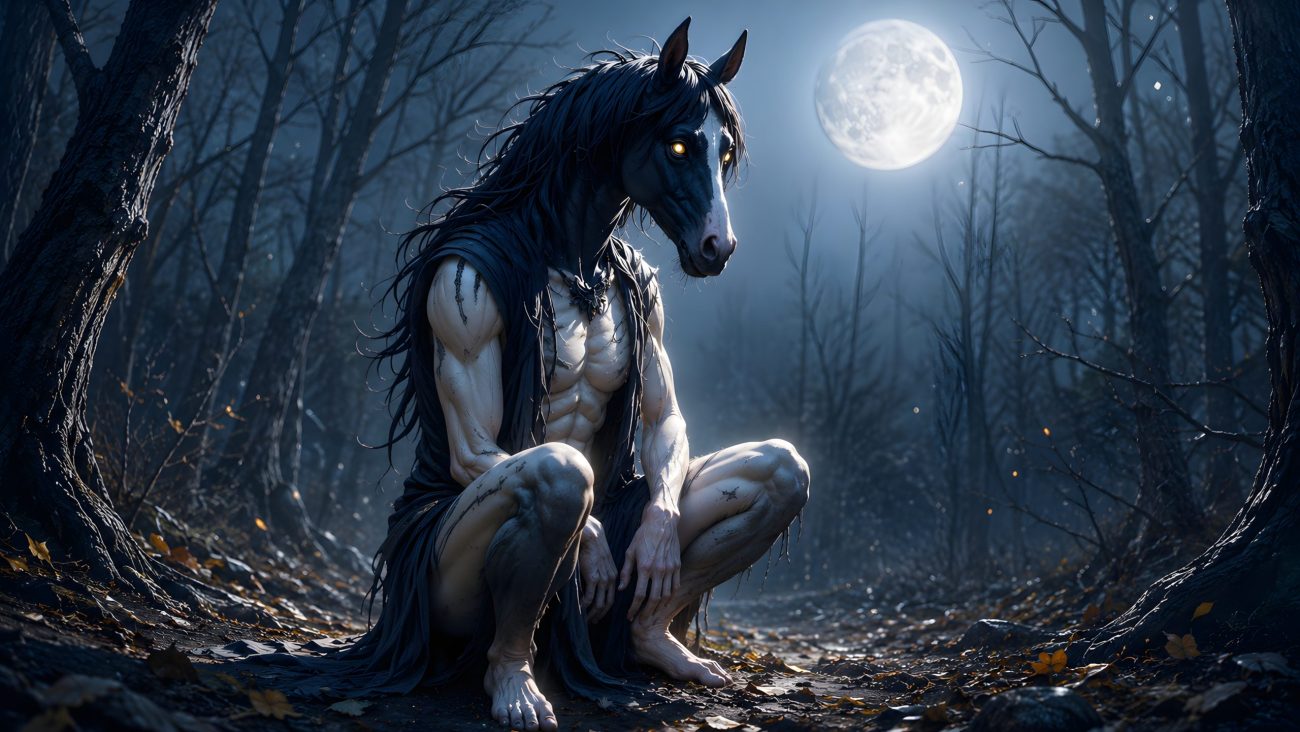
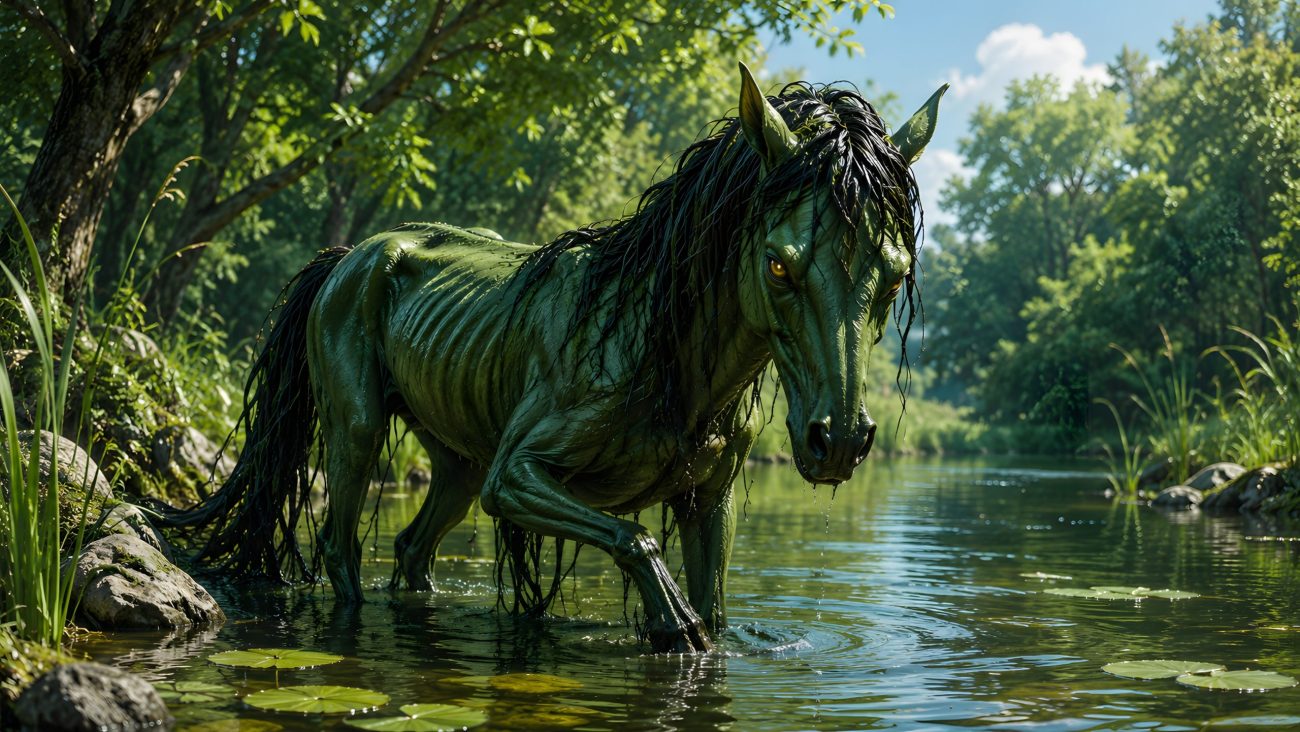
The Kelpie is a mythical shape-shifting water spirit that inhabits the lochs, rivers, and streams of Scotland. It is most commonly described as a powerful black horse, although some traditions describe it as grey or white.

The creature lurks near the water’s edge, preying upon anyone it encounters. One of its distinguishing features is its reversed hooves. It is able to lengthen its back so that many riders can climb aboard at once. Once they do, they become unable to escape as the Kelpie carries them into the depths, where it drowns and devours them, often leaving only their entrails washed ashore. Many stories tell of children climbing onto its back, with only one surviving after cutting off his own fingers or hand to free himself from the creature’s sticky hide.

The Kelpie is also a master of disguise and can transform into a human. It often appears as a handsome young man to lure victims, though some tales describe it as a rough, shaggy man or even an old man. When in human form, it may betray its true nature by retaining horse hooves or having water weeds tangled in its hair. One legend tells of a young woman who recognized a Kelpie, removed its silver bridle while it slept, and forced it to serve on her family’s farm. When the bridle was eventually returned, the Kelpie chose to become a mortal man and married her.

According to tradition, a Kelpie could be captured with a halter marked by the sign of the cross and compelled to perform enormous feats of labor, such as hauling heavy stones. Removing a Kelpie’s magical bridle could also break its power, while the bridle itself was said to possess supernatural abilities. Some stories claim that a Kelpie could be destroyed by a silver bullet or by piercing it with heated iron spears, after which its body dissolved into a soft, jelly-like mass.


Sources

Wikipedia contributors. (n.d.). Kelpie. In Wikipedia. Retrieved June 29, 2026, from https://en.wikipedia.org/wiki/Kelpie.
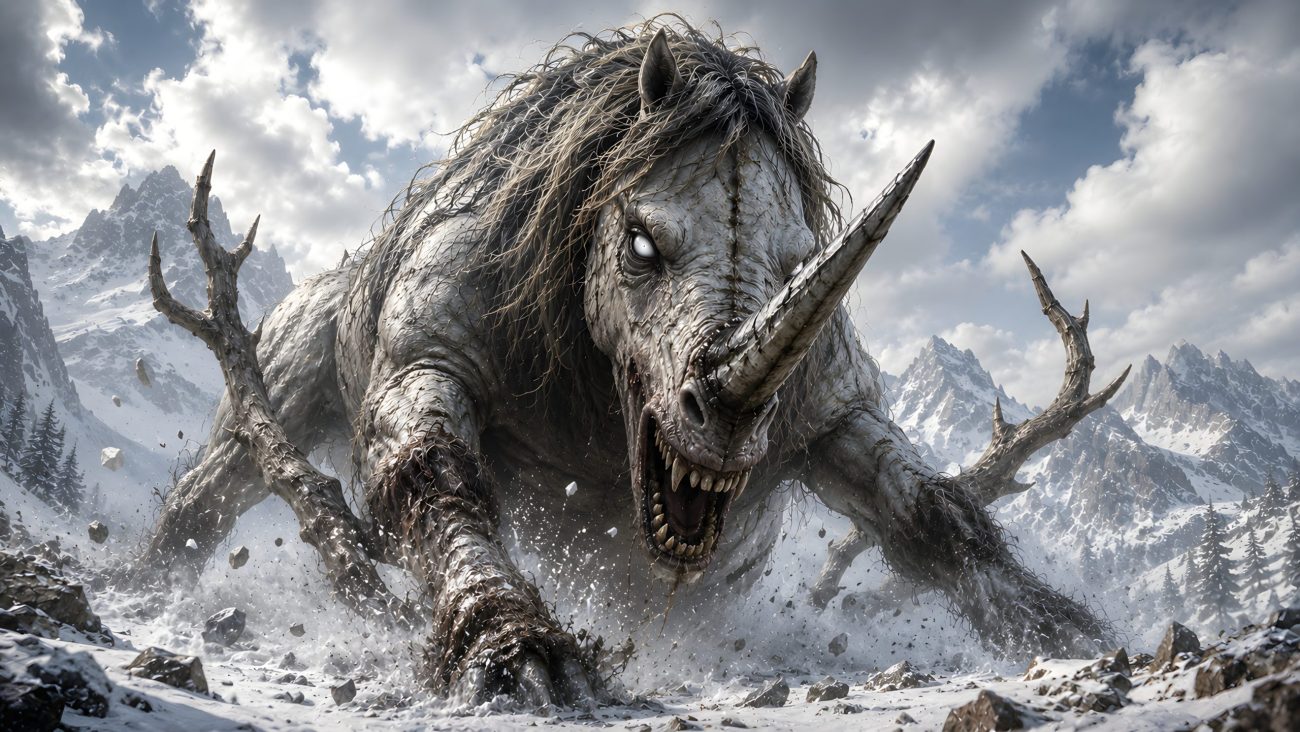
Qianlima

Tradition / Region: Chinese Mythology, Korean Mythology
Alternative names: Chollima (Korean), Cheollima (Korean), Senrima (Japanese), Thousand-li Horse
Category: Horse


The Myth

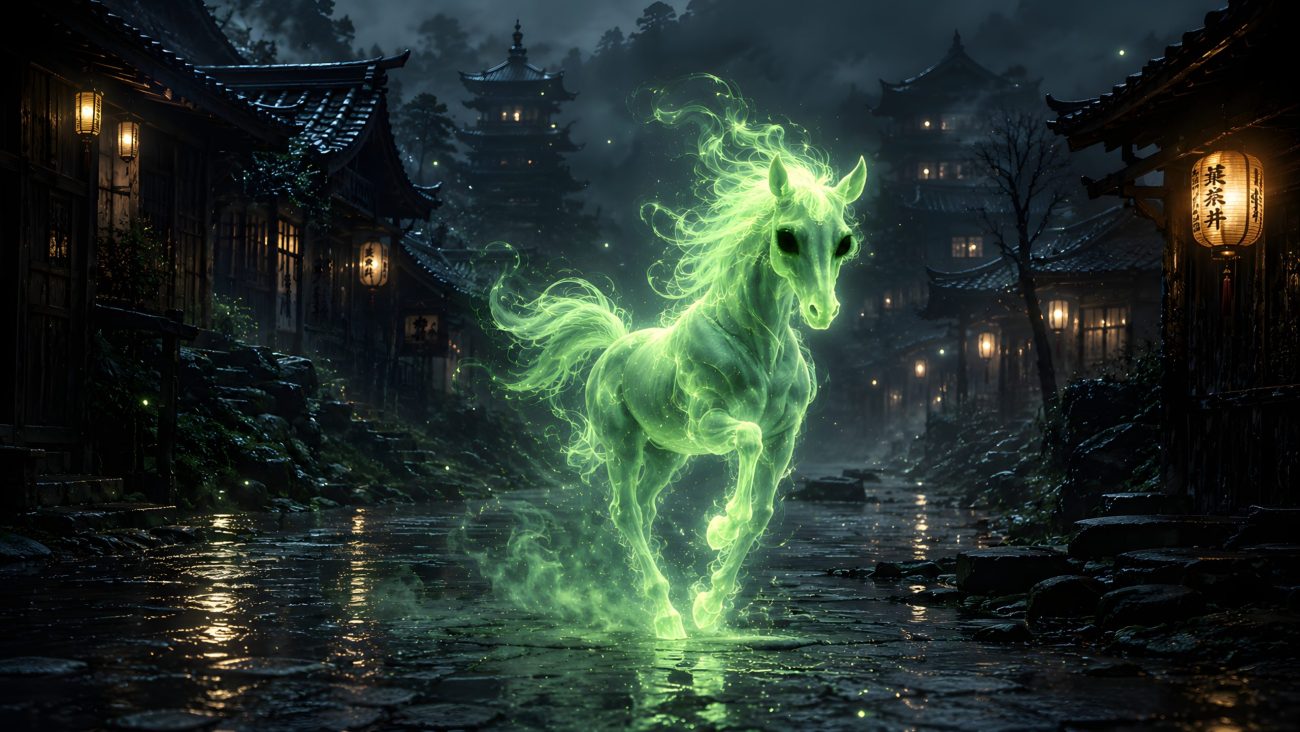
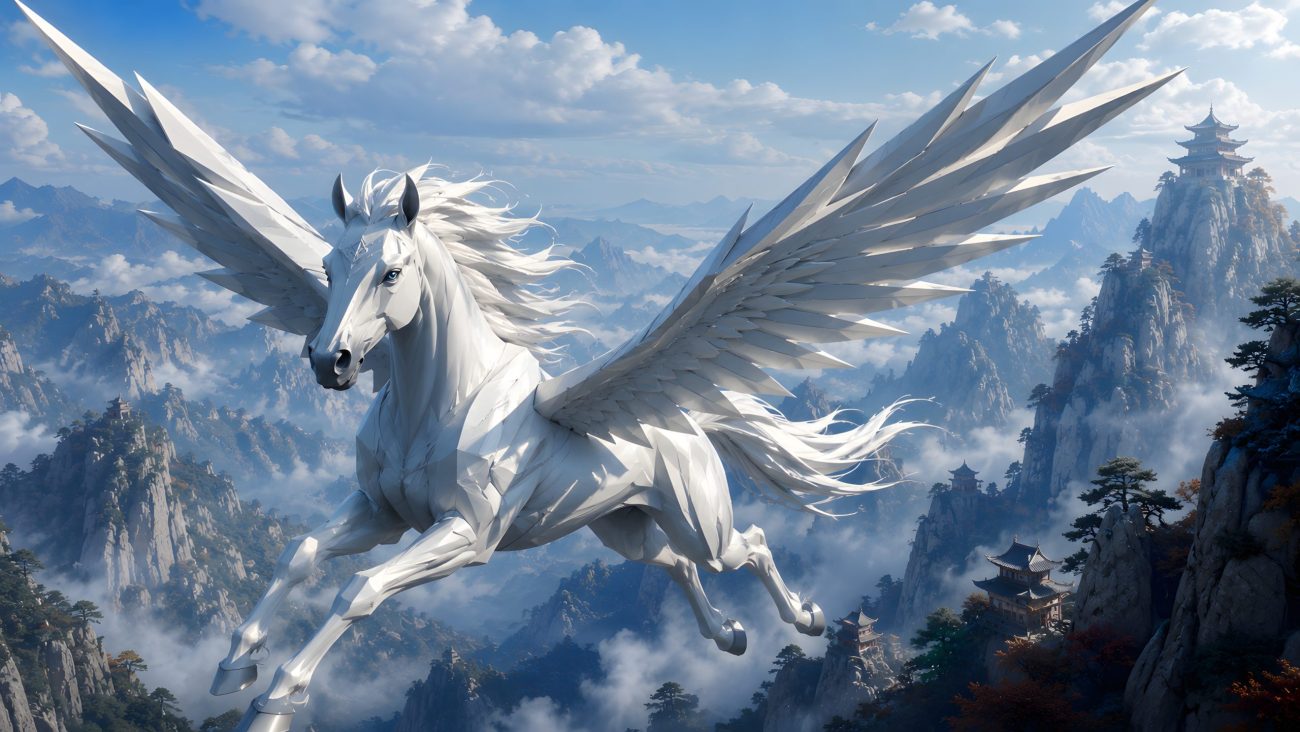
The Qianlima is a mythical winged horse in Chinese tradition renowned for its extraordinary speed and grace. It is said to be capable of traveling one thousand li in a single day, a distance of roughly four hundred kilometers, and is considered so swift and elegant that no mortal can ride it.

Beginning around the 3rd century BCE, the Qianlima became a powerful symbol in Chinese literature. It represented individuals of exceptional talent whose abilities had not yet been recognized. The legendary horse judge Bole was celebrated for his ability to identify a true Qianlima, making the horse a metaphor for gifted people discovered by a wise ruler.

The Qianlima also came to symbolize remarkable horses, including the famous Red Hare, whose speed and endurance embodied the qualities associated with the legendary steed.

Beyond China, the mythical horse became known throughout East Asia. In Korea it is called Chollima or Cheollima, where it became an important national symbol of North Korea and gave its name to the Chollima Movement.


Sources

Wikipedia contributors. (n.d.). Qianlima. In Wikipedia. Retrieved June 29, 2026, from https://en.wikipedia.org/wiki/Qianlima


Kai Kai Filu

Tradition / Region: Argentine Mythology (Mapuche)
Alternative names: –
Category: Horse


The Myth

Kai Kai Filu is a mythological being in Mapuche tradition and is said to have caused the great universal flood.

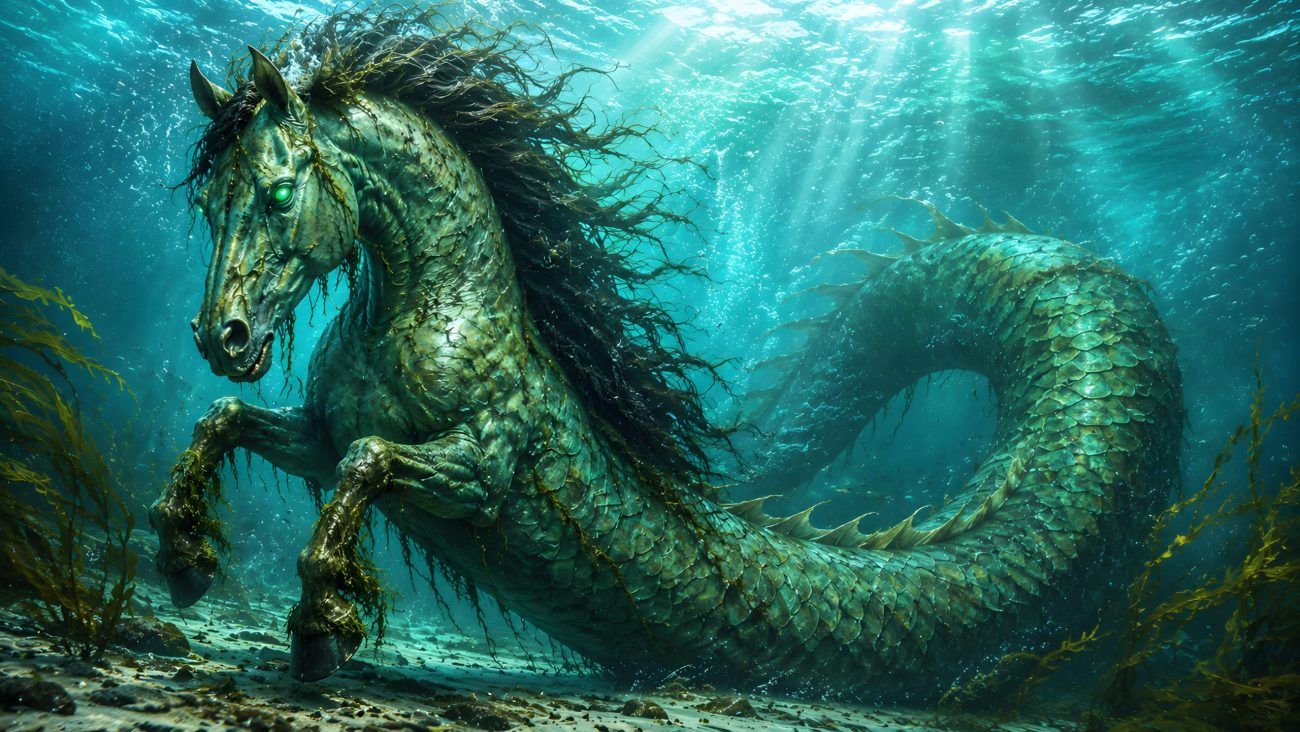
It is described as a hybrid creature, half horse and half serpent, that lives at the bottom of the sea and agitates the waters, causing great floods.

Kai Kai Filu neighs like a horse, although some traditions deny that it possesses an equine half and state that its cry merely resembles the neighing of a horse.


Sources

Colombres, A. (1984). Seres sobrenaturales de la cultura popular argentina (Vol. 1, Biblioteca de Cultura Popular). Ediciones del Sol.


Indrik

Tradition / Region: Russian Mythology
Alternative names: Indrik-Beast
Category: Horse


The Myth

The Indrik, or Indrik-Beast, is a fabulous creature in Russian folklore and the Dove Book. It is regarded as the king of all animals and dwells upon the Holy Mountain, a sacred place where no other creature may set foot.

Whenever the Indrik moves, the earth itself trembles beneath its immense power.

The beast is described as having the gigantic body of a bull, the legs of a deer, the head of a horse, and a single enormous horn growing from its snout, giving it an appearance resembling both a unicorn and a rhinoceros.


Sources

Wikipedia contributors. (n.d.). Indrik. In Wikipedia. Retrieved June 29, 2026, from https://en.wikipedia.org/wiki/Indrik


IJzeren Veulen

Tradition / Region: Dutch Mythology
Alternative names: Iron Foal
Category: Horse


The Myth

The IJzeren Veulen (“Iron Foal”) is a ghostly horse said to haunt the area near Cabauw in the Dutch province of Utrecht.

According to tradition, it galloped between two bridges every night between midnight and one o’clock. As it ran, it made an enormous clattering noise, as though its body were filled with iron or all of its joints were made from iron hinges.

One night, three boys decided to wait for the creature with clubs. When the Iron Foal appeared, it charged them with such tremendous force that it struck the boy standing in the middle, killing him instantly.

A white friar was later said to have banished the haunting spirit. As it disappeared, however, the Iron Foal cried out, “In a hundred years, I will return!”


Sources

Abe van der Veen. (2014, July 8). Van aardmannetje tot zwarte juffer: Een lijst van Nederlandse en Vlaamse elfen en geesten. Abe de Verteller. Retrieved June 29, 2026, from https://abedeverteller.nl/van-aardmannetje-tot-zwarte-juffer-een-lijst-van-nederlandse-en-vlaamse-elfen-en-geesten/


Hommelstommel

Tradition / Region: Dutch Mythology
Alternative names: Hompelstompel
Category: Horse


The Myth

Hommelstommel, also known as Hompelstompel, is a devilish apparition from the Oldambt region of Groningen.

It was said to appear with the upper body of a horse and the lower body of a human. In this monstrous form, or sometimes as a headless horse, it pursued lonely travelers wandering the roads at night.


Sources

Abe van der Veen. (2014, July 8). Van aardmannetje tot zwarte juffer: Een lijst van Nederlandse en Vlaamse elfen en geesten. Abe de Verteller. Retrieved June 29, 2026, from https://abedeverteller.nl/van-aardmannetje-tot-zwarte-juffer-een-lijst-van-nederlandse-en-vlaamse-elfen-en-geesten/


Hippoi Kabeirikoi

Tradition / Region: Greek Mythology
Alternative names: Horses of the Cabeiri
Category: Horse


The Myth

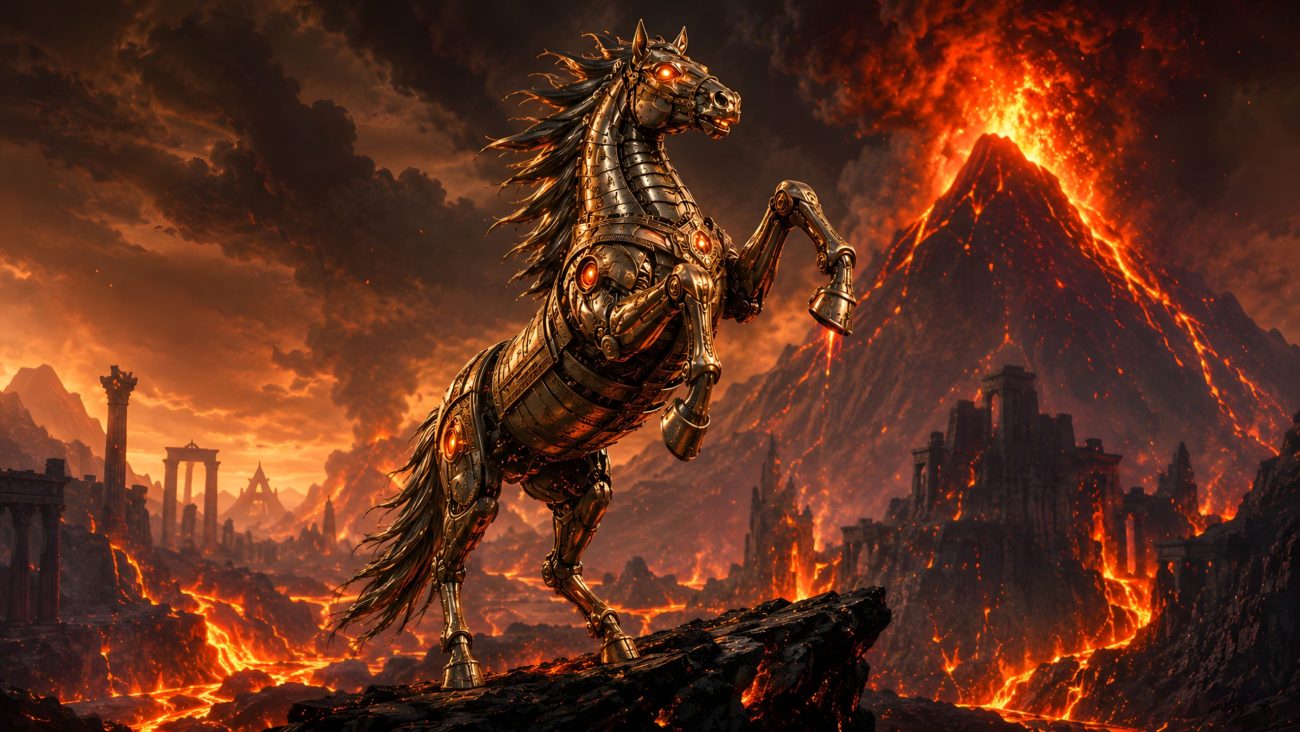
The Hippoi Kabeirikoi were four horse-shaped bronze automata forged by the god Hephaestus to draw the adamantine chariot of his sons, the Cabeiri.

The supernatural horses were fashioned with Hephaestus’ unmatched skill. Their hooves and bodies were made of bronze, and as they galloped they struck the earth with rattling brass hooves while emitting a dry, metallic whinny. Fire blazed from between their teeth, making them as fearsome as the brazen-footed bulls that Hephaestus had once forged for King Aeëtes of Colchis.

The fiery horses drew the adamantine chariot of the Cabeiri, while Eurymedon, one of the divine brothers, guided their iron-footed steeds with a blazing bridle.


Sources

Atsma, A. J. (n.d.). Hippoi Kabeirikoi (Horses of the Cabeiri). In Theoi Greek Mythology. Retrieved June 29, 2026, from https://www.theoi.com/Ther/HippoiKabeirikoi.html


Glujende Peerd

Tradition / Region: Dutch Mythology
Alternative names: Het Gloeiende Paard
Category: Horse


The Myth

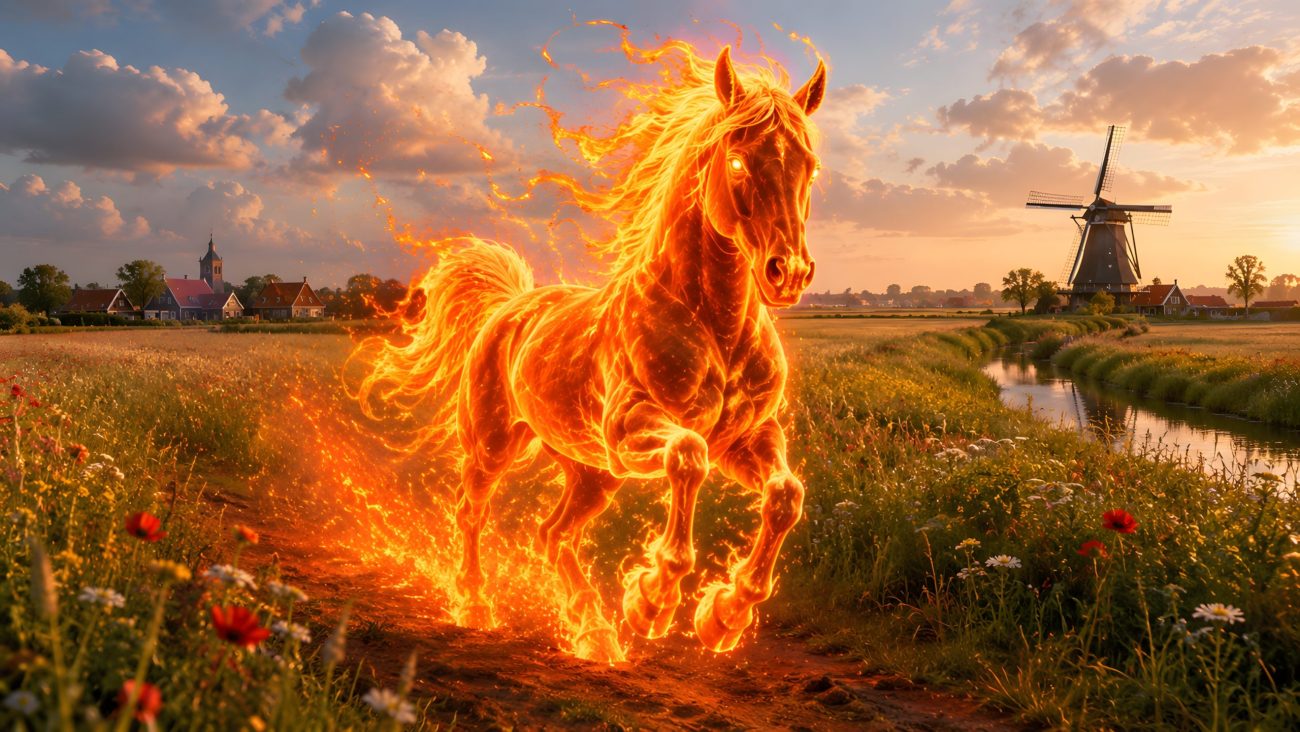
The Glujende Peerd, or “Glowing Horse,” is a supernatural horse from the folklore of Gelderland.

It is described as a burning horse that appears at haunted places. Wherever its hooves touch the ground, the grass is scorched and left burned in its wake.


Sources

Abe van der Veen. (2014, July 8). Van aardmannetje tot zwarte juffer: Een lijst van Nederlandse en Vlaamse elfen en geesten. Abe de Verteller. Retrieved June 29, 2026, from https://abedeverteller.nl/van-aardmannetje-tot-zwarte-juffer-een-lijst-van-nederlandse-en-vlaamse-elfen-en-geesten/


Giba

Tradition / Region: Japanese Mythology
Alternative names: Horse Demon
Category: Horse


The Myth

Giba is a yōkai described in the Sōzan Chōmon Kishū, where it is blamed for the sudden and mysterious deaths of horses. In the provinces of Owari and Mino, the fatal disease known as Teima was instead believed to be the work of this horse demon.

According to tradition, Giba enters a horse through its nostrils and leaves through its hindquarters, causing the animal to collapse and die almost instantly.

One account recorded by Miyoshi Sōzan comes from Yoshimatsu, a former horse handler from Mino Province who claimed to have encountered Giba twice. Local people believed that the demon was the spirit of the daughter of an Eta family from Ōtsu in Ōmi Province, who became a Giba after her death and wandered the countryside killing horses.

The demon was described as a woman dressed in scarlet robes and wearing a golden necklace while riding a small horse with an iridescent golden sheen. She descended silently from the sky like a kite. As she approached, the horses in nearby stables would begin to neigh strangely. Her small mount would leap upon a larger horse, pressing its forelegs against the victim’s mouth while its hind legs gripped the ears and mane. As the creature clung tightly to the horse’s face, the demon smiled before vanishing. Immediately afterward, the horse would turn three times to the right, collapse, and die.

Experienced stable hands were said to know how to save a horse from Giba. They wore their work jackets loosely without fastening them. As soon as the demon seized the horse, they slipped the right sleeve from the jacket, draped it over the horse’s neck together with the invisible demon, forced the horse to turn left instead of right, and pierced the spine above its tail with a needle. If performed in time, these actions were believed to drive away Giba and save the animal.

The Sōzan Chōmon Kishū also records other stories of horses dying in succession because of Giba, making the creature one of the most feared supernatural causes of disease among horses in regional Japanese folklore.


Sources

TYZ. (n.d.). ギバ (Giba). In 新版TYZ 妖怪図鑑. Retrieved June 29, 2026, from https://tyz-yokai.blog.jp/archives/1010655041.html


Girlegei

Tradition / Region: Belgian Mythology
Alternative names: –
Category: Horse


The Myth

Girlegei is a mischievous spirit from Flemish folklore that was said to haunt the heathlands between Koekelare and Moere.

The creature was a shapeshifter capable of taking many forms. People most often encountered it as a horse, a cat, or a dog. In these disguises, it would appear at night and block the path of travelers, preventing them from continuing their journey.

According to tradition, the spell could only be broken by striking the creature or by reciting the Gospel of Saint John. When confronted in this way, Girlegei would flee into the air while laughing and repeatedly crying, “Girlegei, Girlegei!”


Sources

Abe van der Veen. (2014, July 8). Van aardmannetje tot zwarte juffer: Een lijst van Nederlandse en Vlaamse elfen en geesten. Abe de Verteller. Retrieved June 29, 2026, from https://abedeverteller.nl/van-aardmannetje-tot-zwarte-juffer-een-lijst-van-nederlandse-en-vlaamse-elfen-en-geesten/