Me-te

Tradition / Region: Japan
Alternate Names: Te no Me (“Eye of the Hand”)
Category: Yōkai


The Myth

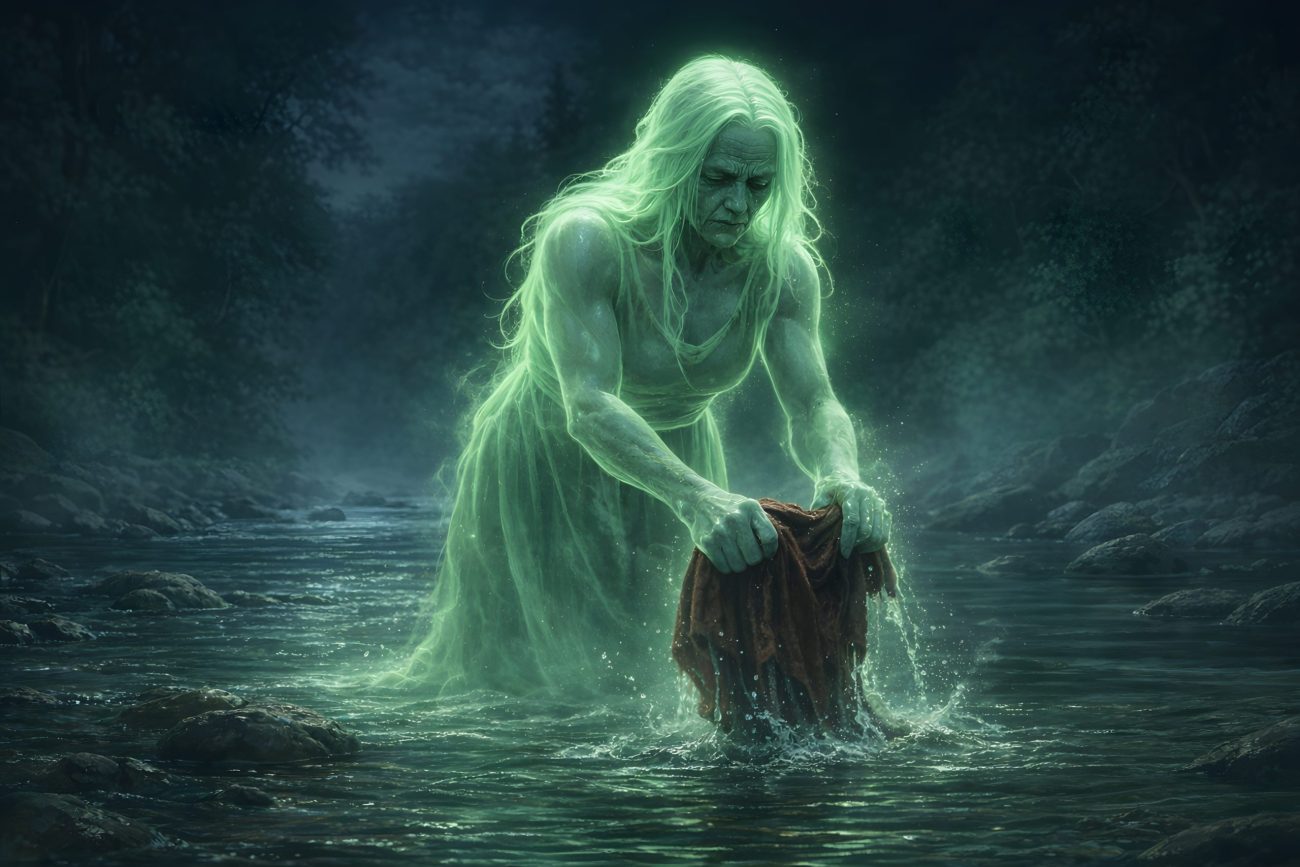
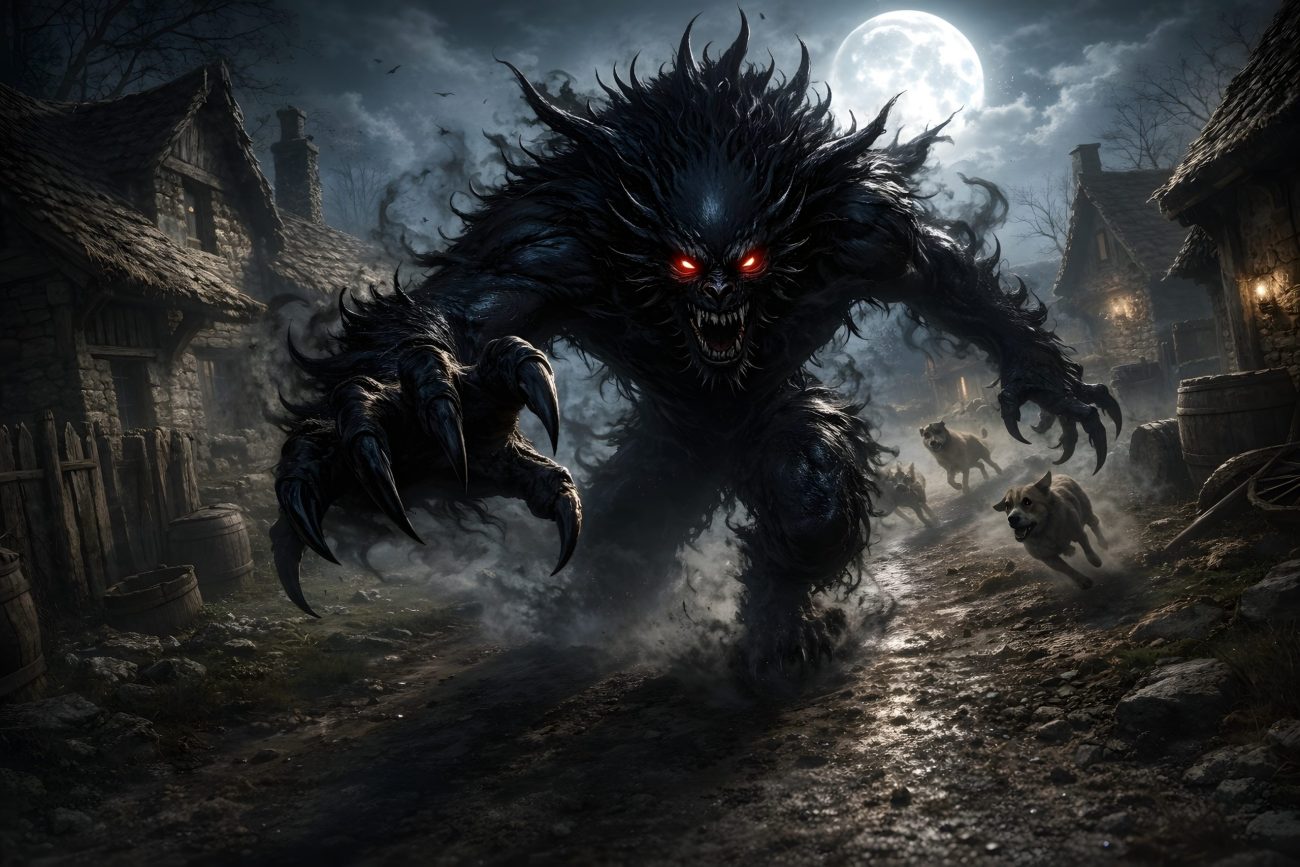
Me-te is a yōkai known from writings attributed to Sato Arifumi. It is described as a blind creature that wanders through open fields, moving as though it cannot see the world around it.

Despite its blindness, Me-te is extremely dangerous. People are warned never to mock or make light of it. Those who laugh at Me-te or assume it is helpless are said to be punished, for the yōkai will suddenly attack and suck out their eyeballs.

Me-te is also known by the name Te no Me, meaning “Eye of the Hand,” a name that reflects its strange and unsettling nature. In illustrations, it appears in a form similar to figures shown in Gazu Hyakki Yagyō, though it is depicted without wrinkles on the face, and its empty eye sockets are shown through deep shading.

Though little is recorded about its origin or fate, Me-te is remembered as a wandering field yōkai whose apparent weakness conceals a brutal and sudden threat.


Interpretive Lenses

Religious Readings
Philosophical Readings
Psychological Readings
Esoteric Deep Dive
Political / Social Readings
Other

Triangular Beast (Triceratops)

Tradition / Region: China
Alternate Names: Triangular Deer
Category: Deer / auspicious beast


The Myth

The Triangular Beast is a mythical creature recorded in Chinese legend. It is described as a deer-like animal with three horns: one on the top of its head, one on its forehead, and one on its nose. Its body is red, and its feet are said to burn like flames, leaving fiery traces where it walks.

According to ancient descriptions, the Triangular Beast resembles a deer in form but differs in its unusual structure. It has a triangular body, a white belly, and a green tail. Its head is compared to that of a ze, with green hair, and it is often depicted on red banners or flags, especially in ceremonial contexts.

The creature is said to dwell on a western mountain, sometimes called the Western Convex Mountain. It does not appear at random. The Triangular Beast is regarded as an auspicious sign, and its appearance is believed to coincide with times of perfect order in the human world.

Several classical texts state that the Triangular Beast emerges only when the laws and regulations of former kings are faithfully upheld. When a ruler inherits the institutions of the past without alteration or neglect, the Triangular Beast is said to appear as a sign of harmony between heaven and the realm.

Thus, the Triangular Beast is remembered as a rare and sacred deer-like creature whose presence marks an age of rightful rule, established law, and cosmic balance.


Interpretive Lenses

Religious Readings
Philosophical Readings
Psychological Readings
Esoteric Deep Dive
Political / Social Readings
Other

Jatai

Tradition / Region: Japan (Ehime Prefecture and other regions)
Alternate Names:
Category: Object/ yōkai


The Myth

The Jatai is said to appear at night as a living obi, a kimono sash that moves on its own like a great snake. By day it is nothing more than a length of cloth, but after night falls it slithers from its resting place, coiling and gliding through rooms in search of victims.

According to old folk belief, if a person lays an obi near their pillow while sleeping, they may dream of snakes. From this belief grew the story that the obi itself can transform. Because the word for a snake’s body sounds the same as the word for a wicked heart, the sash was believed to awaken as a murderous being. In this form it becomes the Jatai, a dangerous tsukumogami born from jealousy and malice.

The Jatai is especially associated with an obi once worn by a jealous woman. After long use, the resentment bound into the garment gives it life. When it hunts, it wraps itself around sleeping men and strangles them in their beds.

The creature is described as a poisonous snake, long enough to coil itself around a person seven times. This detail is remembered as part of its fearsome nature and its unnatural length. Once the Jatai has tightened its coils, escape is said to be impossible.

The Jatai is depicted in Toriyama Sekien’s Konjaku Hyakki Shūi, where it appears as a living sash transformed into a deadly serpent. Through these tales, the Jatai is remembered as a reminder that strong emotions can linger in objects, waiting for the moment when they take on a life of their own.


Interpretive Lenses

Religious Readings
Philosophical Readings
Psychological Readings
Esoteric Deep Dive
Political / Social Readings
Other

Ud Ata

Tradition / Region: Turkic mythology (Oghuz, Kyrgyz, Buryat traditions)
Alternate Names: Boğa Ata
Category: God / bull


The Myth

Ud Ata is the bull god, a powerful divine being who protects bulls and embodies strength. He is associated with physical force, vitality, and the sacred power believed to dwell within horned animals. In the traditions of the Oghuz Turks, Ud Ata is remembered as the being who gave his name to Oğuz Kağan, linking the legendary ruler directly to the strength and authority of the bull.

The horns of heroes are said to be inspired by the bull. These horns are signs of power and are closely connected with the moon. A single horn, or two horns placed side by side, resemble the crescent shape of the moon. Because of this, horns are understood as symbols of both strength and celestial order.

Among the Kyrgyz, it was believed that the world itself rested upon the horns of an ox. This belief placed the bull at the foundation of existence, supporting the earth and maintaining balance through its strength.

Ud Ata is also said to take on a physical form. In some tales, he appears as a gray bull and wrestles with other bulls. In another tradition, Ud Ata, in the form of a bull, unites with a young woman, and a child is born from this union. The Buryat people are said to descend from this child. Because of this ancestral connection, it is known that the Buryats once offered gray bulls as sacrifices to Ud Ata.

Through these stories, Ud Ata appears as a divine bull who grants names, strength, lineage, and protection, moving between godhood and animal form while shaping the fate of peoples and the structure of the world itself.


Interpretive Lenses

Religious Readings
Philosophical Readings
Psychological Readings
Esoteric Deep Dive
Political / Social Readings
Other

Jörmungandr

Tradition / Region: Norse mythology (Scandinavia)
Alternate Names: Midgard Serpent, World Serpent (Miðgarðsormr)
Category: Snake / world-serpent


The Myth

Jörmungandr is the immense serpent who dwells in the world-sea that surrounds Midgard, the realm of humankind. He is so vast that his body encircles the entire world, and he lies beneath the waves biting his own tail. As long as he holds his tail, the world remains intact. When he releases it, the end of all things will begin.

He is the child of Loki and the giantess Angrboða, and the brother of Fenrir and Hel. When the gods learned of these children, Odin seized them. Fenrir was bound, Hel was cast into the realm of the dead, and Jörmungandr was thrown into the great ocean. There, the serpent grew without limit until he encircled Midgard itself.

From that time onward, Jörmungandr and Thor were bound as enemies.

Thor first encounters the serpent at the hall of the giant king Útgarða-Loki. There, Thor is challenged to perform feats meant to humiliate him. One such trial is to lift a massive gray cat. Thor strains with all his strength, gripping the cat around the belly, and manages to raise one of its paws from the ground. The giants watching grow afraid. Later, Útgarða-Loki reveals that the cat was Jörmungandr in disguise, magically constrained. By lifting even part of it, Thor had nearly lifted the World Serpent and stretched the world itself.

Thor’s second great encounter with Jörmungandr occurs during a fishing expedition with the giant Hymir. When Hymir refuses to provide bait, Thor tears the head from Hymir’s strongest ox and uses it on a massive hook. They row far out into the sea, beyond where Hymir dares to go. Thor casts his line, and Jörmungandr rises from the depths, biting the hook.

Thor pulls the serpent from the water until they face one another. The sea churns, poison sprays from the serpent’s mouth, and Hymir trembles in terror. Thor braces his feet through the bottom of the boat and reaches for his hammer to strike. At that moment, Hymir cuts the line, and Jörmungandr sinks back into the sea. In some older poetic accounts, Thor succeeds in striking the serpent before it escapes, though the outcome differs across traditions.

Jörmungandr remains in the ocean, coiled around the world, waiting. His final rising is foretold in the prophecies of Ragnarök. When the end approaches, the serpent will release his tail, causing the seas to surge over the land. Earthquakes and floods will follow as Jörmungandr crawls onto the shore, filling the sky and waters with venom.

At the battlefield of Vigrid, Jörmungandr and Thor will meet for the last time. Thor will strike the World Serpent dead, but after taking nine steps away from the corpse, he will fall and die, overcome by the poison that fills the serpent’s body.

Thus Jörmungandr is fated to remain bound beneath the sea until the final battle — a serpent whose body holds the world together, and whose death will end it.


Interpretive Lenses

Religious Readings
Philosophical Readings
Psychological Readings
Esoteric Deep Dive
Political / Social Readings
Other

Tuuslar

Tradition / Region: Estonian Mythology, Finnish Mythology
Alternate Names:
Category: Sorcerer


The Myth

A Finnish Tuuslar once fled across the sea to the island of Lavassaare, pursued by enemies who sought to destroy him. As he fled, he used his magic to defend himself. He transformed fish in the surrounding waters into terrifying sea monsters, hoping to frighten his pursuers away. Even so, they continued after him and reached the small island.

When the enemies landed, the Tuuslar took a handful of feathers from his beak and blew them into the air. At once, warriors fell from the sky like hail, filling the island and driving the attackers into panic. Terrified, they fled, leaving the Tuuslar alone on Lavassaare.

The Tuuslar remained on the island for many years. From there, he played tricks on the people living along the Viru coast, using his witchcraft to deceive and trouble them. At last, he departed, flying away on the back of a great northern eagle, and was never seen again.

After his departure, the island of Lavassaare stood empty for a long time. People feared to land there, believing the Tuuslar’s magic still lingered. Eventually, peaceful Finns arrived and settled the island. These settlers were said to have lost their witchcraft spells, and their descendants are believed to live on the island to this day.

According to the legend, children are sometimes seen playing and throwing feathers into the air, saying, “Let’s try—can we get shepherds?” remembering the Tuuslar’s magic.

Another tale tells that a Finnish Tuuslar once threw a stone at the sleeping Kalevipoeg, but missed. The stone was said to remain near the Suigu farm in Viru-Jaagupi, marking the place where the spell failed.


Põhja konn

Tradition / Region: Estonian Mythology
Alternate Names: The Dragon of the North, The Northern Frog, The Frog of the North
Category: Frog, Dragon


The Myth

Põhja konn is a monstrous being said to come from the far north. It is described as a vast and terrible creature that devastates the land wherever it travels. In some tellings, its body is said to be as large as an enormous ox, with the legs of a frog and a long, snake-like tail stretching the length of a chain. Its body is covered in scales said to be stronger than stone or iron. It moves across the land in enormous leaps, devouring people and animals alike and leaving desolation behind it.

According to the tale collected by Friedrich Reinhold Kreutzwald, the monster’s destruction seemed unstoppable. It was said that Põhja konn might have devoured every living creature in the world had it not been opposed. The people believed that only someone in possession of King Solomon’s ring could defeat the creature.

A brave young man set out to find a way to stop Põhja konn. His journey led him to a powerful magician from the East, who told him that the birds might aid him. The magician gave the youth a magical brew that allowed him to understand the language of birds and promised that if the youth returned with King Solomon’s ring, he would explain the writing engraved upon it.

Listening to the birds, the youth learned that only a witch-maiden could help him and that she could be found at a certain spring on the night of the full moon. He went there and met her. Though she was angered by his approach, she forgave him and took him to her home. While there, the youth heard a mysterious voice warning him not to give her any blood.

The witch-maiden asked the youth to marry her. When he hesitated, she offered him King Solomon’s ring in exchange for three drops of his blood and explained the powers the ring possessed. The youth pretended to doubt her words, and she demonstrated the ring’s magic, allowing him to try it himself. Using its power of invisibility, the youth escaped and flew away with the ring.

He returned to the magician, who read the inscription on the ring and gave him precise instructions on how to kill Põhja konn. The youth then traveled to a kingdom where a king had promised his daughter and half his realm to anyone who could slay the monster. Following the magician’s directions, the king provided the youth with an iron horse and an iron spear. Using these and the powers of the ring, changing it from finger to finger as instructed, the youth confronted Põhja konn and killed it.

After the monster’s defeat, the youth married the princess. However, the witch-maiden soon sought revenge. She transformed into an eagle, attacked the youth, reclaimed King Solomon’s ring, and chained him inside a cave, intending to leave him there to die. Many years passed before the magician came to the king and revealed that the youth could still be found. Guided once again by birds, they located the cave and freed him. Though he was weak and emaciated, the magician nursed him back to health. The youth returned to his wife and lived in prosperity, but he never saw the ring again.

In other tellings, Põhja konn does not perish completely. After being defeated, it retreats deep underground, where it lies hidden. It is said to promise its service to the brave hero who overcame it, should the land ever face danger again. To awaken Põhja konn, however, one must know the ancient languages of birds or snakes. In later times, when enemies threatened the land and these languages were nearly forgotten, only a few people remembered the old words and were able to call the creature forth, driving the invaders away.

Across its many versions, Põhja konn remains a vast frog-dragon of the north, a being of immense power whose presence brings ruin, whose defeat reshapes kingdoms, and whose fate lies somewhere between destruction, sleep, and return.


Great-hand

Tradition / Region: Scotland (Edinburgh, Old Town)
Alternate Names:
Category: House dweller / subterranean horror


The Myth

Beneath the Old Town of Edinburgh lies a network of cellars, tunnels, and hidden passages. Among these underground spaces is a tunnel said to run beneath the Royal Mile, stretching from the Castle to the Palace of Holyrood. Long ago, soldiers used this passage to launch surprise attacks, but over time it fell into disuse. After that, the tunnel was said to become the lair of a being known as Great-hand, and no one who entered it ever returned alive.

Great-hand is never seen in full. The only part of it that has ever been described is a single hand—enormous, grisly, and inhuman. Its fingernails are said to be long and curved like the talons of an eagle. Whether this hand is attached to a body or exists alone is unknown, as no one has ever seen anything beyond it.

After the tunnel had been avoided for a long time, a piper once declared that he would pass through it to prove that it could be crossed safely. He said he would play his pipes the entire way so that those above ground could follow his progress by sound. Taking his dog with him, he entered the tunnel through a cave near the Castle. As he moved underground, the sound of the pipes could be heard descending the hill.

When the music reached the area of the Heart of Midlothian, it suddenly stopped. Alarmed, those listening rushed back to the tunnel entrance. From the darkness emerged only the dog, running in terror, its fur completely gone. The piper was never seen again.

After this event, the tunnel was sealed at both ends. Stories of Great-hand spread, and similar tales were told across Scotland of haunted caves, lost pipers, and dogs driven hairless by fear. Great-hand remained beneath the city, an unseen presence in the darkness, guarding the underground and claiming any who dared to enter.


Interpretive Lenses

Religious Readings
Philosophical Readings
Psychological Readings
Esoteric Deep Dive
Political / Social Readings
Other

Nurikabe

Tradition / Region: Japan (Edo-period yōkai scrolls)
Alternate Names:
Category: Yōkai / Lion / Dog


The Myth

In illustrated yōkai scrolls from Japan, a creature known as the Nurikabe appears in a form unlike the better-known invisible wall of later folklore. This Nurikabe is a tangible beast with four legs and a powerful body. Its most striking feature is its enormous face, which bears three eyes that shine with an unnatural blue light. It has large, drooping ears like those of an elephant and two black tusks that curve outward. Its body is painted white, giving it a ghostly and imposing appearance. Some describe it as resembling a dog or a lion, though it does not fully match any known animal.

In the scrolls where it appears, the Nurikabe is shown near crashing waves. Behind it emerge figures such as Umi-otoko, a human seaman, and Umi-bōzu, a fearsome sea spirit. This setting places the Nurikabe at the boundary between land and sea, standing where the human world meets the supernatural. It does not act directly against the figures shown, but its presence dominates the scene, suggesting a powerful being that guards or obstructs passage.

The scroll depicting this Nurikabe is dated to the early nineteenth century. No clear written legend accompanies it, and its precise origin is unknown. It is uncertain whether this beast represents a specific local tradition or whether it was created by the artist as a yōkai form inspired by existing beliefs. Its connection to the later Nurikabe known for blocking travelers’ paths is not clearly stated in the original material.

As it appears in the scroll, the Nurikabe remains an enigmatic creature: a massive, watchful being standing firm amid waves and spirits, neither clearly hostile nor welcoming, marking a place where movement forward is uncertain and dangerous.


Interpretive Lenses

Religious Readings
Philosophical Readings
Psychological Readings
Esoteric Deep Dive
Political / Social Readings
Other

Ayashino

Tradition / Region: Japanese Mythology
Alternate Names:
Category: Succubus


The Myth

Ayashino is a famed courtesan of the monster world, appearing in the tale Kwaidan Fudehajime. She belongs to Kusawara, a pleasure quarter of monsters, unlike the human Yoshiwara, where strange beings gather for entertainment, theater, and revelry.

The story is told during the travels of the warrior Sakata Kōhei, also known as Kinpei, who had earned a reputation for tormenting monsters. At one point, he even forced them to sign a written agreement promising never again to harm humans. Welcomed into the monster realm, Kōhei stayed at the residence of Mikoshi Nyūdō, where he moved freely and enjoyed their hospitality, hoping to collect stories to boast of upon his return.

Invited to a monster play—where the famous tale of Chūshingura was performed—Kōhei toured the dressing rooms of favored actors. Afterward, he was brought to Kusawara, the monster pleasure quarter. There, monster courtesans, known as shinjo, laughed upon seeing him, remarking that his strange face was pleasing, since monsters believed unusual features made one attractive.

Mikoshi Nyūdō offered to send Kōhei to Ayashino, a courtesan at the height of her beauty from the Barbara House. Ayashino, however, firmly refused. She openly mocked Kōhei, saying that despite his fame, he lacked wisdom, spoke tediously of peace and tranquility, and possessed neither wit nor spirit. She declared that she disliked him and would not go to his room, rejecting him without hesitation.

Humiliated and bored, Kōhei wandered the halls alone, listening to the conversations drifting from behind closed doors.

Later, driven by greed, Kōhei asked Mikoshi Nyūdō to give him two or three monsters so he could display them for profit. Though Mikoshi initially refused, he agonized over his role as leader and, after much sorrow, gave Kōhei his own children—one three-eyed and one-eyed—after tearfully persuading them. Kōhei placed them in a basket and returned home, quickly arranging a deal with an incense merchant.

When he opened the basket to claim his reward, the monsters vanished like a heat haze. Only then did Kōhei realize that his greed had brought about the loss, and that divine forces—moved by the sincerity of Mikoshi and his children—had returned them safely to the western sea. Ashamed, Kōhei abandoned his cruelty toward monsters and lived quietly thereafter.

Ayashino remains remembered as a proud and sharp-tongued courtesan of the monster world, unafraid to reject even a famed warrior, standing apart as a figure of dignity amid deception, revelry, and the dangers of desire.


Sources

TYZ Yokai Blog contributors. (n.d.). Ayashino. In TYZ Yokai Blog, from https://tyz-yokai.blog.jp/archives/1010655071.html