Vette

Tradition / Region: Icelandic Mythology, Norwegian Mythology
Alternate Names: Vaett, Land-vætt, Wight, Vaette-houer
Category: Nature spirit / house spirit


The Myth

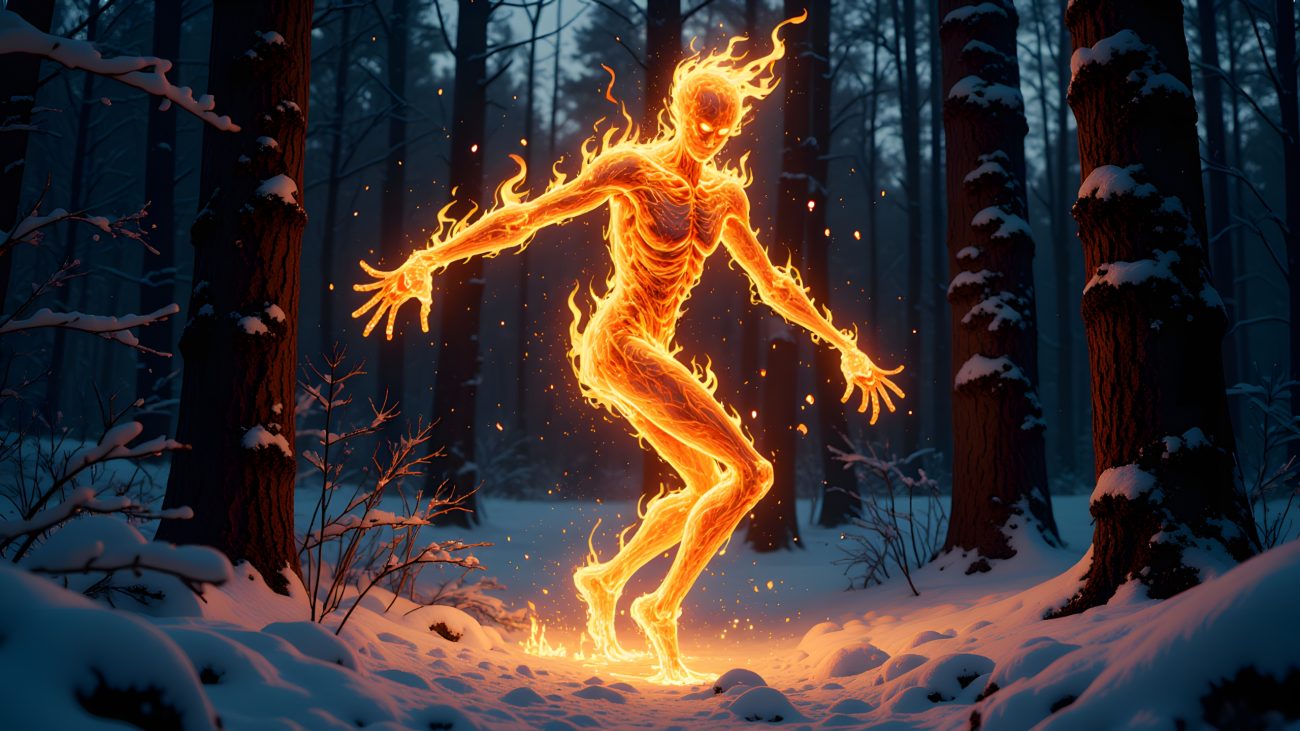
In Scandinavian folklore, a vette (or vætt) is a supernatural being associated with nature, land, and human dwellings. Vættir are understood as spirits bound to specific places, such as farms, burial mounds, waterfalls, fields, or outbuildings. When connected to the land itself, they are known as Land-vættir, guardian spirits of a particular locality.

Early Scandinavian law codes reflect belief in these beings. According to Ulfliot’s law, sailors approaching land were required to remove carved figureheads from their ships so as not to frighten the Land-vættir with their gaping mouths or beaks. The Gulathing law states that Land-vættir were believed to dwell in burial mounds and waterfalls. Spirits associated specifically with burial mounds were known as Vaette-houer.

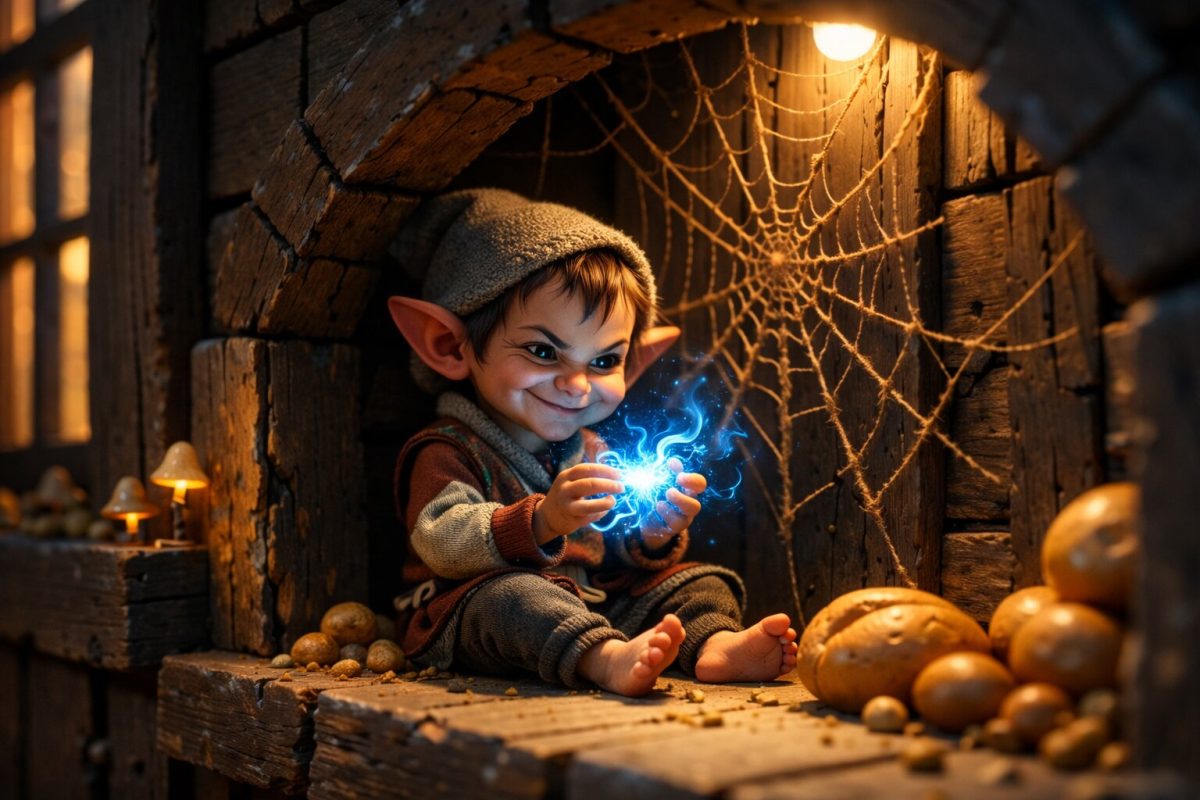
Over time, the image of the vette expanded beyond guardians of land to include spirits tied to farms and household buildings. These beings were believed to live close to humans, inhabiting barns, stables, storehouses, and homes. They were capable of working tirelessly, completing chores such as feeding livestock, tending children, sweeping floors, and carrying water. When well-disposed, they ensured the prosperity and order of the household.

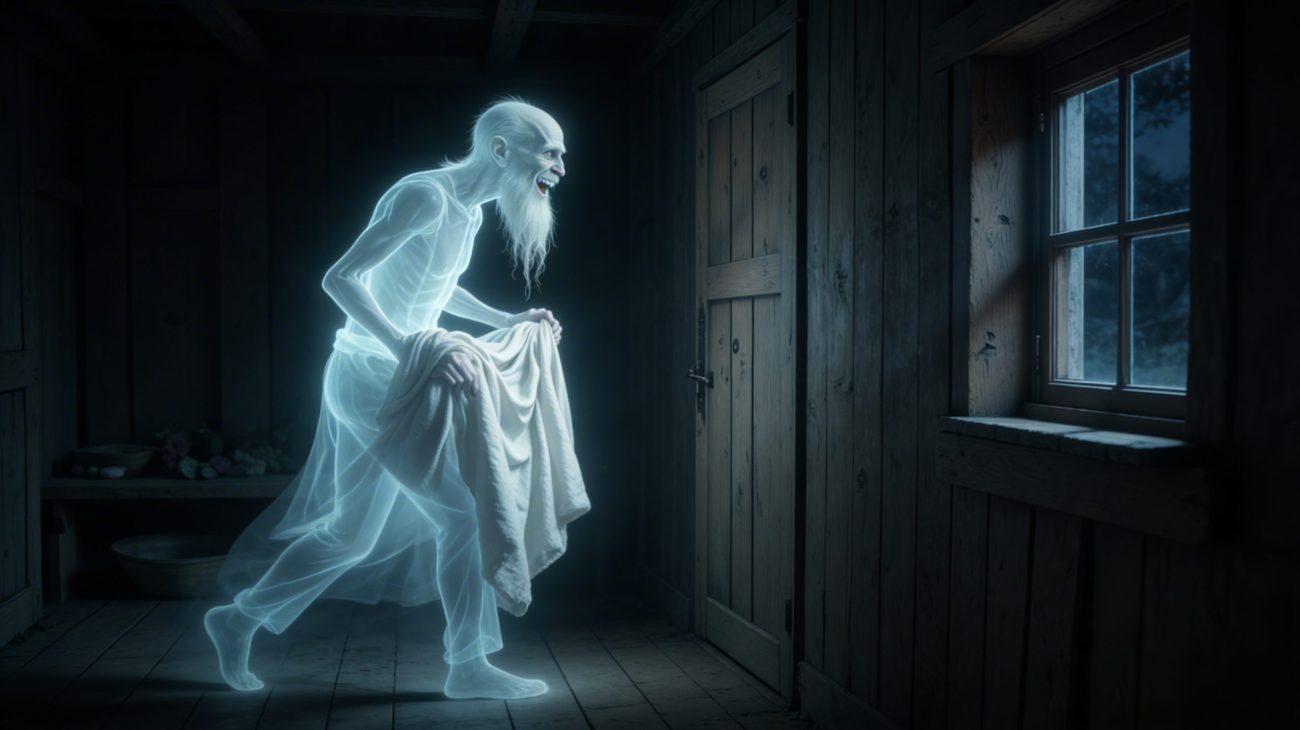
However, vettir were also known for mischief. If offended or simply inclined to play tricks, they might pull blankets off sleeping people, tickle their heels with cold fingers, mix pepper or mustard into sugar bowls, paint faces, or let animals loose from their pens. Such acts could drive the victims to anger and confusion.

Vettir were typically described as small, stout beings with long gray beards, deep-set eyes, round bellies, thin legs, and rough, low voices. They wore old-fashioned peasant clothing, sometimes red jackets and red stockings, and were often said to walk with birch sticks. Like similar household spirits elsewhere in Europe, they disliked being given clothing openly, though some traditions say they would accept garments if left quietly in a hidden place.

In a broader sense, the word vættir could refer to supernatural beings in general. It was sometimes used as a collective term encompassing elves, dwarves, trolls, giants, and even the gods themselves.

Through these traditions, vettir are remembered as ever-present spirits of place—guardians, workers, tricksters, and unseen neighbors who shared the landscape and daily life of the Scandinavian world.


Alvina

Tradition / Region: Belgian Mythology
Alternate Names:
Category: Spirit


The Myth

Alvina is a spirit of the air, known to wander endlessly through the sky. When the wind howls and roars, people say, “Listen! Alvina is crying.” Her presence is heard rather than seen, carried on storms and restless gusts that sweep across the land.

According to the legend, Alvina was once a king’s daughter. Against her parents’ wishes, she married the wrong man. For this act, her parents cursed her to wander forever, stripped of rest or peace. From that moment on, she was bound to the winds, condemned to eternal roaming.

Her name has led some to believe that she was the daughter of an elven king, linking her to an otherworldly royal lineage rather than a purely human one. Whether princess or elf-child, Alvina’s fate remained the same: to drift endlessly through the air, her sorrow echoing whenever the wind rises.

Thus, Alvina is remembered as a mournful air spirit, her lament still heard whenever the wind cries across West Flanders.


Source

Abe de Verteller. (2014). Van aardmannetje tot zwarte juffer: Een lijst van Nederlandse en Vlaamse elfen en geesten. In AbeDeVerteller.nl, from https://abedeverteller.nl/van-aardmannetje-tot-zwarte-juffer-een-lijst-van-nederlandse-en-vlaamse-elfen-en-geesten/


The Rabbit Mystery

Tradition / Region: Japan (Amami Ōshima — Yamato Village)
Alternate Names:
Category: Rabbit / shapeshifter


The Myth

In Yamato Village on Amami Ōshima, there is a legend of a strange and terrifying occurrence that once plagued the island. Every night, an unknown visitor would appear, stealing a set of rice cakes and kidnapping one person. As night after night passed, fear spread through the village and the number of inhabitants steadily decreased.

At last, two courageous villagers decided to uncover the truth. They prepared rice cakes and carried them in a basket, intending to follow the visitor and discover its true form. As they walked, they suddenly saw many white rabbits appear around them. The rabbits gathered together, chanting softly and repeatedly bowing toward the east, as if praying to something unseen.

The two men sought help from an old woman and borrowed her dog. When the dog was brought among the rabbits, it attacked them, killing and devouring them one by one as they ate the rice cakes and continued bowing toward the east.

Afterward, it was revealed that until that time, the rabbit had been transforming into the shape of a monk. In that form, it had been stealing rice cakes and kidnapping people from the village. With the rabbits destroyed by the old woman’s dog, the nightly disappearances ended, and the villagers were finally able to live in peace again.

Thus the rabbit came to be remembered not only as an animal, but as a dangerous shapeshifter whose true nature had long been hidden beneath a human disguise.


Interpretive Lenses

Religious Readings
Philosophical Readings
Psychological Readings
Esoteric Deep Dive
  • Hermetic Deep Dive
Political / Social Readings
Other

Utixo’s Rabbit

Tradition / Region: Khoi mythology (Southwestern Africa)
Alternate Names: Tiqua
Category: Rabbit / divine messenger


The Myth

Utixo is a benevolent sky god of the Khoi people, dwelling above the world and speaking through thunder. He sends rain to nourish the land and watches over human life. In one well-known story, Utixo decided to send a message to humanity concerning death.

Utixo declared that death would not be eternal and that humans would one day rise again. To deliver this message, he chose a rabbit as his messenger and sent it down from the sky to the people.

As the rabbit traveled, it became confused and forgot the message it had been entrusted with. When it finally reached humanity, the rabbit spoke the opposite of Utixo’s words, telling people that death was final and that they would not rise again.

Because of the rabbit’s mistake, death became permanent in the world. From that time onward, humans were said to die forever, and the rabbit was remembered as the bearer of the wrong message, whose error changed the fate of humankind.

In Khoi tradition, this story explains why death is irreversible and why the rabbit holds a special place in myth as a divine messenger whose failure shaped the human condition.


Interpretive Lenses

Religious Readings
Philosophical Readings
Psychological Readings
Esoteric Deep Dive
Political / Social Readings
Other

Penanggalan

Tradition / Region: Malay folklore (Malaysia and wider Southeast Asia)
Alternate Names: Penanggal
Category: Vampire / witch


The Myth

The Penanggalan is a nocturnal vampiric being from Malay folklore. By day, it appears as an ordinary human woman, but at night it separates its head from its body. The head flies freely through the darkness, trailing its internal organs and entrails from the neck. From a distance, it is said to glow or flicker like a small ball of fire, resembling a will-o’-the-wisp.

The name penanggalan comes from the Malay word tanggal, meaning “to remove” or “to take off,” referring to the creature’s ability to detach its head. The Penanggalan is not an undead corpse but a living woman who has gained this ability through black magic. According to tradition, a woman becomes a Penanggalan by performing a ritual bath in vinegar, meditating while her body is submerged except for her head. Through this practice, she learns how to separate herself from her body at night.

When active, the Penanggalan soaks its dangling organs in vinegar to shrink them, making it easier to reattach to its body before dawn. Because of this, the creature is always associated with a strong smell of vinegar, which is said to betray its true nature even during the daytime.

At night, the Penanggalan hunts for blood. Its preferred victims are pregnant women, women who have recently given birth, and young children. Traditional Malay houses were built on stilts, and the Penanggalan was believed to hide beneath them, extending its long tongue upward to feed on the blood of new mothers. Those it feeds upon are said to suffer a wasting illness that is often fatal. Even being brushed by the dripping entrails of the creature could cause painful, festering sores that would not heal without the help of a bomoh.

The Penanggalan is closely related to similar beings across Southeast Asia, all sharing the same basic form of a flying female head with trailing organs. These include the Ahp in Cambodia, the Kasu in Laos, the Krasue in Thailand, the Ma lai in Vietnam, the Kuyang and Leyak in Indonesia, and the Manananggal in the Philippines.

Protection against the Penanggalan involves physical barriers. Thorny leaves of the mengkuang plant are scattered around houses or hung near windows to snag and injure the exposed organs. Shards of glass fixed to the tops of walls serve the same purpose. Pregnant women are said to keep scissors or betel nut cutters under their pillows, as the Penanggalan fears sharp metal.

A Penanggalan may be destroyed if its abandoned body is found. Filling the neck cavity with broken glass will tear its organs apart when it tries to reattach. The body may also be sanctified and burned, or otherwise prevented from reuniting with the head before sunrise. In some accounts, turning the body upside down causes the head to reattach incorrectly, exposing the creature’s identity to everyone.

In Malay tradition, the Penanggalan remains a feared figure of the night—born of witchcraft, moving unseen above villages, and preying upon the most vulnerable while hiding in plain sight by day.


Interpretive Lenses

Religious Readings
Philosophical Readings
Psychological Readings
Esoteric Deep Dive
Political / Social Readings
Other

Cikavac

Tradition / Region: Serbian Mythology
Alternate Names:
Category: Bird / Pelican


The Myth

The Cikavac is a creature of Serbian folklore, described as a strange winged being that is neither fully bird nor beast. It is said to resemble a bird with a long beak and a pouch like that of a pelican. The Cikavac does not appear naturally in the world but must be deliberately created through a secret ritual.

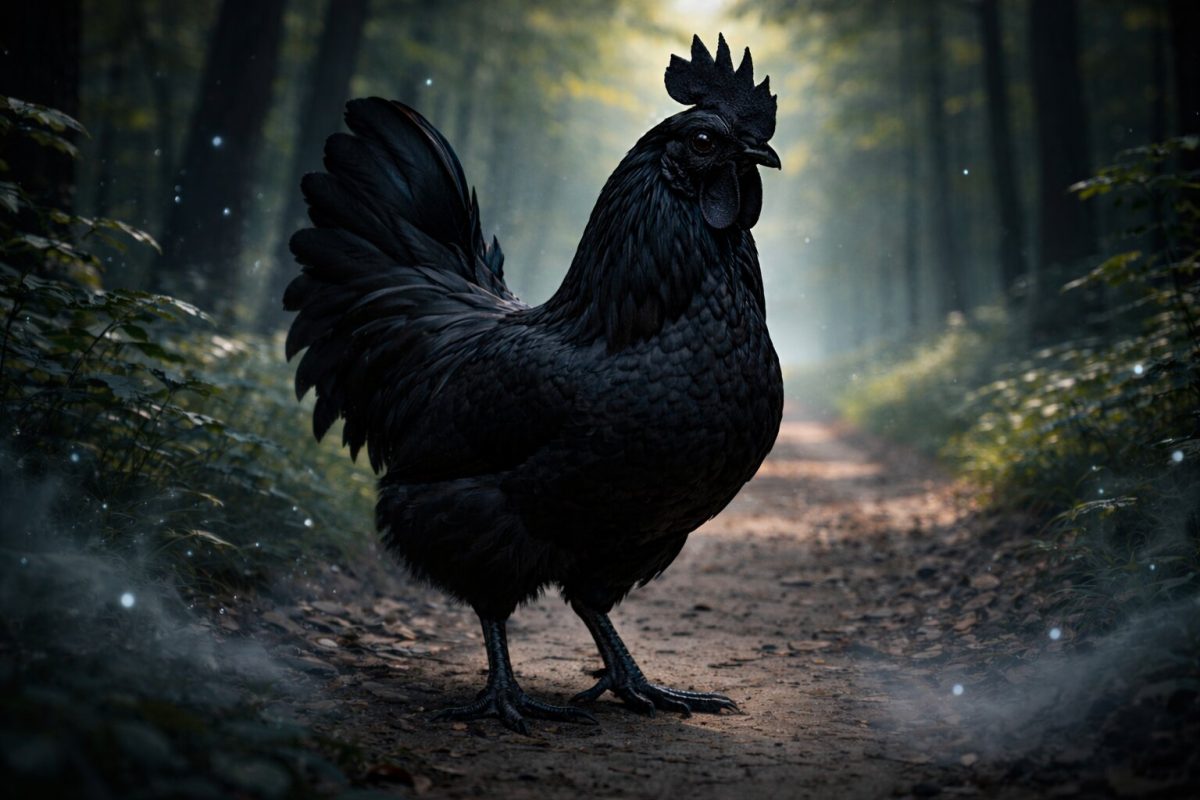
To obtain a Cikavac, a person must take an egg laid by a black hen. The egg is then carried under the armpit of a woman for forty days. During this time, strict rules must be followed. The caretaker must not confess sins, must not pray, must not wash her face, cut her nails, or speak of what she is doing. If these conditions are kept, the egg hatches, and the Cikavac is born.

Once created, the Cikavac becomes bound to its owner. At night, it flies out to perform tasks on their behalf. It is said to steal honey from neighboring beehives and milk from other people’s cattle, bringing these goods back to its master. Despite this, the beehives and animals it visits are often described as remaining unharmed.

The Cikavac is also believed to grant its owner the ability to understand the language of animals. Through this power, humans gain insight into the hidden world of beasts and birds, learning things normally beyond human hearing.

The Cikavac remains close to the household that created it, acting as a secret helper and bringer of prosperity. Its existence depends on secrecy and careful observance of the ritual that brought it into the world. If the rules are broken, the creature is said to fail to form or to disappear.

In Serbian tradition, the Cikavac is remembered as a liminal being—born through human action, moving between forest, farm, and home, and serving as a hidden companion that operates under cover of night.


Shisa

Tradition / Region: Ryukyu Islands (Okinawa, Japan)
Alternate Names:
Category: Guardian beast / talisman


The Myth

Shisa are guardian figures found throughout the Ryukyu Islands, especially in Okinawa. Their name comes from the local pronunciation of the word “lion,” and they are believed to descend from lion figures that spread from the ancient Orient through China and into Japan. Though commonly seen as statues, Shisa are understood as living protectors in spirit.

Shisa are most often placed on rooftops, gates, and walls of houses. There they stand watch over homes and villages, guarding against fire, misfortune, and evil spirits. They are typically made of stone, ceramic, or plaster. In many cases, Shisa appear as a pair: one with an open mouth and one with a closed mouth. One is said to ward off evil, while the other is said to invite good fortune and prosperity.

According to Ryukyuan tradition recorded in the Kyuyo, the national history of the Ryukyu Kingdom, the origin of the Shisa is linked to a time when fires repeatedly broke out in a village. A feng shui master advised that a lion statue be placed facing a particular direction—toward Yaese Takashi—to suppress the destructive force. After the statue was set in place, the fires ceased. The oldest Shisa connected to this account is said to still exist in Yaese.

Over time, Shisa became widespread across Okinawa. Each household placed them according to local custom, believing that the guardian beasts watched constantly, standing between the human world and unseen dangers. Though unmoving in form, Shisa are remembered as ever-vigilant protectors whose presence alone was enough to keep disaster at bay.


Interpretive Lenses

Religious Readings
Philosophical Readings
Psychological Readings
Esoteric Deep Dive
Political / Social Readings
Other

Olde Marolde

Tradition / Region: Netherlands (Achterhoek; Drenthe)
Alternate Names: Marolde
Category: Witch / night spirit


The Myth

Olde Marolde is a figure from folk belief in the eastern Netherlands, remembered in a Drents poem as a witch who flies naked through the night sky. She is said to move unseen through the air, traveling great distances as darkness falls.

According to tradition, Olde Marolde steals children from their cradles and carries them away to the witches’ sabbath. Her presence was feared, especially at night, when illness, restlessness, or misfortune struck a household.

Despite her danger, people believed there was a way to protect themselves from her influence. A spoken rhyme could be used to transfer illness—especially fever—to Olde Marolde herself. To perform this act, one had to walk three times around an old oak tree or bind a garter around its trunk, and then recite:

“Olde Marolde,
Ik hebbe de kolde,
Ik hebbe ze now,
Ik gève ze ow,
Ik bind em hier neer,
Ik krieg em neet weer.”

Through this ritual, the sickness was believed to be passed on to Olde Marolde and bound to the tree, never to return.

In these stories, Olde Marolde appears as a flying witch of the night, a child-stealer and bearer of illness, yet also a being whose power could be resisted through ritual words and actions rooted in the landscape itself.


Interpretive Lenses

Religious Readings
Philosophical Readings
Psychological Readings
Esoteric Deep Dive
Political / Social Readings
Other

Bardha

Tradition / Region: Albanian Mythology
Alternate Names: E Bardha (“The White One”)
Category: Nymph


The Myth

Bardha, whose name means “the White One,” is a mythological figure in Albanian folklore. She appears either as a zana, a nymph-like being of nature, or as an ora, a fate spirit connected with human destiny and fortune. Bardha is associated with goodwill and good luck, and is believed to favor humans rather than harm them.

In the beliefs of the people of the Dukagjini Mountains, there are three types of Ora. Bardha is the one who brings good fortune and wishes people well. Alongside her are e Verdha (“the Yellow One”), who brings misfortune and casts harmful spells, and e Zeza (“the Black One”), who determines death. Among these three, Bardha is the most benevolent.

In older folklore that treats her as a nymph-like being, Bardha is said to resemble the zana e malit, the mountain nymph. She is described as pale and nebulous in form, sometimes appearing indistinct or ghostlike. In some traditions, she is believed to dwell beneath the earth rather than openly in forests or mountains.

To gain Bardha’s favor or avoid offending her, people would leave offerings such as sugar or small cakes on the ground. These gifts were meant to appease her and invite her goodwill, ensuring luck and protection rather than misfortune.

Through these traditions, Bardha is remembered as a gentle and auspicious spirit, moving quietly between the worlds of fate and nature, and watching over human lives with benevolent intent.


Sources

Wikipedia contributors. (n.d.). Bardha. In Wikipedia, from https://en.wikipedia.org/wiki/Bardha


Saratan

Tradition / Region: Arabic folklore and medieval Islamic literature
Alternate Names: Zaratan
Category: Crab / sea monster


The Myth

The Saratan is a colossal sea creature described in Arabic literature as a monstrous crab of unimaginable size. Sailors believed it lived far out at sea, where it remained so still and vast that it was often mistaken for an island. Its back was said to be covered with soil, plants, and even trees, giving the illusion of solid land rising from the ocean.

According to accounts repeated by sailors, ships sometimes anchored beside what appeared to be an island, and crews went ashore to rest. They lit fires, gathered wood, and explored valleys and fissures, unaware that the land beneath them was alive. When the heat of the fire reached the Saratan’s shell, the creature stirred and began to move, sliding back into the sea with everything on its back. Only those who realized the danger in time and fled were said to survive.

The ninth-century scholar Al-Jahiz, writing in Kitāb al-Ḥayawān (The Book of Animals), reported these stories but noted that he had never met anyone who could truthfully claim to have seen the Saratan with their own eyes. He placed it among other legendary sea monsters such as the sea-dragon and the great whale, repeating sailors’ tales while acknowledging their fantastical nature.

The Saratan also appears in The Wonders of Creation by al-Qazwini, where it is listed among the marvels of the seas. In the tales of One Thousand and One Nights, the creature is echoed in the first voyage of Sinbad the Sailor, where sailors land on what they believe to be an island, only to discover it is a living monster that dives beneath the waves.

Across these stories, the Saratan is remembered as a deceptive giant of the sea—silent, immobile, and deadly—whose vast shell lured the unwary and whose awakening meant sudden destruction.