Algae

Tradition / Region: Chinese Mythology
Alternate Names:
Category: Gnome, Spirit


The Myth

In legends dating to the Han Dynasty, Algae is a small supernatural being described as the essence of water and wood. It is recorded in the Funming Record, where the scholar Dongfang Shuo identifies and names the creature as “Algae.”

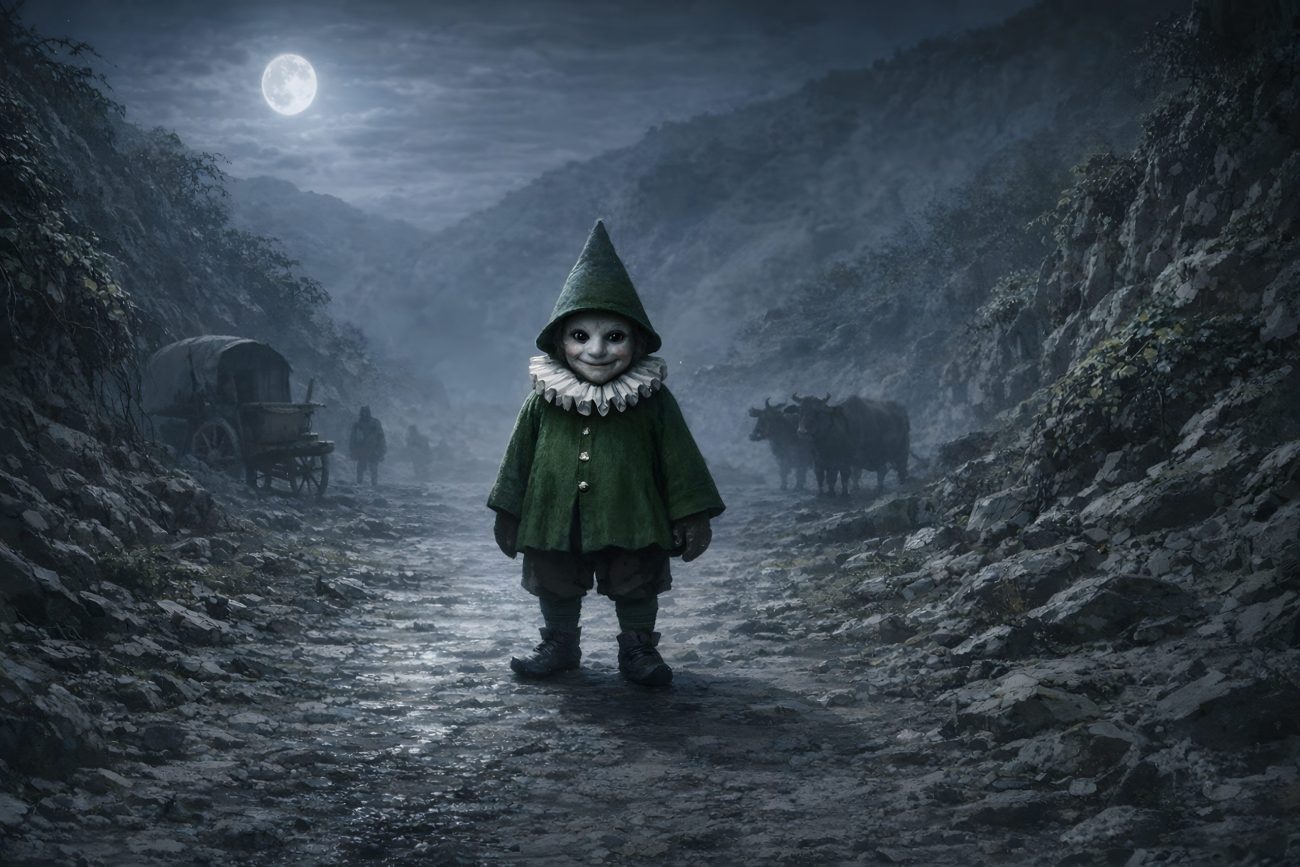
Algae is said to live quietly within nature. In spring, it dwells deep in forests, and in winter it resides in cold, hidden rivers. The creature is very small, only eight or nine inches tall, and resembles a frail old man. It walks slowly with the aid of a crutch, taking careful steps as it moves.

According to tradition, Algae appeared during the reign of Emperor Wu of Han. When the emperor ordered the construction of a palace and cut down the land where Algae lived, the spirit emerged to admonish the ruler directly. In doing so, Algae revealed itself as a manifestation of the vital forces of water and wood, responding to the disturbance of its natural dwelling.

Later texts, including the Taiping records, repeat these accounts, preserving Algae as a symbol of nature’s living essence that can appear before humans when its domain is harmed.


Kolodechnik

Tradition / Region: Russian Mythology
Alternate Names:
Category: Spirit


The Myth

A kolodechnik is a type of brownie spirit in Russian folklore and is regarded as the master and guardian of a well. Each kolodechnik is bound to a specific well, which it protects as its own domain.

The spirit is believed to dwell within the depths of the well, watching over the water and ensuring its proper use. Every well has its own kolodechnik, and the spirit does not stray from the place it guards.


Kodama

Tradition / Region: Japanese folklore (mountain regions, Honshu, Izu Islands, Okinawa)
Alternate Names: Kidama-sama, Kodama-sama, Kiinushii
Category: Tree spirit / forest guardian


The Myth

Deep in the mountainous forests of Japan, ancient trees are believed to be inhabited by spirits known as Kodama. These spirits dwell within very old trees, and their lives are inseparably bound to their host. If the tree dies, the kodama perishes with it; if the kodama is destroyed, the tree cannot survive.

Kodama are rarely seen, but their presence is often heard. In forests and mountain valleys, sounds sometimes echo longer than they should, returning with an unnatural delay. This phenomenon, known as yamabiko, is traditionally attributed to kodama responding to human voices. When they do appear visually, kodama may manifest as faint, distant orbs of light, or as small, oddly shaped, vaguely humanoid figures moving through the forest.

Although their bodies may leave the tree temporarily, kodama remain guardians of their groves, tending to the balance of nature. Trees inhabited by kodama are considered sacred. Villagers traditionally mark such trees with shimenawa, sacred ropes, to signal their divine status and warn against harm. Cutting down a tree that houses a kodama is believed to bring a powerful curse, capable of plunging an entire community into ruin. In some traditions, when an ancient tree is cut and blood appears to flow from the wood, it is taken as proof that a kodama lived within it.

The belief in tree spirits is ancient. In early Japanese texts, kodama are closely associated with gods and yōkai alike. The tree deity Kukunochi no Kami, recorded in the Kojiki (712 CE), is sometimes interpreted as a kodama. In the Heian-period dictionary Wamyō Ruijushō, tree gods are listed under the name “kodama.” Classical literature such as The Tale of Genji refers to kodama alongside oni, fox spirits, and gods, indicating their liminal nature between kami and yōkai.

Kodama are said to take many forms. Some appear as ghostly lights, others as animals or humans. One story tells of a kodama that fell in love with a human and left its tree, assuming human form in order to meet them. According to medieval Shinto texts such as the Reikiki, kodama may dwell in groups deep within the mountains and are sometimes heard speaking, particularly at moments of death.

Regional traditions preserve related beliefs. On Aogashima and Hachijō-jima in the Izu Islands, shrines are built at the base of great cryptomeria trees and worshipped under the names kidama-sama or kodama-sama, and festivals are held whenever such trees are cut. On Okinawa, tree spirits are called kiinushii, and prayers are made before felling any tree. Nighttime sounds resembling falling trees are believed to be the cries of kiinushii, followed by the tree withering days later. The Okinawan yōkai kijimuna is sometimes said to be a manifestation of these spirits.

In the Gazu Hyakki Yagyō by Toriyama Sekien, kodama are depicted as elderly men and women standing among trees, with the explanation that when a tree reaches a hundred years of age, a divine spirit comes to dwell within it. Through these traditions, kodama remain enduring symbols of the living soul of the forest and the sacred bond between trees and spirit.


Interpretive Lenses

Religious Readings
Philosophical Readings
Psychological Readings
Esoteric Deep Dive
  • Hermetic Deep Dive
Political / Social Readings
Other

Kalenik

Tradition / Region: Komi mythology (Zyryan Komi)
Alternate Names: Kalenik-lebach
Category: Forest spirit


The Myth

In Komi mythology, Kalenik is a forest spirit whose role is closely tied to the life of forest game birds. His sole function is to separate the young birds of the forest so that they may later pair off and breed. This act of separation is understood as a necessary step in maintaining the natural order of reproduction within the forest.

The name Kalenik comes from the Komi word kalkӧtny, meaning “to separate” or “to breed,” reflecting his specific task in the cycle of animal life. Kalenik does not hunt, punish, or mislead humans; instead, he quietly ensures that the rhythms of nature proceed correctly among the birds of the forest.

Among the Zyryan Komi, a related figure or expression is Kalenik-lebach, meaning “Kalenik-bird,” which was used as a name for the rainbow. In this form, Kalenik is associated with good fortune, and the appearance of the rainbow was considered a favorable sign.

Through these beliefs, Kalenik is remembered as a spirit connected not to danger or fear, but to fertility, balance, and the orderly continuation of life in the forest.


Interpretive Lenses

Religious Readings
Philosophical Readings
Psychological Readings
Esoteric Deep Dive
  • Hermetic Deep Dive
Political / Social Readings
Other

Ee (İye / Iye)

Tradition / Region: Turkic traditional beliefs (Volga region, Central Asia, North Caucasus, Western Siberia, Altai–Sayan)
Alternate Names: İye, Ee, Iye, Iyase (elemental forms)
Category: Spirit-masters / place spirits


The Myth

In Turkic traditional belief, Ee (also called İye or Iye) are spirits who permanently inhabit and rule specific places, objects, and elements of the world. Every natural or cultural space is believed to have its own ee: mountains, forests, fields, rivers, springs, baths, mills, barns, abandoned houses, ravines, and swamps all possess their own spirit-master.

These spirits are understood as the rightful owners of their domains. They dwell continuously in one place and govern what happens there. Ee may appear in human form—male or female—and are often described with unusual features such as being blind, slant-eyed, three-eyed, fat, or otherwise distorted. They can be benevolent or hostile, depending on how humans behave toward their domain.

Among the Kazan Tatars, West Siberian Tatars, and Bashkirs, ee are divided into specific elemental and domestic spirits. These include su iyase, the master of water; urman iyase, the forest spirit; and oy iyase or yort iyase, the house spirit. Among the Altai and Sayan peoples, a prominent figure is tag-eezi, the master of mountains and taiga, though ee were believed to inhabit all landscapes and could function as protectors of clans tied to particular territories.

In Western Siberian traditions, ee were believed to dwell in abandoned houses, swamps, and ravines, places considered dangerous or spiritually unstable. In Islamized Turkic traditions, especially among the Turkmens, ee gradually came to be regarded as malevolent spirits or genies bound to specific locations.

Among the Chuvash, the iye is believed to live under the stove or in bathhouses. In these places, it may play tricks on people—pushing them, dislocating limbs, or causing their eyes to twist—but it is not purely evil. The iye can also protect the household, prevent fires, increase livestock, support beekeeping, and bring success in trade. For this reason, offerings such as bread, baked goods, or small objects are thrown onto the stove during household rituals.

In later folklore, ee were increasingly blamed for illnesses affecting people and animals, including weakness, exhaustion, and paralysis, especially in children. These afflictions were believed to result from violations of unwritten rules, such as sleeping on boundaries, lying on damp ground without prayer, or leaving children unattended. To appease or expel an ee, people performed incantations and offered sacrifices such as human- or animal-shaped figurines made from dough, bread, or rowan twigs.

Though feared for their capacity to harm, ee were never simply demons. They were understood as guardians and enforcers of cosmic and social order, reacting to human respect or neglect. When treated properly, they protected their domains and those who lived within them; when offended, they punished transgressions, reminding people that every place in the world had a living master.


Interpretive Lenses

Religious Readings
Philosophical Readings
Psychological Readings
Esoteric Deep Dive
  • Hermetic Deep Dive
Political / Social Readings
Other

Ichchi

Tradition / Region: Russian Mythology
Category: Spirit masters / animistic spirits


The Myth

In traditional Yakut belief, ichchi are spirit masters that inhabit objects, places, and natural phenomena. According to this worldview, nature is alive in all its parts, and every thing—large or small—possesses its own indwelling spirit. Mountains, trees, rivers, lakes, fire, tools, dwellings, and even the most ordinary household objects were believed to have an ichchi.

Ichchi could dwell in prominent features of the landscape, such as forests or bodies of water, acting as guardians or owners of those places. At the same time, they could also inhabit humble or easily overlooked things, such as the firebox used in the hearth or tools used in daily work. Because of this, people were expected to treat both nature and objects with care and respect.

When approached properly, an ichchi could become a patron spirit to a person or household, offering protection, good fortune, and harmony. Disrespect, neglect, or improper behavior toward the object or place inhabited by an ichchi could provoke misfortune, illness, or bad luck.

Communication with ichchi took the form of prayers called algys, which were spoken to honor or appease the spirits. Offerings were an essential part of this relationship. These could include horsehair ornaments, scraps of cloth known as salama, non-animal foods, kumiss (fermented mare’s milk), or money. The offerings acknowledged the spirit’s presence and authority.

Ichchi are distinct from other spiritual beings in Yakut cosmology. They are not the high benevolent deities known as Aiyy, nor are they the malevolent spirits such as Abaahy or Uor. Instead, ichchi occupy a middle position as ever-present spirit owners of the world itself.

Similar beliefs in spirit masters exist among neighboring peoples. Other Turkic-speaking groups refer to such spirits as eye or ezi, the Buryats call them ezhins, and the Mongols know them as edzens, reflecting a shared animistic understanding across Inner Asia.


Igrets

Tradition / Region: Russian Mythology
Alternative Name: –
Category: Spirit


The Myth

Igrets is a figure from Russian folk belief understood as a malicious type of domovoi, the household spirit. Unlike the more ambivalent or protective domovoi, the igrets is known specifically for cruel and troublesome behavior. It hides objects, causes disorder in the house, torments livestock, and interferes with daily life through spiteful tricks rather than playful mischief.

In popular belief, the igrets is sometimes identified directly with the house spirit itself, and in other cases confused with the devil or a demonic presence dwelling within the household. Its actions are described as aggressive and harmful: breaking things, frightening people, and provoking physical or emotional distress. Because of this, its “jokes” were considered dangerous rather than humorous.

Belief in the igrets was widespread in central and southern regions of Russia, including the Ryazan, Tambov, Kursk, Tula, Voronezh, Penza, and Oryol provinces, as well as the Don region. From at least the 19th century, everyday speech in these areas included expressions such as “Igrets take you,” “Igrets knows him,” or “Igrets is with you,” used to explain misfortune, sudden anger, or destructive behavior.

In some regions, the word igrets was also used to describe physical or psychological disturbances. In Kursk province, it could refer to a violent fit or hysterical episode accompanied by screaming. In Tambov and the Don region, it could mean paralysis or sudden loss of control over one’s limbs. These meanings suggest that the igrets was associated not only with household disorder, but also with unexplained illness or loss of bodily control.

Overall, the igrets represents the darker side of domestic spirits in Russian folklore: a presence within the home that causes chaos, suffering, and fear, and serves as an explanation for sudden misfortune, destructive impulses, or frightening physical episodes.


Igosha

Tradition / Region: Russian Mythology
Category: Ghost


The Myth

Igosha is a spirit found in Russian folk belief, understood as the soul of a stillborn baby or a child who died before baptism. It is described as an armless and legless creature, sometimes invisible, sometimes imagined as a small, malformed being. Because it died without baptism, the igosha is believed to be unable to find rest.

According to belief, stillborn or unbaptized children often remained close to the place where they were buried—frequently under the floor of the house, near the hut, or within the household space itself. Over time, such spirits could become domestic beings, lingering inside the home and wandering through it at night.

The igosha behaves much like other house spirits such as the brownie or kikimora. It plays pranks, causes disturbances, and brings mischief, especially if it is ignored or disrespected. People believed that if the household failed to acknowledge the igosha—by not leaving a spoon, a piece of bread, or other small offerings—it would become more troublesome. In some traditions, people would throw a mitten or hat out the window as a gesture of recognition, treating the igosha as a house spirit rather than denying its presence.

One belief says that the kikimora feeds the igosha wolfberries, which the spirit can eat without choking, reinforcing its non-human nature. The igosha is often described as incomplete or unfinished, reflecting the idea that it barely entered the world before dying. Its lack of arms and legs is sometimes interpreted as a sign of this incompleteness or as a hint of a snake-like nature.

Information about igosha is rare, and the belief appears only sporadically in folklore records. The figure later inspired the literary fairy tale “Igosha” by V. F. Odoevsky, published in 1833, which drew directly on these traditional ideas of an unbaptized, restless child-spirit haunting the domestic space.


Angako-di-Ngato

Tradition / Region: Philippines Mythology
Alternate Names: Angako-De-Ngato
Category: Spirit


The Myth

Angako-di-Ngato are spirits feared in the folklore of the Kalinga people of northern Luzon. They are believed to be the cause of illness, afflicting humans with sickness when they draw near or are offended.

When disease strikes without an obvious cause, it is said that Angako-di-Ngato are responsible. These spirits act invisibly, entering the human body or lingering around people, weakening them and bringing suffering.

In Kalinga belief, illness is not merely physical but the result of contact with these malevolent spirits, whose presence disrupts the balance between humans and the unseen world.


Source

Bestiary.us contributors. (n.d.). Angako di Ngato. In Bestiary.us — Mythical Creatures of the World, from https://www.bestiary.us/angako-di-ngato/en


Badnjak

Tradition / Region: Bosnian Mythology, Croatian Mythology, Montenegrin Mythology, Serbian Mythology
Alternate Names: Badњak
Category: Flame


The Myth

Badnjak is a spirit known among the Southern Slavs, closely associated with Christmas Eve. It is believed to appear either in the form of a bearded old man or embodied within a log prepared for ritual burning.

On Christmas Eve, a special log—also called the badnjak—is brought into the home and placed on the fire. This log is not considered ordinary wood, but the dwelling place or manifestation of the Badnjak spirit itself. As the log burns, it is believed to bring warmth, protection, fertility, and prosperity to the household for the coming year.

In some traditions, the Badnjak is imagined as an elderly, bearded figure who visits the home symbolically through the fire. The crackling, sparks, and glow of the burning log are taken as signs of the spirit’s presence and favor.

Through this ritual, Badnjak remains a liminal being—both spirit and object—bridging the human household and the sacred time of midwinter, appearing each year with the lighting of the Christmas Eve fire.