Vizunas

Tradition / Region: Lithuanian Mythology
Alternative names: None commonly recorded
Category: Dragon


The Myth

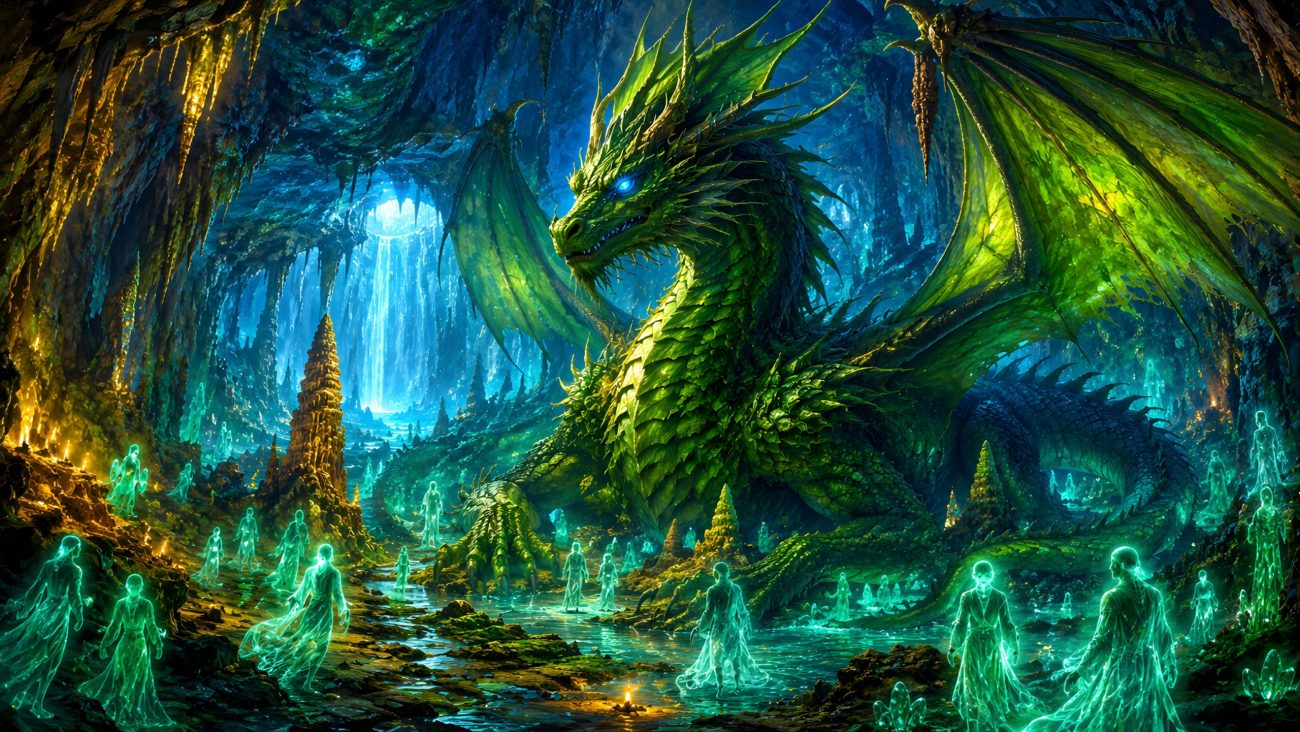
Vizunas is a fearsome dragon of ancient Lithuanian tradition that dwells beneath the sacred mountain of Anafiolis, also called Anapilis. From its lair beneath the inaccessible peak, the monster waits for the souls of the dead that fail in their ascent to the world above.

After death, every soul is destined to climb the steep and rocky mountain of Anafiolis, where a divine judge resides at the summit. There the deeds of each person are weighed, and rewards or eternal punishments are given according to justice.

The journey upward is difficult. Riches acquired during life become a burden upon the soul, making the climb harder. Weapons, horses, servants, and earthly possessions offer no true advantage. A poor and virtuous person, light as a feather, may rise swiftly, while those weighed down by greed and sin struggle upon the mountain’s slopes.

When sinful souls lose their grip and fall from the heights, they descend into the abyss below, where Vizunas lies in wait. The dragon devours the fallen dead without mercy. Rich sinners are consumed by the beast, while poor sinners may be swept away by evil winds before they ever reach the summit.

Thus, Vizunas serves as the terrible guardian beneath the mountain of the dead, a monstrous dragon that punishes those unable to overcome the weight of their earthly sins. While the righteous ascend to judgment above, the wicked risk falling into the jaws of Vizunas, never to reach the divine realm of Anapilis.


Sources

Bestiary.us. (n.d.). Vizūnas. In New Bestiary: Encyclopedia of Imaginary Beings. Retrieved June 16, 2026, from https://www.bestiary.us/vizunas

Baubas

Tradition / Region: Lithuanian Mythology
Alternative names: None commonly recorded
Category: Demon


The Myth

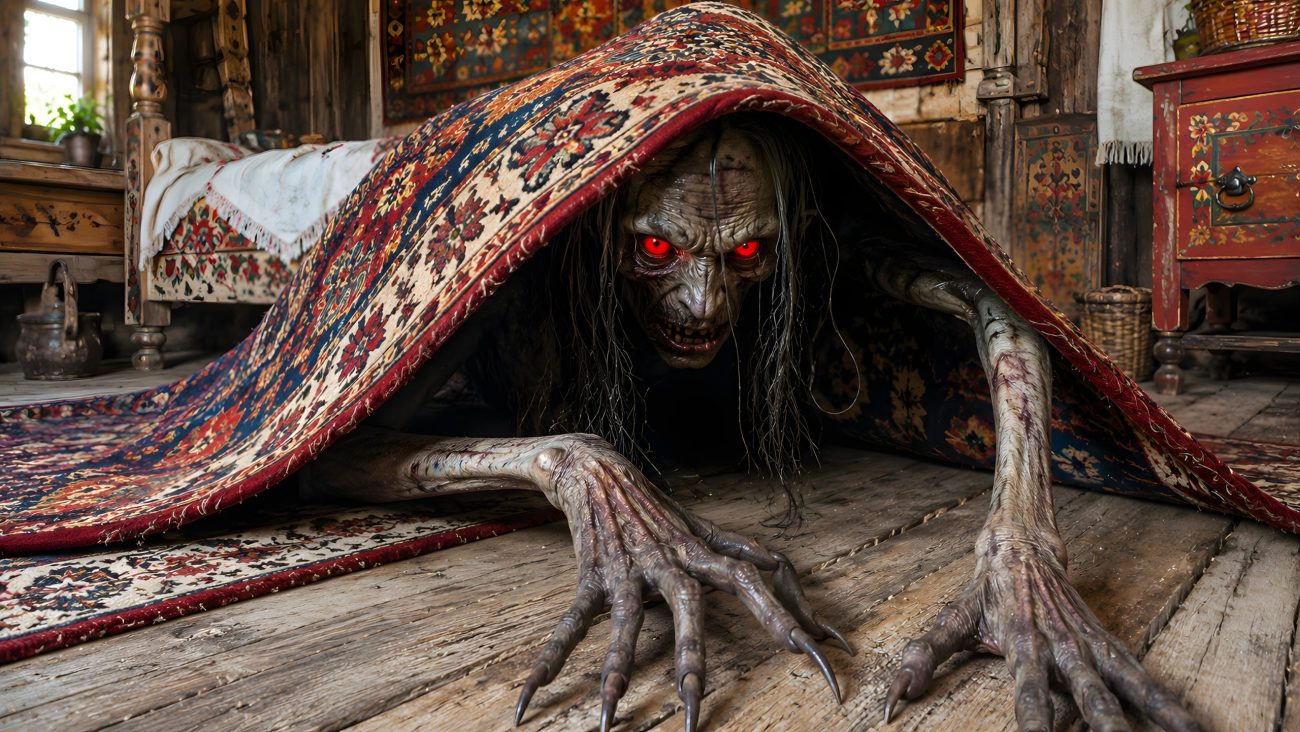
The Baubas is a sinister spirit feared throughout Lithuanian folklore. It is said to lurk in dark corners of houses, beneath carpets, under beds, or anywhere shadows gather. Children were taught to fear it, and parents often warned that the Baubas would come for those who misbehaved.

The creature is described as dark or black in color, with glowing red eyes, long thin arms, and wrinkled fingers. It hides silently and waits for an opportunity to trouble humans.

The Baubas is particularly dangerous at night. It harasses sleeping people, pulls their hair, and is sometimes said to sit upon their chests and suffocate them. Its touch brings terror, and few who encounter it ever clearly see its full form.

For children, the Baubas serves much the same role as the bogeyman in English-speaking traditions. Threats such as “Behave, or the Baubas will come and get you” were commonly used to frighten unruly youngsters into obedience.

Thus, the Baubas remains one of Lithuania’s most feared household spirits—a shadowy being with red eyes and grasping fingers that waits in the darkness for the careless and the disobedient.


Sources

Wikipedia contributors. (n.d.). List of Lithuanian gods and mythological figures. In Wikipedia. Retrieved June 16, 2026, from https://en.wikipedia.org/wiki/List_of_Lithuanian_gods_and_mythological_figures


Eintykára

Tradition / Region: Paraguay Mythology
Alternative names: Golden Honey Bee
Category: Insect


The Myth

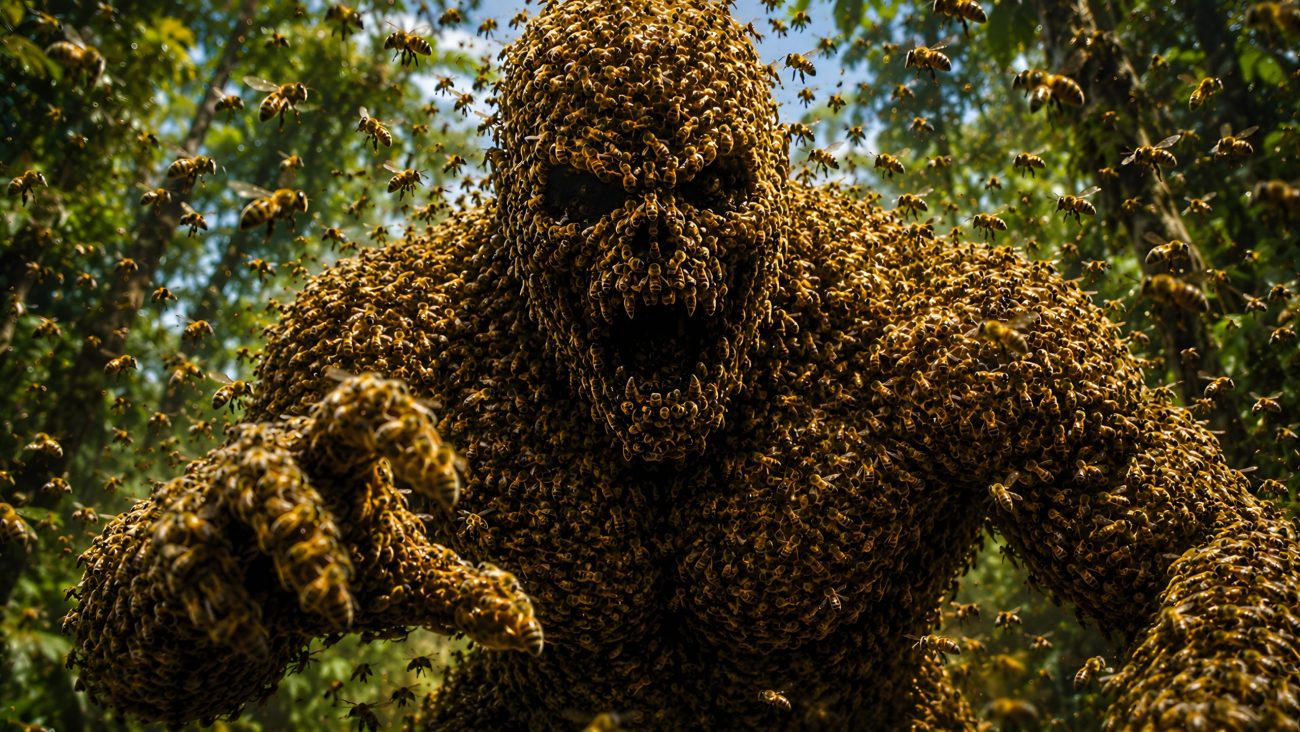
The Eintykára are stingless bees renowned for producing golden honey with unusual properties. Their hives are marked by long tubular entrances, and the bees possess a remarkable power: by gathering together in great numbers, they can take the form of a human being.

Long ago, an elderly unmarried woman passed the same Eintykára hive every day. Fascinated by its shape, she often joked and fantasized aloud, wishing that the hive were a handsome man who could become her husband. Over time, she began speaking to the hive affectionately and even referred to it as her husband.

One night, a stranger appeared before her. He was extraordinarily handsome, with milky-white skin and hair the color of golden honey. He revealed that he was Eintykára, the very hive she had spoken to for so long, and that he had come to take her as his wife and provide for her people.

The two married and had children. Eintykára proved to be unusually wise and tireless, becoming admired throughout the village. He seemed never to eat. Instead, he would disappear into the forest, transform into a swarm of bees, gather nectar, and then return to human form. From his labors came beeswax and golden honey, which he generously shared with everyone. According to tradition, some fair-skinned members of the Chamacoco people are descendants of Eintykára and his children.

Another Eintykára once joined a different Chamacoco settlement and lived among the people. However, the village was attacked by enemies who set the houses ablaze. As the bee-man attempted to escape by transforming into a swarm, too many of his bees were consumed by the flames. Unable to survive the loss, he perished alongside the people he had chosen as his own.

Thus, the Eintykára are remembered not merely as magical bees, but as shapeshifting beings capable of becoming human, bringing prosperity and honey to those they love, and even founding entire bloodlines among the Chamacoco people.


Sources

A Book of Creatures. (2015, July 10). Eintykára. Retrieved June 13, 2026, from https://abookofcreatures.com/2015/07/10/eintykara/


Pombero

Tradition / Region: Paraguay Mythology, Brazilian Mythology, Argentine Mythology
Alternative names: Pomberito, Karai Pyhare, Pyrague, Kuarahy Jára, Cho Pombé, Lord of the Night
Category: Goblin


The Myth

The Pombero is a mysterious nocturnal being that inhabits forests, abandoned houses, barns, and lonely rural places throughout the Guaraní-speaking world. Usually active after dark, he is known as the Lord of the Night and is one of the most feared and respected figures in Paraguayan folklore.

He is commonly described as a short, ugly humanoid with extremely short arms and hairy hands and feet. His feet allow him to move silently through the forest, while the touch of his hairy hands is said to send a cold shiver through those he touches. The Pombero possesses many supernatural abilities, including invisibility and the power to squeeze through impossibly narrow openings.

Before appearing, he often announces his presence with strange whistles and the songs of nocturnal birds, which he can imitate perfectly. Because of this, he is regarded as a protector of birds and is said to punish children who hunt them with slingshots.

Although generally considered a mischievous spirit rather than an outright monster, the Pombero delights in causing trouble. He steals eggs, honey, and chickens, scatters grain and food stores, releases livestock, and frightens horses so that riders are thrown to the ground.

He is also associated with mysterious pregnancies and is sometimes blamed for fathering children born unusually hairy or unattractive. In darker traditions, he is said to kidnap lonely or ungrateful young women, force his affection upon them, and violate them. Similar stories are also attributed to the Guaraní being Kurupi.

Because of his unpredictable nature, people seek to appease the Pombero with offerings. Cigars and rum are his favorite gifts, though honey is also considered acceptable. Families in rural Paraguay often leave these offerings outside at night to prevent his mischief.

Those who regularly honor him may gain his friendship. A satisfied Pombero is believed to protect homes, animals, and possessions, and sometimes rewards his benefactors with small gifts of his own.

Thus, the Pombero remains one of the most enduring figures of Guaraní folklore—a silent lord of the forests who walks unseen through the night, bringing either mischief or protection depending on how he is treated.


Sources

Wikipedia contributors. (n.d.). Pombero. In Wikipedia. Retrieved June 13, 2026, from https://en.wikipedia.org/wiki/Pombero


Jichi

Tradition / Region: Bolivian Mythology
Alternative names: Jichi / Isireri
Category: Snake


The Myth

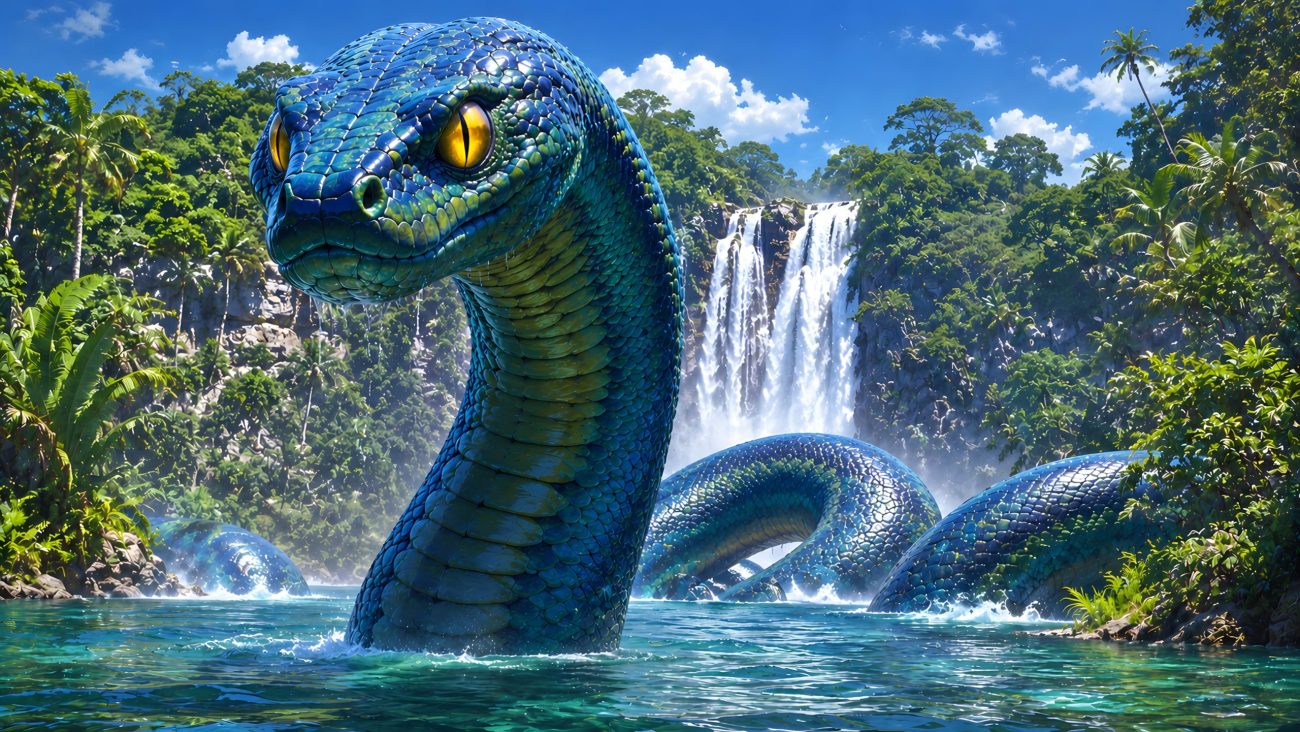
The Jichi is a gigantic serpent spirit that dwells deep beneath rivers, lakes, springs, wells, waterfalls, and hidden pools. It is regarded as the guardian of water and one of the oldest life-giving beings known to the indigenous peoples of the Bolivian lowlands.

Usually unseen, the Jichi reveals itself only after sunset. It is believed to inhabit the depths of waterways, watching over the balance between humans and nature. Wherever the Jichi remains, there is abundant water, healthy forests, plentiful fish, and thriving wildlife.

The creature is considered the source of life itself. According to ancient traditions, if people misuse water or damage the natural world, the Jichi abandons the region. When this happens, drought follows, fish disappear, animals flee, and the land becomes unable to sustain human life.

Among peoples descended from the Arawak migrations, the Jichi is connected with much older traditions surrounding the great anaconda, the Mother of Waters. In one account, the ancestors of humanity were once fish living in a mysterious Lake of Milk at the mouth of the Amazon. From this sacred place emerged the giant water serpent, who carried them upon her back against the current of the Amazon in search of higher lands where they could become human beings of flesh and blood.

As the great serpent traveled, tobacco was smoked and prayers were offered to guide the journey. Through this voyage, people received culture, life, and a place to live.

Thus, the He Jichi is remembered as a colossal serpent and protector of the waters, a being whose presence brings life and prosperity, and whose departure leaves only dryness and desolation behind.


Sources

Wikipedia contributors. (n.d.). Jichi. In Wikipedia, la enciclopedia libre. Retrieved June 13, 2026, from https://es.wikipedia.org/wiki/Jichi


Taraaka

Tradition / Region: Japanese Mythology
Alternative names: Taraaka Dragon
Category: Dragon


The Myth

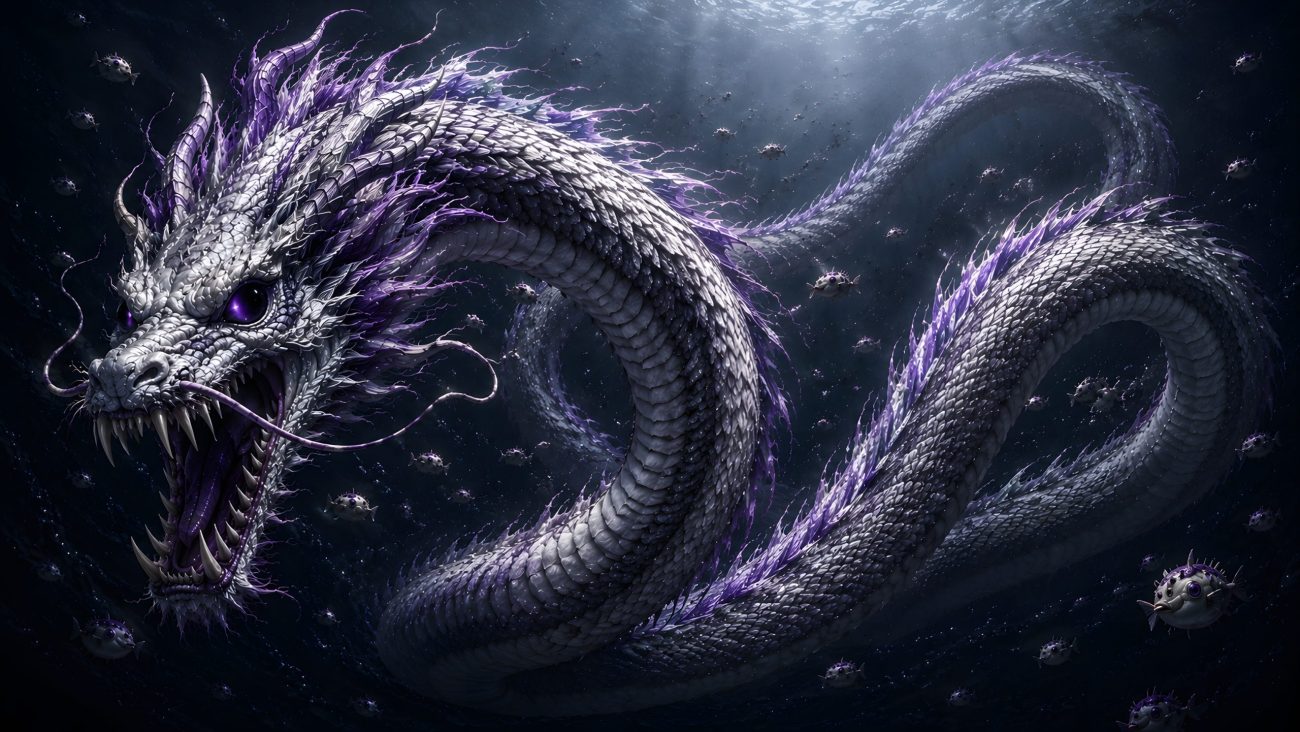
Taraaka was a gigantic evil dragon that invaded the seas ruled by Princess Otohime, mistress of the Dragon Palace. Accompanied by an army of monstrous poisonous fish and marine creatures, Taraaka seized the Shell Palace and spread terror throughout the ocean.

His followers included the Laughing Shark, a sawshark possessed by a vengeful spirit, the Tiger Pufferfish, giant crabs, sea snakes, octopuses, killer whales, sea otters, and many other fearsome creatures. Together they raided the seas and sought to steal the magical jewels that controlled the tides.

The Dragon Palace itself had long been ruled by Princess Otohime, but Taraaka’s growing power threatened her kingdom. The wicked dragon desired the Thousand Jewel and Ten Thousand Jewel, sacred treasures that governed the ebb and flow of the sea.

At that time, the wandering samurai Ōhara Takejirō Takematsu was rescued from drowning by a turtle he had once saved and was brought to the Dragon Palace. Trusting in his courage, Princess Otohime asked him to destroy Taraaka.

Believing the monster to be a type of mizuchi, an aquatic dragon, Takejirō devised a plan based upon ancient legends. Remembering how Susanoo defeated the eight-headed serpent through intoxication, he prepared a powerful sake brewed from fermented swallow meat, which dragons were believed to favor.

When five barrels of the strange wine were completed, they were delivered to Taraaka’s palace. The dragon, delighted by false news that Princess Otohime wished to marry him, opened the barrels and celebrated with his followers.

The magical drink quickly overwhelmed Taraaka and his entire court. While the monsters lay drunken and helpless, Princess Otohime’s servants recovered the stolen jewels and escaped.

Soon the evil fish awoke and pursued them, only to encounter Takejirō. Armed with a sword given to him by Otohime, he slaughtered the Laughing Shark, split the Tiger Pufferfish in half, and killed the other monstrous servants.

Enraged, Taraaka himself appeared, raising enormous waves and storms as he charged into battle. Takejirō drew his bow and released a single arrow. It struck the dragon in the throat and neck, and the gigantic creature collapsed like a falling tree.

When the monster’s true form was revealed, it measured more than twenty fathoms in length. It resembled a terrifying lizard with four legs, looking much like a gigantic crocodile. Takejirō believed it to be a kind of mizuchi, the rain dragon of ancient legends.

After its death, Princess Otohime ordered the bodies of Taraaka and his chief followers burned. Their ashes were buried beneath a mound to calm their vengeful spirits and prevent them from causing further harm.

Having restored peace to the seas, Otohime rewarded Takejirō with a sacred jewel bestowed by the Buddha and returned him to the world of men.

Thus Taraaka was remembered as one of the great evil dragons of Japanese legend, a monstrous ruler of the seas whose reign ended through cunning, sacred treasures, and the courage of a single warrior.


Sources

TYZ. (n.d.). Taraaka [タラーアカ]. In 新版TYZ 妖怪図鑑. Retrieved June 13, 2026, from https://tyz-yokai.blog.jp/archives/1070683103.html


Katawaguruma Nyūdō

Tradition / Region: Japanese Mythology
Alternative names: One-Wheeled Monk / Flaming Wheel Monk
Category: Yokai, Flame


The Myth

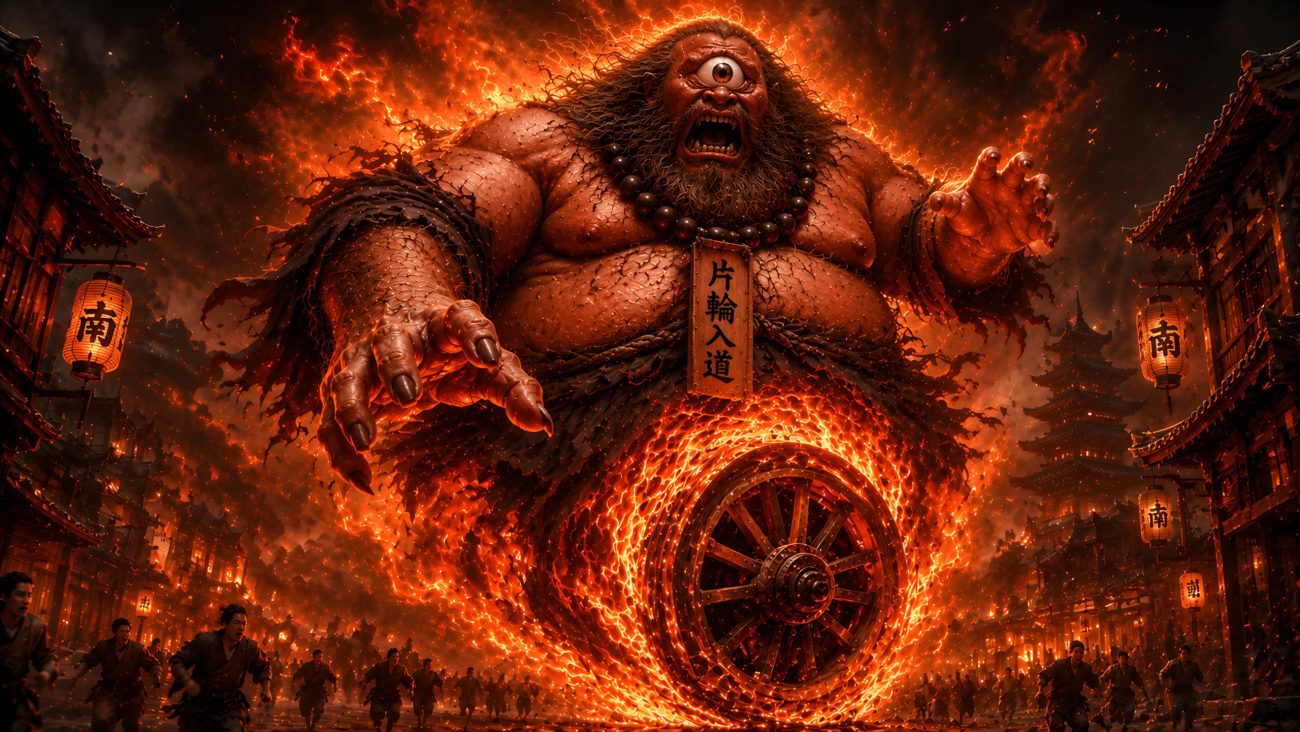
The Katawaguruma Nyūdō is a terrifying yokai that roams the streets of Kyoto at night. It appears as a gigantic hairy monk with a fierce face and enormous strength, riding upon a single wheel engulfed in flames. The burning wheel races through the darkness like a cart from hell, spreading fire and fear wherever it passes.

According to legend, the creature was once a powerful and wealthy monk who lived in the Rokuhara district of Kyoto. Cruel and arrogant, he delighted in the suffering of others and committed countless wicked deeds without fear of divine punishment. Although he enjoyed great prosperity during his life, his evil eventually caught up with him.

Divine punishment descended upon the monk, and he was consumed by supernatural flames. Transformed into a monstrous spirit, he became the Katawaguruma Nyūdō, forever condemned to wander Kyoto upon his fiery wheel.

One night, a woman living nearby put her three children to sleep and, through a knot hole in her door, secretly watched the terrible apparition pass by. The flaming monk noticed her gaze and shouted:

“Look to your children instead of looking at me!”

Terrified, the woman rushed to her children, but it was too late. The Katawaguruma Nyūdō seized all four members of the family and carried them away into the night, and they were never seen again.

Thus the One-Wheeled Monk became one of Kyoto’s most feared supernatural beings — a burning spirit born from greed and cruelty, whose fiery wheel still races through the darkness searching for those unfortunate enough to witness its passage.


Sources

TYZ. (n.d.). Katawaguruma Nyudo [片輪車入道]. In 新版TYZ 妖怪図鑑. Retrieved June 13, 2026, from https://tyz-yokai.blog.jp/archives/1079937229.html


Fire-Red Goat

Tradition / Region: Liechtenstein Mythology
Alternative names: The Red Goat of the Treasure
Category: Sheep


The Myth

In Triesenberg there once lived a wealthy but extremely greedy farmer who trusted no one with his hidden fortune. One Sunday he told his wife, daughters, and servant to go to church while he remained home alone.

The servant became suspicious and secretly hid himself in the hayloft to watch.

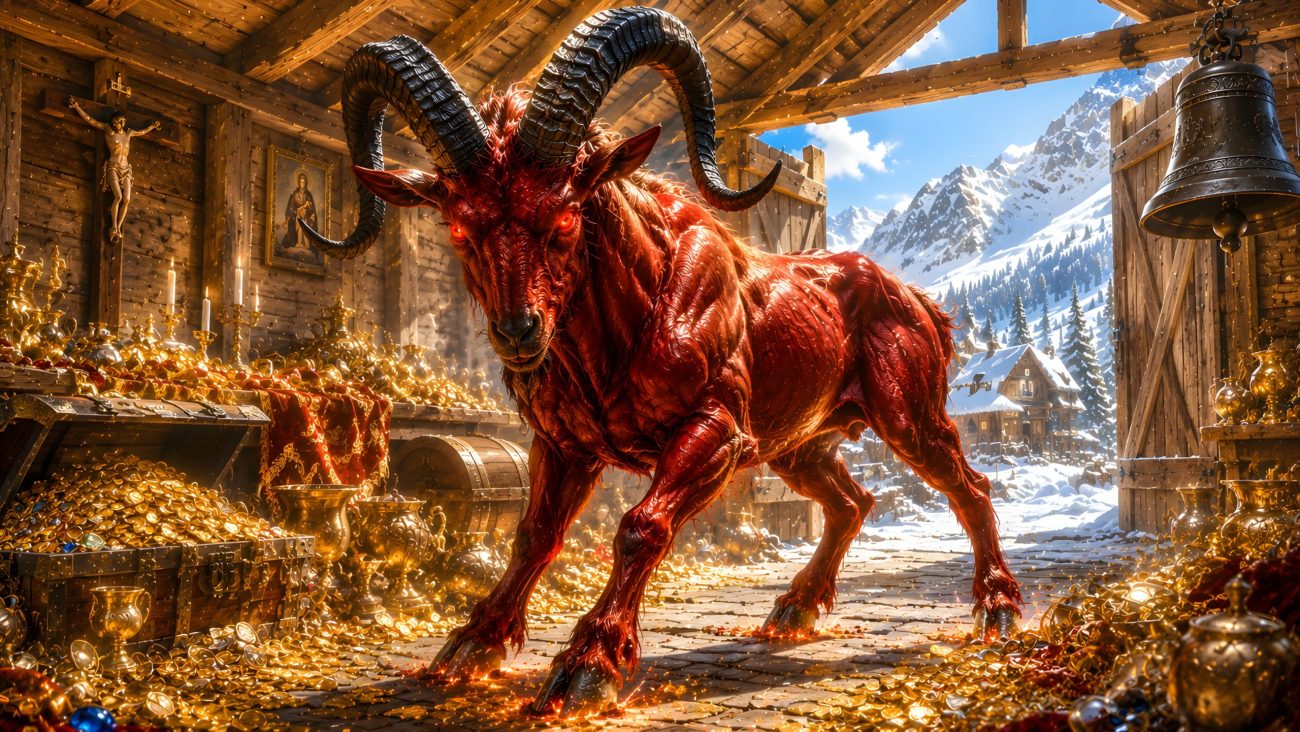
During the church bells for the consecration, the farmer entered the barn carrying a pot filled with gold. He lifted part of the wooden floor and poured the treasure into a hidden cauldron buried beneath the barn. After the farmer left, the servant climbed down and stole a few pieces of gold.

Soon the farmer returned with another load of treasure. Looking into the hidden pit, he muttered that some gold seemed missing, even though he believed himself alone. Frightened, the servant did not dare move again.

When the farmer came a third time and emptied more gold into the hidden place, he sealed the floor and declared:

“Only the one who drives a fire-red goat three times around this treasure during the consecration bells, in the three highest names, shall ever reach this gold.”

Three weeks later the farmer died. No treasure or documents could be found, and his family fell into despair. The servant then told them to pray for him while he searched for something important.

After another three weeks he returned leading a terrifying fire-red goat. The wife and daughters laughed, believing all their prayers had only been for a strange red animal. But the servant warned them to wait and see.

The following Sunday, during the church bells, the servant and the widow opened the barn floor and drove the fire-red goat three times around the hidden treasure.

At that moment the ghost of the dead farmer suddenly appeared sitting upon the gold. When the church bells stopped ringing, the spirit vanished forever, finally released from its curse. The hidden fortune now belonged to the family.

As reward for his courage and cleverness, the servant was allowed to marry the farmer’s eldest daughter.


Sources

SAGEN.at. (n.d.). Der feuerrote Geissbock. In SAGEN.at – Traditionelle Sagen. Retrieved May 23, 2026, from https://www.sagen.at/texte/sagen/liechtenstein/seger/geissbock.html


Lochgass Schimmel

Tradition / Region: Liechtenstein Mythology
Alternative names: The Lochgasse White Horse
Category: Horse


The Myth

Near the narrow road known as the Lochgasse in Vaduz, there once lived a cruel and greedy farmer feared for his dishonesty. Nothing was safe from him, not even horses, which he regularly stole and sold in secret.

One Christmas Eve, he decided to continue his crimes even during the holy night. Crossing near a church shortly before midnight, he noticed a magnificent white horse tied beside the wall. The animal was beautiful, powerful, and calm beneath the winter stars.

The farmer quickly untied the horse, leapt into the saddle, seized the reins, and struck its flanks.

At once the white horse exploded forward with a terrible neigh, racing wildly through the frozen night. The rider could barely control it as it thundered up the Lochgasse at unnatural speed.

Just as the thief believed the horse was finally his, the animal stopped with violent force. The farmer was hurled from the saddle onto the road, where he broke his neck.

As he lay dying, his eyes opened in horror when the white horse transformed before him into the Devil himself.

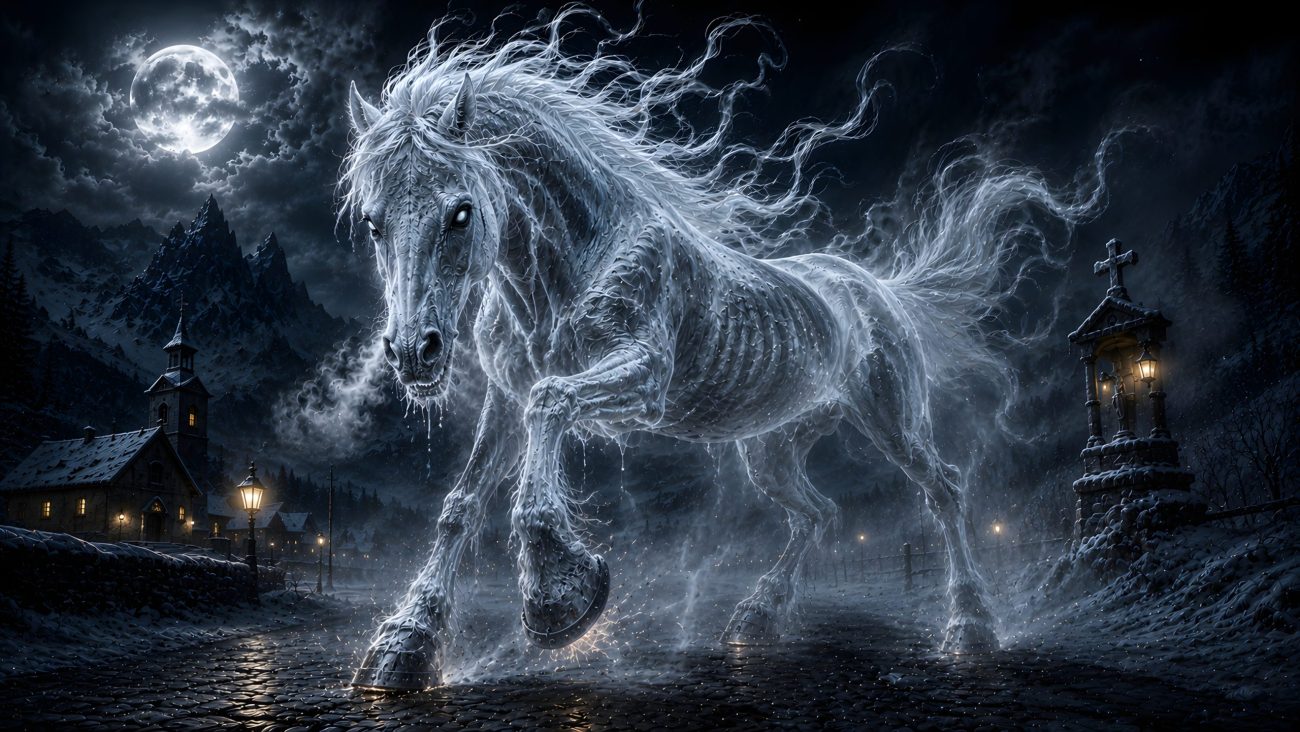
After death, the greedy farmer found no peace. His spirit was condemned to wander the Lochgasse in the form of a ghostly white horse, endlessly roaming the road where he had died. The phantom continued to appear for many years until a sacred cross was finally placed there, bringing the haunting to an end.


Sources

SAGEN.at. (n.d.). Der Lochgass-Schimmel. In SAGEN.at – Plattform für Kultur und Volkskunde. Retrieved May 23, 2026, from SAGEN.at


Wildmannli

Tradition / Region: Liechtenstein Mythology
Alternative names: Wild Men / Wild Folk
Category: Cave Dweller


The Myth

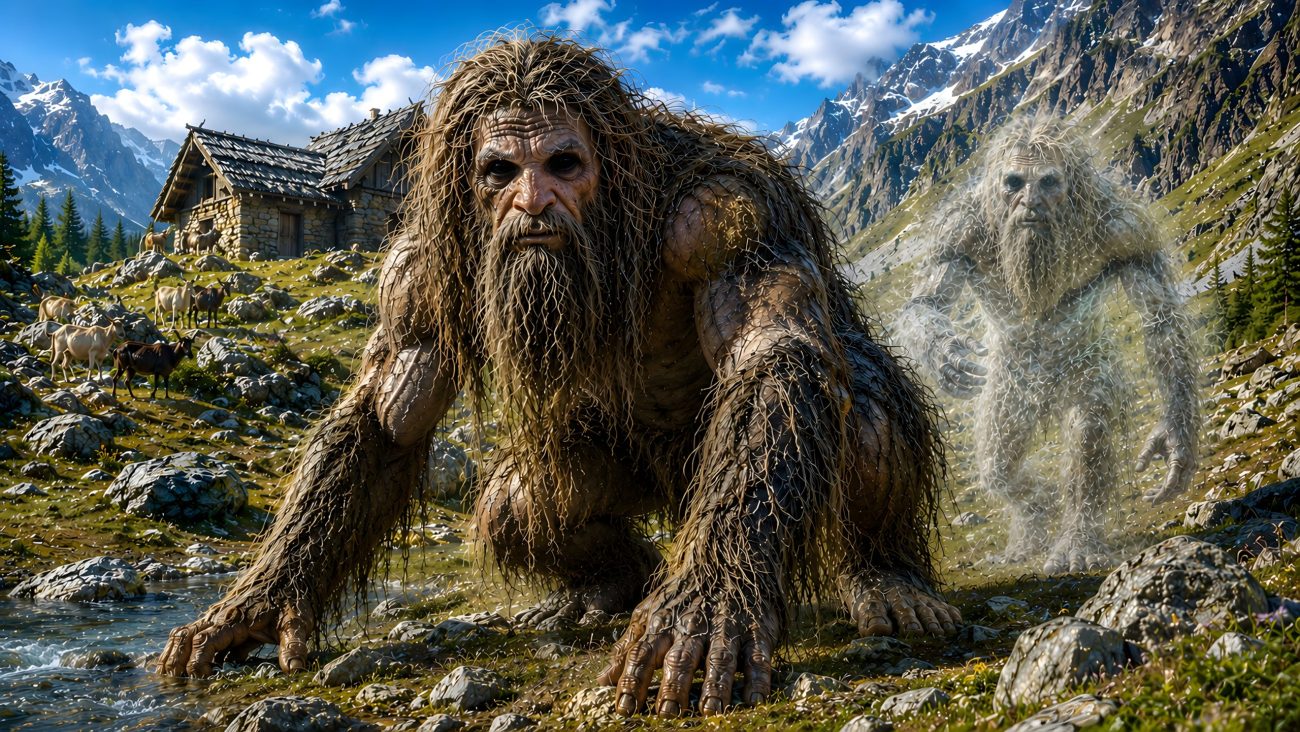
The Wildmannli were mysterious mountain beings said to live in caves high in the Alps around the Nenzing Valley and the alpine pastures of Seris. Their homes were stone caves called “Kasten,” hidden among the mountains and cliffs.

They appeared as small wild people completely covered in thick hair like bears. They wore no clothing and lived apart from ordinary humans in remote valleys and forests.

Despite their strange appearance, the Wildmannli often helped the mountain farmers. They came to the alpine meadows of Malbun and Steg and secretly cared for the cattle, feeding and watching over the animals while the herders remained below in the villages. Farmers trusted them so much that they sometimes stayed away from the high pastures for days, believing the Wildmannli would protect the livestock.

The Wildmannli, however, avoided violent weather, especially the warm alpine wind known as the Föhn. One autumn, while the wind raged high in the mountains, the farmers remained in the valley harvesting potatoes, assuming the Wildmannli would still tend the cattle. After several days, they finally climbed back into the Alps and found the animals nearly starving, because the Wildmannli had stayed hidden in their caves during the storm.

Another story tells how the Wildmannli summoned a midwife from Triesenberg to help a woman give birth deep in the mountains. After the child was born, the midwife was paid with an apron full of charcoal. Angry and disappointed, she threw away pieces of coal along the road home.

An invisible Wildmannli followed behind her, picking up the discarded coals and repeating: “The more you throw away, the less you will have.”

When the woman finally returned home, only a few pieces remained in her apron. But when she emptied them onto the stove, the charcoal had turned into shining silver coins. She rushed back to recover the discarded pieces, but they had vanished completely.

In later years, a Wildmannli was heard crying from the heights of the Ochsenkopf mountain: “Bitzi and Batzi have died!” After that night, the Wildmannli disappeared forever and were never seen again.

One cave near the mountain is still known as the Wildmannskirchle — the Little Church of the Wild Men.


Sources

SAGEN.at. (n.d.). Die Wildmannli. In SAGEN.at – Traditionelle Sagen. Retrieved May 23, 2026, from https://www.sagen.at/texte/sagen/liechtenstein/seger/wildmannli.html