Goninzowai

Tradition / Region: Japanese Mythology
Alternative names: Five-Men Shoal, Goninzowai
Category: Ghost


The Myth

Goninzowai is the name given to the restless spirits of five blind men who perished on a lonely shoal near Uno Port. Their ghosts are said to haunt the sea and can still be heard on dark and rainy nights.

According to tradition, five wealthy blind men arrived in Bingo Province while traveling to the capital to receive the rank of Kengyō, the highest title granted to blind people. A boatman offered to take them to Osaka and they gladly boarded his vessel.

As evening approached, the boatman told them that he needed to empty water from the ship and asked them to wait on a small rocky island. Trusting him, the five men disembarked and sat peacefully listening to the sound of the waves.

But the boat never returned.

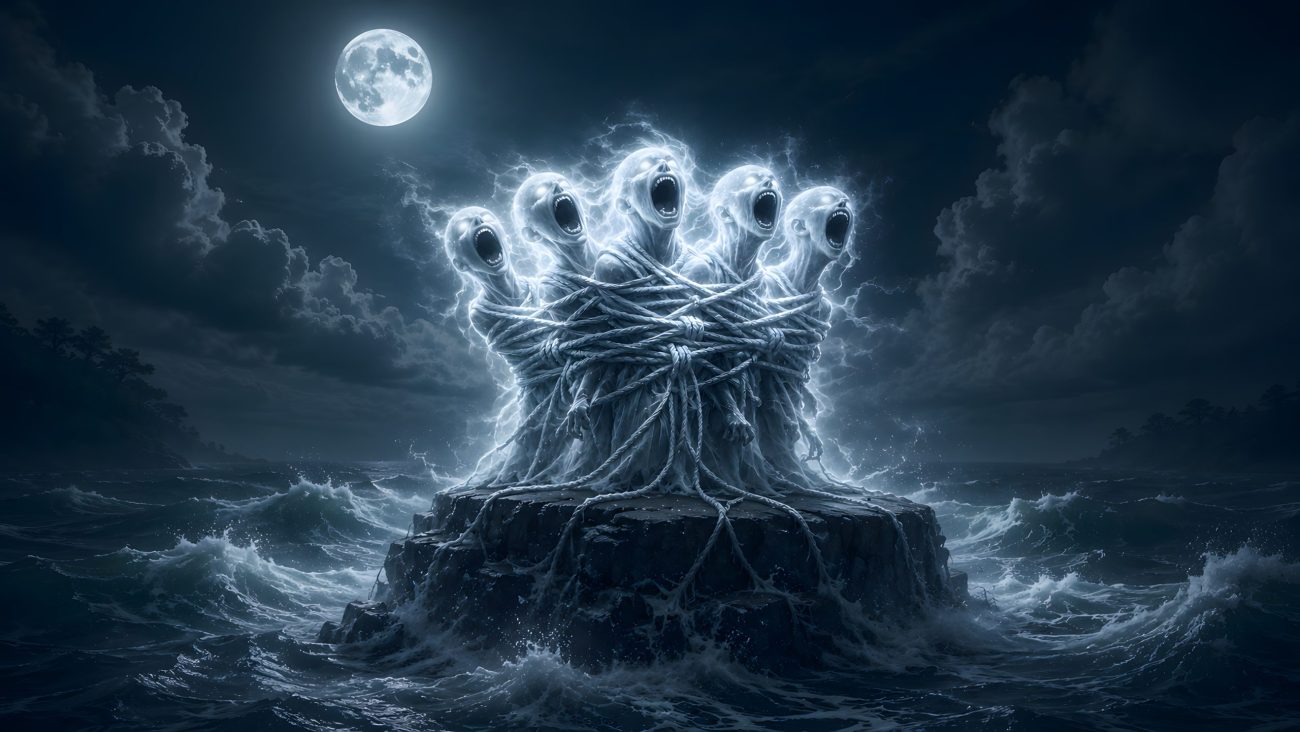
When they realized they had been abandoned, they called desperately for the boatman. No answer came. The tide slowly rose around them. Clinging to one another so that they would not be separated, the five men cried for help, but no vessel passed by. Eventually the sea swallowed them, and they drowned together.

From that time onward, fishermen avoided the area. On rainy nights voices, sobbing, and cries are said to rise from beneath the water. Strange balls of fire sometimes appear above the rocks, circling through the darkness.

The place became known as Goninzowai, meaning “Five-Men Shoal.” The name refers to the small reef that disappears beneath the sea at high tide. One story claims that a diver once descended there and found countless human bones piled among the submerged rocks.

Another version says that one of the blind men managed to wash ashore and was rescued by villagers. In gratitude and sorrow, he later traveled to Mount Kōya and erected a tomb for his four companions, praying for the peace of their souls.

Yet even today, the voices of the dead are said to remain beneath the waves, and the haunted shoal of Goninzowai is remembered as the resting place of the five blind men betrayed by the sea.


Sources

TYZ. (n.d.). Goninzowai [五人増悪]. In 新版TYZ 妖怪図鑑. Retrieved June 20, 2026, from https://tyz-yokai.blog.jp/archives/1010654266.html

Jealous Woman of the Ferry

Tradition / Region: Chinese Mythology
Alternative names: Jealous Woman’s Ferry
Category: Ghost


The Myth

The Jealous Woman is the ghost of Duan, the wife of Liu Boyu during the Jin Dynasty. She was infamous for her fierce jealousy and eventually became a dangerous spirit associated with a river crossing where she met her death.

One day, while reciting the Ode to the Goddess of the Luo River, Liu Boyu admired the beauty and grace of the water goddess and remarked that he would have no regrets if he had such a wife. Enraged by what she considered an insult, Duan exclaimed that if the goddess of the river was so wonderful, then she herself would become a water goddess after death. With those words, she threw herself into the river and drowned.

After her death, strange events began to occur at the ferry where she had perished. Beautiful women who attempted to cross the river while dressed elegantly or wearing fine makeup would suddenly encounter fierce winds and rough waters. Their boats were endangered by violent waves, as though some unseen force sought to harm them.

Ugly or plainly dressed women, however, crossed the river without trouble. Even if they wore their finest clothes, the waters remained calm and peaceful.

People believed that the spirit of Duan had become jealous of the beauty of other women and attacked them out of envy. To warn travelers, a stone monument was erected beside the crossing bearing the inscription “Jealous Woman’s Ferry.”

Thus the Jealous Woman was remembered as a vengeful water spirit whose envy survived even death, disturbing the river and punishing those whose beauty she could no longer bear.


Sources

Wikipedia contributors. (n.d.). 妒婦津. In 維基百科,自由的百科全書. Retrieved June 20, 2026, from https://zh.wikipedia.org/wiki/%E5%A6%92%E5%A6%87%E6%B4%A5


Edimmu

Tradition / Region: Mesopotamian Mythology, Iraqi Mythology
Alternative names: Edimmu, occasionally Ekimmu
Category: Ghost


The Myth

The Edimmu are restless spirits of the dead in ancient Mesopotamian belief. They are the ghosts of those who received no proper burial or whose funeral rites were neglected. Unable to find peace, they wander among the living, filled with bitterness and hunger.

These spirits were feared for their hostility toward mankind. They brought disease, misfortune, and madness, and were believed capable of influencing people toward criminal acts. Those who violated certain taboos, such as the prohibition against eating ox meat, were considered especially vulnerable to their attacks.

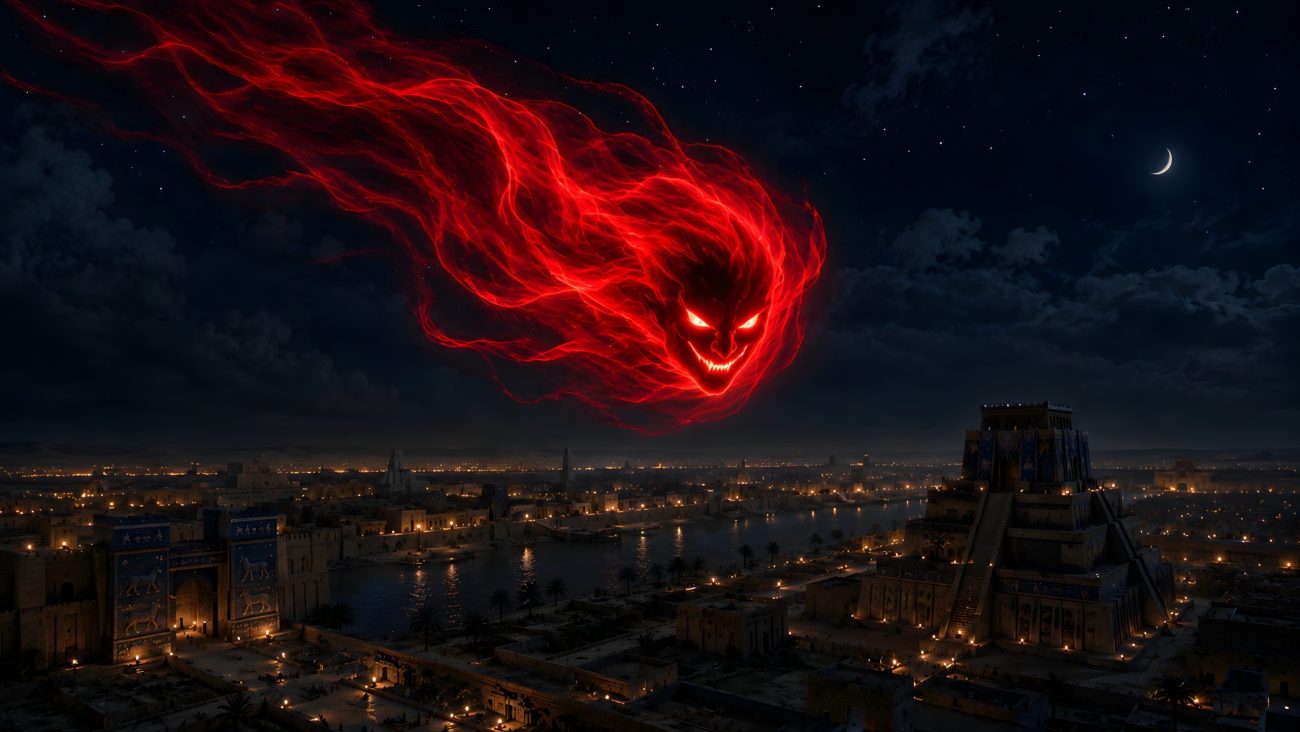
Edimmu were thought to be almost incorporeal beings, more like winds or invisible shadows than physical creatures. They drifted through the darkness and preyed upon the weak, the sleeping, and especially the young, drawing away their life force.

Although dangerous, the spirits could sometimes be appeased. Funeral meals, offerings, and libations made in honor of the dead might calm their anger and provide them with the sustenance they lacked in the afterlife.

Unlike many monsters that dwell in distant places, the Edimmu were believed to arise from neglected ancestors and forgotten dead. Invisible and insubstantial, they haunted the world like hungry winds, forever seeking the peace denied to them in death.


Sources

Wikipedia contributors. (n.d.). Edimmu. In Wikipedia. Retrieved June 20, 2026, from https://en.wikipedia.org/wiki/Edimmu


Baihuoni

Tradition / Region: Chinese Mythology
Alternative names: Baihuoni
Category: Ghost


The Myth

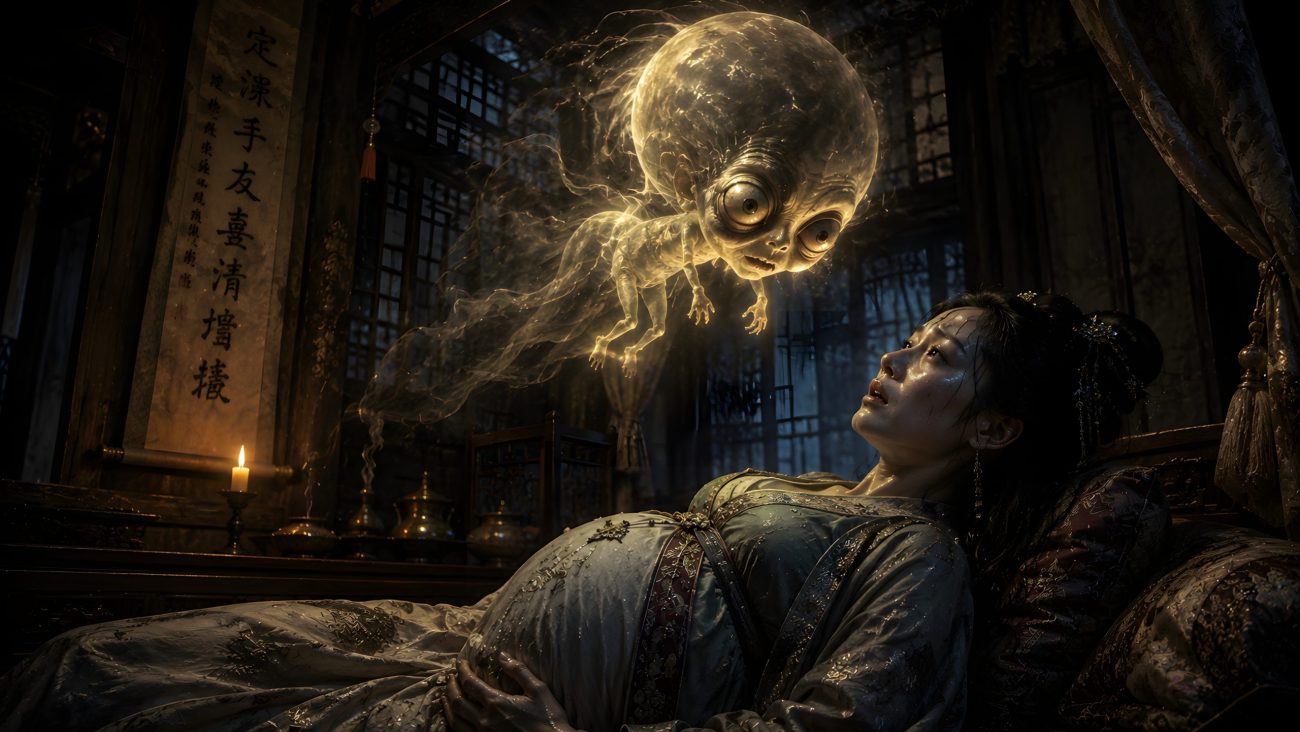
Baihuoni is a feared ghost in the traditions of the Lisu people of Yunnan. It is especially associated with illness and is believed to prey upon the most vulnerable members of the community.

According to tradition, Baihuoni causes sickness in children younger than eight years old and in pregnant women. Because of this, mothers and young children are considered particularly vulnerable to its influence.

To protect families from the spirit, people in the Bijiang region traditionally make offerings to Baihuoni. Pigs or chickens are sacrificed in order to appease the ghost and prevent it from bringing disease upon pregnant women and children.

Thus, Baihuoni is remembered as a dangerous spirit whose presence is linked to sickness, and whose wrath must be calmed through ritual offerings to safeguard mothers and the young.


Sources

Wikipedia contributors. (n.d.). 摆货尼. In 维基百科,自由的百科全书. Retrieved June 20, 2026, from https://zh.wikipedia.org/wiki/%E6%91%86%E8%B4%A7%E5%B0%BC


Ubume

Tradition / Region: Japanese Mythology
Alternative names: Ubume, Ubugame, Guhuo Bird (姑獲鳥)
Category: Ghost, Bird


The Myth

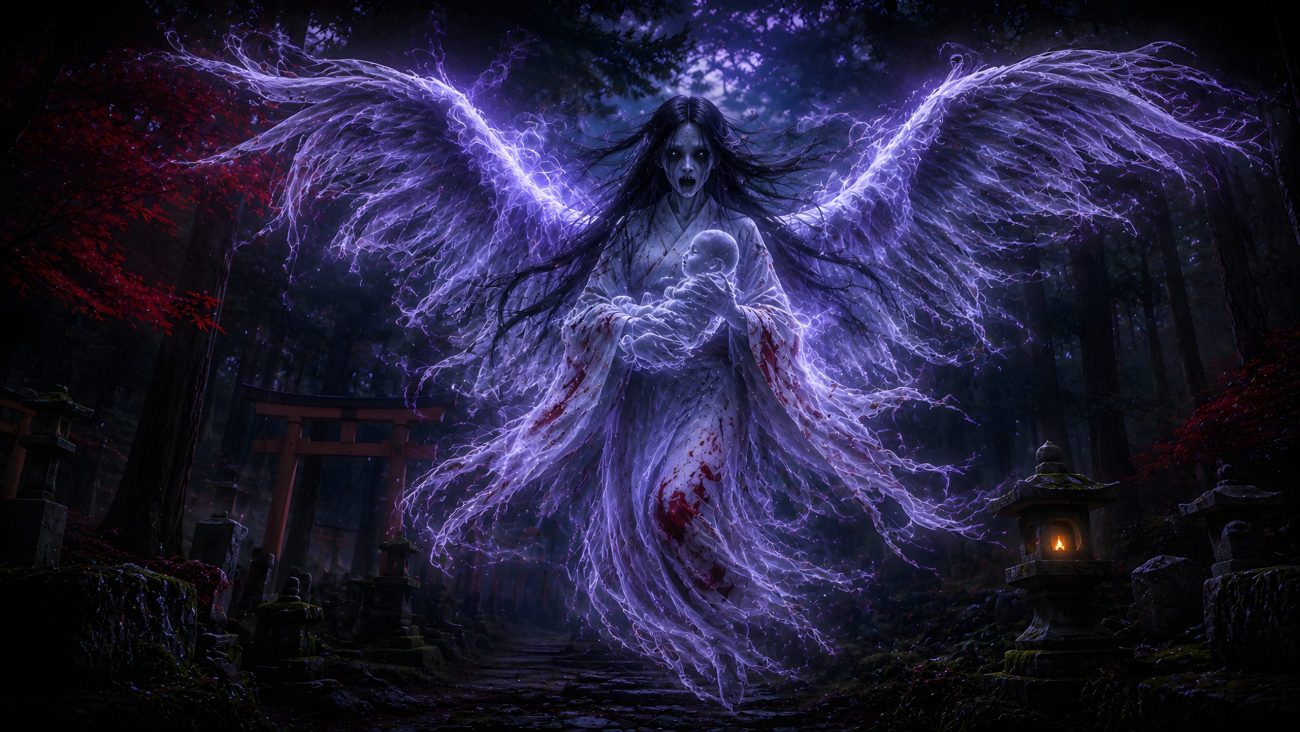
The Ubume is the restless spirit of a woman who died during childbirth. She appears at night along lonely roads, bridges, and riverbanks, carrying an infant in her arms. Dressed in blood-stained clothing, she weeps and asks passersby to hold her child for a moment while she fixes her hair or prays for salvation.

Anyone who accepts the baby soon discovers that it grows heavier and heavier. In some tales, the child eventually transforms into a stone or a bundle wrapped around a straw hammer. Other stories say that a person who fulfills the Ubume’s request and faithfully carries the child receives extraordinary physical strength as a reward. In Akita Prefecture, this supernatural power was known as Obōjikara.

The Ubume is one of Japan’s oldest ghostly beings and was already known during the time when the Konjaku Monogatari-shū was compiled. During the Edo period, it became closely associated with the Chinese Gu Huo Bird, since both were believed to originate from women who had died while pregnant or giving birth. Because of this connection, the two creatures gradually became confused with one another.

Most depictions portray the Ubume as a sorrowful woman holding a baby while wearing blood-soaked garments. Some illustrations, however, give her bird-like features, with wing-shaped arms wrapped protectively around the child.

Though feared, the Ubume is not considered a malicious spirit. She is remembered as a tragic mother unable to abandon her child, forever wandering the night and seeking someone willing to carry the burden she herself could no longer bear.


Sources

TYZ. (n.d.). Ubume [産女]. In 新版TYZ 妖怪図鑑. Retrieved June 20, 2026, from https://tyz-yokai.blog.jp/archives/1010652594.html


Heathen Maiden

Tradition / Region: Slovenian Mythology
Alternative names: Ajdovska deklica, Pagan Maiden
Category: Nymph


The Myth

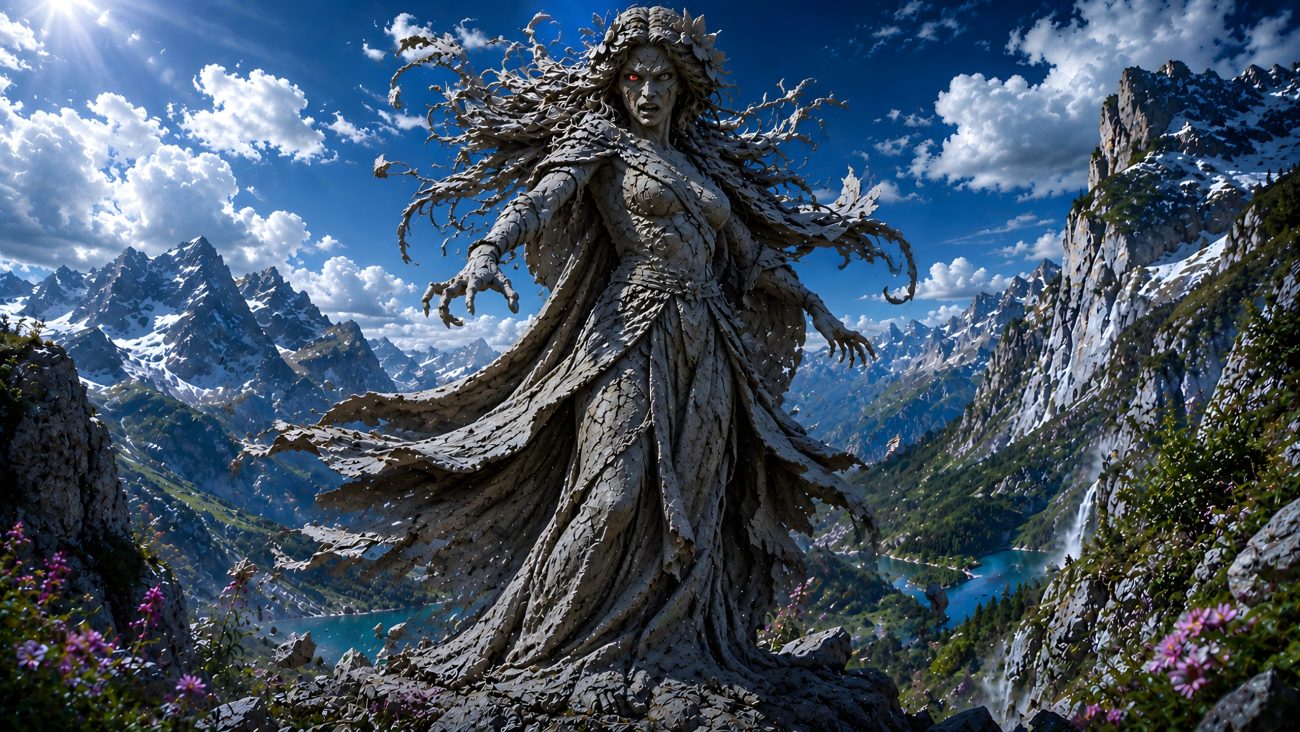
High upon the northern face of Mount Prisojnik in the Julian Alps rests the image of the Heathen Maiden, a giant stone face looking out over the mountains near Kranjska Gora. According to tradition, the face belongs to a mountain nymph who once lived among the peaks.

The nymph possessed the gift of prophecy. One day she foretold that a newborn child would eventually bring about the death of Goldenhorn, the legendary white chamois with golden horns who guarded the treasures of the mountains.

The other mountain nymphs were horrified by her prediction. Angered by what she had revealed, they punished her for speaking of Goldenhorn’s fate.

As punishment, the prophetic maiden was transformed into stone. Her face remained fixed upon the mountain, where it can still be seen gazing over the valleys below.

Thus the Heathen Maiden endures eternally in the cliffs of Mount Prisojnik, a silent reminder of the prophecy that foretold the downfall of Goldenhorn.


Sources

Wikipedia contributors. (n.d.). Heathen Maiden. In Wikipedia. Retrieved June 16, 2026, from https://en.wikipedia.org/wiki/Heathen_Maiden


The Wild Hunt of Gottschee

Tradition / Region: Slovenia (Gottschee / Kočevje)
Alternative names: Bilde Jochd, Bildai Jogkd
Category: Ghost


The Myth

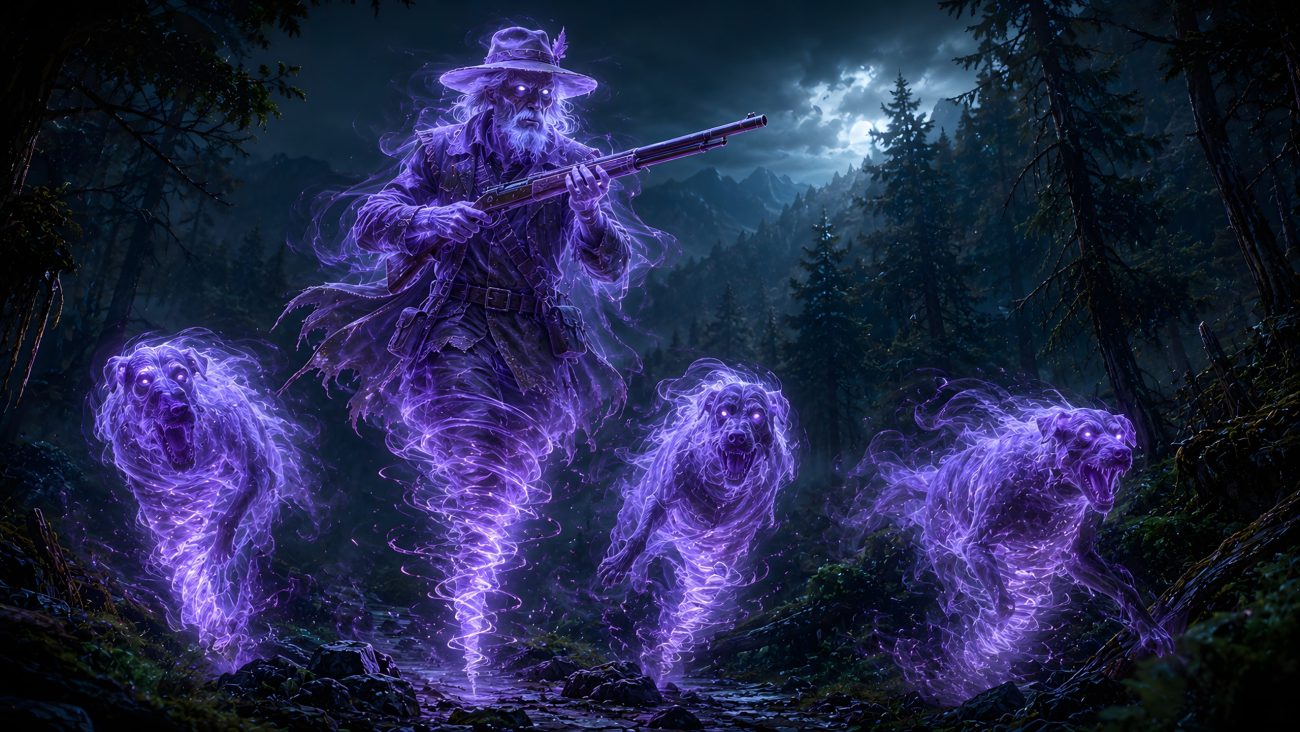
The Wild Hunt of Gottschee is a terrifying phantom procession said to roam the forests and fields during the night. Long before it is seen, people hear its approach: the howling of dogs, the cries of strange animals, and the sound of distant gunfire. Witnesses speak of bears, hares, and foxes fleeing ahead of the hunt, followed by packs of hounds and finally by the ghostly hunters themselves.

The Hunt moves like a whirlwind across the countryside. Those unfortunate enough to stand in its path risk being torn apart or killed. To survive an encounter, people traditionally crossed their hands or lay down inside wagon tracks until the terrible procession had passed.

Stories tell of a man returning home late at night with wine loaded on his horse. His relatives warned him not to travel, but he ignored their advice and set out. Near midnight, villagers later found his horse standing alone, still carrying the wine but missing its tail. Searching the forest, they discovered the man lying dead upon the road, his face blackened and the horse’s severed tail clenched tightly in his hand. It was said that the Wild Hunt had killed him. A cross was later erected at the place where his body was found.

Another tradition explains the nature of the phantom riders. They were once hunters who preferred chasing game to attending Mass and hunted even on Sundays while church services were being held. After death, they were condemned to ride forever through the darkness, accompanied by their hounds and the sounds of the chase.

Crosses were often raised at places where the Wild Hunt was known to pass, and travelers avoided lonely roads at night, fearing the ghostly hunters whose punishment would never end.


Sources

SAGEN.at. (n.d.). Die Wilde Jagd in der Gottschee. In SAGEN.at – Traditionelle Sagen. Retrieved June 16, 2026, from https://www.sagen.at/texte/sagen/slowenien/wildejagd.html


Kulpa Lindworm

Tradition / Region: Slovenia (Kulpa Valley)
Alternative names: Lintwurm
Category: Dragon


The Myth

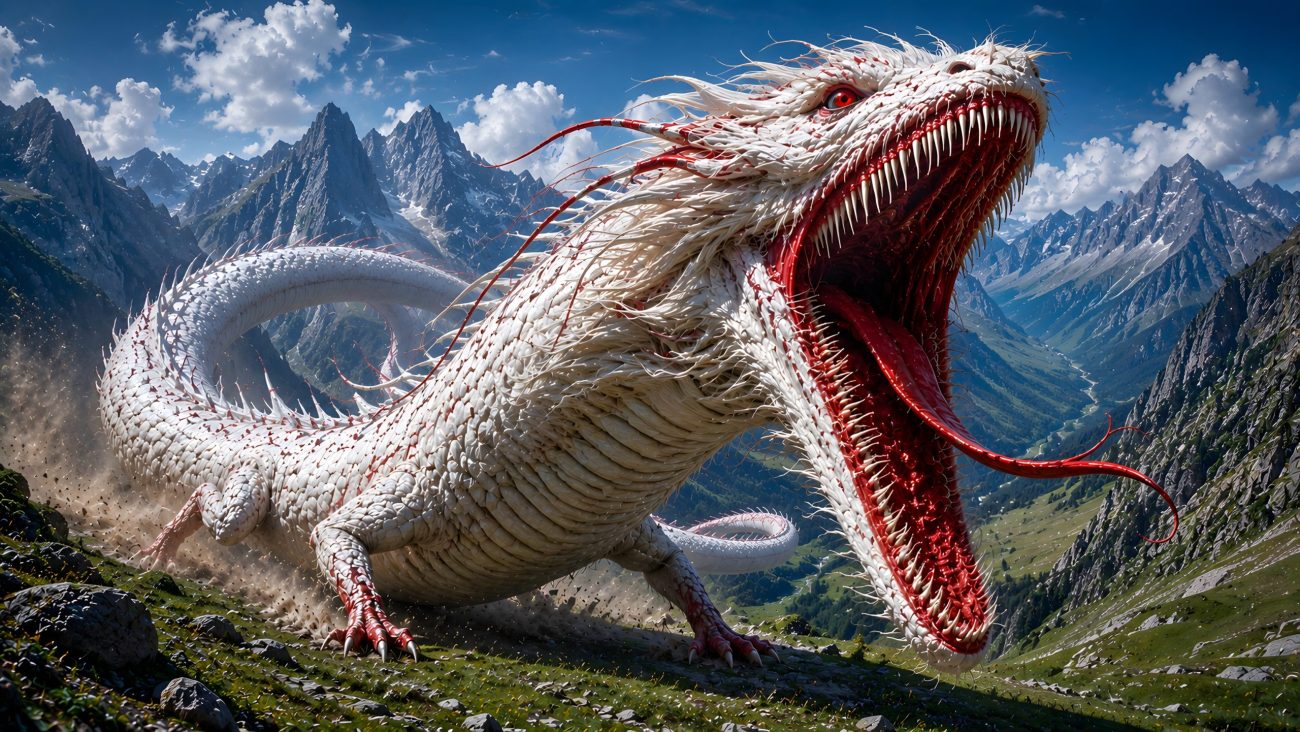
The Kulpa Lindworm was a fearsome dragon that lived in a deep hole in the valley of the Kulpa River. From its lair, the creature brought terror to the surrounding countryside and was blamed for many disasters.

The monstrous serpent preyed upon livestock, devouring sheep and cattle and causing great hardship to the local people. Its hunger grew so terrible that one day it seized a child directly from its cradle and swallowed it.

Unable to endure the creature’s attacks any longer, the people resolved to seek divine protection. They built a church above the entrance to the lindworm’s hole and dedicated it to Saint George, the dragon-slaying saint.

From that time onward, the terrible scourge ceased, and the people of the valley were freed from the fear and destruction caused by the monstrous Lindworm of the Kulpa.


Sources

SAGEN.at. (n.d.). Die Kulpafrau. In SAGEN.at – Traditionelle Sagen. Retrieved June 16, 2026, from https://www.sagen.at/texte/sagen/slowenien/kulpa.html


Gul-yabani

Tradition / Region: Turkish, Azerbaijani, Kyrgyz and Tajik folklore
Alternative names: Gul, Ghul, Desert Demon
Category: Demon, Zombie


The Myth

The Gul-yabani is a fearsome spirit of the wild places, known throughout parts of Central Asia and the Turkic world. Its name means “Desert Demon,” and it is regarded as a dangerous being that inhabits lonely steppes, cemeteries, deserts, forests, and remote mountains. Travelers who encounter it after sunset are said to face terror or death.

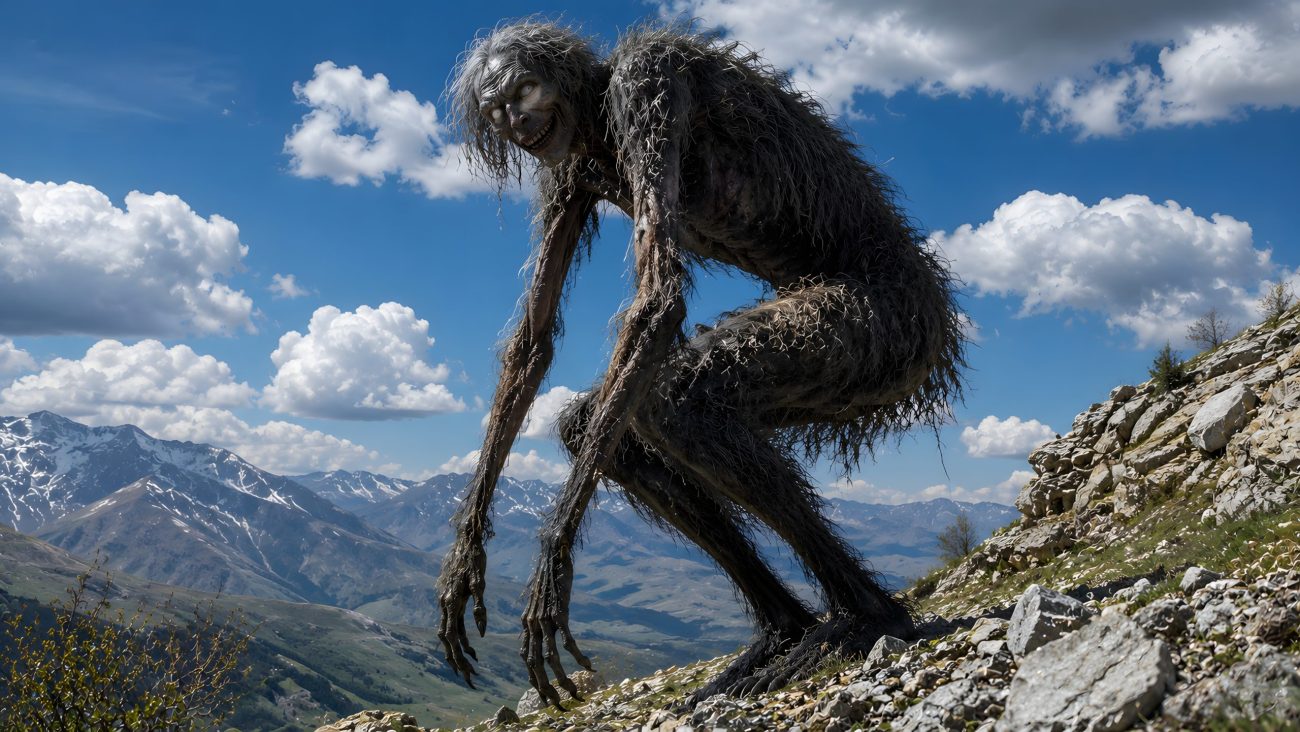
The creature is usually described as gigantic, standing three to four meters tall and covered in gray or black fur. It possesses an overpowering animal-like stench, backward-facing feet or clawed limbs, and often appears in the form of an enormous shepherd or hairy man. Its arrival is accompanied by shrill whistling in the darkness.

Among Turks and Azerbaijanis, Gul-yabani wanders cemeteries and desolate places at night. It frightens travelers and is especially known for riding horses, tangling their manes before vanishing into the darkness. In some parts of western Azerbaijan it was even identified with harmful water spirits. It was believed that if a Gul-yabani could be captured and pierced with a needle, it would become bound to its captor and perform work for them, although often doing the opposite of what was intended.

The Kyrgyz of the Eastern Pamirs and the Tajiks believed the creature lived in deserts and mountain forests. Although monstrous in appearance, it speaks with a human voice and often challenges strong men to wrestling matches. Only exceptionally powerful individuals are capable of fighting it as an equal.

Stories tell of a man near Tajikabad who encountered a giant shepherd after sunset. The two wrestled throughout the night, neither able to defeat the other. When dawn arrived, the stranger was revealed to be covered in wool. The creature gifted the man a piece of its fur and promised friendship, telling him that burning the hair would summon it. A mullah later explained that the mysterious shepherd had been a Gul-yabani and warned that revealing the encounter could bring death.

The Gul-yabani is said to understand every language, though it communicates through thoughts rather than spoken words. Those who establish contact with it may gain unusual powers, and only extremely pious mullahs are believed capable of seeing the creature clearly.

Hunters seldom encounter Gul-yabani because the monster greatly fears gunfire and can smell gunpowder from many kilometers away. One story tells of a police chief resting beside his car in the mountains when a tremendous force began shaking the vehicle. Looking outside, he saw an enormous hairy being devouring meat from a basin. The creature pressed its giant hands against the rear window of the car before fleeing when the officer fired his pistol. Two massive handprints were said to remain on the glass.

Mysterious, foul-smelling, and immensely powerful, the Gul-yabani is remembered as one of the great monsters of Turkic folklore—a giant hairy demon that roams the lonely wilderness and appears only when night falls.


Sources

Bestiary.us. (n.d.). Gjul-Jabani. In New Bestiary: Encyclopedia of Imaginary Beings. Retrieved June 16, 2026, from https://www.bestiary.us/gjul-jabani


Çahık

Tradition / Region: Turkic mythology
Alternative names: Alban, Chahik, Ozor, Körmös, Körmöz, Körmös Spirit
Category: Ghost


The Myth

The Çahık is one of the many forms of the Kormos spirits found in Turkic mythology. These beings are wandering souls and supernatural entities associated with the earth, the heavens, and the underworld. Some are protectors, some are servants of darkness, and others exist in a state of endless misery between the two.

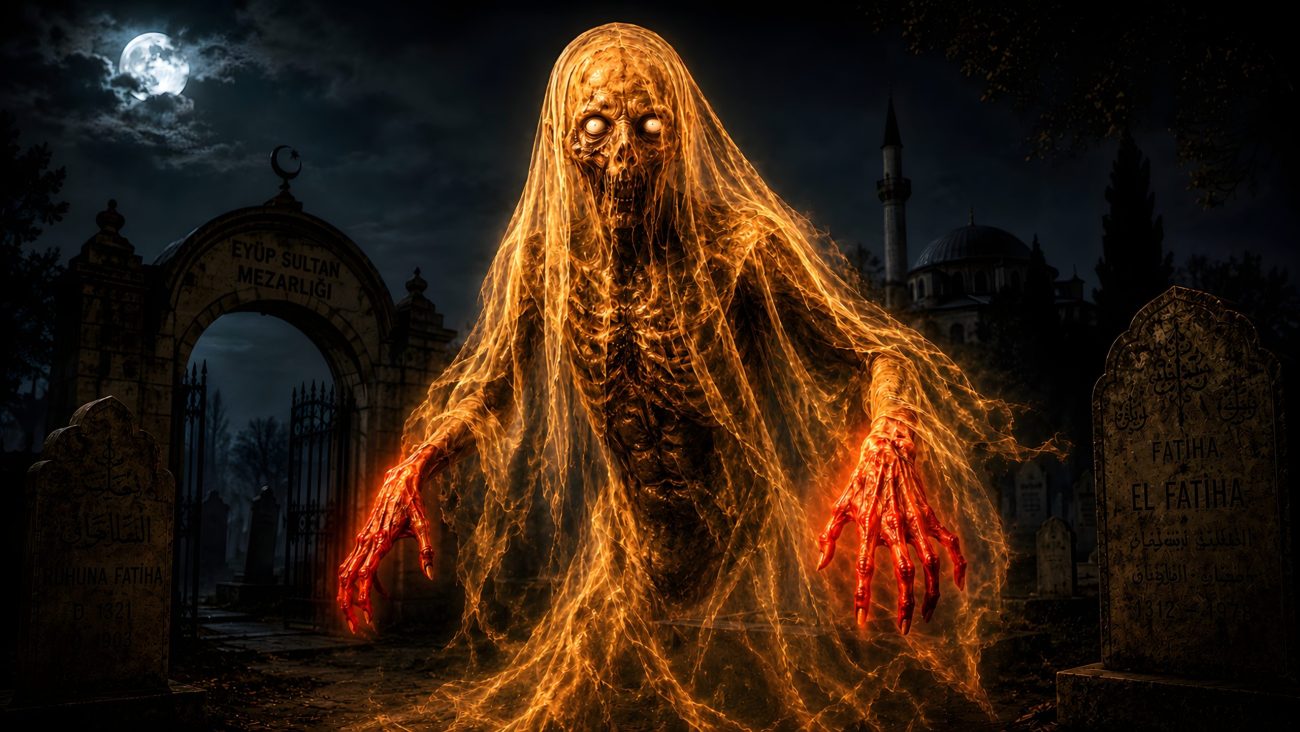
Çahıks are often described as the souls of the damned. They are shape-shifters capable of taking different forms, making them difficult to recognize. Their hands are stained with blood, their eyes are dry and lifeless, and their words themselves are deadly. Merely listening to their speech is considered dangerous.

Kormos spirits are ruled by Körmös Khan and are divided into three kinds. Arug Körmös are benevolent spirits under the command of Ülgen, helping righteous people and maintaining balance in the world. Caman Körmös are demonic servants of Erlik who dwell in Tamag, the underworld, where they torment and abduct humans. Between these two are the Kal Körmös, wandering ghosts neither wholly good nor evil, condemned to roam the earth in sorrow and suffering.

A soul may become a Kormos after death. The spirits of ancestors are known as Ozor, while the souls of those who died violently or by suicide are called Alban. Because of this connection with the dead, Kormoses are often linked to ancestral spirits and ghosts.

Çahıks and other Kormos spirits are believed to appear most often at sunrise and sunset. These moments are regarded as dangerous, and people are traditionally warned not to remain outside or awake during these hours. The spirits are said to seize human souls and carry them away.

Although demonic Kormoses serve Erlik in the underworld, they are not necessarily damned forever. A soul transformed into one of these spirits may eventually escape torment and ascend to Uçmag, the heavenly realm, if the good within it proves stronger than its evil.

Among the wandering spirits of Turkic belief, the Çahık is one of the most feared—a shape-shifting soul with bloody hands and deadly words, forever caught between damnation, suffering, and the possibility of redemption.


Sources

Wikipedia contributors. (n.d.). Kormos. In Wikipedia. Retrieved June 16, 2026, from https://en.wikipedia.org/wiki/Kormos