Thayé

Tradition / Region: Myanmar Mythology
Alternative names: Tasei
Category: Ghost


The Myth

The Thayé are the spirits of wicked people who, after death, are condemned to wander as disembodied ghosts. Feared throughout Myanmar, they are believed to roam both towns and countryside, bringing misfortune and disease to the living.

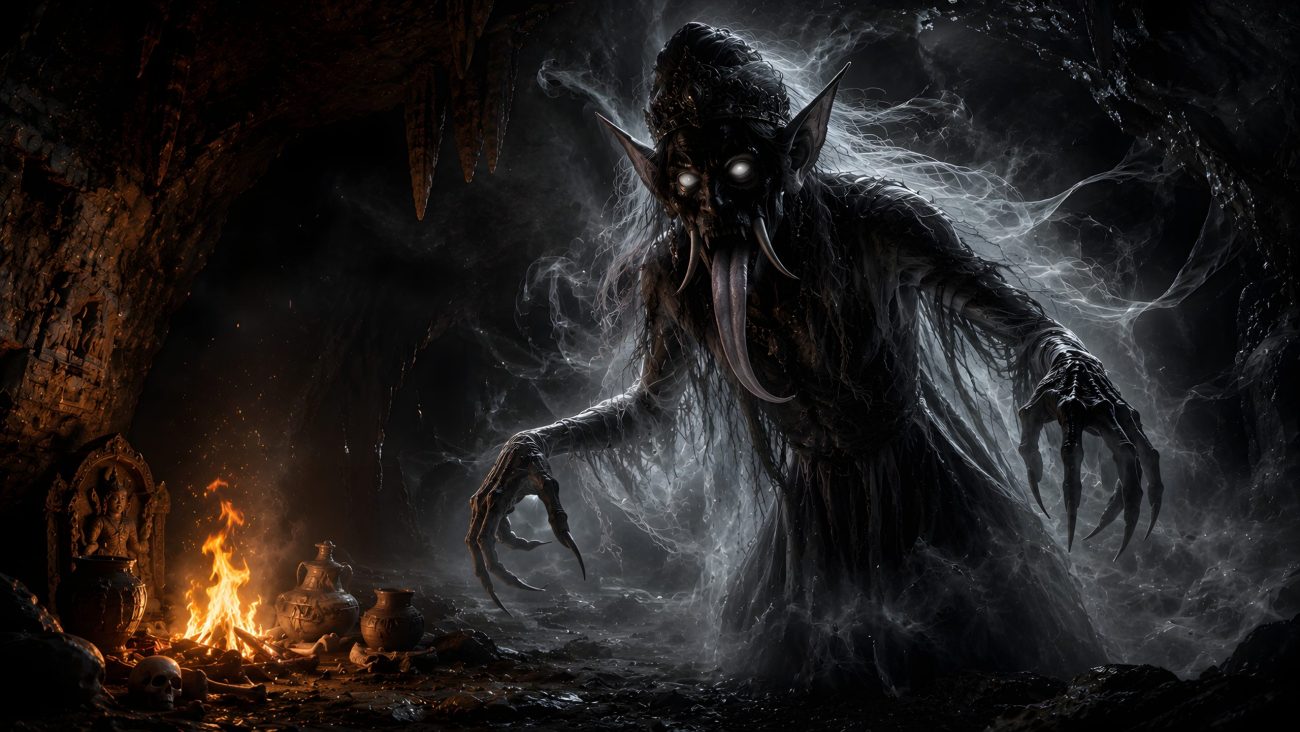
Thayé are often described as terrifying figures. They appear as tall, dark beings with enormous ears, long tongues, and tusk-like teeth. However, no two are necessarily alike, and they are said to possess many forms. Some are slender male ghosts, while others appear as strange female spirits, including bloated pregnant ghosts with fat white bodies and oversized ears.

These spirits are most active around noon and during the night. In rural areas, people traditionally blamed them for outbreaks of sickness and epidemics, believing that Thayé spread diseases such as cholera and smallpox among villages.

Because of their varied appearances, travelers could never be certain what form a Thayé might assume. Some appeared monstrous and unmistakable, while others took more human shapes, making them difficult to recognize until it was too late.

Thus, the Thayé are remembered as the restless ghosts of evil people, condemned after death to wander the world and bring suffering upon the living.


Sources

Wikipedia contributors. (n.d.). Thayé. In Wikipedia. Retrieved June 20, 2026, from https://en.wikipedia.org/wiki/Thay%C3%A9

Lau

Tradition / Region: Indian Mythology, Myanmar Mythology
Alternative names: Chauga (South Andaman languages), Inene (among the Onge)
Category: Ghost


The Myth

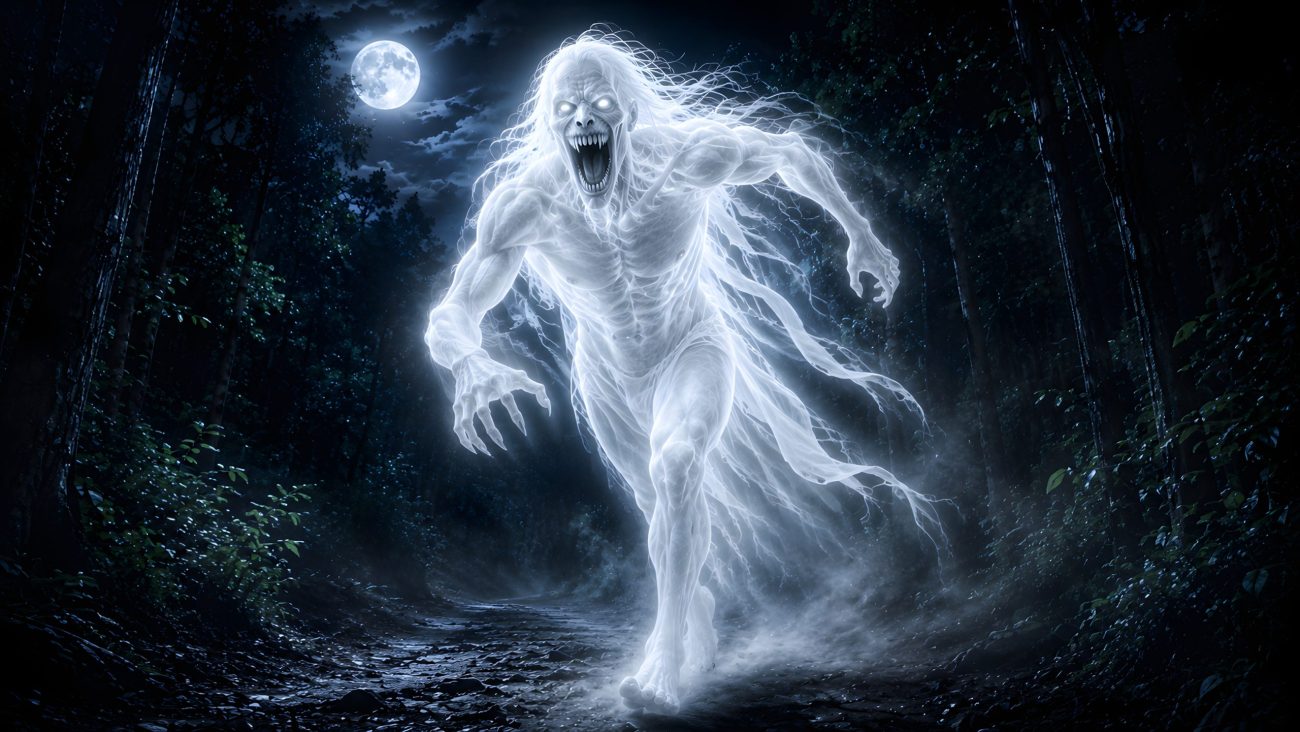
The Lau are the spirits of the dead in the traditions of the indigenous peoples of the Andaman Islands. They are regarded as invisible beings or as pale, white-skinned figures with frightening appearances. Rather than referring to a single creature, the name Lau serves as a general term for the ghosts of the deceased.

Among the peoples of South Andaman, these spirits were also known as Chauga. They were believed to be uncanny beings whose appearance differed greatly from that of ordinary humans. Their strange pale complexion and frightening nature made them objects of fear and caution.

The terms Lau and Chauga were also used to describe foreigners such as mainland Indians, Europeans, and other outsiders. Because these strangers possessed lighter skin than the islanders, they were sometimes viewed as resembling the ghostly dead. Black Africans, however, were considered entirely human in appearance and were not included in this category.

Similarly, among the Onge people, the word Inene referred to pale-skinned people and was also used for the spirits of warriors who had died natural deaths.

Thus, the Lau are remembered as the ghostly dead of the Andaman Islands—terrible pale spirits whose appearance was so distinctive that even unfamiliar foreigners were sometimes associated with them.


Sources

Bestiary.us. (n.d.). Lau. In New Bestiary: Encyclopedia of Imaginary Beings. Retrieved June 20, 2026, from https://www.bestiary.us/lau


Grey Lady of St. George’s Caye

Tradition / Region: Belize Mythology
Alternative names: The Grey Lady Ghost
Category: Ghost


The Myth

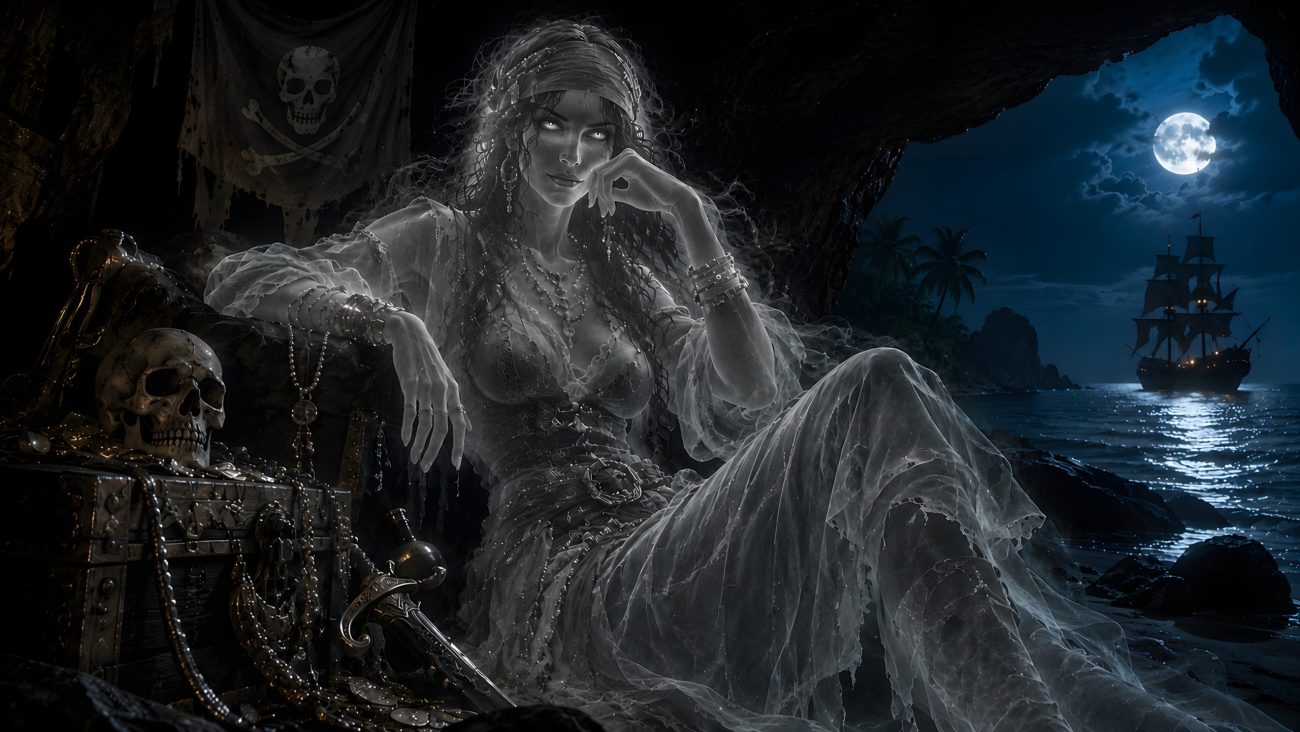
The Grey Lady is one of the most famous ghosts of Belize and is said to haunt St. George’s Caye. Clad in grey and often appearing near the sea or during stormy weather, she wanders the island searching for something lost in life.

Several traditions tell of her origin. One story claims she was the lover of the notorious Captain Morgan, cast overboard and forced to walk the plank. Unable to rest, she still roams the island and coastline searching for her lost beloved.

Another version describes her as a headless woman whose husband disappeared during a violent storm at sea. Night after night, she wanders St. George’s Caye in search of the sailor who never returned.

Others speak of a young girl who perished during a devastating hurricane. Her spirit remains on the island, appearing as a sorrowful figure dressed in grey. Unlike some versions of the ghost, this young apparition is considered harmless and gentle.

The Grey Lady is most often encountered during stormy nights. Islanders traditionally advise people never to speak badly of her and to remain indoors when the weather turns violent, for some manifestations of the Grey Lady are believed to be far less friendly than others.

Stories of the Grey Lady have circulated for generations, and archaeological investigations on St. George’s Caye have uncovered evidence suggesting that real tragedies lie behind the legends. Whether she is a betrayed lover, a grieving wife, or the spirit of a lost child, the Grey Lady remains one of Belize’s most enduring and mysterious ghosts, forever wandering the shores of St. George’s Caye beneath the sound of wind and waves.


Sources

Belize Dive Haven. (2024, January 31). Legends and Folklore of Belize. Retrieved June 20, 2026, from https://belizedivehaven.com/legends-and-folklore-of-belize/


Hupia

Tradition / Region: Taíno culture, Cuban Mythology
Alternative names: Opia, Opi’a, Op’a, Operi’to
Category: Ghost


The Myth

The Hupia is the spirit of a person who has passed from the world of the living. In Taíno belief, the spirit of the living was known as the goeiza, but after death it became a Hupia and journeyed to a distant earthly paradise called Coaybay.

Unlike the spirits of the living, Hupias possessed no fixed form. They could assume many appearances and often took the shape of ordinary people or even deceased relatives. However, one feature always revealed their true nature: a Hupia in human form had no navel.

These spirits were closely associated with bats. They were believed to hide or sleep during the daytime and emerge only at night. Under the cover of darkness, they wandered the world and fed upon guava fruits.

Some traditions describe Hupias as faceless beings, while others portray them as nearly indistinguishable from ordinary humans except for the absence of the navel. Because they could mimic the appearance of loved ones, encounters with them could be unsettling and deceptive.

For the Taíno, death itself was not viewed as an end but as a transformation. The spirit did not cease to exist but continued its existence as a Hupia, dwelling in Coaybay and moving between the worlds of the living and the dead beneath the cover of night.


Sources

Wikipedia contributors. (n.d.). Hupia. In Wikipedia. Retrieved June 20, 2026, from https://en.wikipedia.org/wiki/Hupia


Amadlozi

Tradition / Region: Nguni peoples of South African Mythology
Alternative names: Ancestors, Ancestral Spirits
Category: Ghost


The Myth

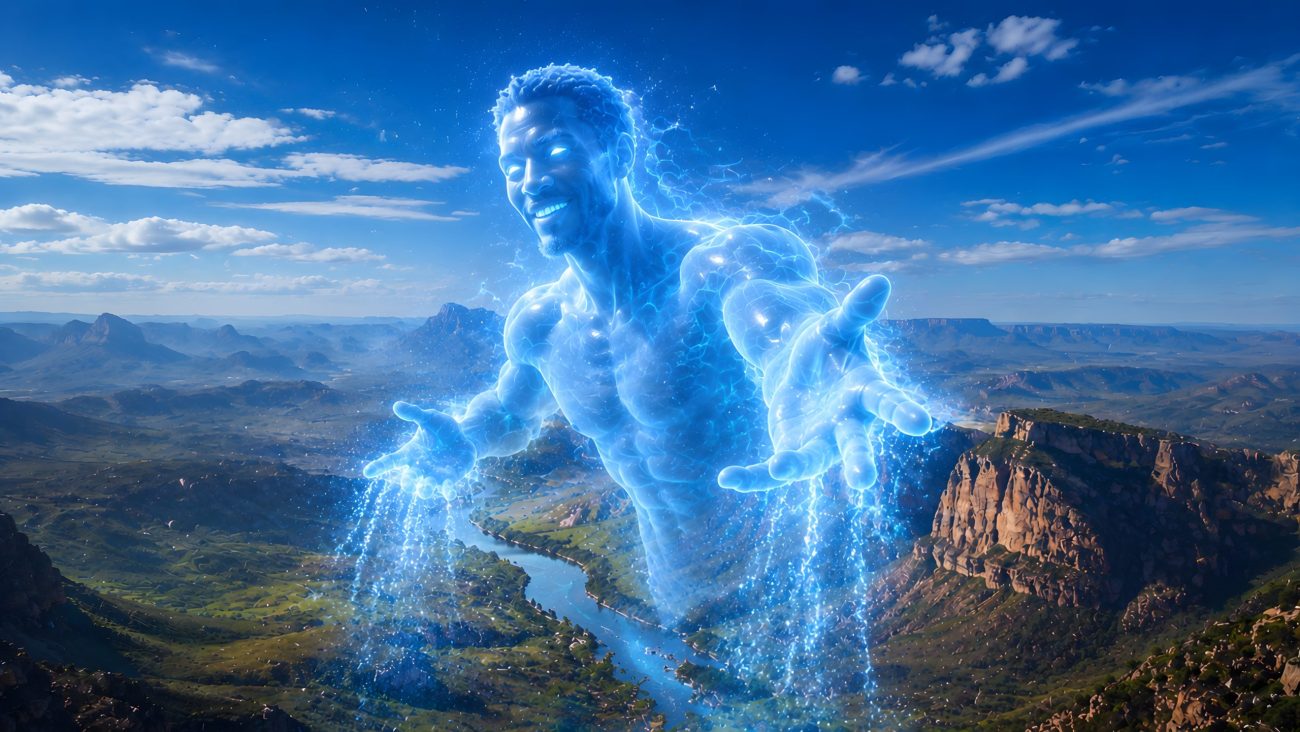
The Amadlozi are the ancestral spirits of the Nguni peoples and are regarded as powerful spiritual beings who remain closely connected to their descendants. They are believed to watch over the living, offering protection, guidance, and assistance when properly honored and remembered.

The Amadlozi are associated with all aspects of life, including fertility, health, fortune, misfortune, birth, and death. They are believed to direct their descendants toward lives of purpose, morality, and integrity, helping to maintain harmony between the spiritual and physical worlds.

Above the Amadlozi stand higher spiritual beings known as iThonga, who are regarded as the primary guardians of the umsamo, the sacred physical and spiritual center of the household.

Among the Nguni, life is considered incomplete without honoring the ancestors. Forgetting or neglecting them is believed to bring imbalance and misfortune, while gratitude and respect ensure their continued blessings.

People communicate with the Amadlozi through prayers, rituals, and offerings. Sacrifices of cattle, goats, or chickens are performed to appease them and seek their favor. Such acts are viewed not as worship of the dead, but as maintaining the bond between generations.

The Amadlozi are therefore remembered as life-giving ancestral spirits who continue to care for their descendants long after death, preserving the connection between the living and those who came before.


Sources

Wikipedia contributors. (n.d.). Amadlozi. In Wikipedia. Retrieved June 20, 2026, from https://en.wikipedia.org/wiki/Amadlozi


Madam Koi Koi

Tradition / Region: Nigerian Mythology, Ghana Mythology
Alternative names: Lady Koi Koi, Madam Moke
Category: Ghost


The Myth

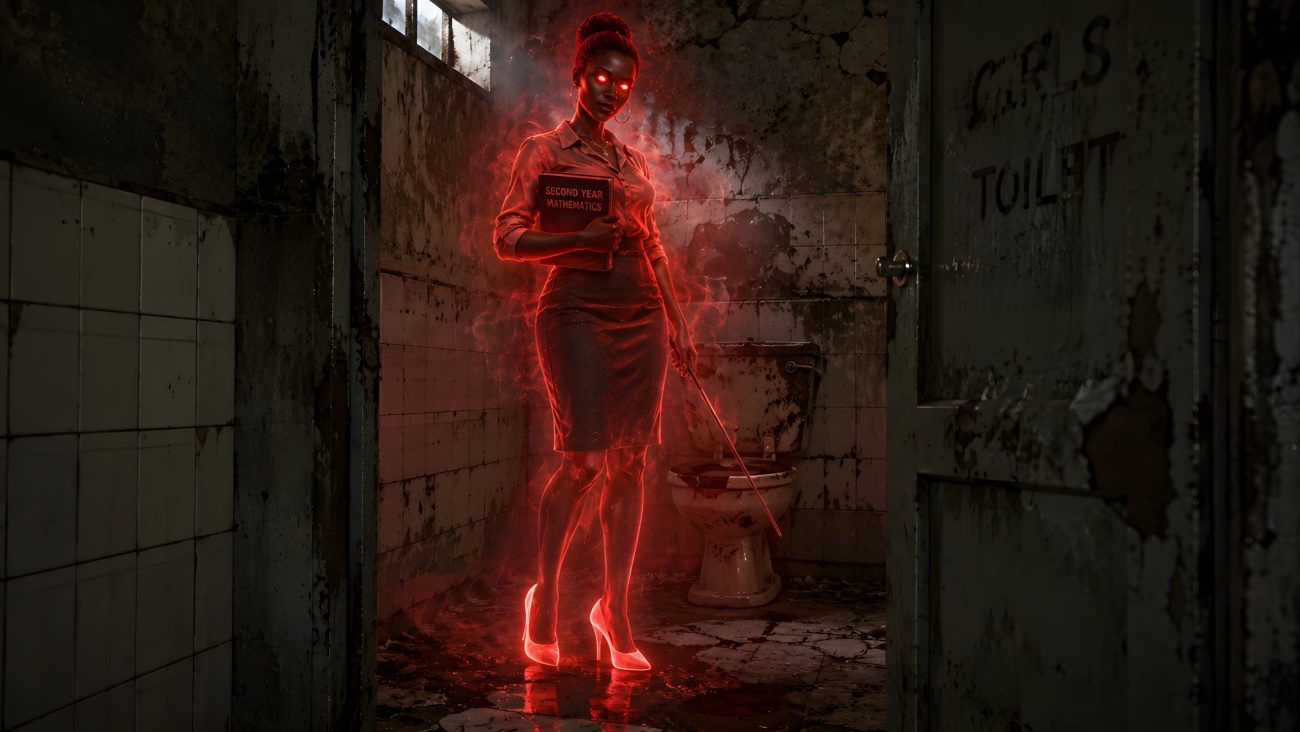
Madam Koi Koi is one of the most famous ghosts in West African folklore and is especially feared in boarding schools. She is said to haunt dormitories, hallways, toilets, and empty school buildings after dark. In day schools, she is believed to appear to students who arrive too early or remain too late.

She is usually described as a beautiful and fashionable woman wearing bright red high heels. Sometimes she wears only a single heel. Her approach is announced by the distinctive sound of her shoes striking the floor—koi, koi, koi—from which she receives her name.

According to the most common stories, she was once a secondary school teacher renowned for her beauty but feared for her cruelty. She harshly punished students and often beat them without reason. In one version, she was dismissed after injuring a student and died in a traffic accident while returning home. Before dying, she swore revenge against the school and its students.

Another tradition says that she was so sadistic that her students eventually murdered her, hiding her body outside the school grounds. One by one, those involved mysteriously disappeared, while the last surviving participant became haunted by the sound of high heels every night. Eventually, he too was found dead after investigating the source of the footsteps.

Since then, students have reported hearing the sound of heels clicking through the dormitory corridors after lights out. Some say she appears as a woman dressed in white with red shoes. Others claim she is invisible except for her heels. Looking directly at her is said to cause people to vanish.

Madam Koi Koi is blamed for strange noises, opening doors, singing, whistling, slaps delivered by unseen hands, and attacks in school restrooms. In some stories, she wanders through the halls searching for her missing shoe and demands that students return it.

Even when she cannot be seen, her presence is known by the sound that echoes through silent corridors in the middle of the night:

Koi… Koi… Koi…

And students know that Madam Koi Koi is walking once again.


Sources

Wikipedia contributors. (n.d.). Madam Koi Koi. In Wikipedia. Retrieved June 20, 2026, from https://en.wikipedia.org/wiki/Madam_Koi_Koi


Murkatta

Tradition / Region: Nepali Mythology
Alternative names: Murkatta
Category: Ghost


The Myth

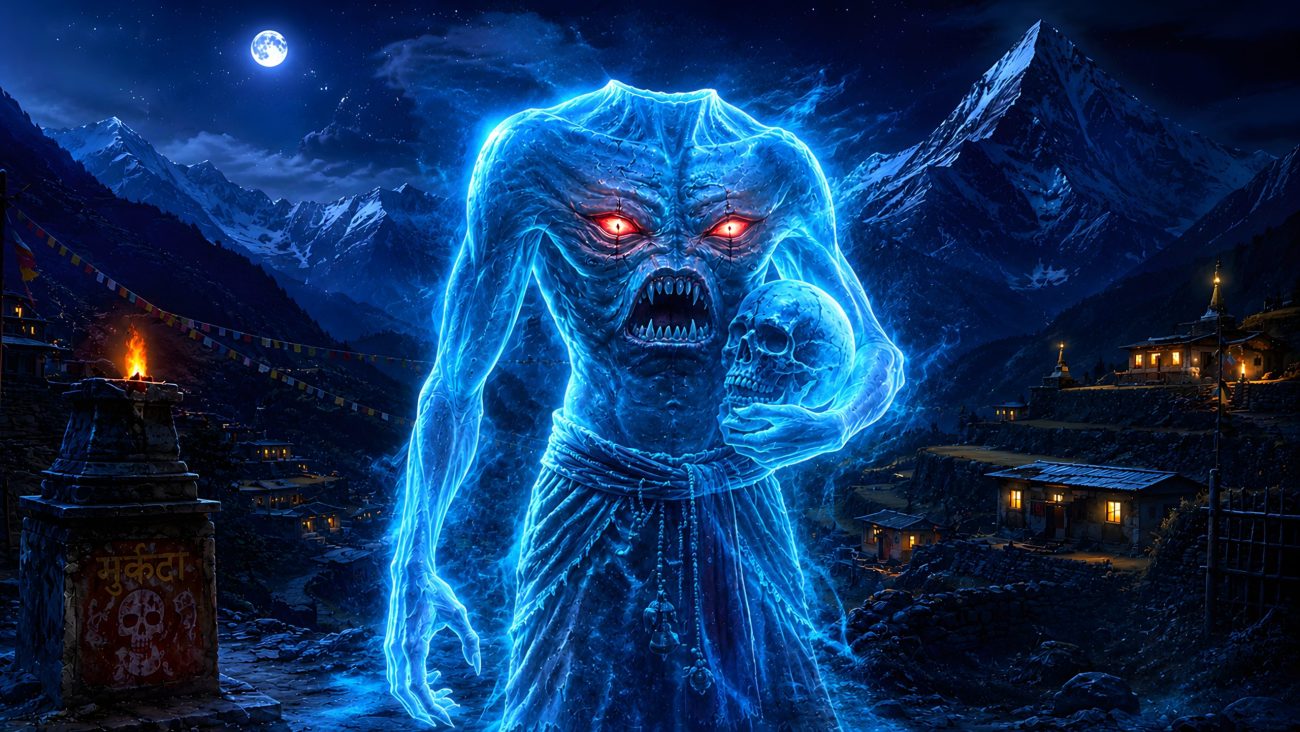
The Murkatta is a terrifying headless ghost found in Nepali folklore. It is believed to be the spirit of a dead person whose head has been severed. Despite lacking a head, the creature is not blind or mute, for its eyes and mouth are located upon its chest, while its severed head is carried beneath one arm.

The Murkatta wanders the world of the living as a restless spirit. Its strange appearance and unnatural form make it one of the most frightening ghosts in Nepalese tradition. Encounters with the creature are associated with fear and misfortune, and its presence is regarded as an omen connected with death and tragedy.

Beyond its role as a supernatural being, the Murkatta is also seen as a symbol of defeat or the loss of reason and intellect, representing a person who has been figuratively or literally deprived of their head.

Remembered as a headless spectre carrying its own severed head while gazing through the eyes embedded in its chest, the Murkatta remains one of the most distinctive and unsettling ghosts of Nepalese folklore.


Sources

Wikipedia contributors. (n.d.). Murkatta. In Wikipedia. Retrieved June 20, 2026, from https://en.wikipedia.org/wiki/Murkatta


Kichkanya

Tradition / Region: Nepali Mythology
Alternative names: Kichkandi
Category: Ghost


The Myth

The Kichkanya is the restless spirit of a woman whose body was not completely cremated, leaving part of her remains—usually a bone—behind in the world of the living. Bound to this fragment, she wanders alone and haunts the place where she suffered an untimely death.

These spirits are often said to be the souls of women who were mistreated during life or who died during pregnancy or childbirth. They are remembered as tragic and tortured beings unable to find peace.

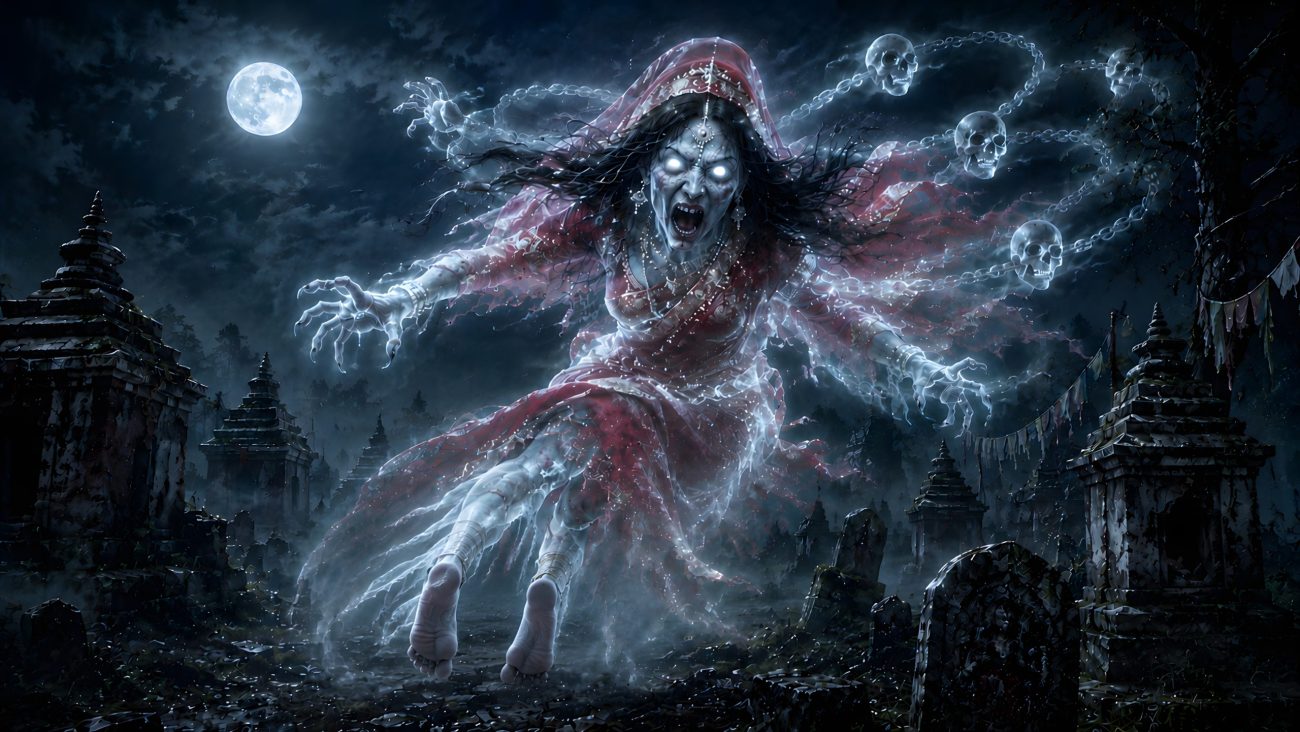
A Kichkanya appears as a beautiful young woman with unusually long black hair, a pale and bony complexion, and a red bridal dress. Her most disturbing feature is revealed by her feet, which point backward.

She uses her beauty to lure lonely male travelers. Those who fall under her influence are said to have their life force drained away, becoming thin, weak, and exhausted. Some victims are believed to waste away entirely.

Another common tale describes the Kichkanya as a ghostly hitchhiker who appears on deserted roads late at night. Drivers who stop for her and obey her directions eventually find themselves led to cremation grounds, temple cemeteries, or lonely places of death.

Solitary and mournful, the Kichkanya is one of Nepal’s most feared female spirits—a beautiful phantom in red, forever wandering the places where her suffering began.


Sources

Wikipedia contributors. (n.d.). Kichkandi. In Wikipedia. Retrieved June 20, 2026, from https://en.wikipedia.org/wiki/Kichkandi


Maniac

Tradition / Region: Russian Mythology
Alternative names: Manya
Category: Ghost


The Myth

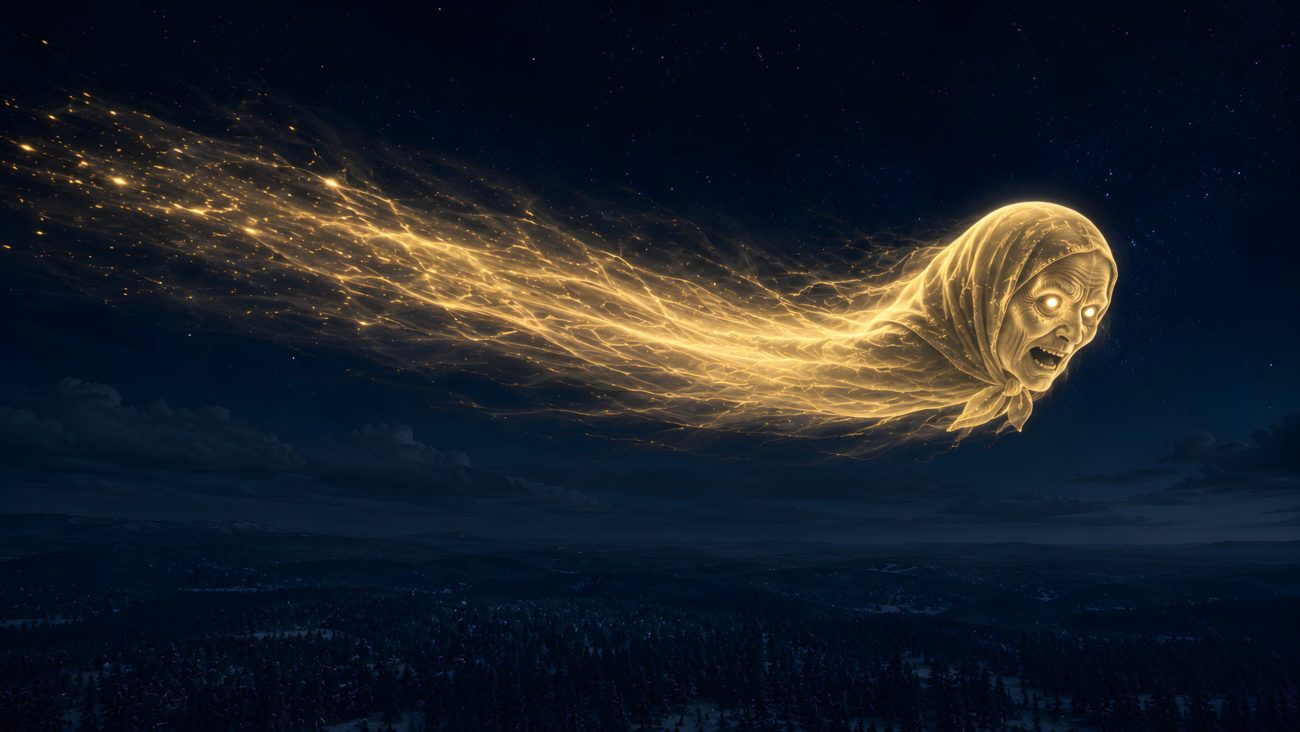
The Maniac is a ghostly being of Russian folklore associated with evil spirits and uncanny apparitions. It is an elusive creature with no fixed form, appearing as a phantom, vision, or wandering spectre.

In northern Russia, northeastern regions, and Siberia, the Maniac often takes the shape of a frail old woman. Such apparitions were especially known by the name Manya, and people regarded them as ghosts rather than living beings.

In central and southwestern Russia, however, the Maniac was believed to appear in a different form. It manifested as a fiery spirit resembling a falling star streaking across the night sky. These celestial apparitions were considered sinister omens.

According to popular belief, anyone who witnessed such a falling star invited misfortune upon themselves. The sight foretold inevitable death, either for the observer or for a member of their family. Because of this, experienced people avoided looking at shooting stars and regarded those who casually remarked, “A maniac has flown,” with suspicion and unease.

Another tradition held that Maniacs appeared to women harvesting grain in the fields on the feast day of Saints Kirik and Julitta, celebrated on July 28. These apparitions were vague and shadowy, more like haunting visions than physical beings.

Known variously as ghosts, spirits, and ill-omened phantoms, the Maniac was feared not for violence but for the doom and death believed to follow in its wake. Whether appearing as an old woman or as a blazing star falling from heaven, it remained one of the unsettling spectres of Russian folk belief.


Sources

Bestiary.us. (n.d.). Manjak. In New Bestiary: Encyclopedia of Imaginary Beings. Retrieved June 20, 2026, from https://www.bestiary.us/manjak


Hone-onna

Tradition / Region: Japanese Mythology
Alternative names: Boneless Woman, Jellyfish Woman
Category: Ghost


The Myth

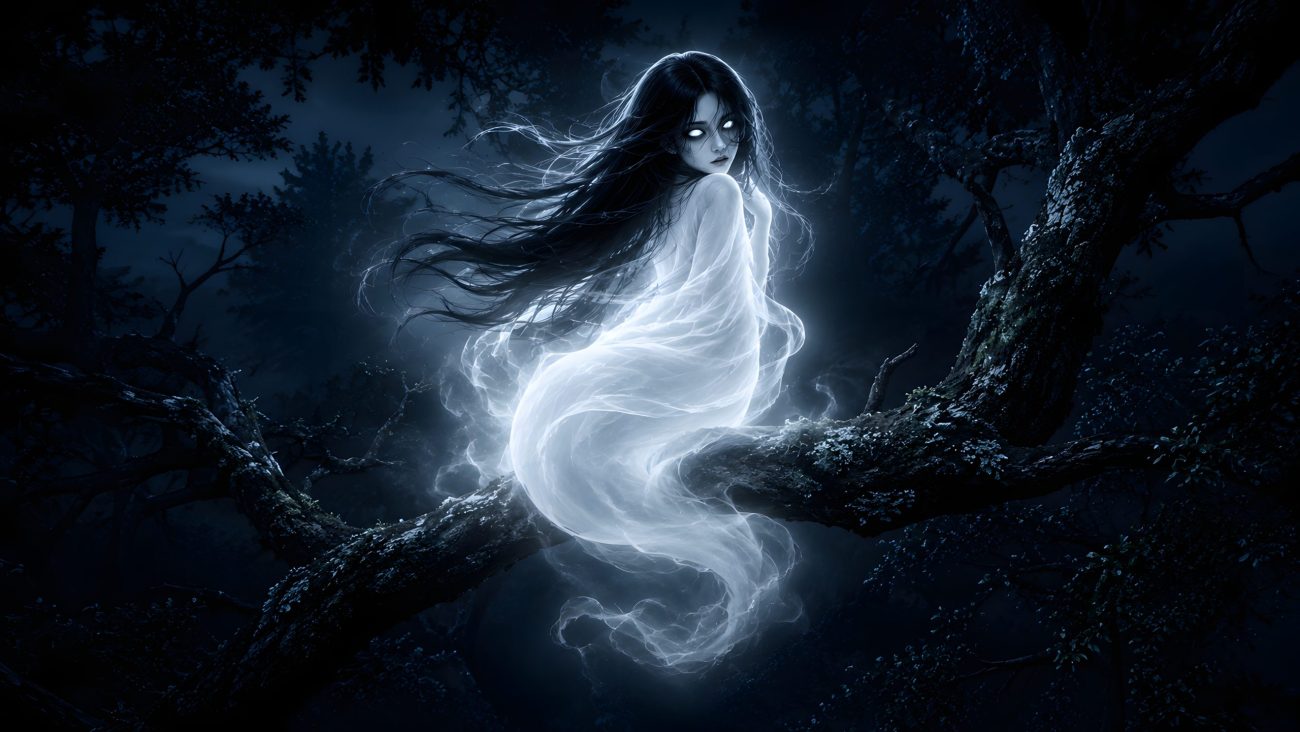
The Hone-onna, or Boneless Woman, is a strange ghost said to originate from Habayama Mountain in Shioe. According to tradition, she was once a jellyfish that lived for so long that it transformed into a woman, though one without any bones.

The creature is associated with death and mourning. Whenever someone dies, the Hone-onna is said to visit the house of the deceased. Night after night, she appears in the garden, clinging to the branches of trees.

There she plays by herself and laughs, seemingly unaware of the living around her. Her eerie laughter echoes through the darkness while she sways among the trees, returning again and again to places touched by death.

Unlike many violent spirits, the Hone-onna is not known for attacking people. Instead, she is remembered as a strange and unsettling apparition—a boneless woman who arrives whenever death enters a household and spends the night laughing alone among the garden trees.


Sources

TYZ. (n.d.). Hone-Onna [骨女]. In 新版TYZ 妖怪図鑑. Retrieved June 20, 2026, from https://tyz-yokai.blog.jp/archives/1010654275.html