Lǘ Yāo

Tradition / Region: Chinese mythology
Alternative names: Donkey Monster, Donkey Demon, Donkey Ghost
Category: Horse


The Myth

Lǘ Yāo is a monstrous donkey spirit that appears in several collections of Chinese supernatural tales. Although its appearance varies between stories, it is consistently portrayed as a dangerous and uncanny creature capable of frightening or harming humans.

In the Miscellaneous Morsels from Youyang, a ghost resembling a blue donkey is briefly mentioned.

In the Xuanshi Zhi, Wang Xun and his companions were holding a banquet when a giant black, hairy arm suddenly reached into the room, demanding food. After repeatedly taking the offered meat, the arm was severed with a sword. Rather than a human limb, it proved to be the leg of a donkey. The following day, Wang Xun learned that a nearby man’s donkey had mysteriously lost one of its legs.

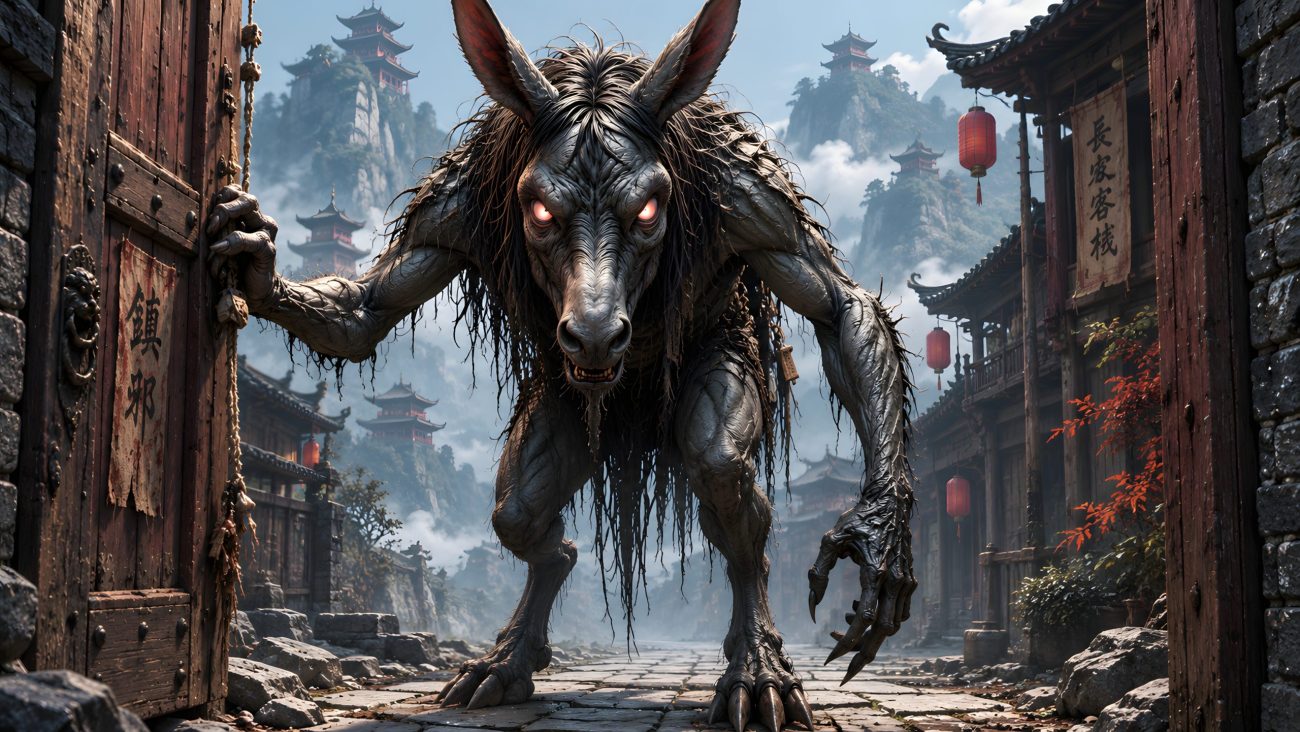
The Record of Examining the Gods, preserved in the Taiping Guangji, describes a donkey demon with human-like hands and feet but covered in long black hair. It wandered into towns at night searching for food, and wherever it appeared an unbearable stench filled the streets.

In the Qing dynasty tale The Revenge of the Donkey, a man named Huang Mingwu rode a black donkey that suddenly began to speak. The animal claimed to be the reincarnation of a man named Yuan San and declared that it had returned to take revenge on Huang Mingwu.

Another Qing dynasty account, Notes from the Right Terrace Immortal Pavilion, tells of a donkey demon haunting the Feng family. Their youngest son repeatedly fell ill and later described a long-eared, hairy figure that appeared beside his bed and forced mud into his mouth. The family concluded that a donkey demon was responsible. Although the Feng family was later destroyed during the Taiping Rebellion, the creature’s lair was said to remain, and it continued to appear from time to time.


Sources

Wikipedia contributors. (n.d.). 驴妖. In 维基百科,自由的百科全书. Retrieved June 29, 2026, from https://zh.wikipedia.org/wiki/%E9%A9%B4%E5%A6%96
Luferlang

Tradition / Region: American Mythology
Alternative names:
Category: Horse, Spider


The Myth

The Luferlang is a fearsome creature of American lumberjack folklore. It is considered highly dangerous and is said to attack without any provocation.

Although it bites only once each year, its bite is believed to be invariably fatal. The biting season is said to occur on July 12.

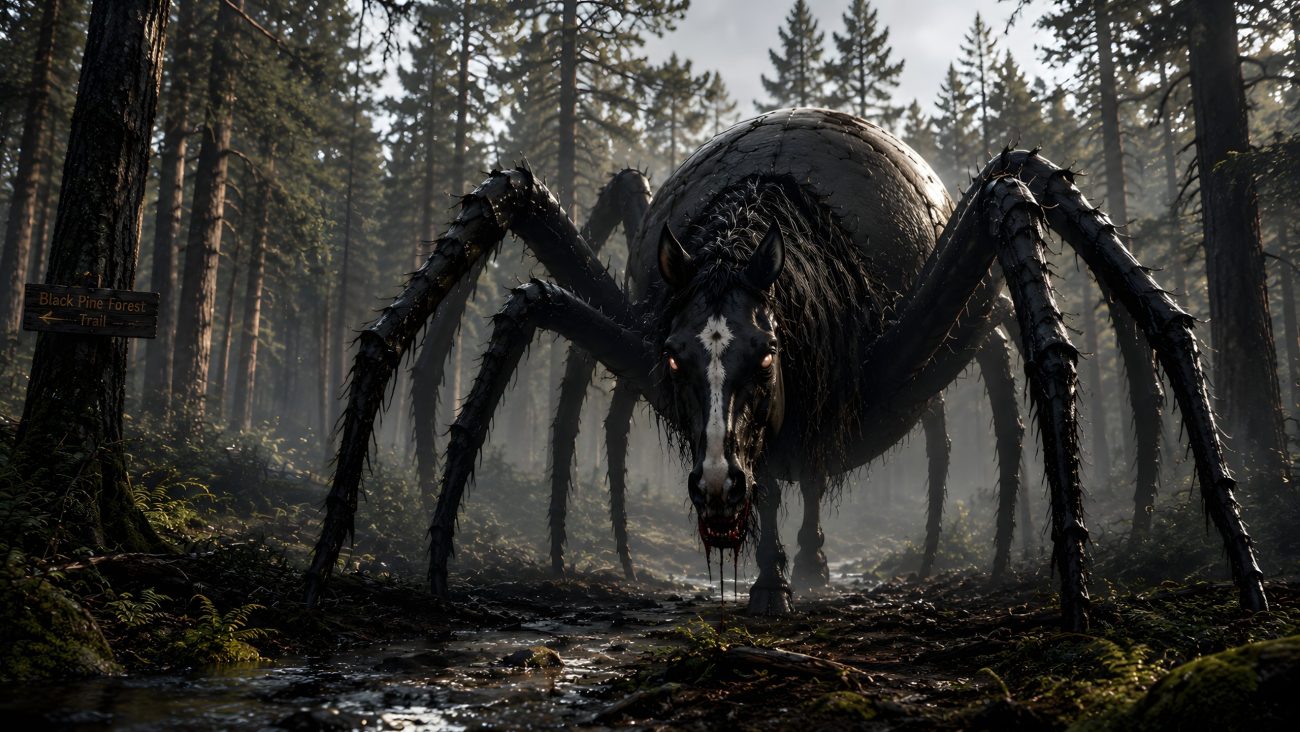
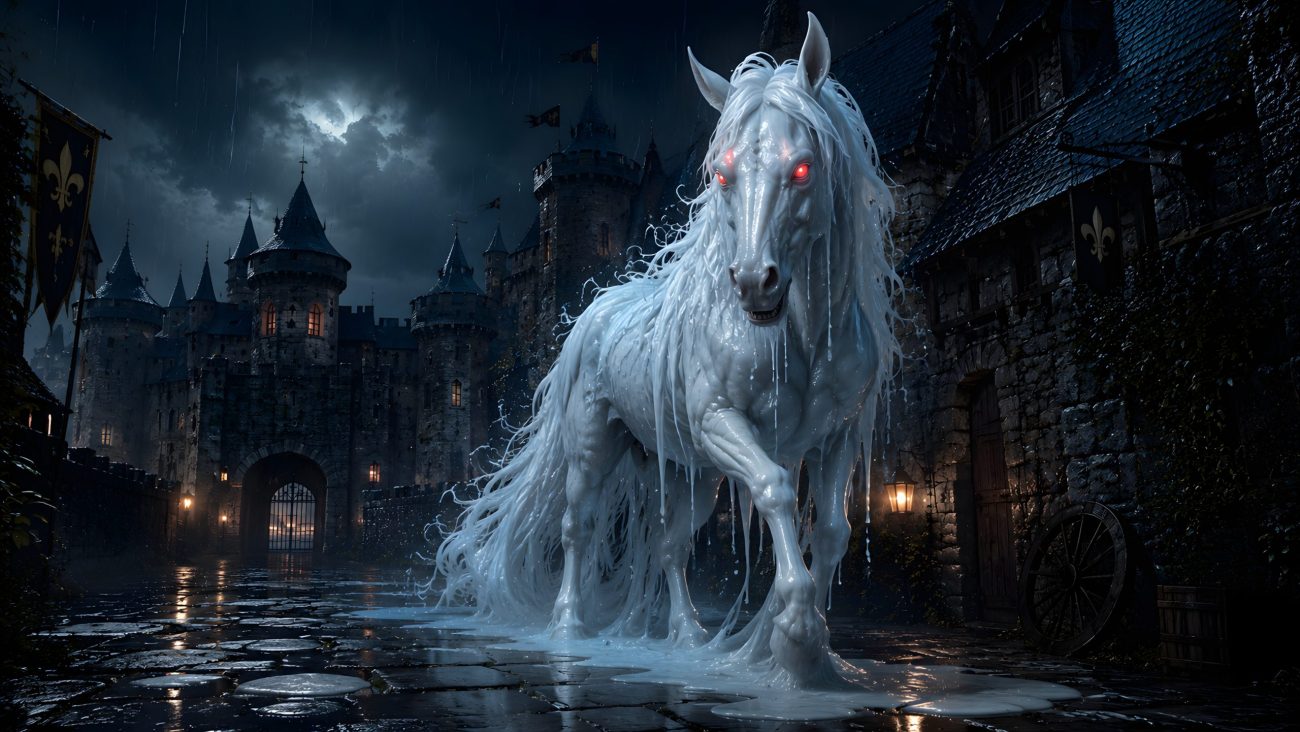
The Luferlang is easily recognized by several unusual features. It has a dark blue stripe running down its back, a bushy tail attached to the middle of its back with a swivel joint, and four triple-jointed legs. These extraordinary limbs allow it to run with equal speed in any direction.

According to tradition, the best defense against a charging Luferlang is to suddenly hold a large mirror beside oneself. The sight of its own doubled reflection supposedly confuses the beast so completely that it flees in disgust.

Another traditional safeguard is to display an orange-colored handkerchief during the biting season. Green clothing, however, should be avoided at that time, as it is believed to provoke the creature even further.


Sources

Cox, W. T. (1910). Fearsome creatures of the lumberwoods: With a few desert and mountain beasts. Press of the Pioneer Company.


Lu Shu

Tradition / Region: Chinese Mythology
Alternative names: Lushu
Category: Horse


The Myth

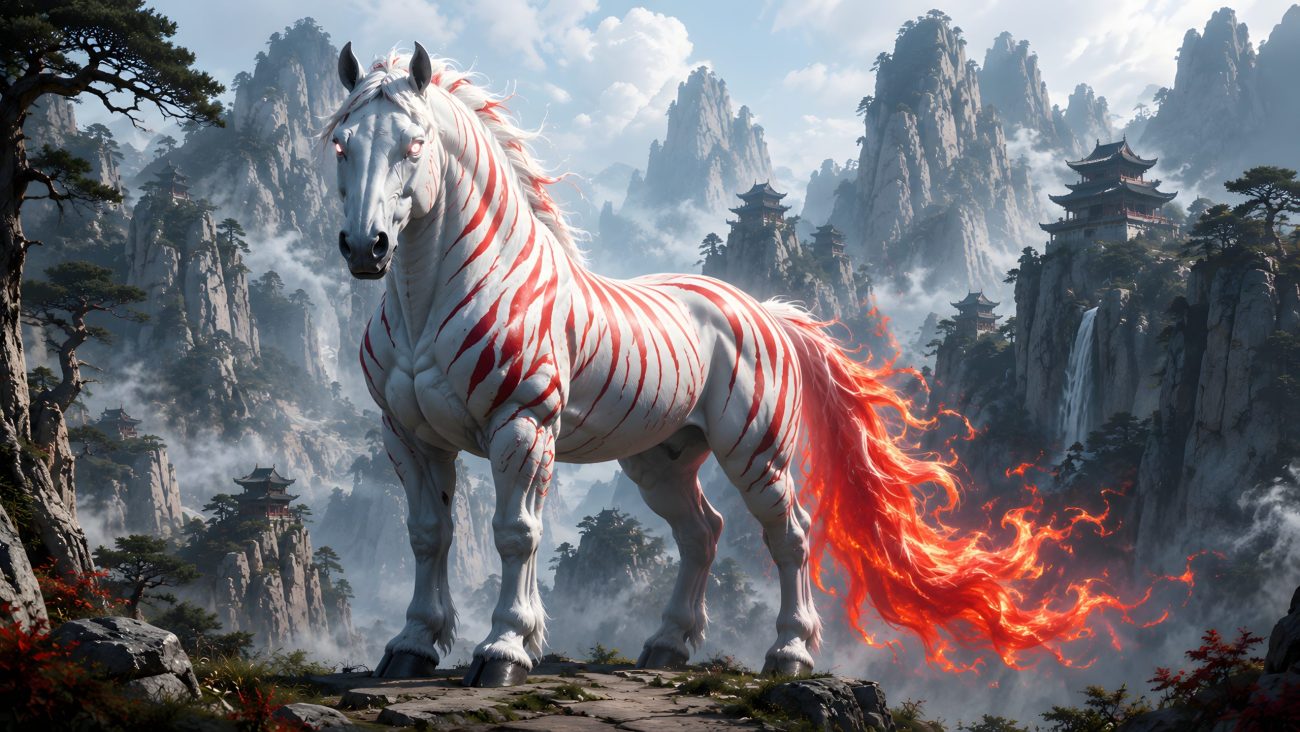
Lu Shu is a mythical beast described in the Classic of Mountains and Seas. It dwells on Mount Niuyang and resembles a horse, but has a white head, tiger-like stripes across its body, and a red tail. Its cry is said to sound like a song or ballad.

The creature is also described in the Taiping Yulan, which states that it travels in groups, raising its head and calling loudly as it leaps across the land.

According to the Classic of Mountains and Seas, wearing the hide of a Lu Shu brings good fortune to one’s descendants. The Taiping Yulan similarly states that wearing its fur ensures that one’s offspring will become as numerous as clouds.

Later tradition records that during the Chongzhen reign of the Ming dynasty, people in the Minnan region claimed to have seen the Lu Shu.


Sources

Wikipedia contributors. (n.d.). 鹿蜀. In 维基百科,自由的百科全书. Retrieved June 29, 2026, from https://zh.wikipedia.org/wiki/%E9%B9%BF%E8%9C%80


Lou Drapé

Tradition / Region: French Mythology
Alternative names: Lo Drapet, Lou Drapé, Lo Drapé
Category: Horse


The Myth

Lou Drapé is a legendary horse from the town of Aigues-Mortes in the Gard region of southern France. It is said to wander the streets and the city walls at night, searching for children who have strayed from home.

The supernatural horse gathers lost children onto its back one after another. As more children climb aboard, its rump magically lengthens until it can carry dozens at once. Once they are all mounted, Lou Drapé carries them away, and they never return. Later traditions claim that it leads them into the marshes surrounding Aigues-Mortes, where they perish, while others say it takes them to a mysterious distant kingdom.

According to one local legend, the final child ever taken by Lou Drapé escaped by crying out, “Jesus, Mary, great Saint Joseph!” before jumping from the horse’s back. At that moment, Lou Drapé vanished, freeing all the children it had carried away.

Lou Drapé was traditionally used to frighten children into staying close to their parents, much like the bogeyman. It is often regarded as a local form of the drac, a dangerous water spirit of Occitan folklore that can assume the shape of a horse. Like many supernatural horses in French tradition, Lou Drapé is closely associated with marshes, water, and death.


Sources

Wikipedia contributors. (n.d.). Drapé (legend). In Wikipedia. Retrieved June 29, 2026, from https://en.wikipedia.org/wiki/Drap%C3%A9_(legend)


Kubiki-uma

Tradition / Region: Japanese Mythology
Alternative names: Headless Horse, Head-cutting Horse
Category: Horse


The Myth

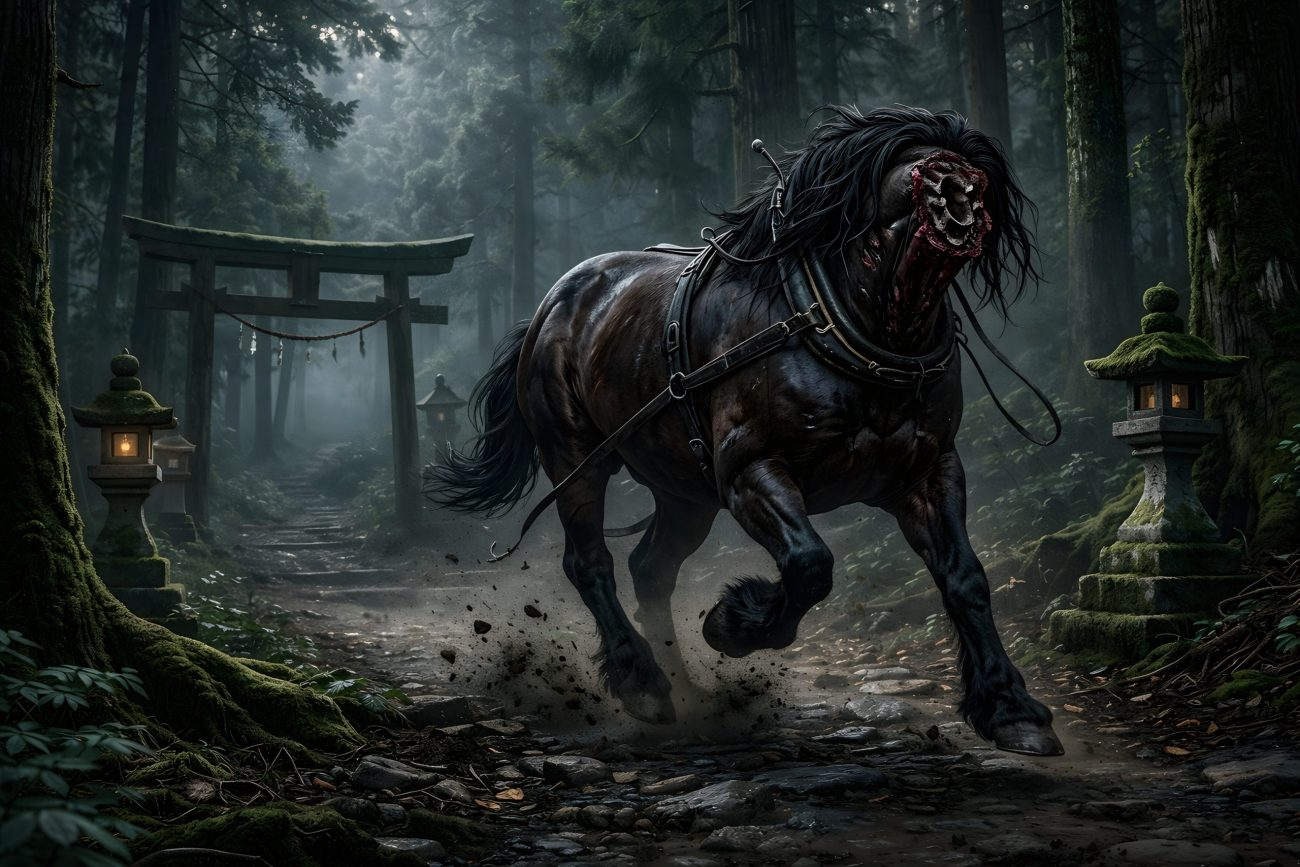
Kubiki-uma is a yōkai that appears as a horse without a head. It is known throughout various parts of Japan, although the traditions of Shikoku, particularly Tokushima Prefecture, are the most famous.

While the details differ from region to region, the stories generally agree that the headless horse appears at a specific place and time, wandering silently through the night. Sometimes it appears alone, while in other tales it carries a deity, a headless person, or a yōkai known as Yakō-san.

Encountering a Kubiki-uma is generally regarded as a sign of misfortune. However, in some areas, such as Tamagawa Town in Ehime Prefecture, seeing the headless horse is considered a good omen instead.

Various legends explain the origin of the Kubiki-uma. Some say it is the spirit of a horse that was loved by a princess but was killed out of jealousy. Other traditions claim it is the ghost of a horse slain together with the monk riding it, or of a horse killed by thieves after they broke into a temple.


Sources

TYZ. (n.d.). クビキ馬 (Kubiki-uma). In 新版TYZ 妖怪図鑑. Retrieved June 29, 2026, from https://tyz-yokai.blog.jp/archives/1010655026.html


Kunne Klaas

Tradition / Region: Dutch Mythology
Alternative names: Grijze Veulen, Steggeveulen
Category: Horse


The Myth

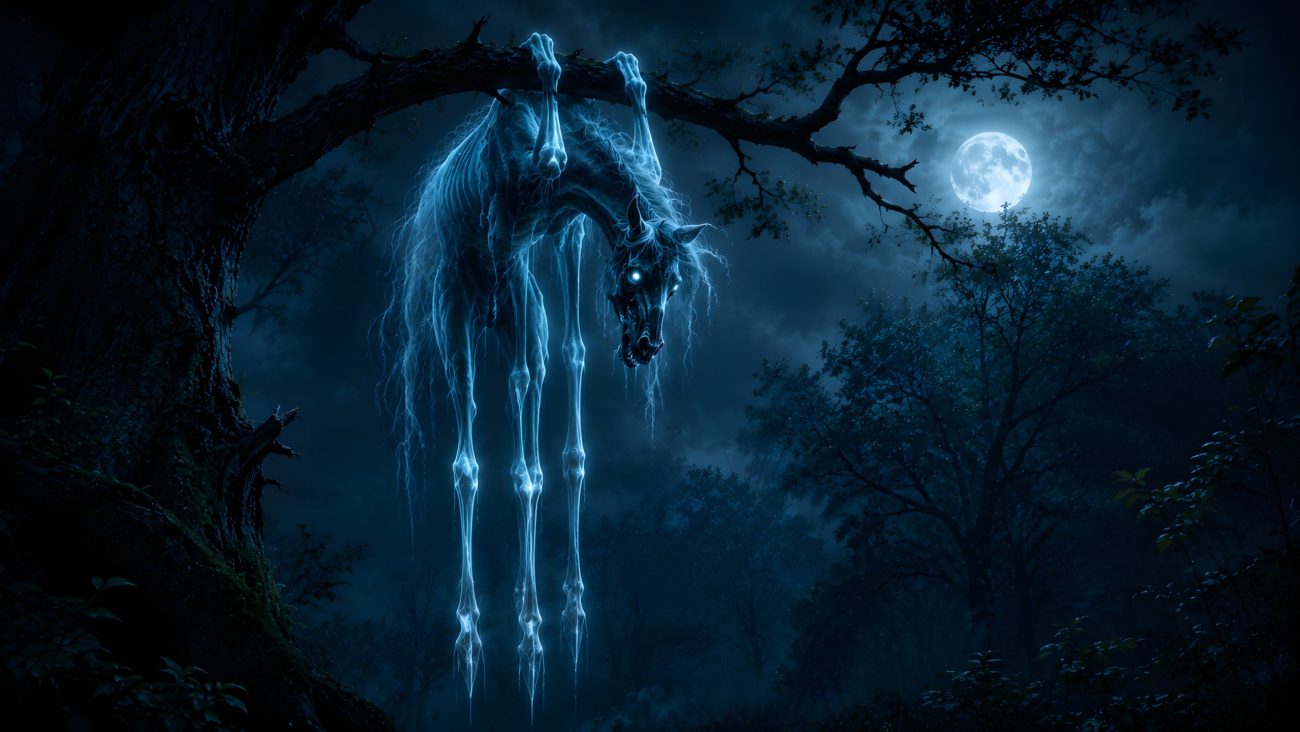
Kunne Klaas is a ghostly horse from the folklore of Twente in the Dutch province of Overijssel.

The phantom horse is said to come charging toward unsuspecting travelers before suddenly vanishing without a trace. In some traditions, it emerges from the water, while in others it flies out of the trees before rushing at its victims.


Sources

Abe van der Veen. (2014, July 8). Van aardmannetje tot zwarte juffer: Een lijst van Nederlandse en Vlaamse elfen en geesten. Abe de Verteller. Retrieved June 29, 2026, from https://abedeverteller.nl/van-aardmannetje-tot-zwarte-juffer-een-lijst-van-nederlandse-en-vlaamse-elfen-en-geesten/.


Kumelgan

Tradition / Region: Belarusian Mythology
Alternative names: Kumelhan, Кумельган
Category: Horse


The Myth

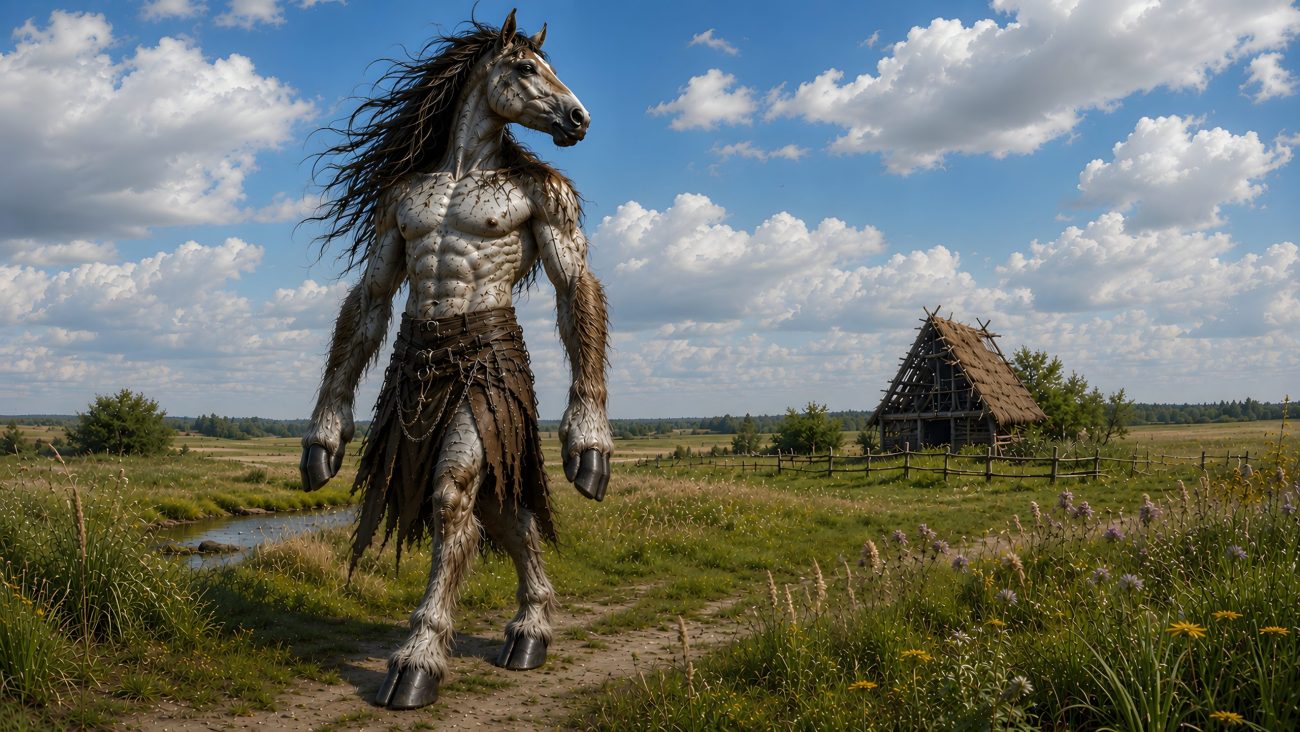
Kumelgan is an evil spirit in Belarusian folklore that harms horses. It is described as a creature that combines the forms of a man and a horse, with the body and arms of a man covered in horsehair, the head of a horse, and hooves in place of hands and feet. It can walk either upright on two legs or on all fours like a horse.

The spirit is regarded as the enemy of Vazila, the protector of horses. Kumelgan’s purpose is to injure horses whenever Vazila is absent. It tortures horses, poisons their feed with harmful plants, and creeps into stables at night. Although it is considered too weak to overpower several horses at once, it attacks animals one by one, pressing them down until they collapse and die. Farmers believed that if several people entered a stable where strange noises had been heard, Kumelgan would immediately flee.

When horses grazed without Vazila’s protection, Kumelgan was said to lead them deep into the forest. It did not usually kill mares but abandoned them to become prey for wild beasts. The spirit could also change its appearance to resemble any horse it wished, allowing it to mingle unnoticed among a herd or even enter a stable disguised as one of the owner’s own horses.

According to the account, the name Kumelgan derives from words meaning “hind part of an animal’s body” or “to walk on hind legs,” referring to the creature’s unusual appearance and manner of movement.


Sources

Bestiary.us. (n.d.). Kumelgan. In New Bestiary: Encyclopedia of Imaginary Beings. Retrieved June 29, 2026, from https://www.bestiary.us/kumelgan/en


Kelpie

Tradition / Region: Scottish Mythology
Alternative names: Water Kelpie, Each-uisge
Category: Horse


The Myth

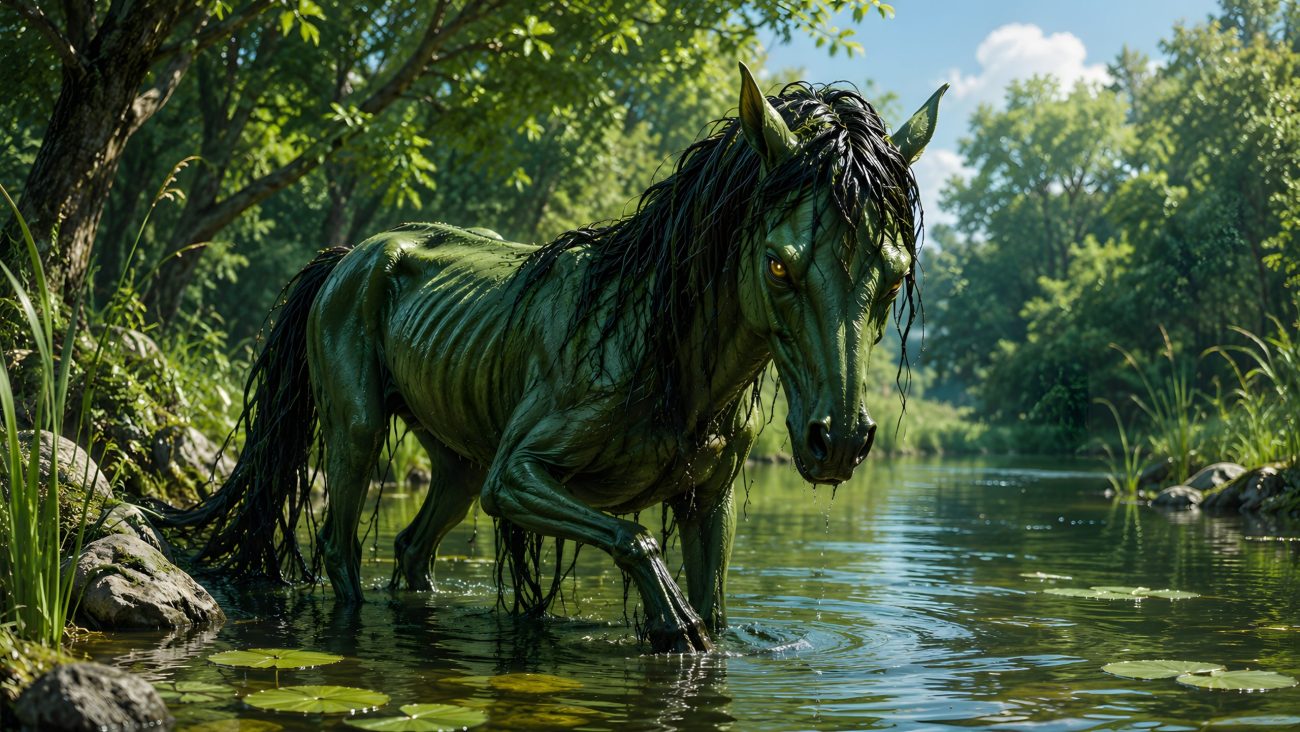
The Kelpie is a mythical shape-shifting water spirit that inhabits the lochs, rivers, and streams of Scotland. It is most commonly described as a powerful black horse, although some traditions describe it as grey or white.

The creature lurks near the water’s edge, preying upon anyone it encounters. One of its distinguishing features is its reversed hooves. It is able to lengthen its back so that many riders can climb aboard at once. Once they do, they become unable to escape as the Kelpie carries them into the depths, where it drowns and devours them, often leaving only their entrails washed ashore. Many stories tell of children climbing onto its back, with only one surviving after cutting off his own fingers or hand to free himself from the creature’s sticky hide.

The Kelpie is also a master of disguise and can transform into a human. It often appears as a handsome young man to lure victims, though some tales describe it as a rough, shaggy man or even an old man. When in human form, it may betray its true nature by retaining horse hooves or having water weeds tangled in its hair. One legend tells of a young woman who recognized a Kelpie, removed its silver bridle while it slept, and forced it to serve on her family’s farm. When the bridle was eventually returned, the Kelpie chose to become a mortal man and married her.

According to tradition, a Kelpie could be captured with a halter marked by the sign of the cross and compelled to perform enormous feats of labor, such as hauling heavy stones. Removing a Kelpie’s magical bridle could also break its power, while the bridle itself was said to possess supernatural abilities. Some stories claim that a Kelpie could be destroyed by a silver bullet or by piercing it with heated iron spears, after which its body dissolved into a soft, jelly-like mass.


Sources

Wikipedia contributors. (n.d.). Kelpie. In Wikipedia. Retrieved June 29, 2026, from https://en.wikipedia.org/wiki/Kelpie.


Qianlima

Tradition / Region: Chinese Mythology, Korean Mythology
Alternative names: Chollima (Korean), Cheollima (Korean), Senrima (Japanese), Thousand-li Horse
Category: Horse


The Myth

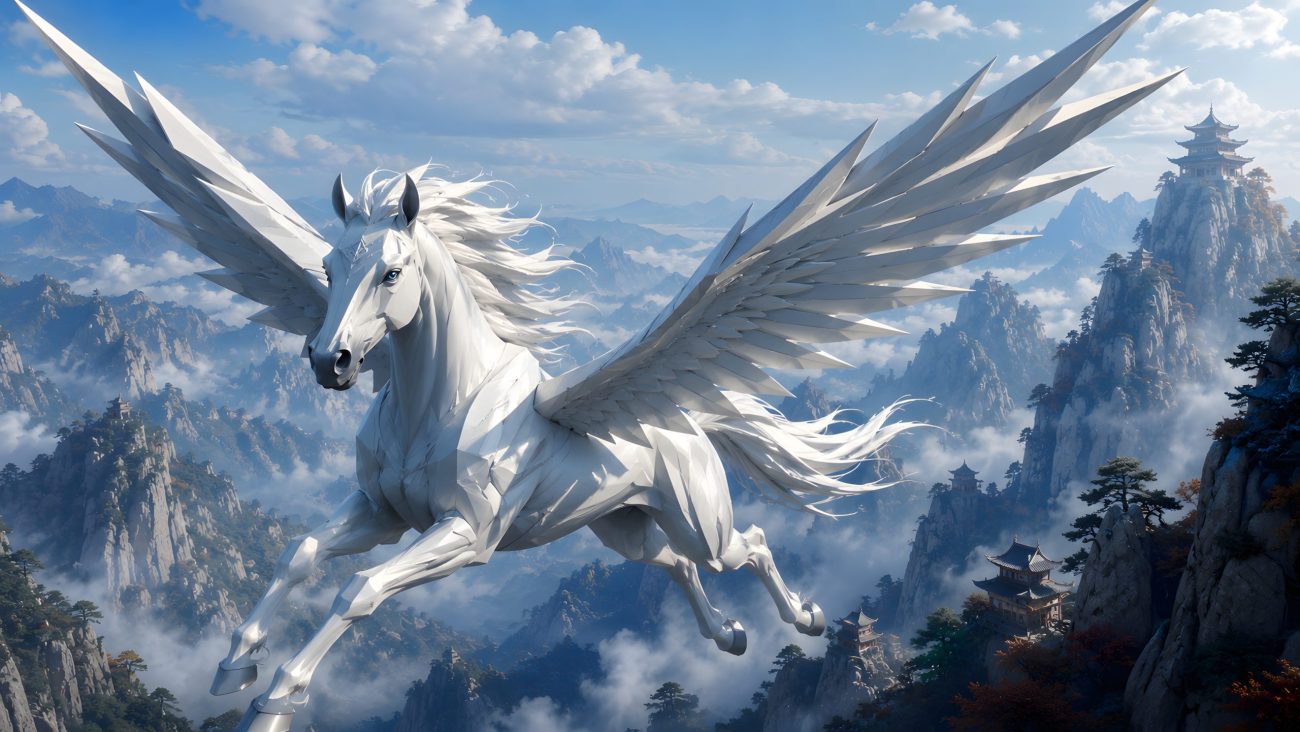
The Qianlima is a mythical winged horse in Chinese tradition renowned for its extraordinary speed and grace. It is said to be capable of traveling one thousand li in a single day, a distance of roughly four hundred kilometers, and is considered so swift and elegant that no mortal can ride it.

Beginning around the 3rd century BCE, the Qianlima became a powerful symbol in Chinese literature. It represented individuals of exceptional talent whose abilities had not yet been recognized. The legendary horse judge Bole was celebrated for his ability to identify a true Qianlima, making the horse a metaphor for gifted people discovered by a wise ruler.

The Qianlima also came to symbolize remarkable horses, including the famous Red Hare, whose speed and endurance embodied the qualities associated with the legendary steed.

Beyond China, the mythical horse became known throughout East Asia. In Korea it is called Chollima or Cheollima, where it became an important national symbol of North Korea and gave its name to the Chollima Movement.


Sources

Wikipedia contributors. (n.d.). Qianlima. In Wikipedia. Retrieved June 29, 2026, from https://en.wikipedia.org/wiki/Qianlima


Kai Kai Filu

Tradition / Region: Argentine Mythology (Mapuche)
Alternative names:
Category: Horse


The Myth

Kai Kai Filu is a mythological being in Mapuche tradition and is said to have caused the great universal flood.

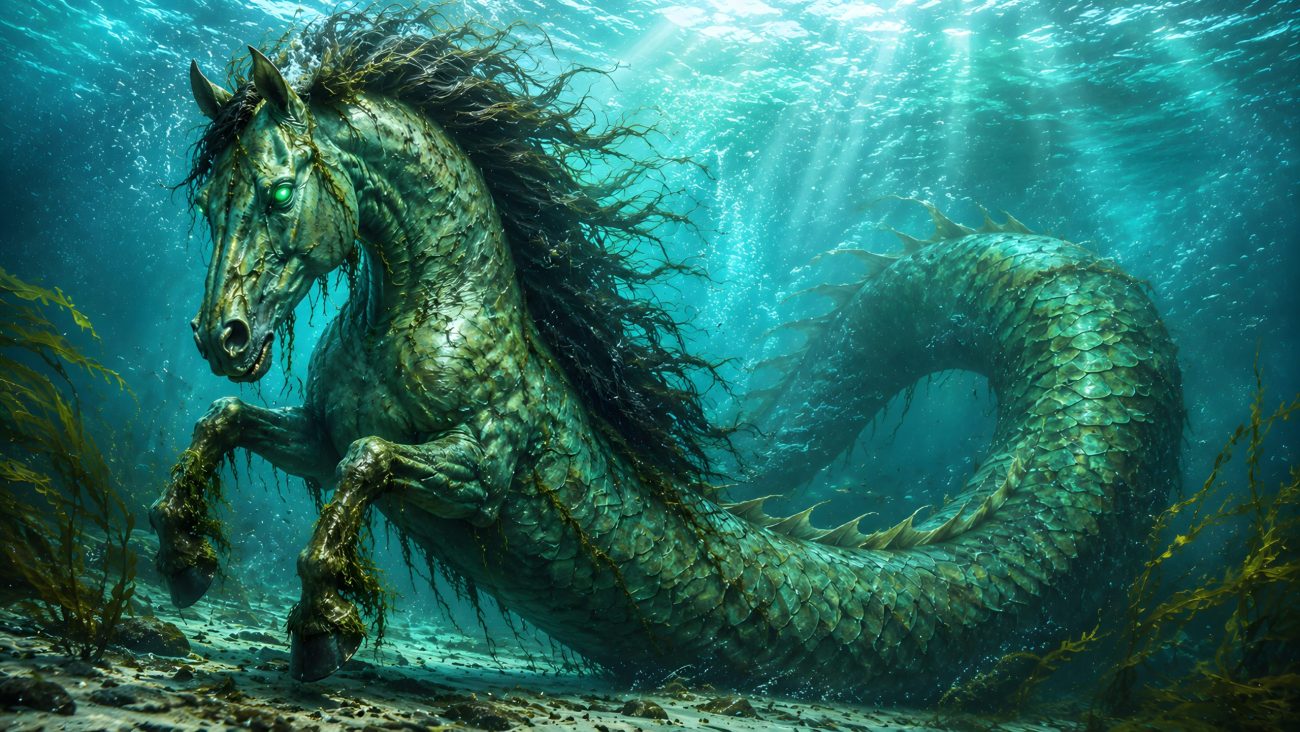
It is described as a hybrid creature, half horse and half serpent, that lives at the bottom of the sea and agitates the waters, causing great floods.

Kai Kai Filu neighs like a horse, although some traditions deny that it possesses an equine half and state that its cry merely resembles the neighing of a horse.


Sources

Colombres, A. (1984). Seres sobrenaturales de la cultura popular argentina (Vol. 1, Biblioteca de Cultura Popular). Ediciones del Sol.