Tradition: Macedonian Mythology, Bulgarian Mythology
Alternative Names: Talason, Talasima, Talasym, Drakus
Category: House dweller
The Myth
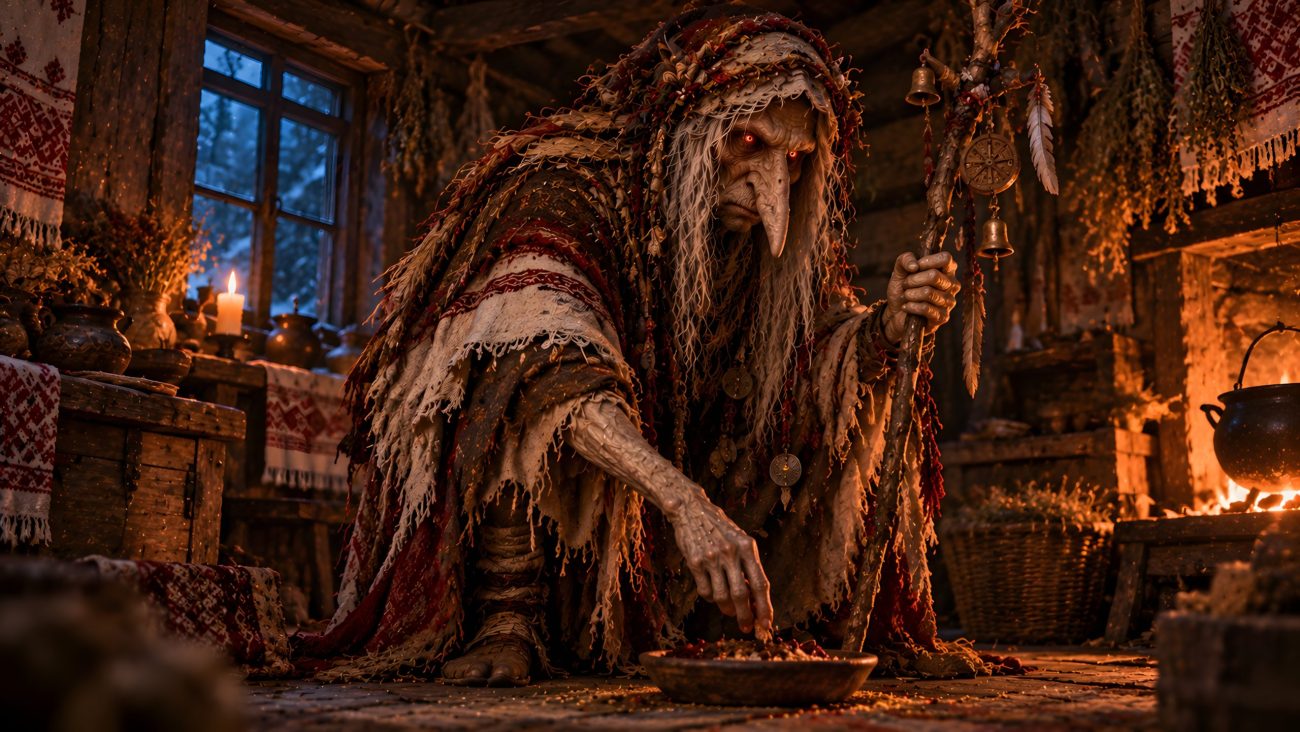
Talasym is a supernatural guardian associated with houses in South Slavic mythology. According to Macedonian belief, it originates from the soul of a person walled into a building during its construction. In this tradition, the talasym is considered a benevolent and harmless spirit, but only as long as it does not perceive hostility towards the house it protects. The spirit appears after the death of a person sacrificed during construction, whose soul becomes bound to the building.
In ancient times, people were believed to have placed people in the foundations of houses, bridges, fortresses, watermills, and windmills to ensure that these structures would endure for centuries and remain protected from evil spirits. A talasym guards its structure by day and night, sometimes appearing to random travellers. Its presence was therefore associated with the protection and longevity of important buildings.
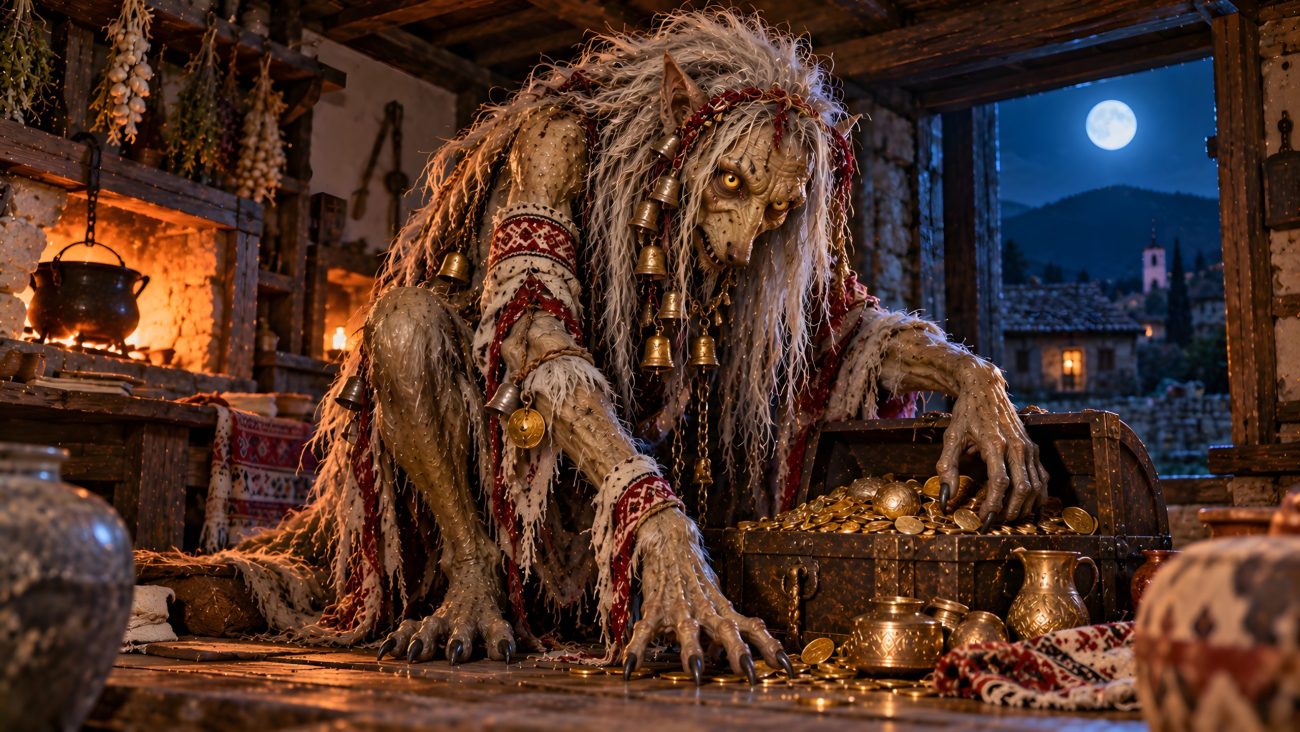
In Bulgarian mythology, however, the talasym takes a more dangerous form. It is described as an eternally living werewolf that can transform into a dog, cat, or another animal. It attacks people during the night and strangles them. Those who fail to escape its grasp may die, and even survivors are said to suffer consequences in the days or weeks that follow.
The talasym is also associated with hidden treasure. Popular belief claims that it protects riches concealed by fire serpents and robbers. Anyone wishing to recover such treasure must fulfil a condition established by the owner, such as sacrificing a black rooster or a person at the place where a cuckoo calls. The talasym ensures that this vow is fulfilled, and only those who meet the required condition can obtain the treasure. It may even transform into an animal to deceive or frighten treasure hunters.
Some accounts describe people who attempt to rob the talasym of its protected treasure. Those who approach without fulfilling the necessary conditions risk being attacked. The spirit may leap onto a person’s back and seize them by the ears, then disappear without leaving a trace. In its hands, the victim is said to be left with either a basket of gold or a cauldron of coal.
The talasym’s nature varies between regional traditions. In South Slavic belief, it can be a protective spirit bound to a building through a sacrificial death, while Bulgarian accounts portray it as a dangerous, shape-shifting werewolf associated with nocturnal attacks and guarded treasure. Across these traditions, it remains a supernatural being whose power is tied to a particular place and whose presence demands caution from those who approach it.
Sources
“Hohlik.” New Bestiary (Bestiary.us). https://www.bestiary.us/hohlik