Dobhar-chú

Tradition / Region: Irish Mythology
Alternate Names: King Otter, Dobharcu, Dorraghow, Anchu
Category: Dog, Lake dweller


The Myth

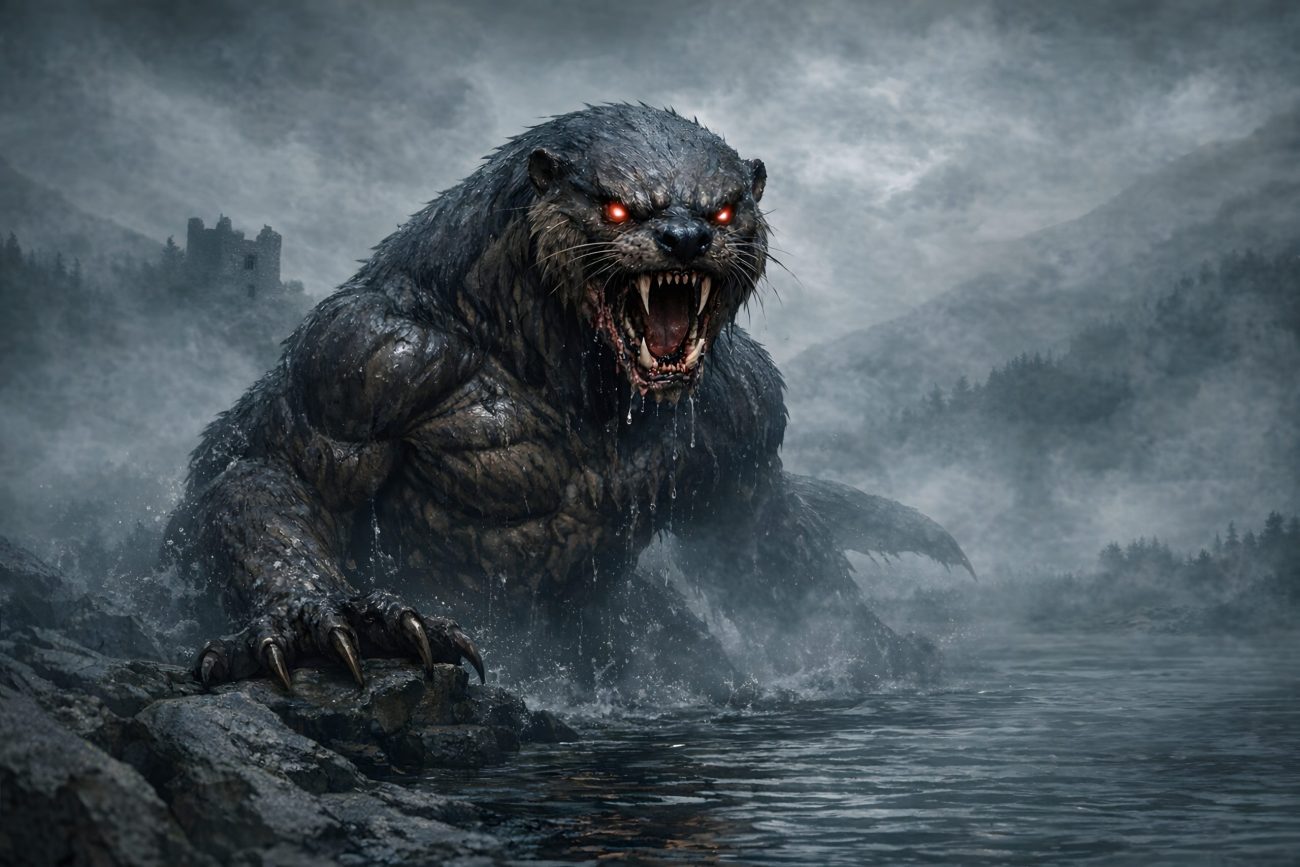
The Dobhar-chú is a feared creature of lakes and rivers in Irish tradition, remembered as a monstrous water hound.

It is said to resemble a great otter but with the strength and build of a dog. Far larger than any natural animal, it could grow many times the size of a normal otter. Some tales describe it with a pale coat marked by darker patches, while others say its fur appears dark from the waters it inhabits. Its body is powerful, with strong limbs and a long tail, and it moves easily both on land and in water.

The creature is believed to dwell in deep lakes and hidden waters, rarely seen but greatly feared by those who live nearby. Stories of it were passed down mostly by word of mouth, and many people believed it to be a dangerous predator of both livestock and humans.

One well-known tale tells of a woman who went to the lakeshore to wash clothes. When she did not return, her husband went to search for her and found her dead by the water. Lying beside her was the great beast itself, resting near its kill.

The man hurried home, armed himself, and returned to face the creature. After a struggle he managed to kill it. But as the beast died, it gave out a piercing cry. From the lake rose another of its kind, drawn by the call. The second monster pursued him, and after a fierce fight he killed that one as well.

The place where the woman died was long remembered, and a stone marking her grave was said to bear the image of a great dog-like animal, keeping alive the memory of the water hound.

Thus the Dobhar-chú was remembered as the king of the waters — a great lake beast shaped like a hound, feared along lonely shores and whispered about in stories of the deep.


Sources

Wikipedia contributors. (n.d.). Dobhar-chú. In Wikipedia, from https://en.wikipedia.org/wiki/Dobhar-ch%C3%BA

Cŵn Annwn

Tradition / Region: Welsh Mythology
Alternate Names: Ci Annwn (singular)
Category: Dog


The Myth

The Cŵn Annwn are the spectral hunting dogs of Annwn, the otherworld of Welsh tradition.

They belong to the realm of the dead and are said to serve its ruler. In older tales they hunt under Arawn, king of Annwn, while later stories place them under Gwyn ap Nudd, a lord of the otherworld and the fairy host. Wherever they run, they form part of the Wild Hunt, a ghostly chase that moves across the night sky and over the hills of the living world.

The hounds are said to be vast and terrible, heard long before they are seen. Their howling carries across mountains and valleys, and people believed that to hear them was a sign that death was near. Their voices are strange: loud when far away, yet growing softer as they approach, until the silence itself becomes frightening.

They are said to hunt on certain nights of the year, especially during the dark seasons, when the boundary between worlds is thin. Some believed they ran only in winter, while others said they appeared on holy eves and sacred nights.

The Cŵn Annwn are not only hunters of beasts but also hunters of souls. They pursue wrongdoers without rest, driving them onward as they once drove their victims. In other tales, they escort the dead on their journey to the otherworld, guiding spirits from the world of the living to the land beyond.

Their cries were sometimes linked to the calls of geese flying in the night sky, whose distant honking was said to resemble the barking of ghostly hounds.

Thus the Cŵn Annwn were remembered as the hunting dogs of the otherworld — spirits of the Wild Hunt whose voices carried death’s warning and whose chase never ceased between the worlds of the living and the dead.


Sources

Wikipedia contributors. (n.d.). Cŵn Annwn. In Wikipedia, from https://en.wikipedia.org/wiki/C%C5%B5n_Annwn


Am-heh

Tradition / Region: Egyptian Mythology
Alternate Names:
Category: Dog


The Myth

Am-heh was a feared being of the Egyptian underworld.

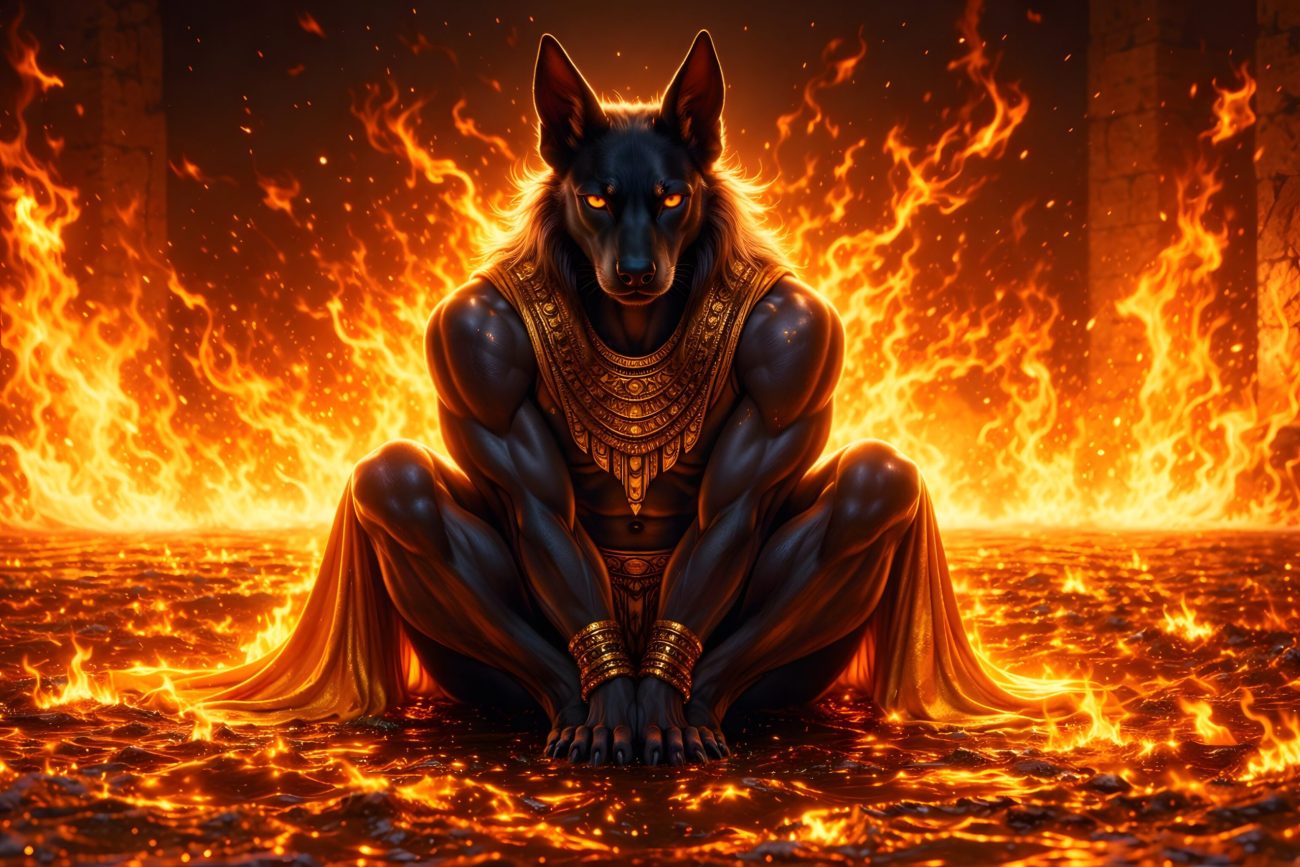
His name was said to mean “Devourer of Millions” or “Eater of Eternity,” and he was imagined as a powerful and dreadful presence among the spirits of the dead. He was depicted with the body of a man and the head of a hunting dog, marking him as one of the dangerous beings that dwelled beyond the world of the living.

Am-heh was believed to reside in a lake of fire deep in the underworld. From this burning place he threatened the souls who passed through the realm of the dead, and his presence was associated with punishment, destruction, and divine retribution. In some traditions he was connected with other devouring beings who judged or consumed the wicked.

Though terrifying, he was not beyond control. It was said that only the creator god Atum possessed the power to repel him and keep his destructive force in check.

Thus Am-heh was remembered as a fiery devourer of the underworld — a dog-headed god who lurked in the burning depths, waiting among the spirits of the dead.


Sources

Wikipedia contributors. (n.d.). Am-heh. In Wikipedia, from https://en.wikipedia.org/wiki/Am-heh


Black Dog of Maraunberg

Tradition / Region: Austrian Mythology
Alternate Names:
Category: Dog


The Myth

In Carinthia it is said that great treasure lies buried within the Maraunberg near St. Veit. Many have sought to uncover it, but none have succeeded.

One time, three men went into the forest at the hour believed to be right for raising hidden wealth. Carrying spades and shovels, they spoke the necessary words and began to dig. They worked hard until at last their tools struck something solid. Clearing the earth away, they uncovered a large iron chest.

Excited, they prepared to lift it from the ground.

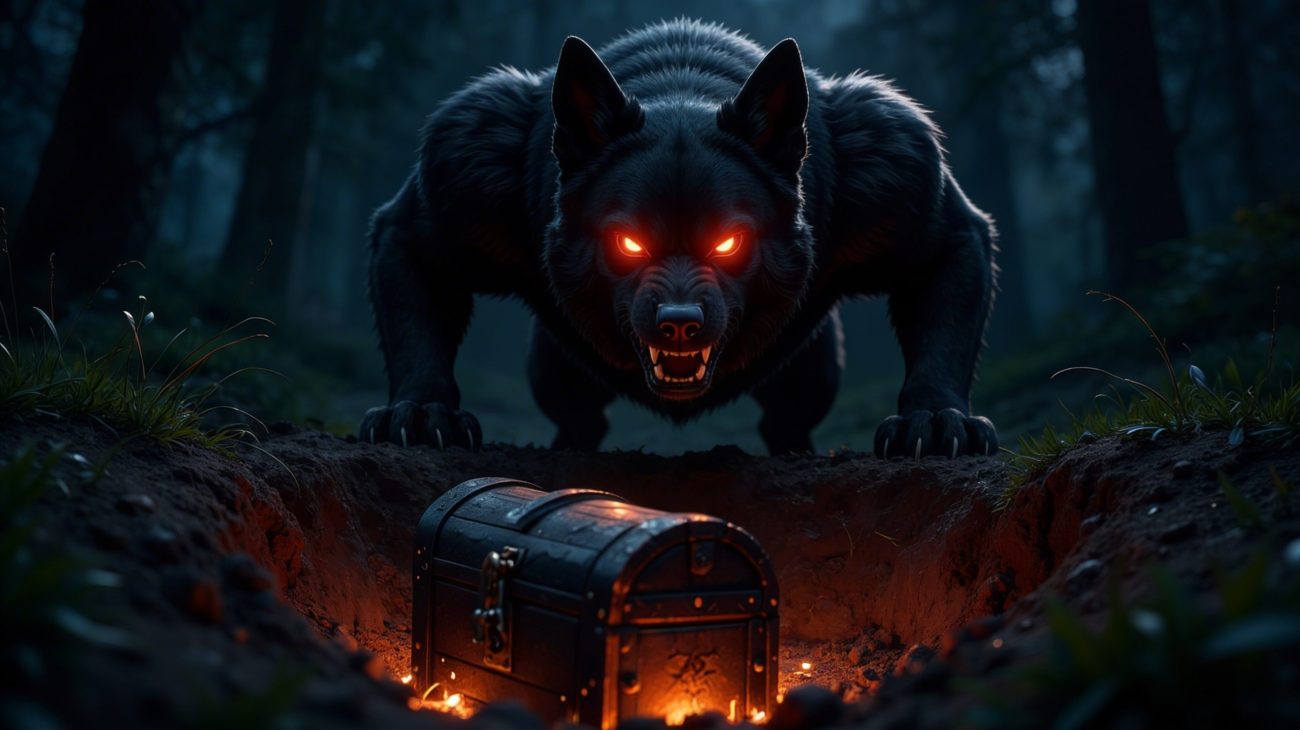
But before they could do so, a black dog suddenly appeared before them. It sat silently, staring at them with glowing, fiery eyes. The sight filled the men with terror. Dropping their tools, they fled from the place as fast as they could run.

As they escaped through the forest, they said they heard strange sounds behind them — sighing and weeping rising from the ground. When they dared to look back from a distance, the chest had already sunk again into the earth, as though the mountain had swallowed it.

And so the treasure of Maraunberg remained hidden, guarded by the black dog whose fiery gaze drove away any who tried to claim it.


Sources

Sagen.at. (n.d.). Der schwarze Hund. From https://www.sagen.at/texte/sagen/oesterreich/kaernten/franz_pehr/derschwarzehund.html


Boy

Tradition / Region: English History
Alternate Names: Boye, Puddle, Pudel
Category: Dog


The History

Boy was the famous white hunting dog of Prince Rupert of the Rhine during the English Civil War.

The animal was said to have first come to Rupert while he was imprisoned in Germany. Given to him as a companion, the dog remained with him afterward and followed him into the wars of England. Wherever Rupert rode, Boy was often seen beside him, even near the battlefield.

Because Rupert became a feared and controversial commander, stories quickly grew around the dog. His enemies claimed Boy was no ordinary animal but a witch’s familiar or a creature with dark powers. Some said he could catch bullets in his mouth, foretell events, or uncover hidden treasure. Others whispered that he was the Devil in disguise.

Royalist writers mocked these rumors, spinning their own exaggerated tales. In jest, some claimed Boy had once been a woman from Lapland transformed into a dog. Soldiers treated him as a mascot and even joked that he held rank among them.

Despite the strange stories, Boy was known to be devoted to his master. He followed Rupert closely and was well known among the king’s supporters. The dog was said to sleep near Rupert, accompany him on campaign, and move freely among the royal court.

In 1644, during the Battle of Marston Moor, Boy was left behind safely in camp. But he broke free and ran toward the fighting to follow Rupert. In the chaos of the battle he was killed.

Afterward, his death was widely noted, and images of the battle even showed the fallen dog. Though he had been only an animal, his fame had grown so great that his loss became part of the story of the war itself.

Thus Boy was remembered as the loyal hound of a prince — a war companion surrounded by tales of magic, feared by enemies, cherished by friends, and carried into legend by the conflict in which he died.


Gallery


Sources

Wikipedia contributors. (n.d.). Boy (dog). In Wikipedia, from https://en.wikipedia.org/wiki/Boy_(dog)


Interpretive Lenses

Religious Readings
  • Christian Ascetic Deep Dive
Philosophical Readings
  • Nietzschean Deep Dive
Psychological Readings
  • Jungian Deep Dive
Esoteric Deep Dive
  • Hermetic Deep Dive
Political / Social Readings
  • Marxist Deep Dive

El Cadejo

Tradition / Region: Costa Rica Mythology, Nicaragua Mythology
Alternate Names: Cadejo Blanco, Cadejo Negro
Category: Dog


The Myth

El Cadejo is a mysterious night-walking creature known across many lands of Central America. It is said that there are two of them — one dark and one pale — and their nature depends on which one walks beside you.

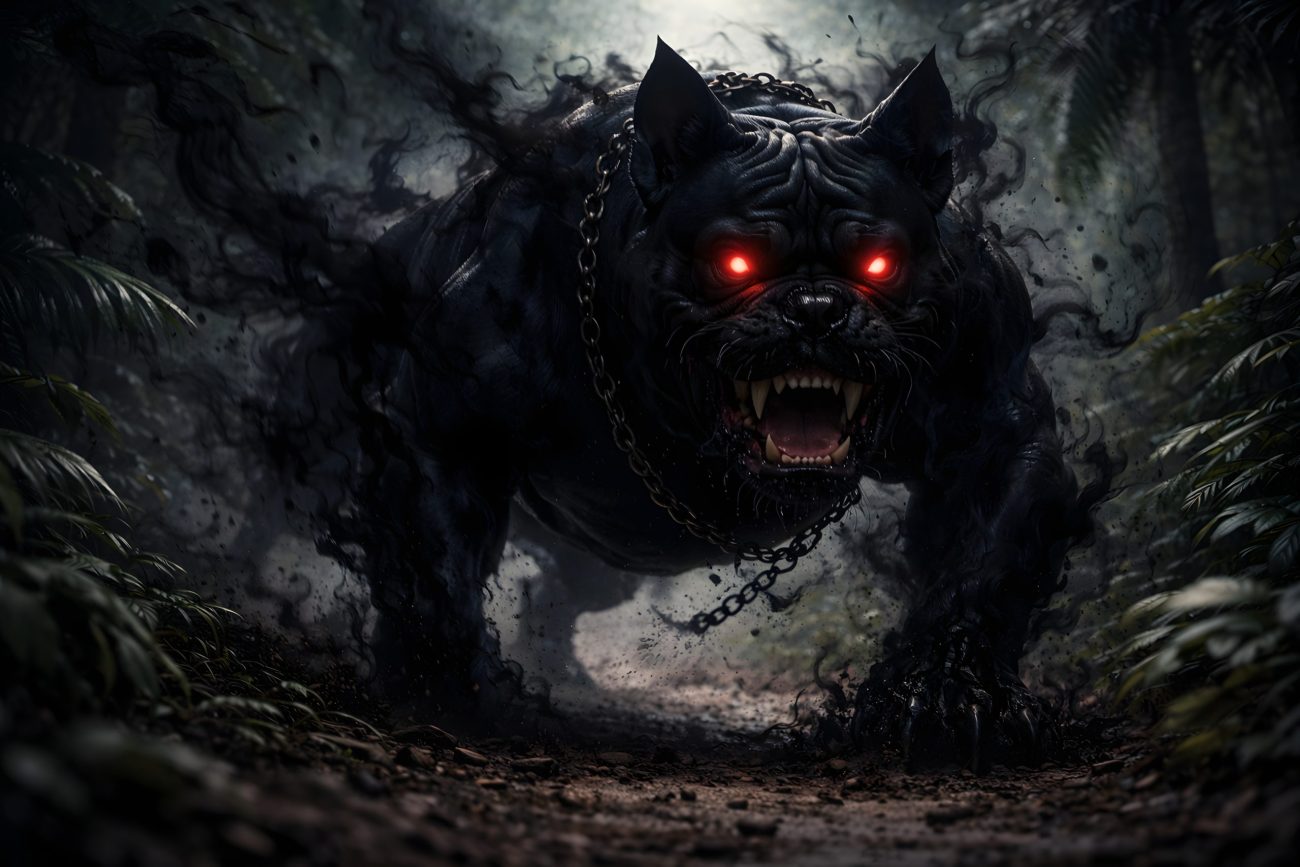
The Cadejo appears as a large dog-like beast, sometimes as big as a cow. Though shaped like a dog, it is not entirely one. Its eyes glow red in the darkness, its body gives off a strong goat-like smell, and some say its feet resemble hooves rather than paws. When it moves, the sound of dragging chains can often be heard.

One of the Cadejos is feared, while the other is said to protect. In some places the white one is the dangerous spirit that tries to trick travelers, while the black one guards the lonely and the drunk as they wander home at night. In other regions, the roles are reversed, and the dark Cadejo becomes the threatening one while the pale one is the protector.

The evil Cadejo is known to follow people silently through the night. Those who encounter it are warned never to speak to it, for doing so can drive a person mad. Turning one’s back on it is also said to bring misfortune or madness.

The other Cadejo, however, may walk beside a traveler and guide them safely home, keeping away its darker counterpart and any dangers that lurk in the night. Many believed that those who staggered through the streets alone after drinking were often unknowingly escorted by this protective spirit.

Thus El Cadejo was remembered as a double-natured hound of the night — a creature that might bring ruin or protection, depending on which form chose to follow you along the road.


Gallery


Sources

Wikipedia contributors. (n.d.). Cadejo. In Wikipedia, from https://es.wikipedia.org/wiki/Cadejo


Interpretive Lenses

Religious Readings
  • Christian Ascetic Deep Dive
Philosophical Readings
  • Nietzschean Deep Dive
Psychological Readings
  • Jungian Deep Dive
Esoteric Deep Dive
  • Hermetic Deep Dive
Political / Social Readings
  • Marxist Deep Dive

Kuon Khryseos

Tradition / Region: Greek Mythology
Alternate Names: Golden Dog
Category: Dog


The Myth

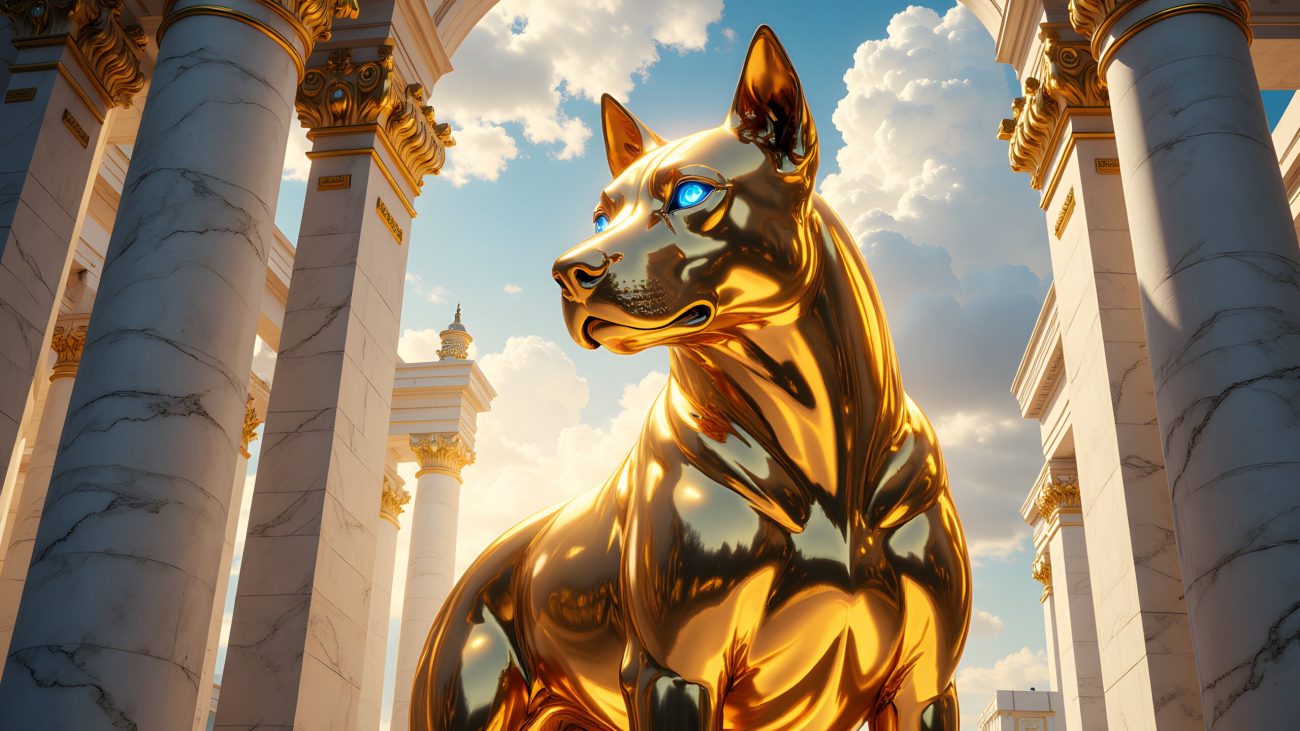
The Kuon Khryseos, the Golden Dog, was a sacred animal set to guard the infant Zeus.

When the god was hidden in a cave on the island of Crete to protect him from his father Kronos, he was nursed by the divine goat Amaltheia. Rhea, wishing to keep both child and nurse safe, appointed a golden dog to stand watch over them. The creature guarded the cave and the sacred place where Zeus was raised.

After Zeus grew to adulthood and overthrew the Titans, he honored those who had protected him. Amaltheia was placed among the stars, and the Golden Dog was also set in the heavens, remembered as a constellation so that its watch would never end.

In another tale, the dog was later stolen. A man named Pandareos took the sacred animal and carried it away, eventually giving it to Tantalos to hide. When the dog was demanded back, Tantalos denied ever having received it. Zeus, angered by the theft and the false oath, punished both men — Pandareos was transformed into stone, and Tantalos was struck down for his lie.

Because of these stories, the Golden Dog was remembered as a divine guardian, tied to the infancy of Zeus, to sacred oaths, and to the stars themselves. In some traditions it was even linked with the magical hound Lailaps, another swift and wondrous dog connected to the heroes of Crete.

Thus the Kuon Khryseos lived on in myth as the shining hound of Zeus — protector of the god in childhood and a watcher placed forever in the heavens.


Sources

Theoi Project. (n.d.). Kuon Khryseos. From https://www.theoi.com/Ther/KuonKhryseos.html


Rukh

Tradition / Region: Arabian mythology, Madagascar Mythology
Alternate Names: Roc
Category: Bird


The Myth

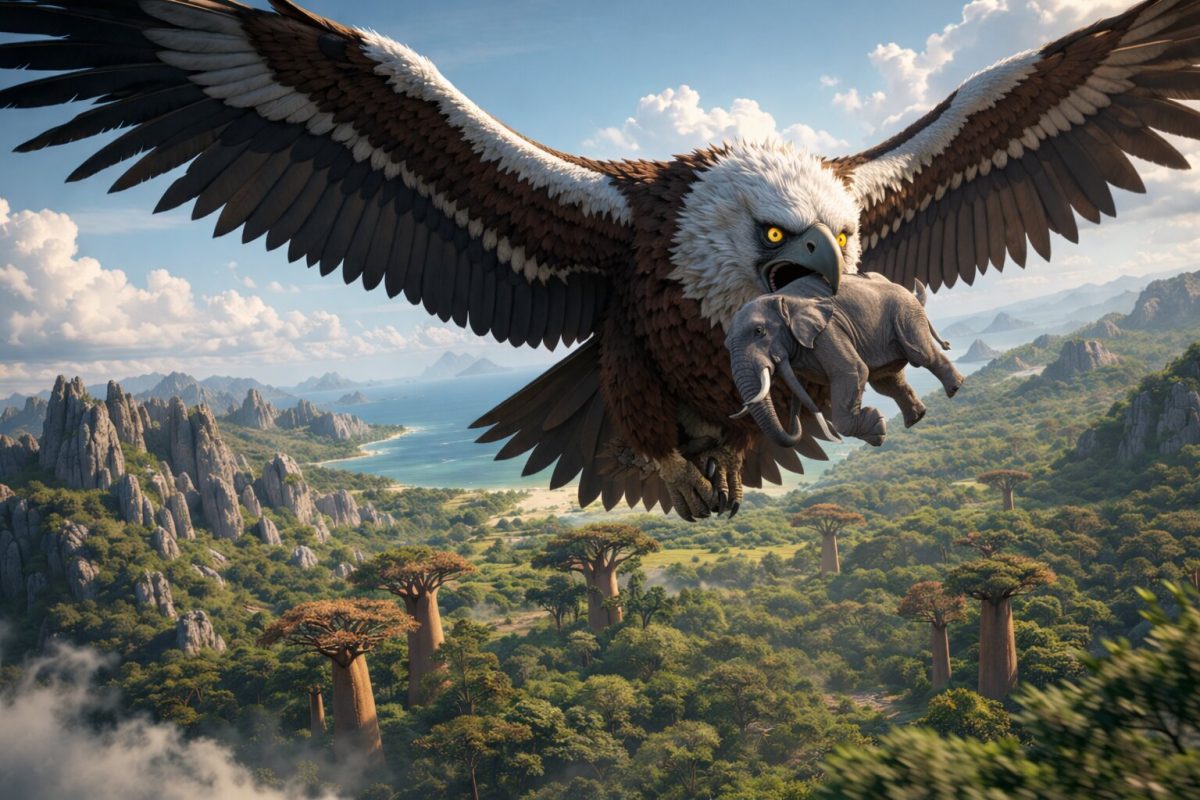
The Rukh is a colossal bird of prey said to live in distant lands, often associated with Madagascar or remote mountains. Its exact appearance is not fixed, but it is always described as enormous, sometimes so large that its wings stretch for vast distances. It preys on the largest animals, including serpents, elephants, and rhinoceroses, and is strong enough to carry them through the air. It is also said to use stones to kill prey.

The sailor Sindbad encountered the Rukh during his travels. On one voyage, he found himself stranded on an island and discovered a great white dome, which proved to be the egg of the bird. When the Rukh returned and settled upon it, Sindbad tied himself to its leg so that it might carry him away. The bird later flew off and landed elsewhere, where it seized a giant serpent before departing again, allowing Sindbad to escape.

On another journey, Sindbad’s companions landed on an island and found a similar egg. Ignoring his warning, they broke it open and killed the chick. Soon the two parent birds appeared and pursued the fleeing ship. Each carried a massive stone in its talons. One missed, but the other struck the vessel directly, destroying it and killing all aboard except Sindbad.

In another tale, a magician urged Aladdin to obtain a Rukh egg to hang in his palace. This request angered the genie, who declared it an insult and revealed that the suggestion came from an enemy.

Travellers also spoke of encounters with the bird. One man obtained a feather quill from a chick cut from an enormous egg; the parent bird attacked their ship with a falling stone, though they escaped. It was said that those who ate the chick’s flesh never grew old. Another traveller saw a distant Rukh in the sky over the seas, so vast it resembled a moving mountain. Others described the bird as able to seize elephants, lift them into the air, and drop them to the ground before feeding on them.


Sources

A Book of Creatures. (2015, October 23). Rukh. From https://abookofcreatures.com/2015/10/23/rukh/


Tokantongotra

Tradition / Region: Madagascar Mythology
Alternate Names:
Category: Forest dweller


The Myth

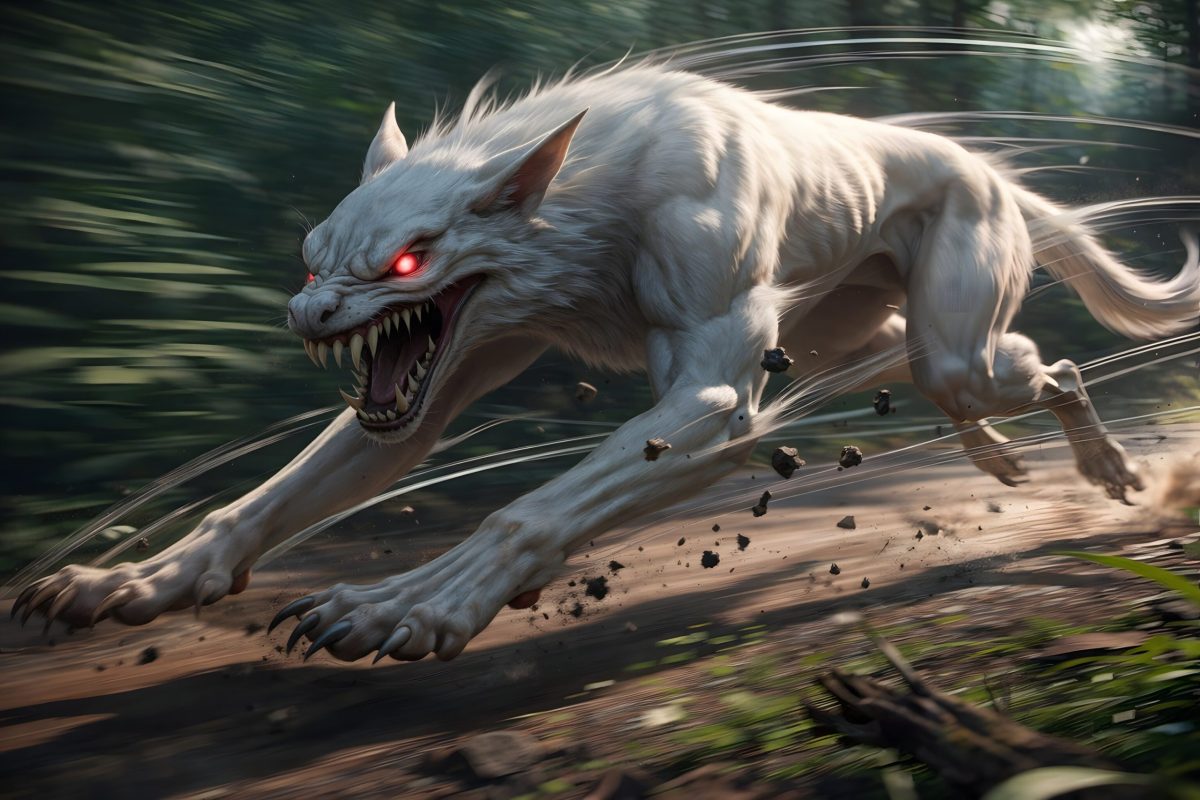
The Tokantongotra is described as a large white animal found in Madagascar. Despite its name meaning “single-foot” or “single-step,” it is not said to have only one leg in front and one behind, as some outsiders believed. It is known instead for its speed, being so fast that nothing can outrun it. It is said to hunt people and to wander at night.

Some claim to have seen it, though such reports are fewer than those concerning the Songomby.


Sources

Sibree, J. (1896). Madagascar before the conquest: The island, the country, and the people, with chapters on travel and topography, folk-lore, strange customs and superstitions, the animal life of the island, and mission work and progress among the inhabitants. New York: Macmillan; London: T. F. Unwin.


Tretretretre

Tradition / Region: Madagascar Mythology
Alternate Names: Tratratratra
Category: Forest dweller, Monkey


The Myth

Tretretretre is a shaggy forest creature from Madagascar said to be about the size of a calf. It has monkey-like forelimbs and hind limbs, a short tail, curly hair, and a round, human-like head and face.

It was described as living in forested regions and being agile, able to climb trees easily. Local people were said to fear it, though it was also said to fear humans in return.

Some accounts suggest that stories of Tretretretre may be linked to large extinct lemurs that once inhabited Madagascar. These included massive, slow-moving tree-dwelling animals that lived until several centuries ago. Their extinction has been attributed to environmental change and human activity.


Sources

Bestiary. (n.d.). Tretretretre. From https://www.bestiary.us/tretretretre