Jeekim

Tradition / Region: Estonian Mythology
Alternative Name: –
Category: Spirit


The Myth

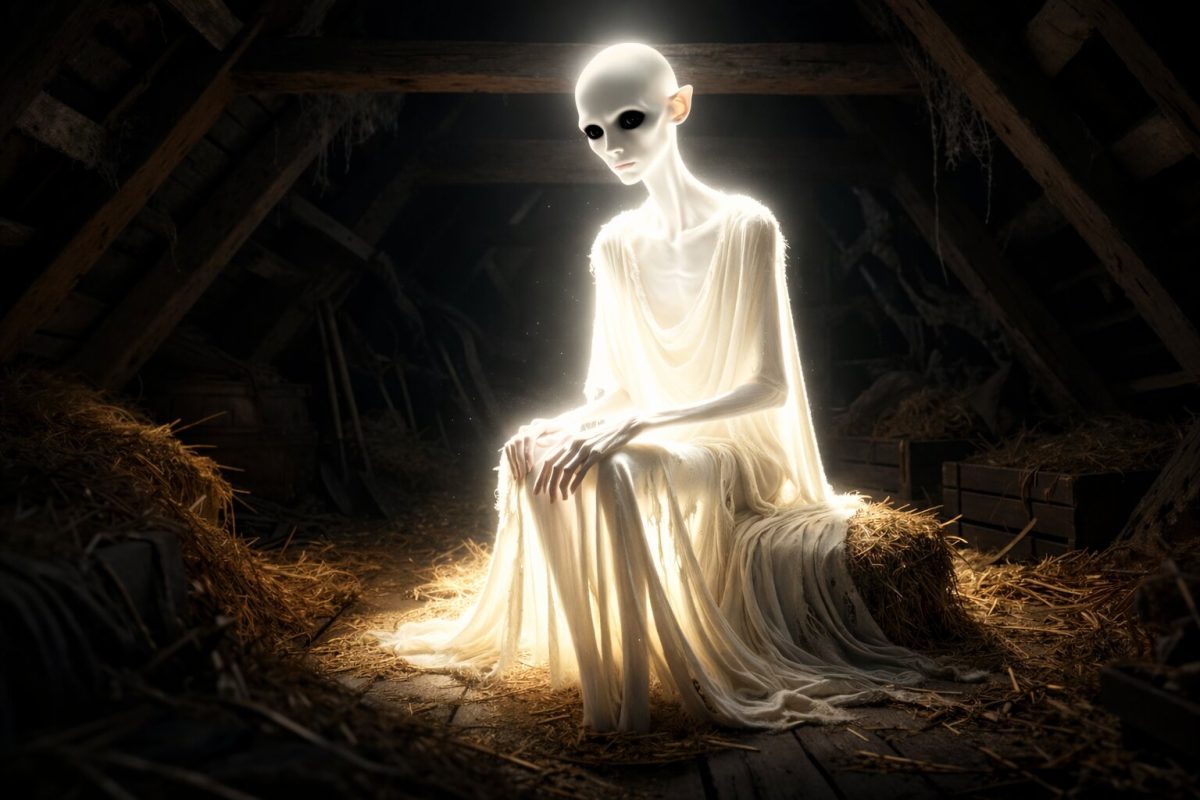
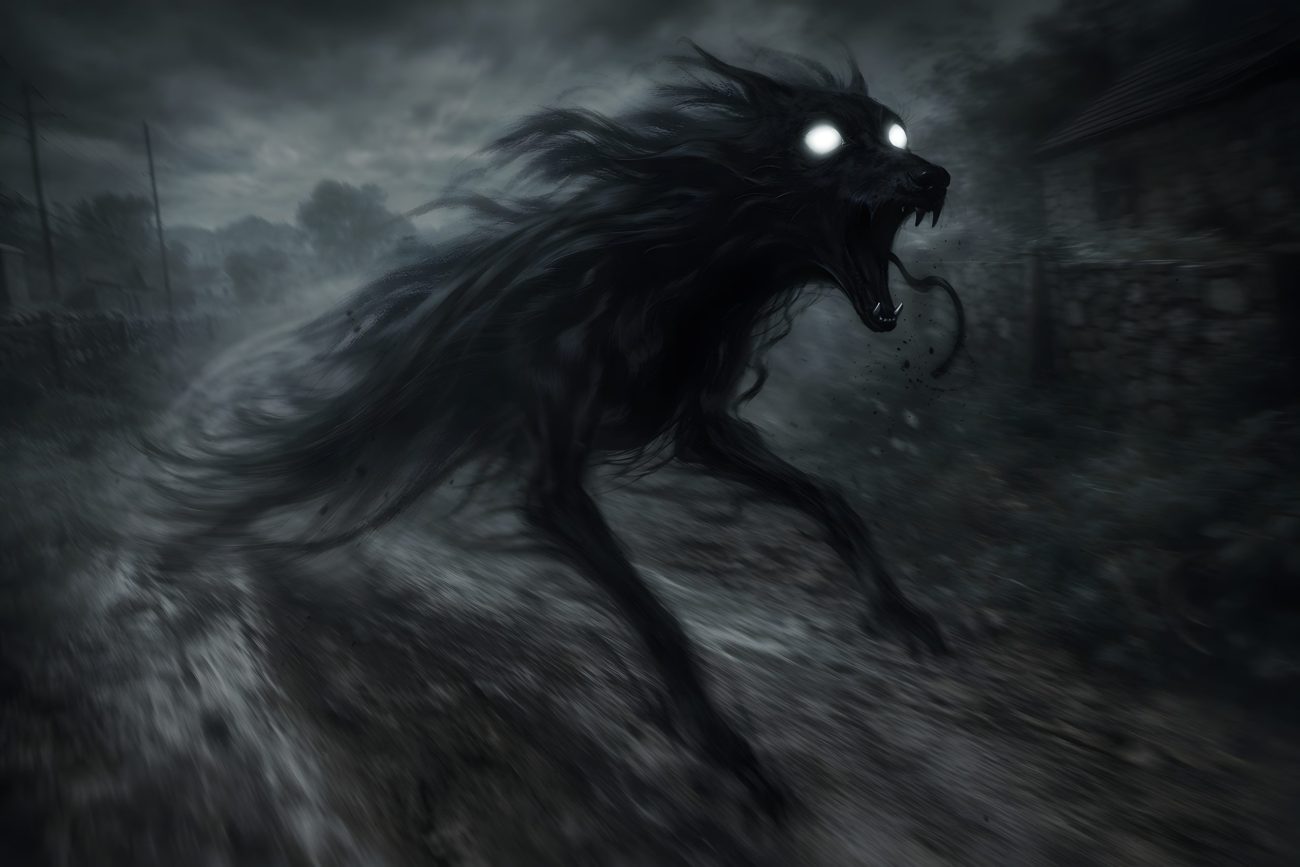
Jeekim is a penitent cemetery spirit found in Estonian legends and myths. The name Jeekim refers to a spirit bound to burial grounds, associated with repentance and unrest rather than active malevolence.

In traditional belief, Jeekim dwells among graves as a presence marked by penitence, suggesting a soul unable to leave the cemetery due to unresolved guilt or unfinished atonement. No detailed deeds or encounters are preserved, and the spirit is known primarily through its association with the place of the dead.

Jeekim belongs to a group of Estonian cemetery spirits whose existence is attested in folklore sources but whose myths survive only in fragmentary form, emphasizing presence and state rather than narrative action.


Kigutilik

Tradition / Region: Inuit mythology
Category: Monster spirit · Failed helping spirit


The Myth

Kigutilik, whose name means “the one with the giant teeth,” is a terrifying spirit encountered during a spring sealing expedition. It rose suddenly from an opening in the ice, described as being as large as a bear but even taller, with long legs swollen at the joints. The creature had two tails, a single enormous ear attached only by a fold of skin, and a mostly bare body with hair growing only in ragged fringes. Its teeth were immense, likened to the tusks of a walrus.

When Kigutilik emerged, it released a thunderous roar—“Ah—ah—ah!”—so overwhelming that the man fled in terror, abandoning the encounter. Because of this fear, he failed to secure Kigutilik as a helping spirit, losing the chance to bind its power.

Kigutilik stands as an example of unclaimed spiritual force in Inuit tradition: a being whose power can only be gained through courage and composure, and which vanishes from those who recoil in fear.


Interpretive Lenses

Religious Readings
Philosophical Readings
Psychological Readings
Esoteric Deep Dive
  • Hermetic Deep Dive
Political / Social Readings
Other

Qungiaruvlik

Tradition / Region: Inuit mythology
Category: Helping spirit · Child snatcher


The Myth

Qungiaruvlik appears in Inuit shamanic lore as a dangerous female helping spirit. In the account drawn and told by Anarqåq, she is seen stealing a child, tucking the infant into her amaut, the carrying pouch of a parka. Though she served as a helping spirit to Anarqåq’s father, her actions crossed a fatal boundary.

When Qungiaruvlik abducts the child, she is confronted and killed by two opposing helping spirits, Puksinå and Navagioq, who belong to Anarqåq’s mother. Their intervention restores balance and halts the harm she had begun.

Qungiaruvlik embodies the perilous edge of shamanic power, where aid and danger exist side by side. Her story reflects the Inuit understanding that spirits are not fixed as good or evil, and that even a helping spirit must be watched, restrained, and opposed when balance is threatened.


Interpretive Lenses

Religious Readings
Philosophical Readings
Psychological Readings
Esoteric Deep Dive
  • Hermetic Deep Dive
Political / Social Readings
Other

Takånakapsåluk

Tradition / Region: Inuit mythology
Category: Sea goddess · Keeper of game · Enforcer of taboo


The Myth

Takånakapsåluk is the stern sovereign of the ocean depths, the source of both survival and catastrophe. From her severed finger joints came the seals, walrus, whales, blubber, and skins that sustain Arctic life; yet from her anger come storms, famine, sickness, and the loss of human souls. She withholds game when humans break taboos, gathering the animals in a pool beside her lamp on the sea floor.

Appeasing her is among a shaman’s greatest feats. When a shaman becomes benak’a’goq—“one who drops to the bottom of the sea”—the community darkens the house, loosens all bindings, and sings ancient songs while the shaman descends. The journey is perilous, marked by rolling stones, the snarling dog in her passage, and the grasp of her father, Isarrataitsoq. Only courage and truth—declaring “I am flesh and blood”—allow safe passage.

In her house, Takånakapsåluk sits turned away from the lamp, her hair matted with the pollution of human wrongdoing, unable to see. The shaman must turn her toward the light, comb and soothe her hair—she has no fingers—and name the causes of her wrath, such as hidden miscarriages and breaches of food taboo. When calmed, she releases the animals, and abundance returns as they surge back into the sea.

Takånakapsåluk embodies a central Inuit law: human conduct governs the balance of the world. The sea gives life—but only to those who live rightly.


Interpretive Lenses

Religious Readings
Philosophical Readings
Psychological Readings
Esoteric Deep Dive
  • Hermetic Deep Dive
Political / Social Readings
Other

Nuliajuk

Tradition / Region: Inuit mythology
Category: Sea goddess · Spirit mistress of marine life


The Myth

Nuliajuk is the powerful and feared mistress of the sea and its animals, ruling over seals, walrus, and all creatures beneath the water. She enforces taboos with ruthless impartiality: when a rule is broken, she may seize any human, not always the guilty one, reflecting the Inuit belief that wrongdoing disturbs a fragile cosmic balance that affects the whole community.

Those taken by Nuliajuk are not always killed. Some are transformed into sea animals, their souls living on in her domain while their bones remain with her. Only rare individuals—an anêrlartukxiâq, one who can return from death through powerful magic—can be restored to human life, often with the aid of a great shaman.

Shamans strong enough may confront Nuliajuk directly, even threatening or beating her to force the return of the stolen. A well-known account tells of Anarte, who died at sea, returned to life, descended to Nuliajuk’s underwater dwelling, and compelled her—by threat—to reassemble his brother’s bones so that he too could live again.

Through Nuliajuk, Inuit tradition expresses a stark moral truth: the sea remembers every breach, and survival depends on respect, restraint, and ritual balance between humans and the unseen powers that govern life.


Interpretive Lenses

Religious Readings
Philosophical Readings
Psychological Readings
Esoteric Deep Dive
  • Hermetic Deep Dive
Political / Social Readings
Other

Nålaqnaq

Tradition / Region: Inuit mythology
Category: Spirit


The Myth

Nålaqnaq, known as the Listener, is a strange and unsettling spirit distinguished by its exaggerated sensory features. It is described as having a large, gaping mouth, two prominent teeth, and a tongue that protrudes outward, emphasizing its nature as a being that listens, hears, and perceives beyond ordinary limits. Its hands are shapeless, each bearing six fingers, marking it unmistakably as non-human.

Nålaqnaq is said to move at a run, suggesting constant alertness and restless awareness, as though it is forever attuned to sounds, words, or cries that escape human notice. Rather than embodying physical strength, it represents heightened perception—a spirit whose power lies in attention and awareness of the unseen.

As the Listener, Nålaqnaq reflects an Inuit understanding that nothing spoken—or unspoken—passes unheard. Its presence reinforces the importance of caution, respect, and mindfulness in speech and behavior, reminding people that words, intentions, and hidden actions may always be perceived by forces beyond the human world.


Interpretive Lenses

Religious Readings
Philosophical Readings
Psychological Readings
Esoteric Deep Dive
  • Hermetic Deep Dive
Political / Social Readings
Other

Putuliq

Tradition / Region: Inuit mythology
Alternate Names: The Spirit of the Many Holes
Category: Helping spirit


The Myth

Putuliq, known as the Spirit of the Many Holes, is an Inuit spirit encountered by a human while fishing for salmon. One day, while the man was fishing on a lake, Putuliq rose up from the depths of the water and approached him. The spirit wished to help a human being and, after this meeting, became the man’s helping spirit.

Putuliq is characterized by having many holes across its body. These holes are believed to possess a special power connected to childbirth. Because of them, Putuliq serves as an accoucheur, aiding women during labor. It is said that when a child sees the many holes of Putuliq, the sight encourages the child, making it easier for the baby to emerge from the womb.

Through this role, Putuliq is remembered as a benevolent helper spirit associated with birth, assistance, and the easing of human suffering.


Interpretive Lenses

Religious Readings
Philosophical Readings
Psychological Readings
Esoteric Deep Dive
  • Hermetic Deep Dive
Political / Social Readings
Other

Puksinå & Navagioq

Tradition / Region: Inuit mythology
Alternate Names:
Category: Helping spirits


The Myth

Puksinå and Navagioq are helping spirits known from Inuit tradition. They are remembered together in a story witnessed by Anarqåq during one spring near a village.

On that day, Anarqåq saw a being called Qungiaruvlik, the helping spirit of his father. Qungiaruvlik was stealing a child, placing it into her amaut. In response, Anarqåq’s mother’s helping spirits appeared: Puksinå, on the right, and Navagioq, on the left.

Together, Puksinå and Navagioq attacked and killed Qungiaruvlik, preventing the child’s abduction. Through this act, they are remembered as powerful protective spirits, intervening directly to stop harm caused by another spirit.


Interpretive Lenses

Religious Readings
Philosophical Readings
Psychological Readings
Esoteric Deep Dive
  • Hermetic Deep Dive
Political / Social Readings
Other

Qarajaitjoq

Tradition / Region: Inuit mythology
Alternate Names: The Hole Animal
Category: Spirit / helping spirit


The Myth

Qarajaitjoq, known as the Hole Animal, is a spirit encountered in Inuit tradition. Its form is strange and unsettling: its head consists only of jaws, with the opening running backward. It has a single arm that extends from the lower jaw, ending in a hand shaped like a loop. Its eyes resemble loose rings, with one located on its back and the other beneath the lower jaw.

According to the account, a person met Qarajaitjoq while wandering alone. After this encounter, the creature became that person’s helping spirit. Qarajaitjoq’s particular power lies in assisting women who have difficulty giving birth, and it is invoked for aid in childbirth.

Through this role, Qarajaitjoq is remembered not as a threatening being, but as a powerful and specialized helper within the spirit world.


Interpretive Lenses

Religious Readings
Philosophical Readings
Psychological Readings
Esoteric Deep Dive
  • Hermetic Deep Dive
Political / Social Readings
Other

Nujaliaq

Tradition / Region: Inuit mythology
Alternate Names: The Hair Woman
Category: Spirit / hunting spirit


The Myth

Nujaliaq, known as the Hair Woman, is a spirit described in Inuit tradition and depicted in drawings by Anarqåq. She is marked by a striking and unusual appearance: her nose is set on the side of her head, her neck has a broad fold of skin, and she has only one arm. Her hair is long, wild, and sticks out in all directions. She has no full body—only a lower back and behind—and her face is white, while the rest of her exposed skin is black and bare.

Nujaliaq carries a seal-skin line, which she uses to catch caribou, despite being associated with land animals rather than sea hunting. She is known especially for her ability to help in the procurement of land game, and her presence is connected to success in hunting caribou.

Through her strange form and specialized skill, Nujaliaq stands out as a powerful and distinctive hunting spirit within Inuit belief.


Interpretive Lenses

Religious Readings
Philosophical Readings
Psychological Readings
Esoteric Deep Dive
  • Hermetic Deep Dive
Political / Social Readings
Other