Chūu

Tradition: Japanese Mythology
Alternative Names: 中有, Chūin, Intermediate Existence
Category: Ghost


The Myth

Chūu refers to the intermediate state between death in the present world and rebirth into the next life. In Japanese Buddhist belief, this period lasts forty-nine days, during which the deceased’s spirit is believed to travel between the world of the living and the world of the dead. This wandering period is sometimes called the journey of Chūu.

During these forty-nine days, the deceased undergoes a series of judgments by the Ten Kings of the underworld. From King Shinkō through King Taizan, these judges pass judgment on the dead, with King Enma confronting the deceased on the thirty-fifth day. Buddhist memorial services are traditionally held every seven days, from the seventh day after death until the forty-ninth day, when the intermediate period ends.

In the Japanese illustrated scroll Hyakuyōzu, a strange ghostlike creature is named Chūu. It stands among bushes with its face concealed and clutches a sotoba, a wooden memorial tablet used in Buddhist funerary rites. Its hidden face and funerary object evoke the image of a spirit lingering between the world of the living and the afterlife, unable to complete its journey.


Sources

. “中有 (Chūu).” 新版TYZ 妖怪図鑑 (New TYZ Yokai Encyclopedia). https://tyz-yokai.blog.jp/archives/1010655125.html


Mamaokka

Tradition: Japanese Mythology
Alternative Names: ママオッカ
Category: Ghost


The Myth

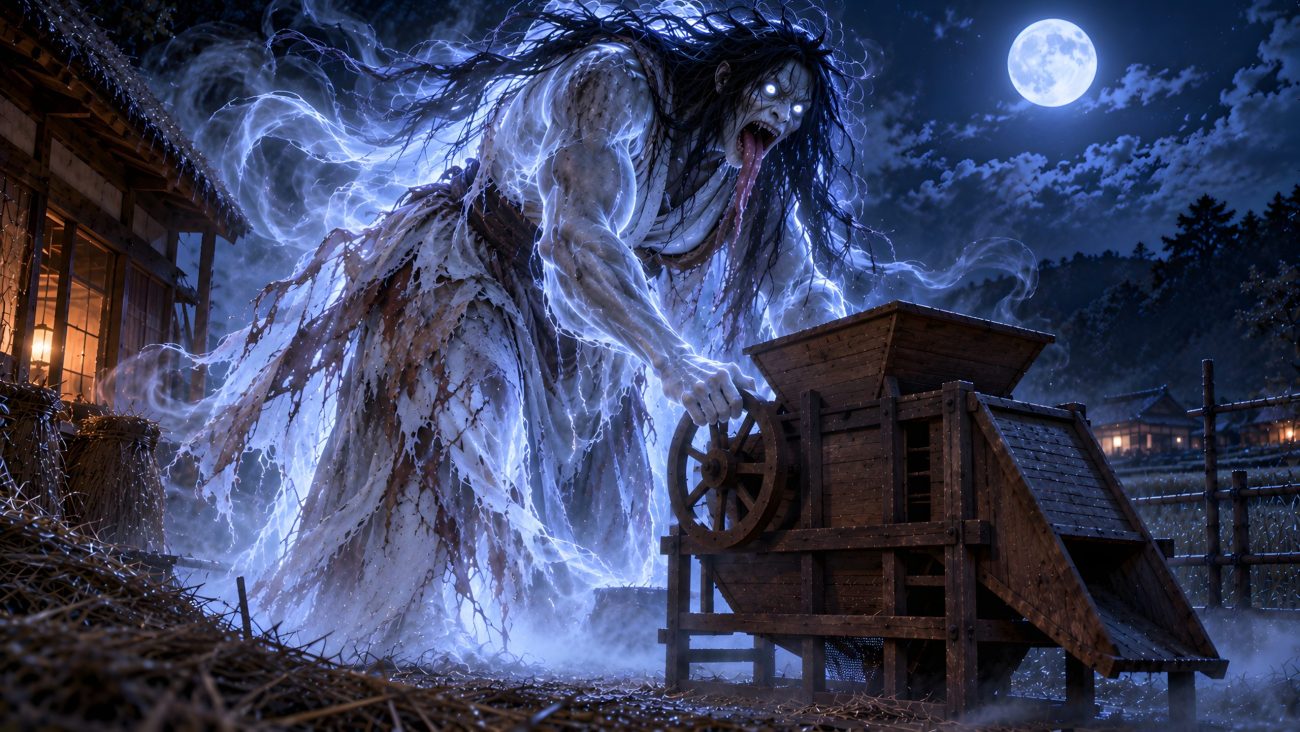
Mamaokka is a terrifying supernatural being said to appear in Sakura, Chiba Prefecture, Japan. According to local belief, an empty winnowing machine could summon this frightening creature when someone turned its mechanism without any grain inside. Mamaokka was described as a terrifying presence or an ogre that emerged in response to this unusual act.

The winnowing machine, known as a tōmi, was a box-shaped agricultural tool used to separate grain from husks and pieces of straw. Turning its internal wheel created a current of air that blew away the lighter waste while the heavier grains fell through a funnel. The belief that operating an empty machine could summon Mamaokka transformed an ordinary farming tool into a source of supernatural fear.


Sources

“ママオッカ (Mamaokka).” 新版TYZ 妖怪図鑑 (New TYZ Yokai Encyclopedia). https://tyz-yokai.blog.jp/archives/1010654452.html


Kasane

Tradition: Japanese Mythology
Alternative Names: Rui, Myōrin Shinnyo
Category: Ghost


The Myth

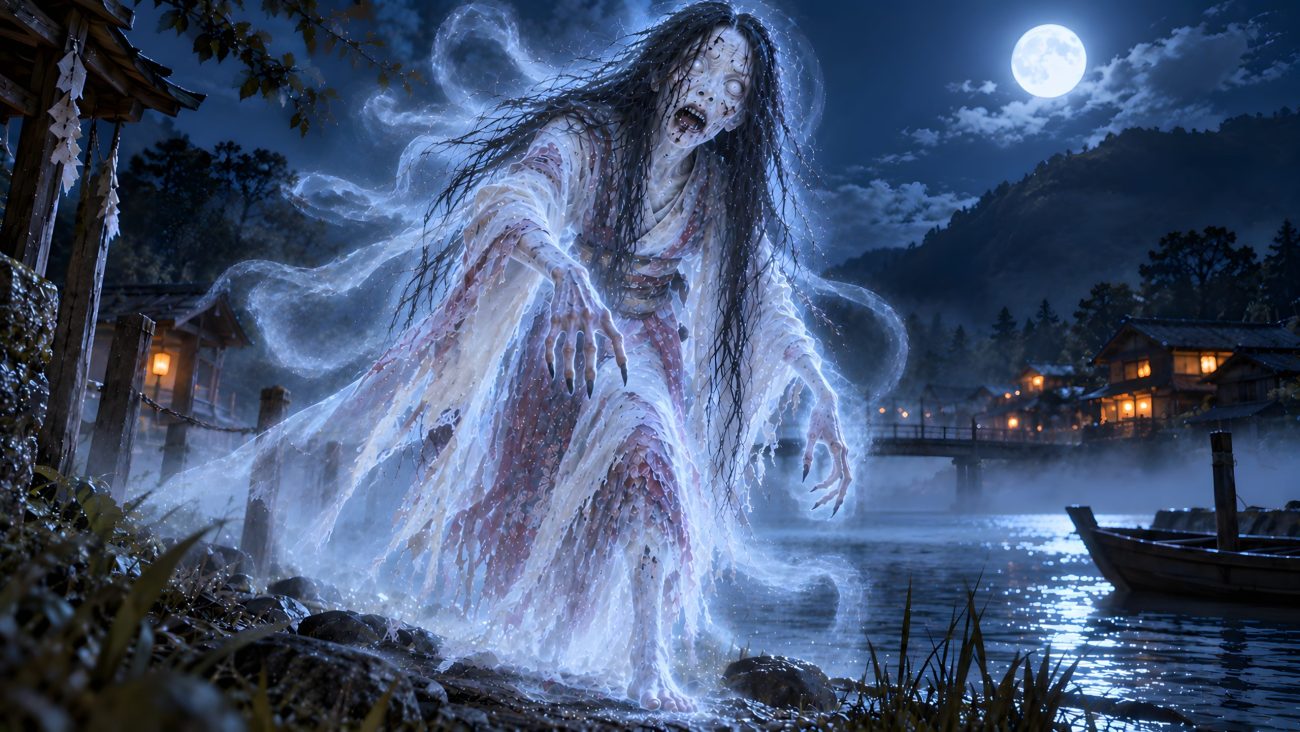
Kasane is a vengeful female ghost associated with the village of Hanyu in Shimōsa Province, in present-day Ibaraki Prefecture. Her story begins with Rui, a woman who was murdered by her husband, Yoemon. Although Rui was deeply disliked for her appearance and temperament, she had inherited valuable farmland, which led the impoverished Yoemon to marry her. Eventually, he decided to kill her so that he could take another wife and keep her property. He pushed Rui into the Kinugawa River, trampled on her chest, forced sand into her mouth, injured her eyes, and strangled her. A man named Seiemon witnessed the murder but remained silent. Yoemon then concealed the crime by claiming that Rui had died suddenly and arranged for her burial under the Buddhist name Myōrin Shinnyo.

Yoemon remarried, but his successive wives died, and his sixth wife eventually gave birth to a daughter named Kiku. When Kiku was fourteen and newly married to Kingorō, Rui’s spirit began possessing her. Kiku collapsed, foaming at the mouth and crying out in pain, before speaking in Rui’s voice and revealing the truth about the murder. Rui explained that she had returned to take revenge on Yoemon and that her resentment had damaged his crops by turning into insects. She also described the suffering of the dead and the torments of hell. Although Yoemon eventually confessed and entered the Buddhist order, his lack of genuine repentance did not end the possession. Kiku continued to suffer until a Buddhist ceremony was performed at Hōzōji Temple, causing Rui’s spirit to disappear temporarily.

During the possession, Kiku described Rui as a terrifying old woman with dark skin, one rotten eye, a wrinkled nose, a wide mouth, and a face marked by smallpox. Her hands were twisted, and one leg was shorter than the other. Yet Rui’s departure did not bring lasting peace. She returned repeatedly, demanding that a stone Buddha be erected and that further prayers be performed. She also revealed the alleged sins of villagers and described the fates of their ancestors, frightening everyone who heard her.

Eventually, the monk Yūten arrived with other monks to free Kiku from the spirit. Their prayers initially failed, and Rui refused to leave Kiku’s body. Yūten finally ordered Kiku to chant the Buddhist invocation herself, despite her fear that Rui would prevent her from doing so. As Kiku chanted, Rui gradually retreated from her chest toward her hand before vanishing. However, the haunting was not truly over: Rui’s spirit later possessed Kiku again, continuing the cycle of suffering and revenge.


Sources

“累 (Kasane).” 新版TYZ 妖怪図鑑 (New TYZ Yokai Encyclopedia). https://tyz-yokai.blog.jp/archives/1010654426.html
Shiroukari

Tradition: Japanese Mythology
Alternative Names: 白うかり, Shiro-ukari
Category: Ghost


The Myth

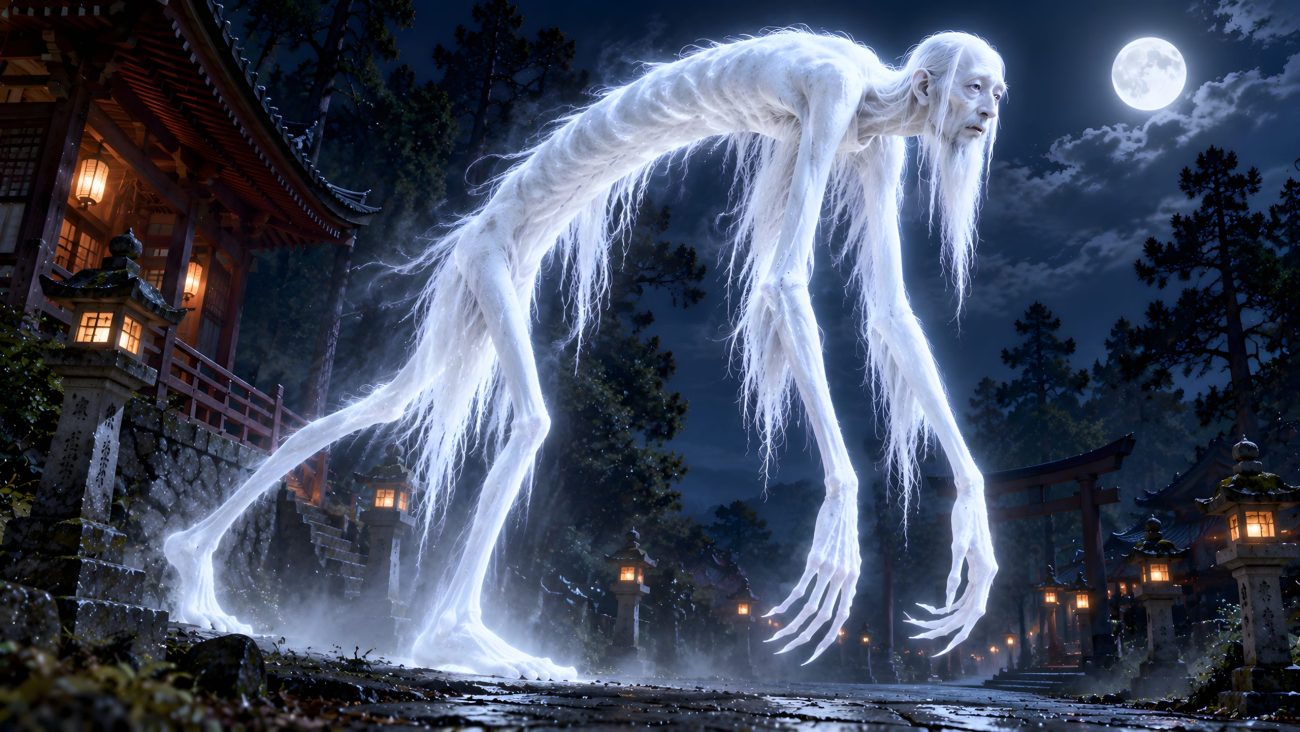
Shiroukari is a strange yokai depicted in certain Japanese illustrated scrolls of supernatural creatures. As its name suggests, it has a completely white body. Its torso is long and slender, giving it an unusual, elongated appearance. It also possesses a beard and hair growing beneath its arms, distinguishing its body from that of an ordinary human.

Shiroukari appears in the Hyakki Yagyō Emaki, an illustrated scroll of supernatural beings created by Oda Yoshikiyo in 1832 and preserved in the Matsui Collection in Kumamoto Prefecture. The scroll depicts 58 different yokai, including several that are unnamed. Shiroukari is one of the unusual creatures whose appearance survives through these illustrated depictions, but no further details about its origins, behavior, or supernatural abilities are recorded.


Sources

“白浮 (Shiro-Ukari).” 新版TYZ 妖怪図鑑 (New TYZ Yokai Encyclopedia). https://tyz-yokai.blog.jp/archives/1010654406.html


Omoshiroshi

Tradition: Japanese Mythology
Alternative Names: 面白, Omoshiroshi
Category: Ghost


The Myth

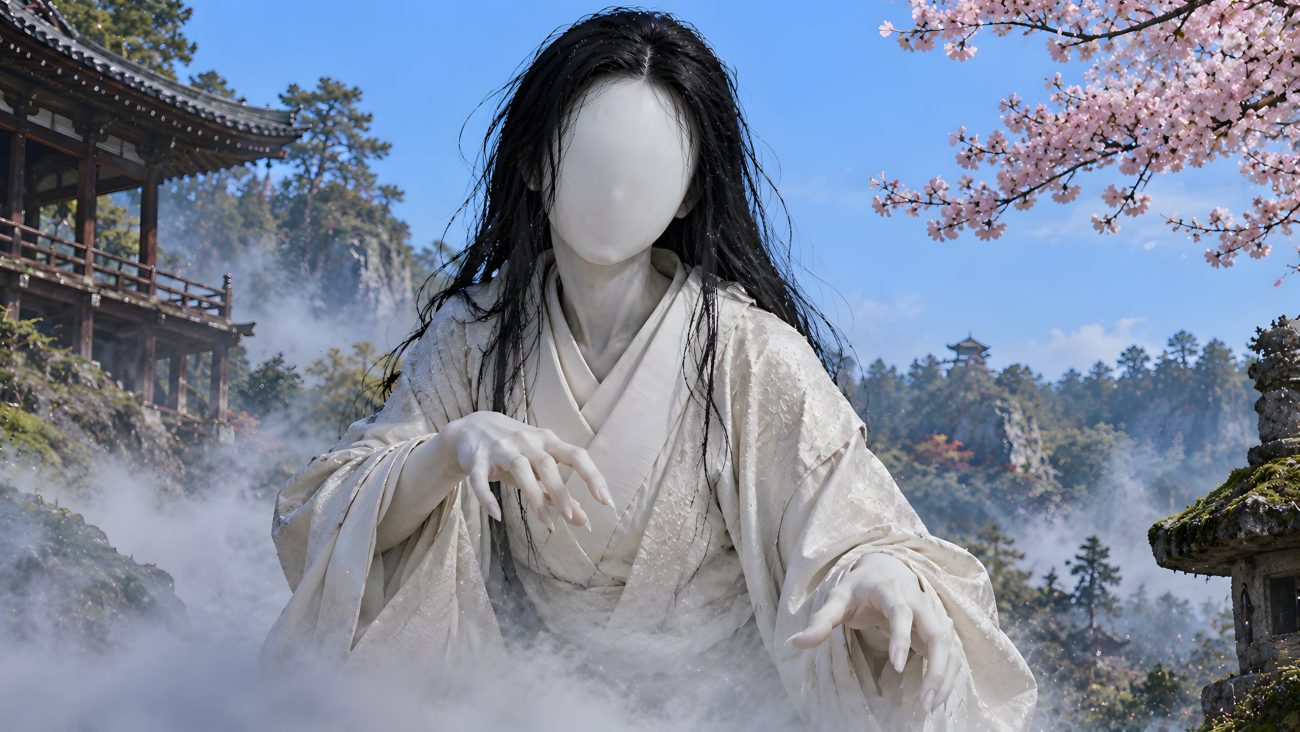
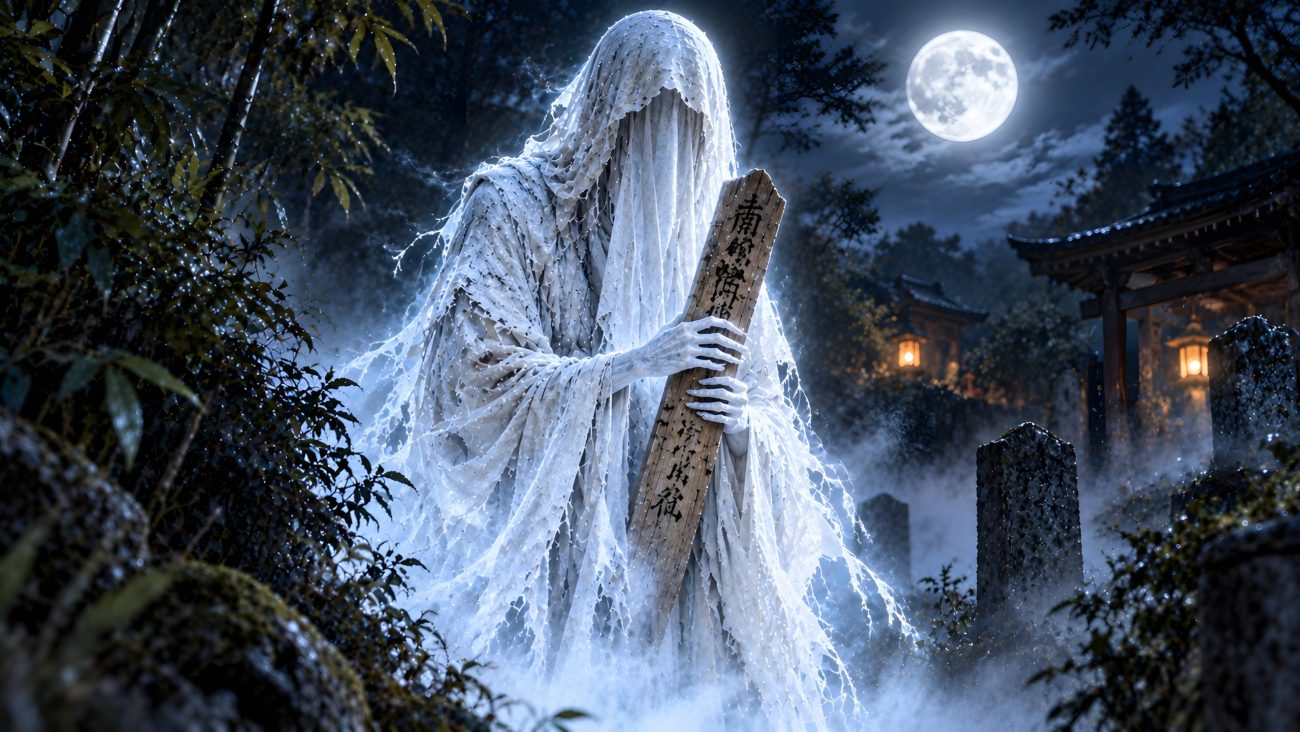
Omoshiroshi is a strange supernatural being depicted as a ghostly figure with only its upper body visible. It wears a white burial kimono, known as a shiro-muku, and has a completely white face without eyes, a nose, or any other facial features. Its blank, featureless head gives it an eerie and unsettling appearance.

Omoshiroshi appears in the Kaidō Zukan, an illustrated scroll of supernatural creatures painted by Miyagawa Shunsui during the middle of Japan’s Edo period. The surviving depiction shows only the creature’s upper body, dressed entirely in white, with its smooth face lacking any recognizable human features. No further details about its behavior, origins, or supernatural abilities are recorded.


Sources

. “おもしろし (Omoshiroshi).” 新版TYZ 妖怪図鑑 (New TYZ Yokai Encyclopedia). https://tyz-yokai.blog.jp/archives/1010654296.html


Wudouni

Tradition: Chinese Mythology
Alternative Names: 屋豆尼, Qiwun
Category: Ghost


The Myth

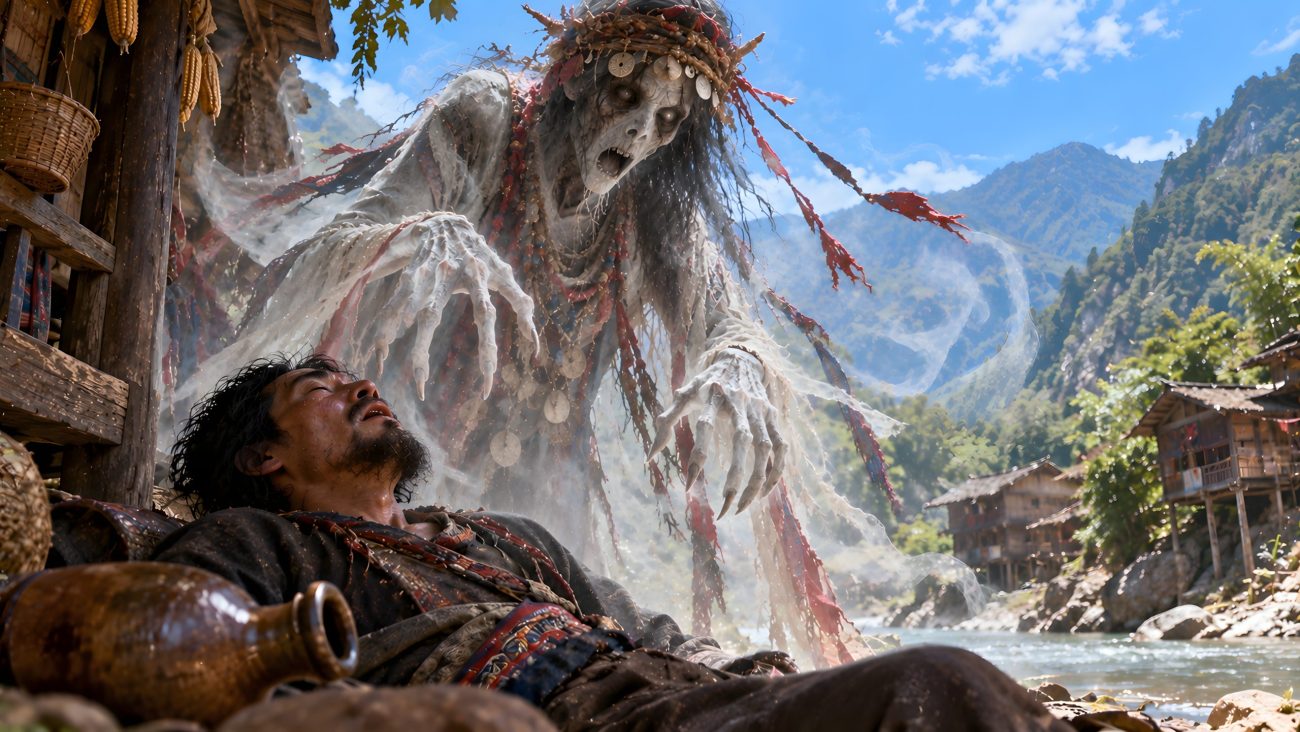
Wudouni is a ghostly being from the mythology of the Lisu people of Yunnan, China. It is also known as Qiwu. According to one tradition, this spirit is connected to Sila Shou and Dala Shou, ancestors of the Tiger clan. Because of this ancestral association, members of the Yang clan among the Lisu do not make offerings to the spirit.

Another account connects the name Wudou with a place along the Lancang River. The spirit is said to cause trouble to people who become drunk, disturbing or harming them while they are intoxicated. Its precise appearance and the exact nature of its supernatural attacks are not described.


Sources

“屋豆尼 (Wūdòuní).” Chinese Wikipedia. Wikimedia Foundation. Accessed October 15, 2026. https://zh.wikipedia.org/wiki/%E5%B1%8B%E8%B1%86%E5%B0%BC


Headless Ghost

Tradition: Chinese Mythology, Taiwan Mythology
Alternative Names: Headless Spirit, Madman
Category: Ghost


The Myth

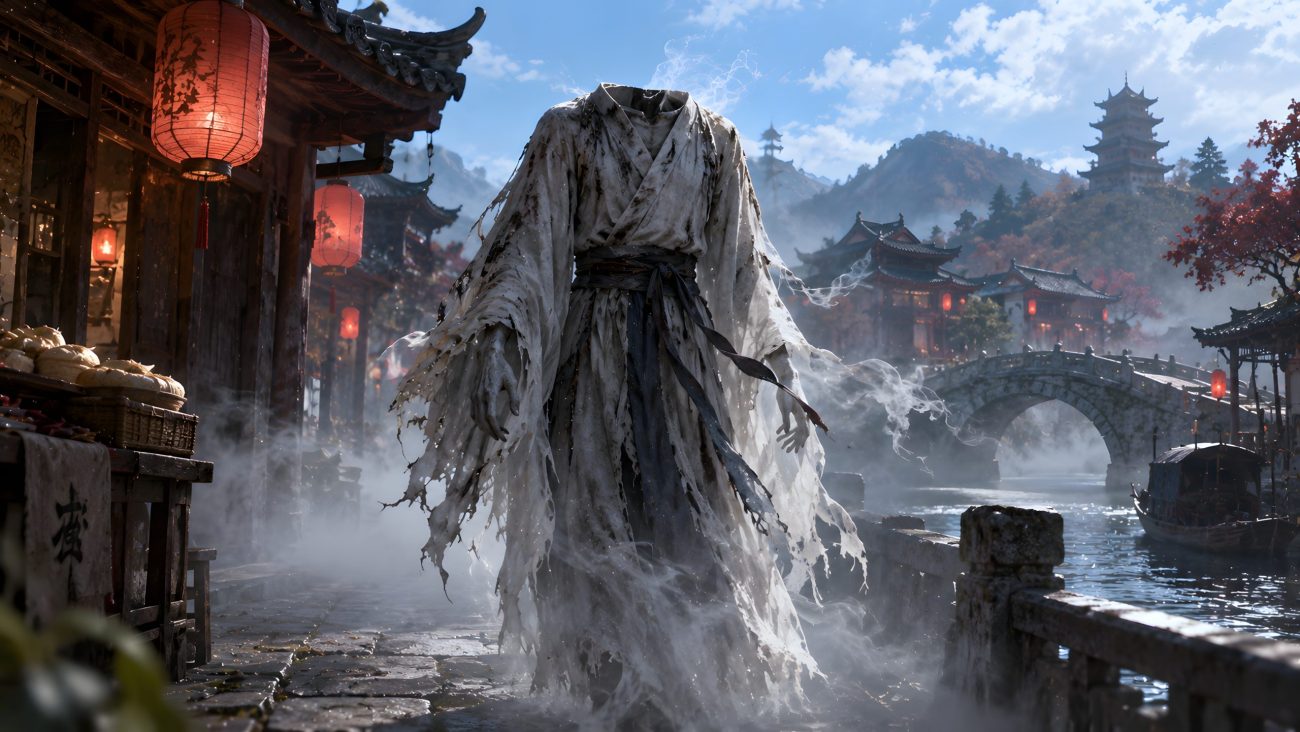
The Headless Ghost is a supernatural being found in Chinese and Taiwanese legends. It appears much like an ordinary person, wearing normal clothing and possessing an otherwise human body, but it has no head. The ghost is said to be someone who was beheaded or killed, returning from death in a horrifying, headless form.

Some stories describe the Headless Ghost as a spirit seeking justice and revenge for the wrongs committed against it during life. One account tells of a ghost whose appearance exposes the crimes of corrupt officials who had killed innocent people. Through its return, the spirit reveals injustice and demands that the truth be acknowledged.

In Dajia, Taichung, a local tale tells of a strange headless ghost that appears at night to buy rice cakes and porridge. Headless ghosts are also known in the traditions of the Yi people of Liangshan, where they are among the many forms of spirits represented in ghost dolls and ritual drawings intended to drive away harmful supernatural beings.


Sources

“无头鬼 (Wútóuguǐ).” Chinese Wikipedia. Wikimedia Foundation. Accessed October 15, 2026. https://zh.wikipedia.org/wiki/%E6%97%A0%E5%A4%B4%E9%AC%BC


Aptakh-Baga

Tradition: Yakut Mythology, Russian Mythology
Alternative Names: Apt aakh baga, Aptah-Bag, Magic Frog
Category: Frog


The Myth

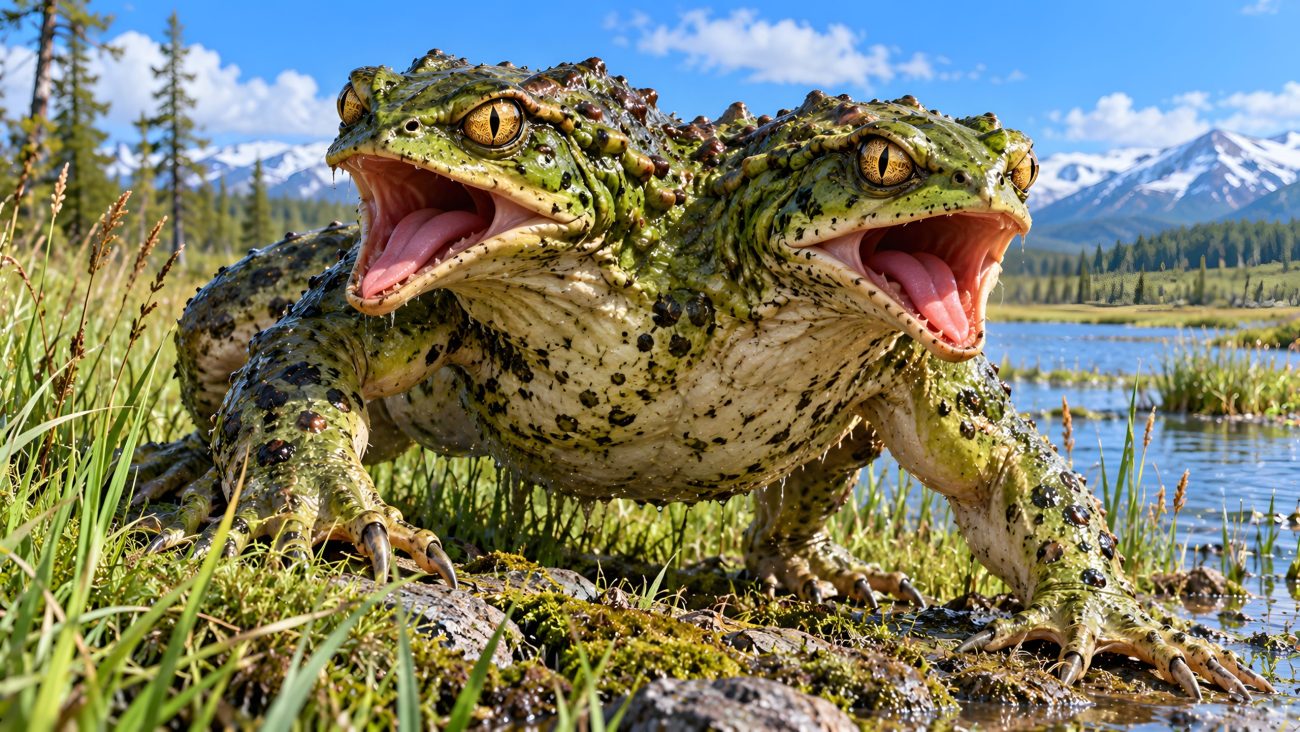
Aptakh-Baga is a magical frog with two heads, feared and revered for its supernatural powers. According to Yakut beliefs, the creature could be captured in thick grass at sunrise, wrapped in birch bark, and thrown into an anthill. Whoever captured it had to flee immediately, without listening to the screams of the unfortunate frog as the ants devoured it alive. Three days later, the person had to return to the anthill and retrieve two of the frog’s bones.

These magical bones granted their owner the power to influence other people. One bone, shaped like a hook, had to be sewn into the inside of the right sleeve, while the other, shaped like a slingshot, was sewn into the left sleeve. Touching someone with the right hand allowed the owner to gain that person’s favour, while touching someone with the left hand made the person leave them alone. The bones could therefore be used to win affection or drive away unwanted attention.

However, the magical bones brought their own troubles. During summer, frogs gathered around their owner from every direction, even when the bones were brushed aside with the left hand. Those who lacked a change of clothing had to cut the bones from their sleeves and hide them carefully. Despite their powers, using the remains of Aptakh-Baga was considered a grave sin among the Yakuts.


Sources

“Аптах-Бага (Aptah-Baga).” New Bestiary (Bestiary.us). https://www.bestiary.us/aptah-baga


Ljaura

Tradition: Albanian Mythology
Alternative Names: Lyauri, Laura, Laurë
Category: Frog


The Myth

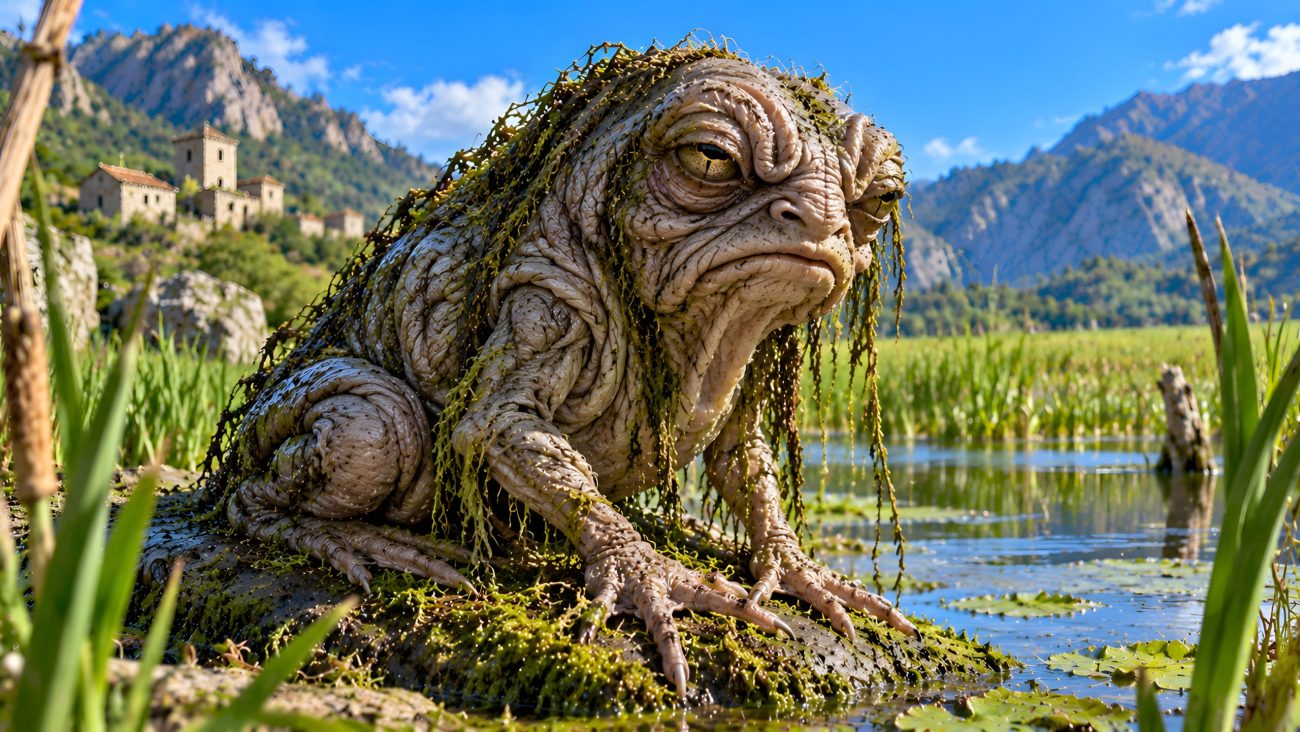
Ljaura is a malevolent supernatural creature from Albanian mythology, usually appearing as an ugly, old woman. She possesses the ability to transform into a small amphibian and is associated with swamps, lakes, and rivers. Although her true appearance is that of a hag, she can hide herself in the water, making her difficult to find.

Ljaura emerges at night along the banks of lakes and rivers, where her eerie cries disturb the darkness. Her voice is hoarse and unsettling, sounding like weeping, sobbing, or a strange trumpet call. If anyone approaches her, she immediately disappears beneath the water. Sometimes she ventures onto roads, where her cries mingle with the barking of village dogs. The dogs seem to sense her presence and begin pursuing her furiously, even when she cannot easily be seen.

The creature is particularly associated with the area around Tirana, where people fear her as an ominous presence near bodies of water. Her nighttime appearances and strange cries make her a frightening figure, an elusive old hag who shifts between human and amphibian forms before vanishing into the darkness.


Sources

“Laura (Ляура).” New Bestiary (Bestiary.us). https://www.bestiary.us/lyaura


Chmuch

Tradition: Polish Mythology
Alternative Names: Ćmuch, Chmukh
Category: Frog


The Myth

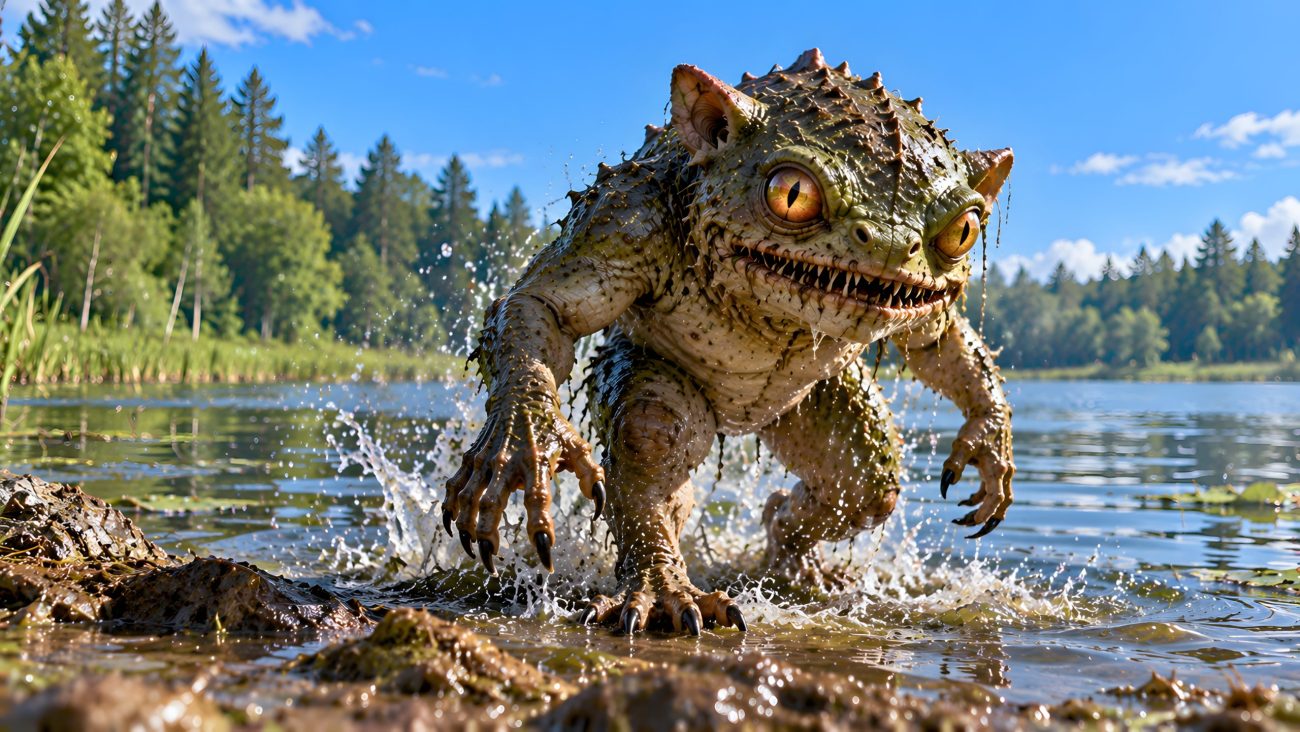
Chmuch is a mysterious water demon that inhabits lakes, ponds, and swamps. It resembles an enormous toad about the size of a dog, with a broad, frog-like body, small rounded ears, and a short tail that curls upward to a point. Despite its fearsome reputation, nobody has ever reliably seen the creature with their own eyes, and its appearance is known only through stories passed down by those who claim to have encountered it.

The Chmuch is said to sense approaching intruders long before they can discover it. Its presence is revealed by strange disturbances around the water: a sudden splash as something invisible plunges beneath the surface, an unexpected swirl of air above the water, or peculiar gurgling and splashing sounds coming from a particular spot. The creature quickly escapes into the water, leaving witnesses unable to explain how it managed to avoid being seen. Unlike other evil spirits, the Chmuch does not approach or attack people. Instead, it frightens them, particularly those considered lazy or unwilling to work.

Because of this reputation, people were wary of places where the Chmuch was believed to dwell. Yet anyone who claimed to have seen the demon risked being mocked as both lazy and foolish, since the creature was supposedly interested in frightening only idle people. This belief made it difficult for anyone to speak openly about an encounter without inviting ridicule, and may explain why the elusive Chmuch remained a mysterious creature known almost entirely through hearsay.


Sources

“Чмух (Chmukh).” New Bestiary (Bestiary.us). https://www.bestiary.us/chmukh