Kigutilik

Tradition / Region: Inuit mythology
Category: Monster spirit · Failed helping spirit


The Myth

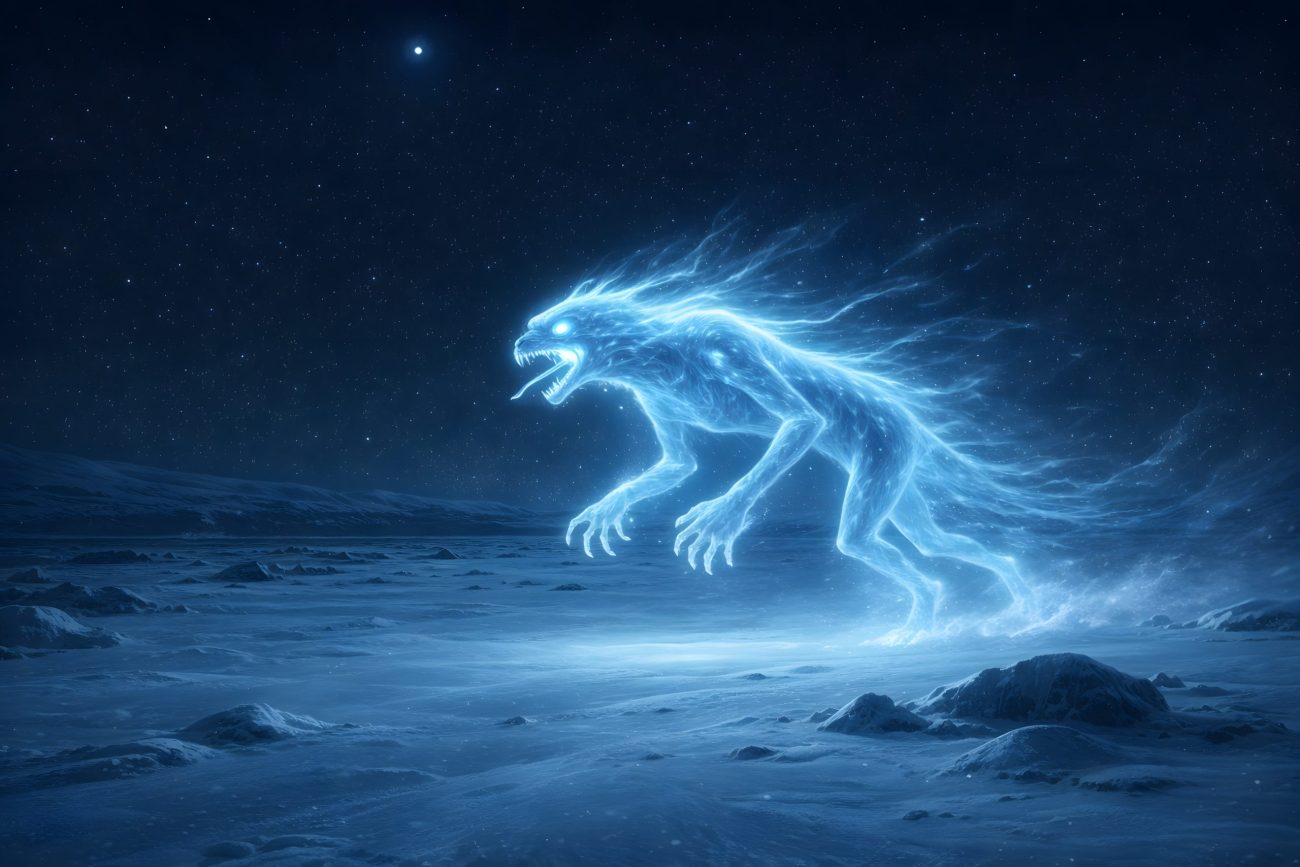
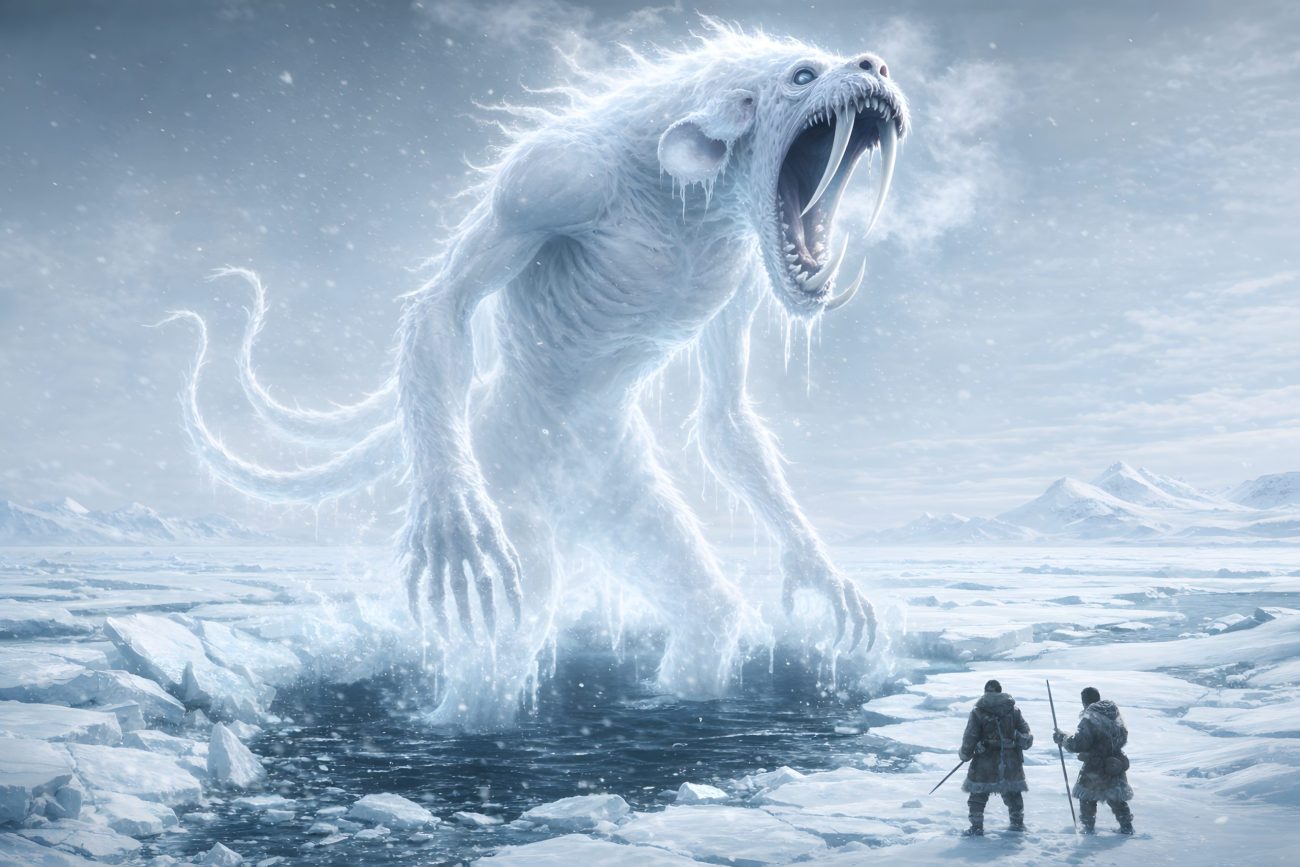
Kigutilik, whose name means “the one with the giant teeth,” is a terrifying spirit encountered during a spring sealing expedition. It rose suddenly from an opening in the ice, described as being as large as a bear but even taller, with long legs swollen at the joints. The creature had two tails, a single enormous ear attached only by a fold of skin, and a mostly bare body with hair growing only in ragged fringes. Its teeth were immense, likened to the tusks of a walrus.

When Kigutilik emerged, it released a thunderous roar—“Ah—ah—ah!”—so overwhelming that the man fled in terror, abandoning the encounter. Because of this fear, he failed to secure Kigutilik as a helping spirit, losing the chance to bind its power.

Kigutilik stands as an example of unclaimed spiritual force in Inuit tradition: a being whose power can only be gained through courage and composure, and which vanishes from those who recoil in fear.


Interpretive Lenses

Religious Readings
Philosophical Readings
Psychological Readings
Esoteric Deep Dive
  • Hermetic Deep Dive
Political / Social Readings
Other

Nålaqnaq

Tradition / Region: Inuit mythology
Category: Spirit


The Myth

Nålaqnaq, known as the Listener, is a strange and unsettling spirit distinguished by its exaggerated sensory features. It is described as having a large, gaping mouth, two prominent teeth, and a tongue that protrudes outward, emphasizing its nature as a being that listens, hears, and perceives beyond ordinary limits. Its hands are shapeless, each bearing six fingers, marking it unmistakably as non-human.

Nålaqnaq is said to move at a run, suggesting constant alertness and restless awareness, as though it is forever attuned to sounds, words, or cries that escape human notice. Rather than embodying physical strength, it represents heightened perception—a spirit whose power lies in attention and awareness of the unseen.

As the Listener, Nålaqnaq reflects an Inuit understanding that nothing spoken—or unspoken—passes unheard. Its presence reinforces the importance of caution, respect, and mindfulness in speech and behavior, reminding people that words, intentions, and hidden actions may always be perceived by forces beyond the human world.


Interpretive Lenses

Religious Readings
Philosophical Readings
Psychological Readings
Esoteric Deep Dive
  • Hermetic Deep Dive
Political / Social Readings
Other

Putuliq

Tradition / Region: Inuit mythology
Alternate Names: The Spirit of the Many Holes
Category: Helping spirit


The Myth

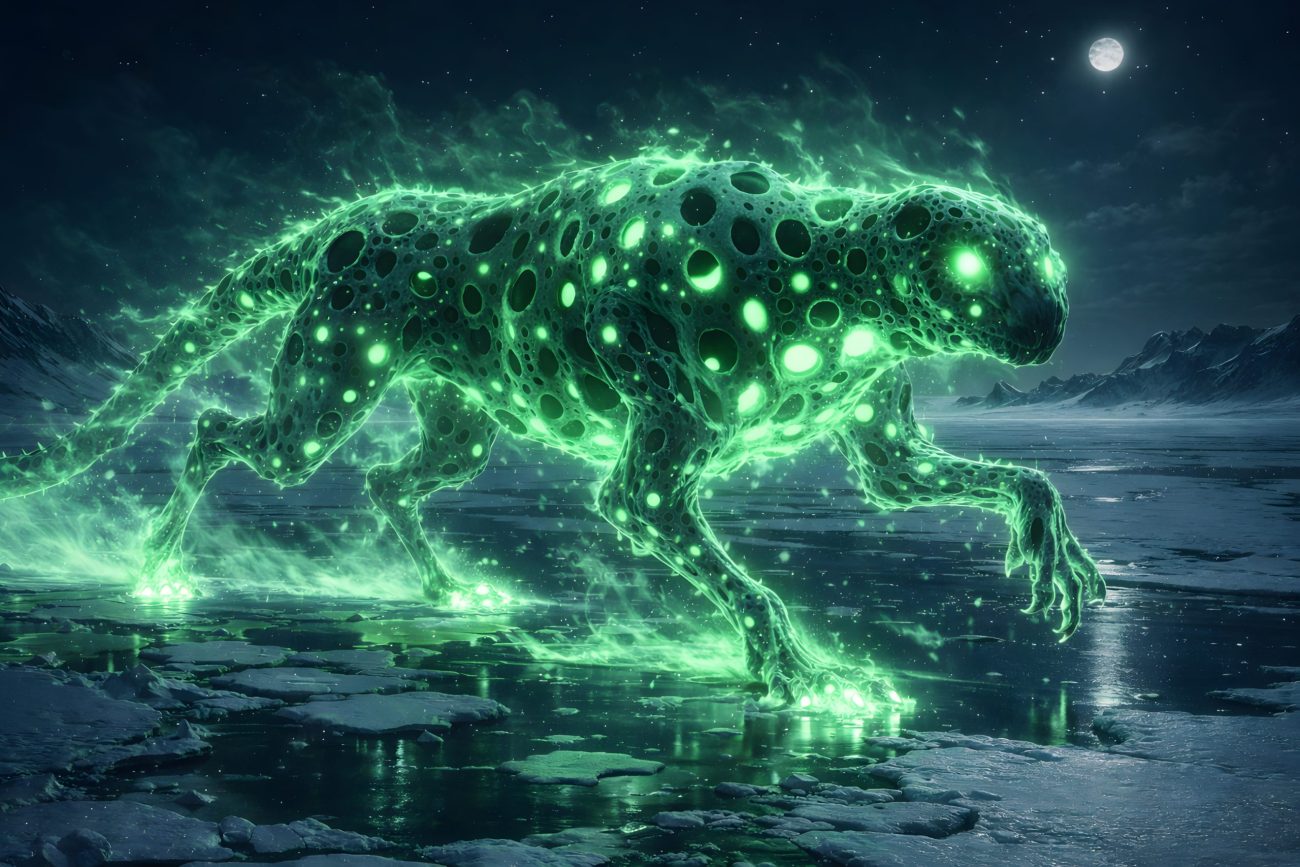
Putuliq, known as the Spirit of the Many Holes, is an Inuit spirit encountered by a human while fishing for salmon. One day, while the man was fishing on a lake, Putuliq rose up from the depths of the water and approached him. The spirit wished to help a human being and, after this meeting, became the man’s helping spirit.

Putuliq is characterized by having many holes across its body. These holes are believed to possess a special power connected to childbirth. Because of them, Putuliq serves as an accoucheur, aiding women during labor. It is said that when a child sees the many holes of Putuliq, the sight encourages the child, making it easier for the baby to emerge from the womb.

Through this role, Putuliq is remembered as a benevolent helper spirit associated with birth, assistance, and the easing of human suffering.


Interpretive Lenses

Religious Readings
Philosophical Readings
Psychological Readings
Esoteric Deep Dive
  • Hermetic Deep Dive
Political / Social Readings
Other

Puksinå & Navagioq

Tradition / Region: Inuit mythology
Alternate Names:
Category: Helping spirits


The Myth

Puksinå and Navagioq are helping spirits known from Inuit tradition. They are remembered together in a story witnessed by Anarqåq during one spring near a village.

On that day, Anarqåq saw a being called Qungiaruvlik, the helping spirit of his father. Qungiaruvlik was stealing a child, placing it into her amaut. In response, Anarqåq’s mother’s helping spirits appeared: Puksinå, on the right, and Navagioq, on the left.

Together, Puksinå and Navagioq attacked and killed Qungiaruvlik, preventing the child’s abduction. Through this act, they are remembered as powerful protective spirits, intervening directly to stop harm caused by another spirit.


Interpretive Lenses

Religious Readings
Philosophical Readings
Psychological Readings
Esoteric Deep Dive
  • Hermetic Deep Dive
Political / Social Readings
Other

Qarajaitjoq

Tradition / Region: Inuit mythology
Alternate Names: The Hole Animal
Category: Spirit / helping spirit


The Myth

Qarajaitjoq, known as the Hole Animal, is a spirit encountered in Inuit tradition. Its form is strange and unsettling: its head consists only of jaws, with the opening running backward. It has a single arm that extends from the lower jaw, ending in a hand shaped like a loop. Its eyes resemble loose rings, with one located on its back and the other beneath the lower jaw.

According to the account, a person met Qarajaitjoq while wandering alone. After this encounter, the creature became that person’s helping spirit. Qarajaitjoq’s particular power lies in assisting women who have difficulty giving birth, and it is invoked for aid in childbirth.

Through this role, Qarajaitjoq is remembered not as a threatening being, but as a powerful and specialized helper within the spirit world.


Interpretive Lenses

Religious Readings
Philosophical Readings
Psychological Readings
Esoteric Deep Dive
  • Hermetic Deep Dive
Political / Social Readings
Other

Kavliliukåq

Tradition / Region: Inuit mythology
Alternate Names:
Category: Spirit


The Myth

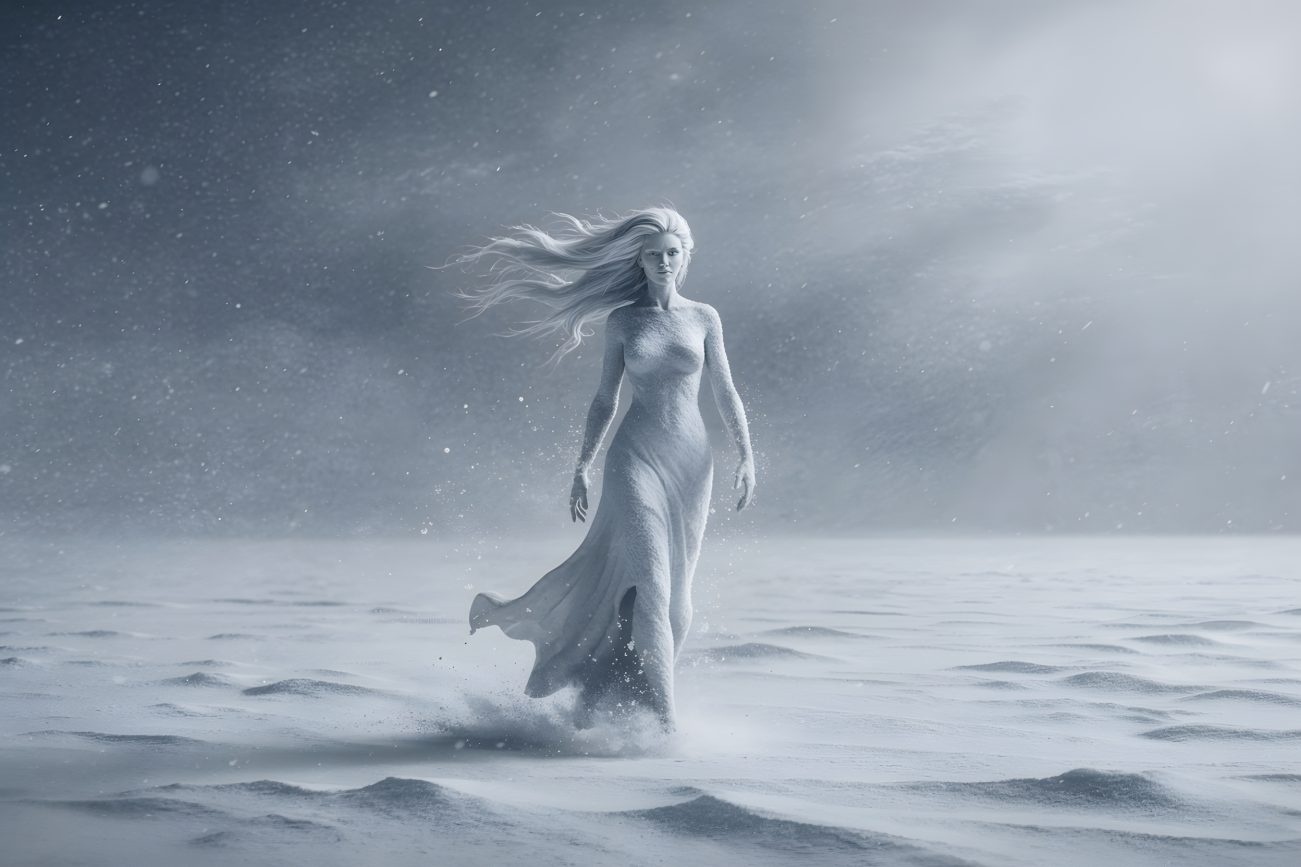
Kavliliukåq is a female spirit known in Inuit tradition. She is identified as a distinct supernatural being, recognized by her feminine form and presence among other spirits encountered in Inuit belief. Little detail is given about her actions, but she is remembered as a named female spirit within the spirit world.


Interpretive Lenses

Religious Readings
Philosophical Readings
Psychological Readings
Esoteric Deep Dive
  • Hermetic Deep Dive
Political / Social Readings
Other

Norssutilik

Tradition / Region: Inuit mythology
Alternate Names:
Category: Spirit


The Myth

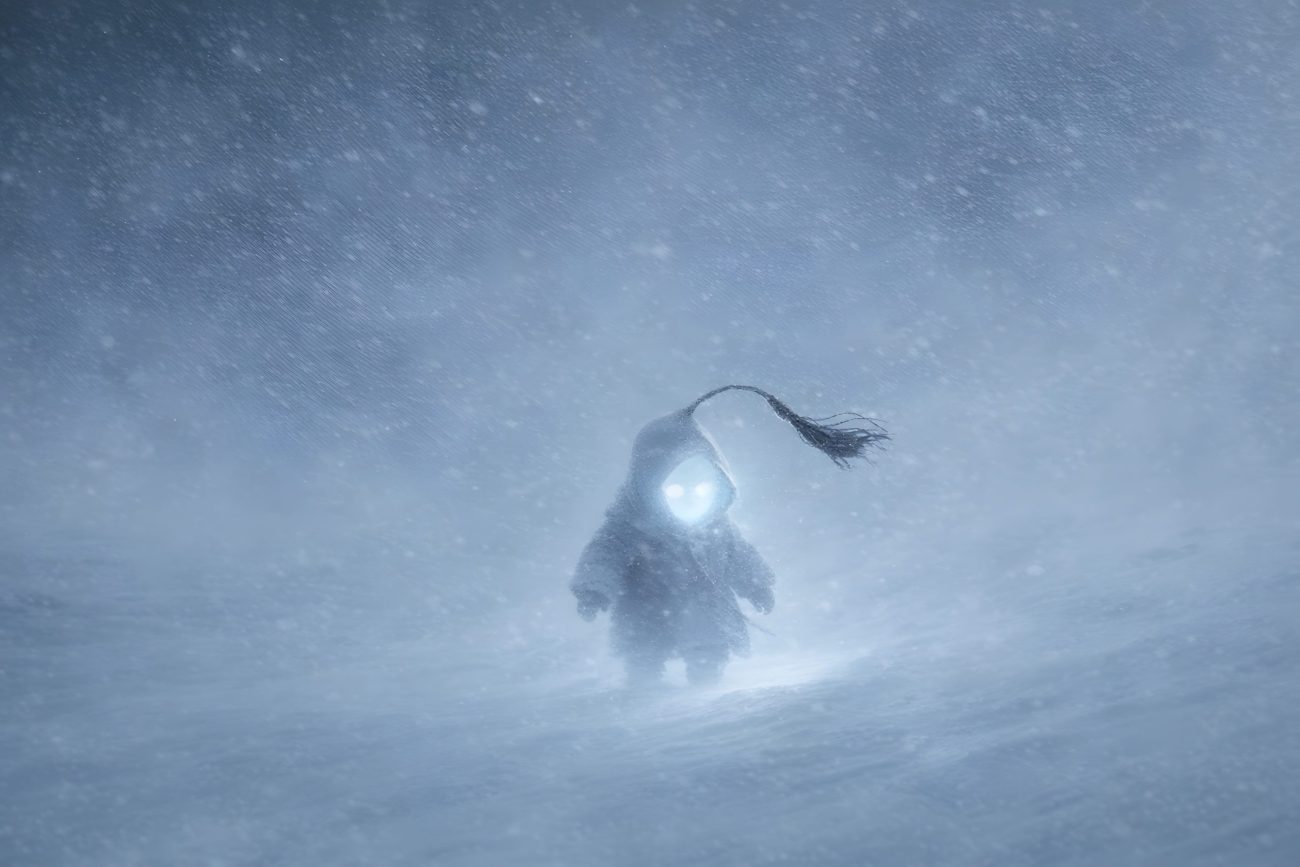
Norssutilik is the name given to two spirits in Inuit belief who share the same defining feature: a norjut, a tassel attached to a flexible stick worn or placed over the hood of a frock.

Because both spirits possess this distinctive tassel, they are known by the same name. The norjut serves as their identifying mark, distinguishing them from other spirits encountered in Inuit tradition.


Interpretive Lenses

Religious Readings
Philosophical Readings
Psychological Readings
Esoteric Deep Dive
  • Hermetic Deep Dive
Political / Social Readings
Other

Aksharquarnilik

Tradition / Region: Inuit Mythology
Alternate Names:
Category: Spirit


The Myth

Aksharquarnilik is a spirit encountered during shamanic healing rituals, acting as a helping spirit who reveals the hidden causes of illness.

In one account, a woman named Nanoraq, the wife of Måkik, lay gravely ill, suffering pain throughout her body and barely able to stand. She was placed on a bench, and all the people of the village were summoned. The shaman Angutingmarik began a ritual to discover the source of her sickness.

Walking slowly back and forth across the floor, Angutingmarik swung his arms while wearing mittens, breathing heavily and speaking in groans and sighs, his voice shifting in tone. He called upon his helping spirits and addressed Aksharquarnilik directly, asking whether the illness had come from a broken taboo—something eaten improperly, wrongdoing by himself, by his wife, or by the sick woman herself.

The patient answered that the sickness was her own fault. She confessed that she had failed in her duties and that her thoughts and actions had been bad. The shaman continued, describing what he perceived spiritually: something resembling peat, though not peat; something behind the ear like cartilage; something white and gleaming, possibly the edge of a pipe.

At this, the listeners cried out together that the woman had smoked a pipe she was forbidden to smoke. They agreed to forgive the offense and urged that it be ignored. But the shaman declared that this was not the only cause. There were further transgressions responsible for the illness.

Asked again whether the cause lay with him or with the patient, the woman replied that it was entirely her own doing. She said there had been wrongdoing connected to her abdomen, something internal that had brought about the sickness.

Through Aksharquarnilik, the hidden violations and their physical manifestations were revealed, allowing the community to acknowledge the causes of the illness and begin the process of purification and healing.


Source

Rasmussen, K. (1930). Intellectual Culture of the Hudson Bay Eskimos. p. 133.


Interpretive Lenses

Religious Readings
Philosophical Readings
Psychological Readings
Esoteric Deep Dive
  • Hermetic Deep Dive
Political / Social Readings
Other