Mamer Goblin

Tradition: Luxembourg Mythology
Alternative Names: The Twelve Goblins of Mamer
Category: Goblin


The Myth

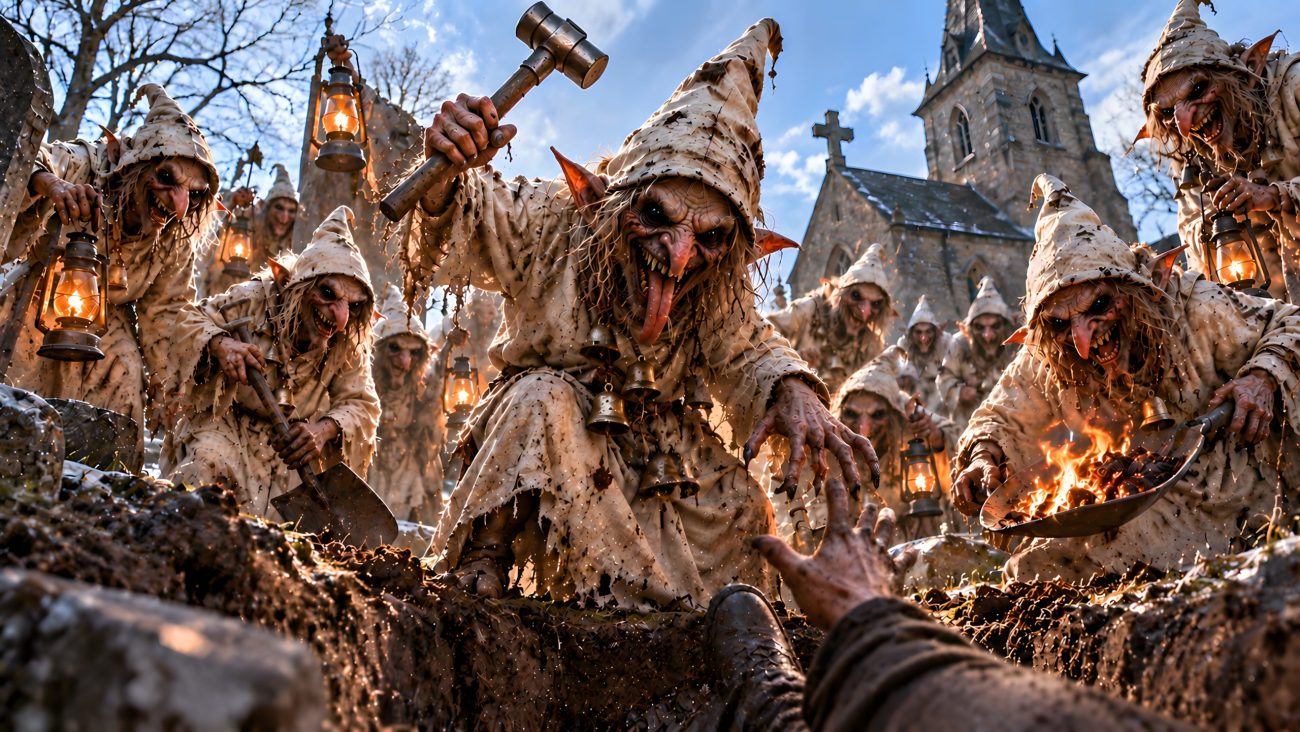
The goblins of Mamer are supernatural beings said to haunt the churchyard of Mamer, Luxembourg. They appear in a legend involving a gravedigger who was known as a drunkard and thief. On Christmas Eve, while digging a grave in the churchyard, he encountered a boy walking along the path and singing. Enraged by the boy’s singing, the gravedigger attacked and beat him. When he later reached for his brandy bottle, he noticed a small man dressed in white sitting four graves away, his tongue hanging out.

Terrified, the gravedigger tried to flee, but the little man held him back. When the gravedigger struggled against him, the spirit struck a metal object with a small hammer, producing a ringing sound. A light then appeared in the sacristy, and twelve more goblins emerged. They seized the gravedigger and forced him into an open grave, where they surrounded him. The first goblin complained that he was cold, and the others brought him fire on a shovel, which he drank. The gravedigger was ordered to drink as well, but when he refused, the goblins forced the burning substance into his mouth.

The punishment grew more brutal as the goblins twisted the gravedigger’s legs over his back and forced his head between them. They eventually threw him out of the grave and back into the churchyard, where he lay unconscious. The following day, he became ill, and the boils covering his body convinced him that the encounter had not been a dream. The legend presents the goblins as frightening supernatural enforcers who punish the gravedigger after his cruel behavior on Christmas Eve.

This account was recorded by Nikolaus Gredt in Treasure of Legends of the Luxembourg Country, published in 1883.


Sources

“Kobolde auf dem Mamer Kirchhof.” SAGEN.at – Luxemburger Sagen. Reproduced by SAGEN.at. https://www.sagen.at/texte/sagen/luxemburg/Kobolde_Mamer.html
Kurakpao

Tradition: Philippine Mythology
Alternative Names: None recorded
Category: Goblin


The Myth

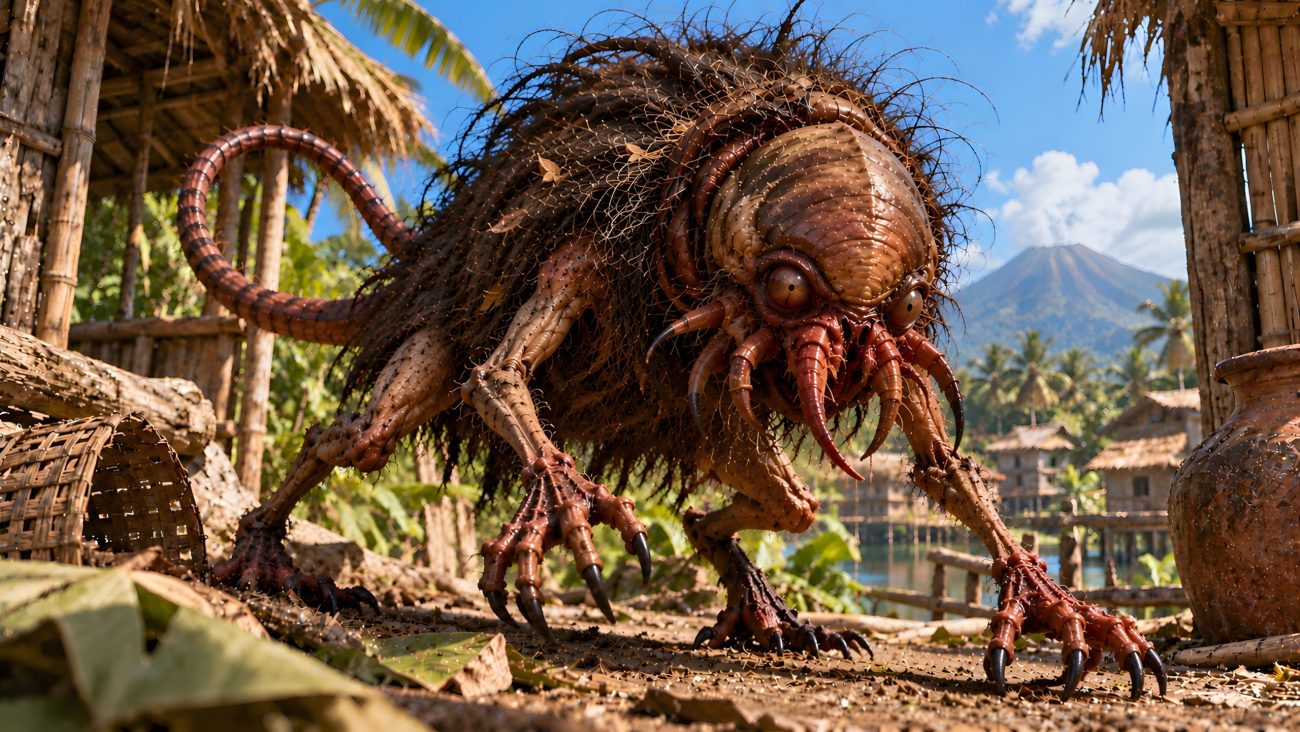
The Kurakpao is a strange and filthy creature in the folklore of the Bicol people of Luzon Island in the Philippines. It is described as an ugly, untidy being with thick, dishevelled hair and large, piercing eyes. Its unsettling appearance makes it a frightening figure in local tradition.

The Kurakpao is said to have a rat-like body and a head shaped like that of a huge tick. This bizarre combination of features contributes to its reputation as a grotesque creature. According to Bicolano folk belief, it is ready to batter anyone it encounters, making it a dangerous presence despite its unusual appearance.


Sources

“Kurakpao.” New Bestiary (Bestiary.us). https://www.bestiary.us/kurakpao/en


Chullachaqui

Tradition: Peruvian Mythology
Alternative Names: Chulla Chaqui
Category: Goblin


The Myth

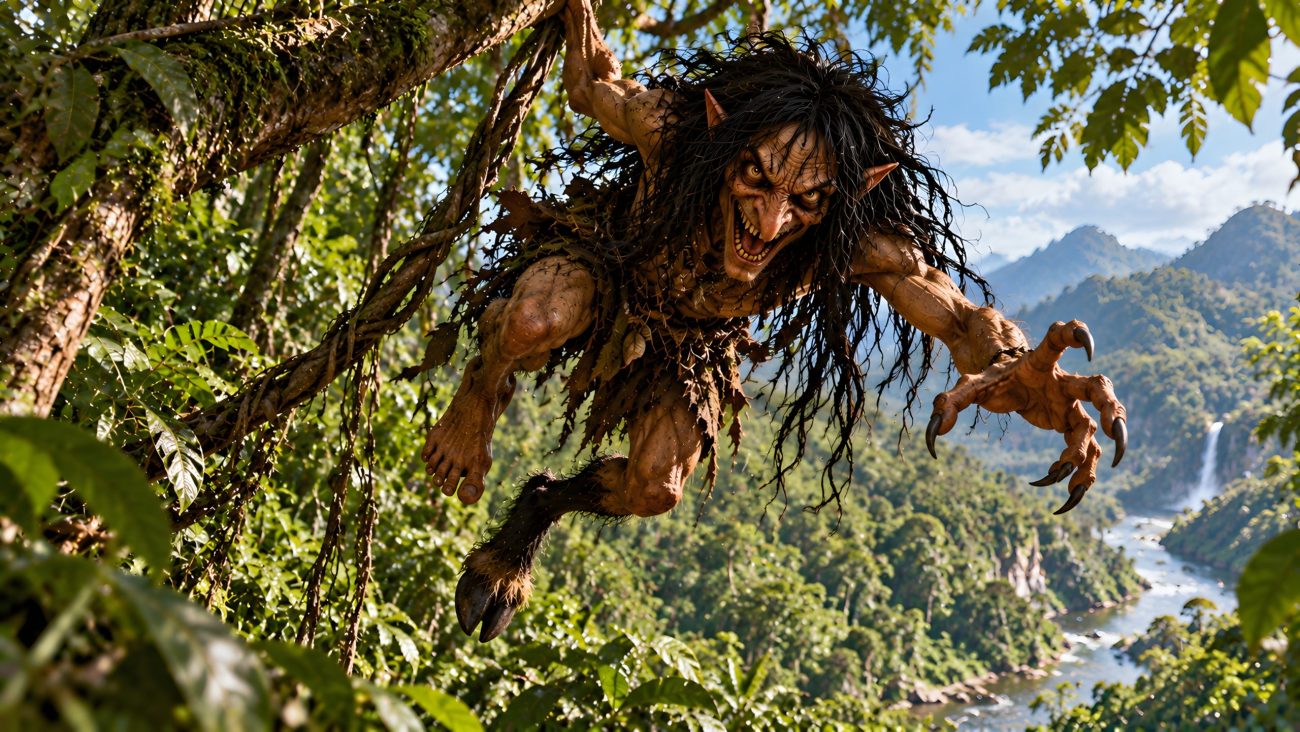
The Chullachaqui is a goblin-like forest spirit associated with the jungles and mountains around Tarapoto in Peru. Its name derives from the Quechua words chulla, meaning “uneven,” and chaqui, meaning “foot,” referring to its most distinctive feature: its mismatched feet. Standing approximately 1.60 metres tall, it is described as a being with a mixture of human and faun-like characteristics. Although it can change its appearance, its left foot retains its unusual shape, which may resemble the foot of a goat, a chicken, or even a chubby baby’s foot, while its right foot appears normal.

Despite sometimes being described as friendly, the Chullachaqui is a dangerous trickster that uses its shapeshifting abilities to deceive people. It can assume the appearance of someone its intended victim knows and trusts, then lead them away from familiar paths and deep into the jungle. Those who follow it may be taken to another dimension, where they are transformed into soldiers serving the goblin-like being, or abandoned in the wilderness far from safety. According to the legend, few of those who suffer this fate survive the ordeal.

The Chullachaqui is associated with particular times of the year, especially the San Juan festivities and the month of December. People who suspect they have encountered the creature are advised to examine its feet carefully. No matter how convincingly it imitates a familiar person, its left foot is said to retain its distinctive goat-like appearance, revealing the supernatural being beneath its disguise.


Sources

“Peruvian Legends: Mythological Creatures and Characters.” Viajes Machu Picchu. https://blog.viajesmachupicchu.travel/en/peruvian-legends-mythological-creatures-and-characters/#elementor-toc__heading-anchor-4


Danters

Tradition: Scottish Mythology
Alternative Names: Dunters, Powries, Dunter, Powrie
Category: Goblin


The Myth

The Danters are supernatural spirits in the folklore of the British Isles, particularly associated with the Old Border between England and Scotland. They are said to inhabit ancient square towers and Pictish fortifications along the border. Also known as Powries, they are described as dangerous goblin-like beings connected with the sacrificial deaths of humans and animals. The name Dunter is an original English spelling, while Powrie is another name for these border spirits.

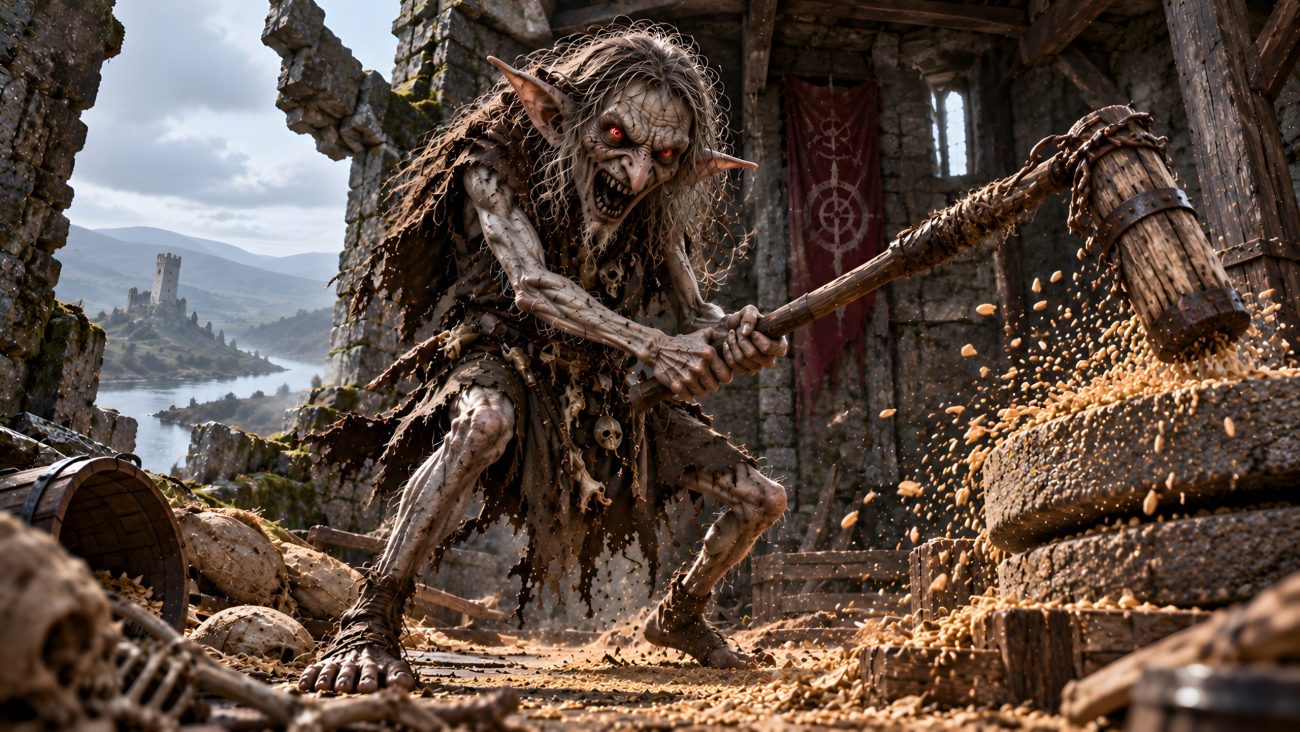
The Danters are believed to haunt old fortifications, where they constantly make noise. Their activity is sometimes described as a faint or persistent sound resembling the beating of flails or grinding barley in stone mills. According to folklore, the sounds grow louder as a tower’s foundations approach a catastrophe. This noise is regarded as an ominous warning of impending death or misfortune, particularly when associated with ancient strongholds.

One tradition connects the Danters to the foundations of old towers, claiming that they were built upon the blood of sacrificial victims. These sacrifices were supposedly made before construction began, possibly involving Picts. The spirits are therefore associated with the violent and mysterious history of the border fortifications they inhabit. Their presence serves as a supernatural reminder of the sacrifices and suffering believed to lie beneath these ancient structures.

The Powries are not easily frightened or subdued. They are described as fearless goblins that cannot readily be panicked, intimidated, or driven away. Their reputation as stubborn and dangerous spirits distinguishes them from more easily frightened supernatural beings in British folklore.


Sources

“Dantery.” New Bestiary (Bestiary.us). https://www.bestiary.us/dantery


Lunkaulemännchen

Tradition: Luxembourg Mythology
Alternative Names: Lunkaule Manikin
Category: Goblin


The Myth

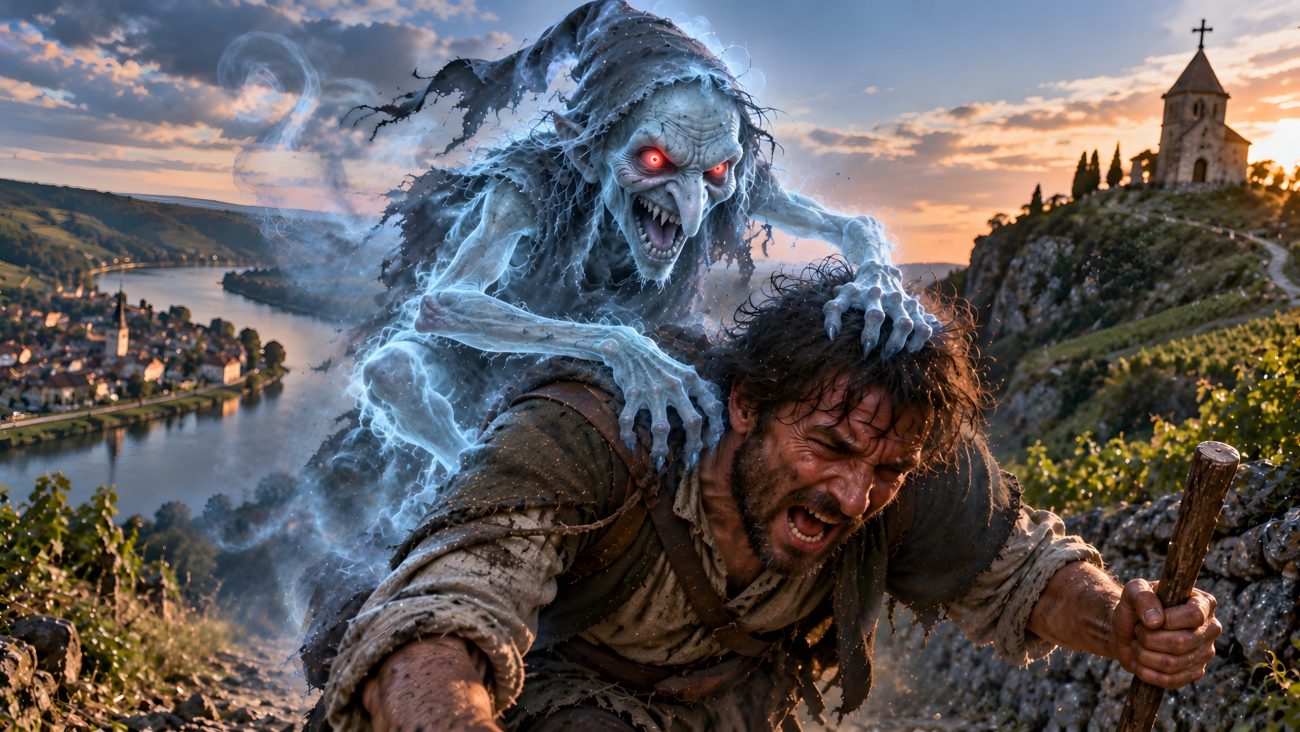
The Lunkaulemännchen is the restless spirit of a wicked man who lived a sinful life, particularly through the dishonest act of moving boundary stones to alter property boundaries. Even death and burial could not put an end to his wicked nature. He is said to wander at night along the banks of the Moselle River near Grevenmacher, where he continues to commit mischief.

The creature is especially feared by late-night travelers near the village of Wellen. On a hill overlooking the village stands an old and venerable chapel, where passing travelers are advised to pray to Heaven for protection. Those who fail to seek divine protection risk a sudden encounter with the Lunkaulemännchen, which leaps onto their backs and forces them to carry it down into the valley.

As it rides its unfortunate victim downhill, the little spirit pinches, strikes, and presses against them relentlessly. It continues tormenting its victim until the exhausted traveler collapses, gasping for breath. The legend presents the Lunkaulemännchen as a punishment-bearing spirit whose nocturnal attacks reflect the wickedness of its former human life.


Sources

La Fontaine, Edmond de. Luxemburger Sagen und Legenden. Luxemburg: Jos. Beffort, 1882.


Hierschermännchen

Tradition: Luxembourg Mythology
Alternative Names: Hierschermännchen
Category: Goblin


The Myth

The Hierschermännchen is a little dwarf said to inhabit the Holzer Busch, a wooded area between Bondorf and Holz in Luxembourg. Unlike many frightening supernatural creatures, this small being is known for interacting directly with people. It often speaks to those it encounters and even allows them to carry it.

A similar phenomenon was reported at a place called Misère, where another small supernatural being, the Hedemännchen, was known. Both traditions appear in Nikolaus Gredt’s Treasure of Legends of the Luxembourg Country, published in 1883. The surviving account provides few further details about either creature, leaving their appearance and precise nature largely unknown.


Sources

“Kobolde in Bondorf.” SAGEN.at – Luxemburger Sagen. Reproduced by SAGEN.at. https://www.sagen.at/texte/sagen/luxemburg/Kobolde_Bondorf.html


El Sombrerón

Tradition: Guatemalan Mythology, Mexican Mythology
Alternative Names: Tzipitio, Tzizimite, The Goblin
Category: Goblin


The Myth

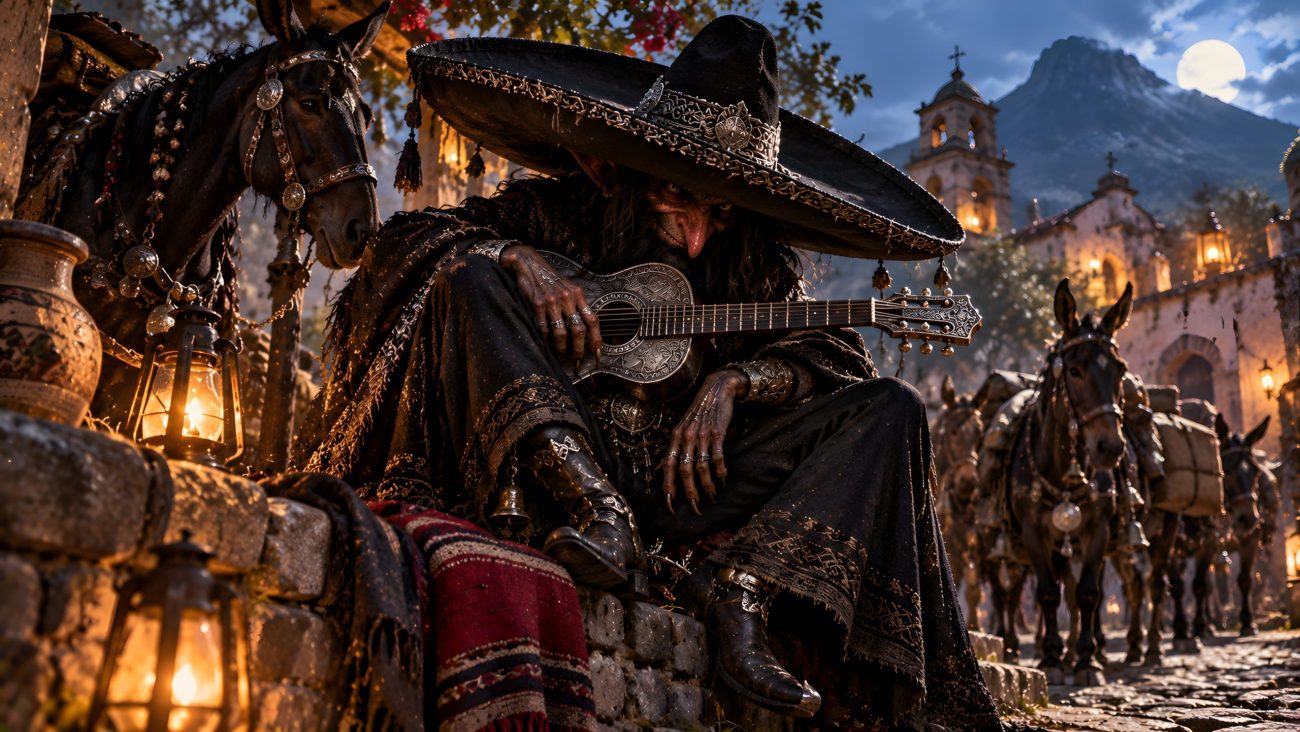
El Sombrerón is one of the most famous legendary figures in Guatemala and is also known as a bogeyman in Mexican folklore. He is commonly described as a man dressed entirely in black, wearing a large black hat, a thick, shiny belt, and boots that make a loud noise as he walks. Despite his imposing appearance, some accounts describe him as a short figure. He carries a silver guitar and is often accompanied by a group of mules carrying coal, which he leads through cities and neighborhoods at dusk.

El Sombrerón is particularly known for his fascination with horses and beautiful young women. He enjoys braiding the manes and tails of horses, and when he cannot find horses, he braids the hair of dogs instead. He is especially attracted to women with long hair and large eyes. When he becomes enamored with a particular woman, he follows her, braids her hair, and serenades her with his silver guitar. Yet his courtship brings suffering rather than happiness: he contaminates her food with soil, leaving her unable to eat or sleep. If a woman returns his affection, he may tie his mules to a post outside her house and spend the night singing and dancing.

One of the best-known versions of the legend concerns Susana, a beautiful young woman who lived in the La Recolección neighborhood of Guatemala City. She had long hair and large hazel eyes and was the daughter of a woman who owned a store. One night, while admiring the full moon from her balcony, Susana encountered a short figure wearing a large hat and carrying a guitar. Captivated by her beauty, El Sombrerón began singing to her, but her parents discovered her outside and ordered her back into the house.

From that night onward, Susana could neither sleep nor eat properly. El Sombrerón appeared inside the house or sang to her from the street, while the food served to her was repeatedly contaminated with soil. Desperate to save their daughter, her parents cut her hair and took it to a church, where a priest blessed it with holy water and prayers. A few days later, El Sombrerón ceased his visits, and Susana was finally free of his influence.

The legend of El Sombrerón remains an important part of Guatemalan folklore, alongside stories such as those of La Llorona, Cadejo, and Siguanaba. Traditionally, the tale has also served as a warning directed at young women, encouraging them to observe the social and moral expectations of their community. His nighttime serenades, mysterious appearances, and obsessive pursuit transform what might seem like romantic courtship into a frightening supernatural encounter.


Sources

“El Sombrerón.” Wikipedia: The Free Encyclopedia. Wikimedia Foundation. Accessed October 17, 2026. https://en.wikipedia.org/wiki/El_Sombrer%C3%B3n


Santenberg Goblin

Tradition: Swiss Mythology
Alternative Names: Goblins of the Santenberg
Category: Goblin


The Myth

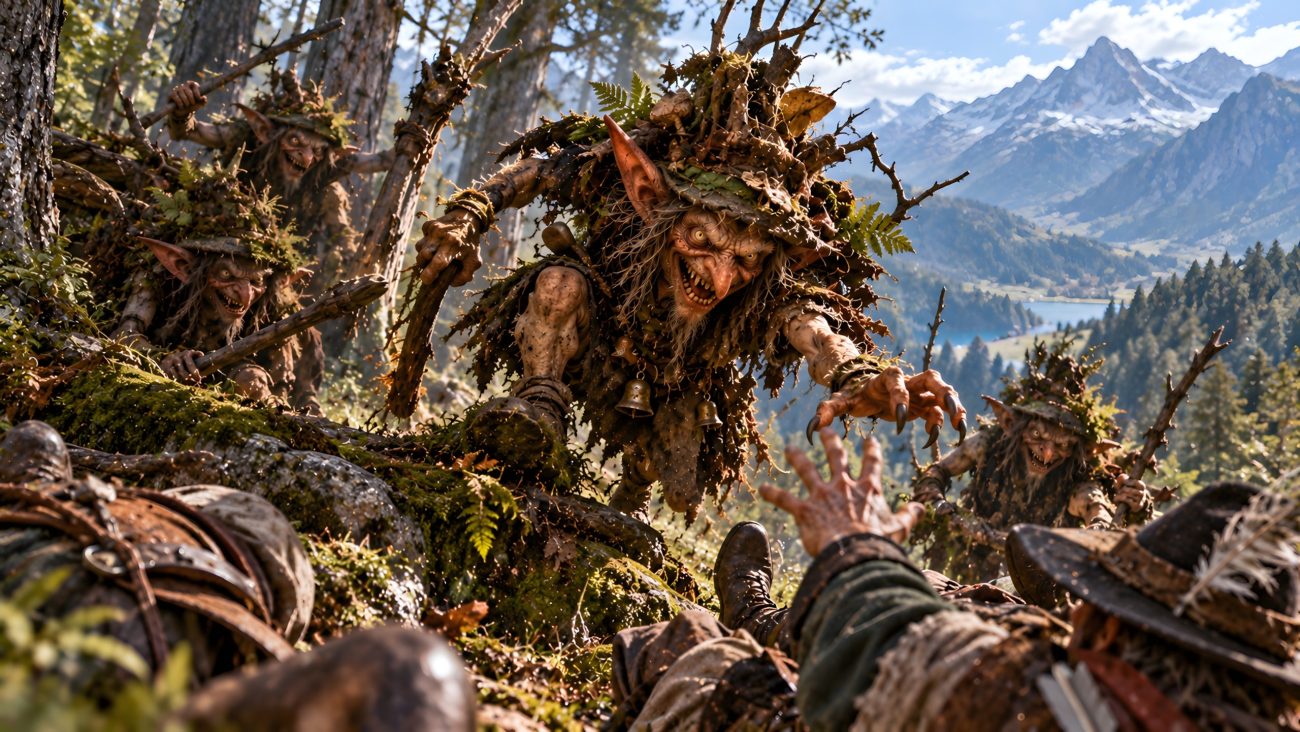
The Goblins of Santenberg are mischievous supernatural beings said to inhabit the forests of Santenberg, a hill near Wauwil in the Swiss canton of Lucerne. They served the wild huntsman Türst, who is identified in the legend with the pagan god Wodan. When hunters came to the mountain in pursuit of a legendary unicorn, Türst ordered the goblins to protect it and prevent the hunters from reaching their quarry.

The goblins used a variety of tricks to obstruct the hunters. They threw clubs between their legs to make them stumble and jabbed their calves with sharp sticks. If a hunter managed to get past these obstacles, Türst himself would invisibly position himself before the unicorn, allowing the animal to escape. The goblins also helped Türst protect the finest stags and eagles from hunters, preserving the forest’s strongest breeding animals.

However, the goblins were ultimately excluded from Türst’s supernatural retinue. After a nobleman’s cruel actions led to the death of Türst’s beloved, the wild huntsman gathered his ancient allies and destroyed the knight’s fortress in revenge. Türst and his companions subsequently became associated with the Wild Hunt, which swept across the region during the violent storms of winter. The goblins of Santenberg, however, were not permitted to join this fearsome company.

According to the legend, the rejected goblins eventually transformed into poisonous ticks. These creatures attacked passersby and carried terrible, sometimes deadly diseases. Their transformation serves as the final fate of the goblins who once defended the forests and their wildlife under Türst’s command.


Sources

“Die Rache des Türst.” SAGEN.at – Schweizer Sagen. Reproduced by SAGEN.at. https://www.sagen.at/texte/sagen/schweiz/luzern/rache_tuerst.html


Kobold

Tradition: German Mythology
Alternative Names: Kobolt, Kobolde, Cobold
Category: Goblin


The Myth

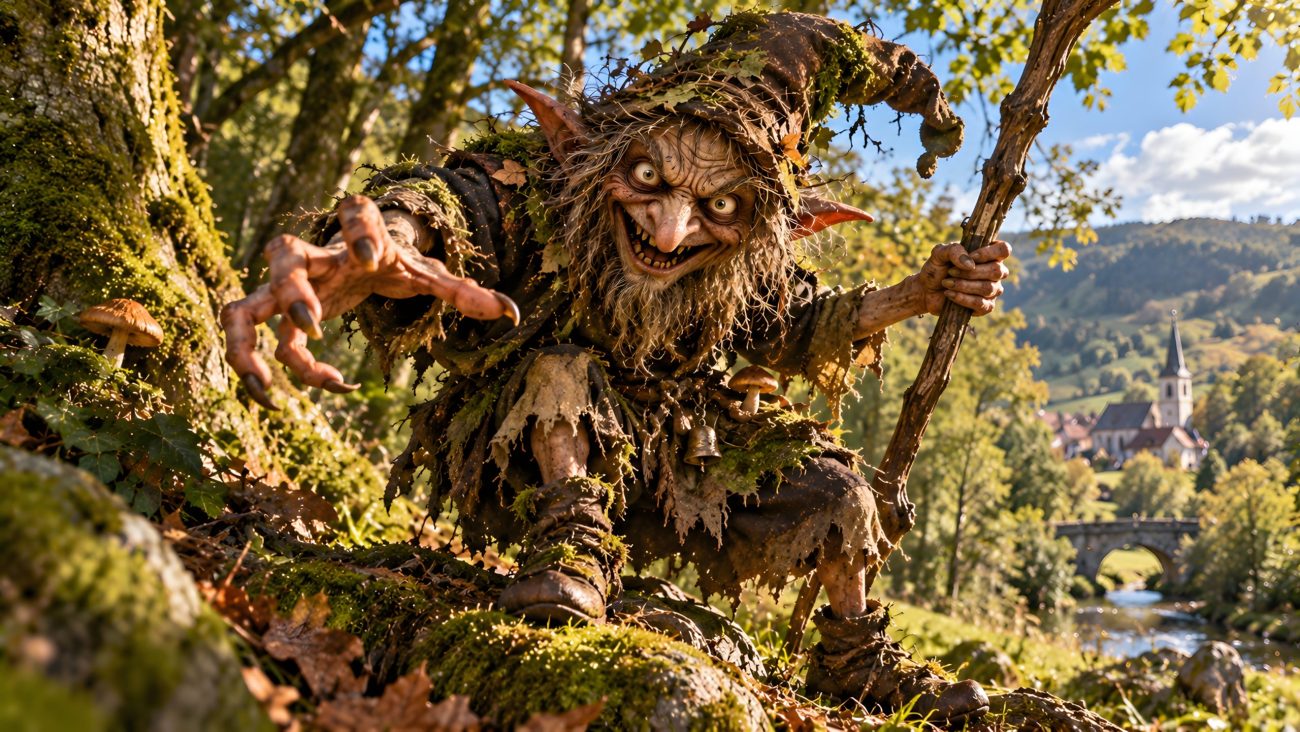
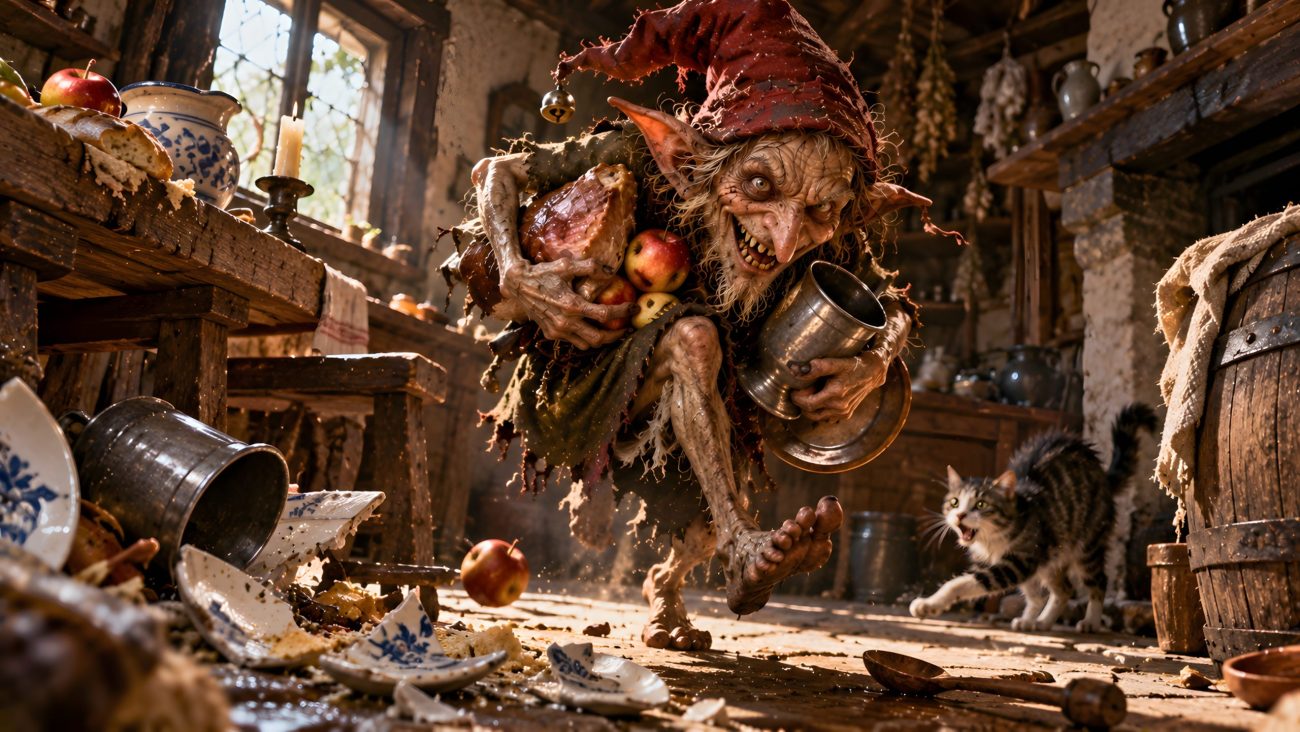
The Kobold is a supernatural household spirit from German folklore, associated with both mischief and helpful service. Kobolds often perform domestic chores in exchange for offerings, washing dishes, cleaning kitchens, sweeping floors, and caring for livestock. They may also assist tradespeople and shopkeepers. However, their helpfulness is conditional: when mistreated or neglected, they can damage property and torment the people they live alongside. Kobolds are generally connected to a particular household, and some traditions claim that every house has its own resident spirit, whether its inhabitants welcome it or not.

Kobolds can inhabit hearths, barns, stables, woodhouses, and the beer cellars of inns. They typically perform their work at night, completing tasks that the human occupants have left unfinished. Some regional spirits have more specialized duties, such as the Wolterken, which grooms horses, feeds pigs, and carries water to livestock. Other kobolds are associated with particular occupations or locations. The Klabautermann, for example, is a shipboard spirit sometimes classified as a type of kobold, while mine spirits known as Kobel or Bergmännlein are associated with underground places. These overlapping traditions make it difficult to draw a strict boundary between kobolds and other household or nature spirits.

The appearance of a kobold varies considerably. It may resemble a small child wearing a fine jacket, a wrinkled old man in a pointed hood, a bearded figure, an animal, or even an object. Some are said to manifest as a shaft of fire with a head-like shape. Red clothing and pointed red caps are characteristic of certain varieties, including the Hütchen, whose name means “little hat.” Other named types include the northern German Niss and Puk, the latter related to the English folkloric Puck. The shapeshifting household spirit Hinzelmann, sometimes depicted as a feather or an animal, is another related figure, distinct from the Heinzelmännchen of Cologne.

Traditions also describe different ways in which a kobold might enter a household. In one account, a person takes pity on a cold, wet supernatural creature and brings it inside to warm up, unintentionally giving it a permanent home. A tradition from Perleberg describes a more deliberate method: on Saint John’s Day, a person must go into the forest between noon and one o’clock and find an anthill with a bird on it. After the correct words are spoken, the bird transforms into a small human figure that jumps into a bag, allowing the person to carry it home. Once settled, the kobold remains even when the household’s servants come and go.

Some accounts give kobolds a more unsettling origin, suggesting that those appearing as children may be the spirits of dead children. In such stories, a knife carried by the spirit represents the means by which the child was killed. Other traditions portray kobolds as mine spirits or beings whose nature overlaps with that of dwarves, wood sprites, and other supernatural inhabitants of the natural world. Across these varied accounts, the kobold remains a flexible figure of German folklore: a spirit that lives close to human communities, capable of useful work, disturbing tricks, and sometimes frightening manifestations.


Sources

“Kobold.” Wikipedia: The Free Encyclopedia. Wikimedia Foundation. Accessed October 17, 2026. https://en.wikipedia.org/wiki/Kobold#Characteristics


Boezehappert

Tradition: Dutch Mythology
Alternative Names: Boesjappert
Category: Goblin


The Myth

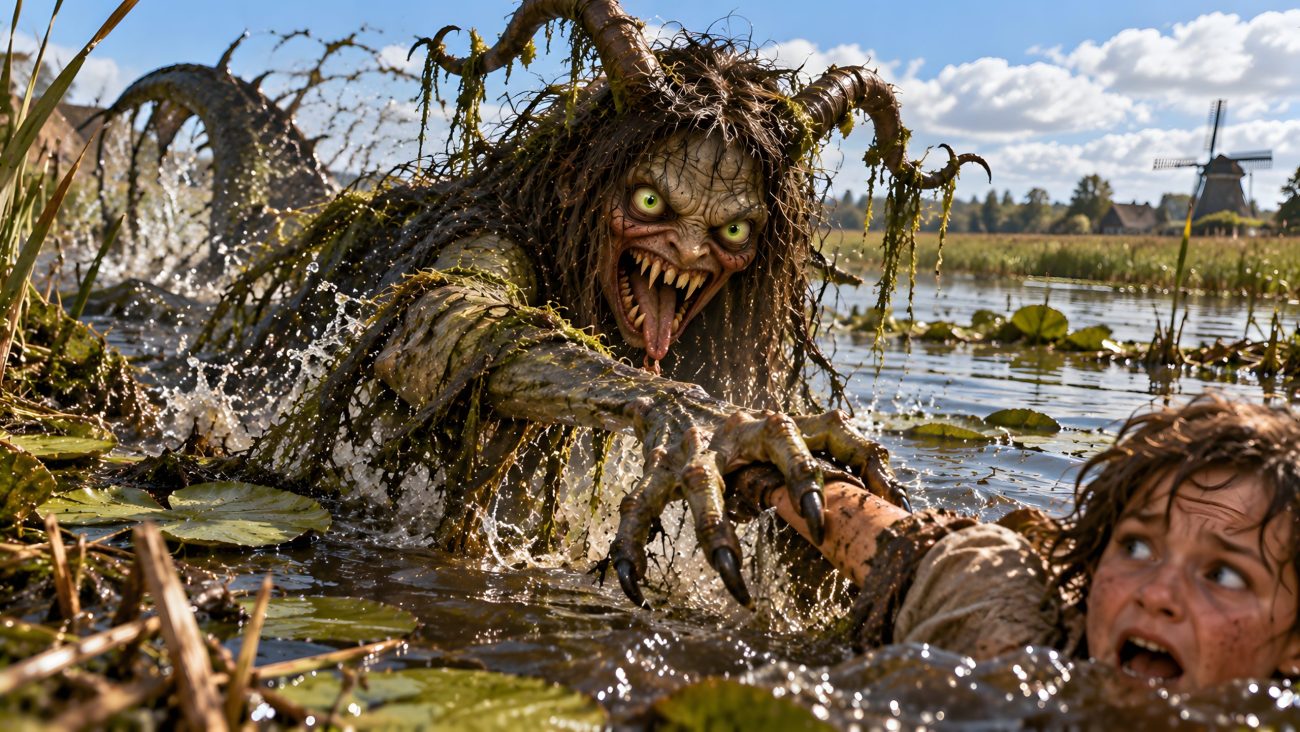
The Boezehappert, also known as the Boesjappert, is a frightening supernatural creature from the folklore of Friesland and Groningen in the northern Netherlands. In Friesland, it is described as a female necker, or water spirit, that lurks in deep lakes and ditches. It is said to drag children underwater when they play too close to the water’s edge, capturing and devouring them. The creature served as a terrifying warning to children to stay away from dangerous waters, return home when darkness fell, and never linger beside lakes or ditches after sunset.

A poem describes the Boezehappert as an enormous creature measuring four ells in length, with glowing green eyes, large, sharp teeth, horns, scales, and sharp claws. Its monstrous appearance reinforces its role as a predator lurking beneath the water, waiting for unwary children to approach.

In Groningen, the Boezehappert is associated instead with the spirit of a rye field. Despite this difference, it also served as a bogeyman used to frighten children into behaving properly. The creature’s regional variations reflect how local folklore used supernatural threats to warn children of dangers in their surroundings, whether the deep waters of Friesland or the fields of Groningen.


Sources

Van der Veen, Abe. “Van aardmannetje tot zwarte juffer: Een lijst van Nederlandse en Vlaamse elfen en geesten.” Abe de Verteller. https://abedeverteller.nl/van-aardmannetje-tot-zwarte-juffer-een-lijst-van-nederlandse-en-vlaamse-elfen-en-geesten/