Tradition: Guatemalan Mythology, Mexican Mythology
Alternative Names: Tzipitio, Tzizimite, The Goblin
Category: Goblin
The Myth
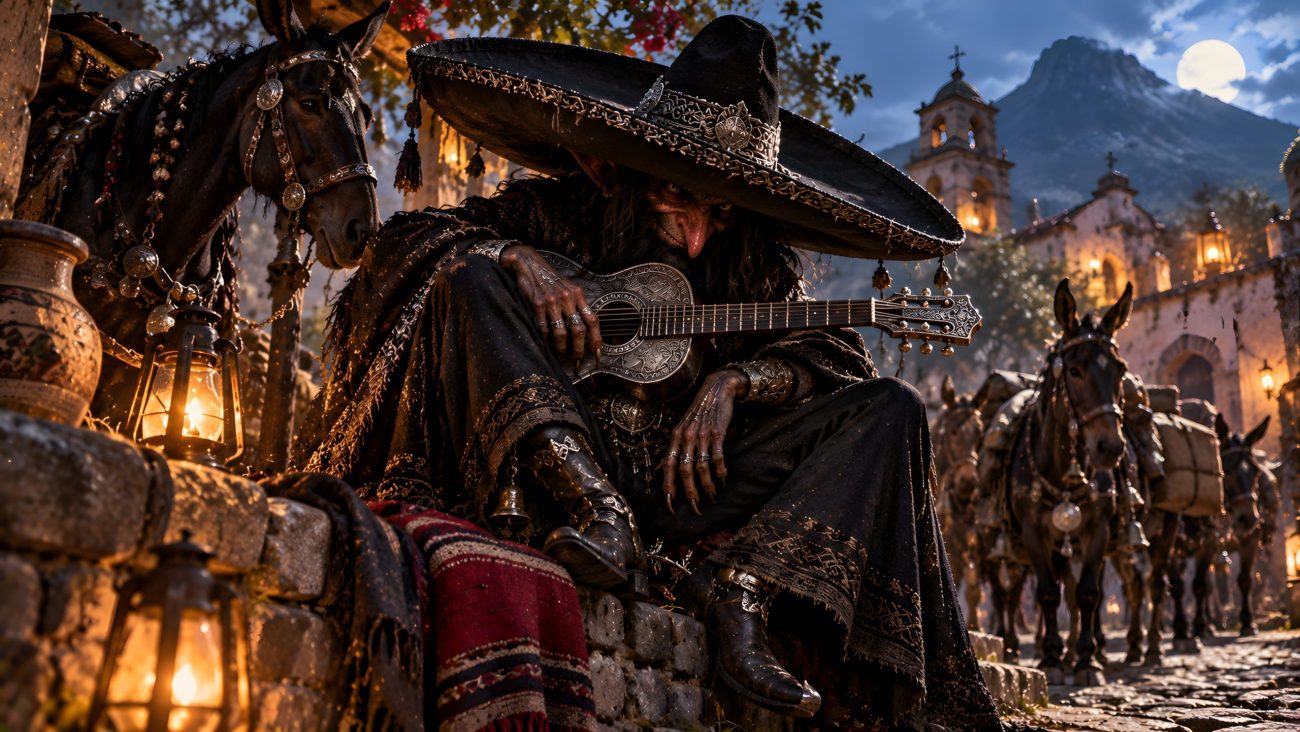
El Sombrerón is one of the most famous legendary figures in Guatemala and is also known as a bogeyman in Mexican folklore. He is commonly described as a man dressed entirely in black, wearing a large black hat, a thick, shiny belt, and boots that make a loud noise as he walks. Despite his imposing appearance, some accounts describe him as a short figure. He carries a silver guitar and is often accompanied by a group of mules carrying coal, which he leads through cities and neighborhoods at dusk.
El Sombrerón is particularly known for his fascination with horses and beautiful young women. He enjoys braiding the manes and tails of horses, and when he cannot find horses, he braids the hair of dogs instead. He is especially attracted to women with long hair and large eyes. When he becomes enamored with a particular woman, he follows her, braids her hair, and serenades her with his silver guitar. Yet his courtship brings suffering rather than happiness: he contaminates her food with soil, leaving her unable to eat or sleep. If a woman returns his affection, he may tie his mules to a post outside her house and spend the night singing and dancing.
One of the best-known versions of the legend concerns Susana, a beautiful young woman who lived in the La Recolección neighborhood of Guatemala City. She had long hair and large hazel eyes and was the daughter of a woman who owned a store. One night, while admiring the full moon from her balcony, Susana encountered a short figure wearing a large hat and carrying a guitar. Captivated by her beauty, El Sombrerón began singing to her, but her parents discovered her outside and ordered her back into the house.
From that night onward, Susana could neither sleep nor eat properly. El Sombrerón appeared inside the house or sang to her from the street, while the food served to her was repeatedly contaminated with soil. Desperate to save their daughter, her parents cut her hair and took it to a church, where a priest blessed it with holy water and prayers. A few days later, El Sombrerón ceased his visits, and Susana was finally free of his influence.
The legend of El Sombrerón remains an important part of Guatemalan folklore, alongside stories such as those of La Llorona, Cadejo, and Siguanaba. Traditionally, the tale has also served as a warning directed at young women, encouraging them to observe the social and moral expectations of their community. His nighttime serenades, mysterious appearances, and obsessive pursuit transform what might seem like romantic courtship into a frightening supernatural encounter.
Sources
“El Sombrerón.” Wikipedia: The Free Encyclopedia. Wikimedia Foundation. Accessed October 17, 2026. https://en.wikipedia.org/wiki/El_Sombrer%C3%B3n