Tradition: German Mythology
Alternative Names: Kobolt, Kobolde, Cobold
Category: Goblin
The Myth
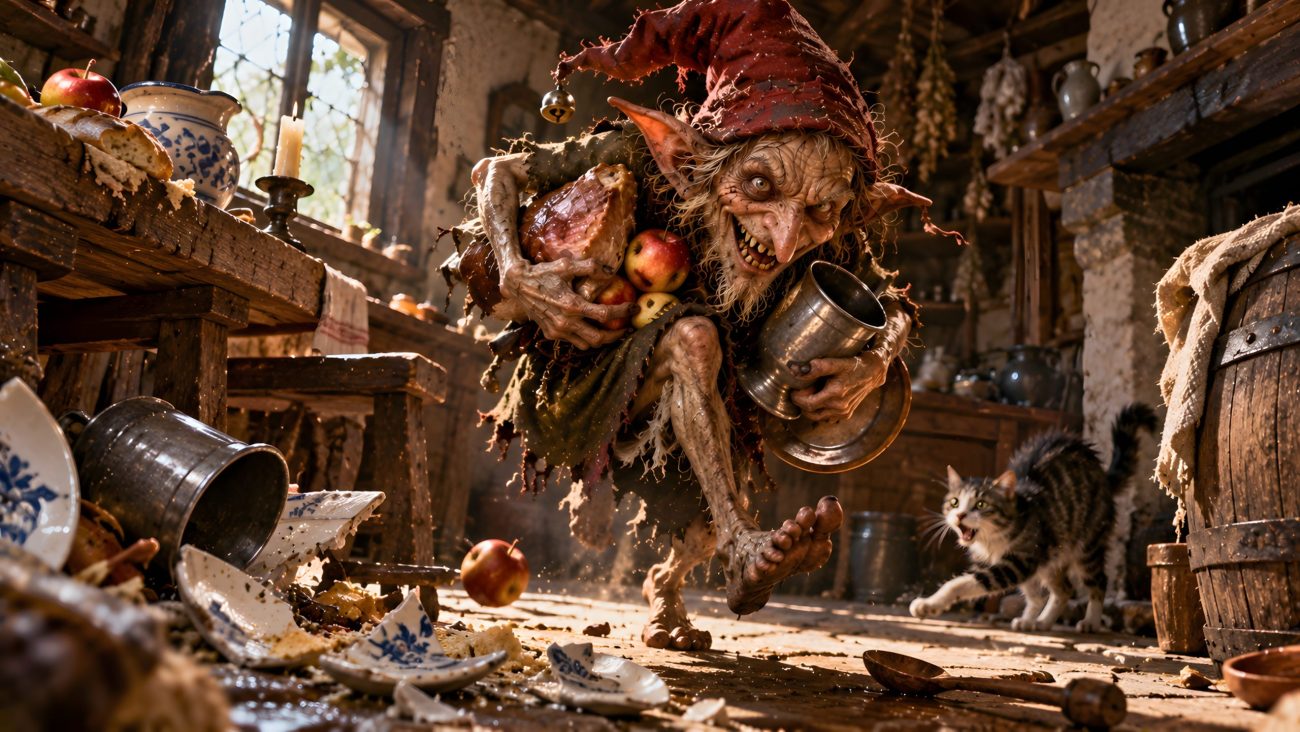
The Kobold is a supernatural household spirit from German folklore, associated with both mischief and helpful service. Kobolds often perform domestic chores in exchange for offerings, washing dishes, cleaning kitchens, sweeping floors, and caring for livestock. They may also assist tradespeople and shopkeepers. However, their helpfulness is conditional: when mistreated or neglected, they can damage property and torment the people they live alongside. Kobolds are generally connected to a particular household, and some traditions claim that every house has its own resident spirit, whether its inhabitants welcome it or not.
Kobolds can inhabit hearths, barns, stables, woodhouses, and the beer cellars of inns. They typically perform their work at night, completing tasks that the human occupants have left unfinished. Some regional spirits have more specialized duties, such as the Wolterken, which grooms horses, feeds pigs, and carries water to livestock. Other kobolds are associated with particular occupations or locations. The Klabautermann, for example, is a shipboard spirit sometimes classified as a type of kobold, while mine spirits known as Kobel or Bergmännlein are associated with underground places. These overlapping traditions make it difficult to draw a strict boundary between kobolds and other household or nature spirits.
The appearance of a kobold varies considerably. It may resemble a small child wearing a fine jacket, a wrinkled old man in a pointed hood, a bearded figure, an animal, or even an object. Some are said to manifest as a shaft of fire with a head-like shape. Red clothing and pointed red caps are characteristic of certain varieties, including the Hütchen, whose name means “little hat.” Other named types include the northern German Niss and Puk, the latter related to the English folkloric Puck. The shapeshifting household spirit Hinzelmann, sometimes depicted as a feather or an animal, is another related figure, distinct from the Heinzelmännchen of Cologne.
Traditions also describe different ways in which a kobold might enter a household. In one account, a person takes pity on a cold, wet supernatural creature and brings it inside to warm up, unintentionally giving it a permanent home. A tradition from Perleberg describes a more deliberate method: on Saint John’s Day, a person must go into the forest between noon and one o’clock and find an anthill with a bird on it. After the correct words are spoken, the bird transforms into a small human figure that jumps into a bag, allowing the person to carry it home. Once settled, the kobold remains even when the household’s servants come and go.
Some accounts give kobolds a more unsettling origin, suggesting that those appearing as children may be the spirits of dead children. In such stories, a knife carried by the spirit represents the means by which the child was killed. Other traditions portray kobolds as mine spirits or beings whose nature overlaps with that of dwarves, wood sprites, and other supernatural inhabitants of the natural world. Across these varied accounts, the kobold remains a flexible figure of German folklore: a spirit that lives close to human communities, capable of useful work, disturbing tricks, and sometimes frightening manifestations.
Sources
“Kobold.” Wikipedia: The Free Encyclopedia. Wikimedia Foundation. Accessed October 17, 2026. https://en.wikipedia.org/wiki/Kobold#Characteristics