Jean de l’Ours

Tradition / Region: French Mythology
Alternative names: John the Bear, John-of-the-Bear, Jean Bear
Category: Bear


The Myth

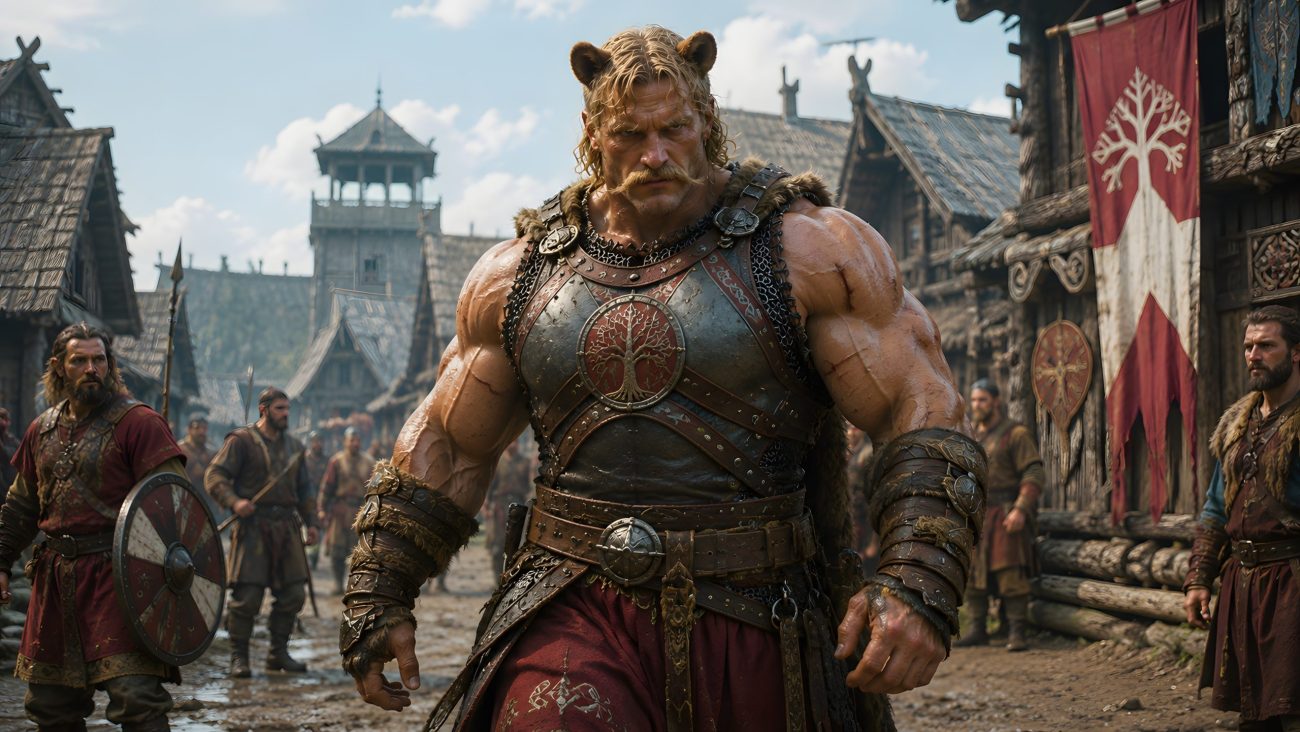
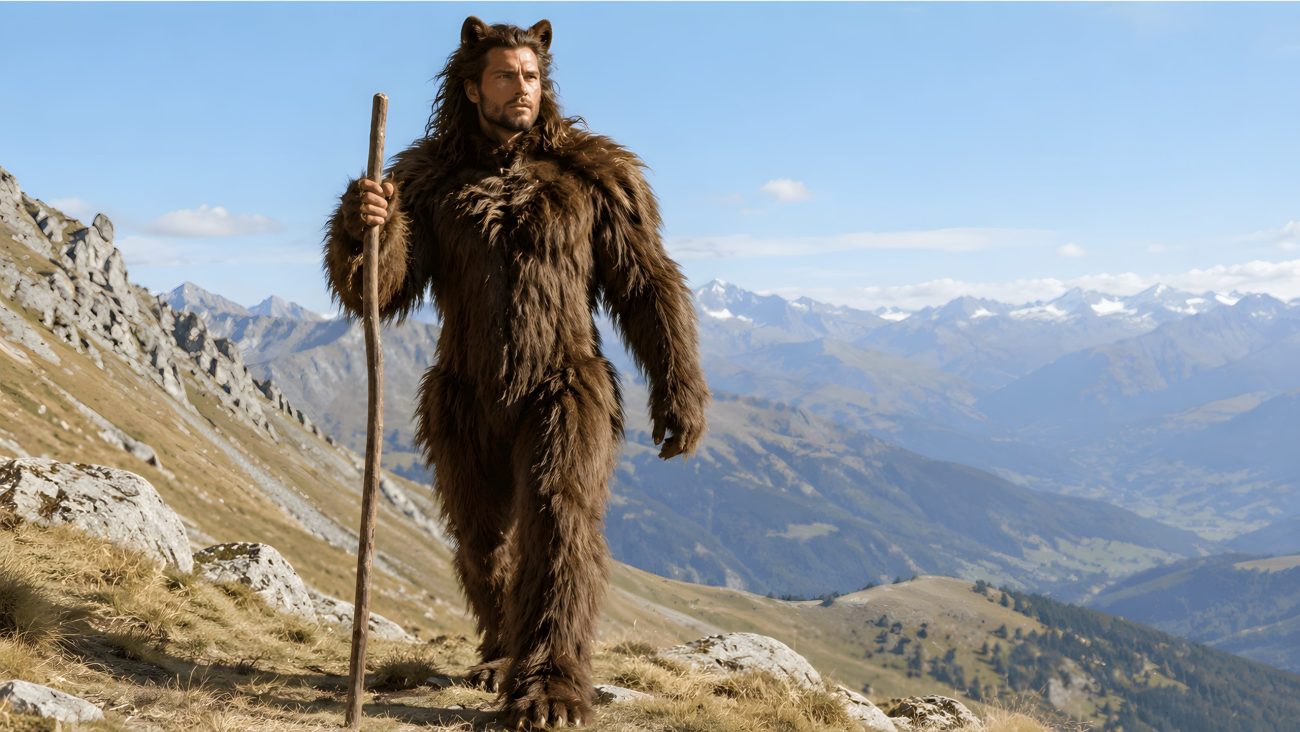
Jean de l’Ours, whose name means “John of the Bear,” is a legendary hero born from the union of a woman and a bear. Half human and half bear, he possessed extraordinary strength from childhood and was covered in thick body hair. While still young, he escaped the bear’s cave with his mother and later forged for himself a massive iron club that no ordinary man could lift.

Setting out on his adventures, Jean was joined by several companions renowned for their own great strength. During their travels they found an enchanted castle where each of his companions was defeated by a mysterious giant. Jean alone overcame the creature, forcing it to flee into a deep pit that led to the underworld.

Descending into the pit, Jean discovered an underground realm where three princesses were held captive. He defeated the monsters guarding them and rescued the princesses, who rewarded him with magical tokens. When his companions pulled the princesses back to the surface, they betrayed Jean by abandoning him in the underworld and claiming the rescue as their own.

After escaping the underworld through his own courage and endurance, Jean returned to the kingdom. By presenting the tokens given to him by the princesses, he proved that he was their true rescuer. The king rewarded him with the hand of the most beautiful princess in marriage, while the treacherous companions were punished for their betrayal.


Sources

Wikipedia contributors. (n.d.). Jean de l’Ours. In Wikipedia. Retrieved June 29, 2026, from https://en.wikipedia.org/wiki/Jean_de_l%27Ours


Bödvar Bjarki

Tradition / Region: Norse Mythology, Danish Mythology
Alternative names: Bǫðvarr Bjarki, Biarco
Category: Bear


The Myth

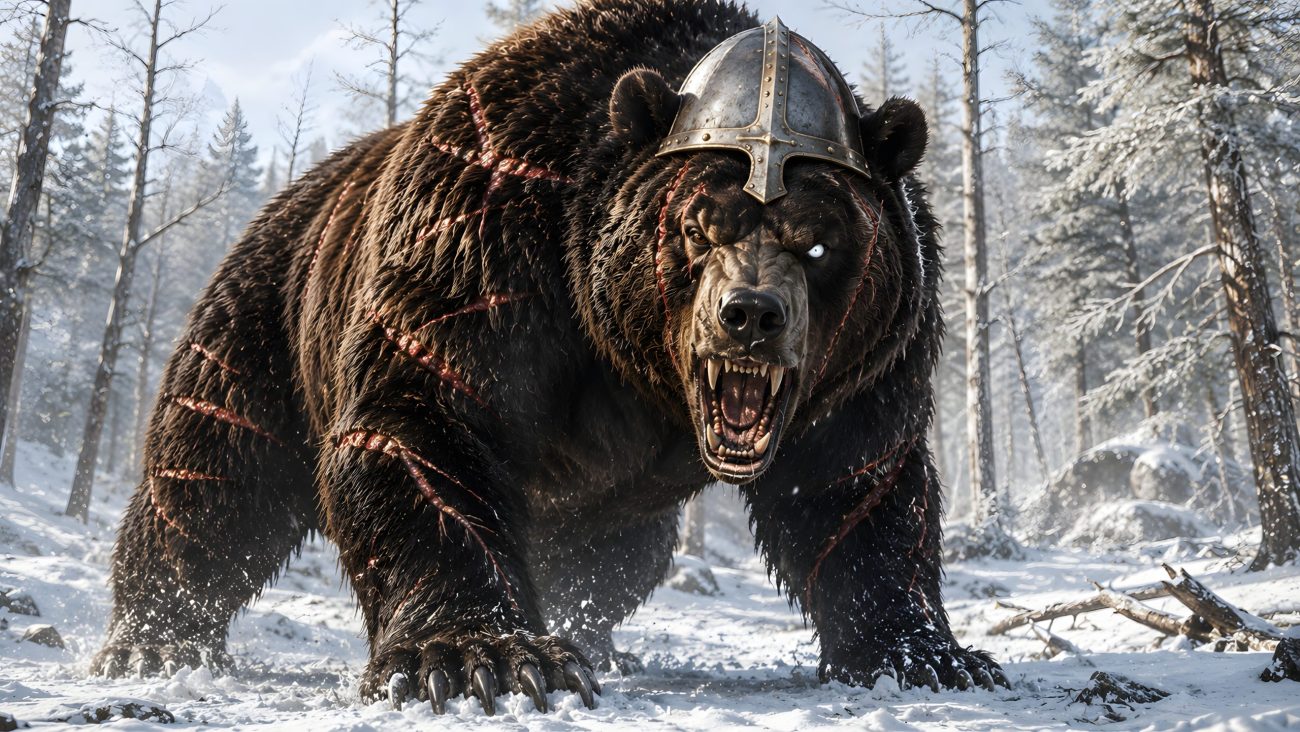
Bödvar Bjarki, whose name means “Warlike Little-Bear,” is one of the greatest heroes of Norse legend. Renowned for his immense strength and courage, he was believed to possess the supernatural ability to assume the form of a bear in battle.

His story began with his father, Björn, who had been transformed into a bear by the magic of his stepmother, Hvit. Forced to live as a bear by day and a man by night, Björn was eventually hunted down and killed. Before his death he warned his wife, Bera, not to eat his flesh, but she was persuaded to take a single bite. She later gave birth to three extraordinary sons. Two were born with animal features, while the youngest, Bödvar Bjarki, appeared entirely human.

As he grew older, Bjarki avenged his father by killing Hvit. He later visited his brother Elgfróði, who strengthened him by giving him some of his own blood to drink, greatly increasing Bjarki’s already remarkable power.

Bjarki eventually entered the service of King Hrólfr Kraki of Denmark. Soon after arriving, he slew a fearsome monster that had terrorized the king’s hall. He then forced the timid servant Hott to drink the monster’s blood, filling him with courage and strength. By arranging the creature’s body to appear alive, Bjarki allowed Hott to strike the final blow before the court, earning him honor and the new name Hjalti.

Bjarki became King Hrólfr’s greatest champion, defeating rival berserkers and serving as one of the king’s closest advisers. During the final battle at Lejre, however, he remained seated in a deep trance while a gigantic bear devastated the enemy army. The bear was revealed to be Bjarki’s spirit fighting apart from his body. When Hjalti awakened him, the spirit bear vanished. Bjarki entered the battle in human form, but without the bear’s supernatural power he and King Hrólfr were ultimately overwhelmed and slain.


Sources

Wikipedia contributors. (n.d.). Bödvar Bjarki. In Wikipedia. Retrieved June 29, 2026, from https://en.wikipedia.org/wiki/B%C3%B6dvar_Bjarki


Otso

Tradition / Region: Finnish Mythology
Alternative names: Karhu, Ohto, Kontio, Metsän kuningas, Mesikämmen
Category: Bear


The Myth

Otso is the sacred bear spirit of Finnish mythology and is regarded as the king of the forest and leader of all bears. Rather than being a single bear, Otso represents the collective spirit of every bear. The creature was deeply revered and feared by the ancient Finns and appears in the Kalevala, the Finnish national epic.

Different traditions tell different stories of Otso’s origin. One legend says that the weather god Ukko cast wool into the sea, from which Otso was born when it drifted ashore. Another tradition states that the great bear spirit descended from the constellation Ursa Major.

The oldest myths tell that Otso married the primordial mother of humankind, establishing a sacred bond between bears and people. Although Otso was said to have many wives and children, the stories also describe the great bear as devouring its own offspring.

When a bear was killed, the ancient Finns held a sacred ceremony known as the Peijaiset to honor its spirit. The bear was carefully skinned, its meat shared in a ritual feast, and a symbolic wedding was performed to return the bear to its mythical family. Afterwards, the bear’s skull was mounted high in a pine tree while prayers and chants were offered to Hongotar, the primordial mother of bears.

Finally, the bear’s bones were buried beneath the tree. The skull was treated as a sacred object and carefully preserved, for it was believed that by protecting it from decay, Otso’s spirit could return to the world, be reborn, and continue the eternal cycle of life.


Sources

Wikipedia contributors. (n.d.). Otso. In Wikipedia. Retrieved June 29, 2026, from https://en.wikipedia.org/wiki/Otso


Sermilik

Tradition / Region: Greenlandic Mythology
Alternative names:
Category: Bear


The Myth

The Sermilik, meaning “ice-clad,” is a gigantic and extremely dangerous polar bear said to inhabit the seas around Aasiaat in Greenland. Although it resembles an ordinary polar bear, its exceptionally long fur is completely coated in ice, allowing it to blend into its frozen surroundings.

The creature is known for lying in ambush beneath the surface of the water. Hunters are taught that what appear to be four harmless lumps of floating ice may actually be the four paws of a waiting Sermilik.

According to tradition, young hunters are warned never to paddle near these suspicious patches of ice, for the hidden beast may suddenly emerge from the sea and attack anyone who ventures too close.


Sources

A Book of Creatures. (2019, June 21). Sermilik. Retrieved June 29, 2026, from https://abookofcreatures.com/2019/06/21/sermilik/


Lāčplēsis

Tradition / Region: Latvian Mythology
Alternative names: The Bear-Slayer
Category: Bear, Hero


The Myth

Lāčplēsis, whose name means “The Bear-Slayer,” is the legendary hero of the Latvian national epic. According to the story, he was destined by the gods to defend the Latvian people against foreign invaders. His extraordinary strength came from his bear-like heritage, as his mother was said to have been a she-bear, and his supernatural power resided in his bear ears.

As a young man, Lāčplēsis earned his name by saving his foster father from a charging bear. Grasping the animal by its jaws, he tore it apart with his bare hands. Afterwards, he journeyed to Burtnieki Castle to continue his education, but his travels soon led him into adventures involving witches, spirits, and the forces of the Devil.

While staying at the castle of Aizkrauklis, Lāčplēsis uncovered the secret activities of the witch Spīdala, who served the Devil. She attempted to kill him by casting him into the whirlpool of Staburags, but he was rescued by the goddess Staburadze and taken to her crystal palace beneath the waters. There he met the maiden Laimdota, with whom he fell in love, and later befriended the mighty hero Koknesis.

Lāčplēsis fought many supernatural enemies during his journeys. He battled the giant Kalapuisis before the two heroes made peace and united against the invading German crusaders. He also spent a night in a cursed sunken castle, breaking its enchantment, and later defeated monstrous beings with three, six, and nine heads on the Enchanted Island. During these adventures he freed Spīdala from her pact with the Devil and reunited with Laimdota and Koknesis.

Eventually the struggle against the German crusaders reached its climax. The traitor Kangars revealed the secret of Lāčplēsis’ strength to the enemy, explaining that his power came from his bear ears. During a final contest with the Dark Knight, both of Lāčplēsis’ bear ears were severed, robbing him of his immense strength. Even so, he wrestled his opponent to the edge of the Daugava, throwing the Dark Knight into the river while falling in himself.

Neither hero was seen again. The legend promises that the struggle was not truly finished and that one day Lāčplēsis will rise again to defeat the Dark Knight, bringing freedom to the Latvian people once more.


Sources

Wikipedia contributors. (n.d.). Lāčplēsis. In Wikipedia. Retrieved June 29, 2026, from https://en.wikipedia.org/wiki/L%C4%81%C4%8Dpl%C4%93sis


Camazotz

Tradition / Region: Maya Mythology, Guatemala Mythology
Alternative names: Cama-Zotz, Sotz, Zotz
Category: Bat


The Myth

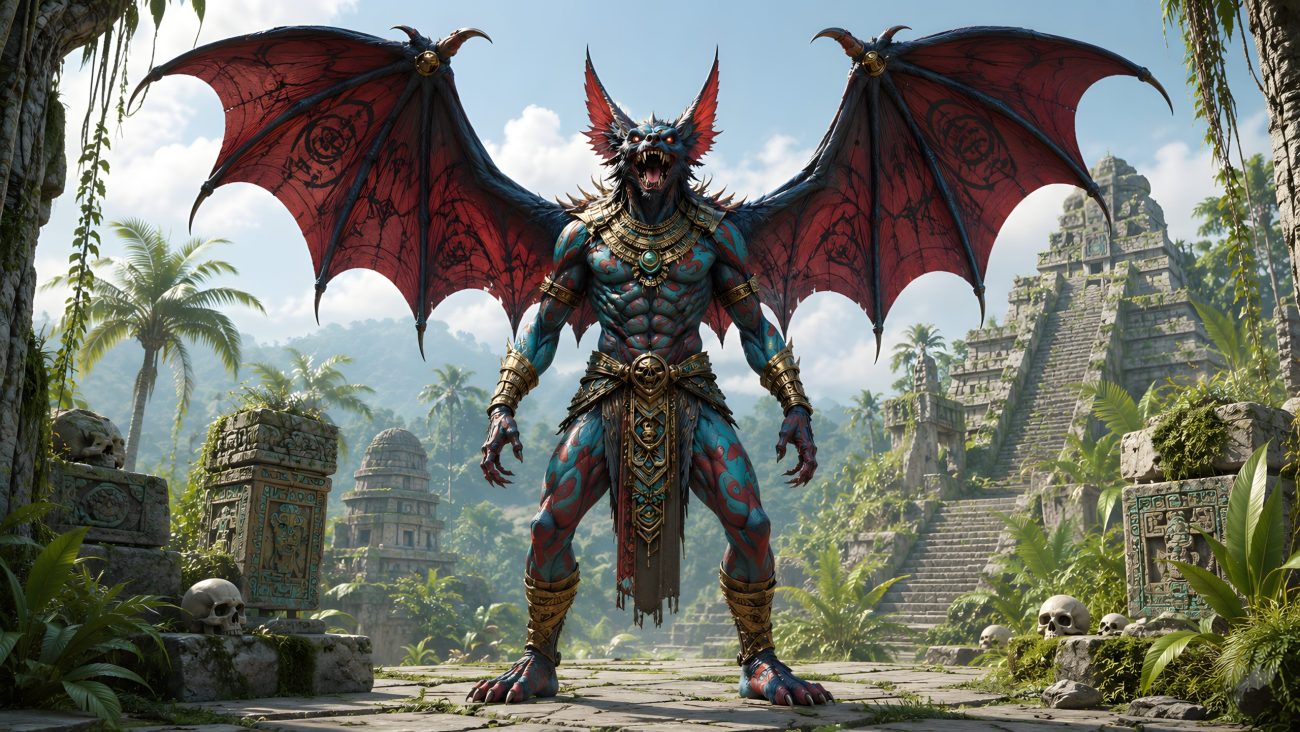
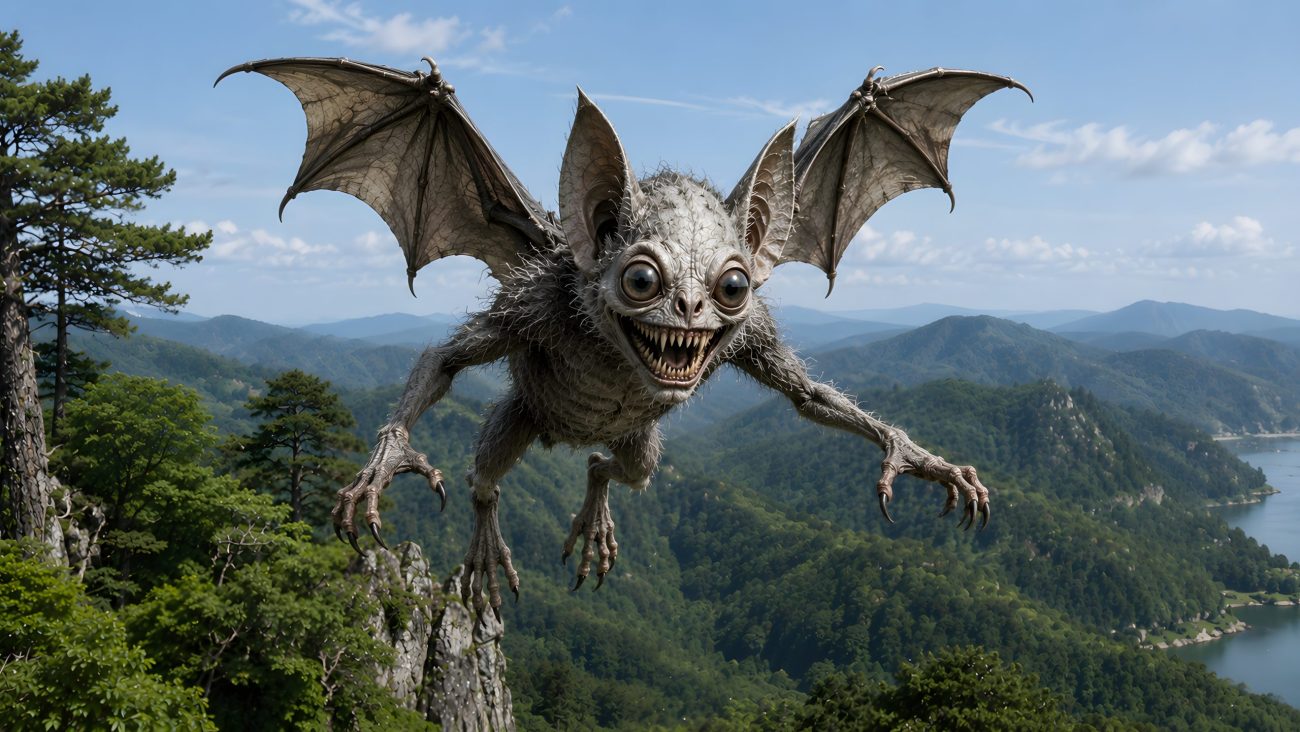
Camazotz, whose name means “Death Bat,” is a bat spirit that serves the lords of Xibalba, the Maya underworld. It is closely associated with the night, death, and sacrifice.

According to the Popol Vuh, the Hero Twins Hunahpu and Xbalanque encountered Camazotz during their trials in the underworld. One of the ordeals required them to spend the night in the House of Bats, a chamber inhabited by deadly bat spirits. To protect themselves, the twins hid inside their hollow blowguns while the bats circled around them.

Before dawn, Hunahpu cautiously poked his head out to see whether the sun had risen. Camazotz immediately swooped down, severed his head, and carried it away. The bat spirit placed the head on the ballcourt, where it was used as the ball for the underworld gods’ sacred ballgame.

Camazotz is portrayed as a fearsome supernatural bat whose sudden attack became one of the greatest trials faced by the Hero Twins on their journey through Xibalba.


Sources

Wikipedia contributors. (n.d.). Camazotz. In Wikipedia. Retrieved June 29, 2026, from https://en.wikipedia.org/wiki/Camazotz


Garkain

Tradition / Region: Australian Mythology
Alternative names:
Category: Bat


The Myth

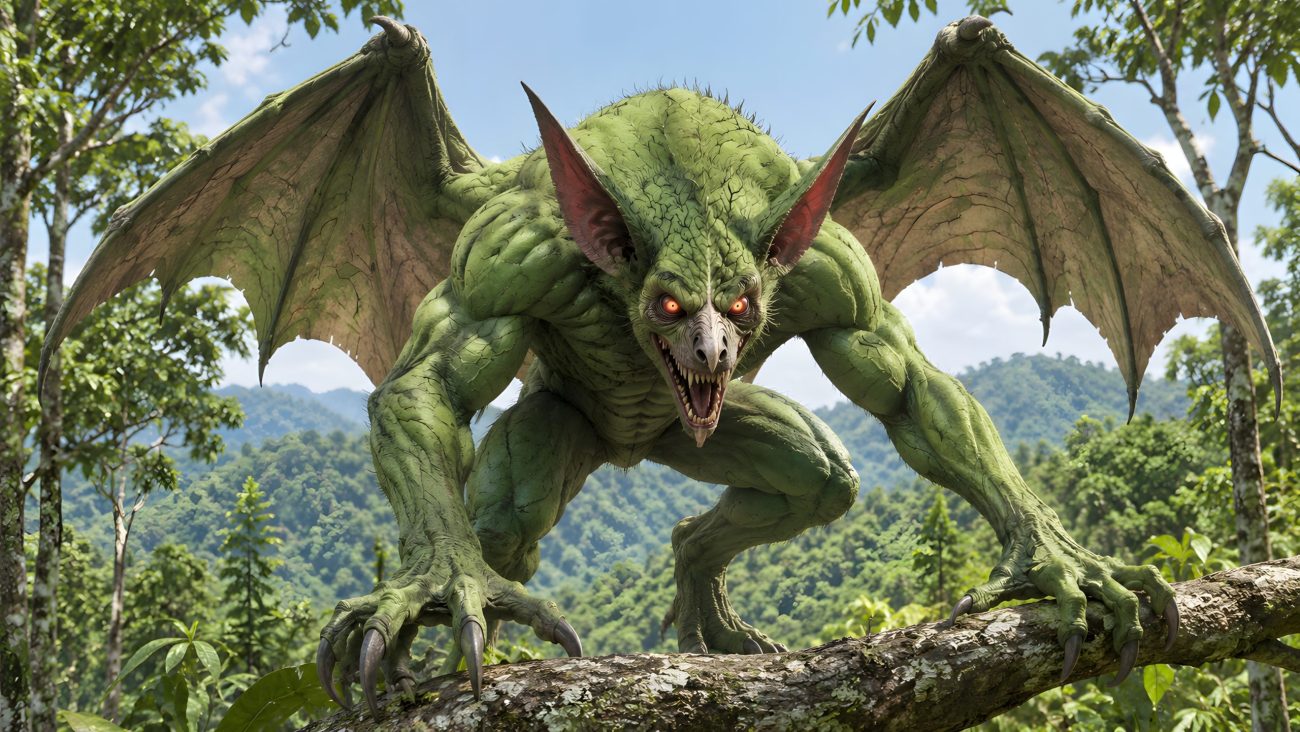
Garkain is a spirit-man from the Aboriginal mythology of Arnhem Land who is said to inhabit the dense jungle of Magurlipun near the mouth of the Liverpool River. About the size of an Aboriginal man, he is able to both walk and fly, but cannot speak and does not know how to make fire or tools.

Because he lacks weapons, Garkain hunts with his bare hands and eats his prey raw. He is a nocturnal creature that sleeps during the day beneath piles of leaves on the jungle floor before emerging after dark to search for victims.

Travellers who wander into his territory are said to be in great danger. Rather than using claws or teeth, Garkain kills by wrapping the loose folds of skin hanging from his arms and legs around his victims, smothering them to death.

Traditional depictions portray Garkain with broad flaps of skin extending from his limbs, enabling him to fly. Although he shares similarities with another spirit being known as Warraguk, Garkain was regarded as less fearsome than other supernatural beings of Arnhem Land, such as the Namarakain and the Nabudi.


Sources

Wikipedia contributors. (n.d.). Garkain. In Wikipedia. Retrieved June 29, 2026, from https://en.wikipedia.org/wiki/Garkain


Ekek

Tradition / Region: Philippine Mythology
Alternative names: Ek Ek
Category: Bat


The Myth

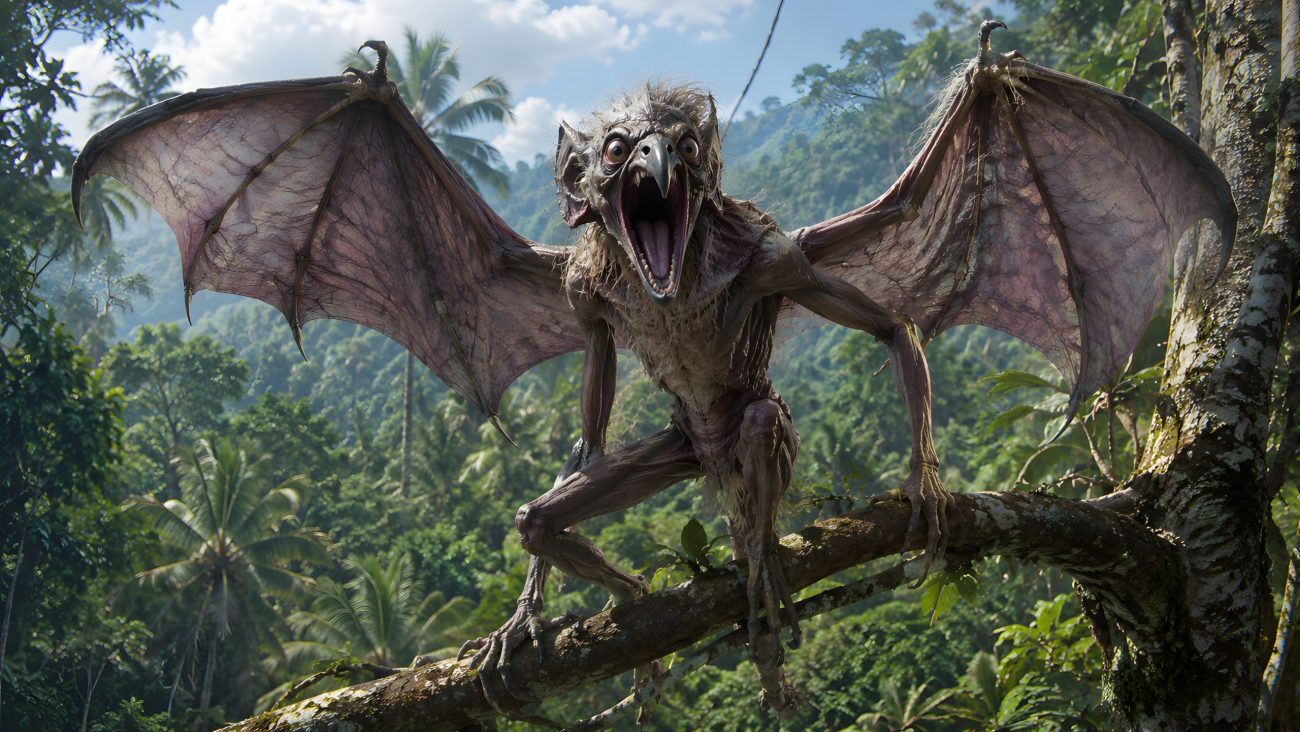
The Ekek is a winged, human-like creature that hunts at night in Philippine folklore. It feeds on human flesh and blood and is often compared to the Manananggal because of its appearance. Unlike the Manananggal, however, the Ekek cannot split its body in two.

By night, the Ekek transforms into a gigantic bird or bat and prowls in search of victims. It is especially known for preying upon sleeping pregnant women. Using an unusually long proboscis, it reaches into the womb to drain the blood of the unborn child, killing the fetus.

The creature is closely associated with the Wak Wak, as the two share many characteristics. The principal difference is that the Ekek possesses a bird-like bill, while the Wak Wak does not.

Its name comes from the eerie “ek-ek-ek” sound it makes while hunting. According to tradition, the cry is deceptive: when the sound seems faint and distant, the creature is actually very close to its intended victim.


Sources

Wikipedia contributors. (n.d.). Ekek. In Wikipedia. Retrieved June 29, 2026, from https://en.wikipedia.org/wiki/Ekek


Lyadashtsik

Tradition / Region: Belarusian Mythology
Alternative names: Lyadashtsik, Lyadashchik, Shevredz, Pusten
Category: Bat


The Myth

Lyadashtsik is an evil spirit from Belarusian folklore that is said to corrupt people. It is regarded as one of the most hostile spirits toward humans and is especially feared by women, as many illnesses and seizures affecting women were traditionally attributed to it.

The spirit was believed to attack by making people sick, driving them into madness, or causing them to transform into various animals. Those believed to have been afflicted by Lyadashtsik were sometimes described as foolish or half-witted.

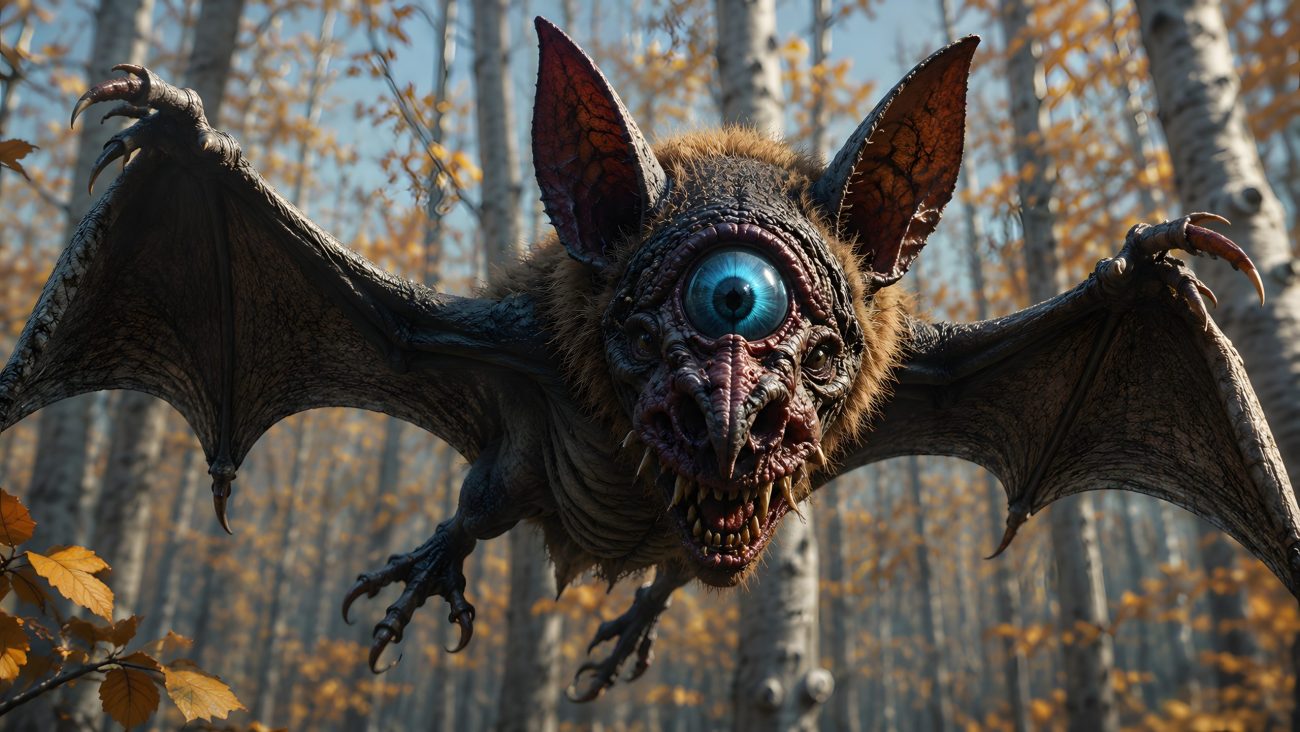
Lyadashtsik was imagined as a hideous monster covered in red hair. It possessed wings, a single eye in the middle of its forehead, and was said to resemble a monstrous bat. In some traditions it was also described with the body of a frog and hairy wings.

The creature was known under different names in various parts of Belarus. In some districts it was called Shevredz, while in others it was known as Pusten. Folk sayings warned that a person who had dealings with Lyadashtsik had “Lyadashtsik’s eye,” meaning they had become mad or half-witted.


Sources

Bestiary.us. (n.d.). Lyadashtsik. In New Bestiary: Encyclopedia of Imaginary Beings. Retrieved June 29, 2026, from https://www.bestiary.us/Lyadashtsik


Kōmori-ba

Tradition / Region: Japanese Mythology
Alternative names:
Category: Bat


The Myth

The Kōmori-ba is a bat-like yōkai that appears in the eighteenth-century illustrated collection Yōkai Chakutōchō. It is depicted among a gathering of supernatural creatures alongside a red oni and a skeleton monster.

Unlike an ordinary bat, the Kōmori-ba does not have wings formed by membranes stretching between its limbs. Instead, it possesses a pair of large wings that grow directly from its back, giving it a more monstrous appearance.

According to the illustration’s description, the Kōmori-ba attacks by targeting the eyes of its victims. Although little else is recorded about the creature, it is presented as one of the many strange yōkai that inhabit the supernatural world of Japanese folklore.


Sources

TYZ. (n.d.). 蝙蝠場 (Kōmori-ba). In 新版TYZ 妖怪図鑑. Retrieved June 29, 2026, from https://tyz-yokai.blog.jp/archives/1065732607.html