Treasure-Hunting Calf

Tradition: English Mythology
Alternative names: Spectral Calf
Category: Cow


The Myth

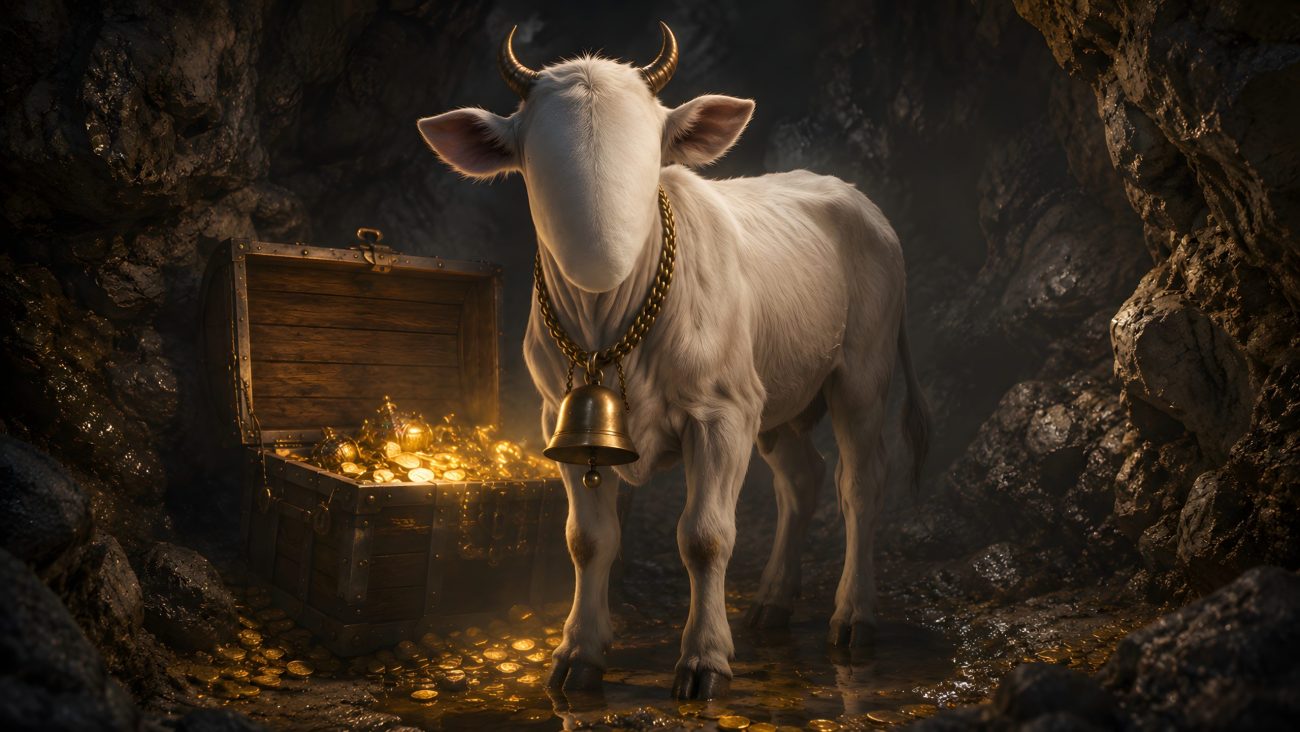
The Treasure-Hunting Calves are spectral calves associated with hidden treasure in the folklore of Westmorland. They appear as ghostly calves and can lead people to buried or concealed wealth.

In a legend connected with Hackthorpe Hall, which had become a farmhouse by the early nineteenth century, a spectral calf appeared before the tenant farmer. The strange animal led him to a stone cattle trough.

The farmer searched beneath the trough and discovered a hidden cache of gold. There was supposedly enough treasure to pay for two estates.

The legend does not explain why the calf guarded the treasure or why it chose the form of a familiar farm animal.


Sources

Sedgwick, Icy. “Cows in Folklore: From Fairy Cattle to Spectral Calves.” Icy Sedgwick. February 8, 2025.


Tranez

Tradition: Roman Mythology, Italian Mythology, Indian Mythology, Chinese Mythology
Alternative names: Tranez
Category: Cow


The Myth

The Tranez is a small but extraordinarily brave creature, about the size of a hare. Despite its diminutive stature, it possesses remarkable strength and fearlessness.

The Tranez has striking red fur and a natural helmet-like covering on its head. This hard covering protects it from bites, blows, and other dangers in the wild.

The creature was said to inhabit the Orient, referring to the distant lands of the East, including regions extending from India toward China. These lands were traditionally imagined as remote and wondrous places filled with unfamiliar animals, plants, and other marvels.

The Tranez’s small body but exceptional courage was regarded as an example of the Creator’s careful design, demonstrating that every creature was given qualities suited to its particular way of life.


Sources

Van Maerlant, J. (2024). Der Naturen Bloeme (I. Biesheuvel, Trans.), p.74.


Toro Encantado

Tradition: Guatemala Mythology
Alternative names: Enchanted Bull
Category: Cow


The Myth

Toro Encantado is an enchanted bull made entirely of pure gold, once revered by the Kekchi people of Alta Verapaz. The bull was worshipped as a sacred being and honored through festivals, flowers, incense, dancing, and music.

The golden bull was associated with Sactzicuil, a hill in Alta Verapaz. The Kekchi held festivals in its honor and treated the place where it lived as sacred. At appointed times, the people gathered to decorate its home with flowers, fan it with the fragrant smoke of burning copal, and dance around it accompanied by music.

Eventually, the enchanted bull sank down into the hill and disappeared.

After its disappearance, a powerful Kekchi wizard ordered half of the women of the tribe to wear the tupuy as a reminder of the bull’s tail, while the other half were instructed to cut their hair in a particular manner to commemorate its ears.

According to the tradition, this custom continued among the women of the tribe. Some would smooth their hair down to the nape of the neck and wind it repeatedly with a red wool cord until it became thick and long like a bull’s tail. Others would cut a lock of hair on each side of the forehead, allowing the locks to hang down like the bull’s large ears.


Sources

G. B. G. “Guatemala Myths.” The Museum Journal 6, no. 3 (September 1915): 103–115. Accessed August 29, 2026. https://www.penn.museum/sites/journal/416/


Torapee and Torapa

Tradition: Thai mythology
Alternative names: Torapee, Torapa
Category: Cow


The Myth

Torapa was originally a giant who was tasked with guarding the gates of Lord Shiva’s palace. After disobeying his master, he angered Shiva and was cursed to be reborn as a giant buffalo named Torapa.

Torapa was destined to be killed by his own son, Torapee. From the time he was young, Torapee would compare the size of his hoofprints with those of his father. He knew that when his own hoofprints became equal in size to his father’s, he would be strong enough to challenge and kill him.

Eventually, the day came when Torapee’s hoofprints were approximately the same size as Torapa’s. Torapee then challenged his father and killed him, fulfilling the curse.

The name Torapee subsequently became associated with an ungrateful child in Thai proverbial speech, referring to someone who repays their parents with hostility rather than gratitude.


Sources

“The Mythical Creatures in Thailand.” Explore Bangkok. Accessed August 30, 2026. https://www.explore-bangkok.com/mythical-creatures-in-thailand/


Toralindo

Tradition: Indonesian Mythology
Alternative names: Toralindo
Category: Cow


The Myth

Toralindo is a gigantic buffalo from the mythology of the Torajan people of Sulawesi. It is believed to support the Earth upon its horns, and its movements are associated with earthquakes.

Toralindo is an enormous buffalo capable of carrying the Earth on its horns. Its movements can cause the ground to shake, and its reactions to sounds or animals can influence the stability of the Earth.

According to Torajan tradition, the Earth is flat and is supported by the giant buffalo Toralindo. When Toralindo is bitten by a fly, it shakes its head to drive the insect away, causing an earthquake.

Different villages have different ways of trying to stop Toralindo from shaking its head. Some people begin to meow loudly, because buffaloes are believed to be afraid of cats. When Toralindo hears the meowing, it forgets about the fly and stops shaking its head.

Other people imitate a pig being struck with a stick, believing that the resulting squealing will distract Toralindo and prevent it from continuing to shake its head.


Sources

“Toralindo.” New Bestiary (Bestiary.us). Accessed August 30, 2026. https://www.bestiary.us/toralindo


Tonzo

Tradition: Japanese mythology
Alternative names: –
Category: Cow


The Myth

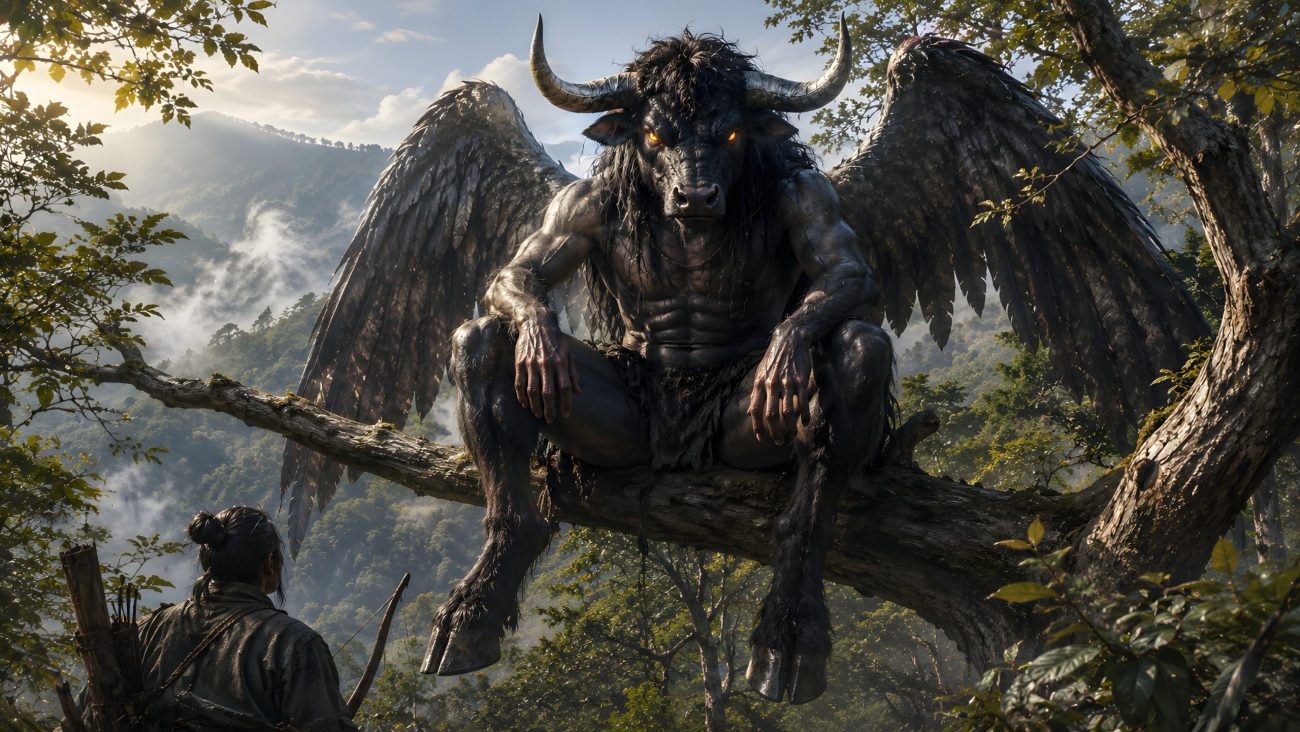
Tonzo is a mysterious yokai from Iwaizumi in Iwate Prefecture. It is described as a pitch-black, bull-like flying monster with enough supernatural strength to shake the ground and destroy trees.

One evening, an experienced hunter named Sahei-dono went hunting in Miyanosawa. For some reason, no deer appeared that night. As dawn approached, he was preparing to leave when a pitch-black creature resembling a bull suddenly jumped out before him.

The creature spoke in a human voice and declared that it was Tonzo, challenging Sahei to strike it and threatening to crush him if he did. Sahei had his hand on the knife at his waist, but he was so frightened that he fled.

Some time later, Sahei went to Yokonaga-mine. Near a chestnut tree, Tonzo appeared again. The ground trembled as the creature leaped onto the tree. It shook the tree violently and snapped its branches.

Tonzo then reminded Sahei of their previous encounter and threatened to seize and kill him if he returned. Terrified, Sahei begged for forgiveness and fled.

About ten days later, Sahei fell ill and died.

The true nature of Tonzo is unknown. The only description preserved in the tradition is that it was a flying monster resembling a bull.


Sources

Takahashi, Toshihiro. “トンゾウ (Tonzo).” 新版TYZ 妖怪図鑑 (New TYZ Yokai Encyclopedia). December 3, 2011. https://tyz-yokai.blog.jp/archives/1010654094.html


Mill Devil

Tradition: Czech Mythology
Alternative names: Mill Devil
Category: Demon


The Myth

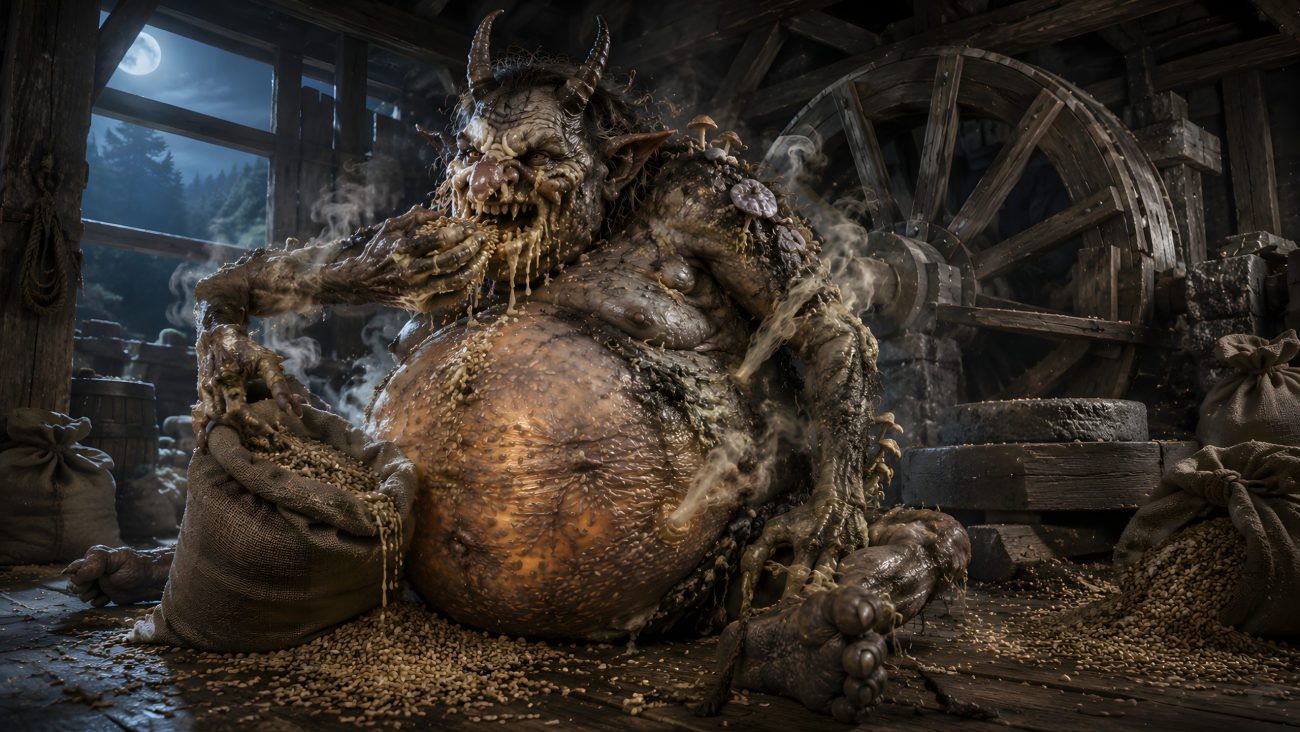
The Mill Devil is a group of hellish spirits summoned through a magical book and associated with an old mill near Langendorf. They appear as numerous devils with glowing eyes and licking tongues, capable of moving with great speed and performing impossible tasks.

The devils have a terrifying appearance, with glowing eyes and tongues that lick from their mouths. They appear in large numbers and are violent and threatening, seeking to strangle those who summon them.

Behind Langendorf stood an old mill whose miller possessed a grey book that allowed him to summon the forces of Hell. One Holy Day, the miller’s children were left alone at home. While rummaging through old things, they discovered the mysterious book. They opened it and began reading the words inside.

Suddenly, the entire mill filled with devils. They raged through the building with glowing eyes and licking tongues, threatening to strangle the children.

At that moment, the miller was sitting in church. During High Mass, he suddenly became restless and felt that something was wrong. He rose from his place and hurried home.

The devils were already waiting for him. They demanded that he quickly tell them what he wanted them to do. The miller tore the fur from his body and threw it before them, ordering them to count every hair in it.

The devils immediately fell upon the fur and began counting. While they were occupied, the miller ran into the mill and poured a sack of grain into the stream.

The devils soon finished counting and announced that the fur contained seven hairs. They demanded another task, threatening to tear the miller apart if he did not give them one quickly.

The miller ordered them to retrieve every grain he had thrown into the stream. The devils fished the grains from the water and returned, again demanding another task.

The miller then gave them an impossible command: they were to remove all the ice from the pond, carry it to the yeast stone, set it alight, and bring him the ashes.

Enraged by the miller’s mockery and impossible demands, the devils finally abandoned him and returned to Hell. Before leaving, however, they took the mill wheel with them as revenge.


Sources

Watzlik, Hans. “Schnelle Knechte.” In Böhmerwald-Sagen. Budweis: Böhmerwalder Dorfbücher, 1921, Heft 5. Reproduced by SAGEN.at. https://www.sagen.at/texte/sagen/tschechien/watzlik/schnelleknechte.html


Gesindel

Tradition: Czech Mythology
Alternative names: Gesindel
Category: Demon


The Myth

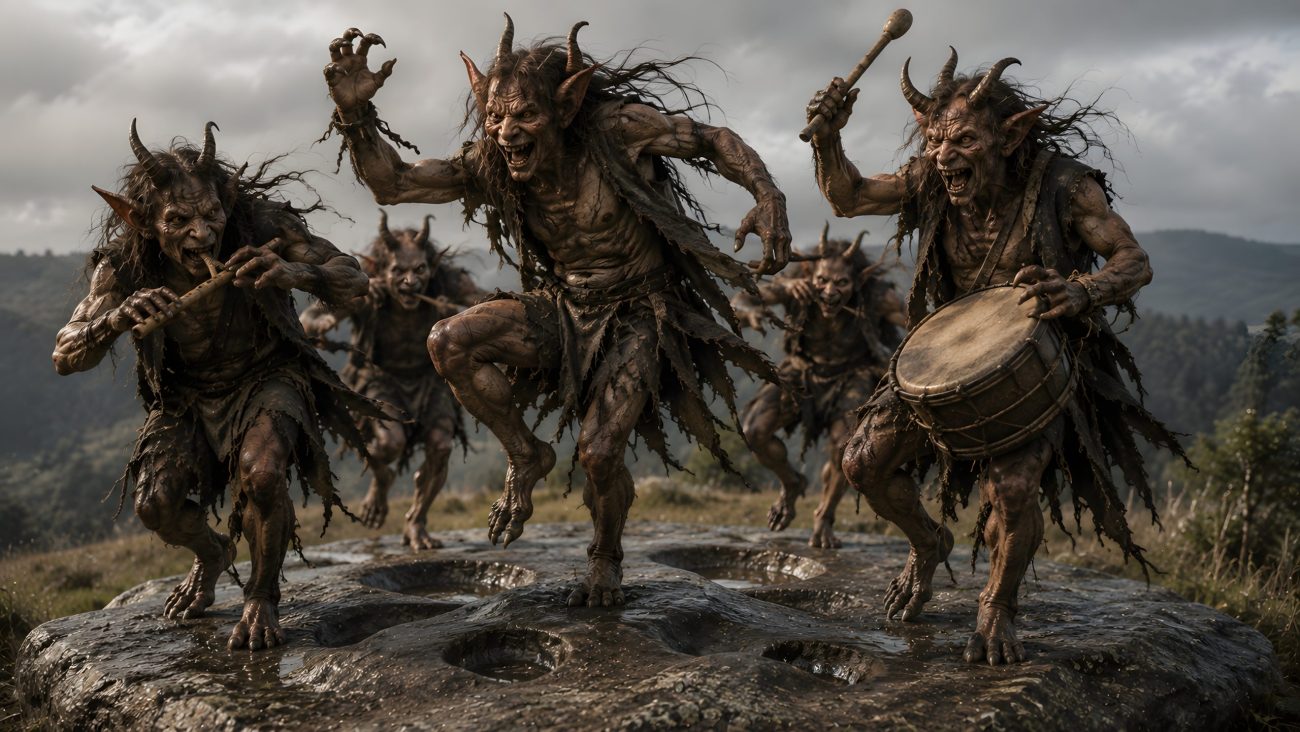
The Gesindel is a hellish rabble of supernatural beings from the folklore of the Bohemian Forest. They appear as groups of devil-like figures associated with strange gatherings, card playing, and supernatural music.

The Gesindel has no single fixed appearance. They are described as groups of devils, sometimes appearing as several figures gathered together in isolated places.

Near Rederhof in Eisenstraß lies a wide, flat stone with hoof-shaped impressions in it. According to local tradition, Satan was said to dance upon this stone. Because of this, the farmers avoided the stone and would not rest upon it.

Once, Martin passed by the stone and saw four figures sitting upon it. They appeared to be nodding devils and were playing cards. Martin would have liked to know which card was the trump, but he did not dare ask.

The hellish rabble also haunted the Huisriegel. In broad daylight, they would drum upon the ground, blow their instruments like a whole band of musicians, and play so loudly that the cattle in the pasture became agitated. The shepherd himself was frightened so badly that he fled over all nine mountains.


Sources

Watzlik, Hans. “Gesindel.” In Böhmerwald-Sagen. Budweis: Böhmerwalder Dorfbücher, 1921, Heft 5. Reproduced by SAGEN.at. https://www.sagen.at/texte/sagen/tschechien/watzlik/gesindel.html


Trud

Tradition: Czech Mythology
Alternative names: –
Category: Demon


The Myth

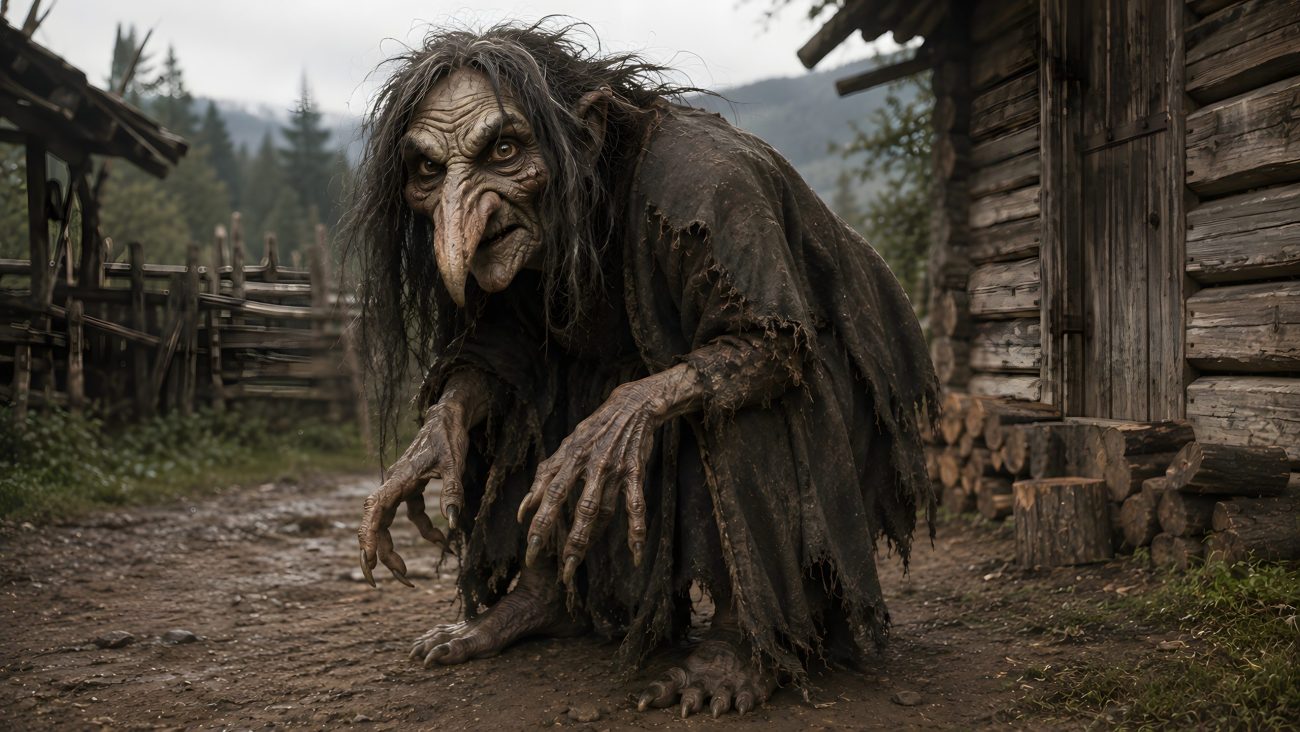
The Trud is a frightening supernatural being from the folklore of the Bohemian Forest. It is associated with nighttime attacks, borrowing objects, and a strange form of possession. The Trud can appear as a woman or an old, wrinkled female figure, and it is capable of becoming extremely heavy when it sits upon a sleeping person.

A musician from St. Catherine’s Church was once visited by a Trud during the night. After dealing with it, he apparently drove it away and warned it to return the following day for matches. Another story explains why people were afraid to lend household objects: a musician’s wife was about to borrow a hoe from a neighbor when her cousin warned her not to go. The neighbor had supposedly trapped the Trud the previous night and was waiting for someone to come to the house and borrow something. The woman immediately returned home.

The Trud could also attack sleeping people. A blacksmith’s apprentice once felt the Trud settle upon his chest while he slept. It was enormously heavy, making it difficult for him to breathe. He eventually grabbed a handful of threshed straw, and the weight immediately became lighter. He jumped from his bed and trapped the straw in a vise.

When morning came, the blacksmith discovered an old, wrinkled woman in his workshop, with her hair caught in the vise. She begged him to release her. He opened the gate and drove her away by beating her.

A miller from High Art described another encounter with the Trud. He heard it approaching while making a constant whirring sound and crying out. It then jumped onto him, sat on his chest, and seemed to draw something from his body. He described the creature as having a round, pig-like beak and claimed that the Trud consumed the vitality or substance of its victims.


Sources

Watzlik, Hans. “Die Trud.” In Böhmerwald-Sagen. Budweis: Böhmerwalder Dorfbücher, 1921, Heft 5. Reproduced by SAGEN.at. https://www.sagen.at/texte/sagen/tschechien/watzlik/dietrud.html


Bosch

Tradition: Breton Mythology, French Mythology
Alternative names: —
Category: Demon


The Myth

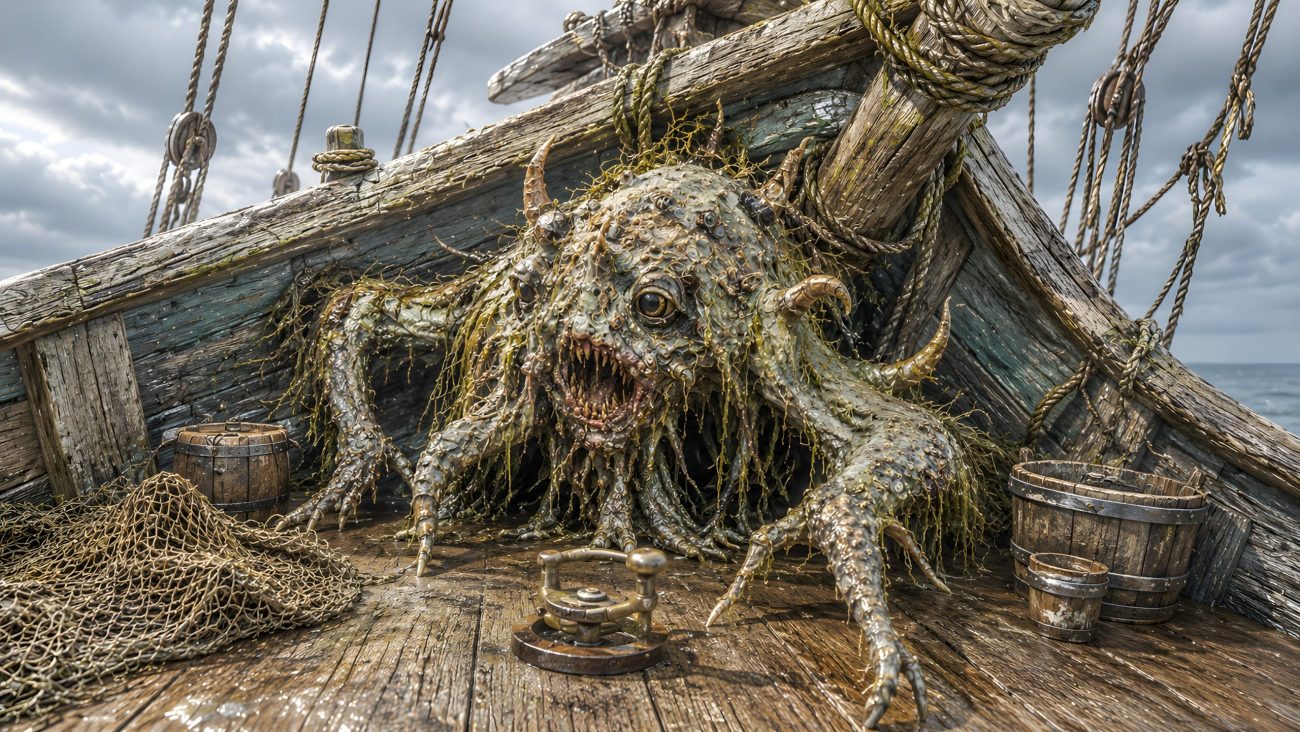
The Bosch is a supernatural creature believed to arise from theft committed aboard a ship. It has no fixed appearance and may take different forms depending on the nature of the crime that created it. Once born, it hides in the bow of the vessel and brings persistent misfortune to the crew.

A Bosch may survive for several months or even several years before gradually weakening and disappearing. While it remains aboard, the ship’s nets stay empty, favorable winds fail to appear, and misfortune continually afflicts the sailors.

In the Audierne region, maritime theft was paradoxically regarded as a source of good luck for the thief, because the Bosch created by the theft would remain behind on the ship. Elsewhere in Finistère, however, such supernatural consequences were regarded as a serious danger. Evil spirits could arise from acts of greed and wrongdoing aboard ships, making it necessary to fumigate a vessel before putting out to sea. The spirits were believed capable of becoming small enough to hide inside a thimble, so smoke had to reach every part of the ship.

There were two known ways to rid a vessel of a Bosch.

The first was to transfer it to another ship. The captain would identify a fortunate vessel whose crew enjoyed plentiful catches and good fortune. During the night, he would secretly board it and steal a small object, usually a pair of oarlocks. The Bosch would then leave its original ship and attach itself to the newly afflicted vessel.

The second method was to drive the creature into the sea. The captain would secretly steal some hay and hide it aboard the ship. At night, the hay would be set on fire near the mizzenmast while the captain shouted that there was a devil aboard.

The sailors, startled by the alarm, would seize whatever they could find and begin striking wildly around the vessel, beating every corner in an attempt to drive the supposed demon out. Faced with the smoke, flames, and blows, the Bosch would eventually flee into the sea, freeing the ship from its curse.


Sources

Countess Sica. “Bosch.” A Book of Creatures. July 8, 2015. https://abookofcreatures.com/2015/07/08/bosch/