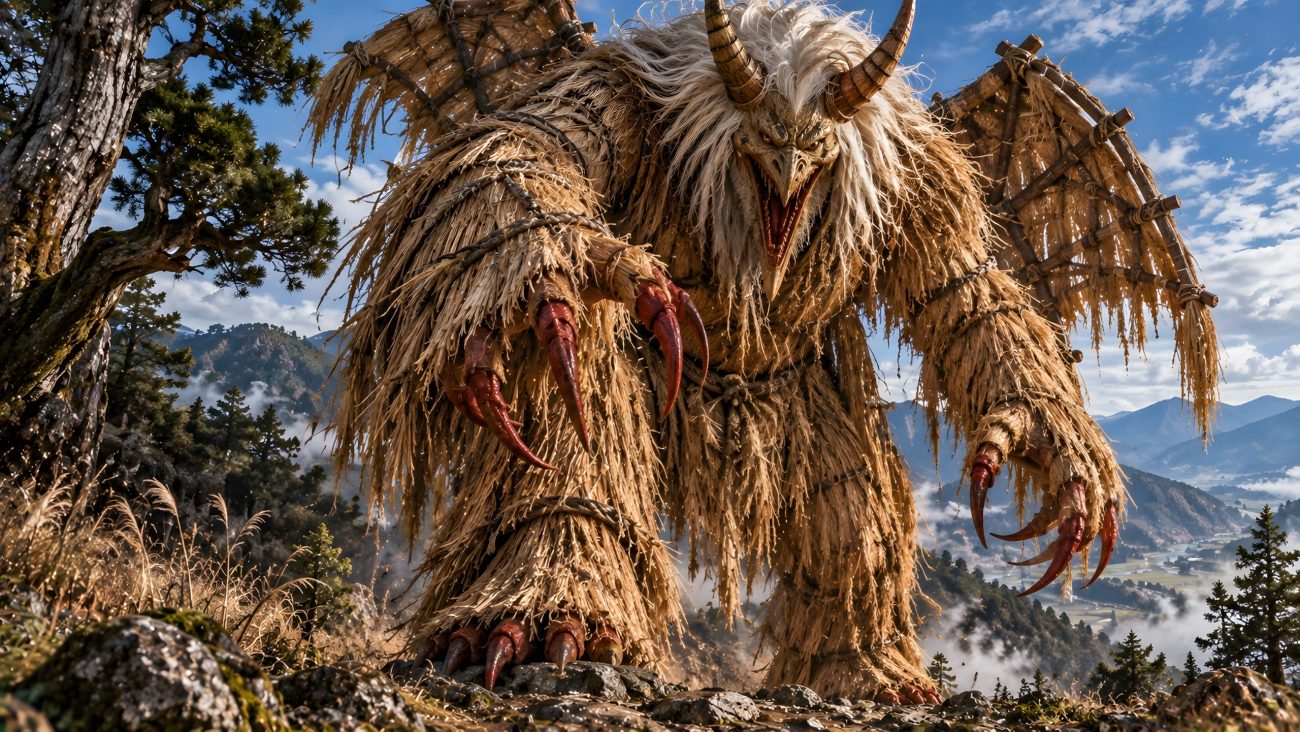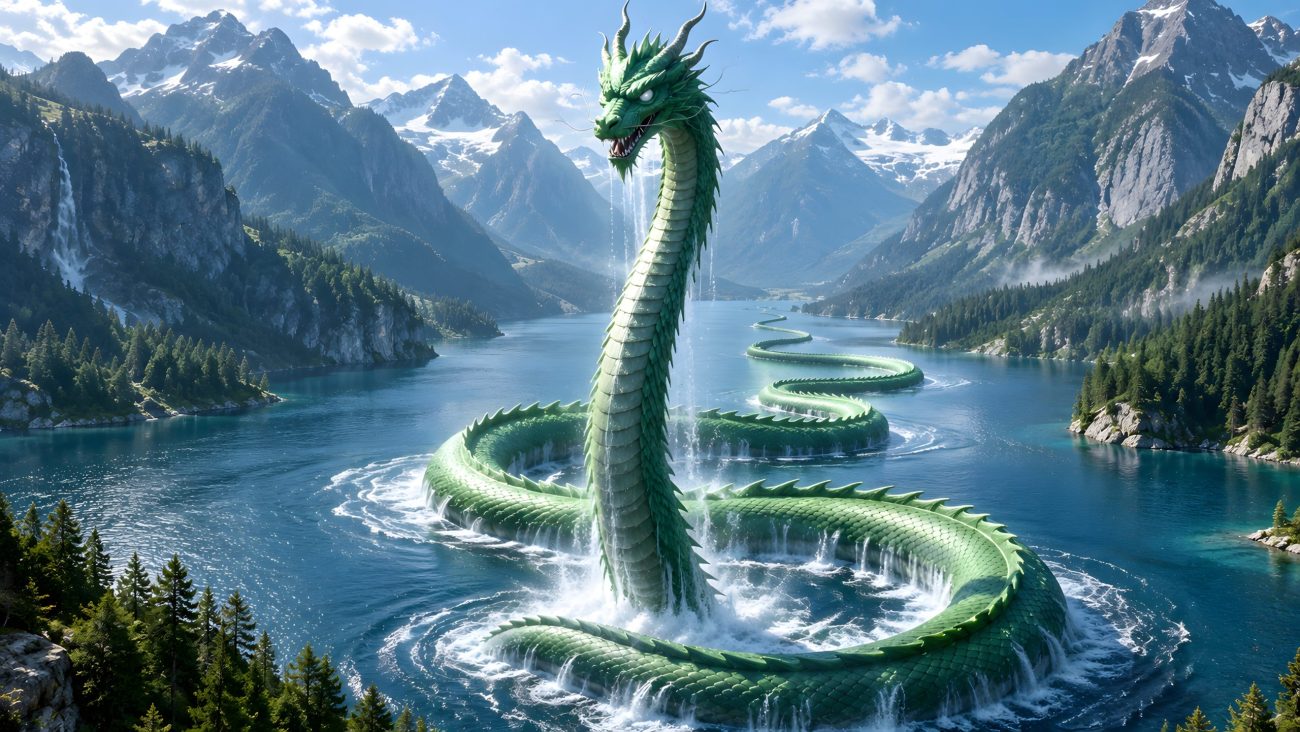
Nishiwokamui

Tradition / Region: Japanese Mythology
Alternate Names:
Category: Mountain dweller


The Myth

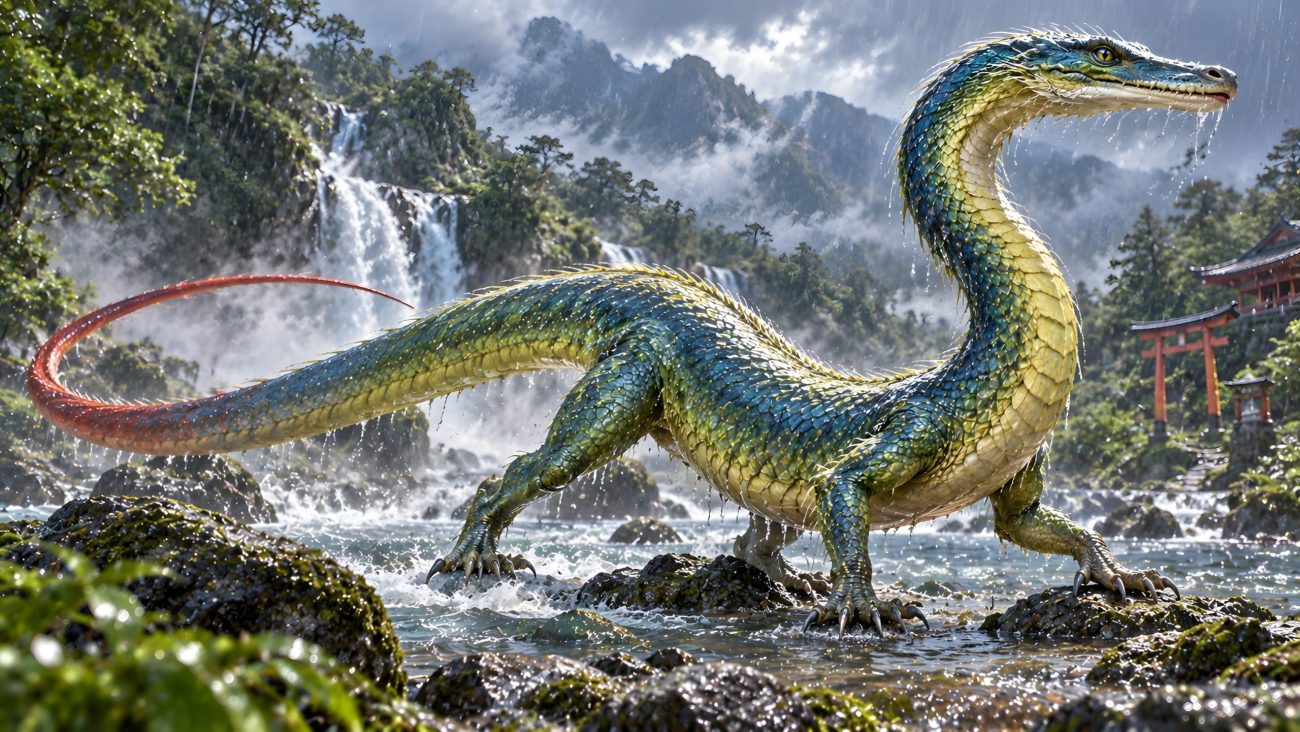
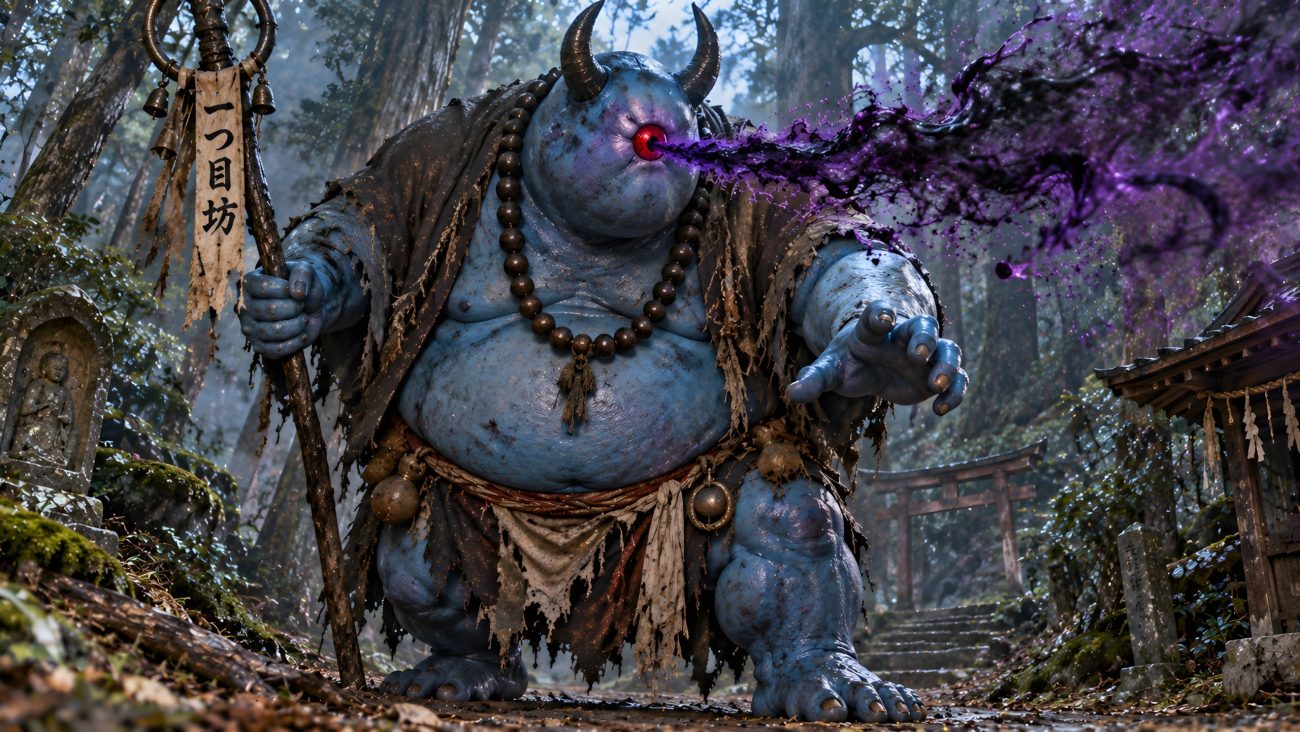
Along the northern coast of Hokkaido, where the Sea of Japan meets dark forests and rising mountains, people once spoke of a strange presence known as Nishiwokamui. It was not a monster of claws or teeth, nor a bringer of disaster, but something quieter and harder to grasp.

On certain summer evenings, as daylight faded and the sea grew calm, Nishiwokamui was said to emerge from the water. From afar it appeared only as a dark mass drifting on the surface, barely distinct from shadow or swell. Fishermen and coastal villagers would notice it moving steadily toward shore, silent and unhurried.

When the being reached land, its form became even more uncertain. It did not walk like an animal, nor stand like a man. Witnesses said its shape dissolved into something like wind itself—present, moving, yet impossible to fully see. It passed from the shore and traveled inland, heading toward the mountains as if drawn by some unseen path.

Despite its eerie nature, Nishiwokamui was not remembered as harmful. It did not attack people, damage villages, or bring illness. Its passing was unsettling rather than violent, a reminder of forces that moved through the world without regard for human concerns. People did not chase it, nor did they try to stop it; they simply watched and let it go.

In this way, Nishiwokamui belongs to the borderlands of belief—a being between sea and mountain, between shape and formlessness. It reflects an older understanding of nature as alive with spirits that do not exist to punish or reward, but simply to move, unseen and unexplained, through the world.


Gallery


Sources

TYZ-Yokai Blog contributors. (n.d.). ニシウォカムイ (Nishiwokamui). In TYZ-Yokai Blog, from https://tyz-yokai.blog.jp/archives/1010654433.html


Interpretive Lenses

Religious Readings
  • Christian Ascetic Deep Dive
Philosophical Readings
  • Nietzschean Deep Dive
Psychological Readings
  • Jungian Deep Dive
Esoteric Deep Dive
  • Hermetic Deep Dive
Political / Social Readings
  • Marxist Deep Dive
Other
  • How to Invite The Nishiwokamui

Yamabiko

Tradition / Region: Japanese Mythology
Alternate Names: Yukaku Hibiki, Kodama (related concept)
Category: Mountain dweller


The Myth

High in the mountains of Japan, where valleys fold into one another and forests swallow sound, people long noticed a strange reply to the human voice. A shout sent across a ravine would return again and again, repeating itself as if something unseen were answering back. This phenomenon came to be known as Yamabiko.

Before echoes were understood as a natural effect of sound and stone, Yamabiko was believed to be a spirit living in the mountains and valleys. When humans called out, the Yamabiko answered by mimicking their voices, not to communicate, but to remind them that they were not alone. Some believed the sound came from tree spirits—kodama—and in older usage, the word kodama itself meant “echo,” blurring the line between sound and spirit.

In this belief, the mountains were alive. Voices disturbed the silence, and the Yamabiko responded, playfully or eerily repeating what had been said. Travelers who heard their own words thrown back at them sometimes felt watched, as though the land itself had ears.

Over time, artists gave the Yamabiko a visible form. In illustrated monster scrolls such as the Hyakkai Zukan, it appears as a small beast resembling a dog or monkey, crouched among rocks and trees. The famous yokai artist Toriyama Sekien also depicted it in Gazu Hyakki Yagyō, labeling it Yukaku Hibiki, though reading the name aloud as Yamabiko. This creature-like form gave shape to something otherwise invisible—a spirit made of sound.

Though later generations would explain echoes through physics, the Yamabiko never fully vanished from imagination. It remains a reminder of a time when mountains were thought to answer back, when every call into the wilderness risked summoning not just sound, but a presence listening from the depths of forest and stone.


Gallery


Sources

TYZ-Yokai Blog contributors. (n.d.). 山びこ (Yamabiko). In TYZ-Yokai Blog, from https://tyz-yokai.blog.jp/archives/1010652600.html


Interpretive Lenses

Religious Readings
  • Christian Ascetic Deep Dive
Philosophical Readings
  • Nietzschean Deep Dive
Psychological Readings
  • Jungian Deep Dive
Esoteric Deep Dive
  • Hermetic Deep Dive
Political / Social Readings
  • Marxist Deep Dive
Other
  • How to Invite The Kuygorozh

Obariyon

Tradition / Region: Japanese Mythology
Alternate Names: Bariyon, Ubariyon, Onbu Obake, Obosaritei
Category: Yōkai, Gnome


The Myth

Along quiet roads and village paths in Niigata, travelers once feared encountering a strange child-sized being called Obariyon. It hid in bushes or trees by the roadside, waiting patiently for someone to pass by. When a lone traveler approached, the creature would suddenly leap onto their back and cry out, “Obariyon!” — a childish demand for a piggyback ride.

If the traveler panicked or tried to throw it off, misfortune followed. But if they sighed, endured, and carried the Obariyon on their back, the burden grew heavier with every step. What began as the weight of a child soon felt like a crushing load, bending backs and shaking knees. To make matters worse, Obariyon was said to chew at the scalp of whoever carried it, gnawing painfully as it laughed.

Some stories say the weight became so great that the traveler was eventually crushed beneath it. Yet more often, the tale ends differently. When the exhausted person finally reached home and the Obariyon vanished, the unbearable weight was revealed to have been a sack of gold all along. Those who endured the journey without complaint found themselves suddenly rich.

Because of this, Obariyon came to embody a dangerous test of patience. Villagers even wore metal bowls on their heads to protect themselves from its biting jaws, unsure whether the creature would bring ruin or reward. In the end, Obariyon was remembered as a yōkai of burden and blessing alike — a spirit that punished weakness, but richly rewarded those who carried its weight to the very end.


Gallery


Sources

Yokai.com contributors. (n.d.). Obariyon. In Yokai.com — The Japanese Mythology Database, from https://yokai.com/obariyon/


Interpretive Lenses

Religious Readings
  • Christian Ascetic Deep Dive
Philosophical Readings
  • Nietzschean Deep Dive
Psychological Readings
  • Jungian Deep Dive
Esoteric Deep Dive
  • Hermetic Deep Dive
Political / Social Readings
  • Marxist Deep Dive
Other
  • How to Invite The Obariyon

Chopirako

Tradition / Region: Japanese mythology
Alternate Names:
Category: House dweller, Gnome


The Myth

The Chopirako is said to be the most beautiful and refined of the household spirits known as zashiki-warashi. It appears as a small child, no more than four or five years old, pale and strikingly white, with a presence gentler and more radiant than its kin. Where a chopirako dwells, the house is blessed with quiet prosperity and harmony.

In old stories from northern Japan, a single household might host several such child spirits, each bound to a different space. One might live in the earthen floor, another in the living room, another near the tools of daily labor. The chopirako, however, was the highest and most graceful among them, associated with the heart of the home rather than its margins.

At night, when the house slept, these spirits made themselves known through sound rather than sight. Soft footsteps, the whisper of movement, or the faint presence of a child passing unseen through rooms were signs that the spirits were awake. They were never meant to be watched directly, and attempts to spy on them risked driving them away forever.

As with all zashiki-warashi, the chopirako was a double-edged blessing. As long as it remained, the household would thrive. If it vanished—offended, neglected, or simply choosing to depart—fortune would fade, and the house would fall into decline. Thus families treated their homes with care and respect, believing that unseen children might be listening, watching, and quietly deciding the fate of those who lived there.


Gallery


Sources

TYZ-Yokai Blog contributors. (n.d.). Chopirako. In TYZ-Yokai Blog, from https://tyz-yokai.blog.jp/archives/1085633632.html


Interpretive Lenses

Religious Readings
  • Christian Ascetic Deep Dive
Philosophical Readings
  • Nietzschean Deep Dive
Psychological Readings
  • Jungian Deep Dive
Esoteric Deep Dive
  • Hermetic Deep Dive
Political / Social Readings
  • Marxist Deep Dive
Other
  • How to Invite The Chopirako

Zashiki-warashi

Tradition / Region: Japanese Mythology
Alternate Names: Zashiki-bokko, Kura-warashi, Warashi
Category: Yokai, Gnome


The Myth

In the farmhouses and old family homes of northern Japan, there lives a mysterious child spirit known as the zashiki-warashi. It appears as a young child—sometimes five or six years old, sometimes closer to twelve—often with a red face and long or cropped hair. Though it looks human, it is not. It belongs to the house itself.

A zashiki-warashi dwells in the inner rooms of prosperous households, especially among wealthy farmers or old, respected families. As long as the child spirit remains, the house flourishes. Crops grow well, money comes easily, and the family prospers. But if the zashiki-warashi leaves, misfortune soon follows. Wealth drains away, sickness appears, and families fall into ruin.

The spirit is playful and unpredictable. It may wander around beds at night, flip pillows, make footsteps in empty rooms, or rustle paper screens. Sometimes it laughs, sometimes it snorts, and sometimes it speaks openly with people. Guests may glimpse it crouching beneath a household altar or peeking from behind doors. In other homes, it remains unseen, known only through sounds and disturbances.

Some houses are said to host more than one zashiki-warashi. In certain villages, they are even ranked—some higher, some lower—each with a different temperament and influence. A few appear as boys, others as girls, and some are remembered as former princesses or noble children bound to the house by fate.

Many stories tell of disaster following their departure. In one tale, two zashiki-warashi were seen moving from a house to another; soon after, nearly the entire family left behind died from poisoned food. In another, a household fell into poverty the moment its spirit vanished. These stories serve as warnings: the spirit’s presence must be respected, never mocked or driven away.

Most strangely, zashiki-warashi do not reveal themselves to everyone. Often, only the head of the household can see them—and even then, only a few times in a lifetime. To others, the spirit remains invisible, known only by laughter in empty rooms or footsteps where no child should be.

Thus the zashiki-warashi endures as both blessing and omen: a child who brings fortune, a spirit bound to home and lineage, and a reminder that prosperity, once lost, may never return.


Gallery


Sources

TYZ-Yokai Blog contributors. (n.d.). 座敷童子 (Zashiki-warashi). In TYZ-Yokai Blog, from https://tyz-yokai.blog.jp/archives/1010654392.html


Interpretive Lenses

Religious Readings
  • Christian Ascetic Deep Dive
Philosophical Readings
  • Nietzschean Deep Dive
Psychological Readings
  • Jungian Deep Dive
Esoteric Deep Dive
  • Hermetic Deep Dive
Political / Social Readings
  • Marxist Deep Dive
Other
  • How to Invite The Zashiki-warashi

Akabeko

Tradition / Region: Japanese mythology
Alternate Names: Red Cow
Category: Cow


The Myth

Long ago, during the early ninth century, monks were building Enzō-ji temple in the town of Yanaizu. The work was heavy, and the task of carrying stone and timber up to the site was exhausting. One day, a powerful red ox appeared and began helping the monk Tokuitsu Daishi, hauling construction materials tirelessly as if it understood the sacred purpose of the work.

The red ox labored until the temple was complete. When the final stone was set, it did not return to the wild. Some say it turned to stone on the temple grounds; others say it simply chose to remain there forever, watching over the place it had helped create. From then on, it was known as Akabeko—the Red Cow.

Generations later, people remembered Akabeko not only for its strength, but for its devotion. Small figures of the red cow were made in its image, and it was said that Akabeko protected children from sickness and misfortune. Its red color was believed to drive illness away, just as the living cow had once driven fatigue and hardship from the builders of the temple.

To this day, Akabeko endures as a gentle guardian. Those who visit its likeness at Enzō-ji rub it for luck, honoring the red cow that gave its strength freely and chose to remain behind as a silent protector of the faithful.


Sources

TYZ Yokai Encyclopedia. (2021, March 3). 赤べこ (Akabeko), from https://tyz-yokai.blog.jp/archives/1078437861.html

Wikipedia contributors. (n.d.). Akabeko. In Wikipedia, The Free Encyclopedia, from https://en.wikipedia.org/wiki/Akabeko


Tenchishindousai

Tradition / Region: Japanese Mythology
Alternate Names: Tenshin Dōsai; Shindōsai
Category: Catfish, Fish, Yokai


The Myth

One night, during the Ansei era, a wandering rōnin arrived at a guardhouse in Edo and begged for shelter and food. He was tall, powerfully built, and strange in appearance, like a man hardened by severe training. The guards refused him, saying the guardhouse was not a place for lodging, and told him to seek an inn elsewhere.

At this, the man’s face grew pale.

He declared, “I am Tenchishindousai. There is none who does not know my name. Yet because the land has been calm for many years, people have grown contemptuous. They catch my kin, roast them, stew them, and kill them without cause. I have come to avenge them.”

He spoke of his journey: how he had shaken people to death at temple gatherings, how he had passed through province after province—mountains, capitals, and ports—causing the earth to tremble beneath his feet. Now, he said, he had arrived in Edo.

When the guards realized he claimed to be the Earthquake itself, they tried to seize him. Enraged, Tenchishindousai vanished on the spot.

At once, heaven and earth roared. The ground convulsed violently. Houses collapsed, storehouses fell, fires erupted across the city, and countless people were crushed or burned. Amid the devastation, Tenchishindousai spoke again, saying that the gods were absent from the land—and that if the deity who pins the earth were to arrive, the destruction would grow even greater.

With that, he fled north.

Those who saw his true form said his face was that of a giant catfish, the ancient creature that writhes beneath the land and shakes the world when angered. Thus the people believed the great earthquake was not chance, but revenge—carried out by Tenchishindousai, the living will of the trembling earth.


Gallery


Sources

TYZ-Yokai Blog contributors. (n.d.). 添地震大歳 (Tenchishindōsai). In TYZ-Yokai Blog, from https://tyz-yokai.blog.jp/archives/1069000650.html


Interpretive Lenses

Religious Readings
  • Christian Ascetic Deep Dive
Philosophical Readings
  • Nietzschean Deep Dive
Psychological Readings
  • Jungian Deep Dive
Esoteric Deep Dive
  • Hermetic Deep Dive
Political / Social Readings
  • Marxist Deep Dive
Other
  • How to Invite The Tenchishindousai

Hyakutou

Tradition / Region: Buddhist Lore, Japanese Mythology
Alternate Names: Hyaku-headed Fish
Category: Fish


The Myth

Long ago, Shakyamuni Buddha traveled with his monks along the banks of a great river. There, fishermen hauled up an enormous fish from the water. It was so vast that hundreds of people were needed to drag it ashore. When the crowd gathered, they saw that the fish bore the heads of one hundred beasts—camel, cow, horse, boar, sheep, dog, and many more—each head crying out in suffering.

The Buddha approached the fish and spoke to it. He asked where the one who had guided it now resided. The fish answered that she had fallen into the hell of unending torment. Those who heard this trembled, and Ananda asked the Buddha what sin could have brought such a fate.

The Buddha then told of the fish’s former life.

In an earlier age, there lived a brilliant youth born into a learned family. Though gifted with wisdom, he followed his mother’s urging to deceive his teacher. When he failed to complete his studies, he returned to the monk who had taught him and repaid kindness with cruel words, mocking and humiliating the one who had guided him, likening his teacher’s head to that of an animal.

For these words, heavy karma was formed.

After death, the mother fell into hell, and the son was reborn as a monstrous fish, bearing upon his body the animal heads he had spoken in insult. Each head was the echo of a word once uttered in contempt.

When asked whether the fish could escape this form, the Buddha answered that even across vast ages and countless rebirths, such punishment was not easily shed. Words spoken in cruelty return in kind, and speech, like action and thought, shapes destiny.

Thus the Hyakutou is remembered—a living sermon of flesh and scale, drifting through the waters, bearing one hundred faces of suffering as the weight of its past words.


Gallery


Sources

TYZ-Yokai Blog contributors. (n.d.). ヒャクトウ (Hyakutou). In TYZ-Yokai Blog, from https://tyz-yokai.blog.jp/archives/1022878715.html


Interpretive Lenses

Religious Readings
  • Christian Ascetic Deep Dive
Philosophical Readings
  • Nietzschean Deep Dive
Psychological Readings
  • Jungian Deep Dive
Esoteric Deep Dive
  • Hermetic Deep Dive
Political / Social Readings
  • Marxist Deep Dive
Other
  • How to Invite The Hyakutou

Akugyo

Tradition / Region: Japanese mythology
Alternate Names: Daigyo; Raichōgyo
Category: Fish, Mermaid, Yokai


The Myth

In the seas near Kibi Province, sailors spoke in fear of the Akugyo, the Evil Fish. Vast beyond measure, it rose from the depths to overturn ships as easily as toys, devouring the sailors who fell screaming into the water.

Some Akugyo breathed fire from their mouths, scorching ships before dragging them under. Others resembled enormous ningyo, their bodies covered in gold and silver scales that gleamed beneath the waves. There were also Akugyo shaped like colossal mermaids, bearing two white horns like those of an oni sprouting from their heads. Fishermen dreaded these monsters, for a boat could become trapped between the creature’s massive fins, leaving the crew helpless as the Akugyo fed.

In the sixth month of 1805, an Akugyo appeared off the coast of Echigo Province. Its body stretched more than eleven meters in length, and its horns were longer than a man’s arm. The terror it caused was so great that the Lord of Kaga dispatched a vast force—fifteen hundred men and four hundred fifty cannons—to hunt it down. After a great battle at sea, the monster was finally slain.

Another tale tells of Izutsuya Kanroku, a famed taiko drummer from Kaga. While crossing the Sea of Japan, his boat suddenly came to a halt. Beneath it lay the back of an Akugyo, and the vessel had become lodged upon the monster’s body. Believing death inevitable, Kanroku took up his drum and played with all the strength he had left. His drumming thundered across the sea and sky, echoing like a storm.

Moved—or perhaps startled—by the sound, the Akugyo shifted. The boat slipped free, and Kanroku escaped unharmed.

Thus the Akugyo remains a creature of terror and wonder: a destroyer of ships, yet sometimes driven away by courage, sound, and human resolve.


Sources

Wikipedia contributors. (n.d.). Akugyō. In Wikipedia, The Free Encyclopedia, from https://en.wikipedia.org/wiki/Akugyo


Tomoe

Tradition / Region: Japanese Mythology
Alternate Names:
Category: Fish, Carp, Yokai


The Myth

In Kawachi Province there lies a deep pool known as Uchisuke-ga-fuchi, whose waters were said never to dry. On its bank lived a fisherman named Uchisuke, a solitary man who made his living by catching carp.

One day, Uchisuke caught a female carp of uncommon dignity, marked by patterns unlike any he had seen before. Instead of selling it, he kept the fish. As years passed, a tomoe crest appeared upon its scales, and the carp grew strangely attached to him. It began to respond when called by name, lingered near him like a companion, and in time even left the water to sleep in his house and share his meals.

For eighteen years Uchisuke kept the carp in a tank. By then it had grown to the size of a young girl of fourteen or fifteen.

At last, Uchisuke married. One night, while he was away fishing, a beautiful woman wearing a pale blue kimono patterned with rising waves burst into the house. She spoke to the new wife with fury, saying that she had known Uchisuke for many years and was even carrying his child. Burning with resentment at being cast aside, she ordered the wife to return to her parents’ home at once, warning that if she did not, a great wave would rise within three days and drag the house into the pond.

Terrified, the wife fled and told Uchisuke what she had seen. He laughed it off, saying that such a woman could never have desired him, and that it must have been an illusion. As dusk fell, he returned to the pond in his boat.

Suddenly the water surged. Seaweed parted, and a massive carp leapt into the boat. From its mouth it spat out a small being shaped like a human child, with hair upon its head, yet with scales upon its body. Then the carp plunged back into the depths and vanished.

Uchisuke fled in terror. When he returned home and looked into the fish tank, Tomoe was gone.

After this, the villagers spoke among themselves and said, “In all things, it is not good for humans to keep living creatures too close to them.”


Gallery


Sources

TYZ-Yokai Blog contributors. (n.d.). 巴御前 (Tomoe). In TYZ-Yokai Blog, from https://tyz-yokai.blog.jp/archives/1010655112.html


Interpretive Lenses

Religious Readings
  • Christian Ascetic Deep Dive
Philosophical Readings
  • Nietzschean Deep Dive
Psychological Readings
  • Jungian Deep Dive
Esoteric Deep Dive
  • Hermetic Deep Dive
Political / Social Readings
  • Marxist Deep Dive
Other
  • How to Invite The Tomoe