Firefox

Tradition / Region: Finnish Mythology
Alternate Names: Tulikettu, Tulirepo, Tulikko
Category: Fox


The Myth

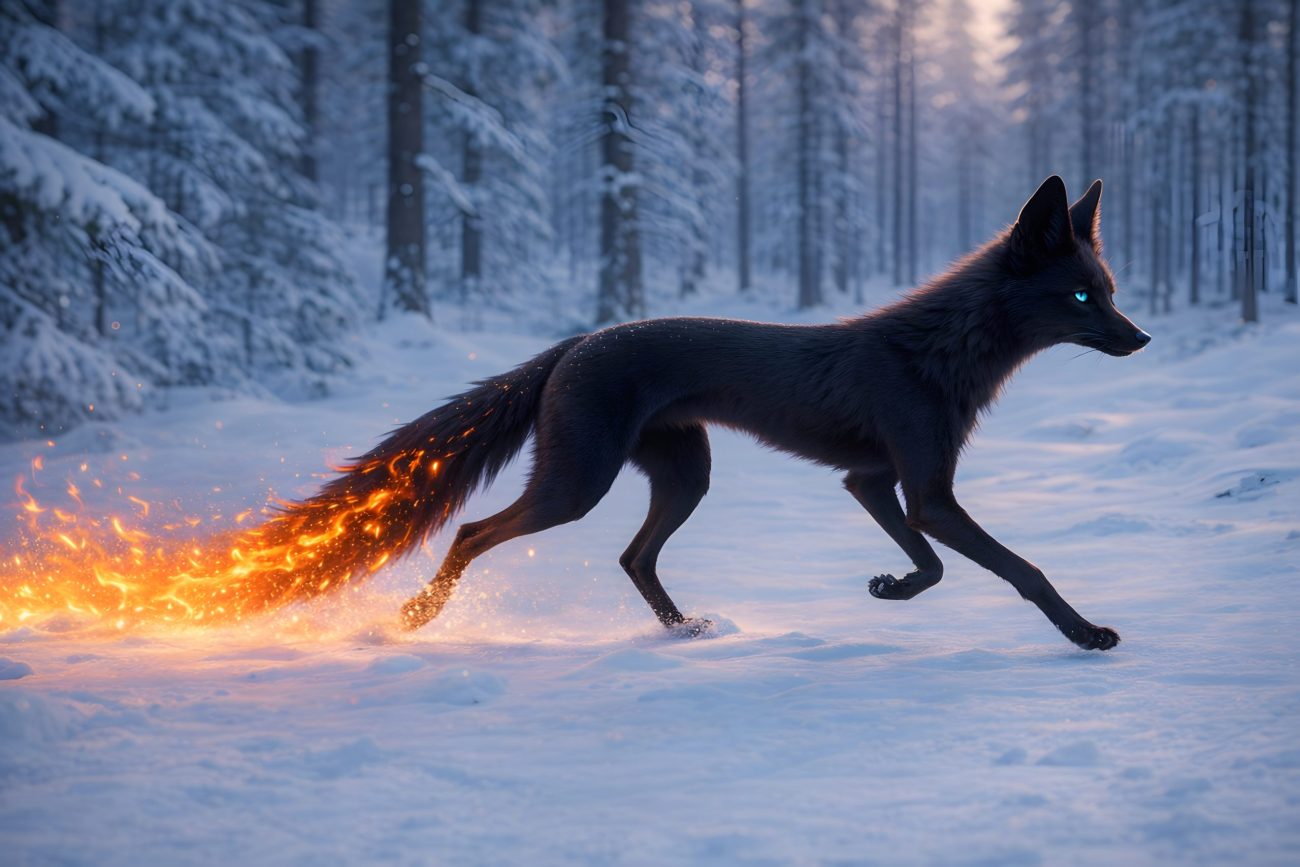
Deep in the forests of the far north, and in the lonely wilderness where few people travel, there is said to live a rare and wondrous fox known as the Firefox.

By day it appears as a dark, almost black fox, slipping silently through the trees and hiding in remote dens where almost no one ever sees it. But when night falls, the creature reveals its true nature. Its tail begins to glow and sparkle, scattering fire-like light as it moves. Some say the sparks trail behind it, lighting the darkness as it runs across the snow.

Stories tell that when the fur of a Firefox is brushed in a certain way, it shines with a strange radiance, giving off a light unlike ordinary flame. Because of this, its hide was believed to be precious beyond measure. It was said that in earlier times, people used the leather of such a fox to illuminate dark storehouses safely, without the danger of open fire.

Hunters dreamed of encountering the Firefox, for capturing one was believed to bring wealth for the rest of their lives. Yet the creature lived far from human paths, hidden in the northern wilds, and very few ever claimed to have seen it.

Thus the Firefox remained a creature of distant forests and winter nights — a fox whose tail burned with light, glimpsed only by the fortunate or the lost beneath the northern sky.


Sources

Wikipedia contributors. (n.d.). Firefox (mythology). In Wikipedia. Retrieved March 1, 2026, from https://en.wikipedia.org/wiki/Firefox_(mythology)

Ahtin Taikahärkä

Tradition / Region: Finnish mythology
Alternate Names: Ahti’s Magic Bull
Category: Cow


The Myth

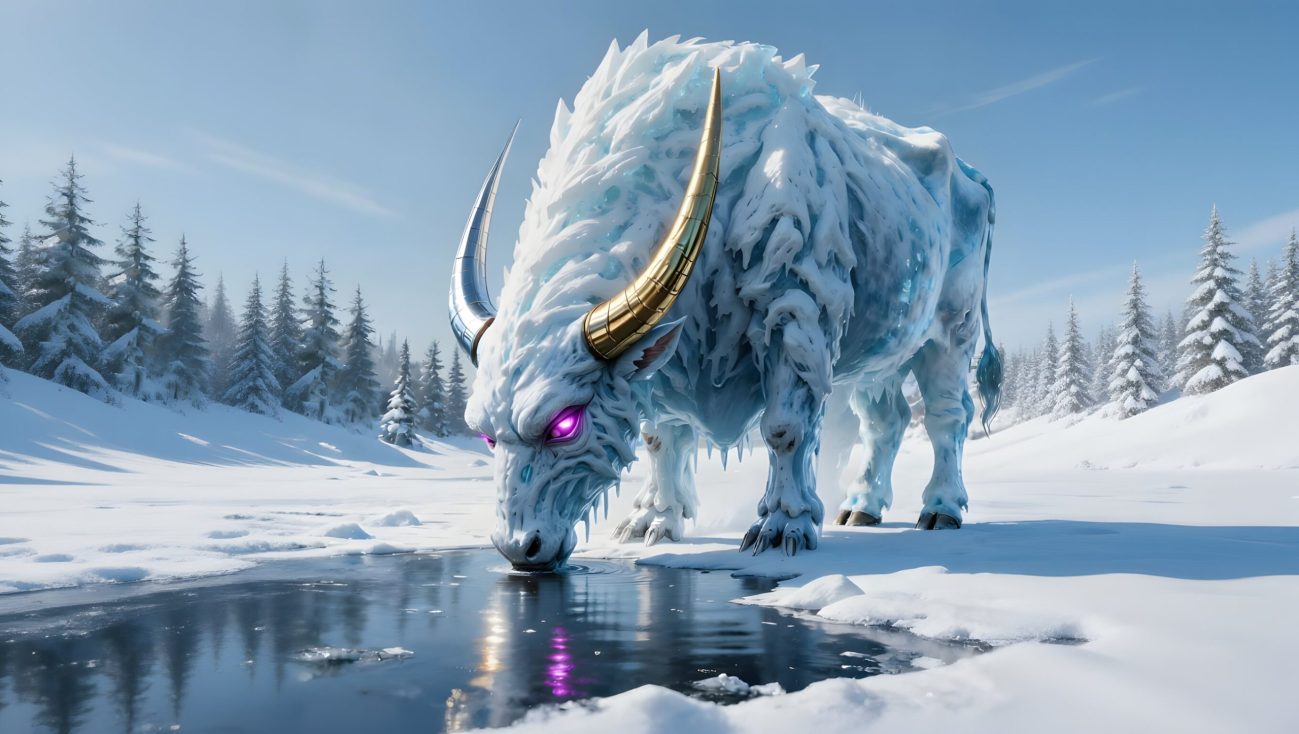
By the will of Ahti, King of the Islands, a wondrous creature was brought fully into the world. It was no spirit or illusion, but a living bull of immense size and strength. Its horns shone like gold and silver, and its body pressed heavily upon the earth as though the land itself struggled to bear it.

The bull wandered in quiet majesty. When it came upon a small lake, it lowered its great head and drank deeply, lingering at the water’s edge as if bound to that place. Its breath was slow and powerful, and the world seemed to pause around it.

Far away in the northern land of Pohjola, its ruler became aware of the bull’s existence. In response, he created a wolf—lean, fierce, and driven by a single purpose—and sent it forth to hunt the magical beast.

In time, bull and wolf met.

Their clash was brief and violent, and the outcome was already woven into fate. The wolf brought the bull’s life to an end, and the creature with horns of gold and silver vanished from the world.

What remained was only the memory of its creation: a life summoned by divine power, brilliant and real, yet destined to endure only for a moment before being reclaimed by the forces set against it.


Sources

Kalevala: The Epic Poem of Finland: RUNE XXVII, the Unwelcome Guest
(J. M. Crawford, Trans.). (1888).


Tuuslar

Tradition / Region: Estonian Mythology, Finnish Mythology
Alternate Names: —
Category: Sorcerer


The Myth

A Finnish Tuuslar once fled across the sea to the island of Lavassaare, pursued by enemies who sought to destroy him. As he fled, he used his magic to defend himself. He transformed fish in the surrounding waters into terrifying sea monsters, hoping to frighten his pursuers away. Even so, they continued after him and reached the small island.

When the enemies landed, the Tuuslar took a handful of feathers from his beak and blew them into the air. At once, warriors fell from the sky like hail, filling the island and driving the attackers into panic. Terrified, they fled, leaving the Tuuslar alone on Lavassaare.

The Tuuslar remained on the island for many years. From there, he played tricks on the people living along the Viru coast, using his witchcraft to deceive and trouble them. At last, he departed, flying away on the back of a great northern eagle, and was never seen again.

After his departure, the island of Lavassaare stood empty for a long time. People feared to land there, believing the Tuuslar’s magic still lingered. Eventually, peaceful Finns arrived and settled the island. These settlers were said to have lost their witchcraft spells, and their descendants are believed to live on the island to this day.

According to the legend, children are sometimes seen playing and throwing feathers into the air, saying, “Let’s try—can we get shepherds?” remembering the Tuuslar’s magic.

Another tale tells that a Finnish Tuuslar once threw a stone at the sleeping Kalevipoeg, but missed. The stone was said to remain near the Suigu farm in Viru-Jaagupi, marking the place where the spell failed.