Viy

Tradition / Region: Ukrainian Mythology
Alternate Names:
Category: Gnome, Cave dweller


The Myth

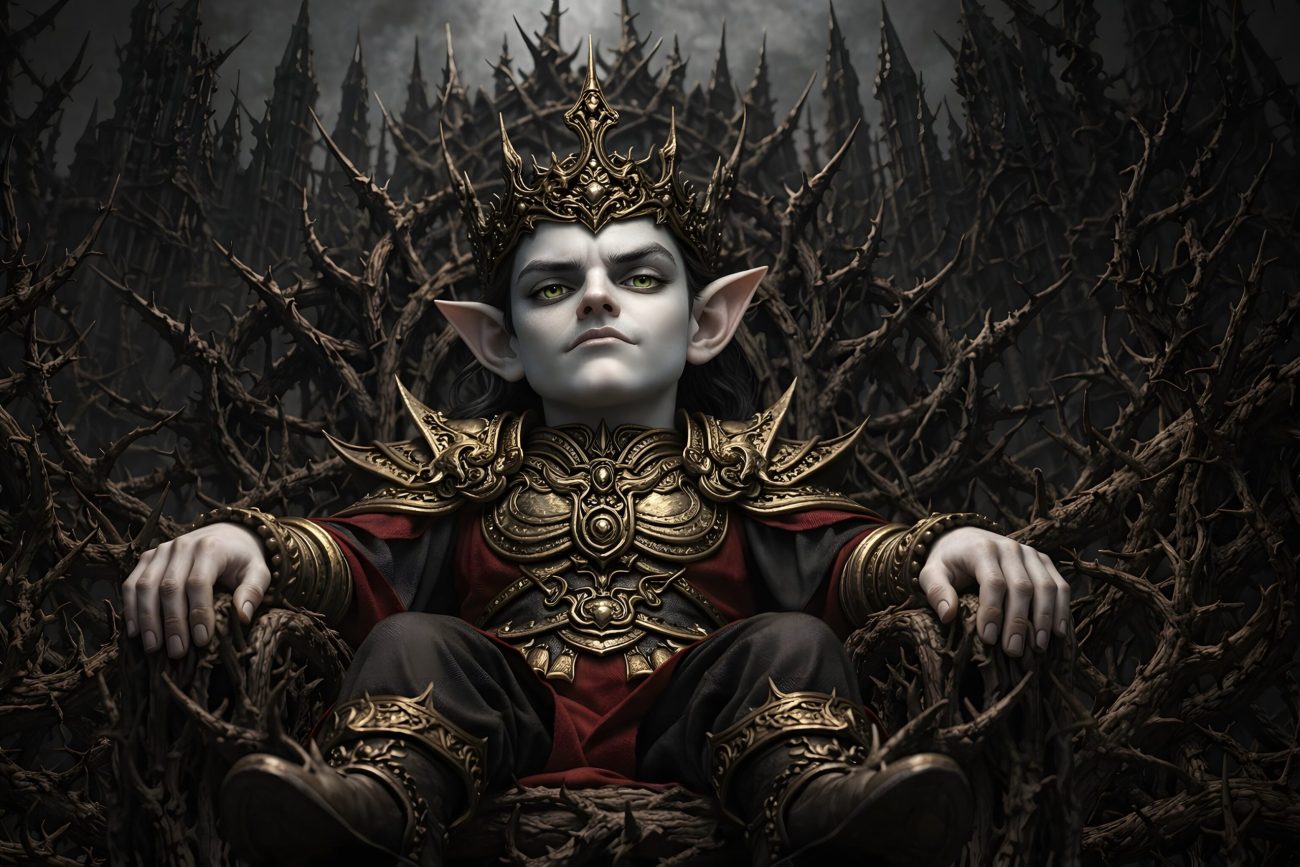
Viy is the master of what lives beneath the earth.

He is said to be the chief of the gnomes and underground beings, an ancient creature so heavy with age and power that his body can scarcely move. His most terrible feature is his eyes. Their eyelids are so vast, thick, and heavy that they drag upon the ground, and Viy himself cannot lift them. When he wishes to see, his servants must raise the lids with iron hooks.

But when his eyes are opened, nothing can hide.

Walls, prayers, circles of protection — all are useless before his gaze. Whatever Viy looks upon is exposed, stripped of concealment, and marked for death. His sight penetrates earth, flesh, and soul alike.

In the tale, Viy is summoned when lesser demons and spirits fail. They call upon him as a final authority, a being whose vision cannot be deceived. When he appears, the ground trembles under his weight. His voice is slow and crushing, and the air grows heavy in his presence.

When Viy’s eyes are lifted and he sees his victim, the victim is doomed. Terror itself seems to answer his gaze, and death follows as a certainty, not as a struggle.

Viy does not chase, does not rage, does not strike. He merely sees.

And that is enough.

He remains a figure of the deep earth and the dark boundary between life and death — a lord not of speed or violence, but of inescapable truth, whose opened eyes end all illusion.


Sources

Wikipedia contributors. (n.d.). Viy (story). In Wikipedia, The Free Encyclopedia, from https://en.wikipedia.org/wiki/Viy_(story)


Acalica

Tradition / Region: Bolivian Mythology
Alternate Names:
Category: Gnome, Cave dweller


The Myth

High in the Bolivian mountains, where clouds cling to stone and storms rise without warning, people speak of the Acalica. They are said to dwell deep within caves hidden in cliffs and ravines, places where thunder echoes long after the sky has cleared. These beings are rarely seen, and most who believe in them know them only through the sudden turning of the weather.

The Acalica are small, wizened men when they choose to appear, bent like ancient roots, their faces lined as though carved by wind and rain. But they do not often show themselves. Instead, their presence is felt when calm skies darken, when hail falls unexpectedly, or when drought ends with sudden rain. Shepherds and travelers say that storms do not come by chance in the mountains — they are sent.

It is believed that the Acalica govern rain, wind, and frost from their rocky shelters. When angered, they unleash violent weather that can ruin crops or make mountain paths deadly. When appeased, they bring gentle rains that nourish the fields. Because of this, people once spoke softly near caves and avoided disturbing stones or entrances in the highlands, fearing they might offend the hidden masters of the sky.

Though few claim to have seen them directly, the Acalica remain part of the living landscape — not creatures of open legend, but of whispered caution — reminders that in the Andes, the weather itself may be listening.


Sources

Wikipedia contributors. (n.d.). Acalica. In Wikipedia, The Free Encyclopedia, from https://en.wikipedia.org/wiki/Acalica


Coblyn

Tradition / Region: Welsh folklore
Alternate Names: Coblynau (plural)
Category: Gnome, Cave dweller


The Myth

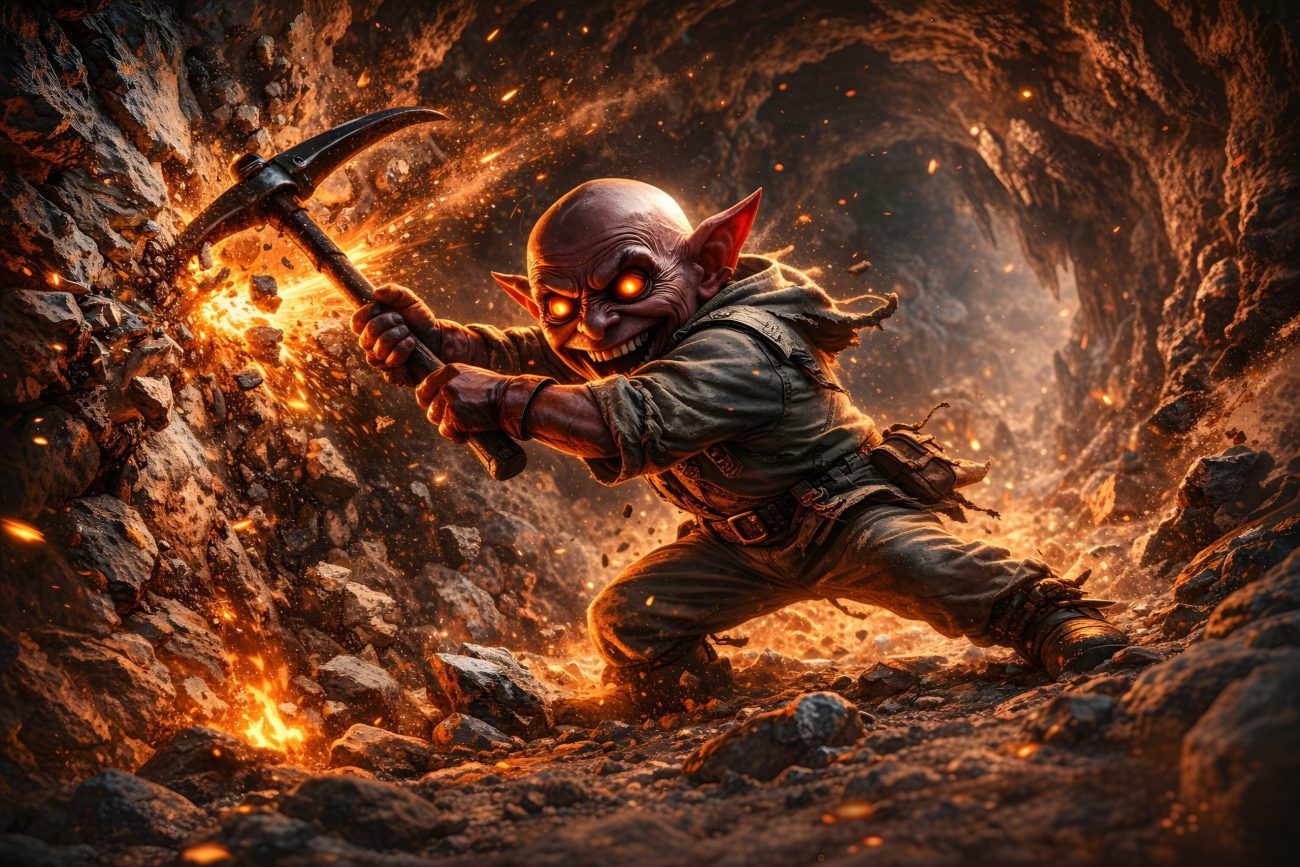
Deep beneath the hills of Wales, where pick and hammer rang against stone, miners spoke of the coblyn—a small, ugly little being who lived in mines and quarries. Barely half a yard tall, the coblyn dressed like a miner, carrying tiny tools and scurrying through the dark tunnels alongside human workers.

Coblynau were known not for their strength, but for their sounds. In the silence underground, miners sometimes heard strange knocking and tapping echoing through the rock. Those who understood the signs believed these knocks were not random at all. They were warnings, or guides—signals that rich veins of ore lay close, or that danger was near. To follow a coblyn’s knocking was often to find treasure.

Though they mimicked the labor of miners, the coblyn’s work was more playful than practical. They chipped and tapped with great enthusiasm, imitating human effort without truly shaping the stone. Still, they were considered friendly spirits, far kinder than many other underground beings. A mine blessed by coblynau was thought to be a fortunate one.

Like many spirits of the deep earth, the coblyn thrived in darkness and secrecy. It was rarely seen clearly, and most encounters came only through sound. Yet its presence lingered in miners’ lore as a quiet companion of the underworld—ugly, busy, and strangely benevolent, guiding humans to the hidden wealth of the stone.


Sources

Wikipedia contributors. (n.d.). Coblyn. In Wikipedia, The Free Encyclopedia, from https://en.wikipedia.org/wiki/Coblyn


Wahlhausen Gnome

Tradition / Region: Luxembourg Mythology
Alternate Names: Wichtelcher of op dem Heidenhäuschen
Category: Gnome, Cave dweller


The Myth

Near Wahlhausen, on a mountain whose foot meets the Ur River, there is a place known as op dem Heidenhäuschen. Long ago, people believed this hill was not solid earth alone, but hollowed beneath by an underground dwelling.

Within that hidden space lived very small people, the Wichtelcher. They were said to inhabit rooms beneath the soil, sheltered from sight, living quietly below the fields. The place where they lived now lies under cultivated land, ploughed and walked upon, yet never entirely at rest.

Old villagers remembered that stone walls were once uncovered in the ground there—traces of something built, then buried again by time and soil. Even in more recent years, the land showed signs of what lay below. While people were working the rock nearby and paused to eat, the ground suddenly sank beneath them, dropping about the depth of a shoe, as if the earth itself had given way into a hollow space.

Such moments were taken as reminders that the Wichtelcher had not been a story alone. Though unseen, their former homes were believed to remain beneath the hill, fragile and empty now, but still capable of shifting the ground above. The place kept its quiet reputation, a reminder that beneath ordinary fields, the Little Ones were once said to live.


Sources

SAGEN.at contributors. (n.d.). Wichtlein (Wahlhausen). In SAGEN.at, from https://www.sagen.at/texte/sagen/luxemburg/Wichtlein_Wahlhausen.html


Tepegöz

Tradition / Region: Azerbaijani Mythology, Turkic mythology
Alternate Names:
Category: Giant, Cave dweller


The Myth

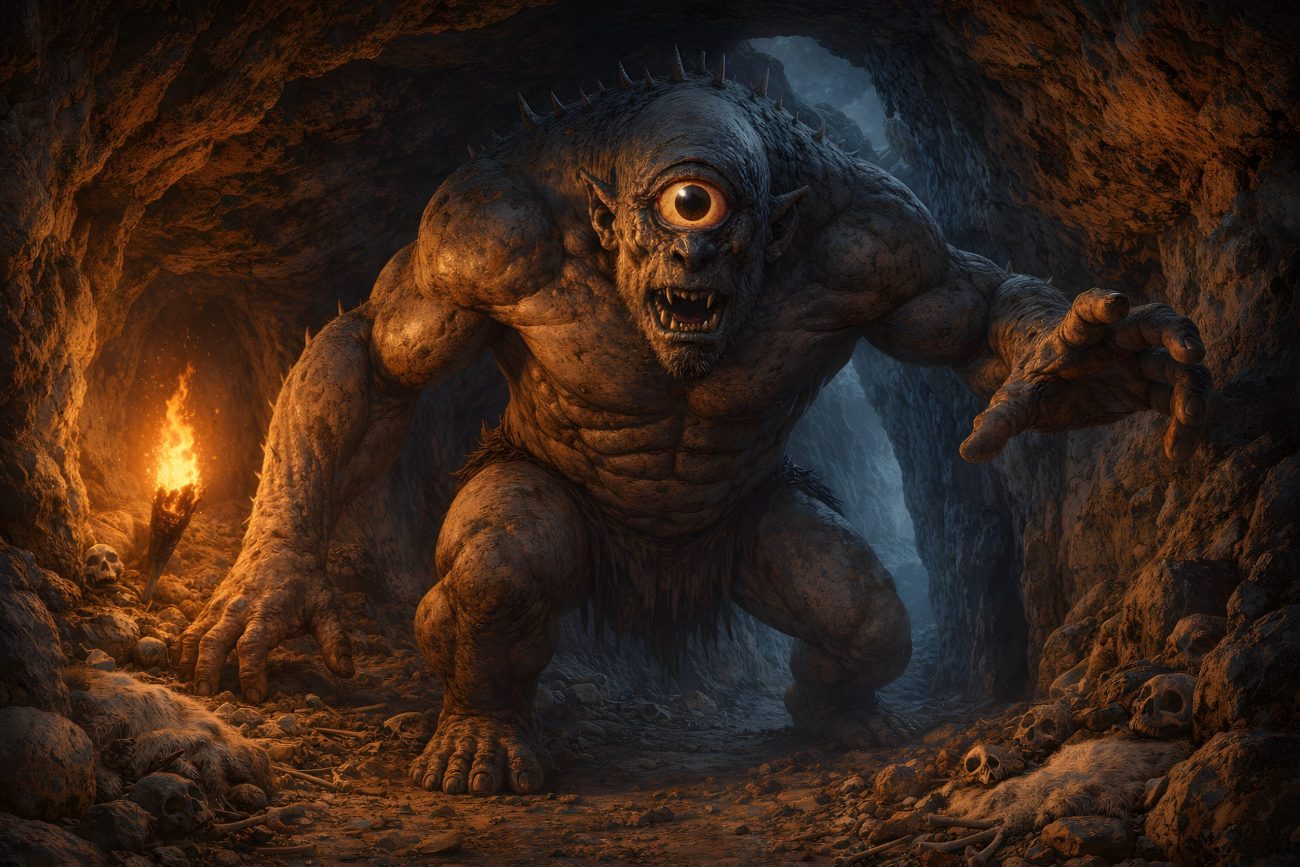
Tepegöz is a huge one-eyed giant who dwells in a cave and feeds on humans. When angered, he forces people inside his lair, where none escape alive. His sense of smell is keen, and he can track victims even in darkness.

There is only one way to survive him. A person must hide beneath a sheep’s skin so the giant cannot detect their scent. When the moment comes, Tepegöz can be slain only by driving a sharp sword into his single eye.

Though powerful and terrifying, Tepegöz is slow-witted. Those who rely on cunning rather than strength alone may overcome him, proving that brute force without intelligence is doomed to fall.


Source

JAMnews contributors. (2017, August 20). The magical creatures of Azerbaijani mythology. In JAMnews, from https://jam-news.net/azerbaijani-demons/


Âssas Buxxam

Tradition / Region: Algerian Mythology
Alternate Names: Guardian of the House
Category: Household Dweller


The Myth

Every home is watched by an unseen presence known as the Âssas Buxxam, the guardian of the house. It lives quietly among the family, observing daily life, protecting the household, and expecting respect in return. When a house contains a rocky outcrop, it is believed the guardian dwells there, and during celebrations a lamp is kept burning so it is not neglected.

The Âssas Buxxam is not alone. It belongs to a greater host of Guardians who dwell in fields, trees, caves, and notable places shaped by nature. These spirits must be greeted and honored, for they are the watchers of the world.

They serve the great lord Aguellid Amokrane, acting as his sentinels. To them, humans do not truly own their homes or lands—they merely borrow them. The Guardians watch how people live, how they treat the earth, and how they behave toward one another.

When respected, the Âssas Buxxam brings harmony to the household and may even speak on behalf of its people before God. When ignored or insulted, its favor withdraws, reminding all who live there that the home is never truly empty, and never entirely theirs.


Sources

Tadukli contributors. (n.d.). Éléments de mythologie kabyle. In Tadukli, from http://tadukli.free.fr/pages/culture/histoire_01_elements_de_mythologie_kabyle.htm


Shiro (Shirodawashi)

Tradition / Region: Japanese Mythology
Alternate Names: Shirodashi, Shirodawashi (White Scrubber)
Category: Mountain Dweller, Cave Dweller


The Myth

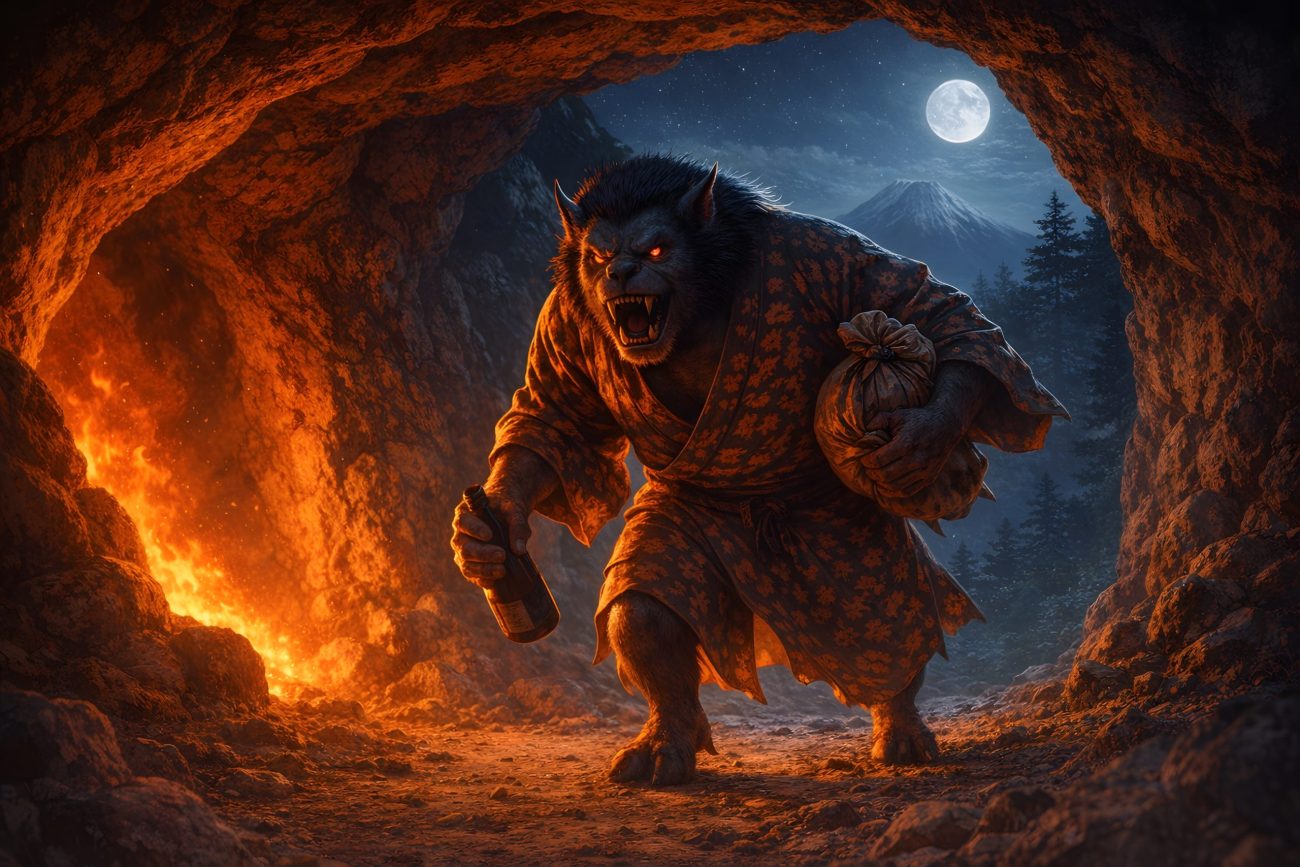
Shiro, also called Shirodawashi, was a yōkai known for his beast-like face, hooves, and a kimono patterned with scrubbing brushes. He lived in a cave near a remote mountain settlement and first appeared as a friendly and helpful figure.

A pair of monsters, Mōryō and his wife Ochiyobon, fled from Ushū to the mountains beyond Hakone and settled in a ruined house. Shiro assisted them in establishing their new home, but his friendliness soon revealed another nature. He was a heavy drinker and a troublemaker who repeatedly visited their house, demanding food, drink, and money.

Shiro became infatuated with Ochiyobon and schemed to take her for himself. One day, he borrowed a padded robe from Mōryō and never returned it. When Ochiyobon came to demand its return, Shiro claimed he had pawned it and left to retrieve it. Instead, he went to Mōryō’s shack armed with a blade and declared that Ochiyobon was now his wife. Intimidated and afraid, Mōryō surrendered, giving Shiro all his possessions, including clothing, bedding, and cosmetics.

When Ochiyobon learned what had happened, she was devastated. Shiro responded brutally, declaring that since she was now his wife, she must submit. Other monsters gathered, and even Momojii, the master of the cave dwellings, appeared. Momojii attempted to restore Ochiyobon to her husband, but Mōryō, fearing public shame, refused reconciliation and announced plans to remarry.

Abandoned, Ochiyobon grew close to Momojii, who treated her with kindness. Enraged, Shiro attacked Momojii with an oak log, but Momojii overpowered him with a massive axe and drove him away. To settle the conflict, Momojii arranged for Shiro to marry a beautiful female ghost.

Despite her beauty, the ghost suffered under Shiro’s relentless desire. Unable to endure him, she abandoned her lingering grudge against the living and wished to return to the underworld. When demons arrived to claim her, Shiro fought them fiercely. During the chaos, the ghost passed on peacefully, leaving the demons with no soul to seize. They attempted to drag Shiro to hell instead, but along the way a mysterious boy appeared and gave Shiro demon-slaying sake. The boy revealed himself to be the tanuki Kakubei, who slew the demons.

Grateful, Kakubei asked Shiro to help abduct the daughter of a fox whose marriage proposal had been rejected. Shiro eagerly agreed and joined the tanuki in attacking the wedding procession, successfully capturing the bride’s palanquin. However, he soon encountered Mikoshi Nyūdō, who defeated him and took him prisoner. Impressed by Shiro’s boldness, Mikoshi Nyūdō eventually released him, predicting he might serve a greater purpose someday.

Later, tanuki thieves stole the White Fox Jewel and entrusted it to Shiro. When monsters and foxes came to retrieve it, they heard a woman’s voice from within Shiro’s cave. Ochiyobon emerged, holding a bloodstained knife and the jewel. Having been disgraced and betrayed, she took revenge by killing Shiro and returning the treasure to its rightful owners.

Thus ended Shirodawashi, remembered as a violent, cunning, and lust-driven yōkai whose ambition and cruelty ultimately led to his downfall.