Bifron

Tradition: French Mythology
Alternative Names: Bifron
Category: Demon


The Myth

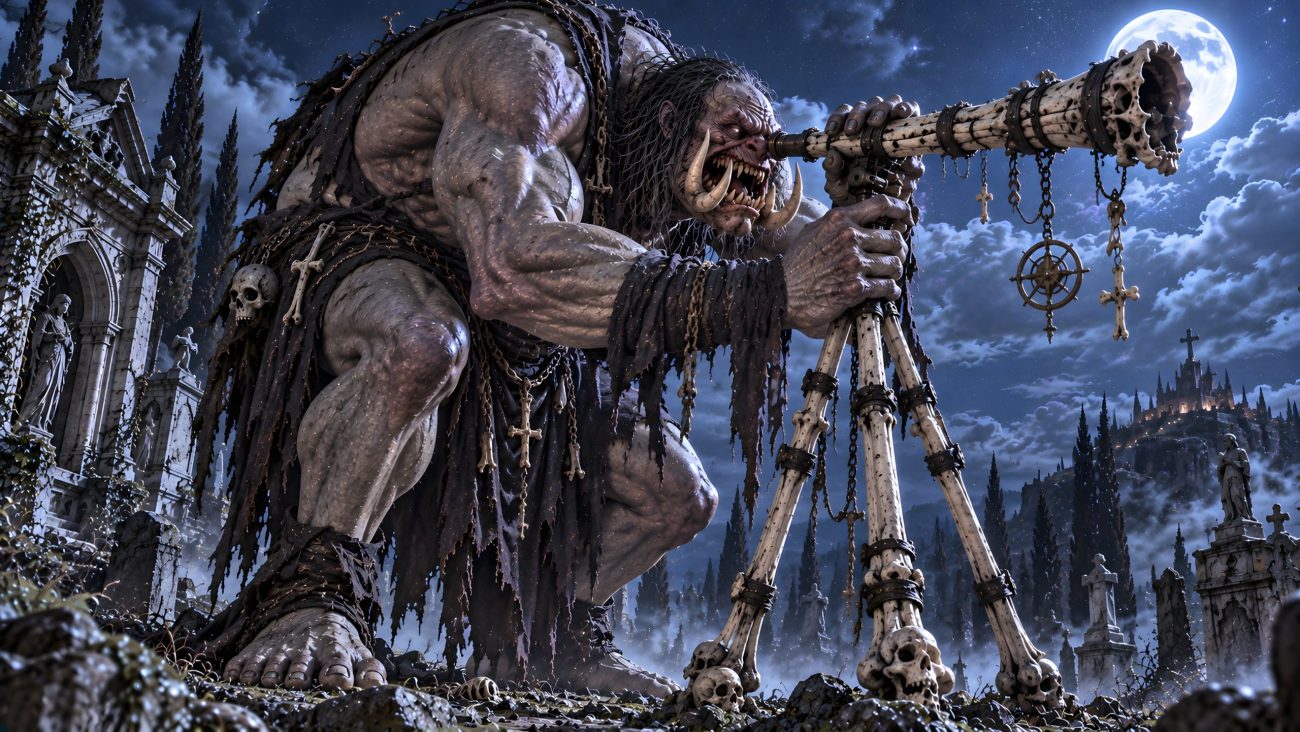
Bifron appears in the form of a monstrous creature. When he takes human form, he makes people knowledgeable in astrology and teaches them the secrets of geometry. He also knows the virtues of herbs, stones, and precious plants.

Bifron transports corpses from one place to another and can move the remains of the dead. He has also been seen lighting torches on the tombs of the dead.

Bifron commands twenty-six legions of demons.


Sources

Collin de Plancy, Jacques Albin Simon. Dictionnaire infernal: répertoire universel des êtres, des personnages, des livres, des faits et des choses qui tiennent aux apparitions, aux divinations, à la magie, au commerce de l’enfer, aux démons, aux sorciers, aux sciences occultes, etc. 4th ed. Paris: Chez Tous Les Libraires, 1845.


Jusuheru

Tradition: Japanese Mythology
Alternative Names: Jusuheru, Jusher, Djosferatu
Category: Demon


The Myth

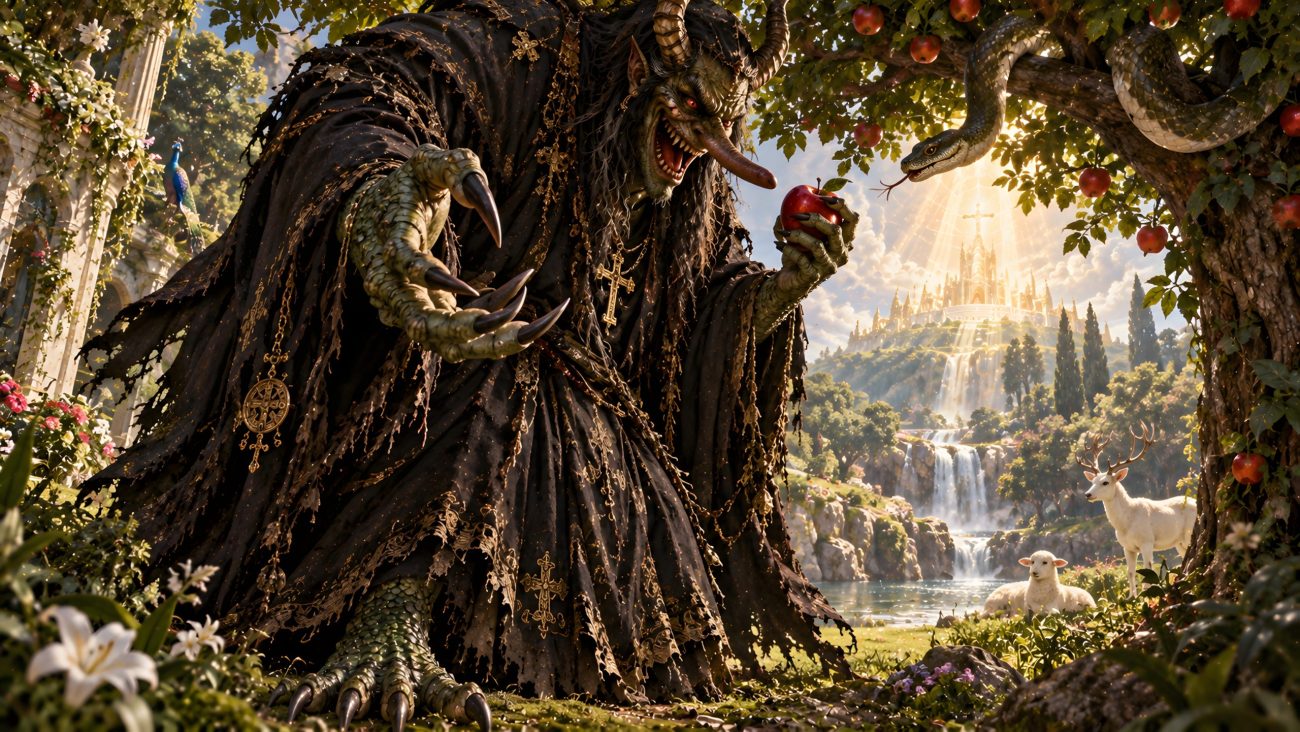
Jusuheru was one of the seven leaders of the tens of thousands of angels created by Deus, the God of Heaven. He possessed a rank of 100 marks and an appearance of 32 marks. Jusuheru had a long nose, a wide mouth, scales on his hands and feet, and horns, giving him a terrifying appearance.

Deus created heaven and earth, the twelve heavens, the sun, moon, and stars, and summoned tens of thousands of angels. He later created the first humans, Domeigosu no Adan and Domeigosu no Ewa, from earth, water, fire, wind, tide, oil, and his own bones and flesh. Adam and Eve lived in Koroteru, the mortal world, but went to Baraiso, heaven, each day to worship Deus. They had two children, Chikoro and Tanho.

One day, while Deus was away, Jusuheru gathered the tens of thousands of angels and declared that he was equal to the Emperor of Heaven and that they should worship him instead. The angels began to worship Jusuheru. When Adam and Eve were asked to worship him as well, they refused, insisting that they worshipped Deus.

When Deus returned, Adam, Eve, and the angels bowed before him. Their remorse over what had happened became the origin of the orasho called “Koukai Konchirisan.” Deus warned Adam and Eve that although they might bow before Jusuheru, they must never eat the fruit of the Masan tree.

Jusuheru then descended to Koroteru to deceive them. He took fruit from the Masan tree and went to Adam and Eve. Adam was absent, serving at the gate of Baraiso, so Jusuheru approached Eve alone. He claimed to be a messenger from Deus and showed her the fruit.

Eve recognized it as the forbidden fruit and asked whether she was really allowed to eat it. Jusuheru deceived her, saying that the nuts belonged to both God and himself, and that eating them would make them like God. Eve accepted the nuts and ate them. When Adam returned, she told him what had happened and gave him the nuts. Although suspicious, Adam also ate them.

Jusuheru pretended to leave but remained nearby, watching them from the shadows. Soon Deus revealed to Adam that the nuts were evil. Adam tried to spit them out, but the nuts became stuck in his throat. As a result, Adam and Eve lost the pleasures of heaven.

The couple cried out toward heaven and fell to the ground, shedding tears of blood and deeply regretting what they had done. Their lamentation became the beginning of the “Ka no Orassho.” They begged Deus to allow them to experience heavenly pleasure once more, but Deus told them that if they did so, they would regret their actions for more than 400 years.

Adam and Eve’s descendants therefore remained in the mortal world. They ate animals, worshipped the moon and stars, and lived with the memory and regret of their fall.

Jusuheru himself then bowed before Deus and begged to experience heavenly pleasure again. He claimed that his evil heart had caused his terrible condition and feared what would happen to him. His plea was rejected, and he was banished from heaven.

Because Eve’s descendants were now living in the mortal world, Jusuheru was given a rank of ten marks and descended to the middle heaven, where he became the god of thunder. The angels who had worshipped him were likewise cast down and became tengu.

Later, as Eve’s descendants multiplied, three evil beings appeared: Unyoku, representing the desire for fortune, Greed, and Selfishness. They stole the food of good people. Deus became angry and bound the three together. They became a terrifying creature with three faces, each bearing horns, but continued their wickedness. Deus eventually kicked them to the bottom of the sea and commanded them to become tengu.

Their monstrous transformation was believed to have been caused by Jusuheru.


Sources

Takahashi, Toshihiro. “じゅすへる (Jusuheru).” 新版TYZ 妖怪図鑑 (New TYZ Yokai Encyclopedia). December 13, 2014. https://tyz-yokai.blog.jp/archives/1015477601.html

Muteikai Daiinjo-o

Tradition: Japanese Mythology
Alternative Names: Muteikai Daiinjo-o, Bottomless Sea Great Yin Queen, Hiesto
Category: Demon


The Myth

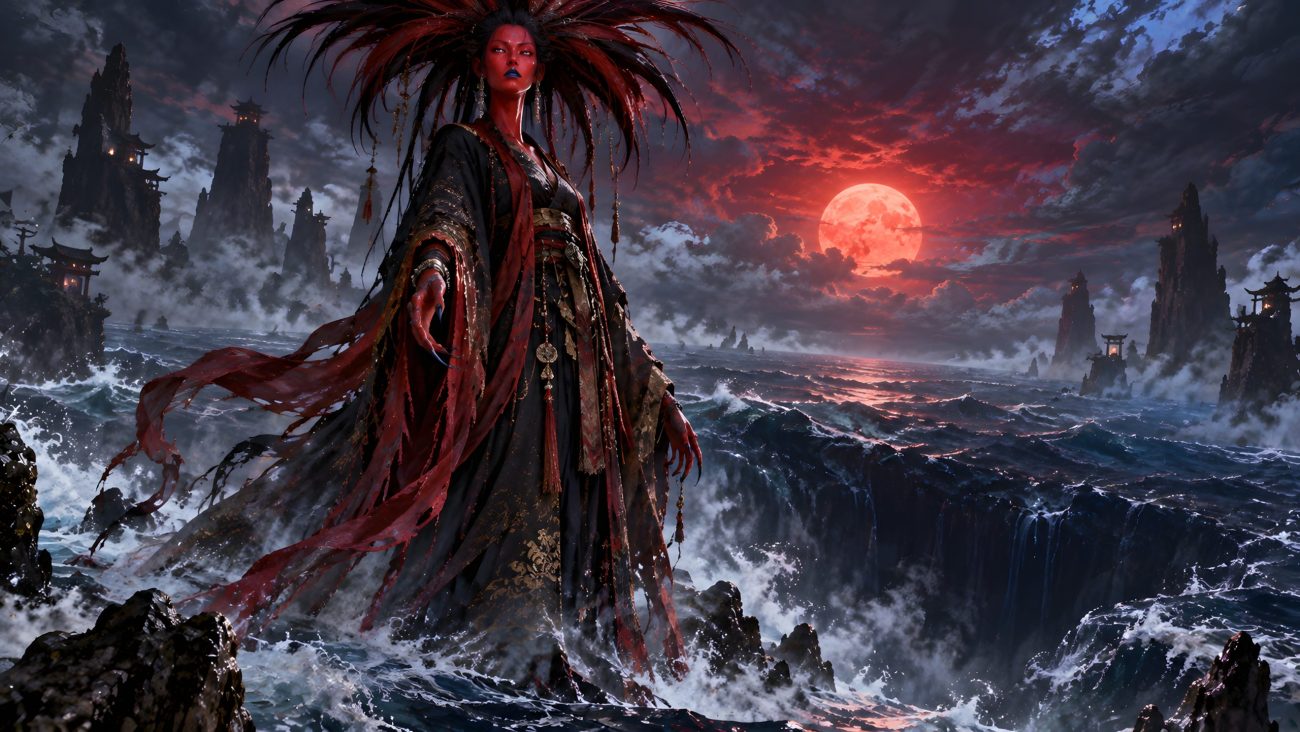
Muteikai Daiinjo-o, the Bottomless Sea Great Yin Queen, is a demon queen of the demon world. She has a red face, blue lips, reddish-black hair resembling a palm tree, and a tall, thin body approximately seven feet in height.

She is one of the demon kings mentioned in Memorandum of Other Worlds. She appears after the first demon king, the Great Creator Queen.

Muteikai Daiinjo-o is also known as Hiesto. According to the hermit Kawatan, who was the teacher of the author, she possesses roughly one hundred times the power of an ordinary god. Her power is said to be comparable to that of the Great Creator Queen.


Sources

Takahashi, Toshihiro. “無底海大陰女王 [むていかいだいいんじょおう] (Muteikai Daiinjo-o).” 新版TYZ 妖怪図鑑 (New TYZ Yokai Encyclopedia). December 2, 2017. https://tyz-yokai.blog.jp/archives/1068700857.html


Narechnici

Tradition: Macedonian Mythology
Alternative Names: Narechnici, Наречници
Category: Demon


The Myth

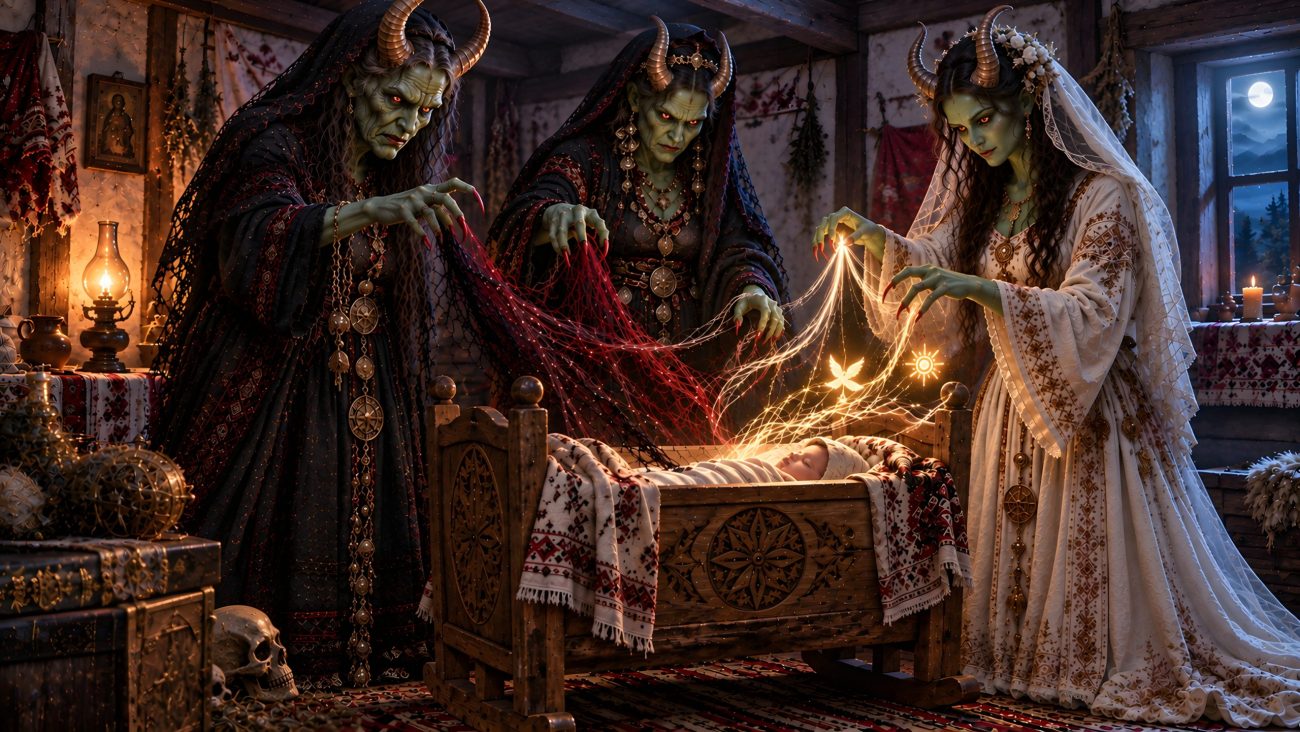
Narechnici are three demonic women who possess the power to predict the destiny of a newborn child. They arrive on the third night after the child’s birth to determine or pronounce its fate.

The Narechnici are sometimes described as three sisters. Two of them are evil and pronounce harmful curses upon the child, while the youngest sister is good and undoes the evil curses of her two older sisters.


Sources

“Macedonian Slavic mythology.” Wikipedia: The Free Encyclopedia. Wikimedia Foundation. Accessed September 12, 2026. https://en.wikipedia.org/wiki/Macedonian_Slavic_mythology


Hitotsumebō

Tradition: Japanese Mythology
Alternative Names: Hitotsumebō, One-Eyed Monk
Category: Demon


The Myth

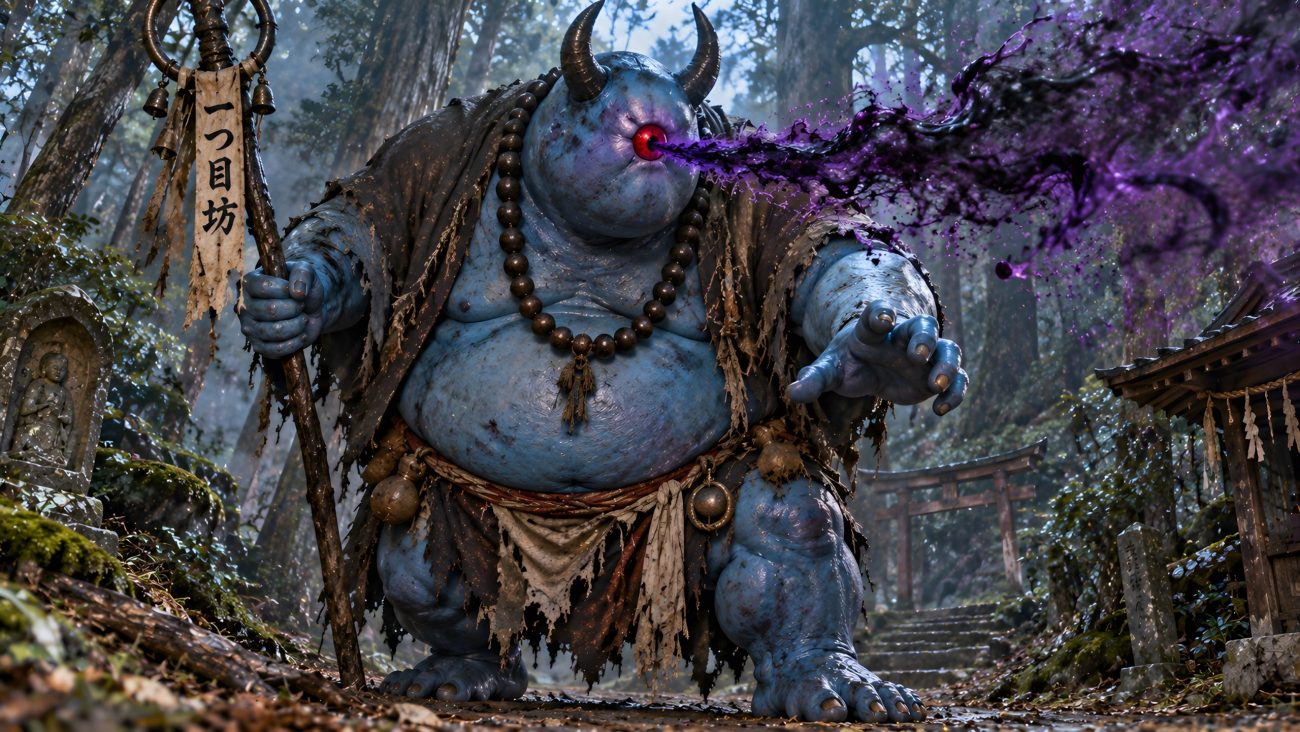
Hitotsumebō is a one-eyed yōkai with a single eye on its forehead. From the small opening on its forehead, it spews something outward.

No further legend or story is given for Hitotsumebō.


Sources

Takahashi, Toshihiro. “一つ目坊 [ひと‐めぼう] (Hitotsumebō).” 新版TYZ 妖怪図鑑 (New TYZ Yokai Encyclopedia). June 10, 2009. https://tyz-yokai.blog.jp/archives/1010652586.html


Likho

Tradition: Ukrainian mythology
Alternative Names: Likho, Liho, Lykho, Лихо, One-Eyed Likho
Category: Demon


The Myth

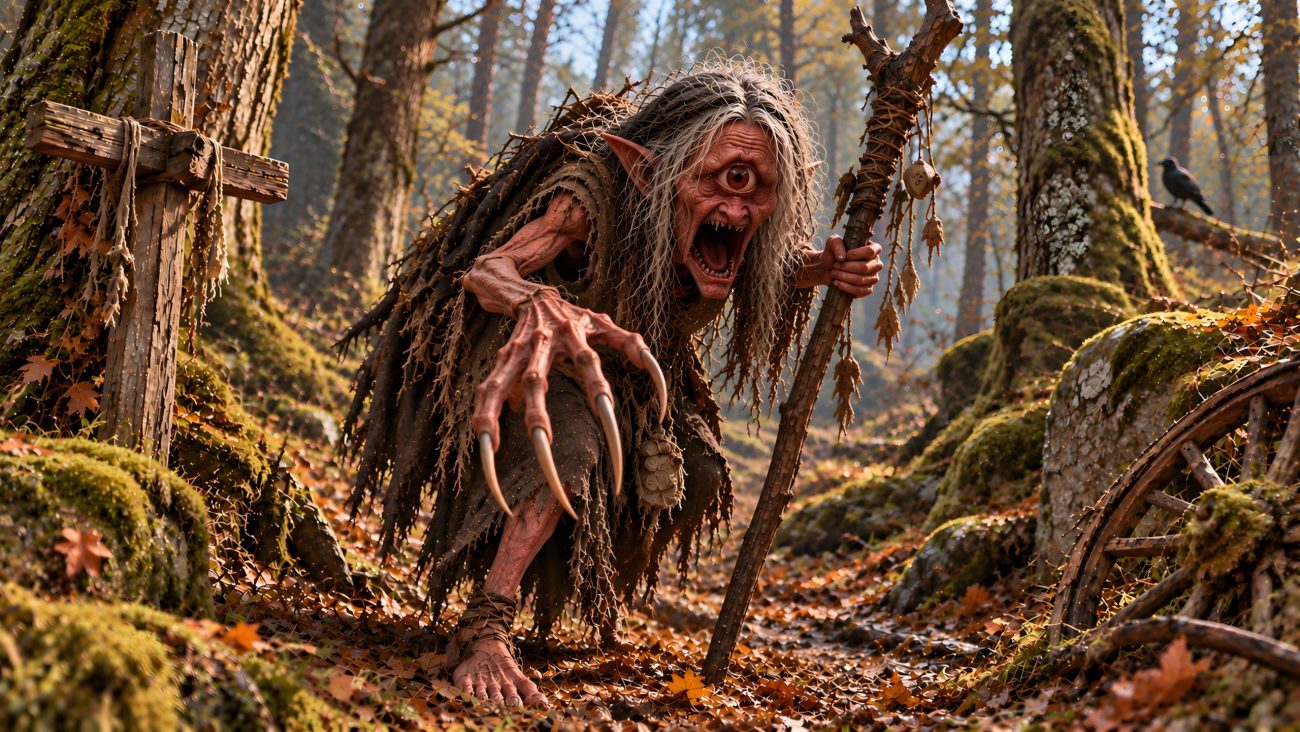
Likho is an embodiment of evil fate and misfortune. It is commonly depicted as a one-eyed, old and skinny woman dressed in black, known as One-Eyed Likho. In other traditions it appears as an evil male forest goblin. In Ukrainian folklore, it can also cling to a person’s neck.

Likho appears in fairy tales as a bringer of misfortune. A person who encounters it may attempt to deceive or escape from it, but their greed or foolishness can lead to disaster. In one tale, a person escapes from Likho while being pursued, but then sees something valuable and grabs it. Their hand becomes stuck to the object, forcing them to cut off their own hand.

In another tale, Likho tricks a person and climbs onto their neck. The person attempts to drown the creature by jumping into a river, but drowns themselves instead, while Likho survives and floats away to pursue other victims.

Likho can also be passed from one person to another, with someone receiving or giving away the creature as though it were a gift.

According to popular superstition, Likho comes to eat people, and stories of it were particularly used to frighten children. Its very nature is associated with bad luck: encountering Likho means becoming caught in misfortune from which escape may come only through cleverness, while greed or poor judgment can make the situation even worse.


Sources

“Likho.” Wikipedia: The Free Encyclopedia. Wikimedia Foundation. Accessed September 12, 2026. https://en.wikipedia.org/wiki/Likho


Żyrownik

Tradition: Polish Mythology
Alternative Names: Żyrownik, Zhyrownik
Category: Demon


The Myth

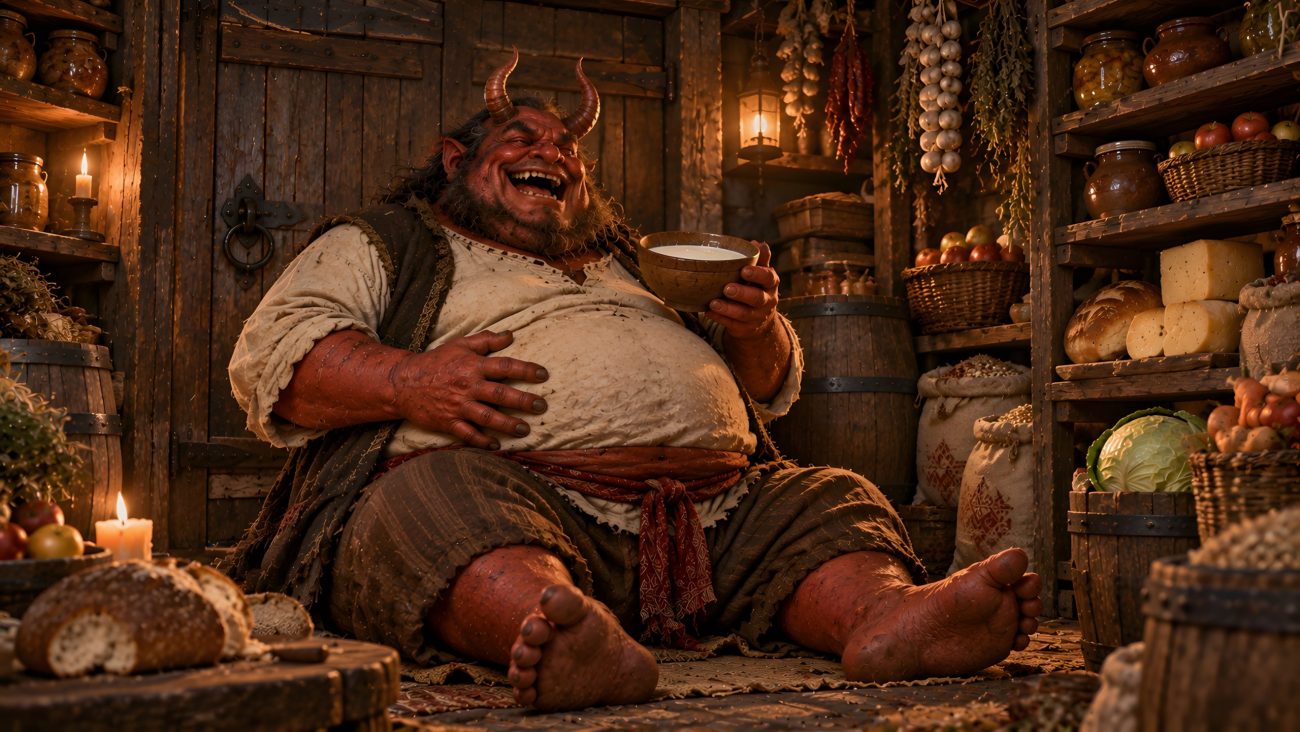
Żyrownik is a fat, obese demon that lives in household pantries and chambers.

When properly treated and fed, usually with fresh cow’s milk, Żyrownik helps increase the household’s supply of food and protects the home from evil spirits. Once a year, the household holds a symbolic feast for him as thanks for his protection.

If the household neglects or mistreats Żyrownik, he does not take revenge. Instead, hunger leaves him too weak to protect the house. Hostile demons, including the devil, can then enter the household.


Sources

“Żyrownik.” Wikipedia, wolna encyklopedia (Polish Wikipedia). Wikimedia Foundation. Accessed September 12, 2026. https://pl.wikipedia.org/wiki/%C5%BByrownik


Cacodemon

Tradition: Greek mythology
Alternative Names: Cacodemon, Cacodaemon, Cacodaimon, Kakodemon, Kakodaemon, Kakodaimon
Category: Demon


The Myth

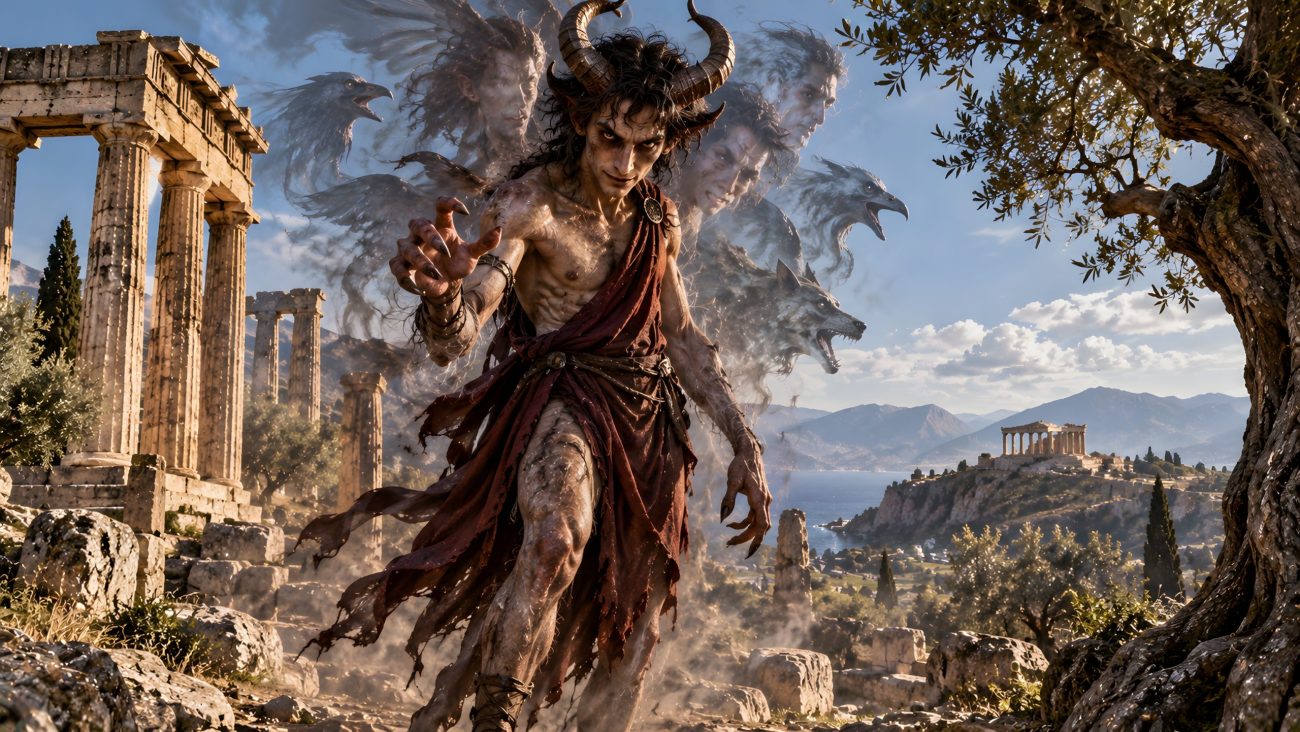
A cacodemon is an evil spirit capable of shapeshifting. The word comes from the Greek kakodaimōn, meaning “evil spirit.” Unlike a cacodemon, a daimon in Greek tradition could be a neutral or benevolent supernatural spirit.

Cacodemons are described as malevolent supernatural beings and can also refer to evil or malicious people. In one depiction attributed to Greek mythology, a cacodemon appears as a young, horned or winged-browed figure with exaggerated physical features.

Cacodemons are the evil counterparts of agathodaemons or eudaemons, which are benevolent spirits. In later tradition, the term came to mean a demon or malevolent supernatural being.


Sources

“Cacodemon.” Wikipedia: The Free Encyclopedia. Wikimedia Foundation. Accessed September 12, 2026. https://en.wikipedia.org/wiki/Cacodemon


Lietuvēns

Tradition: Latvian Mythology
Alternative Names: Lietuvēns, Lietonis, Lītūņš
Category: Demon


The Myth

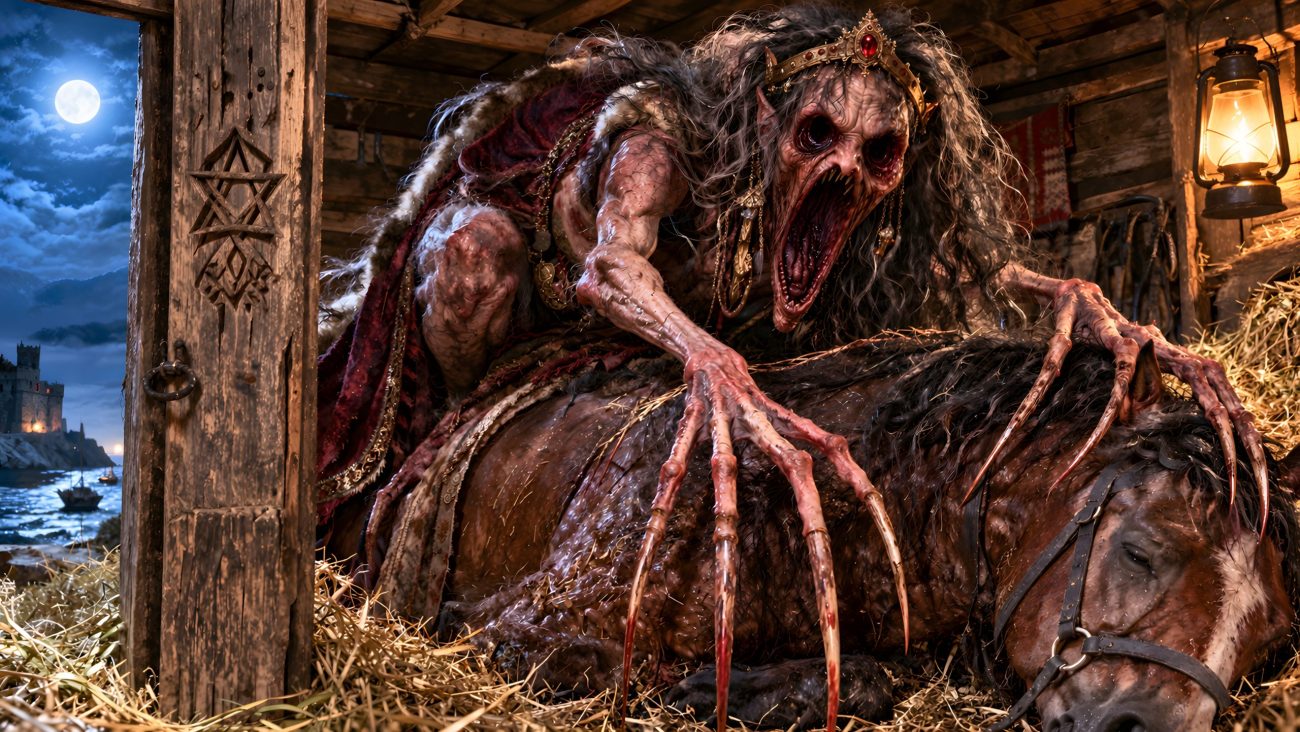
Lietuvēns is usually described as a small, wretched-looking child that moves quickly. It sometimes takes the form of an ugly, vicious woman resembling a witch. It can enter houses through holes, cracks, keyholes, or other small openings and always leaves through the same place by which it entered.

Lietuvēns is believed to be the soul of a murdered person who was strangled, drowned, or hanged and is cursed to remain in the world for as long as that person was originally meant to live. In some beliefs, it is the soul of an unbaptized child.

At night, Lietuvēns rides upon sleeping people and domestic animals, particularly horses and cows, and strangles or crushes them beneath its weight. Its victim rapidly becomes exhausted and covered in sweat, losing their strength as the creature tortures them. The victim may see only a glimpse of Lietuvēns and feel its entire weight pressing down upon them, making it difficult to breathe or move. Eventually the creature leaves, sometimes leaving the victim close to death. Sleep paralysis is therefore understood as an attack by Lietuvēns.

Lietuvēns can also attack animals, although it is said not to torment people or animals that were born during the daytime.

A person attacked by Lietuvēns can drive it away by moving the little or big toe of the left foot. The creature immediately flees.

The Lietuvēns cross is another protection against the creature. It may be a simple pentagram or a larger double form made from two pentagrams. The strongest form is associated with the auseklis, the morning star and the victory of light over darkness. The sign can be placed on doors, thresholds, windows, animals, or even on the fingernails of someone suffering from an attack. It must be drawn in a single continuous movement; if the line is broken, the protection will not work.

Lietuvēns may also be trapped by sealing the hole, crack, or keyhole through which it entered. A piece of mottled wood is used to close the opening. If the creature cannot find a way out, it may transform into a beautiful young woman and remain inside the house until the opening is restored. As soon as the exit is opened, she escapes.

Farm animals can be protected by attaching a knife, comb, or scythe to their backs, since Lietuvēns can be injured by sharp objects. It may also be driven away with a rowan stick when caught behind an animal’s left ear. Oiling an animal’s back makes it too slippery for Lietuvēns to ride, and animals with a cut right ear are also said to be avoided by the creature.

Lietuvēns can finally be freed by finding its body and burying its bones with proper honors. At the moment of burial, a thunderstorm and lightning are said to arise, signifying that the troubled soul has finally been taken into the other world.


Sources

“Lietuvēns.” Wikipedia: The Free Encyclopedia. Wikimedia Foundation. Accessed September 12, 2026. https://en.wikipedia.org/wiki/Lietuv%C4%93ns


Mujō Daiki

Tradition: Japanese Mythology
Alternative Names: Mujō Daiki, Great Impermanence Demon
Category: Demon


The Myth

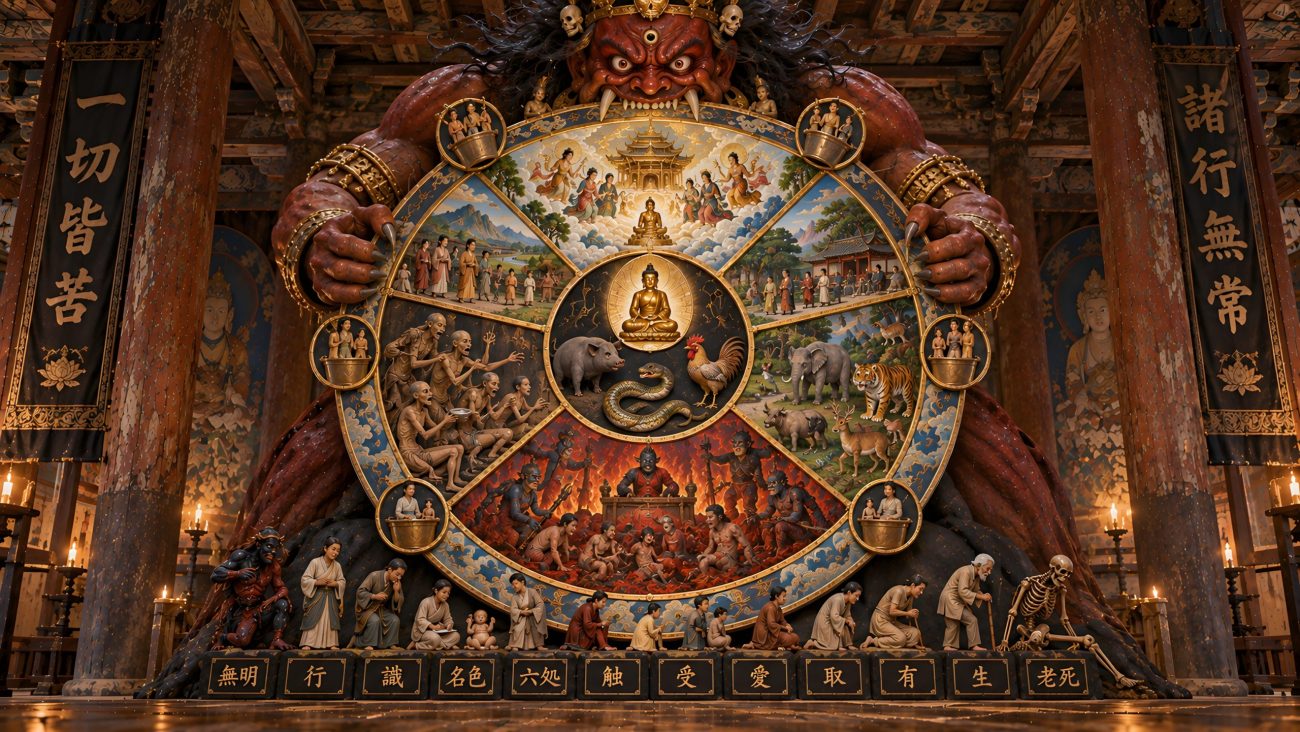
Mujō Daiki is a fearsome demon who holds a great wheel representing the five realms of rebirth. He symbolizes impermanence and the unavoidable cycle of life, death, and rebirth.

All living beings within the five realms are trapped by the Great Demon of Impermanence, with no escape from him. He is also associated with the King of Death, or what is commonly called the Grim Reaper. No living being is said to be free from his grasp.

The wheel held by Mujō Daiki represents the cycle of existence. At its center is an image of Buddha, surrounded by a pig, a snake, and a dove, representing the three poisons of greed, hatred, and delusion.

Below the center of the wheel is Hell, while the realms of hungry ghosts and animals appear on either side. The realms of humans and heaven are positioned above them.

Around the outer edge of the wheel are five pairs of buckets containing people. The buckets represent life and death, constantly being filled and emptied like water being drawn up and poured away. They symbolize the endless continuation of rebirth through successive lives and deaths.

Outside the wheel, at the feet of Mujō Daiki, eighteen characteristics are shown. They begin with ignorance in the form of a demon and continue through the twelve links of dependent origination: volition, consciousness, name and form, the six sense bases, contact, feeling, craving, clinging, being, birth, old age, and death.


Sources

Takahashi, Toshihiro. “無常大鬼 [むじょうだいき] (Mujō Daiki).” 新版TYZ 妖怪図鑑 (New TYZ Yokai Encyclopedia). March 10, 2019. https://tyz-yokai.blog.jp/archives/1074019646.html