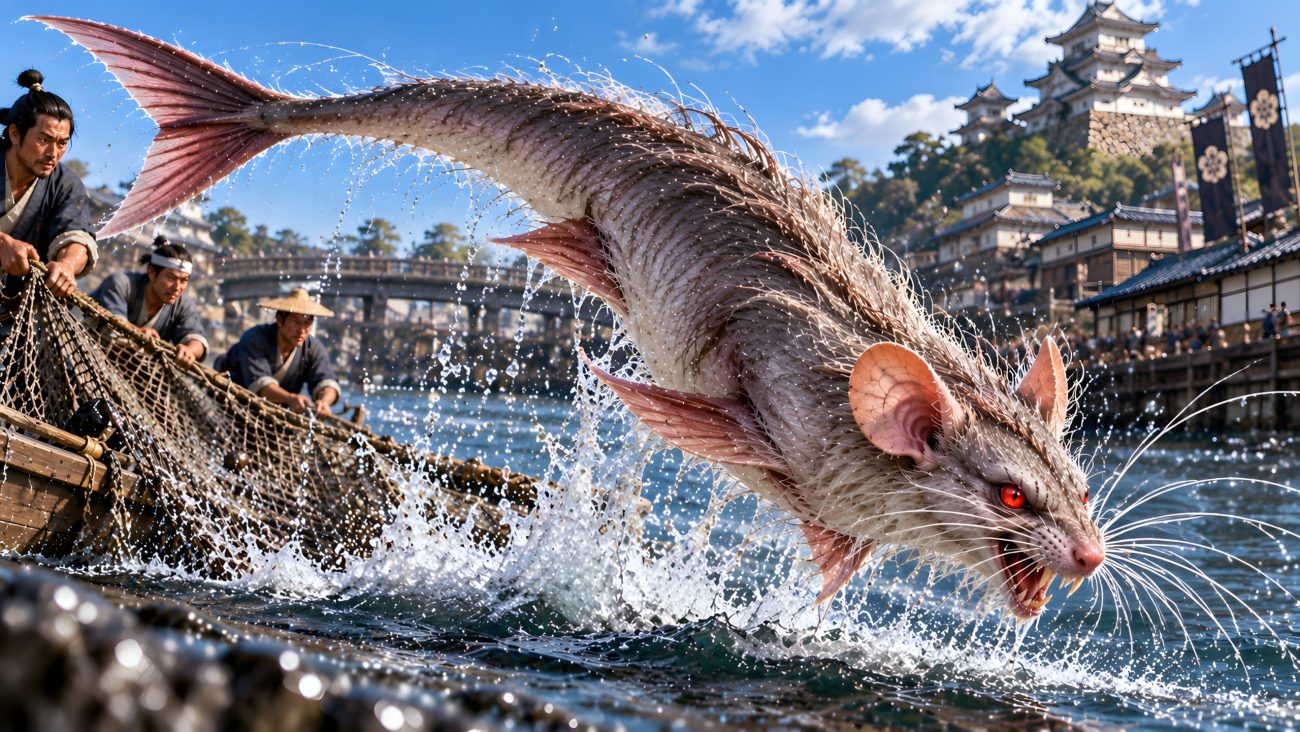
Manzairaku

Tradition: Japanese Mythology
Alternative Names: 万歳楽, Manzai-raku
Category: Rat


The Myth

Manzairaku is a mysterious fish recorded in the Japanese work Getsudō Kenbunshū. In mid-March 1712, it was reportedly caught in a casting net in Fukagawa, Edo, now part of Tokyo. The creature measured approximately seven shaku in length and was grey like a mouse, with fur covering its body.

Its fur was said to be around seven sun long. It had a mouse-like head, red eyes, whiskers, and a forked tail resembling that of a swallow. After being caught, the fish passed from the fisherman to Takenaka Shuzan and was eventually presented to the shogun’s castle.

At the time, Konoe Motohiro, a retired imperial regent who was staying in Edo, gave the creature the auspicious name “Manzairaku,” associated with celebration and longevity.


Sources

“Manzairaku.” 新版TYZ 妖怪図鑑 (New TYZ Yokai Encyclopedia). https://tyz-yokai.blog.jp/archives/1010654457.html
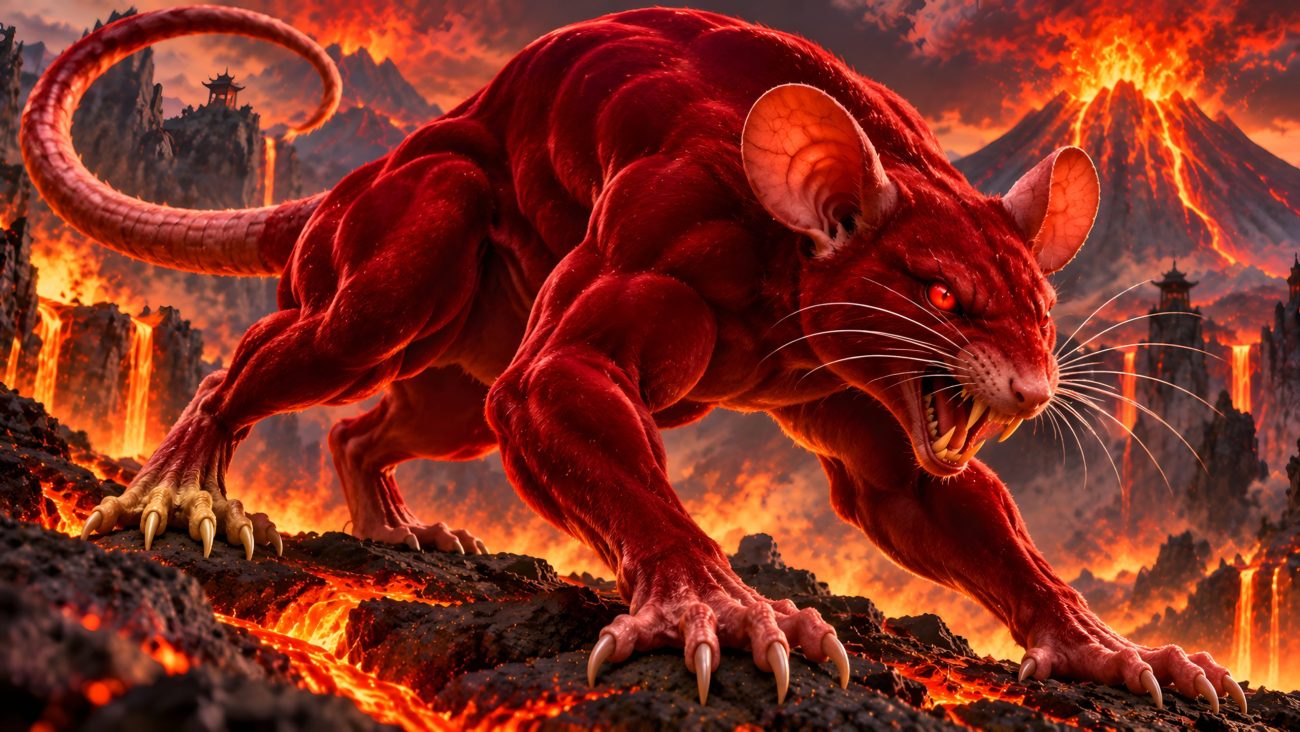
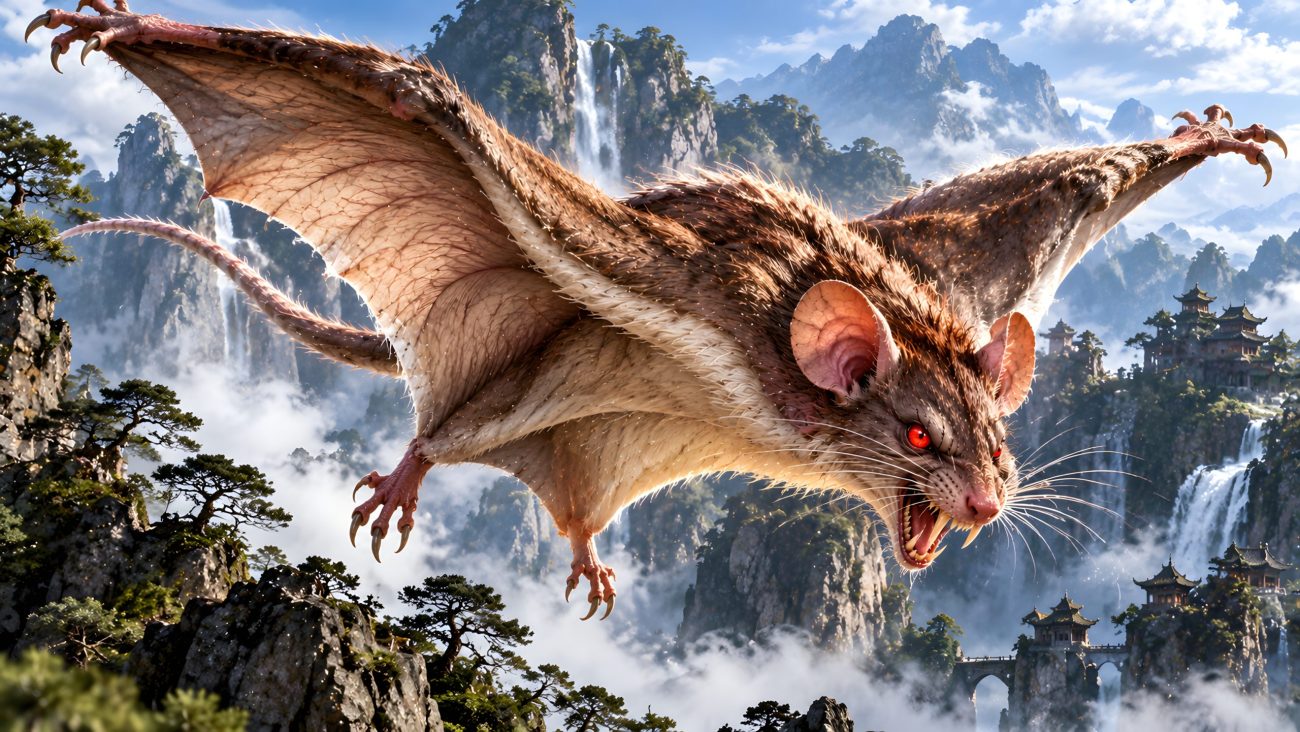
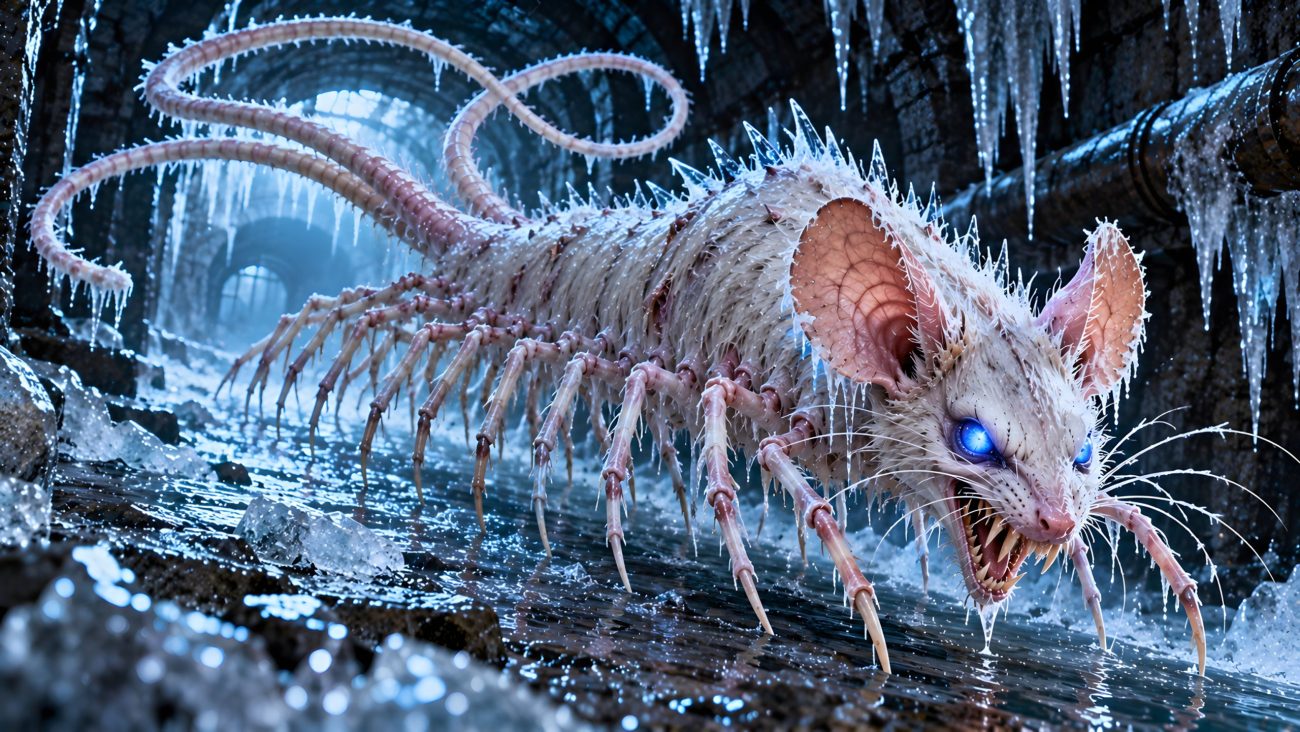
Huǒshǔ

Tradition: Chinese Mythology
Alternative Names: 火鼠, Fire Rat, Firelight Beast, Huǒguāng Shòu
Category: Rat


The Myth

Huǒshǔ, the Fire Rat, is a legendary creature in Chinese mythology said to dwell amid supernatural flames. Some accounts place it among the burning trees of a volcanic region at the southern edge of the world, while others associate it with Mount Kunlun or the fiery mountains of the western and southern lands. It is described as a gigantic rat weighing around 250 kilograms, with fur approximately 50 centimetres long and as fine as silk.

The Fire Rat’s most remarkable feature is its fire-resistant fur. Cloth woven from its hair is known as huǒhuàn bù, or fire-washed cloth. Unlike ordinary fabric, it does not burn; when it becomes dirty, it can be thrown into a fire, emerging pure white as the flames consume the impurities.

The creature appears in Chinese texts such as the Shényì Jīng and is mentioned in later encyclopaedias and natural histories. Its legend also travelled to Japan, where the fire rat’s pelt became the impossible treasure sought by Prince Abe in The Tale of the Bamboo Cutter. The Fire Rat thus became closely associated with a magical garment that could withstand fire.


Sources

“火鼠 (Huǒshǔ).” Chinese Wikipedia. Wikimedia Foundation. https://zh.wikipedia.org/wiki/%E7%81%AB%E9%BC%A0


Fēishǔ

Tradition: Chinese Mythology
Alternative Names: 飞鼠, Flying Rat, Flying Mouse
Category: Rat


The Myth

Fēishǔ is a legendary flying beast recorded in the Classic of Mountains and Seas. It is described as resembling a rabbit, but with the head of a rat, and possessing the ability to fly using its back.

According to the Classic of Mountains and Seas, the Fēishǔ lives in the Tianchi Mountains. Later commentary in the Shanhaijing Buzhu also associates it with the Yao’an and Menghua regions of Yunnan. Its identity has sometimes been linked to flying squirrels or bats.

The creature was also believed to be useful as food. Traditional accounts claim that its flesh could be eaten and used as a remedy for difficult childbirth.


Sources

“飞鼠 (Fēishǔ).” Chinese Wikipedia. Wikimedia Foundation. https://zh.wikipedia.org/wiki/%E9%A3%9E%E9%BC%A0_(%E5%A6%96%E6%80%AA)


Schilalyi

Tradition: Romanian Mythology
Alternative Names: Schilalyi, Cold One
Category: Rat


The Myth

Schilalyi, whose name means “Cold” or “Cold One,” is the fifth of Ana’s children and her third daughter. She and her siblings are demons of disease, born from the unnatural unions between Ana, the Keshalyi queen, and the King of the Loçolico.

According to legend, after Ana gave birth to her fourth child, Melalo advised his father to serve her soup alongside a cooked mouse he had spat on. Ana fell ill, and as she drank water, Schilalyi crawled out of her mouth. Her unnatural birth earned her the hatred of her mother, and Schilalyi tormented her siblings until her husband, Bitoso, was born.

Schilalyi appears as a white mouse with numerous small legs and possibly several tails. She is responsible for chills and cold fevers. In traditional remedies, sufferers were treated with dried mouse lungs and stomachs steeped in alcohol. White mice were considered agents or offspring of Schilalyi, and one reported incident tells of a pharmacist’s laboratory mice being drowned in a well in an attempt to avert disaster.


Sources

“Schilalyi.” A Book of Creatures, November 14, 2016. https://abookofcreatures.com/2016/11/14/schilalyi/


Uiluruyak

Tradition: American Mythology
Alternative Names: Wi’-lû-ghó-yûk, Sea Shrew
Category: Rat


The Myth

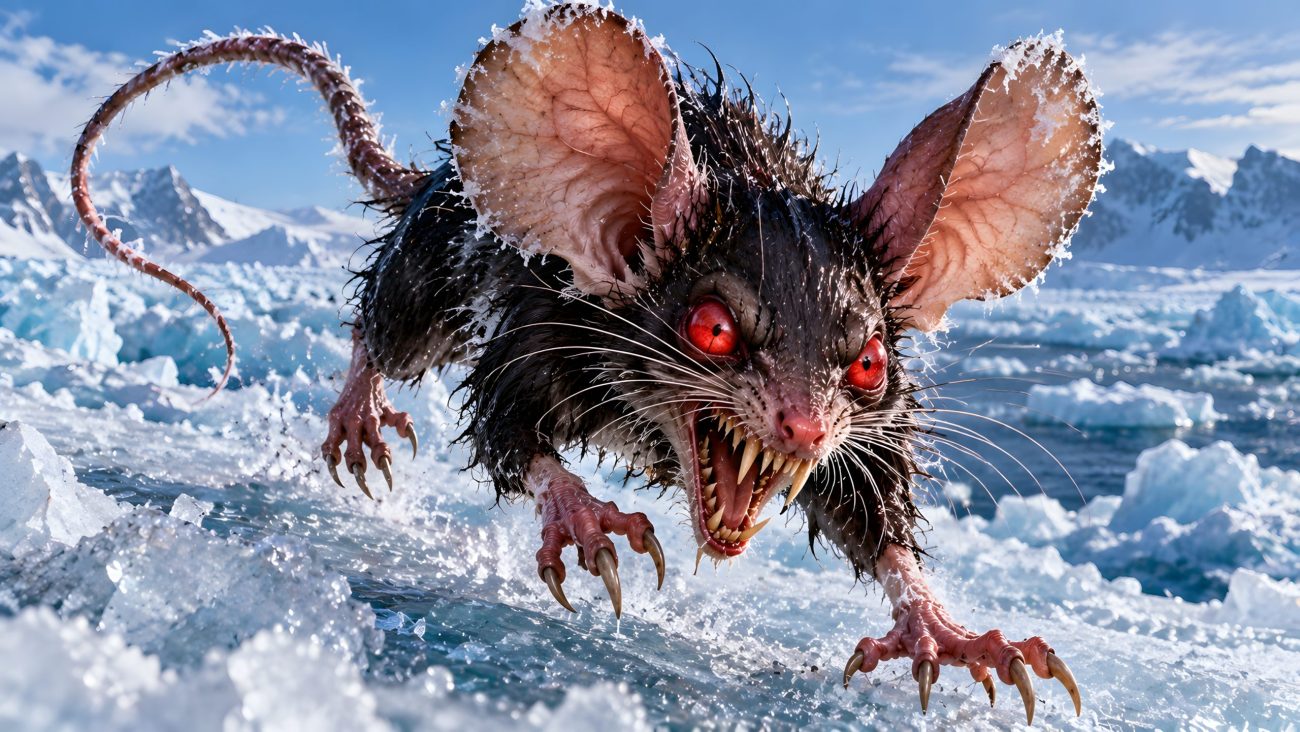
The Uiluruyak is a small, mouse-like creature associated with the sea ice of Alaska in Yupik folklore. Although the name has been identified with the meadow jumping mouse (Zapus hudsonius), the explorer Edward William Nelson described it as a sea shrew. Hunters are said to encounter it on the frozen sea.

When the Uiluruyak sees a person, it darts forward with incredible speed, pierces the sole of their boot, and crawls beneath their clothes. If the person remains completely motionless, the creature eventually leaves through the same hole it entered. Those who endure the encounter without moving are said to become successful hunters.

However, even the slightest movement can prove fatal. The Uiluruyak is believed to burrow into the victim’s flesh, pierce their heart, and kill them. For this reason, hunters are warned to remain perfectly still if they encounter a mouse on the sea ice, in case it is the dangerous Uiluruyak.


Sources

“Uiluruyak.” A Book of Creatures, October 19, 2020. https://abookofcreatures.com/2020/10/19/uiluruyak/


Lolmischo

Tradition: Romanian Mythology
Alternative Names: Lolmischo, Red Mouse
Category: Rat


The Myth

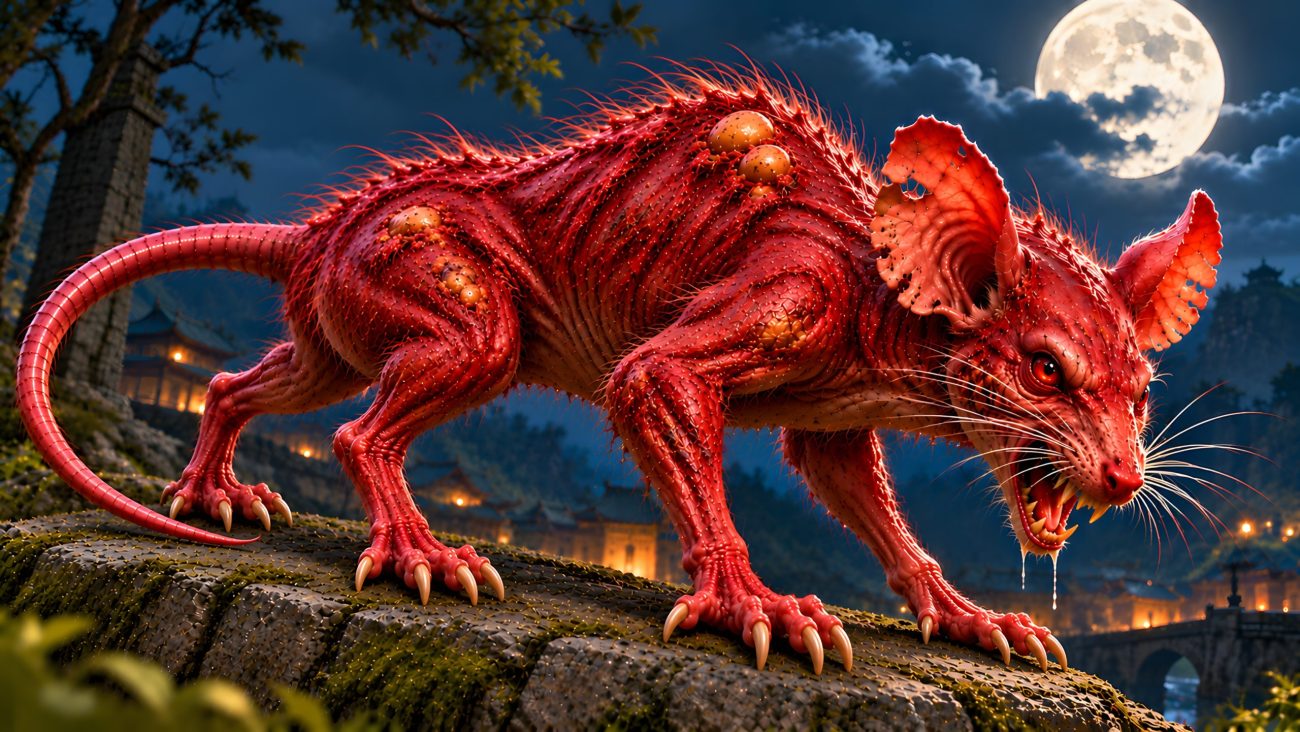
Lolmischo, the “Red Mouse,” is the seventh of the Children of Ana and her fourth son. Like his siblings, he was conceived by Ana, a Keshalyi fairy, and her husband, the King of the Loçolico. According to the legend, Ana was suffering from a skin condition when the vile Melalo recommended that mice lick her skin. One mouse entered her belly, resulting in Lolmischo’s conception.

As his name suggests, Lolmischo takes the form of a red mouse or rat. He governs skin ailments, including rashes, hives, itching, ulcers, blisters, and boils. It is said that he can cause eczema simply by running across the skin of a sleeping person.

Lolmischo married his younger sister, Minceskro. Their offspring became demons associated with infectious diseases, including chickenpox, measles, scarlet fever, and smallpox.


Sources

“Lolmischo.” A Book of Creatures, February 17, 2017. https://abookofcreatures.com/2017/02/17/lolmischo/


Growing Ghost Beast

Tradition: Belgian Mythology
Alternative Names: Groeiend Spookdier
Category: Rat


The Myth

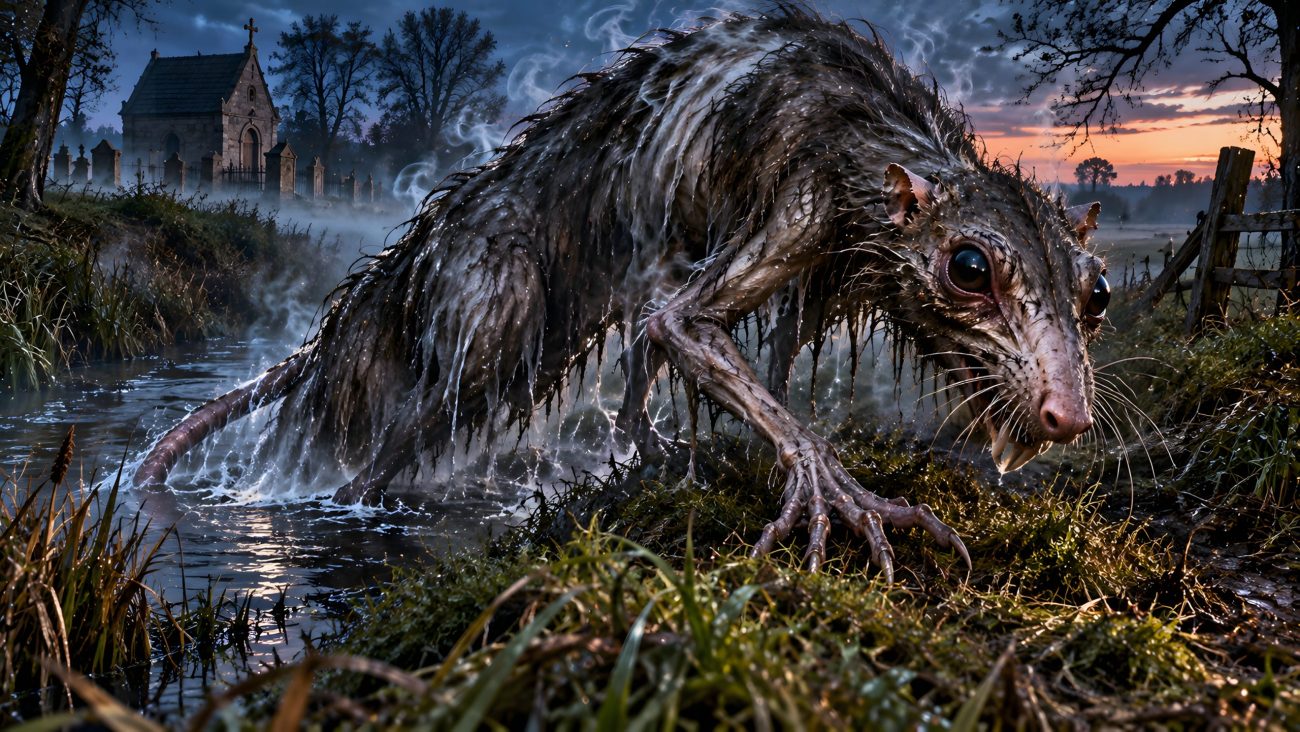
The Groeiend Spookdier first appeared as a small creature resembling a rat, but it possessed the strange ability to grow to an enormous size.

A man had lost his wife and went to the priest to report her death. At the cemetery, beside the charnel house, he knelt and prayed an Our Father for the repose of her soul. As he sat there, a great weight suddenly pressed down upon his shoulders. The mysterious burden soon disappeared, and the man was able to leave.

On his way home, a little animal resembling a rat suddenly emerged from a stream and ran between his legs. He continued on his way, but the strange creature followed him. As it went, it grew larger and larger until it became so enormous that the man could have ridden upon its back.

Not far from his home, the strange beast suddenly leapt back into the stream and disappeared beneath the water. The man never saw it again, and he had never encountered an animal like it before.


Sources

De Cock, Alfons. Vlaamsche sagen uit den volksmond. Amsterdam: Maatschappij voor Goede en Goedkoope Lectuur, 1921.


Kekko

Tradition / Region: Chinese Mythology
Alternative names: Jiegou; Keikin (Japanese variant)
Category: Bird, Rat


The Myth

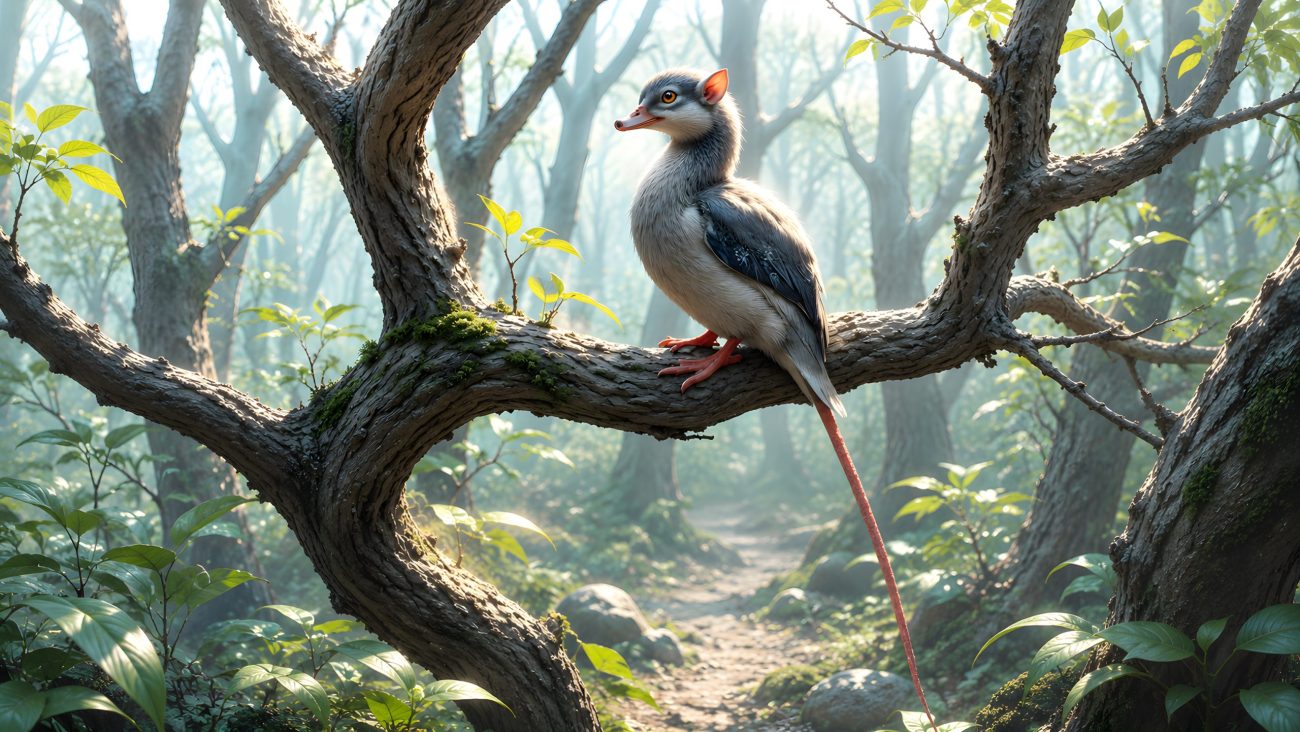
The Kekko is a legendary bird described in the ancient Chinese Classic of Mountains and Seas. It is said to dwell upon Mount Kō, where it resembles a duck but possesses the tail of a mouse and is unusually adept at climbing trees.

The bird is feared as a harbinger of disease. Whenever a Kekko appears in a region, sickness is believed to spread among the people, making its arrival a dreadful omen. Rather than attacking directly, its mere presence foretells widespread illness.

In later centuries, stories of the Kekko spread from China to Japan through encyclopedias and illustrated collections of strange creatures. During the Edo period it was occasionally depicted alongside other exotic birds and beasts from the Classic of Mountains and Seas, preserving its reputation as one of the ominous creatures of ancient Chinese legend.


Sources

TYZ. (2020, March 15). ケッコ (Kekko). In 新版TYZ 妖怪図鑑. Retrieved June 29, 2026, from https://tyz-yokai.blog.jp/archives/1077285093.html