Butcher of Imst

Tradition: Austrian Mythology
Alternative Names: The Ghost of the Butcher of Imst, The Condemned Butcher of Imst
Category: Ghost


The Myth

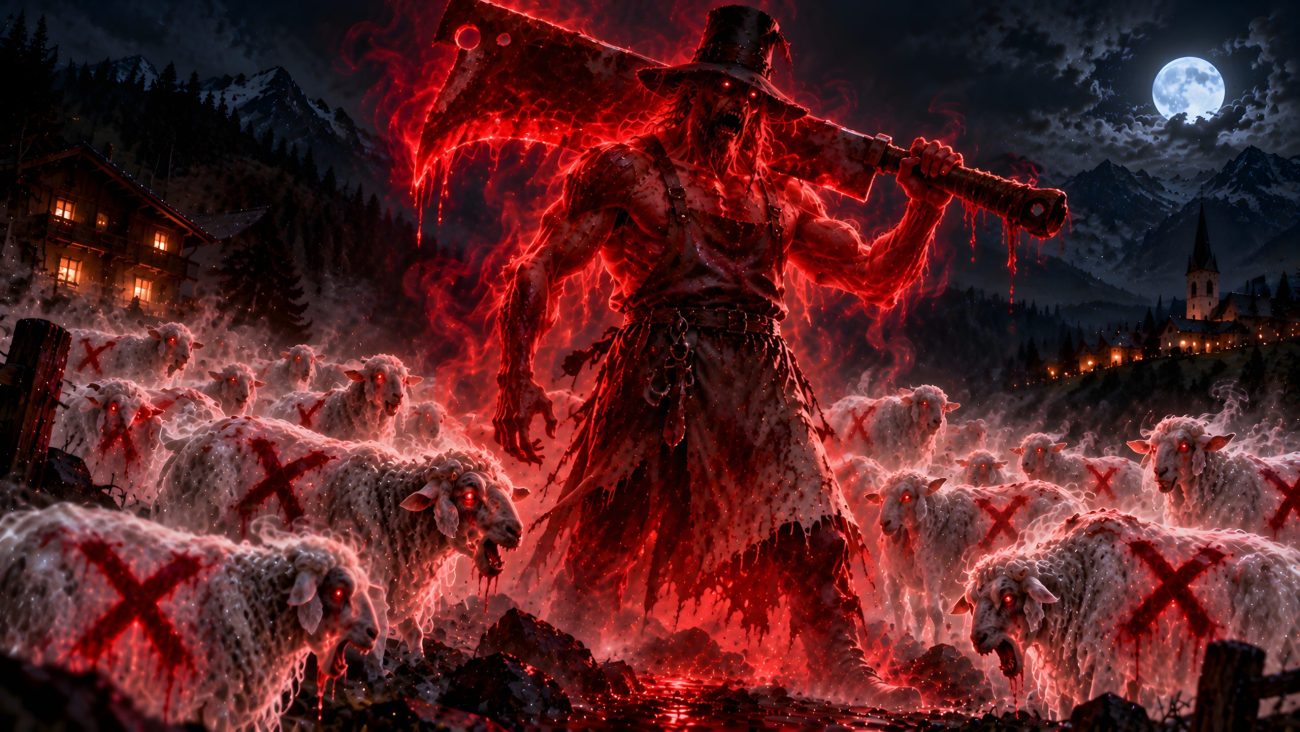
The Butcher of Imst was a dishonest butcher who lived in the Tyrolean town of Imst in Austria. He made a habit of stealing other people’s sheep in the mountains, altering their identifying marks, and allowing them to mingle with his own flock. After some time, he would either slaughter the stolen animals or sell them alive. His deception succeeded for years, but his death brought no peace. Soon afterward, a terrifying ghost began appearing in his house, frightening his family so badly that they were forced to abandon it until the Church could arrange for the spirit to be exorcised.

One pitch-dark night, as the night-watchman of Strad announced midnight, two Capuchin monks appeared on the road, each carrying a burning candle. One of them also carried a massive book beneath his arm. Walking between them was the dead butcher, dressed in black, with his familiar high-crowned hat pulled tightly down over his eyes and his arms crossed before him. The monks signaled for the watchman to move aside, and he obeyed in terror as the strange procession passed through the village.

The three figures continued along the road toward Nassereit, reaching the inn known as Zum Döllinger without entering it. Instead, they turned toward the Gurgl Valley and proceeded to a narrow gorge through which the Klammbach torrent rushed down from the Andelsberg. This chasm was said to be a place where numerous ghosts from the area around Imst had been condemned. In the stillness of the night, terrible cries could frequently be heard coming from the gorge: “Help us! Hoi—hoiiih!” The butcher’s spectral escort suggested that his spirit, like those of other local wrongdoers, was being led to a place of supernatural punishment.


Sources

Von Günther, Amalia, Countess. Tales and Legends of the Tyrol. London: Chapman and Hall, 1874.

Cóiste Bodhar

Tradition: Irish Mythology
Alternative Names: Silent Coach, Death Coach, Cóiste na Marbh
Category: Ghost


The Myth

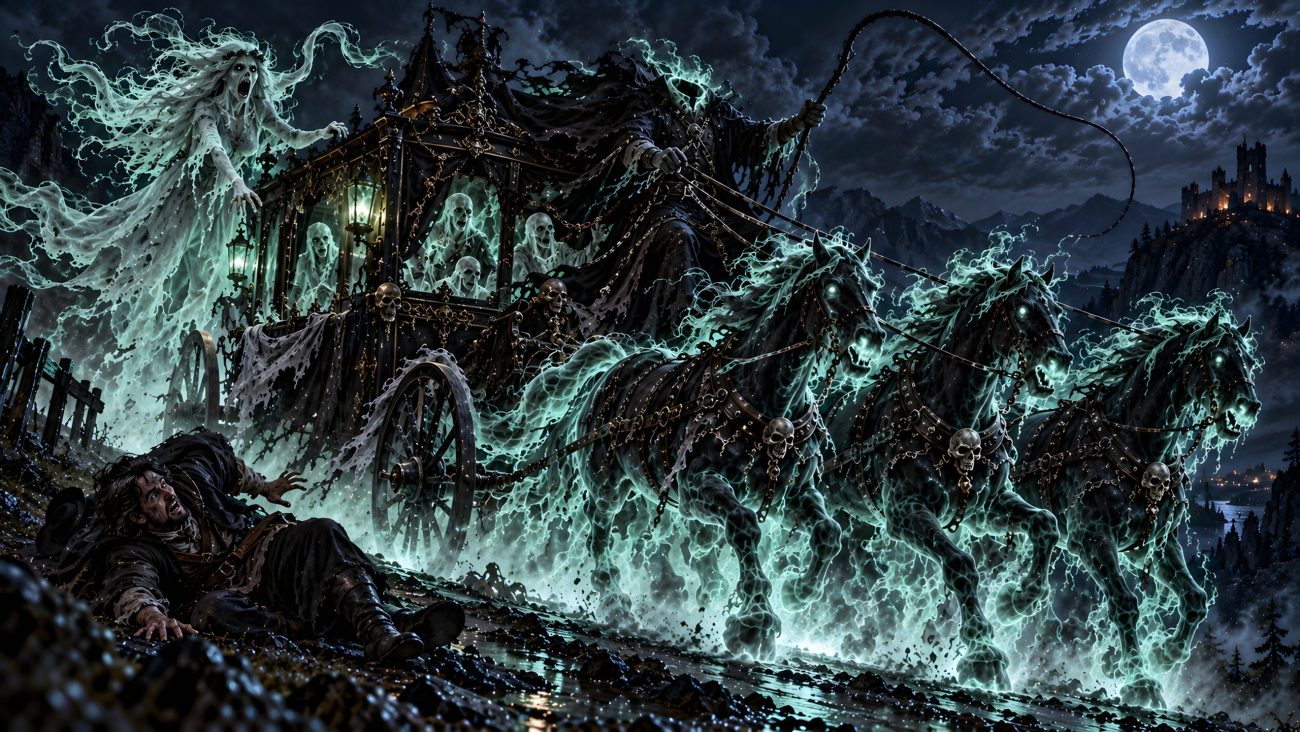
The Cóiste Bodhar is a supernatural death coach from Irish mythology whose appearance or sound foretells an approaching death. Its name is commonly translated as “silent coach,” although it is also known as the death coach. It is usually described as a black carriage driven or led by the Dullahan, a terrifying headless horseman. The banshee, another supernatural herald of death, is also associated with the coach and is sometimes said to accompany it on its journeys.

The sight or sound of the Cóiste Bodhar warns that someone is destined to die soon. The threatened person may be the witness themselves or a close relative. According to Irish belief, once the death coach arrives in the earthly world, it can never return empty. Its appearance therefore signals a death that cannot be prevented by mortal intervention, as the fate of the doomed individual has already been decided by a higher power.

Related traditions occur elsewhere in the British Isles. In Scottish folklore, a death coach is said to appear along Edinburgh’s Royal Mile, where it collects the souls of the dead. Another supernatural vehicle, known as the Hell Wain, is reportedly seen moving through the night sky. Similar stories of phantom coaches and spectral riders also occur in British and American culture, where they serve as ominous reminders of approaching death.


Sources

“Death coach.” Wikipedia: The Free Encyclopedia. Wikimedia Foundation. Accessed October 16, 2026. https://en.wikipedia.org/wiki/Death_coach


Hänsken met de Hond

Tradition: Dutch Mythology
Alternative Names: Wilde Jager, Jakko, Dirk met de Beer, Beerneken van Galen, the Eternal Jew, Hubertus, Hakkelberend, Hänsken met de Hond, Lodewijk van Nassau, Duvelsbender
Category: Ghost


The Myth

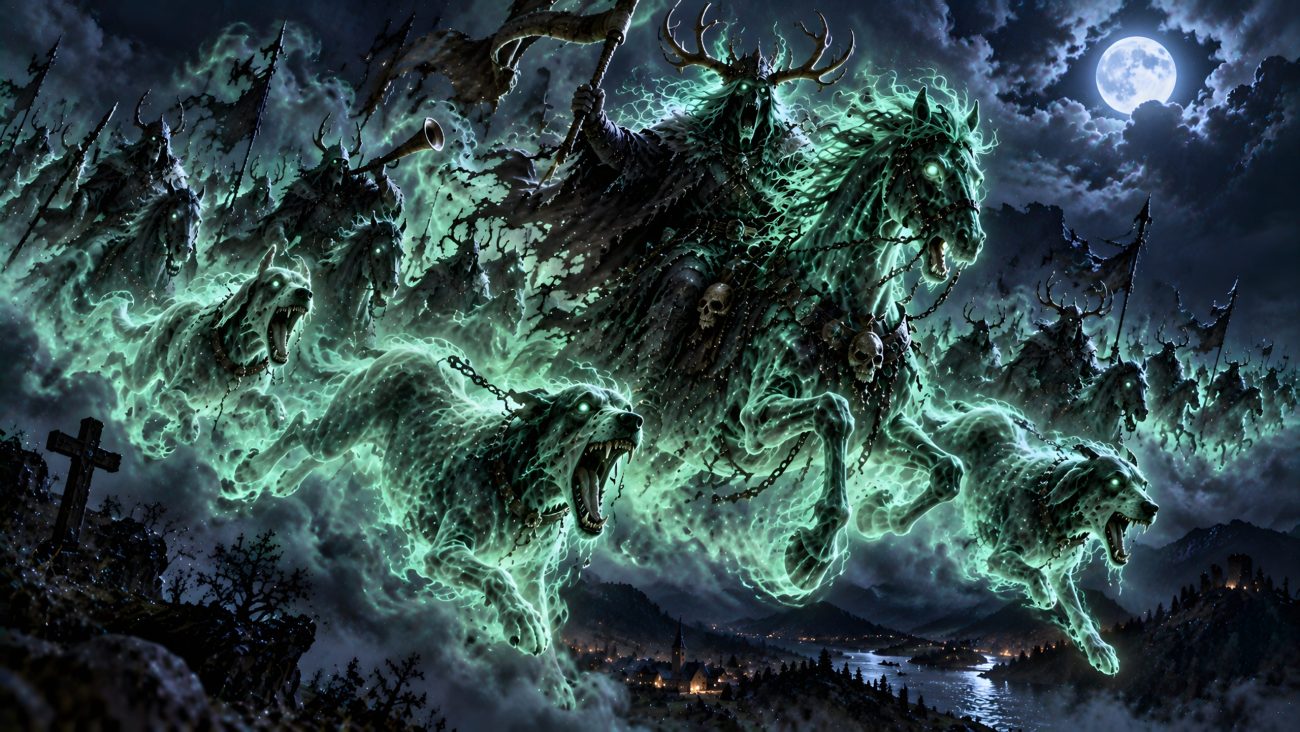
The Wild Hunter is the restless spirit of a man, often someone of high social standing, who was punished for insisting on hunting even on Sundays. Condemned to hunt eternally through the sky, he rides with a supernatural retinue of hunters and hounds, forming the terrifying procession known as the Wild Hunt. His passage is announced by a hellish uproar: dogs barking, hunting horns blaring, and hunters shouting and howling as they race through the air.

Encountering the Wild Hunter is considered extremely dangerous. Those who cross his path may be forced to join the eternal hunt, while others risk having their necks twisted around. His spectral procession is therefore more than a frightening spectacle; it is a deadly supernatural force that threatens anyone unfortunate enough to encounter it.

The Wild Hunter is also associated with strange occurrences on Christmas night. According to local traditions, he may take away anything left loose in a farmyard or move it somewhere else. His identity varies between regions, where he is known by numerous names, including Jakko, Dirk met de Beer, Beerneken van Galen, Hubertus, Hakkelberend, Hänsken met de Hond, and Lodewijk van Nassau. Some traditions also identify him with the Eternal Jew or call him the Duvelsbender. Despite these different identities, the stories share a central theme: a hunter condemned to pursue his quarry forever as punishment for violating sacred time.


Sources

Van der Veen, Abe. “Van aardmannetje tot zwarte juffer: Een lijst van Nederlandse en Vlaamse elfen en geesten.” Abe de Verteller. https://abedeverteller.nl/van-aardmannetje-tot-zwarte-juffer-een-lijst-van-nederlandse-en-vlaamse-elfen-en-geesten/


Mleika

Tradition: Maltese Mythology
Alternative Names: Meika, Mejka, Little Queen, Ghost Queen of Gozo
Category: Ghost


The Myth

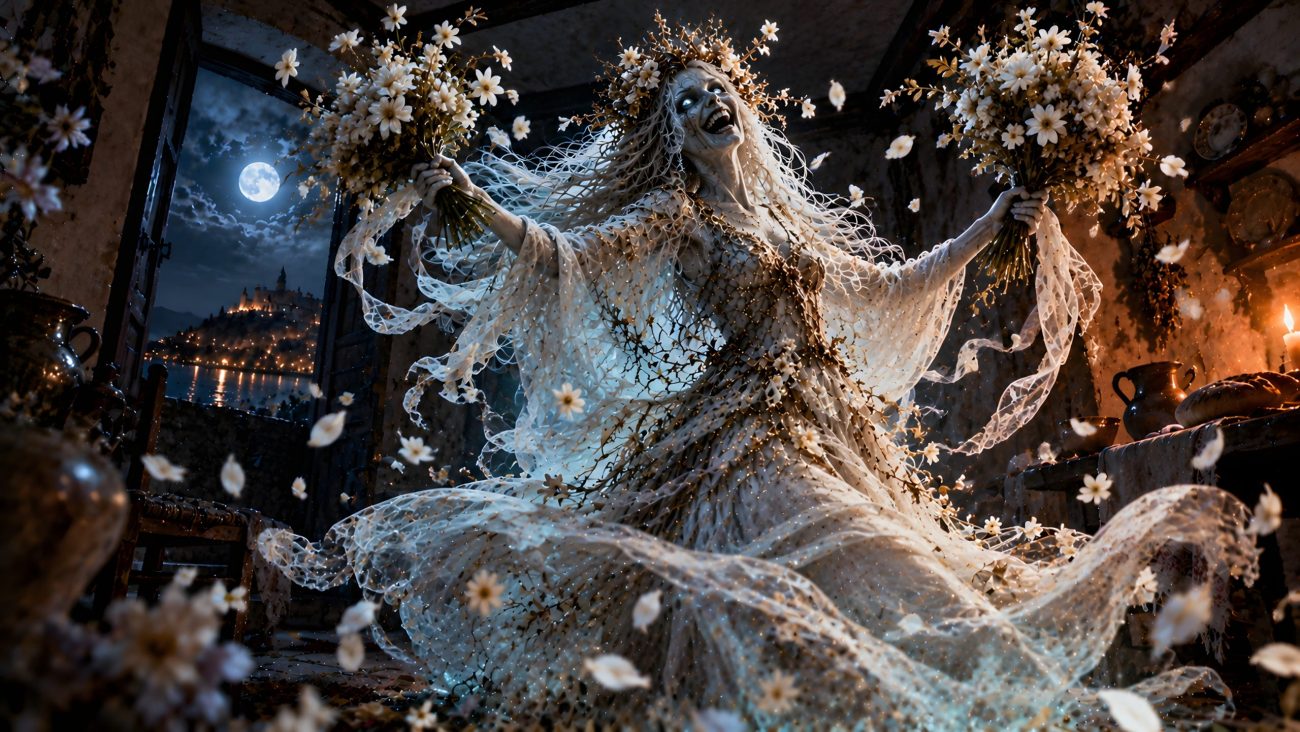
Mleika is a ghost queen in the folklore of the Maltese island of Gozo. Her name, also recorded in the Latin spelling Mejka, is associated with a Maltese Christian spirit of good fortune and literally means “little queen.” She visits homes on New Year’s Eve, bringing either good luck or misfortune to the household depending on its cleanliness and tidiness.

Mleika is one of two supernatural Christmas figures in Gozitan tradition. The other is the gavgav, a man who transforms into a monster on Christmas Eve and frightens passers-by. While the gavgav inspires fear outside the home, Mleika enters houses to judge the conditions within them.

According to the tradition, Mleika is accompanied by a distinctive sense of smell. If she enters a house and the milkmaid smells the aroma of flowers and the scent of cooking food, she brings good luck to the household for the coming year. If these pleasant smells are absent, misfortune awaits the family. Her visit therefore makes the cleanliness and atmosphere of the home a sign of the fortune that its inhabitants can expect in the year ahead.


Sources

“Mleika.” New Bestiary (Bestiary.us). https://www.bestiary.us/mleika


Koalemen’ke

Tradition: Dutch Mythology
Alternative Names: Kaolmenke, Kasper, Spirit of the Emma Coal Mine
Category: Ghost


The Myth

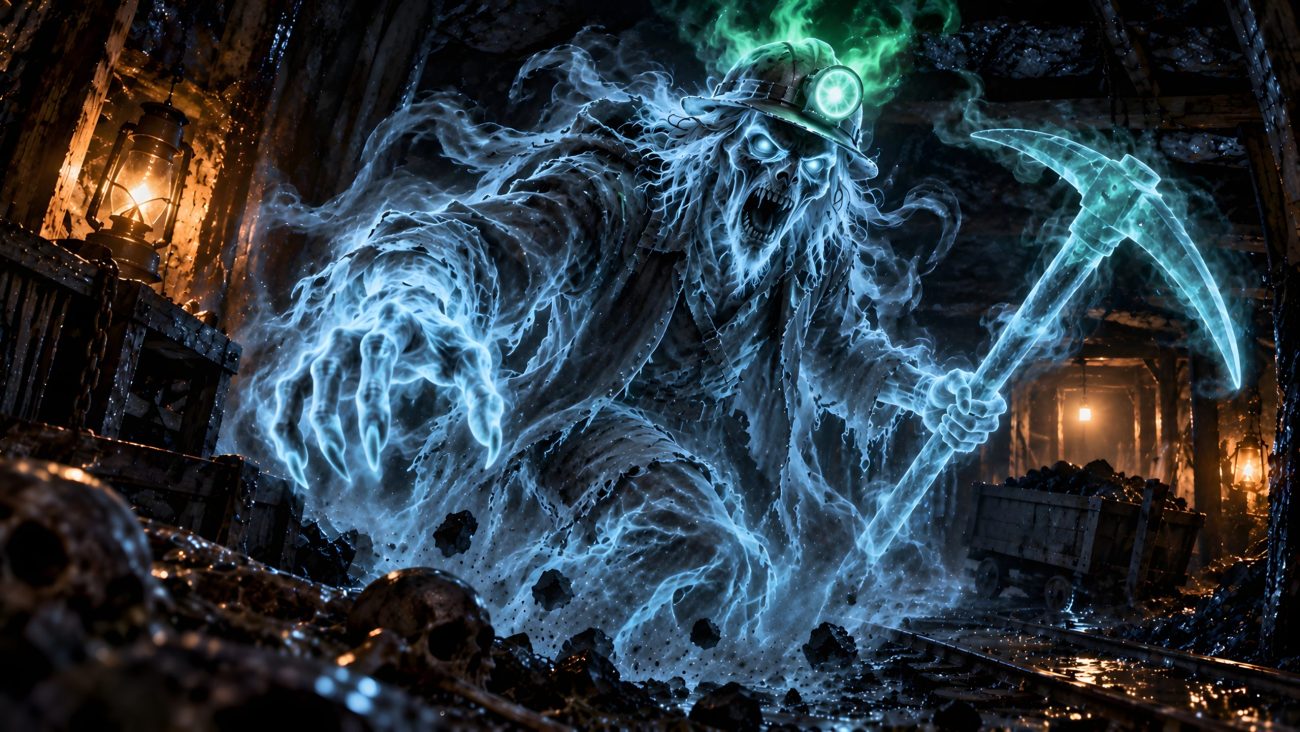
Koalemen’ke is a supernatural spirit associated with the Emma coal mine in Hoensbroek, Limburg, in the Netherlands. Also known as Kaolmenke, this mysterious being is described as a spirit of the mountain or the mine, connected to the coal deposits hidden underground. In later versions of the legend, the spirit is given the name Kasper. He wears the clothing of a coal miner and has red, glowing eyes, making him a frightening presence in the dark passages of the mine.

The legend tells of a young boy who disappeared inside the coal mine for three days. When he finally reappeared, he claimed to have spoken with the spirit of the mountain. His strange experience became associated with the mysterious being later known as Koalemen’ke, whose presence was believed to explain some of the uncanny occurrences deep underground.

Koalemen’ke protects the mine’s coal reserves, but his behavior toward the miners is not always benevolent. He sometimes steals their food and tools, disrupting their work and unsettling those who encounter him. More dangerously, he is said to be capable of causing a mine collapse. As both a guardian of the underground riches and a potential source of disaster, Koalemen’ke embodies the dangers and mysteries of working beneath the earth.


Sources

Van der Veen, Abe. “Van aardmannetje tot zwarte juffer: Een lijst van Nederlandse en Vlaamse elfen en geesten.” Abe de Verteller. https://abedeverteller.nl/van-aardmannetje-tot-zwarte-juffer-een-lijst-van-nederlandse-en-vlaamse-elfen-en-geesten/


Banshee

Tradition: Irish Mythology
Alternative Names: Bean Sí, Bean Sídhe, Fairy Woman, Woman of the Fairy Mound
Category: Ghost


The Myth

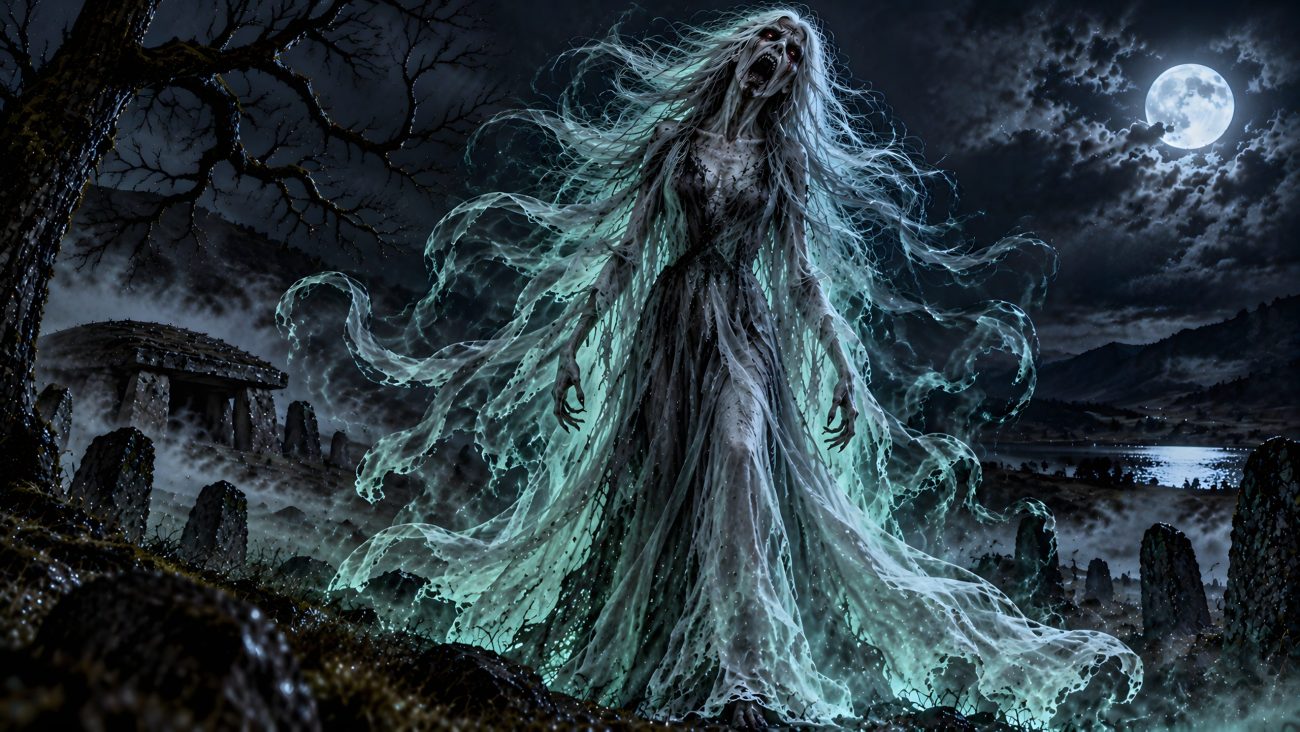
The banshee is a female spirit in Irish mythology whose mournful cries foretell the death of a member of a family. Her name derives from the Irish bean sí, meaning “woman of the fairy mound,” connecting her to the ancient burial mounds scattered throughout the Irish countryside. These mounds were regarded as entrances to the supernatural world inhabited by the sí, or fairies. The banshee is most often heard rather than seen, announcing impending death through screaming, shrieking, wailing, or the traditional Irish lament known as keening.

Descriptions of the banshee vary between accounts. She may appear as an old woman with long, streaming hair, which she sometimes combs while lamenting. In some traditions, she wears a grey cloak over a green dress, and her eyes are red from continual weeping. Other descriptions portray her dressed entirely in white, with red hair and a deathly complexion. Her stature also differs between tales: although some accounts describe her as unnaturally tall, many depict her as an exceptionally small, elderly figure, sometimes no more than a few feet in height. She may also appear as a veiled woman crouching beneath trees at night or as a spectral figure flying through the moonlight while crying bitterly.

In some legends, the banshee is the spirit of a young woman who died before her time and was assigned by supernatural powers to warn her mortal relatives of approaching death. She may even appear as a sweet-singing maiden associated with the family she serves. Traditional accounts claim that the banshee’s lament is heard around the home of a family when one of its members suffers from an illness destined to end in death. The belief was particularly associated with ancient and noble families, who were said to possess the privilege of a supernatural mourner. Her cry does not necessarily cause death; rather, it serves as a sorrowful warning that death is near.


Sources

“Banshee.” Wikipedia: The Free Encyclopedia. Wikimedia Foundation. Accessed October 16, 2026. https://en.wikipedia.org/wiki/Banshee


Black Plague Messengers

Tradition: Swiss Mythology
Alternative Names: The Three Plague Messengers, The Dark Messengers of the Plague
Category: Ghost


The Myth

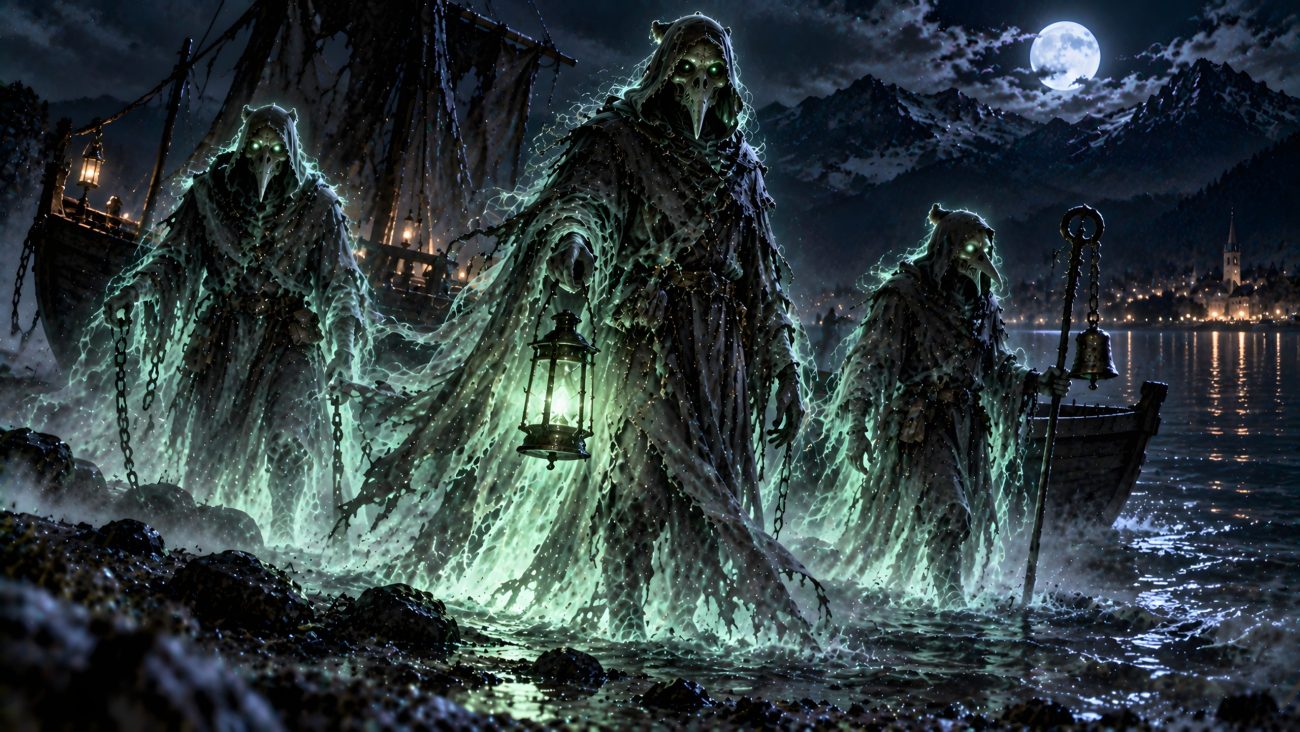
The Black Plague Messengers are mysterious supernatural figures associated with the arrival of the plague in the canton of Zug, Switzerland, in 1628. According to the legend, the events began on the Feast of the Assumption in mid-August, when the people of Kolinstadt gathered beneath a linden tree beside the lake to enjoy a beautiful summer evening. Among them was a man troubled by terrible news from friends in Basel, where the plague had begun raging once more. When the townspeople pressed him to explain his melancholy, he revealed the dreadful tidings. The cheerful gathering fell silent, and the citizens gradually returned to their homes, fearing that the epidemic might spread to their own community.

As night descended over the lake, some of the townspeople witnessed a strange vessel approaching the shore. Dark, unfamiliar figures stood aboard, and the sound of iron chains clanking accompanied the boat as it drew nearer. Three dark men eventually stepped onto the shore. They offered no greetings or words of comfort, but instead behaved like grim messengers carrying out a terrible assignment. The tallest among them addressed his two companions in a somber voice, declaring that he would remain behind to perform his duties while the other two went ashore to carry out their orders.

After the three figures separated, the mysterious vessel glided back into the darkness. Their appearance seemed to announce that the plague had reached Zug. The following morning, the first victims of the disease were discovered lying on the slope. The legend thus portrays the outbreak not merely as an epidemic spreading between towns, but as the arrival of supernatural messengers whose silent landing foreshadowed death and suffering. Their dark vessel, clanking chains, and ominous division of duties made them terrifying harbingers of the calamity that was about to strike the region.


Sources

“Die Pestboten.” SAGEN.at – Zuger Sagen. Reproduced by SAGEN.at. https://www.sagen.at/texte/sagen/schweiz/zug/pestboten.html


Grüthergeist

Tradition: Swiss Mythology
Alternative Names: The Spirit of Grüth, The Ghost of the Schwarzenbach Farm
Category: Ghost


The Myth

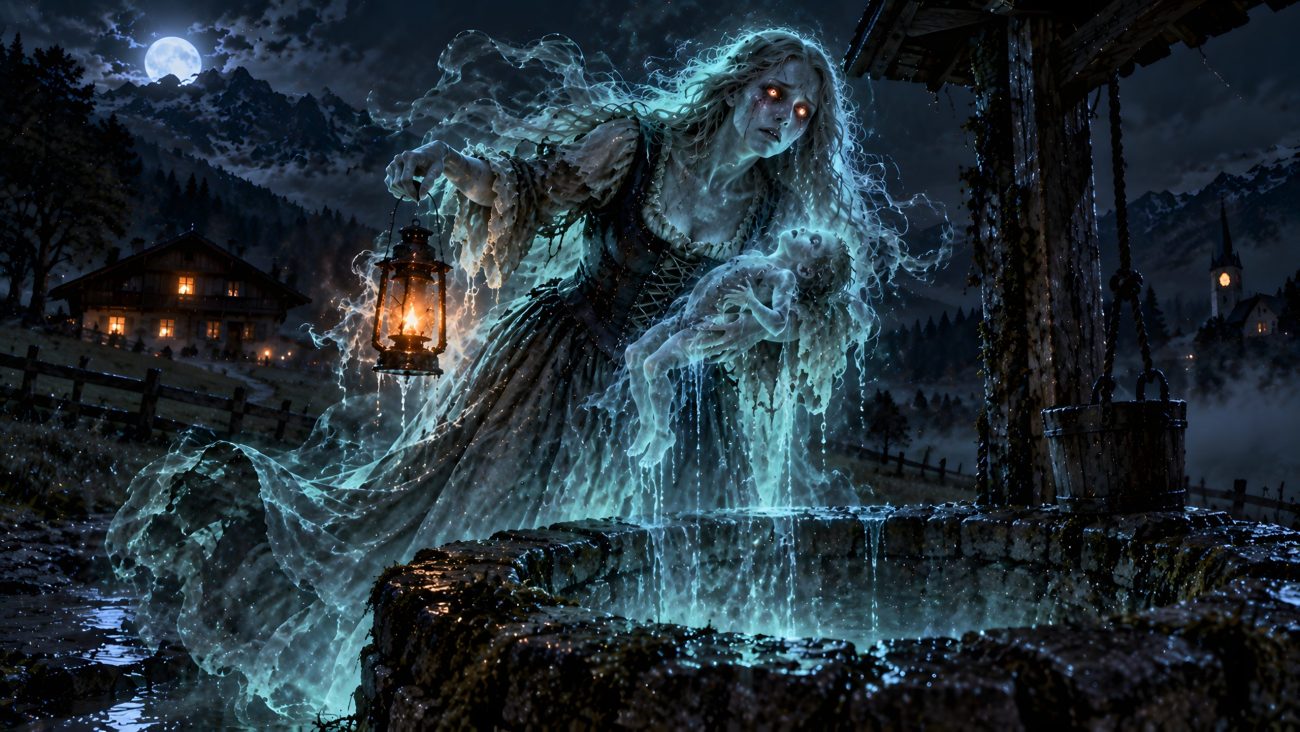
The Grüthergeist is the ghost of a former farm servant who haunts the fields and meadows around the Schwarzenbach farm in Grüth, Switzerland. She appears on dark nights after the church clock in Allenwinden has struck midnight. The apparition takes the form of a maiden wearing a black bodice, with flowing hair and fiery eyes. She has been seen hovering above the fields and sitting beside an old well, the place most closely associated with her terrible crime.

Many years ago, the maiden worked as a servant on the farm and secretly drowned her illegitimate child in the well during the night. After committing the murder, she hurried back to her bedchamber, but as she entered, the dead child appeared to float towards her. Horrified, she cried out and fled. The innocent victim continued to appear before her, and she could find no peace. Eventually, she confessed her guilt before a court, and the executioner carried out her sentence. Yet death did not free her from the consequences of her crime, and she was condemned to wander the place where she had murdered her child.

The Grüthergeist’s haunting follows a grim nightly ritual. Sometimes she carries a brightly shining lantern as she approaches the well. She circles it three times, throwing a small stone into its depths on each visit. As midnight draws towards its end, she climbs onto the edge of the well and releases a terrifying cry of anguish before plunging into the water at the stroke of the church clock. Her repeated return to the scene of the murder reflects her eternal punishment and remorse, making the old well a place of dread for anyone travelling through Grüth after dark.


Sources

“Der Grüthergeist.” SAGEN.at – Zuger Sagen. Reproduced by SAGEN.at. https://www.sagen.at/texte/sagen/schweiz/zug/gruethergeist.html


Mill Stream Lady

Tradition: Swiss Mythology
Alternative Names: Mühlebach Lady, Mühlebach Maid, The Ghost of the Mill Stream
Category: Ghost


The Myth

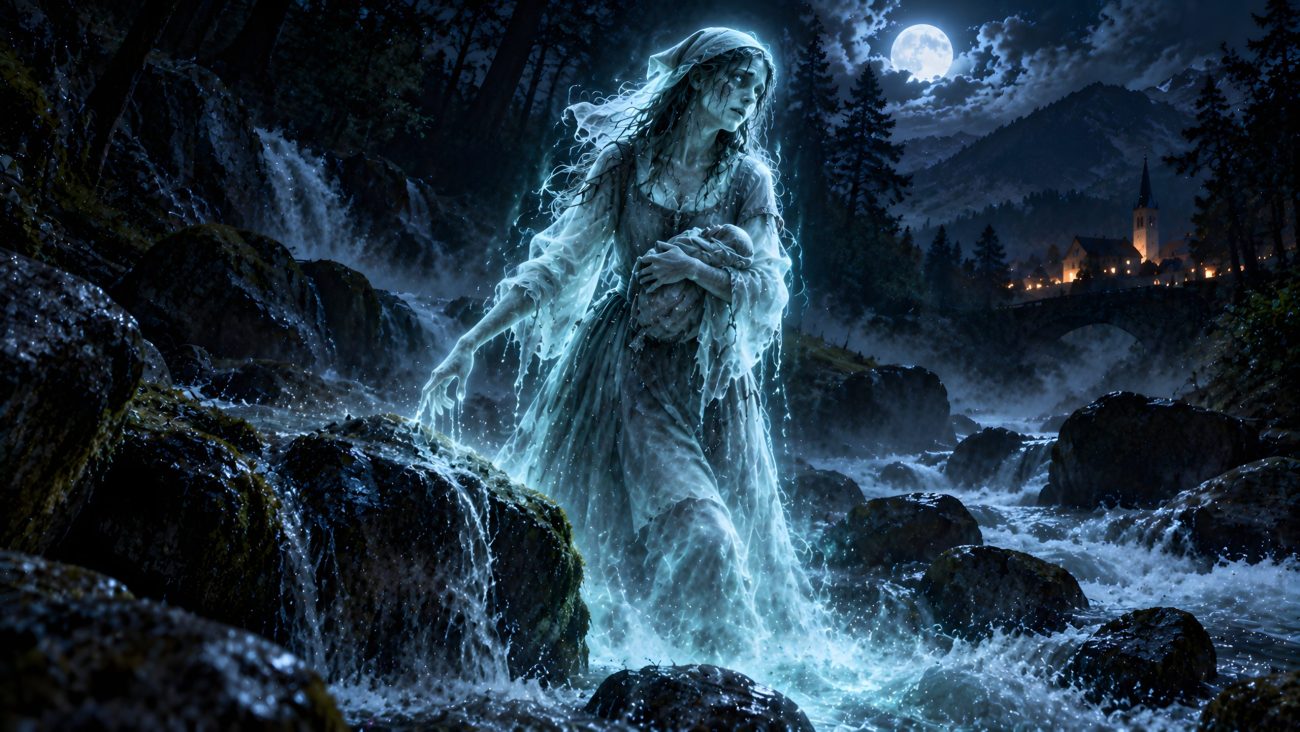
The Mill Stream Lady is the ghost of a young farmmaid who drowned her illegitimate child in the wild ravine of the Mühlebach stream near Oberwil, Switzerland. The stream rises on the Geißboden and rushes through a rugged forest gorge, plunging over hard rocks before joining Lake Zug. After killing her child, the maid was condemned to atone for her crime by wandering along the stream at midnight. She often appeared to young men travelling towards the Geißboden after dark, dressed in traditional rural clothing. She never dared to venture as far as the village of Oberwil, and a large, gnawed stone beside the stream was believed to mark the place where she had drowned the child. Some people even claimed to have seen her there in broad daylight, washing something at the water’s edge.

One young man from Oberwil heard stories about the apparition and decided to defile the stone where the maid was believed to have washed. That evening, he grew uneasy but eventually overcame his fear and went to bed. At midnight, a loud knock sounded at the front door. When he cautiously looked out of his bedroom window, he saw the Mill Stream Lady standing outside. She ordered him in threatening terms to clean the stone immediately. Although frightened, the young man initially refused. The apparition then promised that he would come to no harm if he obeyed. He went to the stream, cleaned the stone, and returned home without encountering her again along the way.

Other encounters reinforced the fear surrounding the Mill Stream Lady. Two farmers from Walchwilerberg claimed to have seen her. One had been warned not to cross the Geißboden at night, but ignored the advice and encountered the ghost. He was so terrified that he remained frozen in place for several minutes. After finally reaching home, he was forced to stay in bed for an extended period, deeply shaken by the sight of the wandering infanticide.

The apparition also punished those who mocked her. Near the stream’s source stood the Widishof farm, where several farmhands once kept watch beside a cow at midnight. As they exchanged stories, the conversation turned to the Mill Stream Lady. One boastful farmhand went outside and called mockingly for her to appear. Fear immediately overcame him, and he rushed back into the stable, slamming the wooden door behind him. Moments after he rejoined the others, a stone struck the locked door with such force that the entire building shook. The incident served as a warning that the Mill Stream Lady was not to be mocked or challenged, even by those who doubted the stories about her.


Sources

“Die Mühlebachdame.” SAGEN.at – Zuger Sagen. Reproduced by SAGEN.at. https://www.sagen.at/texte/sagen/schweiz/zug/muehlebachdame.html


Walking Traitor

Tradition: Swiss Mythology
Alternative Names: The Traitors of the Stage, The Wild Horsemen of Deinikon
Category: Ghost


The Myth

The Walking Traitors are restless spirits associated with a hill near Deinikon, Switzerland, known as the Stage. According to local legend, this was where the Peace of Zurich was concluded in 1531, following the bitter end of the war at Kappel. The people told that Zurich, fearing the consequences of defeat, instructed its envoys to do everything possible to preserve the city’s Protestant faith. If the victorious Catholic side insisted on a return to the old religion, the envoys were to negotiate fiercely and spare no expense. Some Catholic envoys allegedly accepted bribes from Zurich, allowing the city to remain Reformed.

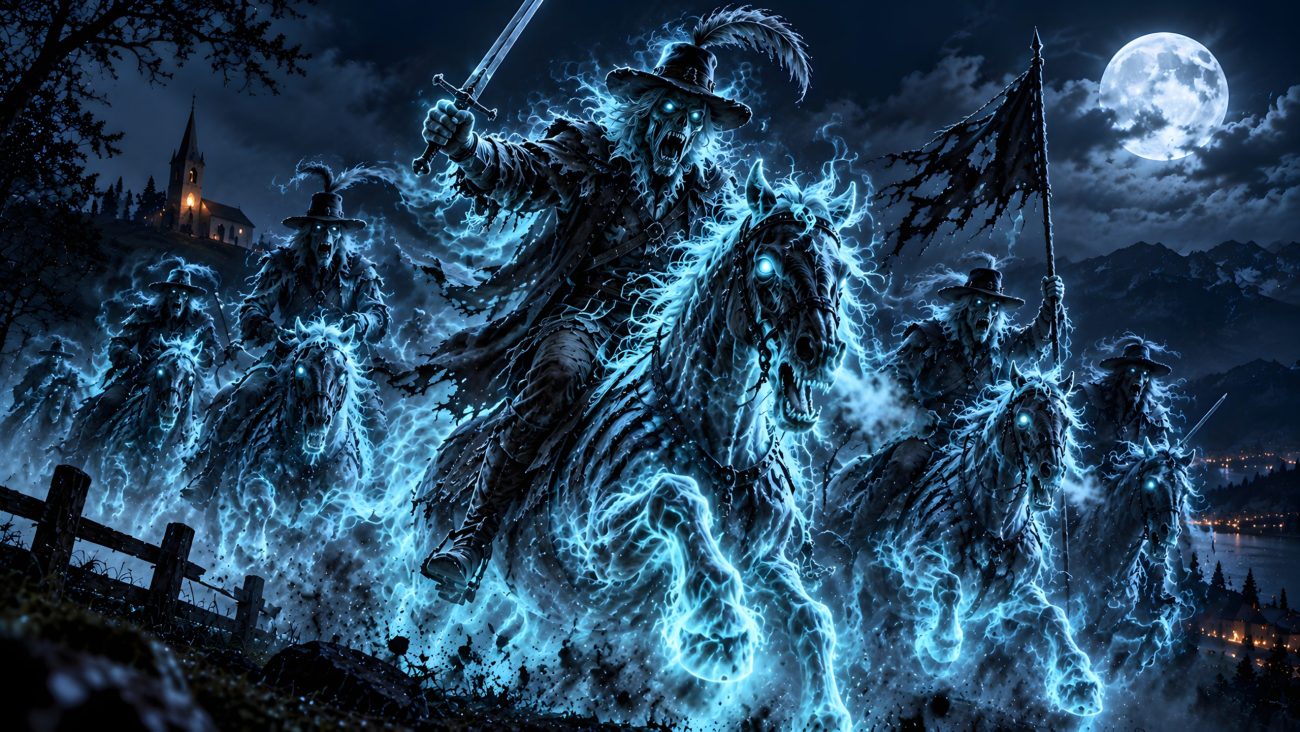
Those who accepted the bribes were believed to have sacrificed their peace of mind for all eternity. Their guilt condemned them to wander as the Walking Traitors, supernatural horsemen who revealed their wrongdoing through their endless punishment. They rode as part of a Wild Hunt along a precisely defined route, and no one was permitted to obstruct their passage. On one occasion, a clothesline was accidentally stretched across their ghostly path. The neighbors suffered a night of disturbances and unrest until the obstacle was removed, after which the haunting ceased.

The supernatural nature of the Stage was also revealed in a tale about a poor beggar woman. One day, she asked a hurriedly wandering man dressed in ancient clothing for alms in God’s name. Before her eyes, the mysterious stranger suddenly melted into thin air. The story suggests that the hill remained haunted by figures from the past, whose appearances served as reminders of the guilt, betrayal, and supernatural punishment associated with the Walking Traitors.


Sources

“Die Verräter von Deinikon.” SAGEN.at – Zuger Sagen. Reproduced by SAGEN.at. https://www.sagen.at/texte/sagen/schweiz/zug/verraeter.html