Zwartbaardkabouter

Tradition / Region: Dutch Mythology
Alternate Names:
Category: Gnome


The Myth

Deep in the Veluwe, near Vierhouten, rises the Bonenberg, a hill long believed to be home to the Zwartbaardkabouters—kabouters with dark, black beards who dwell beneath the earth. On certain nights, when the world above is asleep, they are said to emerge and dance in circles around a great fire burning on the mountain.

The Bonenberg itself bears signs of their presence. Its slopes are lush and thick with unusually large plants, nourished by an underground lake and warmed by the hidden heat of the kabouters’ fire below. This unnatural fertility marks the hill as no ordinary place.

Once, a young girl wandering at night saw the fire blazing on the mountain. Drawn by curiosity rather than fear, she approached and asked the kabouters for a few glowing coals. They agreed and let her take some home. But when she reached her house and looked again, the coals had turned into lumps of gold.

Since then, the Bonenberg has been remembered as a place of secret wealth and hidden life, where black-bearded kabouters dance by firelight and where a simple request, made at the right moment, can be rewarded beyond all expectation.


Sources

Abe de Verteller contributors. (n.d.). Van aardmannetje tot zwarte juffer: Een lijst van Nederlandse en Vlaamse elfen en geesten. In Abe de Verteller, from https://abedeverteller.nl/van-aardmannetje-tot-zwarte-juffer-een-lijst-van-nederlandse-en-vlaamse-elfen-en-geesten/


Woutermannetje

Tradition / Region: Dutch Mythology
Alternate Names: Woatermankes, Woudhermannekens, Wouterkens
Category: Gnome, Forest dweller


The Myth

On the island of Ameland, people once spoke—half in fear, half in warning—of the Woutermannetjes, tiny man-like beings who lived among the dunes and in the nearby woods. They were said to come out at night, when paths were quiet and travelers were alone.

Those who wandered after dark risked an unpleasant encounter. The Woutermannetjes would creep close and prick walkers in the legs with pins, or, as later told to children, bite their legs without being seen. The pain was sudden and sharp, leaving the victim frightened and confused, never quite sure what had struck them.

Children, especially, were warned about them. Parents would say: “Be careful, or the woatermankes will take you away.” In this way, the little beings became part of everyday discipline and night-time fear, lurking just beyond the dunes or trees.

What the Woutermannetjes truly were was never entirely clear. Some believed their name came from water, making them spirits of wet ground and dunes. Others thought it came from woud—the forest—making them woodland beings. Older traditions blur the distinction even further. In earlier centuries, similar creatures were described as house spirits, helpers and tricksters who lived close to humans, while at the same time being linked to fauns or wild spirits of nature.

Thus the Woutermannetjes stood on a boundary: between house and wilderness, safety and fear, water and wood. Small, unseen, and sharp-toothed or sharp-pinned, they remained figures used to explain night terrors, restless dunes, and the uneasy feeling of being watched when walking alone after dark.


Sources

Abe de Verteller contributors. (n.d.). Van aardmannetje tot zwarte juffer: Een lijst van Nederlandse en Vlaamse elfen en geesten. In Abe de Verteller, from https://abedeverteller.nl/van-aardmannetje-tot-zwarte-juffer-een-lijst-van-nederlandse-en-vlaamse-elfen-en-geesten/


Sommeltje

Tradition / Region: Dutch Mythology
Alternate Names:
Category: Gnome


The Myth

On Texel, among the dunes and old burial mounds, people long believed in the Sommeltjes—small earth spirits no taller than a child’s waist. Their home was said to be the Sommeltjesberg, a grassy burial hill near the village of De Waal, where they hid their treasures beneath the sand and danced together in the moonlight.

The Sommeltjes lived only by night. Sunlight was deadly to them: if caught by the sun’s rays, they would turn to stone. Because of this, they slept hidden beneath dunes, hills, and pits during the day. At night they emerged silently, moving like shadows over sand and grass. They could make themselves invisible and slip into houses through the smallest cracks or openings.

They loved shining objects above all else. Copper kettles, silver coins, and anything that gleamed might vanish overnight. Yet the Sommeltjes were not purely thieves. Sometimes a stolen kettle would return, polished until it shone like new, and filled with food or drink—as if to remind people that the spirits were capricious rather than cruel.

On Wieringen, they were also said to live in a hollow known as the Sammeltjeskuil, where small clay pipes—sammeltjespiipkes—were found. These tiny pipes were believed to be used by the Sommeltjes themselves when they gathered at night to smoke and whisper beneath the stars.

Children were warned to behave, lest the Sommeltjes come creeping out of the hill to take them. At the same time, parents told their young ones that newborn babies were brought by the Sommeltjes, carried secretly through the dunes under cover of darkness.

Neither fully kind nor fully malicious, the Sommeltjes belonged to the land itself—spirits of sand, moonlight, and buried things. To respect the dunes was to remain safe; to mock or challenge the little night-folk was to invite loss, fear, or stone-cold silence.


Sources

Abe de Verteller contributors. (n.d.). Van aardmannetje tot zwarte juffer: Een lijst van Nederlandse en Vlaamse elfen en geesten. In Abe de Verteller, from https://abedeverteller.nl/van-aardmannetje-tot-zwarte-juffer-een-lijst-van-nederlandse-en-vlaamse-elfen-en-geesten/


Reidmantsje

Tradition / Region: Dutch Mythology
Category: Swamp dweller, Gnome


The Myth

In the wetlands of Friesland, where reeds whisper and the ground trembles beneath careless feet, people once spoke in low voices of the Reidmantsje—the little man of the reeds.

The Reidmantsje lives hidden among the tall riet, in places where the earth is soft, dark, and treacherous. He knows every patch of sinking mud and every weak place in the marsh. His greatest pleasure is to lure humans into the soggy ground, letting them slowly sink until escape becomes impossible.

He bears a special hatred for reed cutters and turf diggers, for with every bundle they cut and every block they pull from the earth, his domain shrinks. To him, they are intruders gnawing away at his home. When they walk the marshes, the ground beneath them may suddenly give way—not by chance, but by the Reidmantsje’s will.

Though cruel, the Reidmantsje has one great weakness: he cannot swim.

Once, one of these reed men became trapped as rising water closed in around him. Desperate, he cried out for help. A turf digger heard him and hurried over, thinking the little man might reward him with hidden gold. But greed sealed his fate. The Reidmantsje turned the marsh against him, and the man drowned in the mire.

Later, another passerby heard the same cries. This one helped the Reidmantsje without expectation or desire for reward. Grateful, the marsh spirit spared him and blessed him instead. From that day on, the man lived a life of unbroken luck, as if the land itself favored his steps.

So the story warns: the marsh remembers intent. In the reedlands, greed sinks—but kindness may yet walk safely home.


Sources

Abe de Verteller contributors. (n.d.). Van aardmannetje tot zwarte juffer: Een lijst van Nederlandse en Vlaamse elfen en geesten. In Abe de Verteller, from https://abedeverteller.nl/van-aardmannetje-tot-zwarte-juffer-een-lijst-van-nederlandse-en-vlaamse-elfen-en-geesten/

Maanje Klop

Tradition / Region: Dutch Mythology
Alternate Names: Mannetje Klop
Category: Gnome


The Myth

Along the coast of Groningen, especially among the fishermen of Delfzijl, there is told the tale of Maanje Klop, a small, helpful kabouter who watches over ships at sea.

Maanje Klop is about half a meter tall and dresses like a sailor of old: a blue woolen jacket pulled tight against the cold and a storm hat set firmly on his head. In his hand he carries a wooden hammer, and it is with this hammer that he makes himself known—though never seen.

At night, when the crew sleeps and the sea lies dark around the vessel, Maanje Klop comes aboard. He moves silently through the ship, fixing broken gear, tightening ropes, patching small damage, and setting right anything that might cause trouble. As he works, sailors sometimes hear soft knocking sounds echoing through the hull, as if wood were being gently tapped from within. These sounds are his sign.

As long as Maanje Klop remains on a ship, nothing bad can happen. Storms may rise, waves may crash, but the vessel will not be lost. The fishermen know this, and when they hear the knocking, they feel reassured rather than afraid.

Maanje Klop asks for no thanks and leaves no trace. He works unseen, departing as quietly as he arrived. Only when the knocking stops do sailors worry, for it may mean the little helper has gone elsewhere.

Thus Maanje Klop lives on in coastal memory as a guardian of the night sea, a quiet worker whose hammer taps meant safety, luck, and a ship that would always find its way home.


Gallery


Sources

Abe de Verteller contributors. (n.d.). Van aardmannetje tot zwarte juffer: Een lijst van Nederlandse en Vlaamse elfen en geesten. In Abe de Verteller, from https://abedeverteller.nl/van-aardmannetje-tot-zwarte-juffer-een-lijst-van-nederlandse-en-vlaamse-elfen-en-geesten/


Interpretive Lenses

Religious Readings
  • Christian Ascetic Deep Dive
Philosophical Readings
  • Nietzschean Deep Dive
Psychological Readings
  • Jungian Deep Dive
Esoteric Deep Dive
  • Hermetic Deep Dive
Political / Social Readings
  • Marxist Deep Dive
Other
  • How to Invite The Maanje Klop

Hus

Tradition / Region: Belgian Mythology
Alternate Names: Alvervrouwen, wives of the alvermannekes
Category: Gnome


The Myth

In the heaths around Leuven and Aarschot lived the Hussen, the female counterparts of the alvermannekes. They were small, secretive beings who survived not by honest labor but by raiding and stealing, slipping unseen into human spaces and vanishing again with what they needed.

The Hussen lived apart from people, bound by their own harsh customs. Among them was a grim belief about age and renewal. When a Hus grew too old to keep up with the others, she was buried alive by her own kind. This was not done in cruelty alone, but as part of a strange promise.

Before the earth was closed over her, they placed beside her a small bottle of beer or a loaf of bread, and spoke these words:
“Vertrek, oud moederke, ge zult in jongheid wederkeren.”
“Depart, old mother, you will return in youth.”

It was believed that death beneath the soil would restore her, allowing her to be reborn young, ready to return to the world of the Hussen once more.

Thus the Hussen were remembered as beings of theft and survival, ruled by their own laws—laws in which age was not endured, but buried, and where the earth itself was the gateway back to youth.


Sources

Abe de Verteller contributors. (n.d.). Van aardmannetje tot zwarte juffer: Een lijst van Nederlandse en Vlaamse elfen en geesten. In Abe de Verteller, from https://abedeverteller.nl/van-aardmannetje-tot-zwarte-juffer-een-lijst-van-nederlandse-en-vlaamse-elfen-en-geesten/


Hansjop

Tradition / Region: Dutch Mythology
Alternate Names:
Category: Dwarf, Gnome


The Myth

On the heath near Oss, there rises a low hill called the Hansjoppenberg. There, people say, lives a small dwarf-like being known as Hansjop.

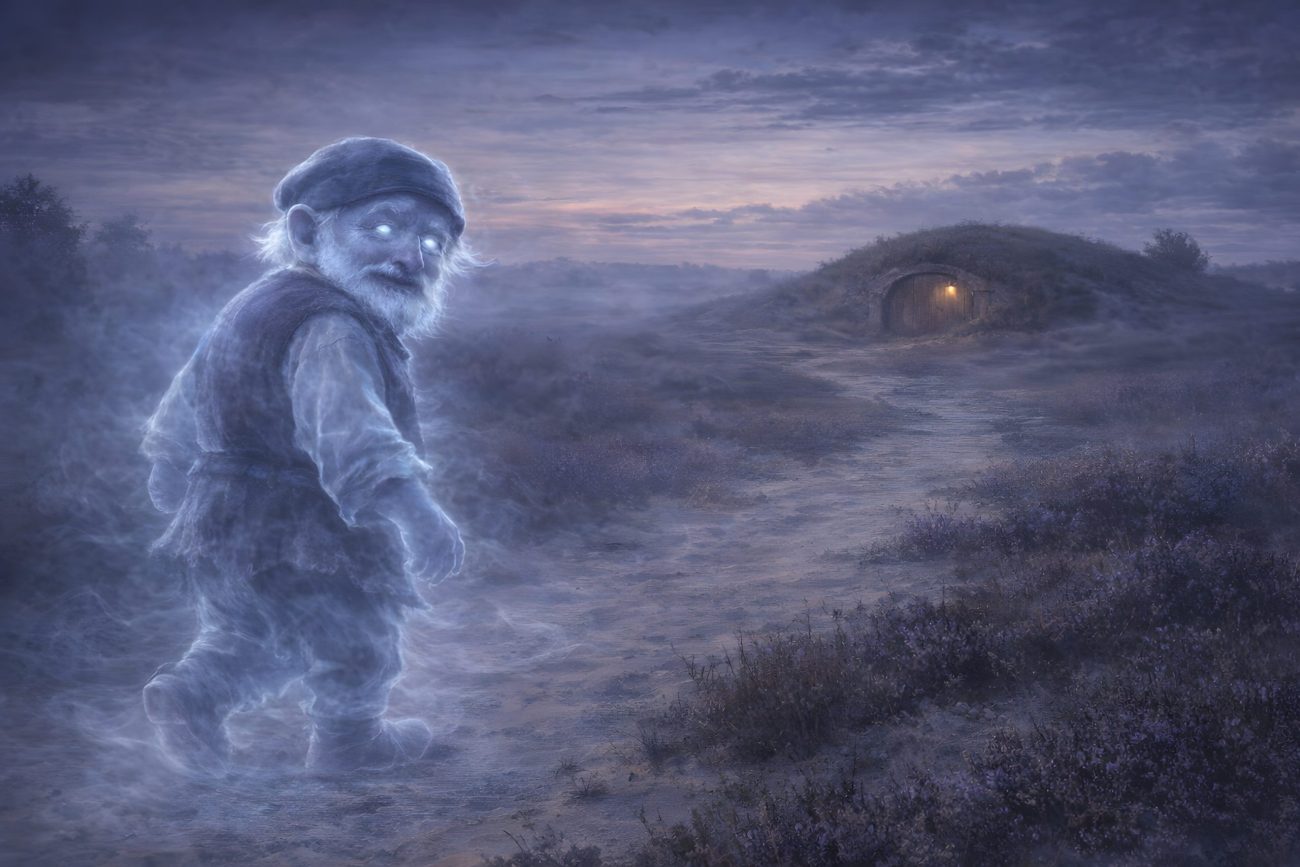
Lonely walkers crossing the heath at dusk or in quiet weather may find themselves unexpectedly accompanied. A short figure appears beside them, walking along as if by chance. He does not threaten, nor does he ask questions. He simply keeps pace, sharing the path in silence or light-hearted calm.

After walking a little way together, Hansjop suddenly stops. With a cheerful “houdoe”—a familiar Brabant farewell—he turns aside and vanishes back into his hill, leaving the traveler alone once more, unsure whether what they experienced was real.

Some say Hansjop is no harmless dwarf at all, but the restless spirit of a man named Hans Joppe, or Hans Jacob, who in 1678 murdered his wife and was punished with a brutal execution. According to this telling, his soul never left the place and now wanders the heath, neither fully at peace nor openly hostile.

Whether friendly hill-dweller or condemned ghost, Hansjop remains a figure of quiet encounters—appearing only to the solitary traveler, walking beside them for a time, and disappearing again into the earth as suddenly as he came.


Sources

Abe de Verteller contributors. (n.d.). Van aardmannetje tot zwarte juffer: Een lijst van Nederlandse en Vlaamse elfen en geesten. In Abe de Verteller, from https://abedeverteller.nl/van-aardmannetje-tot-zwarte-juffer-een-lijst-van-nederlandse-en-vlaamse-elfen-en-geesten/


Grauwke

Tradition / Region: Dutch Mythology
Alternate Names:
Category: Gnome, Goblin


The Myth

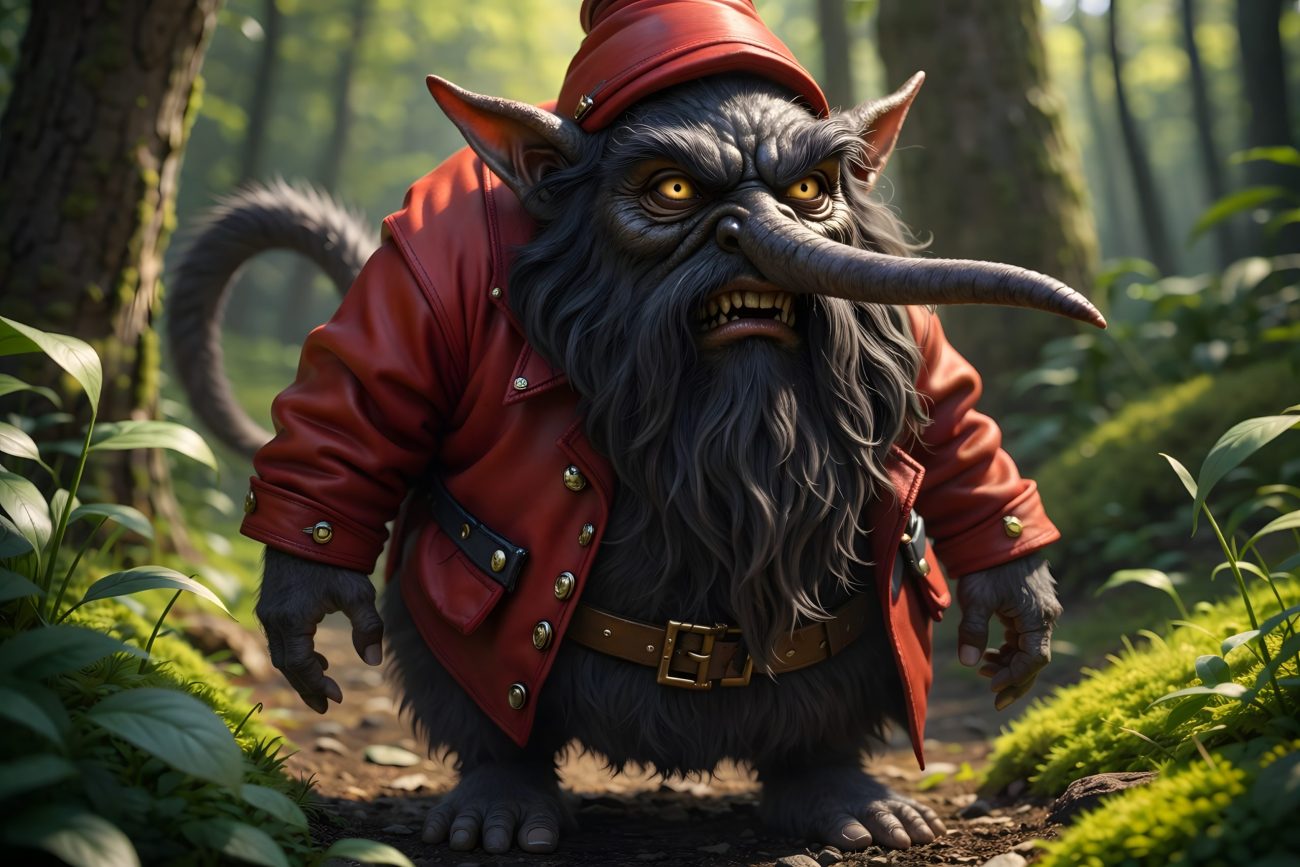
In the countryside of Groningen, people once spoke in hushed tones of the Grauwkes, small, black gnome-like beings who lived hidden beneath hedges and thick growth. By day they remained unseen, buried deep in the roots and shadows where no one looked too closely.

At evening, when light faded and the land grew quiet, the Grauwkes emerged. They did not come to help or to trade favors, but to frighten. Shapes would move where nothing should be, soft sounds followed travelers along paths, and sudden presences made hearts race without reason. People felt watched, surrounded, or chased, though nothing could be clearly seen.

The Grauwkes were not known for grand deeds or lasting harm. Their power lay in fear itself—the unease that crept in at dusk, the sudden panic that made someone hurry home, the sense that something small and malicious lingered just out of sight.

Because of this, people avoided hedges after dark and warned children not to linger outside at night. The Grauwkes did not need to be seen to be believed in; their work was done as soon as fear took hold.


Gallery


Sources

Abe de Verteller contributors. (n.d.). Van aardmannetje tot zwarte juffer: Een lijst van Nederlandse en Vlaamse elfen en geesten. In Abe de Verteller, from https://abedeverteller.nl/van-aardmannetje-tot-zwarte-juffer-een-lijst-van-nederlandse-en-vlaamse-elfen-en-geesten/


Interpretive Lenses

Religious Readings
  • Christian Ascetic Deep Dive
Philosophical Readings
  • Nietzschean Deep Dive
Psychological Readings
  • Jungian Deep Dive
Esoteric Deep Dive
  • Hermetic Deep Dive
Political / Social Readings
  • Marxist Deep Dive
Other
  • How to Invite The Grauwkes

Junren

Tradition / Region: Chinese mythology
Alternate Names: People of Small Stature
Category: Gnome


The Myth

Beyond the familiar lands of humankind, in the far and unnamed regions of the world, there live the Junren, a race of people small in body yet fully human in form. They dwell in distant wildernesses where mountains, forests, and seas stretch beyond the reach of ordinary travelers.

The Junren are said to live together as their own people, forming small kingdoms hidden at the edges of the world. Though diminutive in size, they walk upright, speak, labor, and order their lives as humans do. Their lands mirror the greater world, only scaled down—fields, dwellings, and communities shaped to their stature.

They are rarely seen, not because they are spirits or illusions, but because their homes lie far from known roads. Those who glimpse them often do so only briefly, mistaking them at first for children, birds, or moving shadows among grass and stone. By the time the eye adjusts, the Junren have already withdrawn.

In the old telling, the Junren serve as a reminder that the world is vast and layered, filled with peoples unseen by most. Humanity is not alone in shaping civilization; even in the remotest wilderness, lives unfold according to their own customs and rhythms.

Thus the Junren endure in story as the small people of the far lands, quiet proof that the earth holds more nations than those whose names are commonly known.


Gallery


Sources

Wikipedia contributors. (n.d.). 茜人. In Wikipedia, The Free Encyclopedia, from https://zh.wikipedia.org/wiki/%E8%8F%8C%E4%BA%BA


Interpretive Lenses

Religious Readings
  • Christian Ascetic Deep Dive
Philosophical Readings
  • Nietzschean Deep Dive
Psychological Readings
  • Jungian Deep Dive
Esoteric Deep Dive
  • Hermetic Deep Dive
Political / Social Readings
  • Marxist Deep Dive
Other
  • How to Invite The Junren

Lutin

Tradition / Region: French Mythology
Alternate Names: Lutine (female), Nain Rouge, Cheval Bayard (horse form)
Category: Gnome, House dweller


The Myth

The lutin is one of the small hidden folk who live close to humans, slipping easily between the visible and invisible worlds. Mischievous by nature, clever rather than cruel, the lutin delights in tricks, surprises, and quiet interference in everyday life.

Often unseen, the lutin may suddenly make its presence known through tangled hair, twisted into stubborn elf-locks, or by the unexplained movement of objects in a home or stable. Horses are particular targets of its playfulness: their manes may be braided overnight, or they may be found lathered and exhausted, as though ridden hard while no rider was seen.

At times, the lutin takes on a striking form—a horse already saddled and waiting, known as Le Cheval Bayard. Those foolish enough to mount it may find themselves carried off at impossible speed, only to be dropped far from home, confused and shaken.

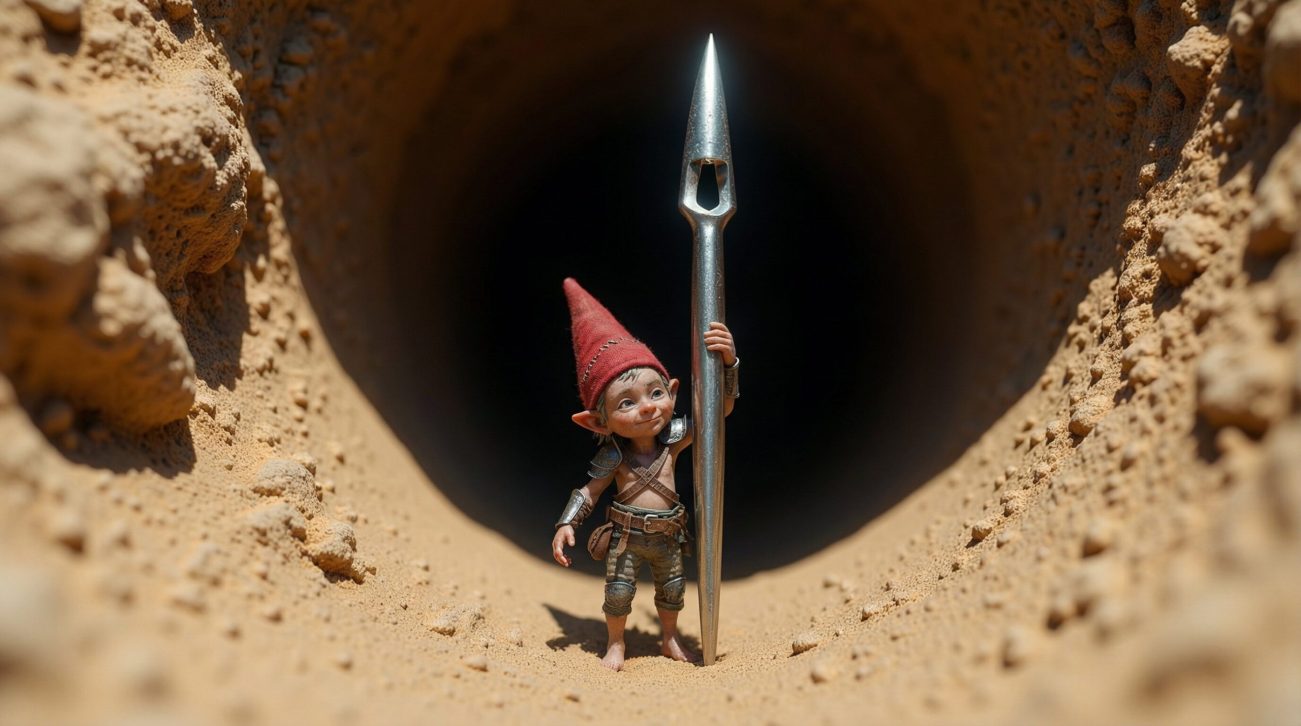
Lutins possess remarkable powers. They can become invisible at will, pass through walls, doors, and locked spaces, rise into the air without wings, dive into the sea without drowning, and cross vast distances in an instant. They are not bound by the limits of land, water, or sky. When they choose to be seen, they appear in a small, human-like form, often wearing a red cap, sometimes enchanted so that it grants invisibility.

Though playful and troublesome, lutins are not enemies of humankind. Like household spirits elsewhere in Europe, they may help or hinder depending on how they are treated. Kindness may earn quiet assistance; disrespect invites mockery and confusion.

In later tradition, the lutin’s role softened further. It is said that they now assist Père Noël, working unseen to help with his labors in the far north. Yet even then, they retain their old nature—quick, elusive, fond of tricks, and never entirely trustworthy.

To encounter a lutin is to brush against a world where rules bend, doors open without keys, and laughter may echo just beyond sight.


Sources

Wikipedia contributors. (n.d.). Lutin. In Wikipedia, The Free Encyclopedia, from https://en.wikipedia.org/wiki/Lutin