Lau

Tradition: Indian Mythology
Alternative Names: Chauga, Čauga, Lao, Yau
Category: Ghost


The Myth

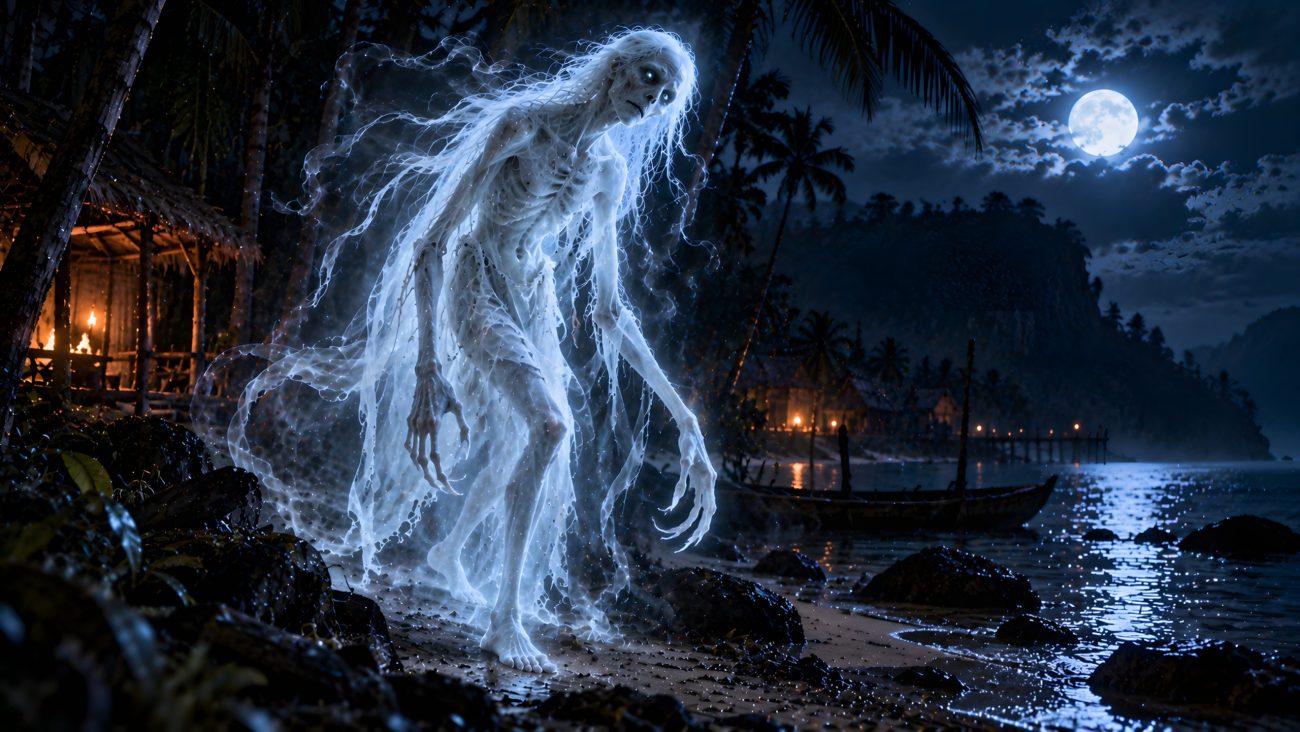
Lau are the spirits of the dead in the mythology of the Indigenous peoples of the Andaman Islands. They are commonly described as invisible spirits or as pale, white figures with a terrifying appearance. Their presence belongs to the unseen world of the dead, where departed souls continue to exist beyond the sight of the living.

The name Lau is also known as Chauga among the peoples of South Andaman. These spirits represent the dead as supernatural beings whose appearance and presence can inspire fear. They may remain unseen, or manifest as pale figures whose strange appearance distinguishes them from ordinary living people.

The terms Lau and Chauga were also used by Andamanese people to describe mainland Indians, Europeans, and many other foreigners, whose appearance differed from their own. In this way, the name associated with the spirits of the dead was also connected to the unfamiliar appearance of outsiders.


Sources

“Lau.” New Bestiary (Bestiary.us). https://www.bestiary.us/lau

Oitekebori

Tradition: Japanese Mythology
Alternative Names: 置行堀, おいてけぼり
Category: Ghost


The Myth

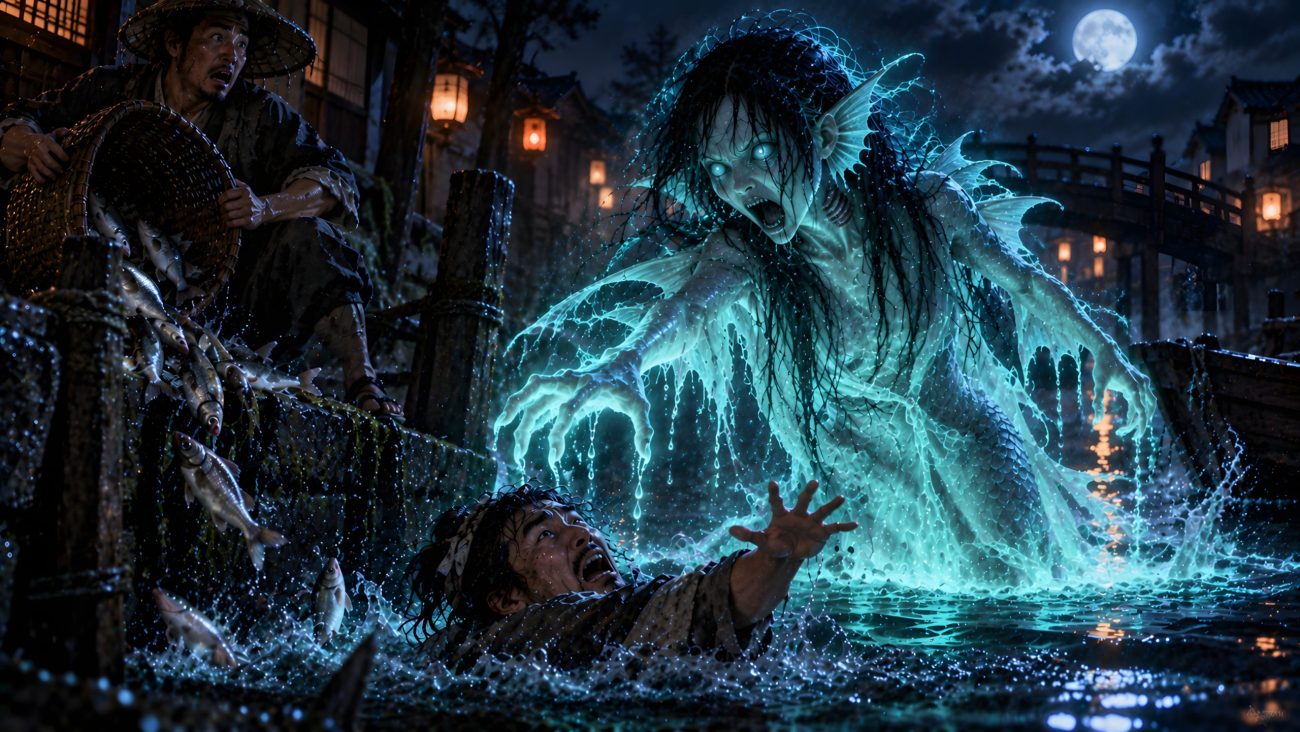
Oitekebori is a mysterious apparition said to haunt the canals of Honjo, in present-day Sumida, Tokyo. It is described as a human-like ghost that lurks near waterways and terrorizes fishermen who venture too close to its home. Its name comes from the eerie command “Oiteke,” meaning “Leave it behind!” or “Drop it and get out of here!”

Long ago, the canals of Honjo were filled with fish, and fishermen made their living catching them. One evening, two fishermen were fishing in a canal and found themselves catching far more fish than usual. Delighted by their enormous haul, they continued until their baskets were full. As they prepared to leave and carry their catch home, a terrible, disembodied voice rose from the water and shouted, “Oiteke!”

Terrified, the fishermen fled. In some versions, they abandoned their baskets and later discovered that the fish had vanished. In another telling, one fisherman escaped with his basket while the other was seized by a ghostly hand that rose from the canal and dragged him underwater, never to be seen again. The identity of Oitekebori remains uncertain in the legends: some stories blame a hungry kappa stealing fish, while others attribute the haunting to a mischievous tanuki, a yūrei, a kawauso, a mujina, or a supernatural soft-shelled turtle.


Sources

“Oitekebori.” Yokai.com: The Database of Japanese Folklore. https://yokai.com/oitekebori/


Gaohuang Gui

Tradition: Chinese Mythology
Alternative Names: 膏肓鬼, Ghost of the Gaohuang
Category: Ghost


The Myth

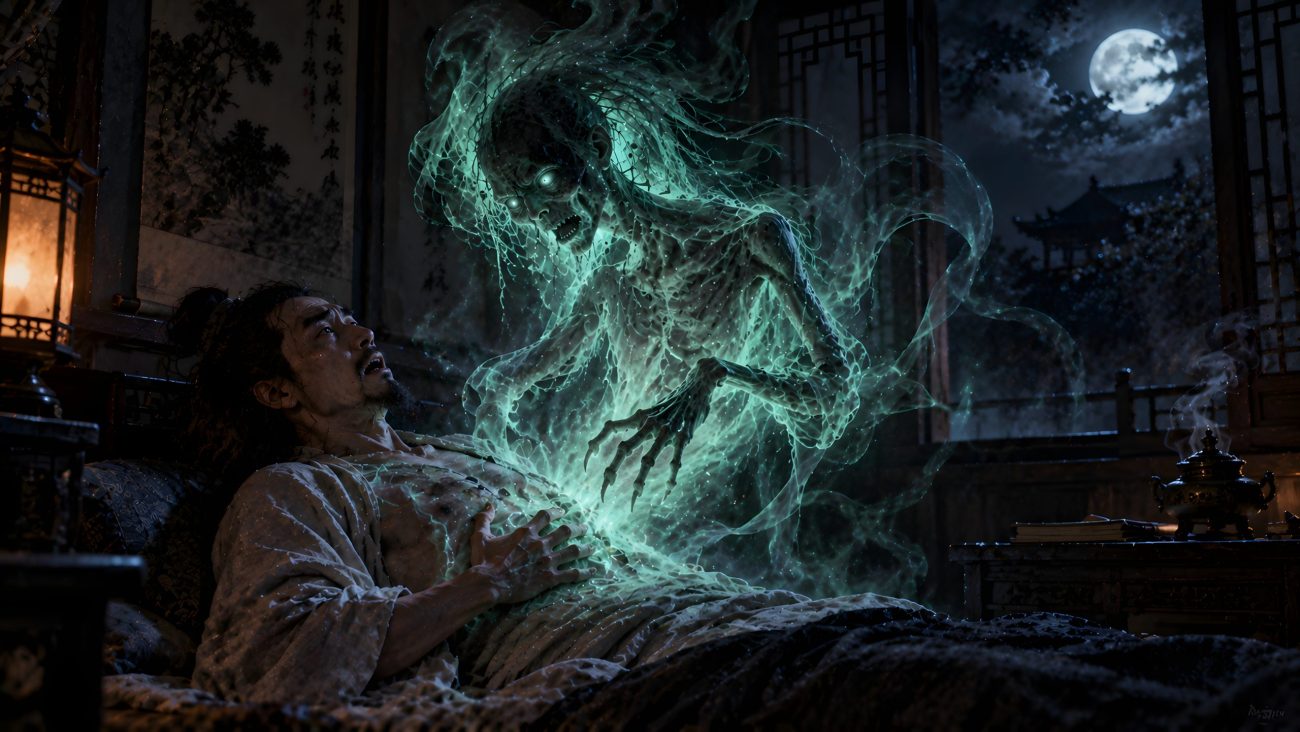
Gaohuang Gui is a sinister ghost from Chinese mythology associated with the gaohuang, the region of the body traditionally understood as lying around the diaphragm. It is described as a terrifying spirit that can hide deep within a person’s body, beyond the reach of ordinary treatment.

The legend originates in the story of Duke Jing of Jin, who dreamed of a fierce ghost hiding in his gaohuang. After this encounter, the image of the spirit developed into that of a supernatural creature that dwells in this part of the body and makes an illness increasingly severe. Once Gaohuang Gui has taken refuge there, the afflicted person becomes difficult to cure, as the spirit is hidden in a place that ordinary medicine cannot easily reach.

Gaohuang Gui embodies the terrifying idea of an illness that has become deeply rooted within the body. Unlike ghosts that attack openly, this spirit hides inside its victim, silently worsening the sickness from within.


Sources

“膏肓鬼 (Gāohuāngguǐ).” Chinese Wikipedia. Wikimedia Foundation. Accessed October 15, 2026. https://zh.wikipedia.org/wiki/%E8%86%8F%E8%82%93%E9%AC%BC


Buruburu

Tradition: Japanese Mythology
Alternative Names: 震々, ぶるぶる, Zozogami
Category: Ghost


The Myth

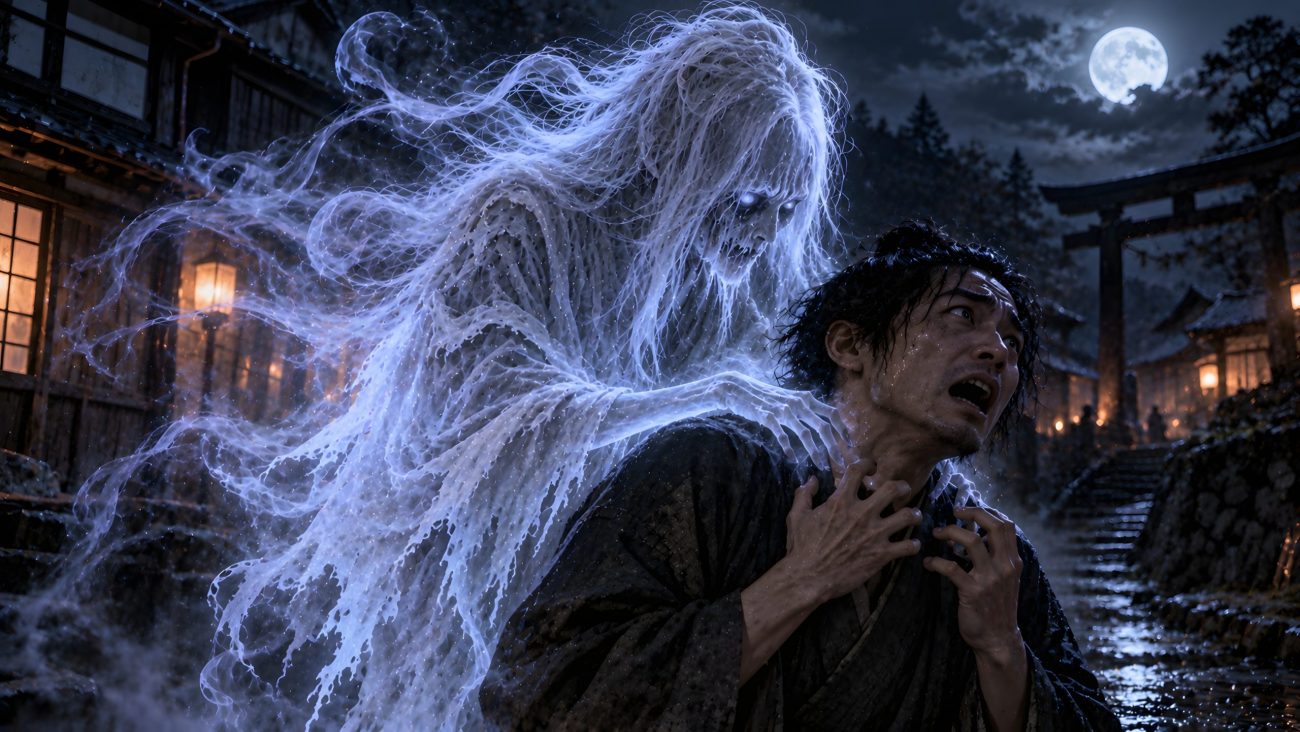
Buruburu is a mysterious yokai known as the spirit of cowardice. It follows people through inhabited areas, causing them to shudder with fear. Although it may not appear as a clearly visible creature, its presence is felt through sudden chills, trembling bodies, and the sensation of fear running down the spine.

Buruburu is born when a person commits an act of cowardice, such as fleeing from battle. The spirit then attaches itself to other people, possessing them by clinging to the collars of their shirts and touching the backs of their necks. Its supernatural touch makes their hair stand on end and sends shivers throughout their bodies.

The name Buruburu imitates the sound of trembling, while its alternate name, Zozogami, is also associated with the sensation of shivering with fear. The spirit embodies the physical feeling of terror itself, haunting people through the sudden, uncontrollable shudders that reveal its presence.


Sources

“Buruburu.” Yokai.com: The Database of Japanese Folklore. https://yokai.com/buruburu/


Zbiglenyata

Tradition: Ukrainian Mythology
Alternative Names: Zvihlenik, Zykhlenik, Zvylenik, Zbihlenyaty
Category: Ghost


The Myth

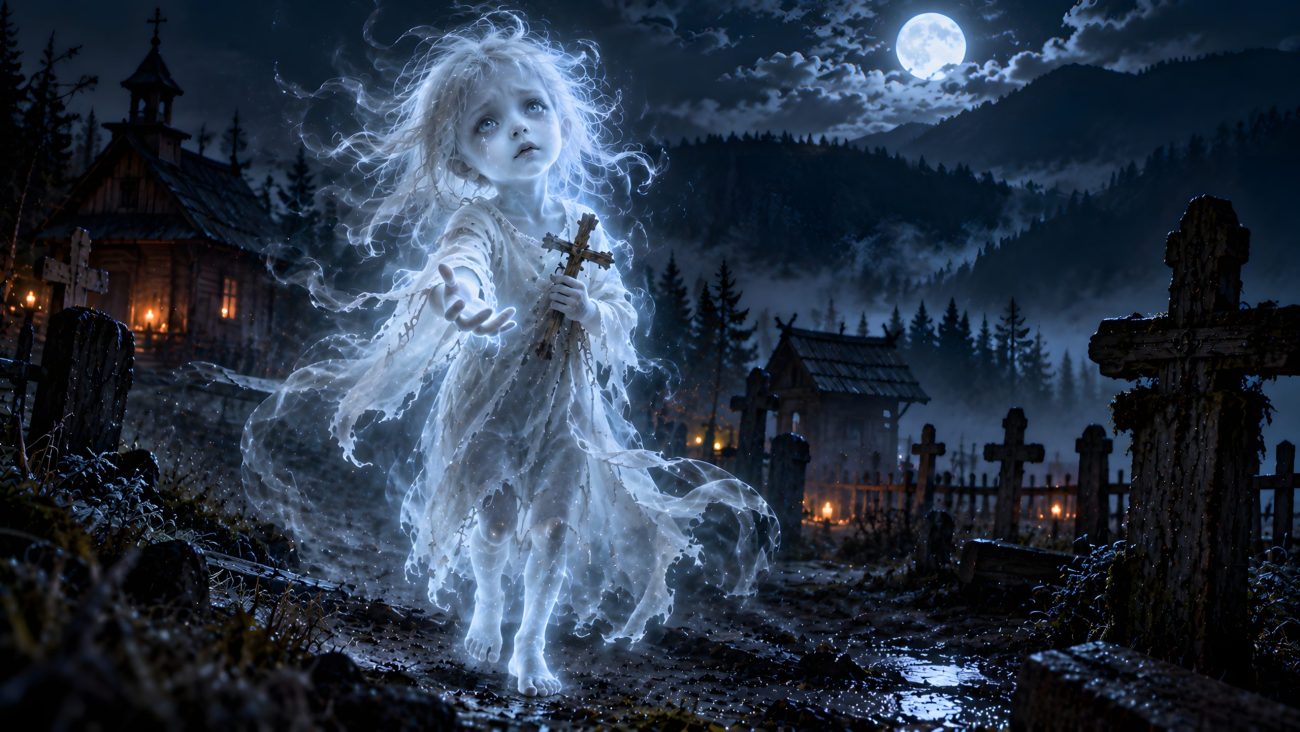
Zbiglenyata are the restless spirits of children who died without being baptized. According to Hutsul mythology, these children are buried in a special place in the cemetery reserved for the unbaptized. Their souls remain in this state until they reach the age of seven, when they risk becoming evil spirits known as zkhlenik or zvihlenik. They are sometimes heard crying in lonely places, asking passersby for a baptismal cloth and a cross.

As the seventh year approaches, a zbiglenyata may cry out, begging someone who believes in God to give it a cross. If a person who hears the spirit knows the correct baptismal formula and throws away a small piece of wood from their shirt, the child can be freed from its fate. Instead of becoming an evil spirit, its soul becomes an angel, who then serves as the guardian angel of the person who saved it.

Hutsul traditions also describe a ritual intended to prevent a dead, unbaptized child from becoming an evil spirit. A priest blesses water in twelve vessels, with a small cake and a candle placed beside each one on the church altar. The blessed water is then dedicated to the child’s soul and poured over its coffin or grave. Through this ritual, the child becomes an angel as though it had received baptism in life.


Sources

“Zbiglenyata.” New Bestiary (Bestiary.us). https://www.bestiary.us/zbiglenyata


Houwvrouw

Tradition: Dutch Mythology, Belgian Mythology
Alternative Names: Meltevrouw, Barende Vrouw, Varende Vrouw, Dolvrouw, Bontevrouw, Windsbruid, Winddrolle
Category: Ghost


The Myth

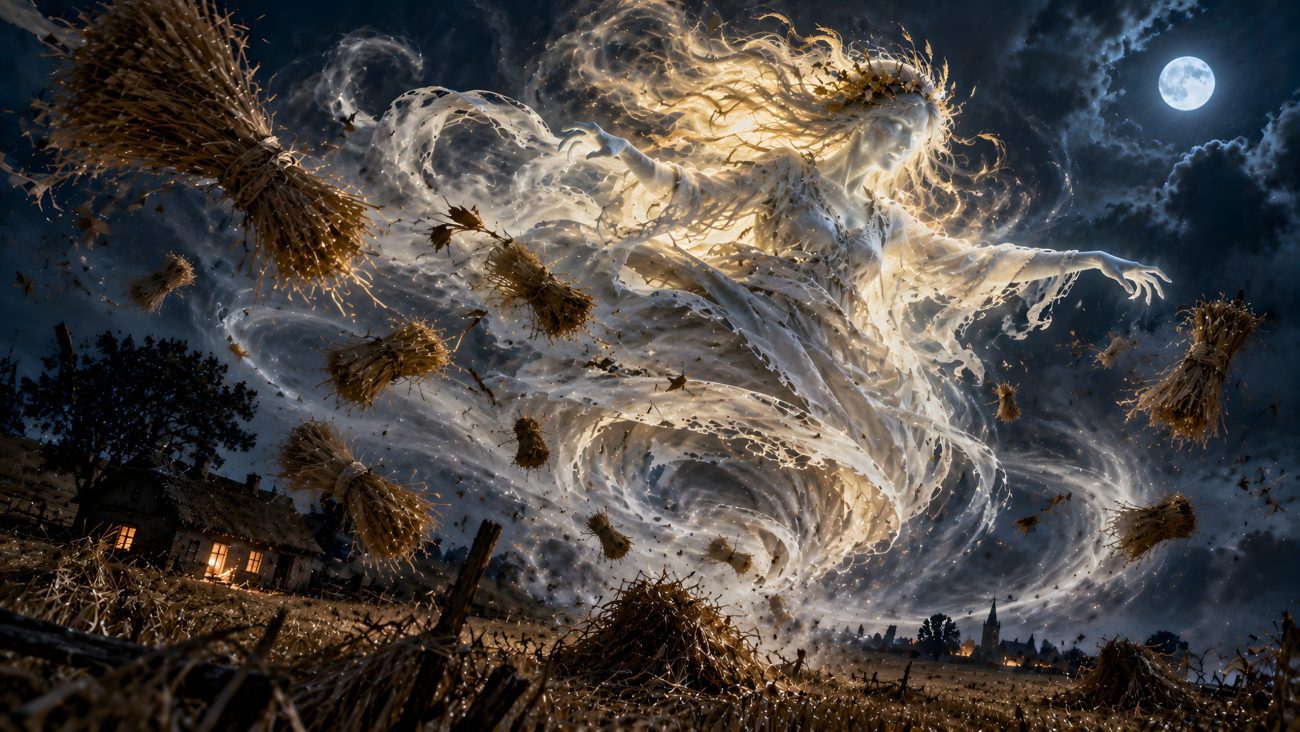
The Houwvrouw is a mysterious female wind spirit said to appear on hot summer days above the Afferdsche heath in Limburg. She can be seen in the shimmering waves of heated air, twisting and spinning as she travels through the sky. As she moves, she carries away everything light enough to be swept up by the wind. After her journey, she rests in an underground dwelling belonging to Aart with the Grey Beard, king of the gnomes, and Wieland the Smith, king of the little elves.

In Belgian Limburg, the Houwvrouw is described as a powerful storm wind that uproots and overturns sheaves of grain, carrying them several metres into the air. Her appearance may take the form of a sudden downpour, a whirlwind, or a swirling gust of wind that sweeps across the land. Farmers fear the destruction she can cause as she tears through fields and scatters their harvest.

The names Houwvrouw and Meltevrouw both mean “marrying woman.” One explanation suggests that people may have interpreted the wind as a sign of a marriage between heaven and earth, as it rises into the sky before descending again. In this way, the Houwvrouw embodies the mysterious and destructive power of the wind, appearing as a supernatural woman whose passage can transform a peaceful summer landscape into a swirling storm.


Sources

Van der Veen, Abe. “Van aardmannetje tot zwarte juffer: Een lijst van Nederlandse en Vlaamse elfen en geesten.” Abe de Verteller. https://abedeverteller.nl/van-aardmannetje-tot-zwarte-juffer-een-lijst-van-nederlandse-en-vlaamse-elfen-en-geesten/


Bornes

Tradition: Dutch Mythology
Alternative Names: The Bornes, Bornius Ghost
Category: Ghost


The Myth

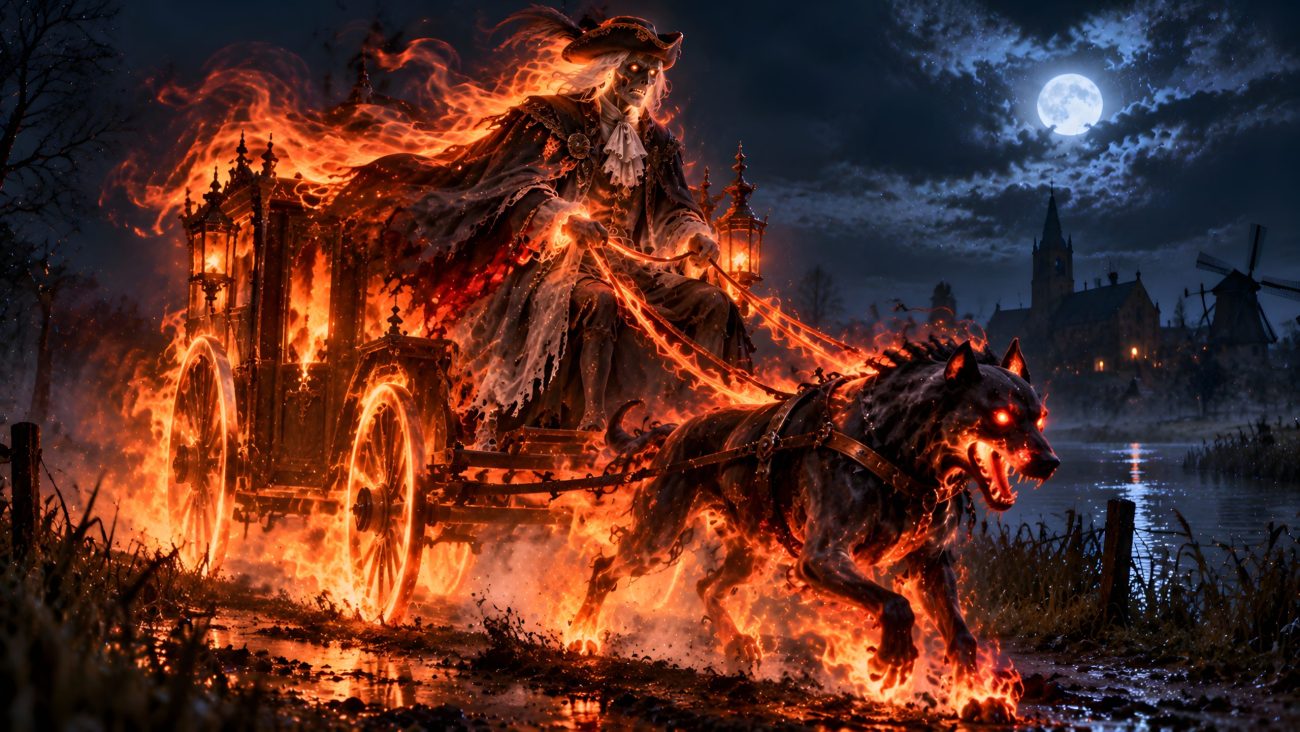
Bornes is an evil spirit from Zeeland, said to be the wandering soul of a cruel steward belonging to the Bornius family. After death, his restless spirit continued to roam the countryside around Hulst, bringing an ominous presence to the area. He was sometimes associated with the water, where his malevolent nature made him a feared supernatural being.

Bornes is accompanied by a black dog with flaming eyes, a terrifying companion that follows him as he wanders through the darkness. The sight of the ghost and his fiery-eyed hound was a dreadful omen, warning those who encountered them of the spirit’s sinister nature.

Once every hundred years, Bornes reveals his most terrifying form as he races through the night in a blazing carriage. Surrounded by fire, he rushes across the landscape in a supernatural frenzy, bringing terror to anyone unfortunate enough to witness his passage.


Sources

Van der Veen, Abe. “Van aardmannetje tot zwarte juffer: Een lijst van Nederlandse en Vlaamse elfen en geesten.” Abe de Verteller. https://abedeverteller.nl/van-aardmannetje-tot-zwarte-juffer-een-lijst-van-nederlandse-en-vlaamse-elfen-en-geesten/


Yuki-Onna

Tradition: Japanese Mythology
Alternative Names: Snow Woman, Yuki-onna
Category: Ghost


The Myth

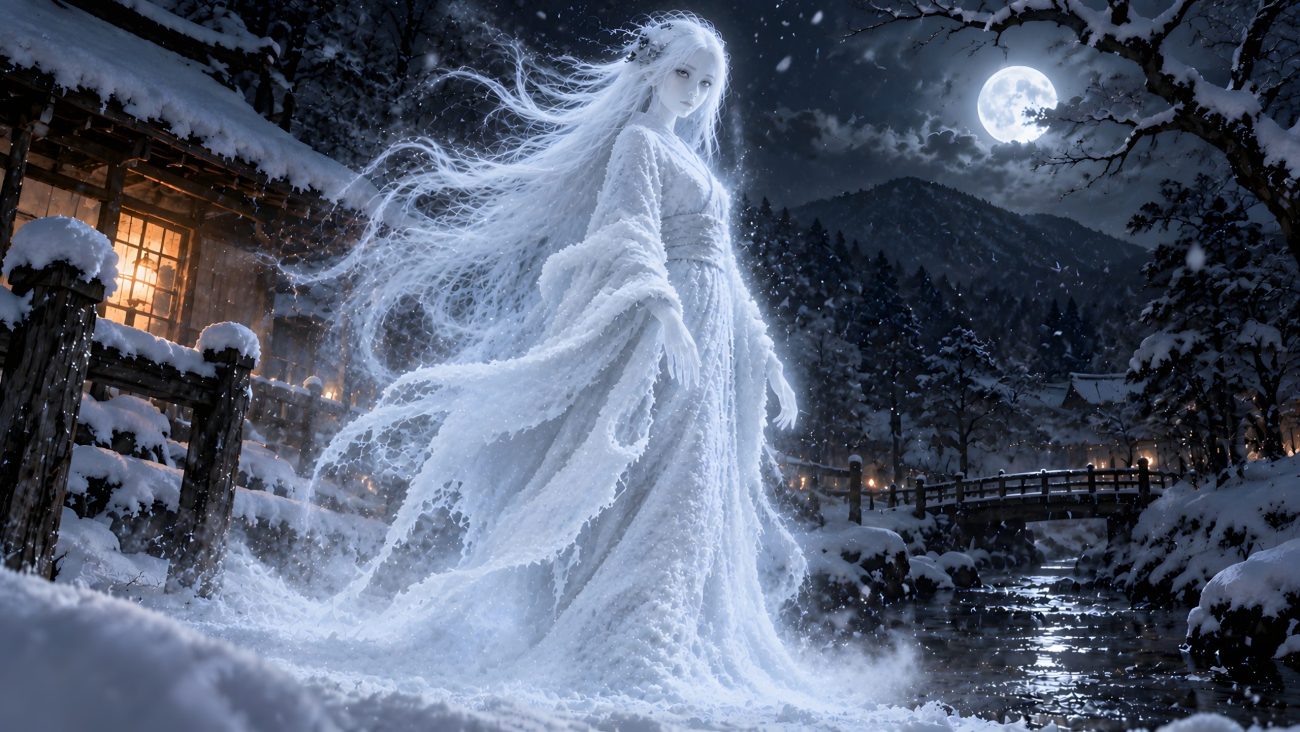
Yuki-Onna, the Snow Woman, is a supernatural female being who appears on snowy nights, particularly in regions where heavy snowfall blankets the mountains and countryside. She is believed to be either a spirit of the snow itself or the ghost of a woman who lost her life in a blizzard. In traditional depictions, she appears as a woman dressed in a white kimono, with a ghostly lower body and sometimes hairy hands visible beneath her sleeves.

The Snow Woman appears in many regional legends, and her visits are sometimes associated with particular nights of the year. In parts of Iwate Prefecture, she is said to appear on the night of the Little New Year or during a full moon, sometimes accompanied by numerous children. In parts of Aomori Prefecture, she appears on New Year’s Day and returns on a particular day later in the year. Encounters with her are dangerous: in Iwate and Miyagi, she is believed to drain the life force from those who meet her, while in Niigata she freezes people to death or abducts children and takes their livers.

Other traditions describe stranger encounters. In Tottori Prefecture, the Snow Woman carries a white paper streamer and cries, “Give it ice, give it hot water.” When water is poured over her, she swells in size, but when hot water is poured on her, she disappears. In some regions, she is associated with the Ubume, a spirit connected with childbirth and children. The Snow Women of Tsugaru and Akita are said to approach people while pleading, “Please hold my baby.”

Across these legends, Yuki-Onna is a mysterious and dangerous presence of the winter landscape. Sometimes she appears as a beautiful woman in white, while in other tales she is a frightening spirit capable of draining vitality, killing travelers, or stealing children. Her appearance and behavior vary from region to region, making her one of Japan’s most recognizable supernatural beings.


Sources

“雪女 (Yuki-Onna).” 新版TYZ 妖怪図鑑 (New TYZ Yokai Encyclopedia). https://tyz-yokai.blog.jp/archives/1010653475.html


Bingui

Tradition: Chinese Mythology
Alternative Names: Sick Ghost, Illness Ghost
Category: Ghost


The Myth

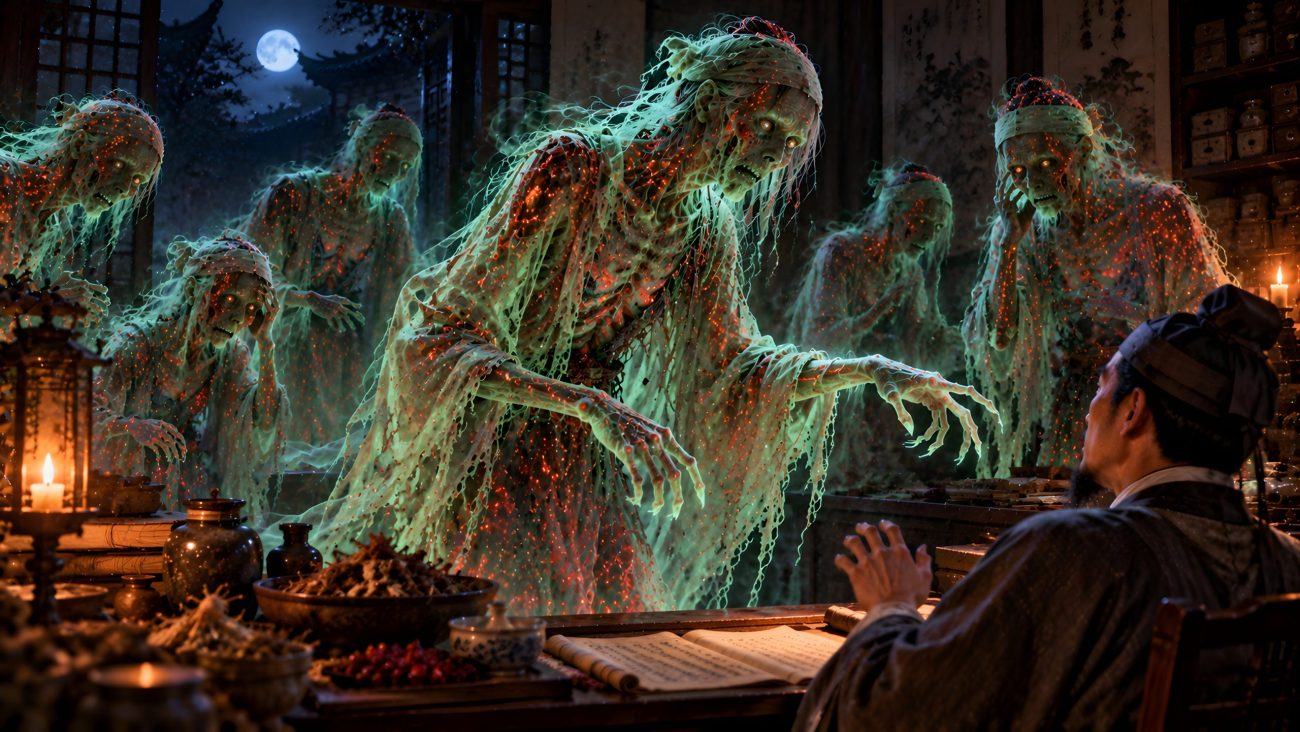
Bingui, the Sick Ghost, is a supernatural being associated with illness, ghostly patients, and encounters between the living and the dead. Tales about Bingui describe ghosts who suffer from ailments and seek medical treatment from human physicians. In some stories, a person renowned for his medical skill receives unexpected visitors at night, when ghosts arrive asking him to cure their illnesses. After receiving treatment, the spirits may feel deeply grateful for the physician’s kindness.

Other versions tell of physicians who treat ghosts but suffer misfortune as a result. One tale describes a person who is led by the ghosts of patients he had killed through mistaken treatment to the underworld, where he is beaten as punishment. These stories portray encounters with sick ghosts as dangerous, especially when a healer’s actions have caused suffering among the dead.

Stories of groups of sick ghosts seeking treatment also appear in Chinese supernatural literature. In these accounts, the boundary between medicine, death, and the underworld becomes blurred, as the living may be summoned to treat the dead or face consequences for their dealings with spirits.


Sources

“病鬼 (Bìngguǐ).” Chinese Wikipedia. Wikimedia Foundation. Accessed October 15, 2026. https://zh.wikipedia.org/wiki/%E7%97%85%E9%AC%BC


Baijia Ni

Tradition: Chinese Mythology
Alternative Names: Heavenly Ghost, Aoshani
Category: Ghost


The Myth

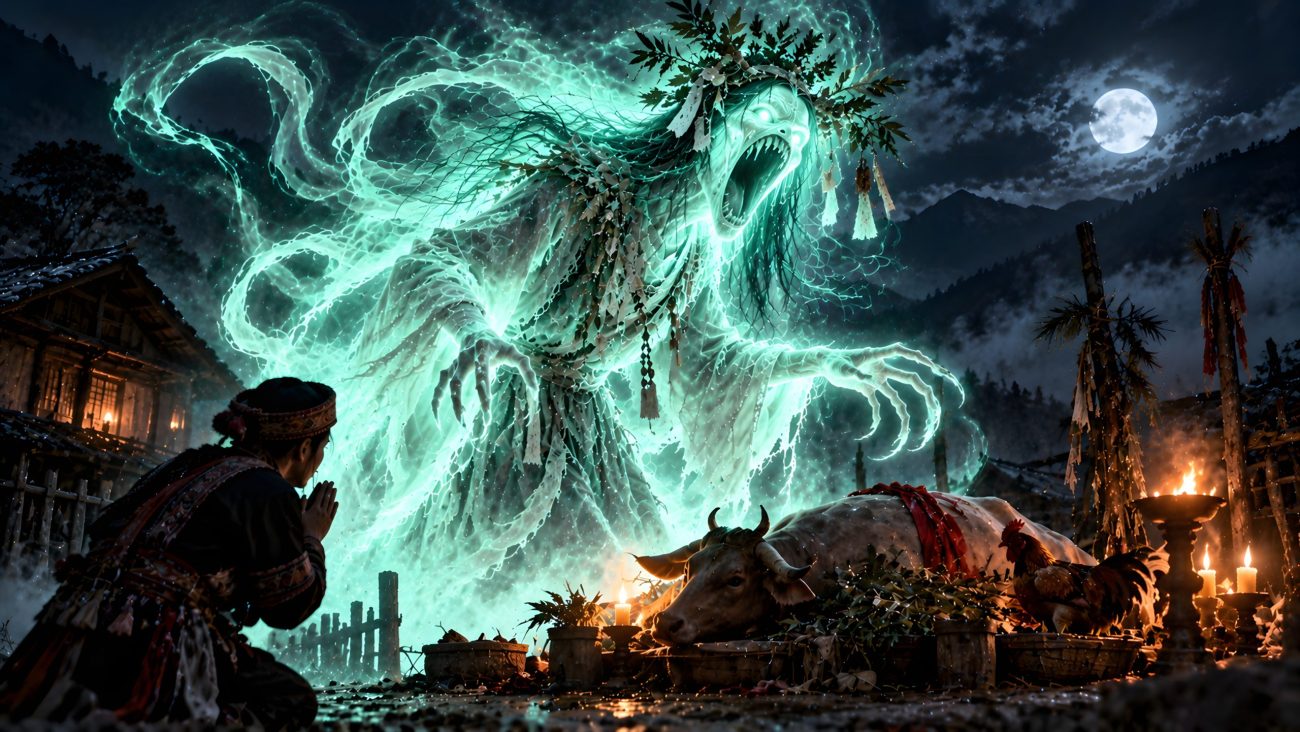
Baijia Ni, also known as the Heavenly Ghost or Aoshani, is a malevolent spirit in Lisu mythology that brings illness and suffering to the living. It can cause severe headaches, deafness, coughing, and other diseases. In the most serious cases, its influence can lead to death. It belongs to a wider group of supernatural beings known as Ni, the spirits feared by the Lisu people.

To appease Baijia Ni, people perform a sacrificial ritual involving the killing of a cow. A chicken must also be offered, with a rooster required when the sacrificed cow is a bull. The ritual includes specific plants and materials, such as poplar, pine, cypress, wild bamboo, and golden bamboo. These offerings are intended to address the spirit and protect people from the illnesses and misfortune it can bring.


Sources

“白加尼 (Báijiāní).” Chinese Wikipedia. Wikimedia Foundation. Accessed October 15, 2026. https://zh.wikipedia.org/wiki/%E7%99%BD%E5%8A%A0%E5%B0%BC