Nogitsune

Tradition: Japanese Mythology
Alternative Names: Yako, Yakan, 野狐, のぎつね
Category: Fox


The Myth

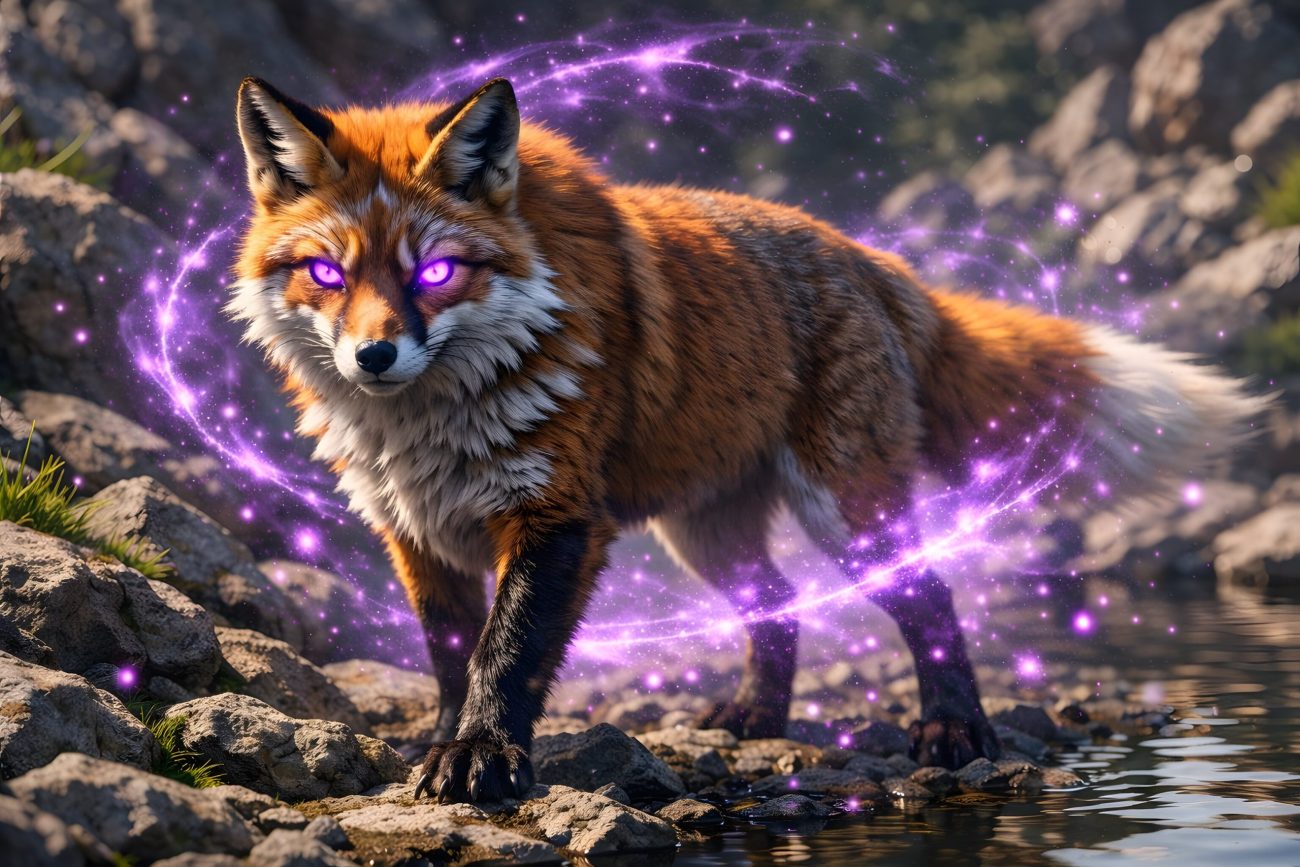
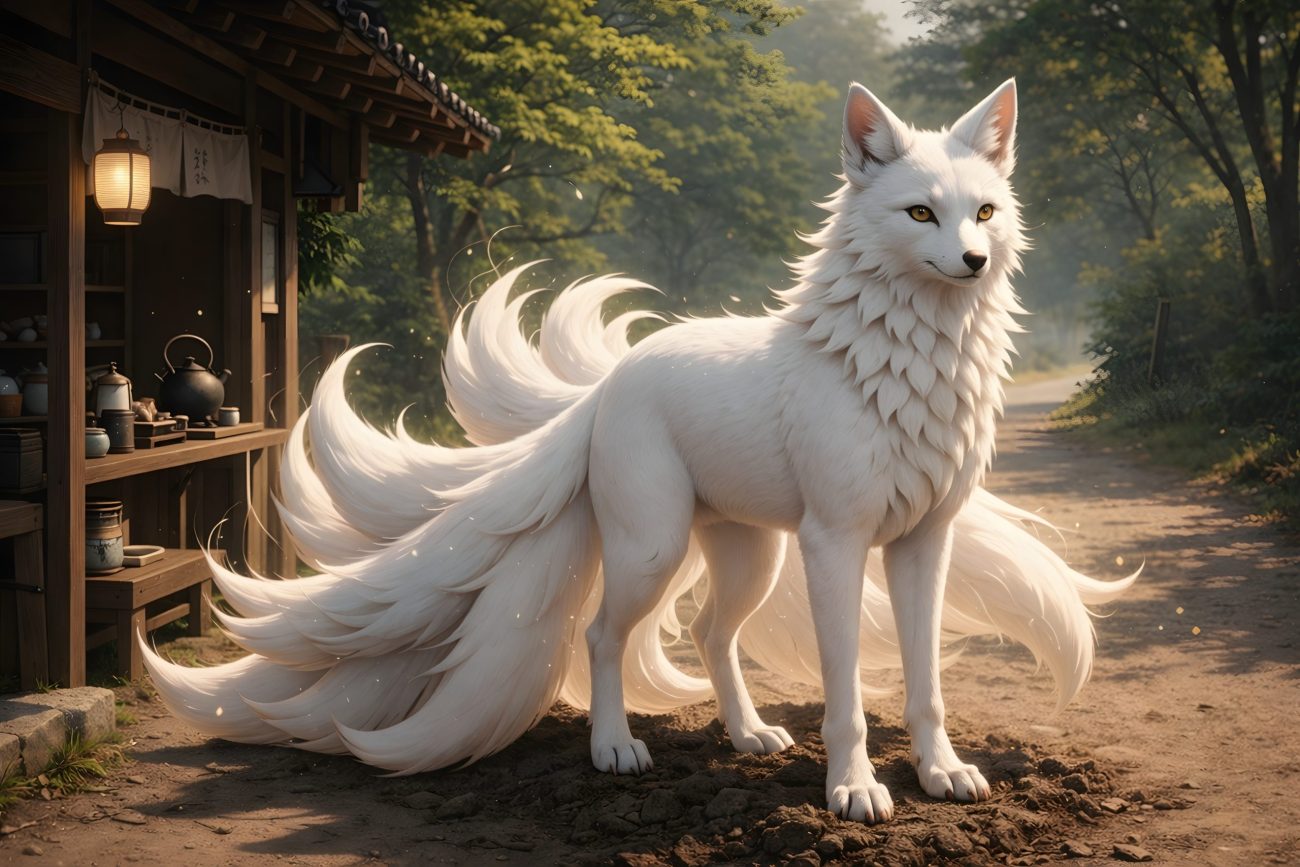
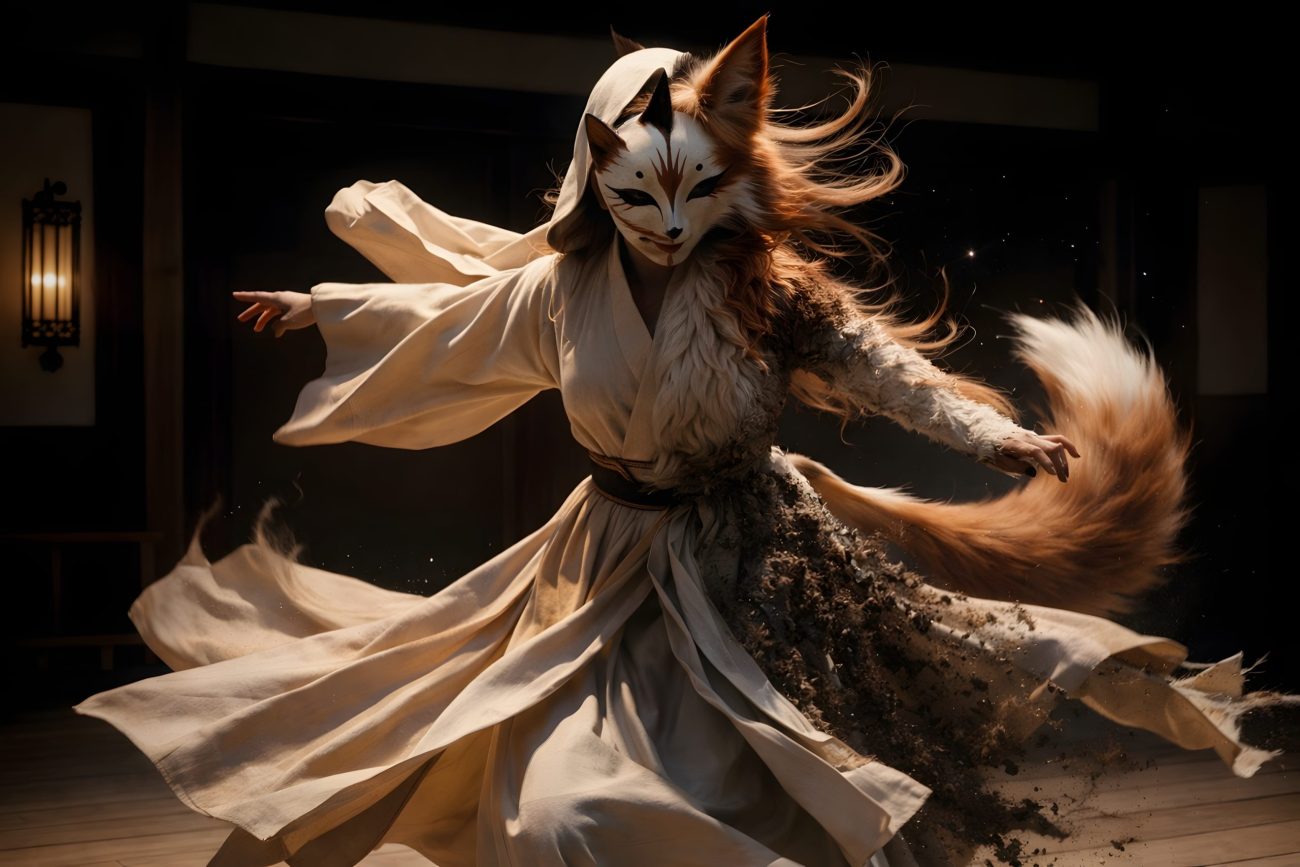
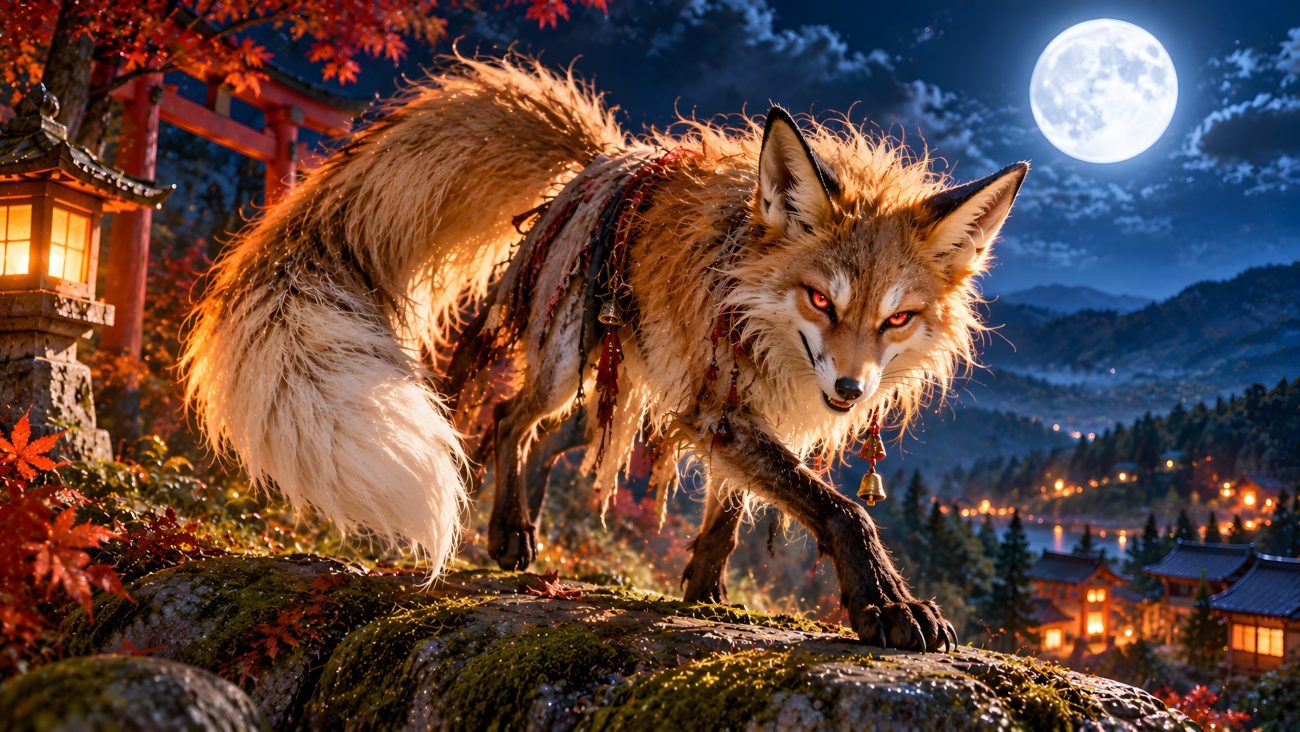
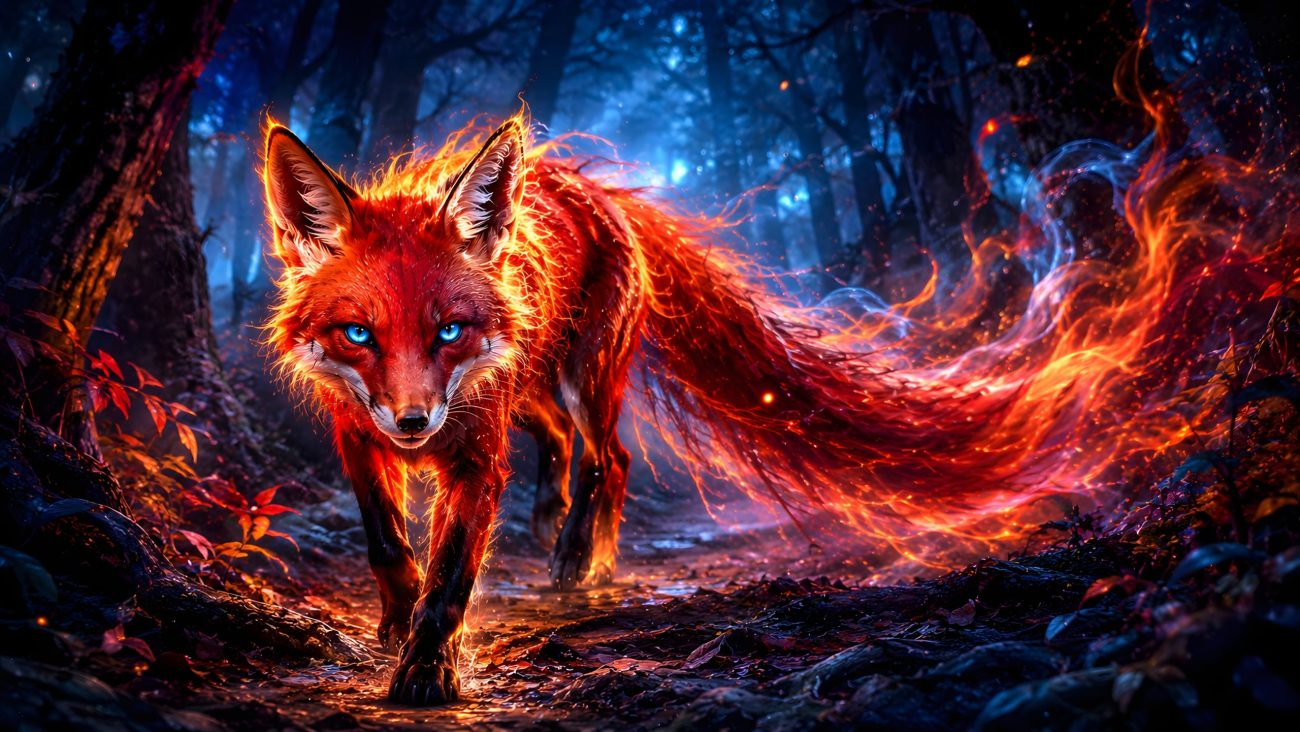
Nogitsune are wild fox spirits from Japanese mythology, known for their cunning, shapeshifting abilities, and mischievous nature. Unlike the sacred Zenko, which serve the gods, Nogitsune are low-ranking fox spirits that possess no divine soul and act independently of the deities. They inhabit forests, fields, and other wild places, usually hiding from humans during the day and venturing into inhabited areas at night. They have a keen sense of danger and fear bright light, bladed weapons, and dogs. A Nogitsune disguised as a human may accidentally reveal its true nature when startled by a barking dog.

These fox spirits are notorious thieves and tricksters. They sneak into houses to steal wax candles, lamp oil, lacquer, alcohol, and fried tofu. They can transform themselves into human beings to deceive unsuspecting people, frighten travellers, and steal from their victims. To change its shape, a Nogitsune typically requires a magical object to focus its powers, often a bone taken from a cow or horse. Although they generally avoid direct confrontation, they enjoy confusing humans and exploiting their foolishness.

Nogitsune are also associated with kitsunetsuki, the possession of humans by fox spirits. They may possess people to punish those they dislike or simply to amuse themselves, with women being particularly frequent targets. Some accounts claim that Nogitsune feed on a woman’s life force and blood. Nevertheless, these spirits are not always hostile. Stories tell of wild foxes repaying kindness, helping people who have treated them well, and even marrying men while disguised as beautiful women. Such romances often end tragically when the fox’s true identity is discovered. Nogitsune can also be asked to protect objects or perform favours, but they are unreliable servants, frequently forgetting their promises and wandering away.

The name Yakan has a connection to magical beasts described in Chinese Buddhist traditions. These creatures were originally associated with jackals, scavengers that frequented burial grounds and fed on carrion. Because jackals were unfamiliar in China, they were sometimes understood as animals resembling foxes, martens, or wild dogs. When Buddhist traditions reached Japan, Yakan became associated with foxes and eventually synonymous with Nogitsune. As a result, the sinister qualities attributed to these scavenging beasts became attached to Japan’s wild fox spirits, reinforcing their reputation as cunning and potentially dangerous supernatural tricksters.


Sources

“野狐 (Yakujō Yako).” 新版TYZ 妖怪図鑑 (New TYZ Yokai Encyclopedia). https://tyz-yokai.blog.jp/archives/1064835229.html
Zenko

Tradition: Japanese Mythology
Alternative Names: Reiko, Inari Kitsune, Osakitōge
Category: Fox


The Myth

Zenko are benevolent fox spirits from Japanese mythology who serve the gods and perform good deeds. They inhabit forests, fields, mountains, and shrines, appearing as sacred foxes associated with the divine. Unlike wild and malicious fox spirits, Zenko are virtuous beings who devote themselves to serving higher powers and maintaining their standing within the supernatural world. They are especially connected to Inari, the Shinto deity, and Dakini, a Buddhist goddess, acting as messengers between the gods and humanity.

Zenko possess a complex society that resembles human civilization, complete with families, tribes, social ranks, and distinctions awarded for faithful service. One classification divides them into five groups according to their fur color: Tenko, the heavenly foxes; Kinko, the golden foxes; Ginko, the silver foxes; Byakko, the white foxes; and Kokuko, the black foxes. Another classification organizes them into three ranks: Tenko, the heavenly foxes; Kūko, the sky foxes; and Kiko, the spirit foxes. Different shrines may also establish their own ranks and degrees, which Zenko can earn through their devoted service.

The defining characteristic of Zenko is their commitment to virtue and spiritual advancement. They strive to improve themselves and gain higher standing within fox society, unlike Yako, the wild foxes, who are associated with wicked and harmful behaviour. Although Zenko may occasionally play tricks or pranks on humans, they do not deliberately inflict serious harm or kill people. Their role is to assist the gods, carry messages between humans and the kami, and help maintain the connection between the mortal and divine worlds. Some Zenko may themselves be worshipped at shrines as sacred beings or regarded as manifestations of higher deities.


Sources

“Zenko.” Yokai.com: The Database of Japanese Folklore. https://yokai.com/zenko/


Kinko

Tradition: Japanese Mythology
Alternative Names: Kingitsune, 金狐, きんこ
Category: Fox


The Myth

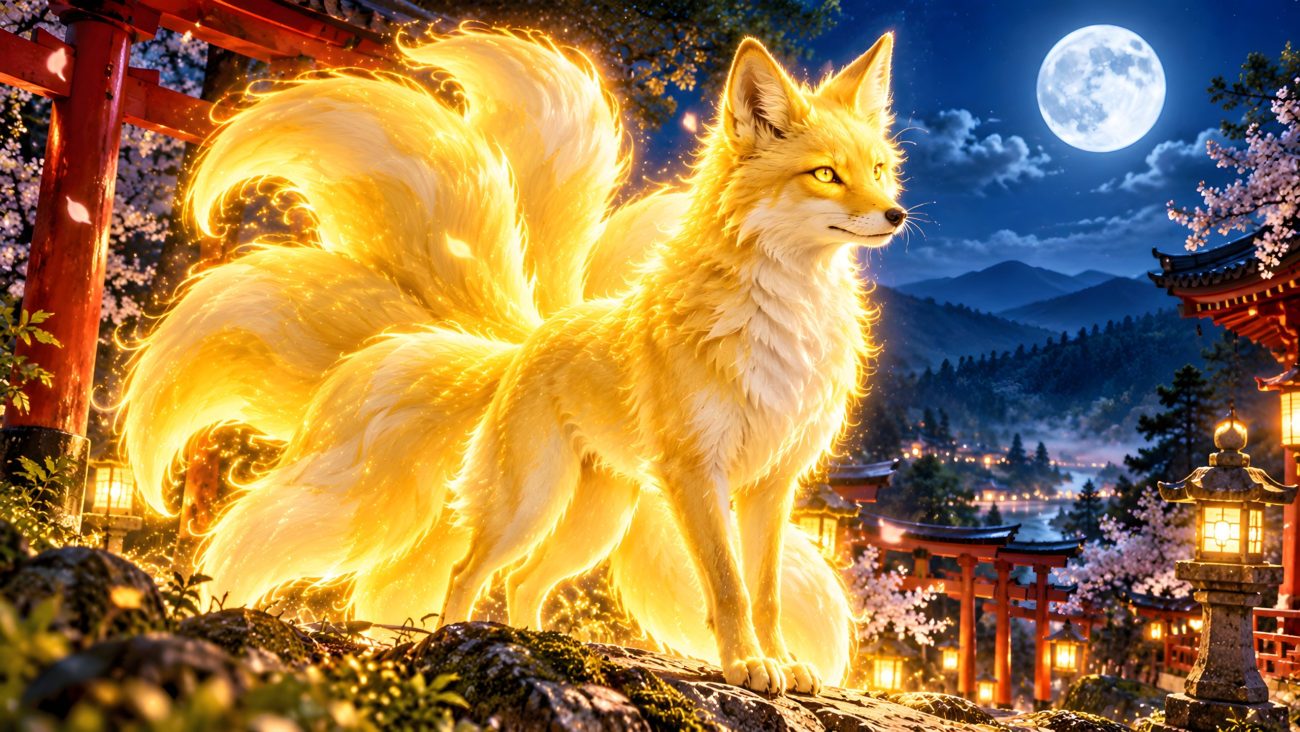
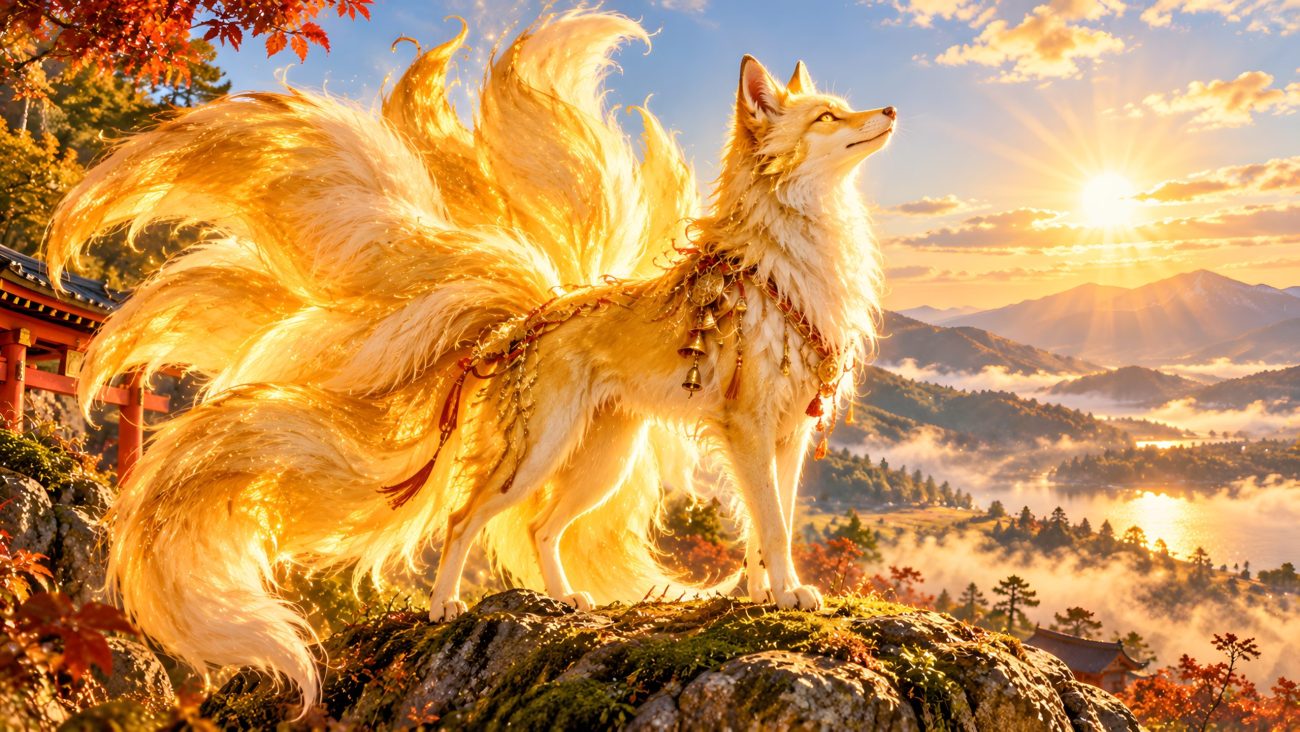
Kinko are sacred fox spirits from Japanese mythology, distinguished by their beautiful golden fur. They inhabit forests, fields, mountains, temples, and shrines, serving the goddess Dakini. As pure and holy supernatural beings, they are associated with Buddhism and act as divine foxes connected to the spiritual world.

Kinko symbolize the sun and are paired with their counterparts, the Ginko, who represent the moon. Together, these two kinds of fox spirits embody the complementary powers of the sun and moon and are believed to work alongside one another. Both belong to the five families of Zenko, the benevolent fox spirits of Japanese mythology.

Unlike the Byakko and Kokuko, which are associated with the god Inari and Shinto traditions, Kinko and Ginko are connected to the goddess Dakini and Buddhism. Their golden and silvery lunar associations distinguish them as sacred messengers and spiritual beings, representing the harmony between the sun and moon.


Sources

“Kinko (Gold).” Yokai.com: The Database of Japanese Folklore. https://yokai.com/kinko-gold/


Enchanted Fox

Tradition / Region: Slovakian Mythology
Alternative names: The Fox of the Enchanted Forest
Category: Fox


The Myth

Deep within a cursed forest said to trap and destroy all who entered it lived an enchanted fox with strange supernatural powers. The creature appeared as an ordinary fox at first glance, swift and elusive, always staying just beyond reach. Hunters chased it deeper and deeper into the woods until they lost their way forever.

The fox served an ancient crone who ruled the enchanted forest through dark magic. The forest itself deceived travelers, swallowing roads and covering the land in unnatural darkness even during the day. No one who entered was believed to return alive.

The fox could not directly harm innocent people. Instead, it lured victims into anger, frustration, or cursing. Once someone lost control of themselves, the enchantment gained power over them. Only then could the witch capture them.

In the tale, one of two identical brothers chased the fox during a hunt. The creature constantly stopped just long enough to be seen before darting away again, leading him deeper into the cursed woods. Exhausted and furious, the hunter finally cursed aloud. At that moment the fox vanished, and he found himself trapped in the enchanted forest beneath a great oak.

There an old witch appeared, pretending to be cold and helpless. She tricked the hunter into striking his magical animal companions with a wand, turning them into stone. Then she transformed the hunter himself into stone and dragged him into her hidden cave where many victims already lay imprisoned.

Later, the hunter’s younger brother entered the forest searching for him. The fox again tried to lure him into rage, but this brother remained calm and careful. When the witch attempted the same trick, he deceived her instead, saving his animals from enchantment. Using a golden wand hidden in the oak tree, he restored the petrified creatures and revived his brother.

With the witch destroyed, the curse over the forest finally broke. The dead yellow woods became green again, and the enchanted animals revealed themselves to be princes who had long been trapped under a magical curse.


Sources

Dobšinský, P. (2015). Traditional Slovak folktales (D. L. Cooper, Ed. & Trans.). Routledge. (Original work published 2001 by M.E. Sharpe).


Witch as Fox

Tradition / Region: Swiss Mythology
Alternate Names: Fox-Witch, Witch in Fox Form
Category: Fox, witch


The Myth

Hunters in the mountains often warned that not every fox in the snow was truly an animal.

Once, several hunters from Reutte went together to the Fuchspasse on the heights between Reutte and Heiterwang. They had neglected to bless their weapons before setting out. After a long search they finally saw a fox and fired at it. The shot struck true, and the fox fell, but it soon leapt up again and fled.

The hunters followed its trail in the snow. At first the prints were clearly those of a fox, but as they continued, the tracks grew larger. Soon they began to resemble human footprints, and at last they looked like the marks of slippers.

Realizing something was wrong, the hunters followed the trail until it led to a house in the upper part of Reutte. Inside lay an old woman in bed, wounded by a gunshot.

Another tale tells of a hunter from Betzigau who chased a fox for a long time through the fields. Each time he fired, the fox ignored the shots and even seemed to mock him. The hunter then suspected the creature was no ordinary animal. He took his rosary, cut the cord, and used one of its beads in place of a bullet.

When he fired again, the fox was struck at once. It fled, bleeding heavily, and the hunter followed the trail. The tracks led him to a house, where he learned that the woman of the house lay in bed with a badly injured foot.

From such stories people said that witches sometimes took the form of foxes to wander the night. And if a hunter wounded such a fox, the mark would be found later on the body of the witch who had worn its shape.


Sources

SAGEN.at. (n.d.). Die Garmina-Hexen. Retrieved March 1, 2026, from https://www.sagen.at/texte/sagen/schweiz/st_gallen/garmina_hexen.html.


Onchú

Tradition / Region: Irish Mythology
Alternate Names: Enfield, Alphyn
Category: Fox


The Myth

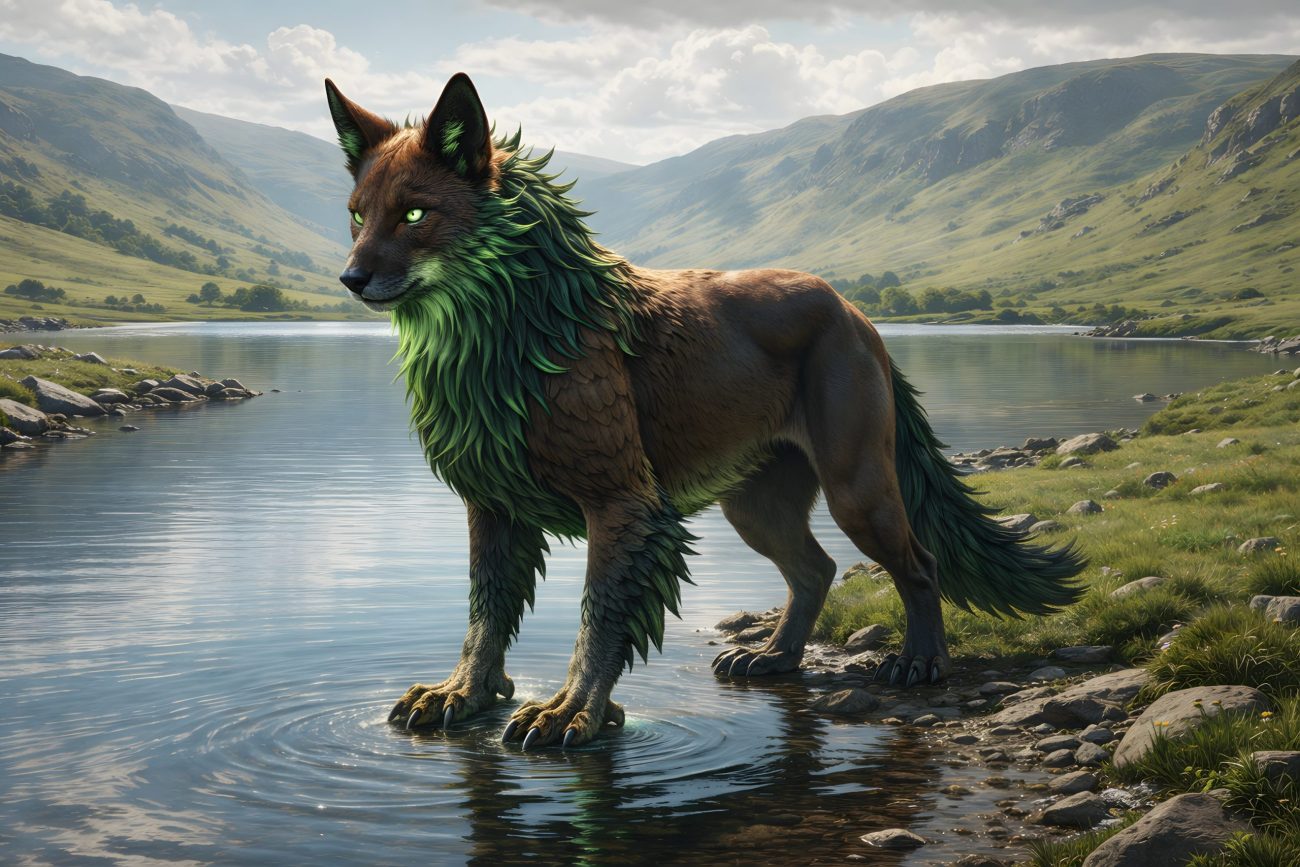
In old Irish tradition there is a strange creature called the Onchú, known in later times by the names Enfield or Alphyn. It is said to be a beast of mixed form, combining the traits of several animals into one powerful body.

Many describe it with the head of a fox, the chest of a hound, the talons or forelimbs of a bird of prey, and the hindquarters of a wolf or lion. It moves with the speed of a hunter and the strength of a great beast, carrying the cunning of the fox, the bravery of the hound, and the ferocity of the wolf.

Stories say the Onchú dwells near water or in lonely places where land meets lake or sea. In ancient times, one such creature lived between Loch Con and Loch Cuilinn and killed many men who crossed its path. A warrior named Muiredach pursued it into the water and slew it, earning a title for his bravery afterward.

Another tale links the creature to the battlefield. When the warrior Tadhg Mór Ua Ceallaigh fell at the battle of Clontarf, it is said that a strange beast rose from the sea and guarded his body, keeping it safe until his kin recovered it. Because of this, the creature later appeared on the family’s crest, remembered as a protector as well as a monster.

Thus the Onchú was remembered both as a fearsome beast of land and water and as a guardian spirit of warriors — a fox-headed creature whose form blended many animals, and whose presence could mean either danger or protection depending on the tale.


Sources

A Book of Creatures. (n.d.). Onchú. Retrieved March 1, 2026, from https://abookofcreatures.com/2017/04/03/onchu/.

Wikipedia contributors. (n.d.). Onchú. In Wikipedia. Retrieved March 1, 2026, from https://en.wikipedia.org/wiki/Onch%C3%BA.


Skoffín

Tradition / Region: Icelandic Mythology
Alternate Names: none firmly fixed; related beings include Skuggabaldur, Urdarköttur, and Modyrmi
Category: Fox


The Myth

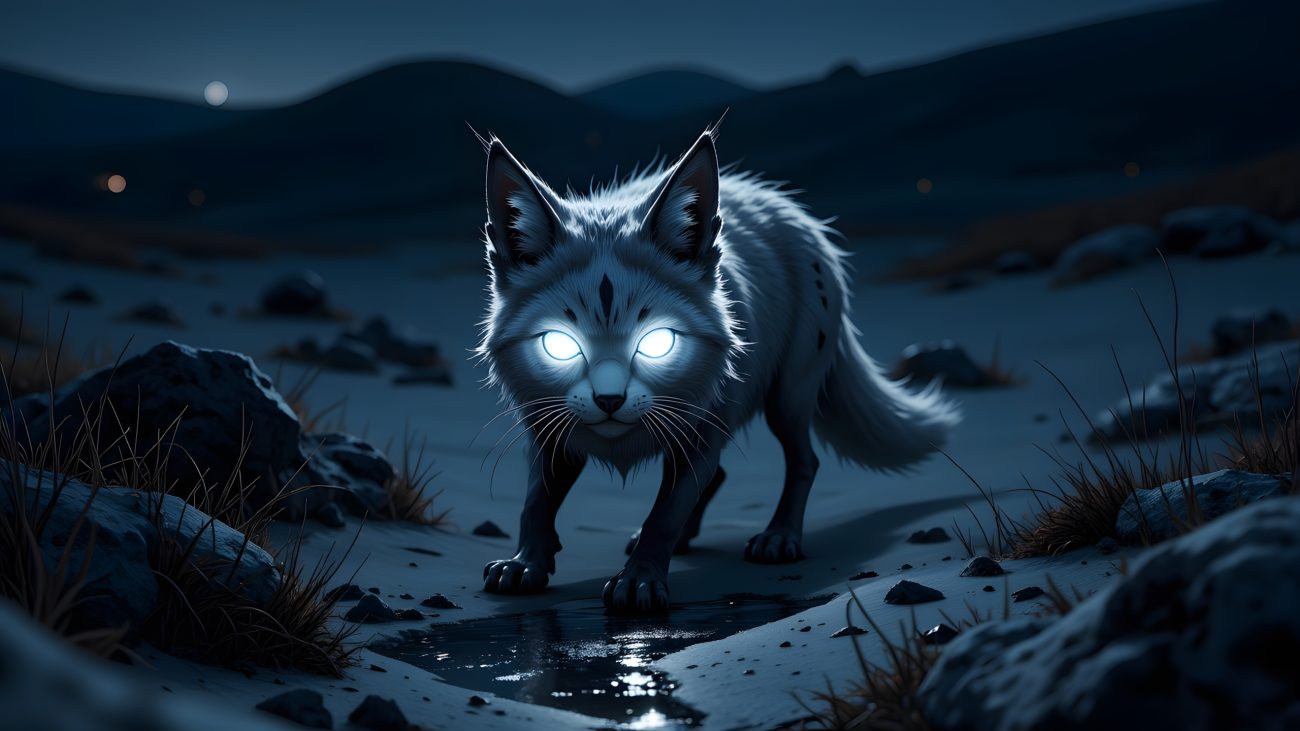
In Icelandic lore there is a dreadful creature called the Skoffín, born from the unnatural union of an Arctic fox and a house cat. It carries the cunning of the fox and the cruelty of the cat, and its very existence is considered a sign of evil.

The Skoffín resembles both parents at once. Its fur may change with the seasons like a fox’s coat, and some say its body bears bare patches of skin. Yet its most feared power lies in its eyes. The creature’s gaze is said to bring instant death to anything it looks upon, whether human or animal.

It is said that Skoffín kittens are born with their eyes already open. If they are not destroyed at once, they sink into the ground and vanish, only to emerge again after three years, fully grown and dangerous. Because of this, people once took great care to destroy such kittens before they could escape into the earth.

When grown, the Skoffín roams farms and wilderness alike, killing livestock and sometimes people simply by fixing its eyes upon them. The safest way to deal with one is from afar, with a bullet blessed by prayer or made of silver. Some stories say that even hardened sheep dung can serve as a missile against it.

Yet the creature is not invincible. If a Skoffín sees another of its kind, both die instantly from the meeting of their deadly gazes. Mirrors also defeat it, for if it sees its own reflection, it perishes at once. One tale tells of a Skoffín that perched upon a church roof, causing people to die as they stepped outside. A clever man raised a mirror toward it on a long pole, and the monster died the moment it saw itself.

The Skoffín belongs to a family of similar hybrid beasts — foxes, cats, and other creatures twisted into monstrous forms. But among them all, the Skoffín is remembered as one of the most feared: a creature whose eyes alone could end a life, and whose birth was taken as an omen of darkness in the land.


Sources

A Book of Creatures. (n.d.). Skoffín. Retrieved March 1, 2026, from https://abookofcreatures.com/2015/11/06/skoffin/.


Nguruvilu

Tradition / Region: Mapuche mythology, Chilean Mythology, Argentinian Mythology
Alternate Names: Guruvilu, Guirivilu, Ngarrafilu, Fox-Serpent
Category: Fox


The Myth

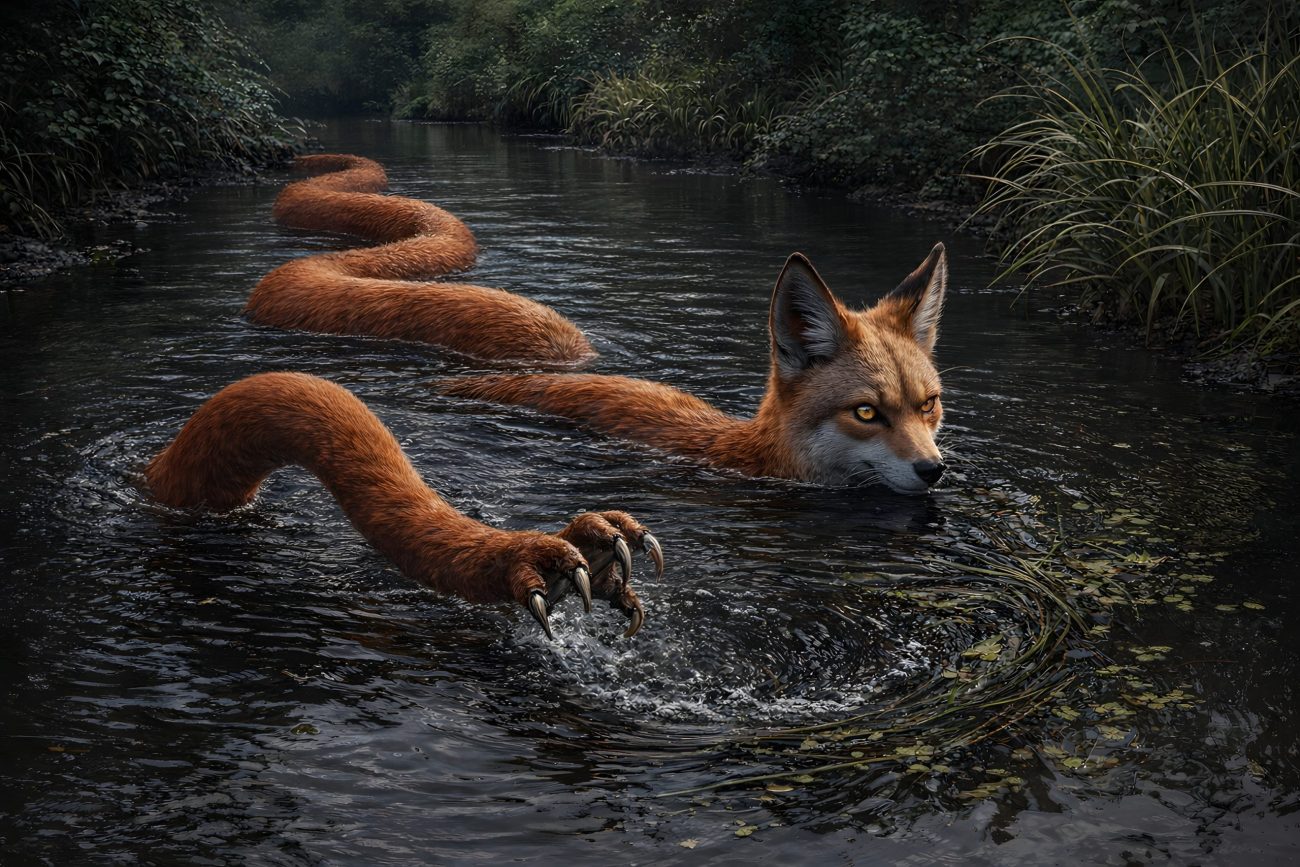
Among the Mapuche people there is a feared creature of the waters known as the Nguruvilu, whose name means “fox-serpent.” It is said to dwell in rivers, lakes, and dark channels where the current slows and deepens.

The creature is described as having the head of a fox or wildcat, with the body of a serpent or a small animal stretched long and thin. Its most terrible feature is its tail, long and powerful, tipped with claws. With this tail it snatches those who wade into the water, dragging them beneath the surface to drown or drink their blood.

People say the Nguruvilu waits in hidden places such as whirlpools, backwaters, or river crossings. Sometimes it makes the water seem shallow and safe, tempting travelers and herds to cross. But when they step into the river, the monster coils around them or their horses and pulls them down into the depths.

Stories tell of riders who scoffed at warnings and lost their animals in the river, barely escaping with their lives. Others say the creature grips people as though holding reins, controlling them like a rider controls a horse. Only with a sharp knife and great strength can one cut free from its grasp.

In some places it is said that the spirit of evil itself can take the form of the Nguruvilu. In others, it is believed the creature’s life rests in its tail, and that if the tail is cut off, the monster will die.

Because of this, people once avoided bathing or fording rivers where it was thought to dwell, choosing instead to cross by boat. Thus the Nguruvilu was remembered as a guardian of dangerous waters — a fox-headed serpent that waits beneath the surface, turning quiet rivers into places of fear.


Sources

Wikipedia contributors. (n.d.). Nguruvilu. In Wikipedia. Retrieved March 1, 2026, from https://en.wikipedia.org/wiki/Nguruvilu.


Takatsugu and Masaki

Tradition / Region: Japanese Mythology
Alternate Names: The White Fox of Uenohara
Category: Fox


The Myth

Long ago, after many wanderings, a fox came to live in Uenohara. She had lived for centuries, yet had gained little power. Though she had survived many dangers, she had not become a spirit fox, and she carried the burden of having once taken a human life, even if it had been an enemy.

Thinking on her fate, she resolved to change. Instead of seeking power through trickery, she decided to do good for the world and for people. Taking the form of an old woman, she opened a small tea shop by the roadside.

There she welcomed travelers passing through the region, giving them warmth in winter and rest from the summer heat. The money she earned she did not keep for herself. She gave it to orphaned children, and whenever she encountered people in despair, she tried to save them.

She persuaded lovers who planned to die together to abandon their decision. She fed and clothed those driven to desperation by poverty and gave shelter to the hopeless. Year after year she continued her work, quietly helping anyone who came to her door.

In time, the number of lives she saved was said to have reached nine hundred and ninety-nine.

At last, when she reached the age of one thousand years, her body changed. Her fur turned pure white, and her tail split and multiplied until she bore nine. By the virtue she had gathered through kindness, the fox finally rose to the rank of a great spirit.

Thus she was remembered as the fox of Uenohara, who gained power not through cunning, but through compassion, and whose many good deeds transformed her into a nine-tailed white fox of legend.


Sources

Tyz-Yokai Blog. (n.d.). Takatsugu and Masaki. Retrieved March 1, 2026, from https://tyz-yokai.blog.jp/archives/1064835229.html.


Obana Kitsune

Tradition / Region: Japanese Mythology
Alternate Names: Obanagitsune
Category: Fox


The Myth

In the world of Edo-period theatre there was a fox known as Obana Kitsune, remembered from a dance performed in the play Willow Dolls and Birds Singing.

In this performance, a nun appears on stage, facing forward in calm devotion. Yet when she turns, her face changes, and with the aid of a mask she becomes a fox. Spinning in dance, she reveals her true nature before vanishing as suddenly as she appeared.

This fox was said to be Obana Kitsune, a spirit born from stories of foxes who disguise themselves as monks or nuns to move among humans. Like the foxes of older tales, she takes on holy robes and human form, only to reveal her identity in a sudden transformation.

Her story echoes older performances in which animal spirits disguised as religious figures try to persuade hunters to spare their kind, or escape danger through clever tricks. When her disguise fails, the fox does not fight. Instead she dances, spins, and slips away, leaving only the memory of movement behind.

Thus Obana Kitsune was remembered as a fox of the stage — a spirit who appeared in the form of a nun, revealed herself through dance, and vanished like a performance fading into silence.


Sources

Tyz-Yokai Blog. (n.d.). Obana Kitsune. Retrieved March 1, 2026, from https://tyz-yokai.blog.jp/archives/1058717512.html.