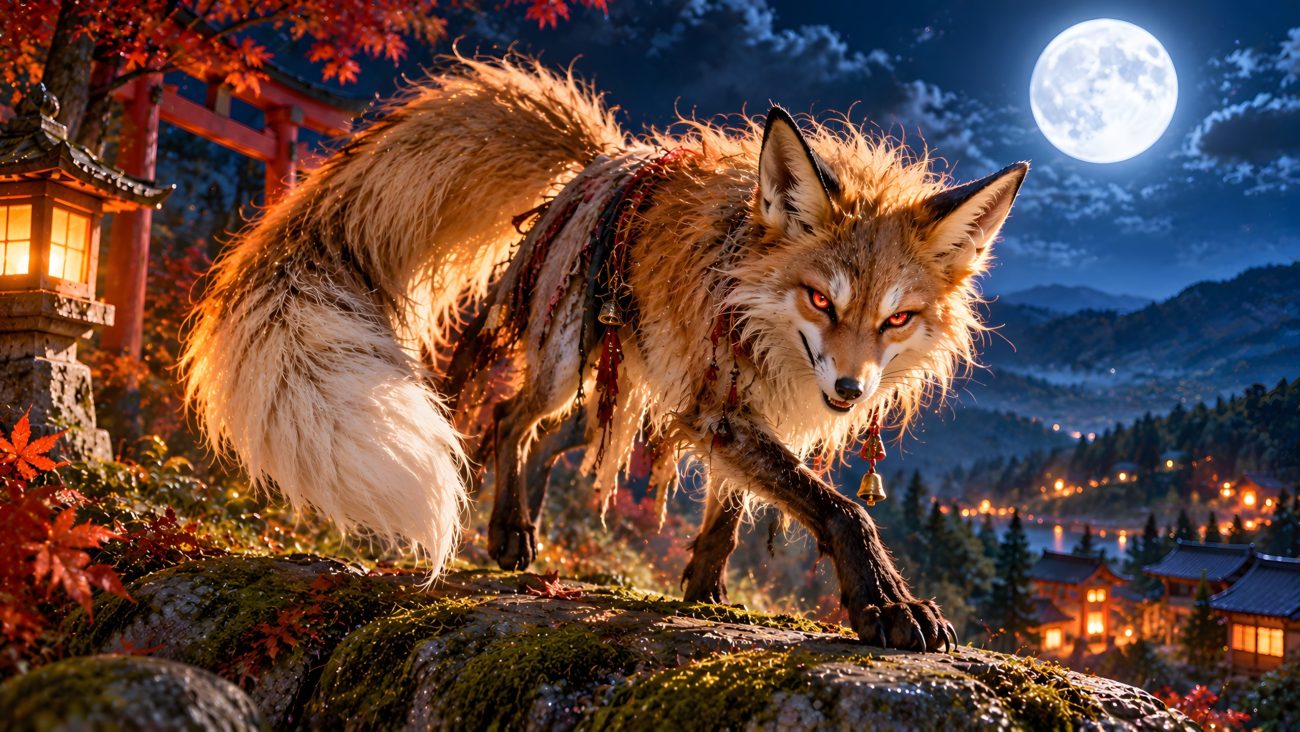
Tradition: Japanese Mythology
Alternative Names: Yako, Yakan, 野狐, のぎつね
Category: Fox
The Myth
Nogitsune are wild fox spirits from Japanese mythology, known for their cunning, shapeshifting abilities, and mischievous nature. Unlike the sacred Zenko, which serve the gods, Nogitsune are low-ranking fox spirits that possess no divine soul and act independently of the deities. They inhabit forests, fields, and other wild places, usually hiding from humans during the day and venturing into inhabited areas at night. They have a keen sense of danger and fear bright light, bladed weapons, and dogs. A Nogitsune disguised as a human may accidentally reveal its true nature when startled by a barking dog.
These fox spirits are notorious thieves and tricksters. They sneak into houses to steal wax candles, lamp oil, lacquer, alcohol, and fried tofu. They can transform themselves into human beings to deceive unsuspecting people, frighten travellers, and steal from their victims. To change its shape, a Nogitsune typically requires a magical object to focus its powers, often a bone taken from a cow or horse. Although they generally avoid direct confrontation, they enjoy confusing humans and exploiting their foolishness.
Nogitsune are also associated with kitsunetsuki, the possession of humans by fox spirits. They may possess people to punish those they dislike or simply to amuse themselves, with women being particularly frequent targets. Some accounts claim that Nogitsune feed on a woman’s life force and blood. Nevertheless, these spirits are not always hostile. Stories tell of wild foxes repaying kindness, helping people who have treated them well, and even marrying men while disguised as beautiful women. Such romances often end tragically when the fox’s true identity is discovered. Nogitsune can also be asked to protect objects or perform favours, but they are unreliable servants, frequently forgetting their promises and wandering away.
The name Yakan has a connection to magical beasts described in Chinese Buddhist traditions. These creatures were originally associated with jackals, scavengers that frequented burial grounds and fed on carrion. Because jackals were unfamiliar in China, they were sometimes understood as animals resembling foxes, martens, or wild dogs. When Buddhist traditions reached Japan, Yakan became associated with foxes and eventually synonymous with Nogitsune. As a result, the sinister qualities attributed to these scavenging beasts became attached to Japan’s wild fox spirits, reinforcing their reputation as cunning and potentially dangerous supernatural tricksters.
Sources
“野狐 (Yakujō Yako).” 新版TYZ 妖怪図鑑 (New TYZ Yokai Encyclopedia). https://tyz-yokai.blog.jp/archives/1064835229.html