Senzanri

Tradition / Region: Japanese Mythology
Alternate Names: Thousand Mountain Carp
Category: Fish, Mountain dweller, Carp


The Myth

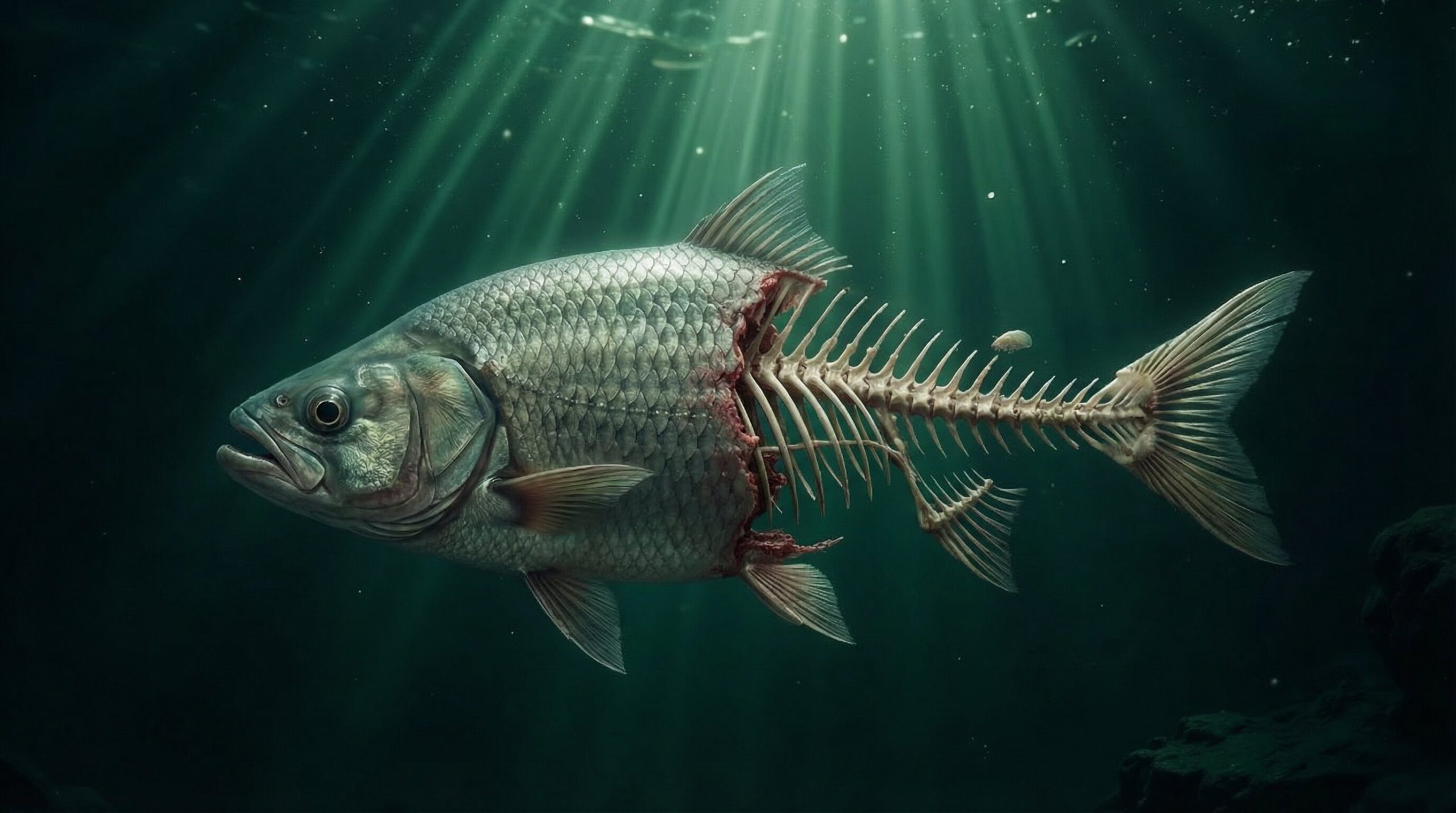
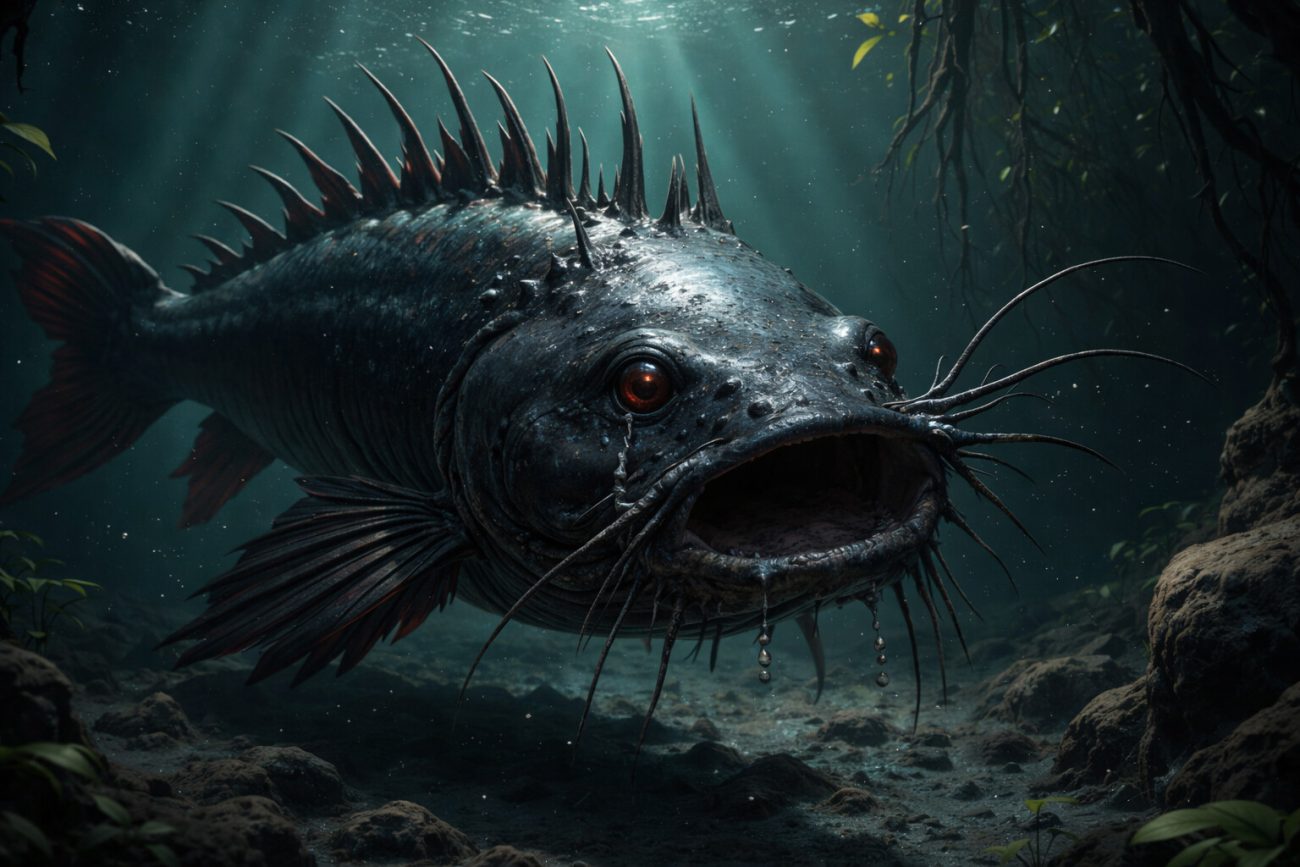
The Senzanri is a strange and transformative carp, said to be capable of leaving the water and becoming a creature of the mountains.

According to the story, a boy named Torakichi spoke of this being from his own experience. He said that when certain substances were mixed into water or shaped like fish and placed in old ponds, crucian carp would appear in great numbers. These carp were not ordinary fish. Among them were those that would later become Senzanri, carp that transform and give birth after leaving the water.

It is commonly said that carp climb waterfalls and become dragons, but Torakichi explained that this belief misunderstands what truly happens. The carp do not become dragons. Instead, using the force they gather while leaping up waterfalls, they launch themselves into the mountains. There, far from rivers and ponds, the transformation begins.

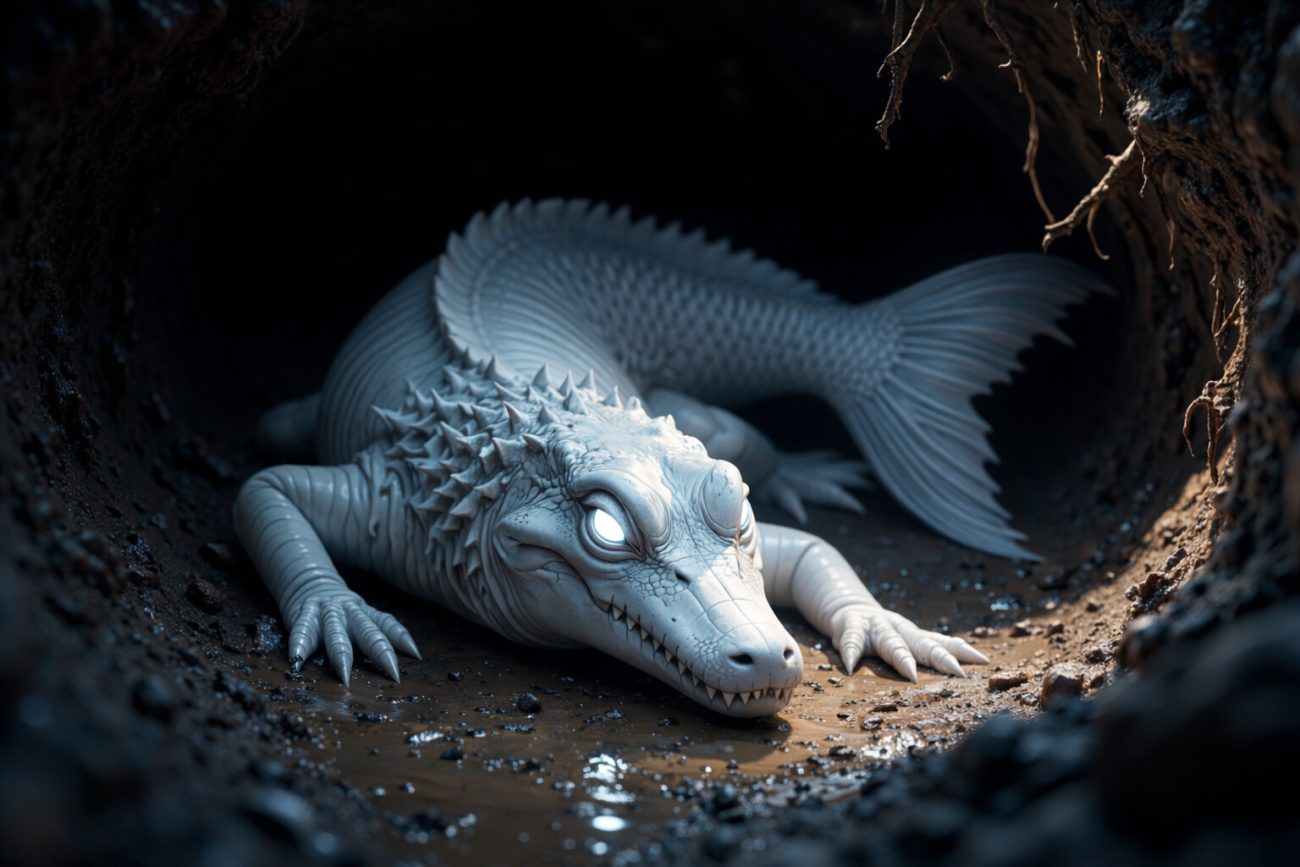
Once on land, the carp rolls about in grassy places. As time passes, its body becomes rounder and harder, forming a shell. Hair grows between its scales. Its fins change into four limbs, and the creature begins to crawl like a land animal. Though its shape changes, its inner body remains that of a carp.

In this form, the Senzanri lives in mountain pools, where it gives birth to offspring known as mountain-burrowing carp. These young inherit the strange nature of their parent, belonging neither fully to water nor to land.

The Senzanri is thus a creature that bridges worlds: born as a fish, transformed by the mountains, and living a life hidden from ordinary human sight.


Gallery


Sources

TYZ-Yokai Blog contributors. (n.d.). 雪女 (Yuki-onna). In TYZ-Yokai Blog, from https://tyz-yokai.blog.jp/archives/1010654386.html


Interpretive Lenses

Religious Readings
  • Christian Ascetic Deep Dive
Philosophical Readings
  • Nietzschean Deep Dive
Psychological Readings
  • Jungian Deep Dive
Esoteric Deep Dive
  • Hermetic Deep Dive
Political / Social Readings
  • Marxist Deep Dive
Other
  • How to Invite The Senzanri

Ran Yi Fish

Tradition / Region: Chinese mythology
Category: Fish, Mountain dweller


The Myth

The Ran Yi fish lives in the Wan River, which flows from Yingdi Mountain. This mountain is unlike any other: its slopes are thick with lacquer trees, metal ores and jade lie at its base, and all the birds and beasts that dwell there are said to be entirely white. From this place the Wan River rises and runs northward into Lingyang Marsh, and within its waters the Ran Yi fish can be found.

The Ran Yi fish has a fish’s body, but its head is that of a snake, and from its sides grow six legs. Its eyes resemble the ears of a horse, giving it a strange and unsettling appearance. Though it moves through water like a fish, its form marks it as something unnatural and powerful.

People believe that eating the Ran Yi fish brings protection. Those who consume it are said to be free from nightmares, untouched by disturbing dreams, and shielded from evil influences. Because of this, the Ran Yi fish is regarded not as a threat, but as a creature of warding and spiritual defense.

It remains hidden in the waters of the Wan River, tied to the strange mountain where white creatures roam and precious substances lie buried, a guardian presence within an uncanny landscape.


Gallery


Sources

Wikipedia contributors. (n.d.). 冷遺魚. In Wikipedia, The Free Encyclopedia, from https://zh.wikipedia.org/wiki/%E5%86%89%E9%81%97%E9%B1%BC


Interpretive Lenses

Religious Readings
  • Christian Ascetic Deep Dive
Philosophical Readings
  • Nietzschean Deep Dive
Psychological Readings
  • Jungian Deep Dive
Esoteric Deep Dive
  • Hermetic Deep Dive
Political / Social Readings
  • Marxist Deep Dive
Other
  • How to Invite The Ran Yi Fish

Wangyu Fish

Tradition / Region: Chinese mythology
Alternate Names: Wuyu Kuai, Wu Wang Kuaiyu, Kuaican
Category: Fish


The Myth

The Wangyu fish is a strange and sorrowful creature, known for having only half a body. Legend says that long ago, during the time of the Kingdom of Wu, a king—most often named King Helü, though some say it was King Sun Li—was eating a fish and left it unfinished. Displeased or careless, he cast the remaining half into the water. From this act, the fish did not die, but instead transformed, becoming the Wangyu fish, forever incomplete.

Because of this origin, the Wangyu swims through the water as a half-bodied being, a living reminder of abandonment and loss. It is said to dwell in city ponds and enclosed waters rather than open rivers or seas.

One tale tells of a Wangyu fish living in a pond within the eastern city. When the pond burst and the water drained away, the fish was left stranded and close to death, unable to escape on its own. A person nearby held up a mirror, allowing the fish to see its own reflection in the water’s surface. Mistaking its reflection for another of its kind, the Wangyu believed it had found a companion. Encouraged by the sight of what it thought was its missing half, the fish gathered its strength and leapt away, escaping side by side with its reflected image.

Thus, the Wangyu fish survives not through strength, but through illusion—forever seeking wholeness, even if only in reflection.


Gallery


Sources

Wikipedia contributors. (n.d.). 王鬱魚. In Wikipedia, The Free Encyclopedia, from https://zh.wikipedia.org/wiki/%E7%8E%8B%E9%A6%80%E9%B1%BC


Interpretive Lenses

Religious Readings
  • Christian Ascetic Deep Dive
Philosophical Readings
  • Nietzschean Deep Dive
Psychological Readings
  • Jungian Deep Dive
Esoteric Deep Dive
  • Hermetic Deep Dive
Political / Social Readings
  • Marxist Deep Dive
Other
  • How to Invite The Wangyu Fish

Lingyu

Tradition / Region: Chinese mythology
Category: Fish


The Myth

Lingyu is a strange fish of the sea, known for its human-like face and barbels shaped like hands. Its body moves through the water like an ordinary fish, yet its features mark it as something far from natural.

Lingyu lives in the sea near Lieguye Mountain, appearing and disappearing among the waves. When it emerges, the sea does not remain calm. It is said that whenever Lingyu appears, violent winds rise and storms suddenly break out, churning the water and darkening the sky.

Because of this, Lingyu is feared as an omen of chaos and upheaval. Sailors and coastal people believe its presence signals danger, and its human face is seen as a warning rather than a comfort.

Lingyu does not attack ships or people directly. Instead, it moves the sea itself, bringing sudden storms as it travels, leaving destruction in its wake before vanishing again into the depths.


Gallery


Sources

Wikipedia contributors. (n.d.). 陸魚. In Wikipedia, The Free Encyclopedia, from https://zh.wikipedia.org/wiki/%E9%99%B5%E9%B1%BC


Interpretive Lenses

Religious Readings
  • Christian Ascetic Deep Dive
Philosophical Readings
  • Nietzschean Deep Dive
Psychological Readings
  • Jungian Deep Dive
Esoteric Deep Dive
  • Hermetic Deep Dive
Political / Social Readings
  • Marxist Deep Dive
Other
  • How to Invite The Lingyu

Dan Fish

Tradition / Region: Chinese mythology
Category: Fish


The Myth

The Dan fish is a legendary fish surrounded by a red, glowing aura. When it appears, its body shines as if lit by fire, and the light rises above the water. It is said to live in deep pools and only comes close to the surface at certain times.

According to belief, if a person cuts the Dan fish and smears its blood on their feet, they gain the power to walk across the surface of water. Because of this ability, the fish is regarded as extraordinary and dangerous to approach.

In some stories, people who see the glowing fish are filled with awe and fear. They believe it is not an ordinary creature, and many refuse to touch or eat it, considering it a sacred or divine being.


Gallery


Sources

Bestiary.us contributors. (n.d.). Eterari. In Bestiary.us, from https://www.bestiary.us/eterari/


Interpretive Lenses

Religious Readings
  • Christian Ascetic Deep Dive
Philosophical Readings
  • Nietzschean Deep Dive
Psychological Readings
  • Jungian Deep Dive
Esoteric Deep Dive
  • Hermetic Deep Dive
Political / Social Readings
  • Marxist Deep Dive
Other
  • How to Invite The Dan Fish

Red Carp

Tradition / Region: Chinese mythology
Category: Fish, Carp


The Myth

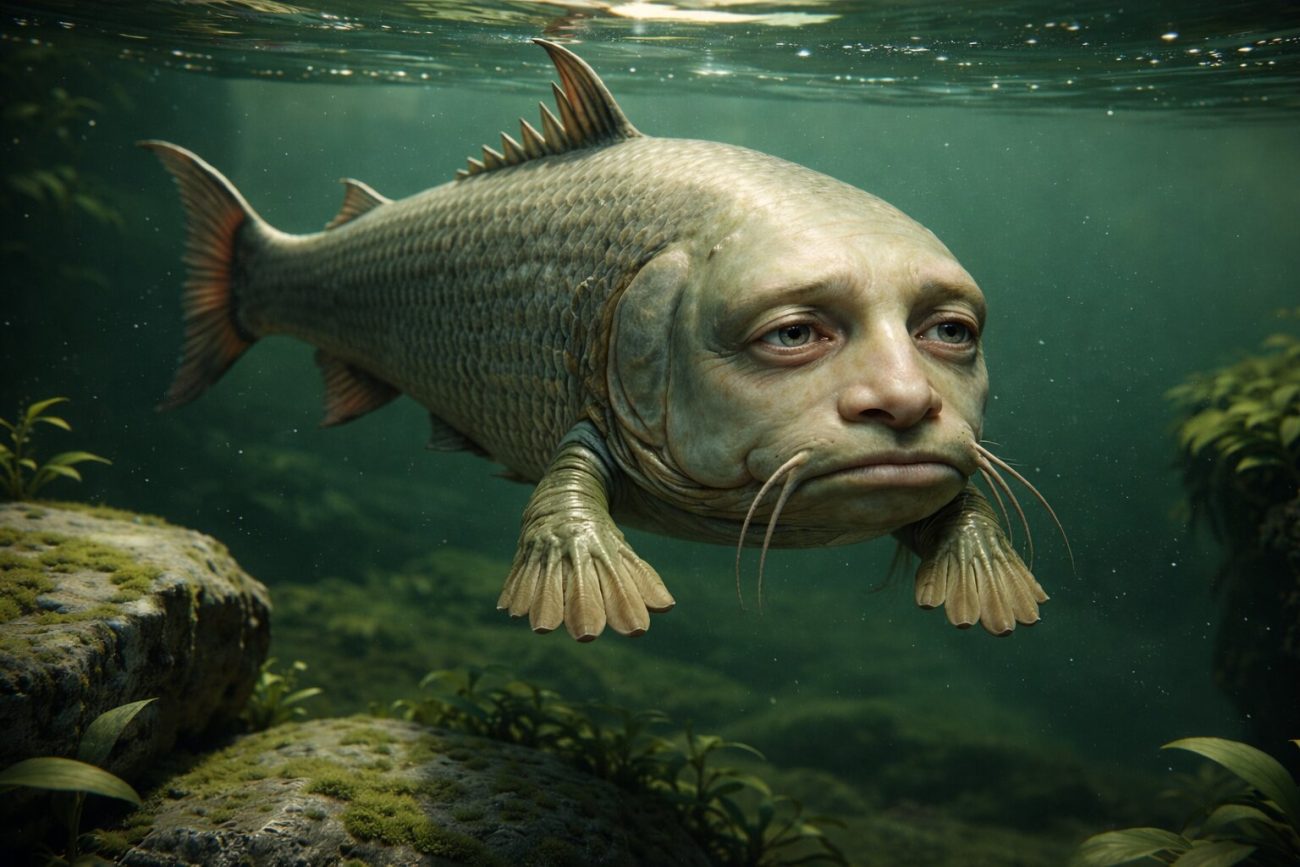
The Red Carp is a strange and unusual fish described in Chinese legend. It has the body of a fish but the face of a human, making it both familiar and unsettling in appearance. The creature is said to live in the Winged Marsh, a remote and mysterious wetland.

When the Red Carp cries out, its voice is said to resemble the call of a mandarin duck. Despite its uncanny form, the fish is associated with healing rather than danger. According to tradition, eating the Red Carp can cure scabies.

The Red Carp is recorded in the Classic of Mountains and Seas, specifically in the Southern Mountains Classic, where it appears as one of the many strange beings inhabiting distant and mythical landscapes.


Gallery


Sources

Wikipedia contributors. (n.d.). 赤鱬. In Wikipedia, The Free Encyclopedia, from https://zh.wikipedia.org/wiki/%E8%B5%A4%E9%B1%AC


Interpretive Lenses

Religious Readings
  • Christian Ascetic Deep Dive
Philosophical Readings
  • Nietzschean Deep Dive
Psychological Readings
  • Jungian Deep Dive
Esoteric Deep Dive
  • Hermetic Deep Dive
Political / Social Readings
  • Marxist Deep Dive
Other
  • How to Invite The Red Carp

Abaia

Tradition / Region: Melanesian Mythology
Alternate Names:
Category: Eel, Fish, Lake Dweller


The Myth

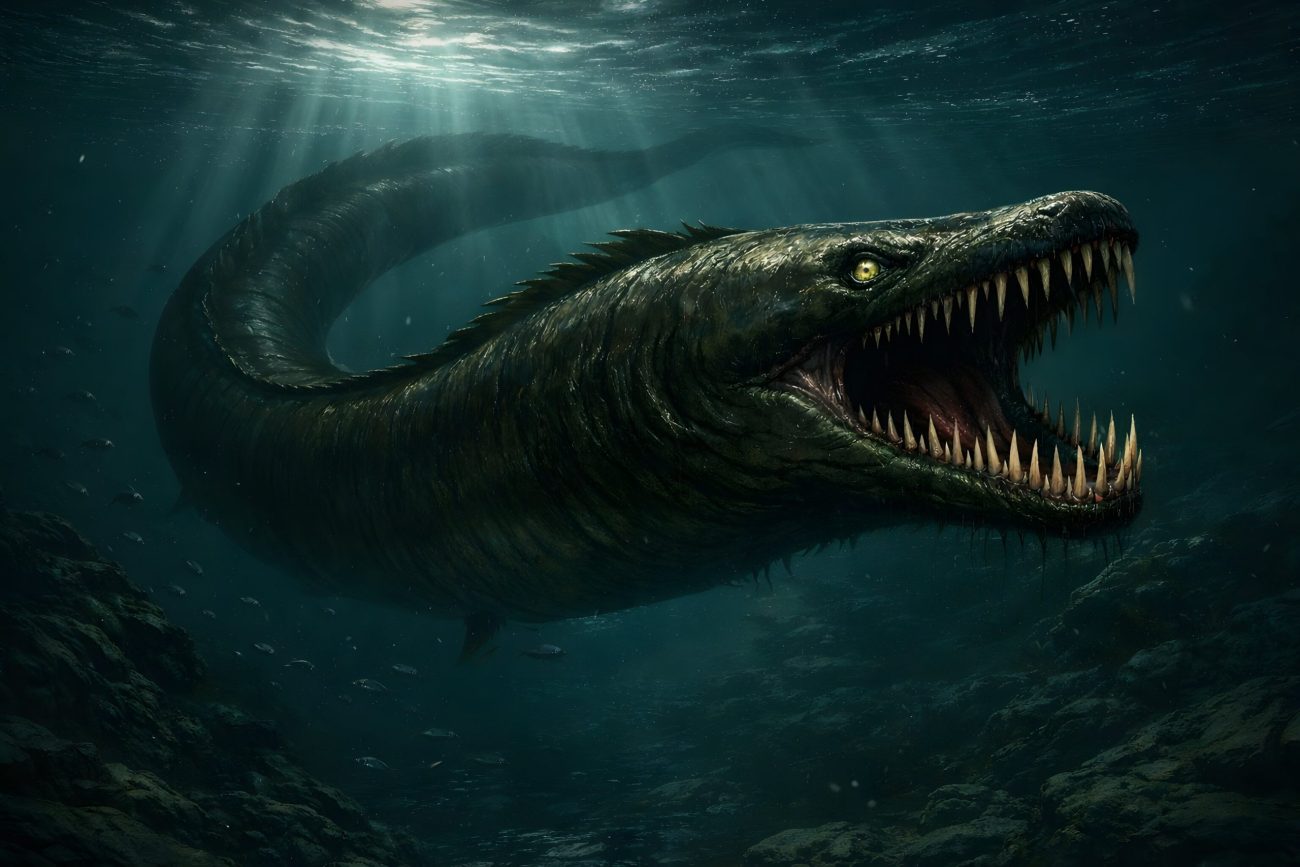
There is a deep lake in British New Guinea, rich with fish, and at its bottom dwells Abaia, a powerful and magical eel. Abaia is ancient and territorial, and like many great serpents and eels of Melanesian belief, it is bound to the forces of weather, storms, and floods. It does not tolerate disturbance.

One day, a man discovered Abaia’s lake and found that the fish within it were plentiful beyond measure. He caught many and returned to his village, telling the others of the endless bounty. Soon the people came together to the lake, casting their nets and hauling out fish in great numbers. In their greed, they took without restraint.

Among them, one woman caught Abaia himself in her net. The great eel struggled and escaped, slipping back into the depths of the lake.

That night, Abaia took revenge. Rain fell without pause. The lake swelled and overflowed its banks, and the floodwaters rose until the entire village was drowned. Men, women, and children were swept away by the storm.

Only one old woman survived. She had refused to eat the fish taken from the lake and climbed into a tree as the waters rose. When the flood receded, she alone remained, spared because she had not partaken in what belonged to Abaia.

Thus the people learned that the gifts of the water are not without guardians, and that greed awakens the wrath of those who dwell beneath the surface.


Gallery


Sources

Dixon, R. B. (1916) The Mythology of All Races v. IX: Oceanic. Marshall Jones Company, Boston.

A Book of Creatures contributors. (n.d.). Abaia. In A Book of Creatures, from https://abookofcreatures.com/2019/01/04/abaia/


Interpretive Lenses

Religious Readings
  • Christian Ascetic Deep Dive
Philosophical Readings
  • Nietzschean Deep Dive
Psychological Readings
  • Jungian Deep Dive
Esoteric Deep Dive
  • Hermetic Deep Dive
Political / Social Readings
  • Marxist Deep Dive
Other
  • How to Invite The Abaia

Gabora

Tradition / Region: Papua New Guinea Mythology
Alternate Names: The Saw-Fish of Madiri
Category: Fish, Sawfish


The Myth

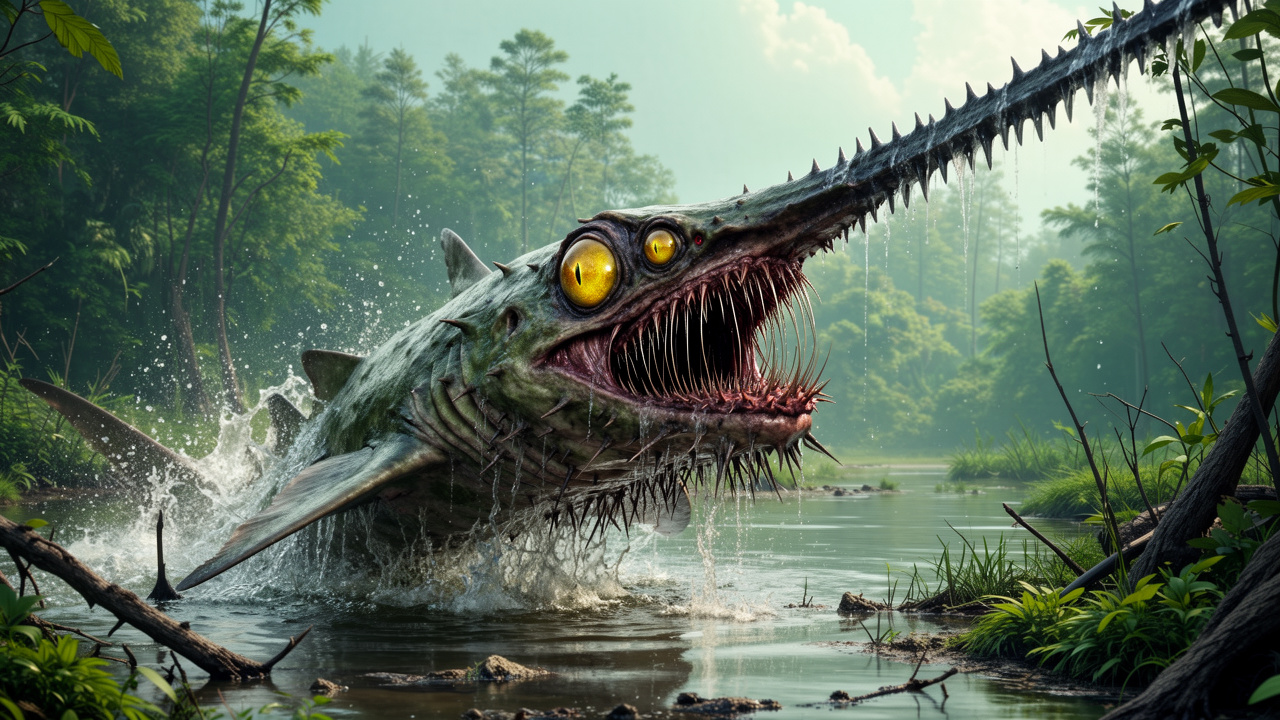
Long ago, in the bushland along the coast of Kiwai, between Iasa and Kubira, there was an open stretch of land that had been cleared in a terrible way. This clearing was made by Gabora, a gigantic saw-fish that lived in a nearby swamp.

One day, a woman was fishing in the swamp using sádi, a poisonous substance placed in the water to stun fish. The poison disturbed Gabora. Driven from the swamp, the monstrous saw-fish surged out onto dry land. As it moved toward the sea, it swept its enormous saw from side to side, cutting down the bush in a single, devastating passage. Trees fell as if sliced by a blade, and the land was left bare. From that day onward, no trees ever grew there again.

Later, the people returned to fish in the same place, again using sádi. Once more, Gabora rose from the water. This time, it swung its terrible weapon across the fishing grounds, killing nearly all the people present. The destruction was so complete that the event was remembered as a warning never to disturb certain waters again.

Gabora is spoken of not only as a fish, but as an obisare, a dangerous and uncanny being whose presence marks places of death and desolation. The empty land it created remains as proof of its passage, and the story endures as a reminder that some waters are guarded by powers that do not forgive intrusion.


Gallery


Sources

Landtman, G. (1970). The Kiwai Papuans of British New Guinea: A nature-born instance of Rousseau’s ideal community.


Interpretive Lenses

Religious Readings
  • Christian Ascetic Deep Dive
Philosophical Readings
  • Nietzschean Deep Dive
Psychological Readings
  • Jungian Deep Dive
Esoteric Deep Dive
  • Hermetic Deep Dive
Political / Social Readings
  • Marxist Deep Dive
Other
  • How to Invite The Gabora

Pairio

Tradition / Region: Papua New Guinea Mythology
Alternate Names:
Category: Fish, Catfish


The Myth

On the reef of Kubani-kikava there lives a cat-fish called Pairio, feared by all who travel those waters. No canoe dares to pass close to her home, for Pairio destroys vessels by thrusting up her back, which is lined with sharp spines. At times a single spine is seen breaking the surface of the sea ahead of a canoe, a warning that forces the crew to turn away at once. At other times she swims behind a vessel, one spine aimed like a weapon, and the paddlers must flee with all their strength to escape destruction.

Pairio was not always a fish. In the beginning she was a malignant female being, akin to other dangerous spirits of the land. One day she was pursued by a great cloud of butterflies. They swarmed over her and settled upon her body until she was completely covered, their wings beating and clinging so tightly that she could not free herself.

To escape them, Pairio fled into the sea. The butterflies followed and were soaked by the water. Their wings hardened, their bodies changed, and spines rose along their backs. In that moment they were transformed into stone-fish and cat-fish, bright and richly colored, just as the butterflies had been.

Pairio herself remained in the reef, now fully a creature of the sea, armed with spines and power. From that time on, the waters of Kubani-kikava became dangerous to all who ventured too near, and the presence of strange, spined fish in the reef was remembered as the legacy of butterflies that once chased a spirit into the ocean.


Gallery


Sources

Landtman, G. (1970). The Kiwai Papuans of British New Guinea: A nature-born instance of Rousseau’s ideal community.


Interpretive Lenses

Religious Readings
  • Christian Ascetic Deep Dive
Philosophical Readings
  • Nietzschean Deep Dive
Psychological Readings
  • Jungian Deep Dive
Esoteric Deep Dive
  • Hermetic Deep Dive
Political / Social Readings
  • Marxist Deep Dive
Other
  • How to Invite The Pairio

Emobali

Tradition / Region: Papua New Guinea Mythology
Alternate Names:
Category: Crocodile, Fish, Shapeshifter


The Myth

Emobali was once a Djibu boy. One day, while hunting, he shot a woman without knowing who she was. When he discovered that he had killed his own mother, grief and terror seized him. Unable to live with what he had done, Emobali went to the Binatui River at Mude and threw himself into the water.

At the place where he entered the river, a deep hollow was formed close to the bank. This deep spot is said to exist because of Emobali’s leap, and it remains as a sign of his death.

Afterward, Emobali became a spirit of the river. In the water, he appears in the form of a crocodile or a fish, moving silently beneath the surface. Yet Emobali does not only haunt the river. He also comes to people in dreams. When Djibu people sleep naked, Emobali may appear to them and instruct them, teaching medicines and giving knowledge useful for hunting and gardening.

In these dreams, he does not appear as an animal, but in his human form, as the boy he once was.

Thus Emobali lives on as a crocodile–fish spirit of the river, born from an act of tragic ignorance, dwelling in water and dreams alike, feared and respected as both a reminder of guilt and a giver of hidden knowledge.


Gallery


Sources

Landtman, G. (1970). The Kiwai Papuans of British New Guinea; a nature-born instance of Rousseau’s ideal community. New York: Johnson Reprint Corp., p. 302.


Interpretive Lenses

Religious Readings
  • Christian Ascetic Deep Dive
Philosophical Readings
  • Nietzschean Deep Dive
Psychological Readings
  • Jungian Deep Dive
Esoteric Deep Dive
  • Hermetic Deep Dive
Political / Social Readings
  • Marxist Deep Dive
Other
  • How to Invite The Emobali