Kivihaldjad

Tradition / Region: Estonian Mythology
Alternative names: Stone Fairies, Stone Spirits, Stone Guardians
Category: Fairy


The Myth

The Kivihaldjad are fairy-like spirits believed to dwell within sacred stones, especially ancient sacrificial stones used in traditional Estonian folk religion. These quiet guardians were thought to watch over the holy places where people left offerings and sought blessings.

Many sacrificial stones contained small natural hollows that collected rainwater. This water was regarded as sacred because it belonged to the Kivihaldjad. People believed it possessed healing powers and used it to treat illnesses, wash wounds, and bring good fortune.

The Kivihaldjad were closely connected to these stones and their sacred waters. Out of respect, people left offerings at the stones and avoided damaging or disturbing them, believing that honoring the spirits would bring health and protection, while disrespecting the sacred places could invite misfortune.


Sources

Wikipedia contributors. (n.d.). Kivihaldjad. In Vikipeedia. Retrieved June 29, 2026, from https://et.wikipedia.org/wiki/Kivihaldjad


Ehaema

Tradition / Region: Estonian Mythology
Alternative names: Mother Twilight, Twilight Mother
Category: Spirit, Fairy


The Myth

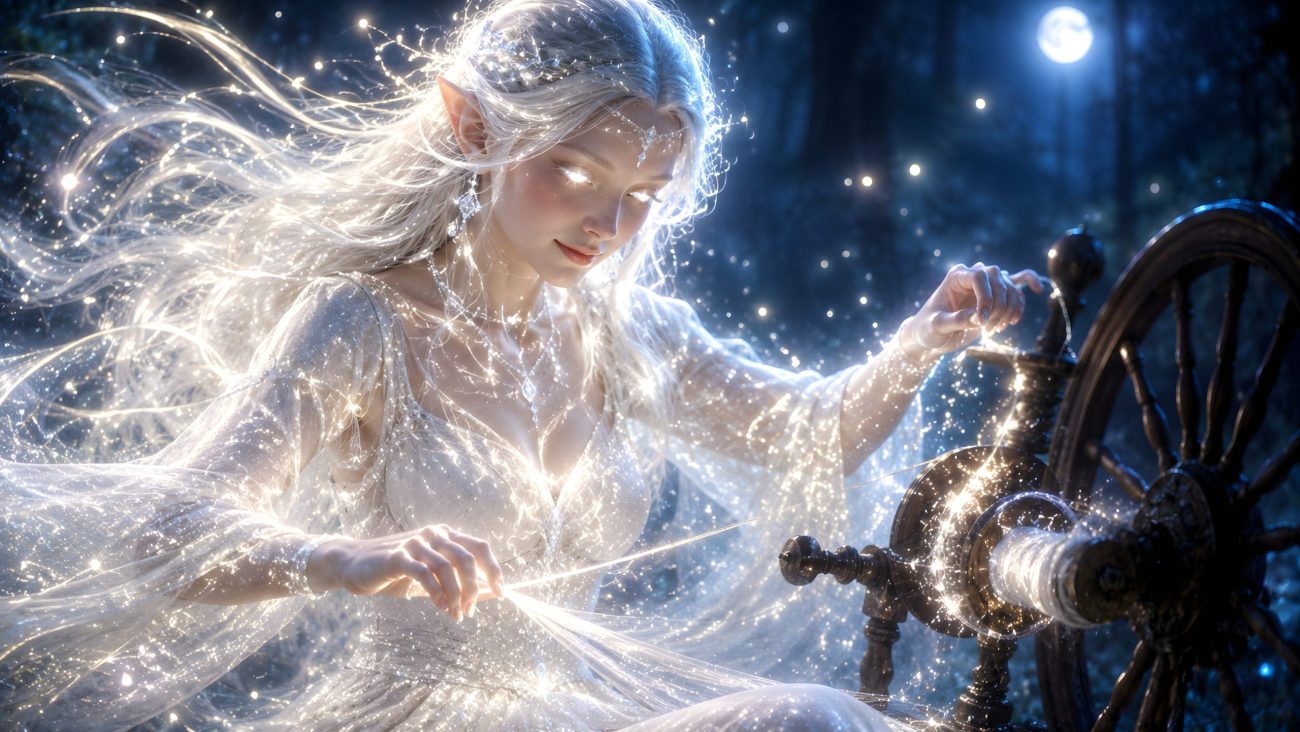
Ehaema, or Mother Twilight, is a mysterious spirit associated with evening twilight and the coming of night. She appears as a female elf or supernatural woman who visits homes after sunset, especially where spinning has been left unfinished.

Her most famous trait is spinning. If thread, flax, or a spinning wheel is left prepared overnight, Ehaema may enter the house and begin spinning through the night. People claimed to hear the spinning wheel turning on its own while everyone slept. Because of this, families carefully removed thread from the wheel before going to bed to prevent attracting her.

Although feared, Ehaema was not always hostile. Some traditions believed that anyone who managed to catch or witness her while she spun would gain exceptional skill and strength in spinning. She was therefore both a warning against laziness and a mysterious helper connected to household work.

In other traditions, Ehaema belonged to a group of nocturnal beings that included the Midnight Mother and the Midnight People. These spirits were believed to wander during the dangerous hours of twilight and midnight, making children cry, causing illness, or disturbing sleepers. Like many Estonian household spirits, Ehaema gradually became associated with ghosts and elves that silently visited homes during the night.

She remains one of Estonia’s most distinctive domestic spirits—a twilight woman who emerges with the fading light, quietly spinning abandoned flax while the household sleeps.


Sources

Valk, Ü. (2004). Night Wailer and Night Mother in Estonian and Finno-Ugric Folk Tradition. Sator, 5. Retrieved June 29, 2026, from https://www.folklore.ee/rl/pubte/ee/sator/sator5/night.pdf


Kratt

Tradition / Region: Estonian Mythology, Finnish Mythology
Alternative names: Pisuhänd, Puuk, Tulihänd, Vedaja
Category: Spirit, Object


The Myth

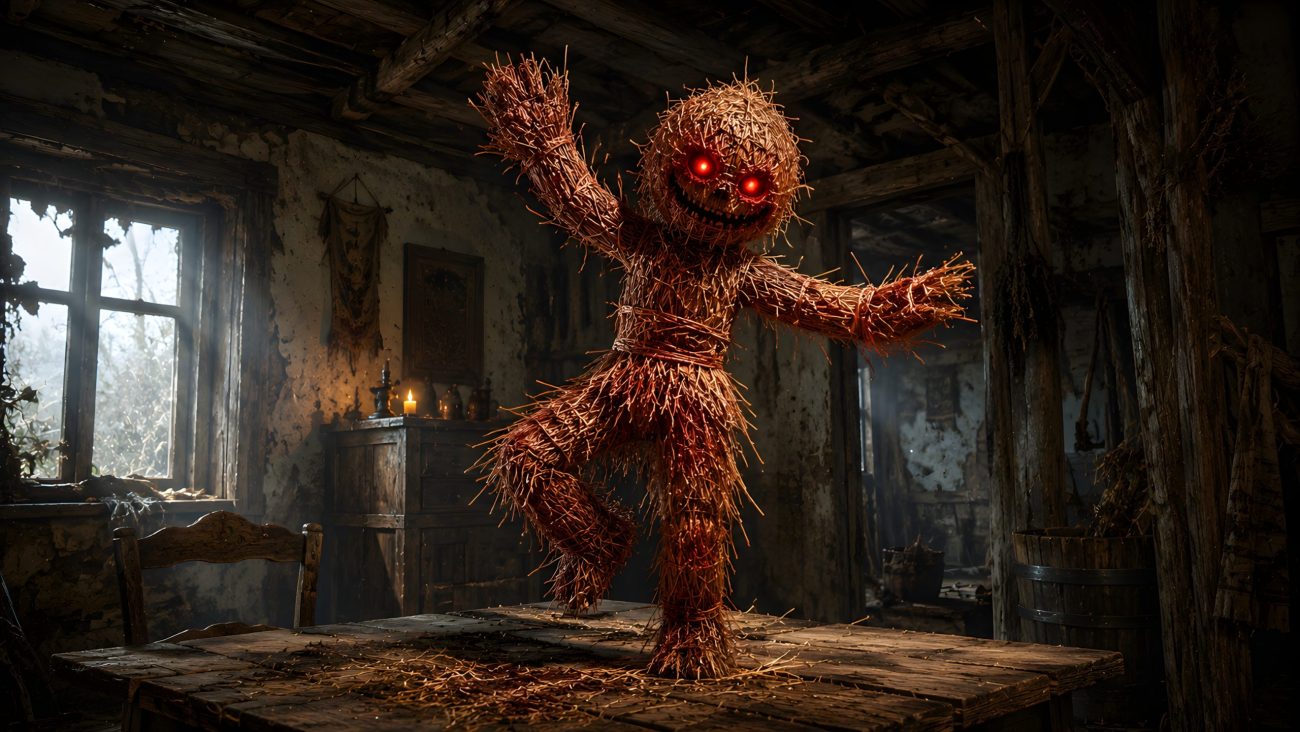
The Kratt is one of Estonia’s most famous magical beings—a supernatural servant created by humans to steal wealth and carry out endless work. It was usually built from hay, old tools, sticks, household objects, or other scraps, then brought to life after its creator made a pact with the Devil by giving three drops of blood.

Once animated, the Kratt obeyed every command of its master. Its favorite task was stealing grain, livestock, butter, money, and valuables from neighboring farms and secretly delivering them to its owner. It could travel through the night sky, often appearing as a blazing streak of fire as it flew between farms carrying stolen treasure.

The Kratt could never be left without work. If it had nothing to do, it became dangerous and could turn against its own master. To destroy an unwanted Kratt, people assigned it an impossible task—such as weaving a rope from sand or building a ladder out of bread. Unable to complete the impossible command, the hay-built creature would labor endlessly until it finally burst into flames and burned itself to ashes.

People also believed that blazing fireballs or bright meteors crossing the night sky were Kratts attempting to complete impossible tasks before burning away.

A closely related belief existed in Finland. There, Kratti or Aarni was the supernatural guardian of buried treasure. Hidden riches were protected by a spirit that revealed their location only to those who made the proper offerings. On Midsummer Night, mysterious flames known as Aarni Fire were said to burn above hidden treasure pits, marking where great wealth lay beneath the earth. Those who approached correctly could claim the treasure, while the greedy or disrespectful would see it disappear again.

Whether as a tireless servant stealing wealth for its master or as the guardian of hidden riches beneath the earth, the Kratt became one of the most enduring magical beings of Estonian and Finnish folklore.


Sources

Wikipedia contributors. (n.d.). Kratt. In Wikipedia. Retrieved June 29, 2026, from https://en.wikipedia.org/wiki/Kratt


Majahaldjas

Tradition / Region: Estonian Mythology
Alternative names: House Spirit, Home Spirit, Farm Spirit, Building Spirit, House Guardian, House Ghost, Viruskundra (regional form)
Category: House Dweller


The Myth

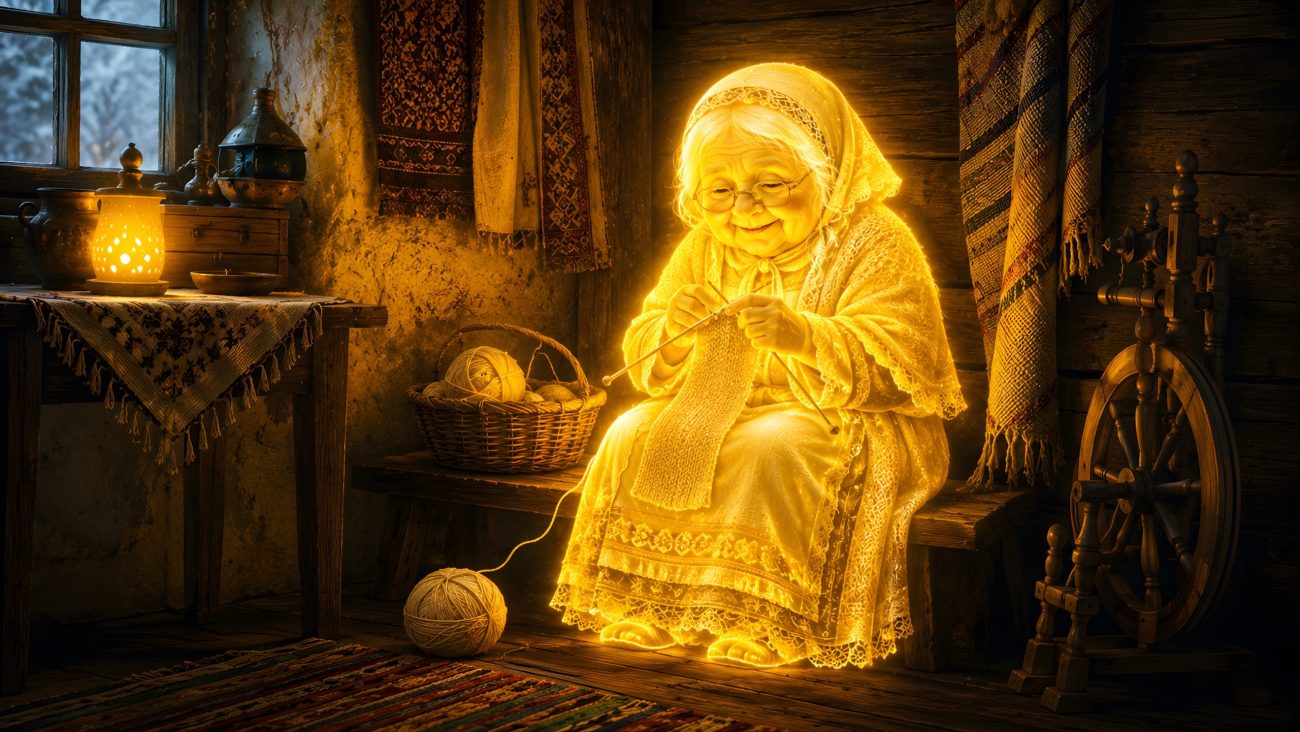
Majahaldjas is the protective spirit that dwells within every home. It may live inside houses, barns, mills, threshing houses, churches, and other buildings, quietly watching over the people who live there. The spirit cares for the household, protects its inhabitants, and helps maintain peace and prosperity.

It rarely reveals itself. When it does appear, it usually takes the form of an elderly man or woman, often believed to be a former resident of the house who continues to guard it after death. It is also said to appear around the time of a household member’s death, while many people claimed to see it only in dreams.

The Majahaldjas is kind only to good people. Because it knows every corner of the home, it can warn the family of danger, offer advice during difficult times, and quietly help with household affairs. However, it cannot tolerate constant quarrels, insults, or a household filled with anger. If driven away by fighting or mistreatment, it abandons the home, taking its protection with it and leaving the family vulnerable to misfortune.

Families traditionally sought to keep the spirit content by making small offerings. Food was left on shelves or near the hearth, while drops of beer or homemade ale were poured into the corners of the house as gifts for the unseen guardian. These offerings were believed to restore harmony if the spirit had become offended.

In southern Estonia, especially in Võru and Setomaa, the house spirit is known as Viruskundra. It was believed to live beneath the stove, sometimes above it or on the sleeping platform. Although rarely seen, its voice was often heard, and children were warned to respect it. At Christmas, food was left for Viruskundra, and when a child’s baby tooth fell out, it was thrown onto the stove with the words: “Viruskundra, take this bone tooth and give me an iron tooth.” The spirit was also believed to reveal treasures hidden beneath the house to families it favored.


Sources

Wikipedia contributors. (n.d.). Majahaldjad. In Vikipeedia. Retrieved June 29, 2026, from https://et.wikipedia.org/wiki/Majahaldjad


Pakasetaat

Tradition / Region: Estonian Mythology
Alternative names: Frost Father / Old Man Frost
Category: Spirit


The Myth

Pakasetaat is the ancient spirit of frost and winter, an old supernatural being who rules over cold, snow, and ice. He is described as an elderly man dressed entirely in white, with long white hair, a flowing white beard, a white hat, a white cloak, white stockings, and white shoes. His appearance is as pale as the frozen world he commands.

He has three sons who each govern a different stage of the cold season. The youngest is Härm, who brings the first light frosts and covers grass and grain with sparkling white crystals during the night. The middle son is Kahu, who arrives in autumn and seals ponds and rivers with ice. The eldest, Külm, rules the heart of winter, traveling both day and night while bringing the fiercest cold.

During summer, Pakasetaat and his sons retreat to the frozen northern lands, where ice continually cracks and trees split from the cold.

When Pakasetaat himself walks across the land, his frozen beard hangs with icicles. Snow crunches beneath his feet, fence posts split apart before him, and birds fall dead behind his passing. His freezing breath attacks both people and animals without mercy, forcing everyone who can to seek shelter indoors.

Although feared for his destructive power, Pakasetaat is not always cruel. Sometimes he compensates those harmed by the frost by giving them two magical bags: one that produces warmth and another that brings cold.

The Frost Father does not always reveal his true appearance. At times he disguises himself as a small tit bird, wandering unnoticed while spreading frost across the countryside.

Eventually Pakasetaat tires of his work and returns to the distant frozen land of Turjamaa to rest. With his departure, the grip of winter loosens, the bitter cold fades, and people can once again breathe freely.


Sources

Wikipedia contributors. (n.d.). Pakane (mütoloogia). In Vikipeedia. Retrieved June 29, 2026, from https://et.wikipedia.org/wiki/Pakane_(m%C3%BCtoloogia)


Koerakoonlased

Tradition / Region: Estonian Mythology
Alternate Names: Pendolls
Category: Dog


The Myth

The Koerakoonlased were originally remembered from stories connected to the feared warriors of Ivan IV. These soldiers were said to carry symbols of a dog’s head, representing their duty to track down enemies as a hound tracks its prey.

In later storytelling, this image passed from history into legend. The dog-headed symbol became something more than a sign, and people began to speak of beings who truly had such forms.

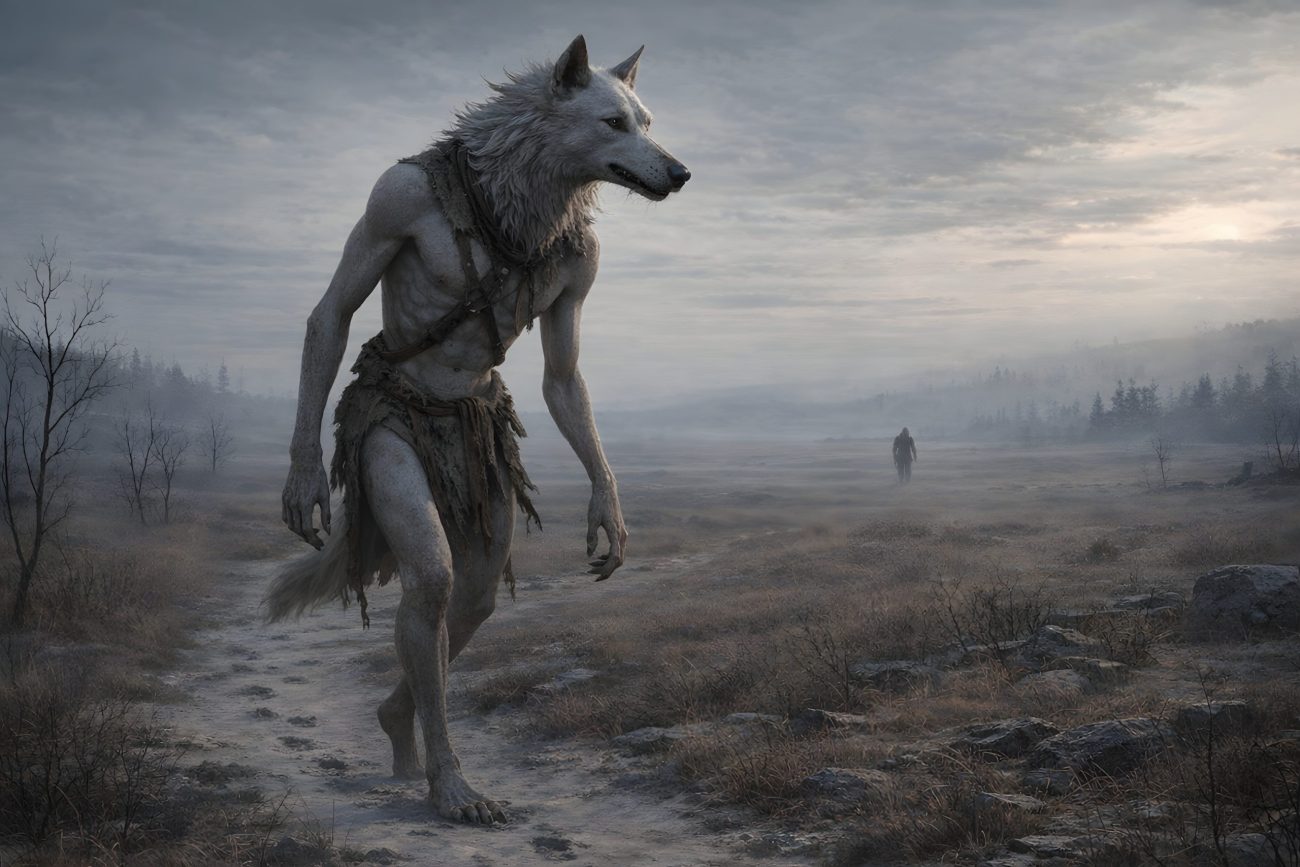
In these tales, the Koerakoonlased were imagined as creatures with the bodies of humans but the heads of dogs. They belonged to the realm of monsters and distant lands, sometimes placed beyond the known world. They were spoken of as strange and unsettling beings, neither human nor animal, living outside ordinary society.

Stories linked them with similar creatures known in other traditions, suggesting that the idea of dog-headed beings belonged to a wider world of myth. Over time, the Koerakoonlased remained in memory not as soldiers but as monstrous figures, part of folklore rather than history.

Thus they were remembered as dog-headed beings born from a symbol of power and fear, transformed by storytelling into creatures of legend.


Sources

Wikipedia contributors. (n.d.). Koerakõonlased. In Wikipedia, from https://et.wikipedia.org/wiki/Koerakoonlased


Härjapõlvlane

Tradition / Region: Estonian mythology
Alternate Names: Ox Knee, Son of the Ox-Knee
Category: Gnome


The Myth

In the old tales of Estonia, the Härjapõlvlane is one of the small underground people, no taller than a bull’s knee, yet far stronger than any full-grown man. Though tiny, he is clever, quick, and dangerous to underestimate.

One night, after a great battle, Kalevipoeg and his companions came upon an old woman cooking broth in a cauldron beside a cave. She warned them sternly to guard the pot well, for a strange thief lurked nearby—if the cauldron were drained, they would go hungry. The heroes agreed to take turns keeping watch while the old woman lay down to sleep.

But one by one, as each man nodded off, the thief appeared.

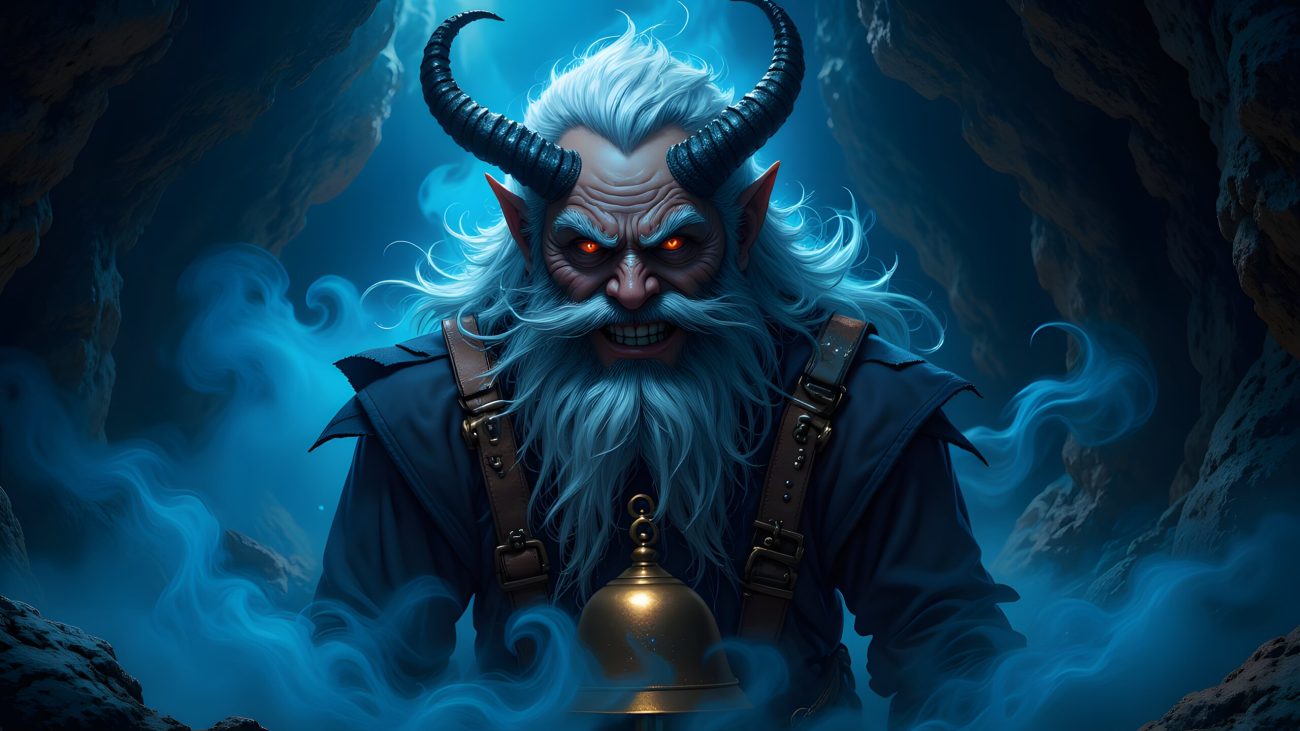
Out of the grass crept the son of the Härjapõlvlane: a small grey-bearded figure with a head too large for his body, horns peeking near his ears, and a golden bell hanging from his neck. With sly speed he climbed the cauldron, drank it dry, and vanished again. Each time, the men had to rekindle the fire and start anew.

When Kalevipoeg’s turn came, the trick failed. As the Härjapõlvlane climbed up, Kalevipoeg seized the golden bell and struck the little man. With a burst of blue smoke, the Ox-Knee plunged into the abyss and was gone.

At dawn, the old woman awoke and saw the bell. She knew it at once—a source of strength and power. With a cry, she leapt after the Härjapõlvlane into the depths, revealing her true nature as one of the underground folk.

Beyond this tale, Härjapõlvlased are said to live beneath the earth, where they forge metal in hidden smithies, often working together in groups. Their hammering is usually silent, but on certain nights—midwinter or midsummer—it can be heard faintly, a sign that they are at work. Though small, they are immensely strong, quick to anger, and dangerous when offended. Those who treat them well may be rewarded, but those who anger them may suffer without ever knowing why.

Thus the Härjapõlvlane remains a warning figure: a reminder that even the smallest beings may carry great power, and that the unseen world beneath the ground is never as quiet—or as harmless—as it seems.


Sources

Wikipedia contributors. (n.d.). Härjapõlvlane. In Wikipedia, The Free Encyclopedia (Estonian), from https://et.wikipedia.org/wiki/H%C3%A4rjap%C3%B5lvlane
Liiva-Annus

Tradition / Region: Estonian mythology
Alternative name: –
Category: Spirit


The Myth

Liiva-Annus is one of the most widespread names used by Estonians to refer to Death itself, understood not merely as an abstract end, but as an active, personified spirit. Because death was feared as something that could be summoned by name, people avoided calling it directly and instead used substitute names and nicknames. Among these were Mulla-Madis, Kalmu-Kaarel, Haua-Kusta, Toone-Toomas, Death-Peeter, as well as descriptive titles such as the scytheman, boneman, blackman, and coldfoot. Liiva-Annus is one of the most enduring of these euphemisms.

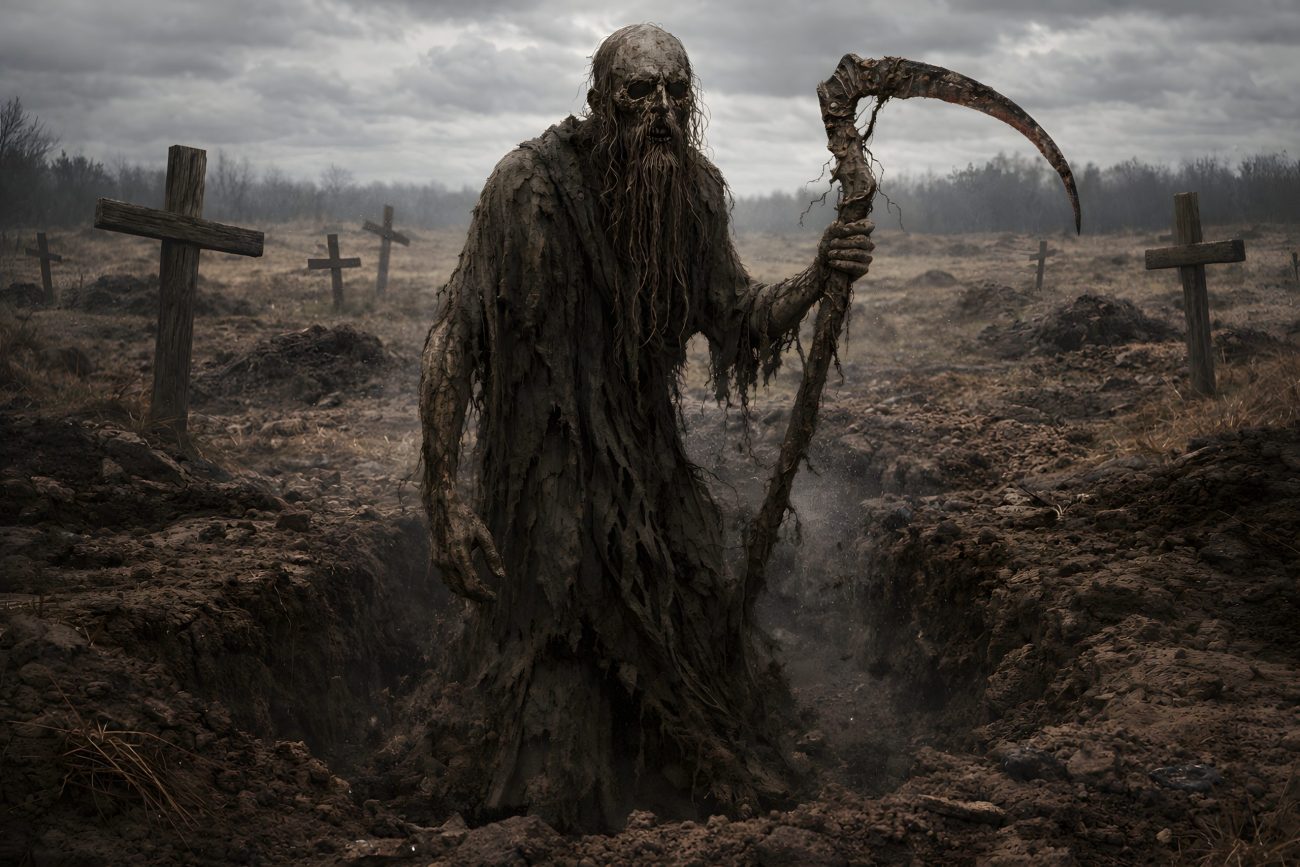
In folk imagination, Liiva-Annus appears as an old man who comes to claim human lives by force. He is said to beat people to death using tools associated with earth and burial—such as a scythe, shovel, pickaxe, or similar implements—linking him closely to the grave, soil, and the labor of digging. His presence is sudden, unavoidable, and final.

The figure of Liiva-Annus belongs to a broader, internationally known image of Death found throughout Christian Europe: the aged reaper who harvests human lives. In Estonian tradition, however, his many names emphasize both fear and familiarity—Death is ever-present, but must be spoken of carefully, indirectly, and with respect.


Rahaaugu Haldjad

Tradition / Region: Estonian mythology
Alternative name: –
Category: Spirit


The Myth

Rahaaugu haldjad, the Fairies of the Money Pit, are spirits believed to guard buried treasure hidden in the earth. In ancient times, money and valuable metal objects were often buried to protect them from war, raids, or theft. When the owners of these treasures died or were unable to return, the wealth remained underground, and the soul of the person who buried it became bound to the site as its guardian.

These spirits are not pagan priests or “old pagans,” despite later confusion in folklore. Their role is specific: they are keepers of wealth, bound to the treasure by death and unfinished responsibility. In some cases, a single money pit may be guarded by several fairies, reflecting that the treasure once had multiple owners, all of whom became its guardians after death.

To those deemed worthy, a fairy of the money pit may appear in a dream, inviting the dreamer to seek the hidden treasure. Yet this invitation is also a trial. Before allowing the treasure to be taken, the fairy tests the seeker’s courage. It may conjure shadowy apparitions, ghosts, or frightening visions, or transform itself into animals such as a dog, goat, wolf, or bear to terrify the human.

Only those who face these trials without fear or hesitation may succeed. In this way, the Rahaaugu haldjad embody the belief that wealth is never freely given, and that courage, resolve, and moral strength are required to claim what lies buried beneath the earth.


Ebajalg

Tradition / Region: Estonian mythology
Category: Spirit, Demon


The Myth

Ebajalg is a being of Estonian folklore that manifests as a violent whirlwind. Rather than a natural phenomenon alone, it is believed to be a malicious spirit or demon moving through the landscape in the form of spinning wind.

Ebajalg is associated with sudden destruction and overwhelming force. When it appears, it may tear through fields, damage buildings, or scatter objects, its strength far beyond that of ordinary wind. Encounters with Ebajalg are not personal or communicative; its presence is felt through impact and chaos rather than speech or form.

In Estonian belief, Ebajalg represents the dangerous animation of nature itself—an unseen will acting through the air, embodying the fear that destruction may arise suddenly, without warning, and without human cause.