Tradition / Region: Estonian Mythology
Alternative names: House Snake
Category: Household Dweller, Snake
The Myth
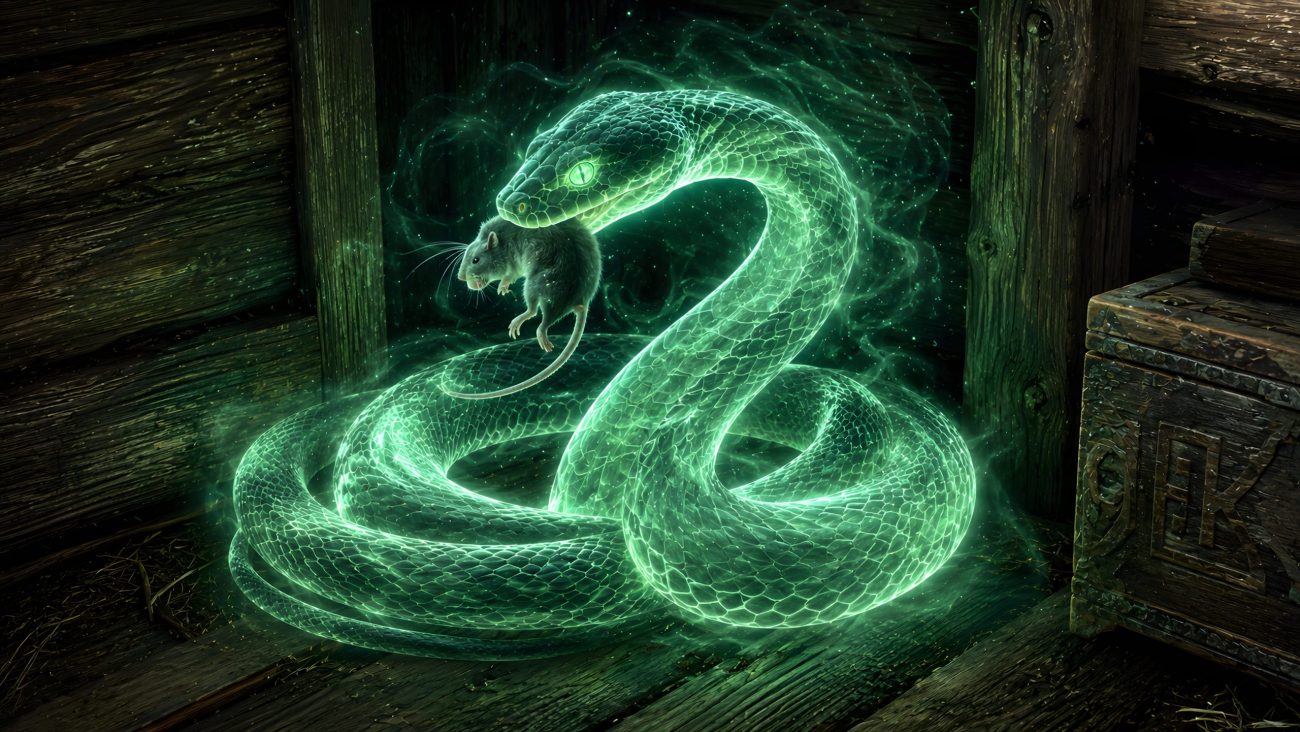
The Majauss, literally meaning “house snake,” was a harmless grass snake that lived inside Estonian farmhouses and barns. It caught mice and was treated as a welcome member of the household. Families cared for it and fed it milk.
The Majauss was honored because it was believed to embody the spirit of a deceased ancestor, especially a former head of the family. Through the snake, the ancestor continued to watch over the home and its inhabitants.
A Majauss was believed to bring good fortune to the house, the family, and the livestock. However, if it was mistreated, it could bring misfortune instead. The death of a house snake was considered a bad omen, and people feared that difficult times would soon follow for the household.
The veneration of the Majauss remained widespread in Estonia, Latvia, and Lithuania into the 19th century and was rooted in the ancient belief that the soul of a deceased ancestor could dwell within the snake.
Sources
Wikipedia contributors. (n.d.). Majauss. In Vikipeedia. Retrieved June 29, 2026, from https://et.wikipedia.org/wiki/Majauss