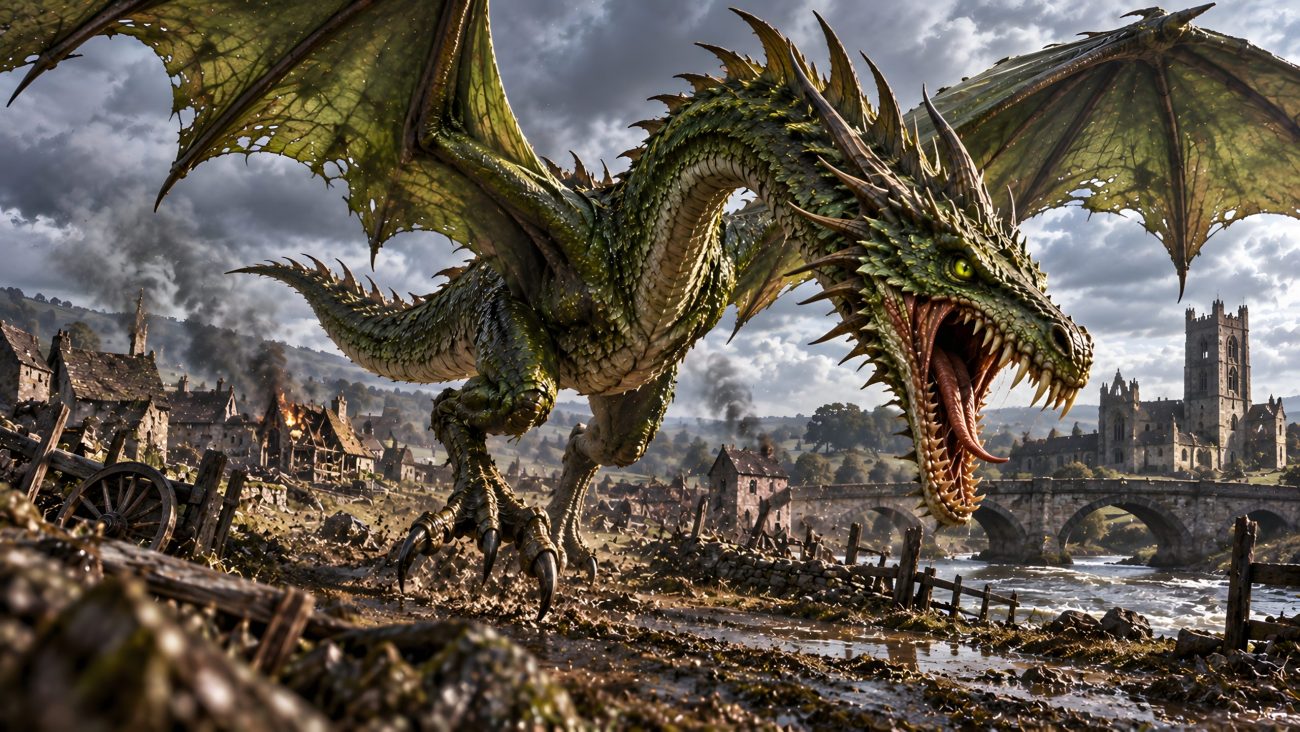
Black Dog of Newgate

Tradition / Region: English Mythology
Alternate Names:
Category: Dog, Ghost


The Myth

At the old Newgate Prison in London, there was once said to haunt a terrible creature known as the Black Dog of Newgate.

The story tells that during a time of famine, when hunger and misery gripped the land, a scholar was imprisoned there. He had a reputation as a sorcerer, a man said to have practiced dark arts. The prison conditions were so dreadful that the inmates, driven mad with starvation, killed and ate him.

Not long after this deed, something began to move through the prison in the night.

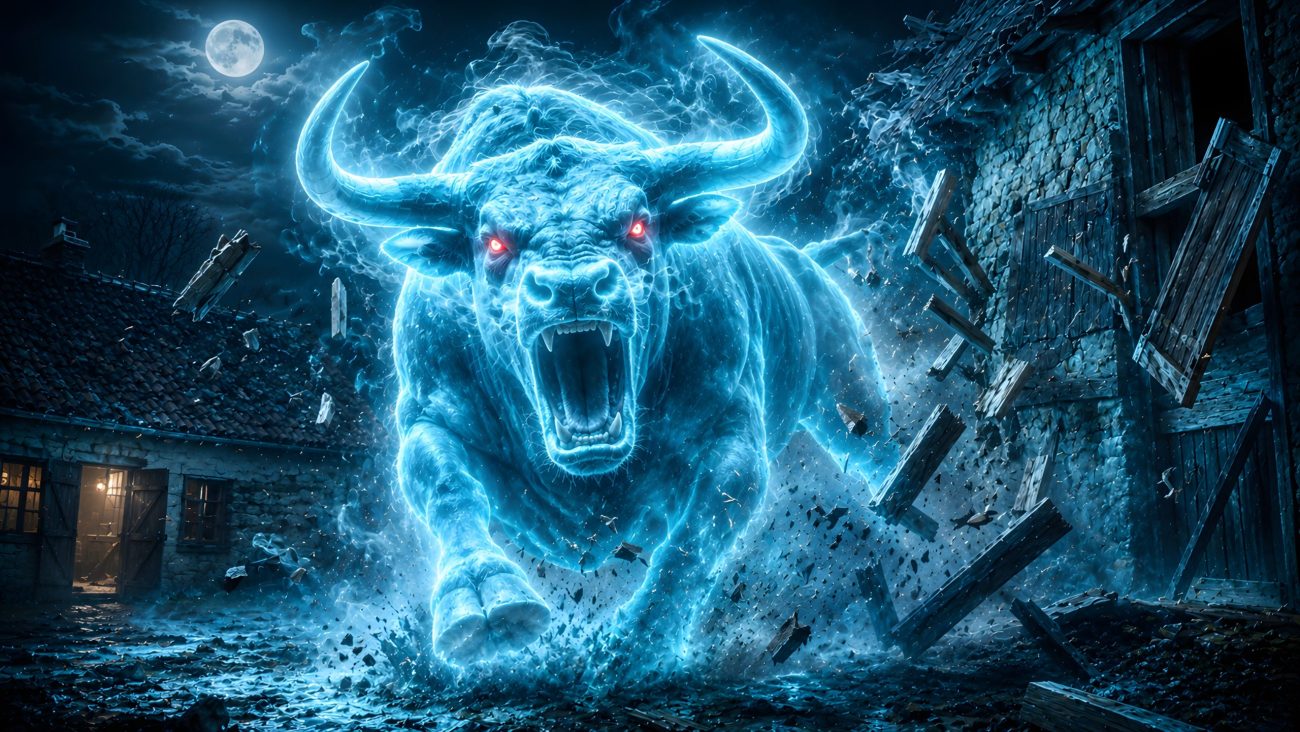
Prisoners reported seeing a monstrous black dog pacing the corridors and the cells. It appeared suddenly and vanished just as quickly, but its presence filled the place with dread. Those who had taken part in the killing believed the creature was the spirit of the murdered man, returned in a new form to avenge himself.

One by one, the prisoners who had been involved were said to die horribly, as though hunted down by the spectral beast. Fear spread through the prison until the survivors, half-mad with terror, broke out and fled.

But the story says the black dog did not stop there. It followed the escapees wherever they tried to hide, pursuing them until each had paid for the crime.

The tale was later told as a warning about cruelty, sin, and the brutal life within the prison walls. Some even doubted whether the beast was real at all, claiming the only “black dog” in the prison was a dark stone in the dungeon where condemned prisoners sometimes dashed out their brains in despair.

Yet the legend endured, and the image remained of a great black hound stalking the halls of Newgate — a spirit born from murder, hunger, and guilt, returning to claim the lives of those who had done wrong.


Sources

Wikipedia contributors. (n.d.). The Black Dog of Newgate. In Wikipedia, from https://en.wikipedia.org/wiki/The_Black_Dog_of_Newgate


Getulian Dog

Tradition / Region: English Mythology
Alternate Names: Canis getulus, Canis lucernarius, Mimic Dog
Category: Dog


The Myth

In early accounts of strange animals recorded by scholars and writers, there are descriptions of a mysterious creature known as the Getulian Dog.

It was said to be a four-legged beast of unusual appearance. Some described it as red and black, or white and black, with a broad, frog-like head and large protruding ears. Others gave it a sharper, darker face, with long legs, shaggy hair, and a short, curved body. Though dog-shaped, it seemed unlike any known breed.

What made the creature most remarkable was not its appearance but its behavior. The Getulian Dog was believed to possess an uncanny intelligence and the ability to imitate human actions. It could copy gestures and movements, and some stories claimed it could even serve people, performing tasks much like a servant.

In certain accounts, the animal was said to be capable of appearing in performances or plays, behaving in ways so human-like that observers were astonished. Because of this strange ability, it was sometimes called the Mimic Dog.

Whether the creature truly existed or belonged to the realm of marvels, it lived on in the writings of naturalists and storytellers alike, remembered as a curious and almost human dog whose nature blurred the line between beast and person.


Sources

Cryptid Archives contributors. (n.d.). Mimick dog. In cryptidarchives.fandom.com, from https://cryptidarchives.fandom.com/wiki/Mimick_dog


Freybug

Tradition / Region: English Mythology
Alternate Names: Fray-bug, Fraybug
Category: Dog


The Myth

In the folklore of Norfolk in England, people spoke of a terrifying creature known as the Freybug.

It was said to be a monstrous black dog, as large as a calf, wandering lonely country roads and appearing suddenly before travelers. Those who encountered it were struck with fear, for it belonged to the same shadowy kind as the other great black hounds of England that haunted paths, fields, and crossroads.

The creature did not need to attack to bring terror. Its size, darkness, and silent approach were enough to unnerve anyone who saw it on the road at night. Many believed that to meet such a beast was a sign of danger, misfortune, or a presence from the unseen world.

The name of the Freybug was remembered in old writings as a word for something meant to frighten — a specter or bogey used to terrify the living. In time, this fearful name came to be linked with the image of the black roadside hound itself.

So the Freybug lived on in memory as one of the dread black dogs of England, a creature of the night that prowled the roads of Norfolk and left travelers hurrying home in fear.


Sources

Wikipedia contributors. (n.d.). Freybug. In Wikipedia, from https://en.wikipedia.org/wiki/Freybug


Cow of Saint Kenelm

Tradition / Region: English Mythology
Alternate Names:
Category: Cow


The Myth

After the young king Kenelm was murdered and secretly buried in the Clent Hills, his sister Quendryda ordered that his name should never again be spoken, so that he might be forgotten. For a time it seemed her command had succeeded, and the child king lay hidden beneath the earth, unknown to the world.

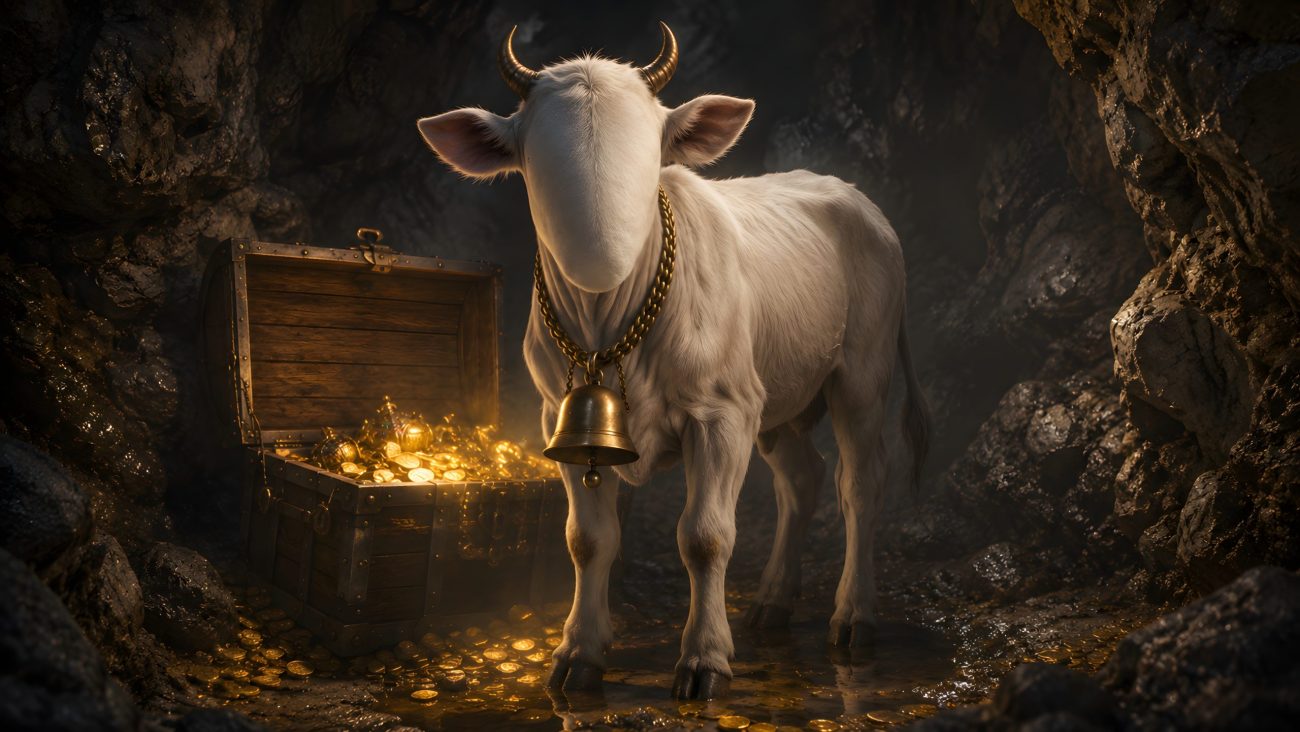
Yet a cow began to visit the place where he was buried. Each morning she went to the spot beside a thorn tree and remained there all day. From dawn until dusk she ate nothing, yet every evening she returned home with her udders full of milk. The next day she came again, and the same thing happened.

This continued for a long time. The people of the district watched in wonder, for the cow seemed bound to that single place and lived without grazing. Because of her strange vigil, the valley came to be known as Cowbach.

Though the king’s name was scarcely spoken, the cow’s silent presence kept the memory of the place alive.

Far away in Rome, a white dove flew into the Pope’s chapel carrying word that the body of Saint Kenelm lay in a place called Cowbach in the Clent Hills. The message was sent onward to Archbishop Wulfred of Canterbury, and men were dispatched to find the saint.

When they arrived in the district, the locals led them at once to the spot where the cow sat each day. There they uncovered the body of the young king. As it was raised from the earth, a clear spring burst forth where he had lain.

Thus the cow’s quiet watch preserved the resting place of the saint until the time came for him to be remembered again.


Gallery


Sources

Wikipedia contributors. (n.d.). Saint Kenelm. In Wikipedia, The Free Encyclopedia, from https://en.wikipedia.org/wiki/Saint_Kenelm


Interpretive Lenses

Religious Readings
  • Christian Ascetic Deep Dive
Philosophical Readings
  • Nietzschean Deep Dive
Psychological Readings
  • Jungian Deep Dive
Esoteric Deep Dive
  • Hermetic Deep Dive
Political / Social Readings
  • Marxist Deep Dive

Urhins

Tradition / Region: English Mythology
Alternate Names: Hurhins, Urchins
Category: Hedgehog, Spirit


The Myth

Urhins are small bogies or pixies in British folklore that take the form of hedgehogs. The name urhin or hurhin comes from a dialect word meaning “hedgehog,” and reflects both their appearance and their low, ground-dwelling nature.

These beings are imagined as small, prickly spirits, moving quietly through fields, gardens, and the edges of settlements. Though tiny, they are mischievous and capable of causing discomfort or fear, especially when encountered unexpectedly. Their hedgehog form allows them to remain unnoticed until they choose to reveal themselves.

Urhins are associated with trickery and torment, particularly toward humans who stray into places where such spirits dwell. They are not grand or powerful beings, but persistent and irritating, more likely to harass than to harm outright. Their presence is felt through unease, sudden disturbances, or the sense of being watched from low to the ground.

In English folklore and storytelling, urhins are grouped alongside other small supernatural beings such as fairies and sprites. They are part of the hidden population of the land, creatures that exist just beyond ordinary perception and whose behavior reflects the unpredictable nature of the unseen world.

Over time, the word “urchin” came to be used for mischievous children, echoing the playful yet troublesome qualities once attributed to these hedgehog-like spirits. Though their supernatural meaning has faded in everyday language, the image of the urhin remains rooted in folklore as a small, prickly trickster lurking close to the earth.


Sources

Bestiary.us contributors. (n.d.). Urhiny. In Bestiary.us, from https://www.bestiary.us/Urhiny


Grant

Tradition / Region: English Mythology
Alternate Names:
Category: Horse, Demon


The Myth

There is said to be in England a kind of demon called the Grant. It appears in the form of a young horse or yearling foal, standing upright on its hind legs, with bright, sparkling eyes. Though not always seen, it most often shows itself in the streets during the heat of the day or around sunset.

When danger is about to strike—especially fire or disaster expected during the coming night or the following day—the Grant emerges and runs through the streets. As it moves, it provokes dogs to bark and chase it. By pretending to flee, it draws the dogs after it, though none can ever catch it.

Through this strange behavior, the Grant serves as a warning. Its sudden appearance and commotion alert the inhabitants that danger is near. Though terrifying to those who witness it, the demon’s actions are said to protect the people by putting them on guard before disaster can strike.

Thus the Grant is remembered as a fearful yet strangely helpful presence—an illusionary demon whose wild run through the streets signals that harm is approaching.


Sources

Wikipedia contributors. (n.d.). Grant (folklore). In Wikipedia. Retrieved June 29, 2026, from https://en.wikipedia.org/wiki/Grant_(folklore)