Will the Smith

Tradition: English Mythology
Alternative Names: Will-o’-the-Wisp, Will the Smith
Category: Flame


The Myth

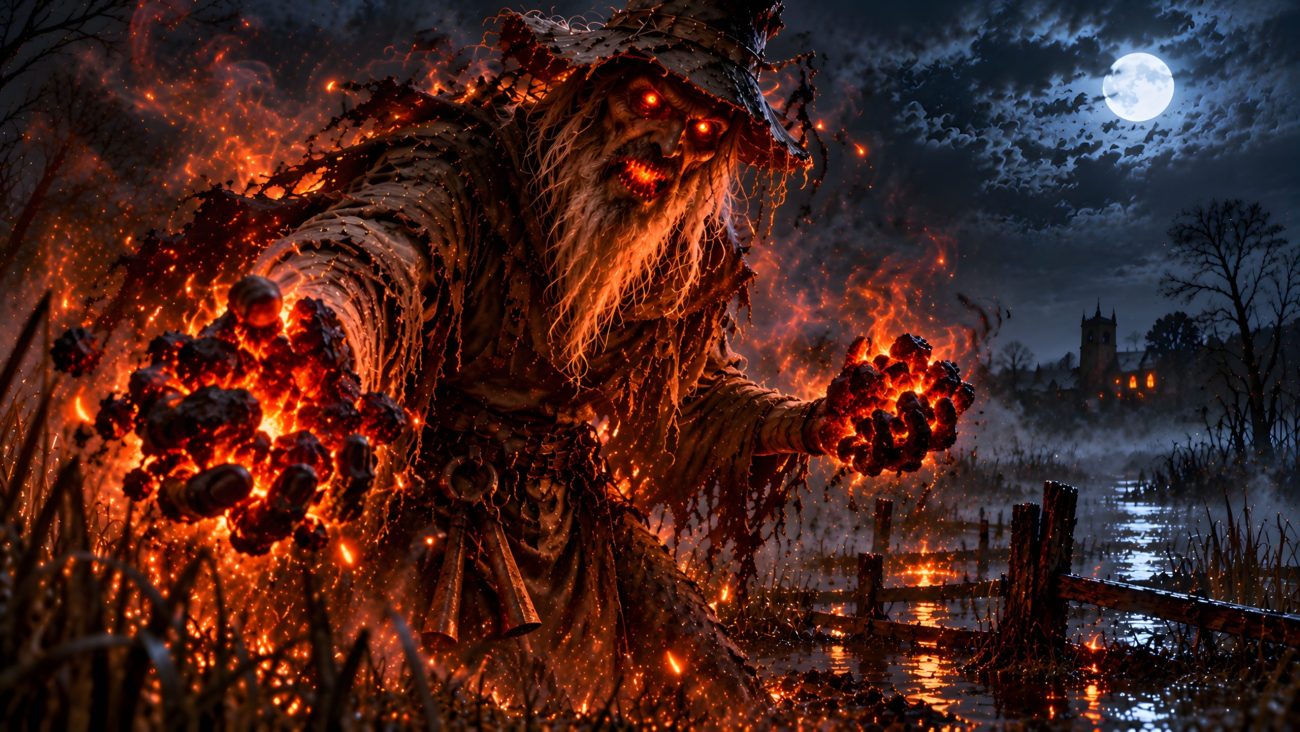
Will the Smith is a wicked blacksmith from English folklore who is condemned to wander the earth as a supernatural light. According to a tale from Shropshire, Will was given a second chance by Saint Peter at the gates of heaven, but continued to lead such a sinful life that he was ultimately denied salvation. Unable to enter heaven, he was doomed to roam the world without rest.

The Devil provided Will with a single burning coal to keep himself warm as he wandered through the darkness. Carrying this glowing ember, Will became a mysterious light haunting the marshes. However, rather than using the coal merely for warmth, he turned it into a means of tormenting others, luring foolish travellers away from safe paths and into the dangerous wetlands.

The legend explains the wandering lights of the marshes as the work of condemned souls, forced to carry their lonely flames through the darkness. Will the Smith’s glowing coal serves both as his only comfort and as a deceptive beacon with which he leads unsuspecting travellers astray.


Sources

“Will-o’-the-wisp.” Wikipedia: The Free Encyclopedia. Wikimedia Foundation. Accessed October 11, 2026. Section: “Asia.” https://en.wikipedia.org/wiki/Will-o%27-the-wisp#Asia

Lantern Man

Tradition: English Mythology
Alternative Names: Lantern Man
Category: Flame


The Myth

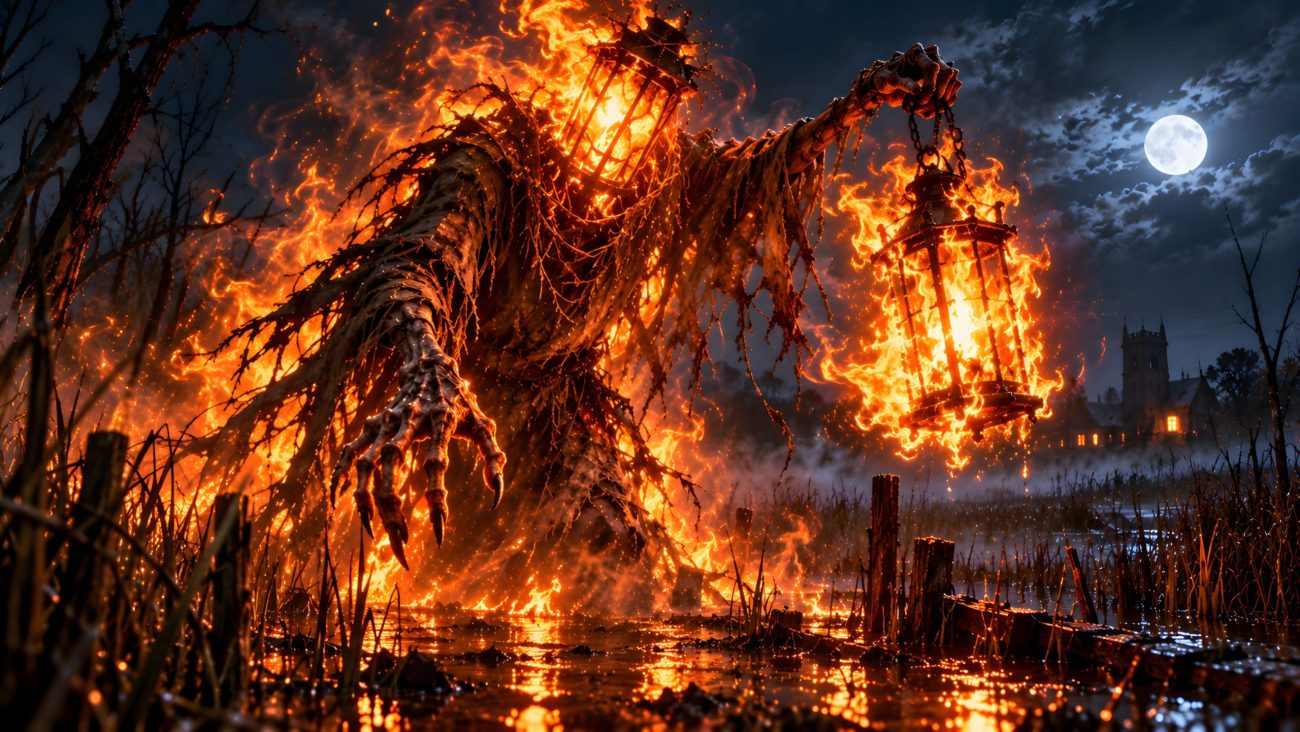
The Lantern Man is a terrifying supernatural light from the folklore of the Fens in East Anglia, England, particularly associated with Wicken Fen and the surrounding wetlands. It appears at night as a mysterious light that lures travellers away from safe paths and into the dangerous reed beds. According to local stories, these lights are evil spirits that deliberately lead their victims toward their deaths in the marshes. Their deceptive glow resembles that of a lantern carried by someone walking through the darkness, tempting people to follow where they should not.

The Lantern Man is said to be attracted by whistling. Folklorist L. F. Newman recorded accounts describing how people who whistled in the fens risked attracting the spirit’s attention. One local fisherman reportedly escaped by throwing himself face down onto the ground when a Lantern Man approached him after hearing his whistle. Traditional advice for evading the creature was to lie flat with one’s mouth pressed into the mud, making oneself less noticeable to the pursuing spirit.

Another tale describes a man who attracted a Lantern Man while whistling to his dog during a walk across the fen. He sought refuge at a friend’s house, where his companion hung a horn from a long pole to distract the spirit. By the following morning, the horn had been burned away. These accounts portray the Lantern Man as a dangerous presence that could pursue those who attracted its attention, even when they attempted to find shelter.


Sources

“Lantern man.” Wikipedia: The Free Encyclopedia. Wikimedia Foundation. Accessed October 11, 2026. https://en.wikipedia.org/wiki/Lantern_man


Faeu boulanger

Tradition / Region: Guernsey Mythology, English Mythology
Alternate Names: Rolling fire
Category: Flame


The Myth

Faeu boulanger, meaning “rolling fire,” is believed to be a lost soul.

When confronted with the spectre, one remedy is to turn one’s cap or coat inside out. This stops the Faeu boulanger in its tracks. Another remedy is to stick a knife into the ground, blade upward. The Faeu boulanger will attack the blade in an attempt to kill itself.


Sources

“Will-o’-the-wisp.” Wikipedia: The Free Encyclopedia. Wikimedia Foundation. Accessed October 10, 2026. Section: “Americas.” https://en.wikipedia.org/wiki/Will-o%27-the-wisp#Americas