Gütel

Tradition: German Mythology
Alternative Names: Gütchen, Gütgen, Güetel, Gietel, Gitel, Gidl, Gidle, Göthel, Jütel, Heugütel
Category: Dwarf


The Myth

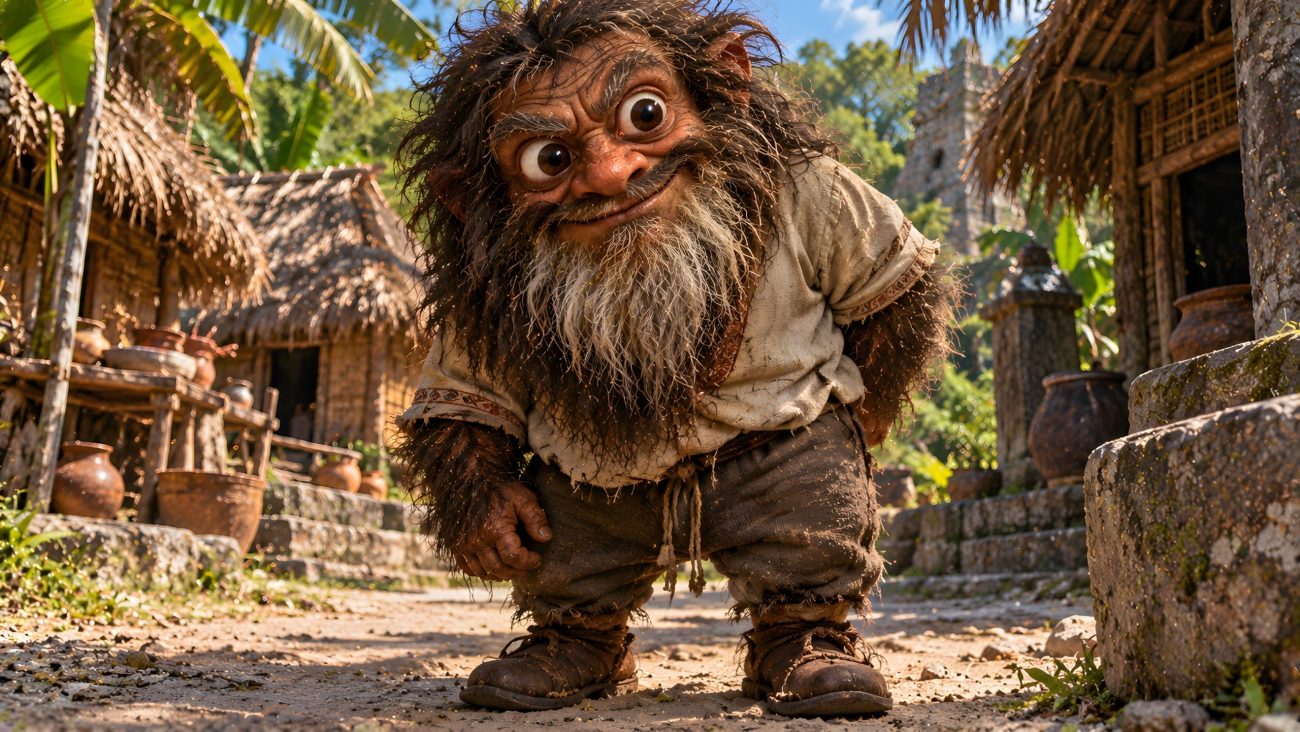
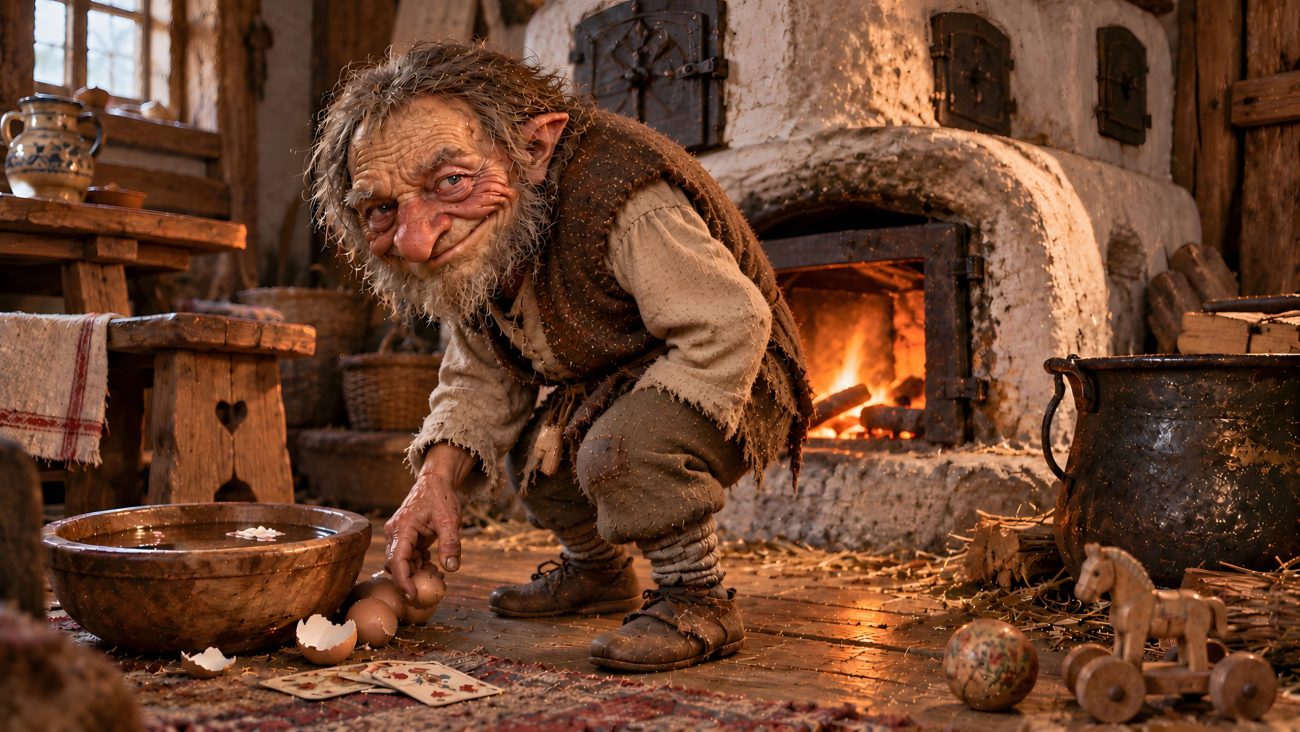
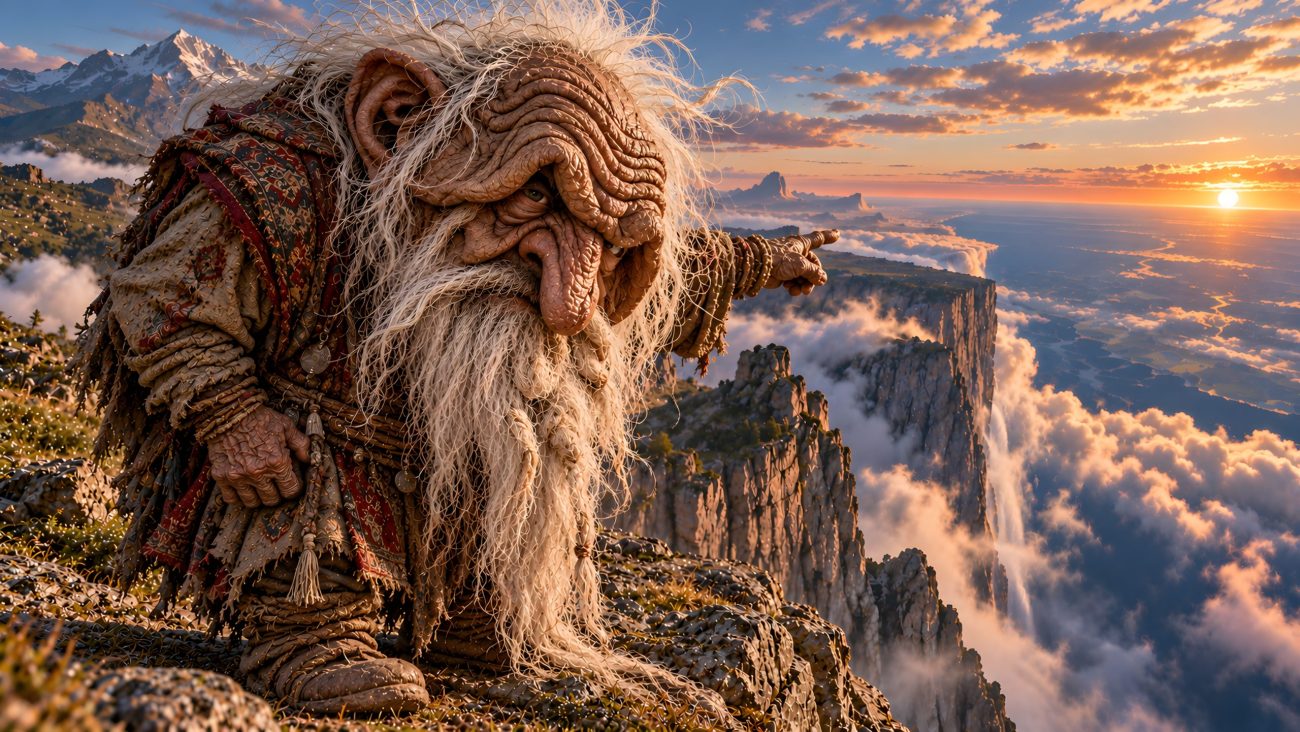
The Gütel is a small household spirit of German folklore, sometimes appearing as a little man or dwarf. In the Vogtland and Ore Mountains, the related Heugütel is described as a bearded little old man who lives in the hayloft. Despite his aged appearance, the Heugütel is believed to be the soul of a child who died without being baptized, and its tiny footprints may sometimes be found in ashes. Other Gütel are associated with the stove itself, where they are believed to make their homes. Geplakte markdown

The Gütel are generally helpful household spirits. They assist with work around the house and stable, while the Heugütel is particularly fond of children, rocking them to sleep and keeping them company while they dream. These spirits are most comfortable in households where people live piously, and the Heugütel is said to remain only where the inhabitants lead a Christian life. Geplakte markdown

Not every Gütel is friendly, however. Some of their darker forms torment children during the night, making them restless and causing illnesses such as chills, seizures, and measles. Women giving birth are also considered vulnerable to their attention. A Gütel can sometimes be distracted with small amusements: a little pot of leftover bathwater placed on the stove gives it something to play with, while eggshells, playing cards, and small bows and arrows can be left around the house or barn for its entertainment. Geplakte markdown

There are also ways of driving them away. Greasing the stove door with bacon rind or placing straw from the bed of a woman in childbirth across the doors can keep them out. In Saxony, giving the spirit new clothing is another way to make it leave. With the departure of the benevolent Heugütel, however, the household may lose the blessing and protection that came with its presence. Geplakte markdown

The Gütel can become especially dangerous when illness or death is near. In the Ore Mountains, a loud and heavy crash heard during the night was regarded as an omen of impending death. When someone had already fallen ill, offerings could be made to the Gütgen in the hope that the spirit would take an animal instead of the sick person. A cock was offered for a man, a sow for a woman, a goat for the person making the offering, and hens for children. Geplakte markdown

At night, the more troublesome forms also visit the stables. They torment cows until the animals growl and harass horses until they kick and bite. They are notorious for tangling the manes of horses and the hair of women into knots, a practice that gave rise to names such as Haargütel, meaning “hair Gütel.” Geplakte markdown

One particularly troublesome form haunts the woods and attacks solitary travelers. The little spirit leaps onto a person’s back and forces them to carry it, growing heavier and tormenting its victim until they become exhausted, breathless, and sick. In this form the Gütel becomes a true wandering menace rather than a helpful household companion.


Sources

“Gütel.” Wikipedia: The Free Encyclopedia. Wikimedia Foundation. Accessed October 4, 2026. https://en.wikipedia.org/wiki/G%C3%BCtel
Katutayuk

Tradition: Greenlandic Mythology, Canadian Mythology, Inuit Mythology
Alternative Names: Katutajuit; Katutajuk; Katutayuit
Category: Dwarf


The Myth

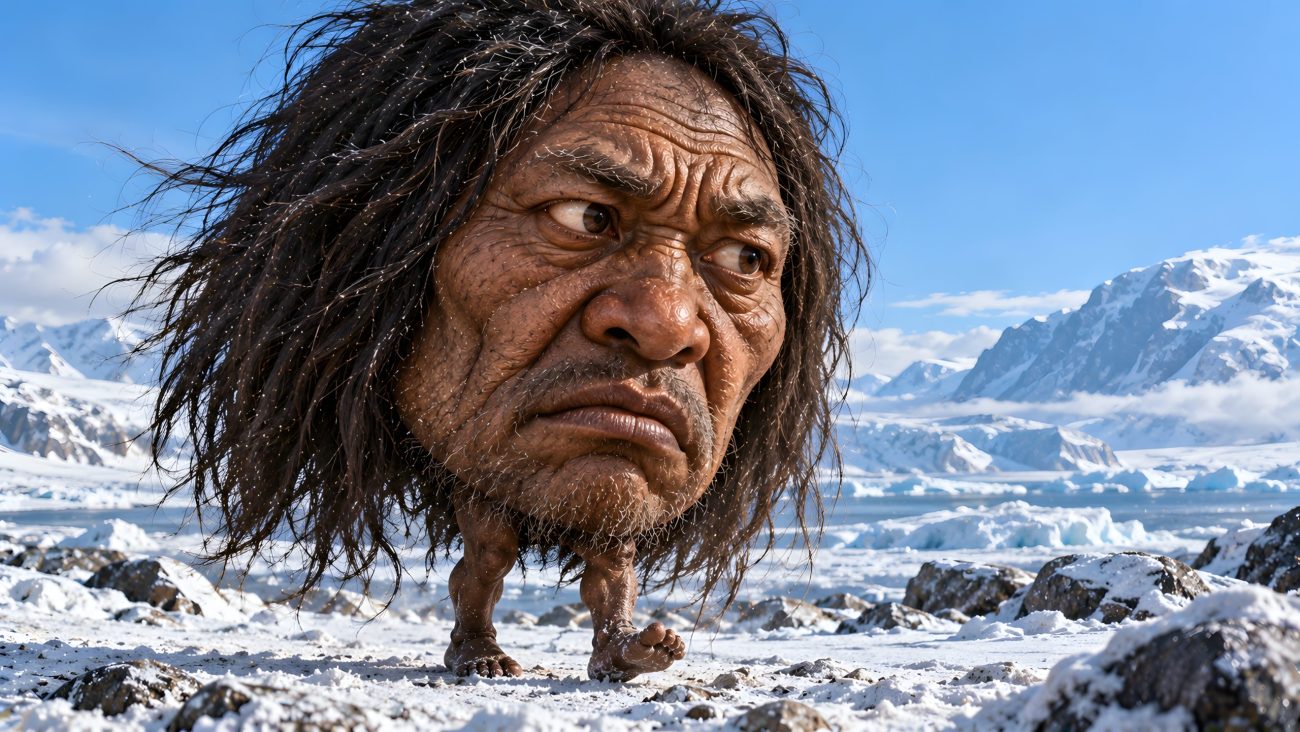
The Katutayuk are a strange race of dwarfs with enormous human-like heads carried on tiny legs. Their bodies are extremely small, with some traditions describing them as having no arms or torsos at all, only legs extending directly from beneath their oversized heads. Other accounts say that they have only three toes.

Very little is known about the Katutayuk, but they are associated with misfortune and wandering. Their lives are said to consist of one unfortunate event after another, leaving them doomed to roam the earth without ever finding a permanent home. They wander through the wilderness, appearing in places where strange disturbances have occurred.

Their presence may sometimes be detected without seeing the creatures themselves. The sounds of the Katutayuk moving through the night can be heard in the wilderness, while their wandering may leave behind broken or overturned objects. They are also blamed for strange holes suddenly appearing in the walls of igloos. These disturbances are caused by the Katutayuk as they continue their endless wandering through the land.


Sources

“Katutajuk.” New Bestiary (Bestiary.us). Accessed October 4, 2026. https://www.bestiary.us/katutajuk


Achuch-Pachuch

Tradition: Armenian mythology
Alternative Names: Achoych-Pachoych; Achoch-Machoсh; Աչուճ-Պաչուճ
Category: Dwarf


The Myth

The Achuch-Pachuch are dwarfs who live at the very edge of the world, where the last human being is said to live before the end of the world.

According to Armenian tradition, the Achuch-Pachuch are so small that the entire world is believed to fit through the eye of a needle. When people eventually become small enough to pass through the eye of a needle, the end of the world will come.


Sources

“Achuch-Pachuch.” New Bestiary (Bestiary.us). Accessed October 4, 2026. https://www.bestiary.us/achuch-pachuch


Wakonyingo

Tradition: Tanzanian Mythology
Alternative Names: Wakoningo; Wadaatimba
Category: Dwarf


The Myth

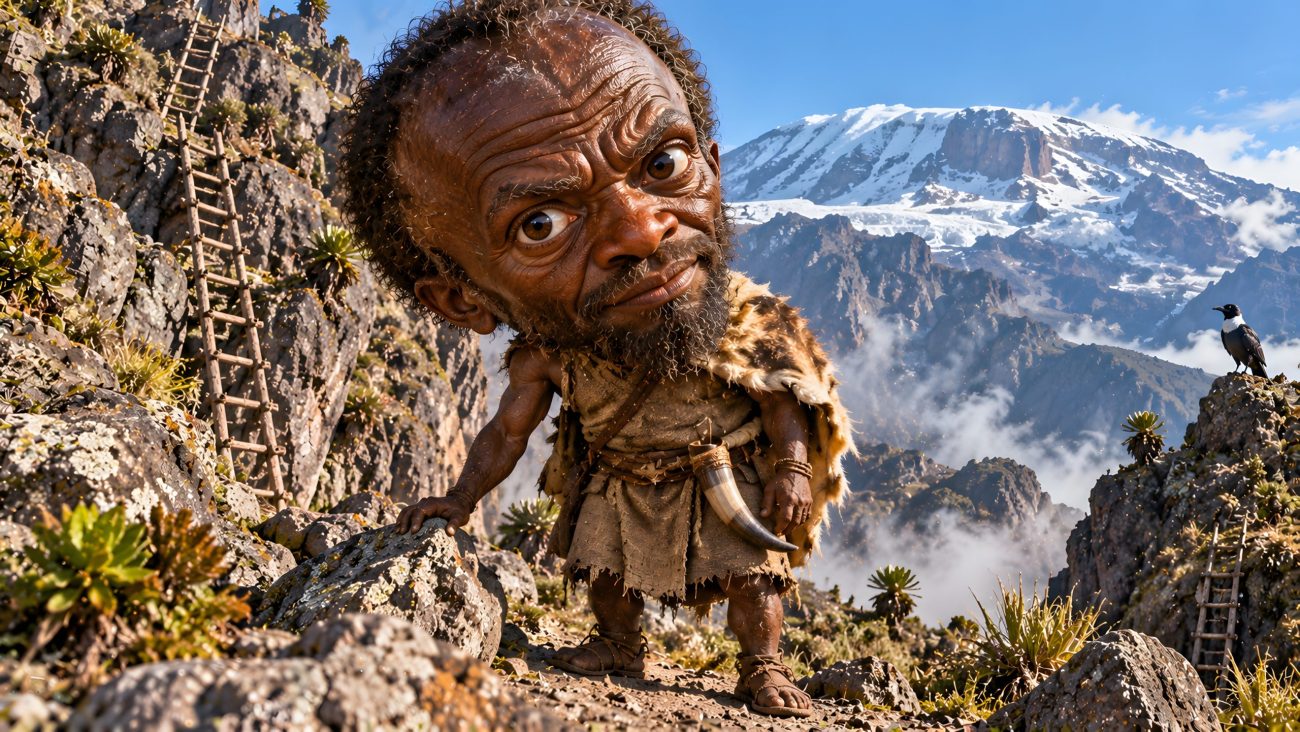
The Wakonyingo are a mysterious people of dwarfs said to live on Mount Kilimanjaro. They have enormous, misshapen heads and are much smaller than ordinary people. They withdrew into the mountains when advancing tribes drove them from their former homes, taking refuge high among the inaccessible slopes. Their settlements are reached by remarkable ladders fastened directly to the mountainsides, climbing so high that they seem to disappear into the sky.

Despite their strange appearance, the Wakonyingo are not portrayed as wholly hostile. They are said to feel compassion for people in need and sometimes help those who show them kindness. They are also connected with magical knowledge and are believed to possess spells capable of protecting crops from insects and other pests, as well as magic for closing roads so that enemies cannot enter their territory.

The Wakonyingo are said to descend from human children, although their enormous heads set them apart from ordinary people. They do not lie down to sleep. Instead, they sit upright against the walls of their huts, because their heads are so large that lying down would cause them to fall. Their unusual size also affects the way they dress: when one of the dwarfs falls, his companions must use their horns to lift him back up.

One story tells of two brothers, Mkunare and Kanyanga, who lived with their father in poverty. They had nothing, not even a cow, and Mkunare decided to travel to Mount Kilimanjaro, where they had heard that a chief who possessed many cattle lived. Along the road he met an old woman whose eyes were so badly affected that she could barely see. She asked him to lick her eyes so that her sight would return, promising to tell him how to find the chief. Mkunare helped her, but when she gave him directions, he ignored her request to treat her respectfully and continued on his way.

Eventually Mkunare reached the Wakonyingo settlement and saw what he expected to be a community of adults. Instead, everyone was no taller than a small herding boy. He asked where their fathers and older brothers were, and they assured him that the elders would return soon. The Wakonyingo then slaughtered an animal for dinner, but refused to give Mkunare any food, telling him to wait until their fathers and brothers came home. Hungry and disappointed, he left.

On his journey home he became lost and wandered for almost a month before finally finding his way back. He told his family about the strange little people living on Kilimanjaro and the great herds of cattle belonging to their chief.

Kanyanga then decided to try his luck. He too encountered an old woman and fulfilled her request, treating her with kindness. She directed him toward the chief’s settlement and told him to greet the Wakonyingo respectfully when he arrived. Kanyanga followed her instructions. The Wakonyingo welcomed him warmly, took him before their chief, and provided him with food and shelter.

In return for his kindness, Kanyanga was taught their magical knowledge. The Wakonyingo showed him spells that could protect crops from insects and other pests and taught him how to magically close roads so that enemies could not enter their territory. Before he left, the Wakonyingo rewarded him with cattle and goats. Kanyanga returned home driving a large herd, while his brother Mkunare remained poor.

The people remembered the story in a song that contrasted the fortunes of the two brothers and warned against despising the mysterious little people of the mountain:

“O Mkunare, wait until the fathers come!
What right did you have to despise the ‘little people’?”

The Wakonyingo were not believed to be creatures of the sky, although their lofty mountain homes and immense ladders gave them an appearance of belonging to the heavens. Their world remained firmly connected to the mountains of Kilimanjaro, where they lived apart from ordinary people and guarded their own strange knowledge.


Sources

“Vakoningo.” New Bestiary (Bestiary.us). Accessed October 4, 2026. https://www.bestiary.us/vakoningo


Anshikh Sisva Pyalta

Tradition: Mansi Mythology, Russian Mythology
Alternative Names: Anshikh Sisva Pyalt; Anshikh Sisva Pyalta; The Old Man as Long as a Hare
Category: Dwarf


The Myth

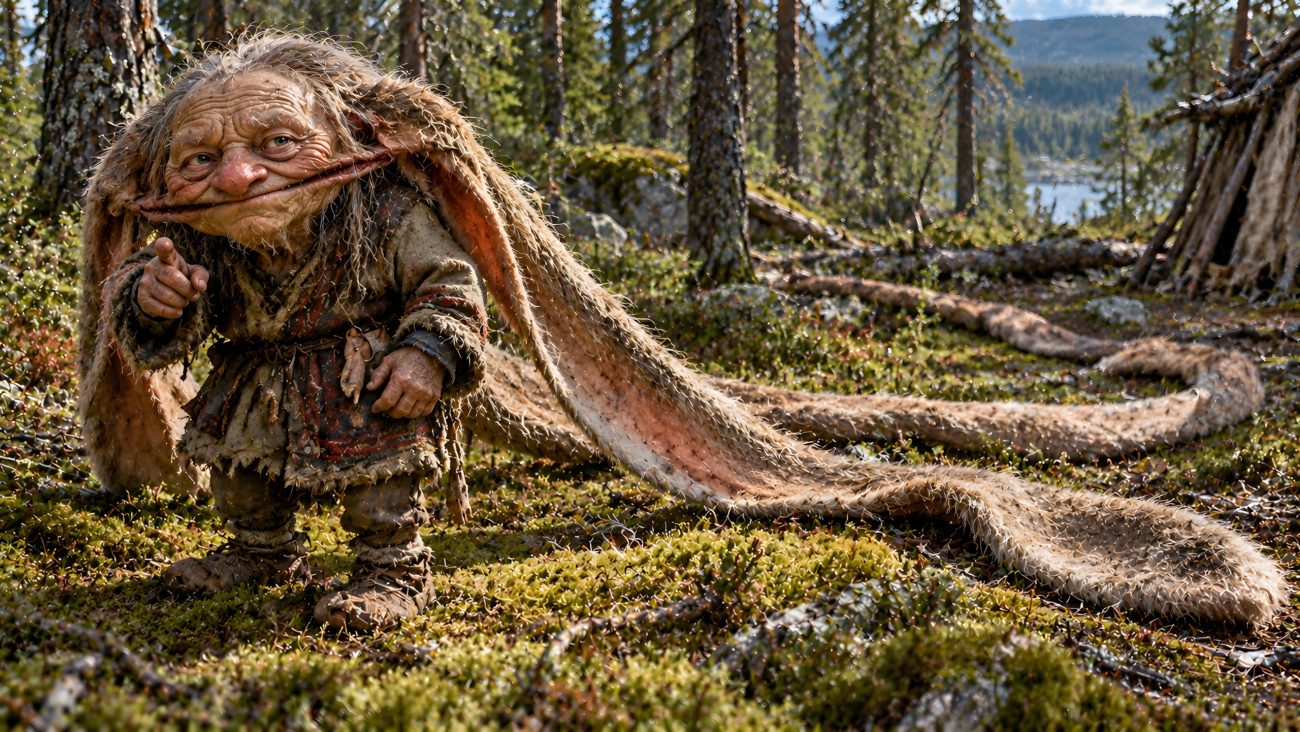
Anshikh Sisva Pyalta is a strange dwarf with incredibly long ears that trail behind him along the ground. He also has a harelip, giving him a peculiar and unsettling appearance.

In the Mansi fairy tale The Son with the Deer Ear, a woman hears someone at the door and finds the little old man standing outside. He has already stepped onto the seventh floor of the house, yet his enormous ears are still lying across the threshold. The Old Man as Long as a Hare sits down at the table, grabs his ears, and throws them onto the bench beside him.

He whispers that the creature is an unclean spirit and asks what kind of being he is. The old man then stretches out one of his ears, telling her to look at its length. He grabs a sharp tooth and sinks it into the upper part of his ear. The ear stretches even farther, reaching two-thirds of the way across the room. He pulls the other ear toward him in the same manner, making it stretch in the opposite direction.

The old man then swallows his head, ears and all, and kicks his legs up from beneath his enormous ears. He jumps and leaps about, shouting and dancing. The strings begin to sound like singing spring birds, while the woman’s head spins and the old man carries her away in a dance.


Sources

“Anshhih Sisva Pjalt.” New Bestiary (Bestiary.us). Accessed October 4, 2026.
https://www.bestiary.us/anshhih-sisva-pjalt


Antivitamin

Tradition: Maya Mythology, Mexican Mythology
Alternative Names: Antivites, Alush
Category: Dwarf


The Myth

The Antivitamins are a race of tiny people said to live among human communities in Chontal Maya villages. They are described as small, mischievous beings and are considered a local variety of the Alush, the trickster dwarves known throughout Mexico and Central America.

The Antivitamins are believed to possess ancient knowledge and are associated with the supernatural world. Although they resemble little people, their behavior can be troublesome and unpredictable, and in later legends they are sometimes transformed into ordinary demons, forest spirits, or mischievous brownies.

They are said to have hair and large eyes, with their bodies covered in hair. Their appearance is that of small, hairy beings rather than ordinary humans, marking them as creatures of the supernatural world.

One story tells how a group of Antivitamins climbed the bell tower of a church and began ringing the bell. The unexpected noise frightened the bell-ringer, who became so startled that he fell and broke his leg. The tale presents the Antivitamins in their familiar role as troublesome little creatures whose mischief can have very real consequences for those who encounter them.


Sources

“Antivity.” New Bestiary (Bestiary.us). Accessed October 4, 2026.
https://www.bestiary.us/antivity


Andumbulu

Tradition: Dogon mythology, Mali Mythology
Alternative Names: Andumbulu
Category: Dwarf


The Myth

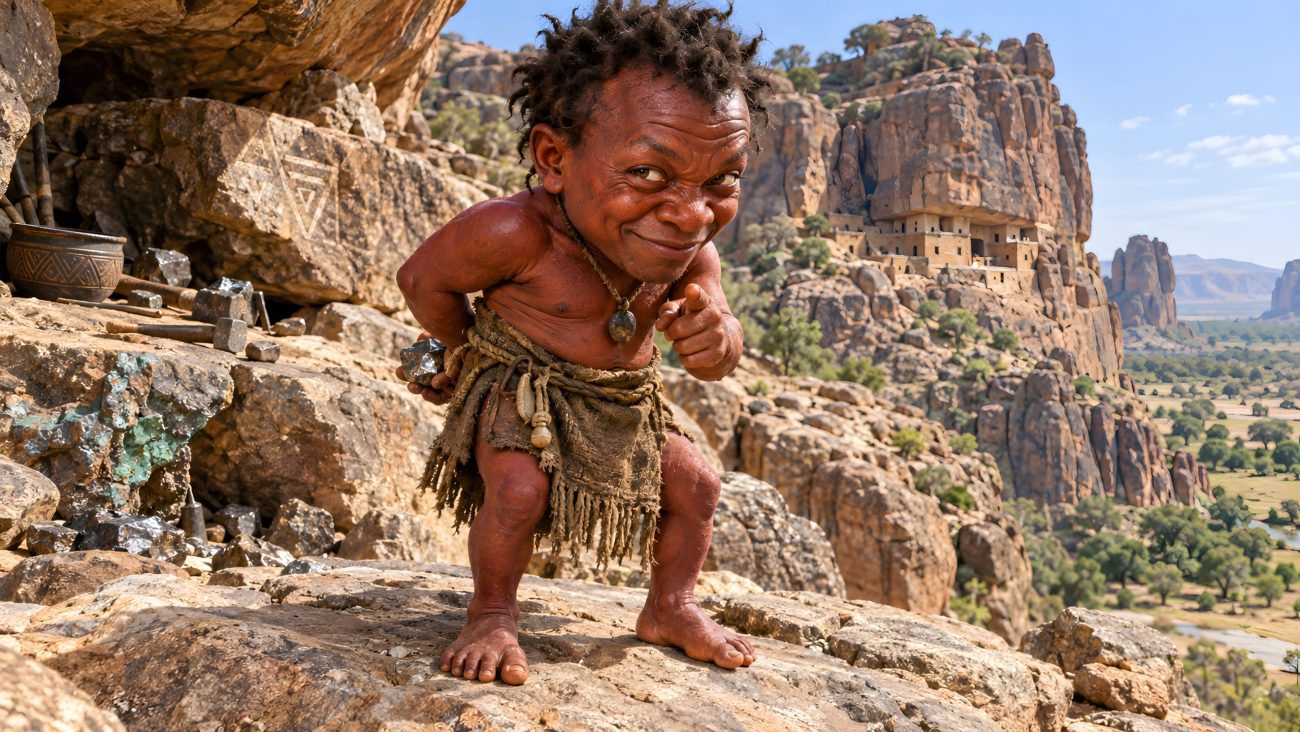
The Andumbulu are a mysterious people of small stature who are said to dwell among the rocks of southeastern Mali and the borderlands of Burkina Faso. They are described as little red-skinned people who live in hidden places among the rocks, remaining apart from ordinary human communities.

The Andumbulu are regarded as ancient beings who possess knowledge of the gods, cultural customs, and sacred rituals. According to Dogon tradition, they passed much of this knowledge on to the people who encountered them, giving them gifts and teachings that helped shape their way of life.

They were also credited with teaching practical skills. The Andumbulu showed people how to make bricks and construct dwellings, including houses built within hollow trees. They taught them how to prepare food, light and use cooking fires, grind flour and spices, and recognize and prepare medicinal herbs.

Dogon tradition places the Andumbulu in the landscape as a people who were already there before the ancestors of the present inhabitants arrived. They are associated particularly with the region around Sang, where they were believed to have lived before later peoples settled there. Their small size and hidden existence have sometimes led them to be compared with other traditions of mysterious small peoples found elsewhere in West Africa.


Sources

“Andumbulu.” New Bestiary (Bestiary.us). Accessed October 4, 2026.
https://www.bestiary.us/andumbulu


Abura Sumashi

Tradition: Japanese Mythology
Alternative Names: 油すまし (Abura Sumashi)
Category: Yōkai, Dwarf


The Myth

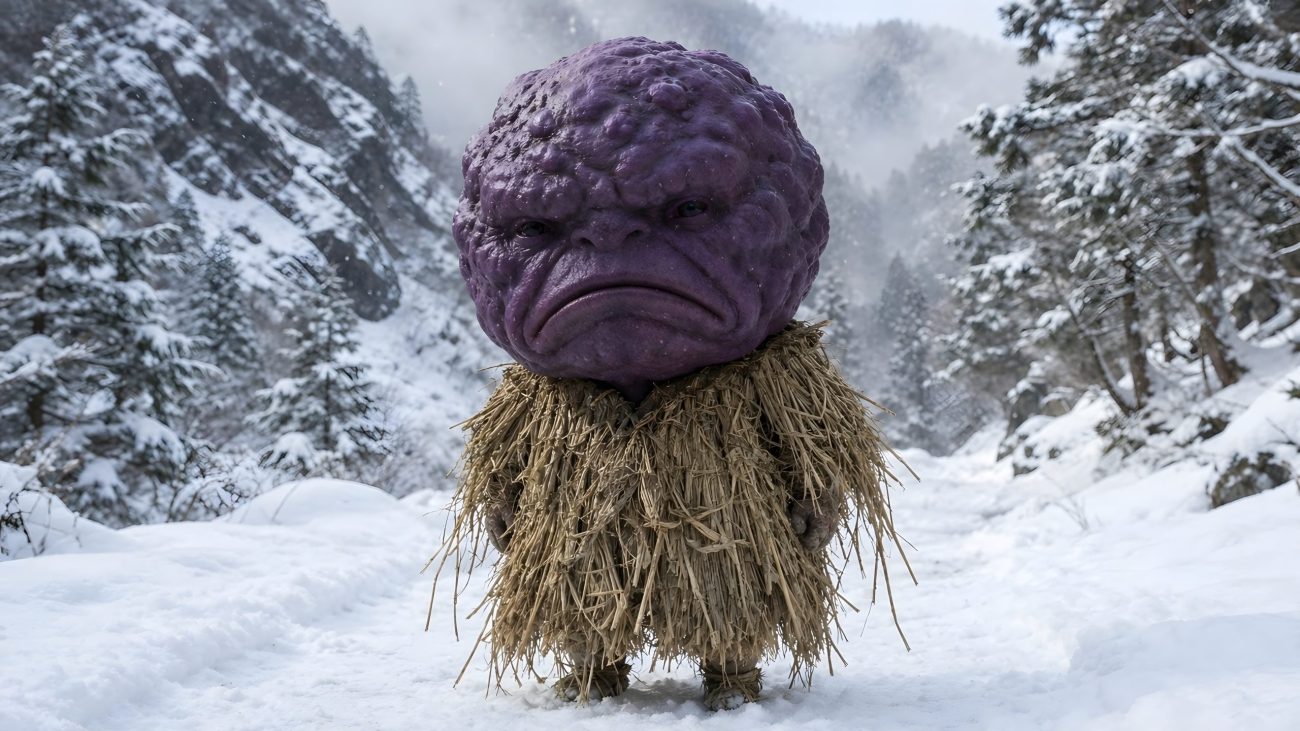
The Abura Sumashi is a strange, squat figure said to haunt the remote mountain paths of Kumamoto. Its most striking feature is its enormous head, rough and misshapen like a stone or a large potato. Beneath it is a short humanoid body dressed in a coat woven from straw, giving the creature the appearance of a bizarre mountain traveler.

It is rarely seen. The Abura Sumashi is said to remain deep in the mountains, particularly around the secluded passes of southern Japan where wild tea grows. Travelers may sometimes encounter one without warning, appearing seemingly from nowhere before disappearing back into the wilderness.

The most famous Abura Sumashi is associated with the Kusazumigoe Pass. The creature has a peculiar habit of making its presence known without necessarily revealing itself. An elderly woman might walk along the pass with her grandchildren and mention that an Abura Sumashi once lived there. A voice from the mountains can then suddenly answer that it still lives there. Only on rare occasions does the creature actually step out before those who have heard it.

The name Abura Sumashi means “oil presser,” connecting the yōkai to the traditional production of oil from tea seeds. Producing the oil was difficult and time-consuming, making it a valuable commodity. According to the legend surrounding the creature, thieves who stole oil and escaped into the mountains could avoid punishment during their lifetime, but they could not escape it forever. Their spirits were believed to return as Abura Sumashi, condemned to haunt the mountains as punishment for their crimes.


Sources

“Aburasumashi.” Yokai.com: The Japanese Yokai Encyclopedia. Accessed October 4, 2026.
https://yokai.com/aburasumashi/


Permonik

Tradition / Region: Czech Mythology, Slovak Mythology
Alternative names: Permoník, Permon, Perkmont, Perkajst, Berggeist
Category: Spirit, Dwarf


The Myth

The Permonik is a supernatural mine spirit said to dwell deep beneath the mountains and mining tunnels of the Czech and Slovak lands, especially in regions such as Kladno, Příbram, Kutná Hora, Moravia, and central Slovakia. Miners feared and respected these underground beings for centuries.

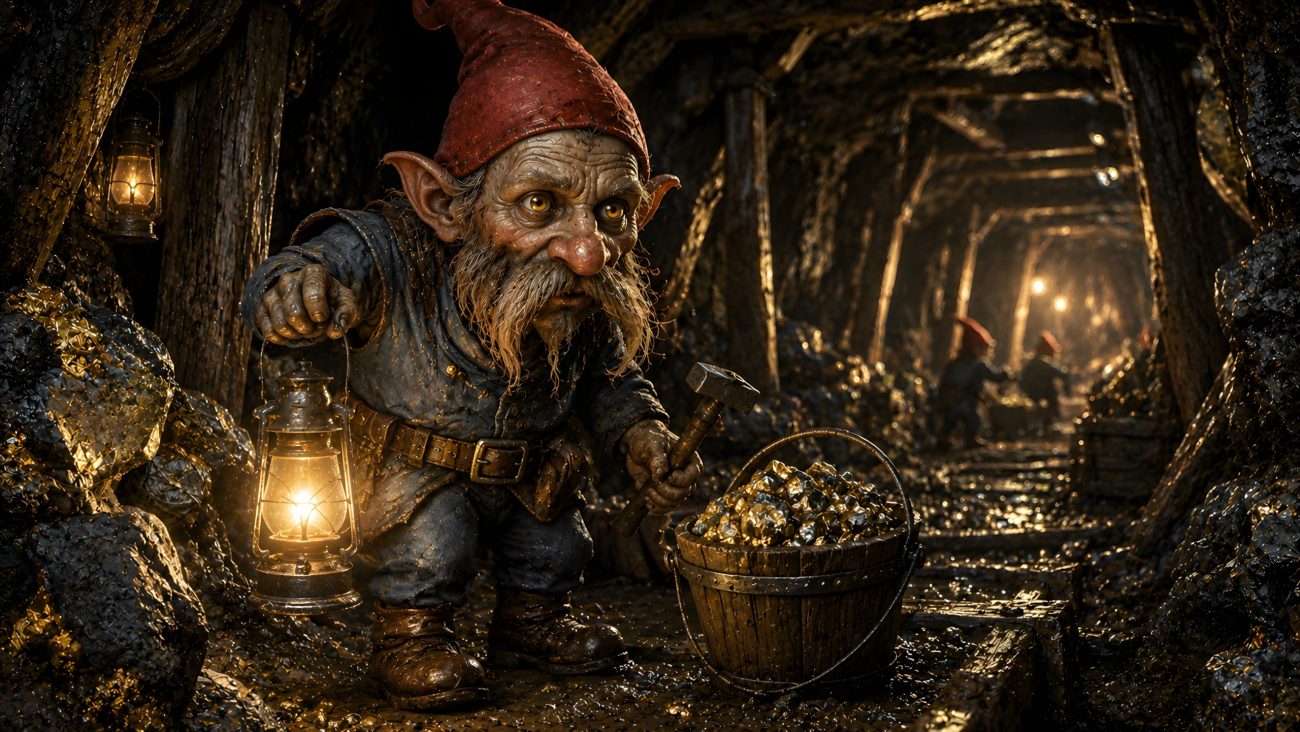
Permoniks are usually described as small dwarf-like figures with enormous heads, broad shoulders, and short legs. They wear the clothing of miners and often carry lamps, buckets, hammers, or mining tools. In some traditions they appear with long moustaches, pointed red caps, and blue clothing. Elsewhere they may take the form of mice, toads, or tiny angelic boys.

These spirits lived in large underground communities hidden within shafts and tunnels. They mined ore themselves, gathered precious metals, washed gold, and guarded hidden veins deep inside the earth. Miners believed that hearing the sounds of Permoniks working underground was a sign that rich deposits of ore were nearby.

The Permoniks could warn miners about cave-ins, accidents, or dangerous explosions, but they were easily angered by greed, disrespect, swearing, whistling, or loud noises inside the mine. Those who violated mining customs risked being punished or trapped forever underground.

When miners encountered a Permonik, tradition required them to greet it loudly with the words “Zdař Bůh” — “God help you.” If the creature blocked the passage and refused to move, the miner was expected to crawl between its legs to avoid offending it.

Offerings of food and proper respect earned the goodwill of the Permoniks. In return, they sometimes guided poor miners toward hidden gold or valuable ore and protected honest workers from danger beneath the mountains.

The name “Permonik” comes from medieval German mining traditions and is related to the word Bergmännchen, meaning “little miner.” Similar beings appear throughout Slavic and Germanic folklore, including kobolds, skarbniki, mine dwarves, and mountain spirits, but the Permonik became one of the best-known underground spirits of the Czech and Slovak mining world.


Sources

Bestiary.us. (n.d.). Permonik. Retrieved May 18, 2026, from https://www.bestiary.us/permonik/


Subterranean Algerian Dwarf

Tradition / Region: Algerian Mythology
Alternative Name: —
Category: Dwarf


The Myth

In Kabyle mythology, beneath the world of humans exists another hidden world beneath the earth. This underground realm is described as a dark and inverted version of the human world — a shadowy place where sterility reigns and where everything exists in opposition to normal life.

The subterranean world is inhabited by many strange beings, including spirits, giants, ogres, ogresses, and swarms of mysterious dwarves sometimes compared to ants because of their numbers and constant movement. Though the landscapes beneath the earth resemble mountains, forests, ravines, and pastures found in the human world, everything there is reversed or corrupted. Sheep are black, goats produce black milk, and productive human activities become twisted parodies.

Legends say that the first humans originally emerged from this underground world before coming to the surface and establishing the fertile world of humankind. Openings such as wells, caves, hidden doors, or iron slabs sometimes allow passage between the two realms. Heroes, serpents, spirits, and even the dead can travel between them.

The underground beings are especially feared at night, when the boundary between worlds weakens and creatures from below wander into human lands. Only the brave or the spiritually protected are believed capable of resisting the dangerous forces that emerge after dark.

One Kabyle myth explains the cycle of day and night through two brothers in the underworld who endlessly unwind two balls of yarn: one made of white thread that brings daylight, and one made of black thread that brings night.


Sources

Tadukli.free.fr. (2006, July 22). Éléments de mythologie kabyle. Retrieved May 10, 2026, from https://tadukli.free.fr/pages/culture/histoire_01_elements_de_mythologie_kabyle.htm