Gargouille

Tradition: French Mythology
Alternative Names: La Gargouille, Goji, Gargoyle
Category: Dragon


The Myth

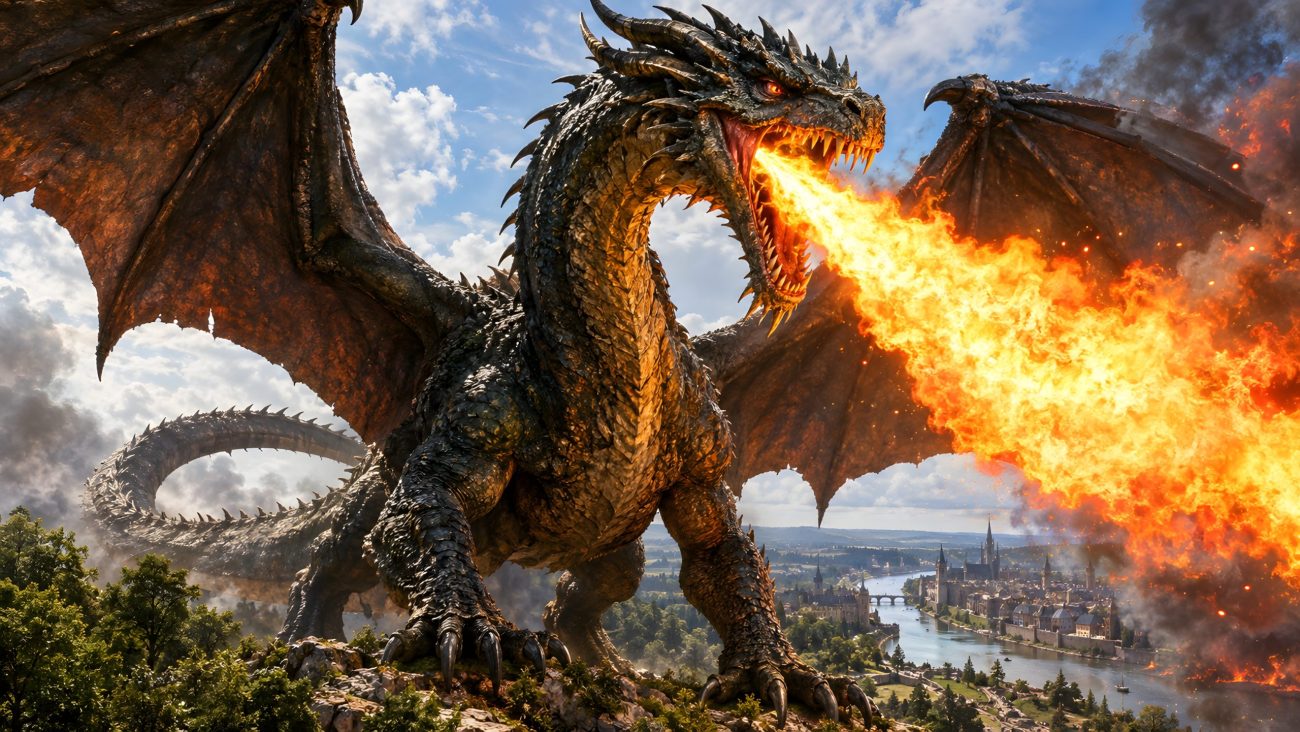
Gargouille was a terrible dragon that terrorized the countryside around Rouen. It had the appearance of a typical Western European dragon, with bat-like wings, a long neck, and the ability to breathe fire.

The monster was eventually confronted by Saint Romanus, the bishop of Rouen. In one version of the legend, Saint Romanus subdued Gargouille with a crucifix. In another, he captured the beast with the help of a condemned man who was the only person brave enough to volunteer.

The saint then led the captured dragon back to Rouen. There, the people burned the monster, but its head and neck refused to be consumed by the flames. Having been hardened by its own fiery breath, these parts of Gargouille survived the fire.

The surviving head and neck were mounted upon the walls of Rouen Cathedral. The monstrous remains were said to protect the church from evil spirits, transforming the defeated dragon into a guardian of the sacred building.


Sources

“Gargoyle.” Wikipedia: The Free Encyclopedia. Wikimedia Foundation. Accessed October 3, 2026.
https://en.wikipedia.org/wiki/Gargoyle


Hong

Tradition: Chinese mythology
Alternative Names: Jiang, Rainbow Dragon
Category: Dragon


The Myth

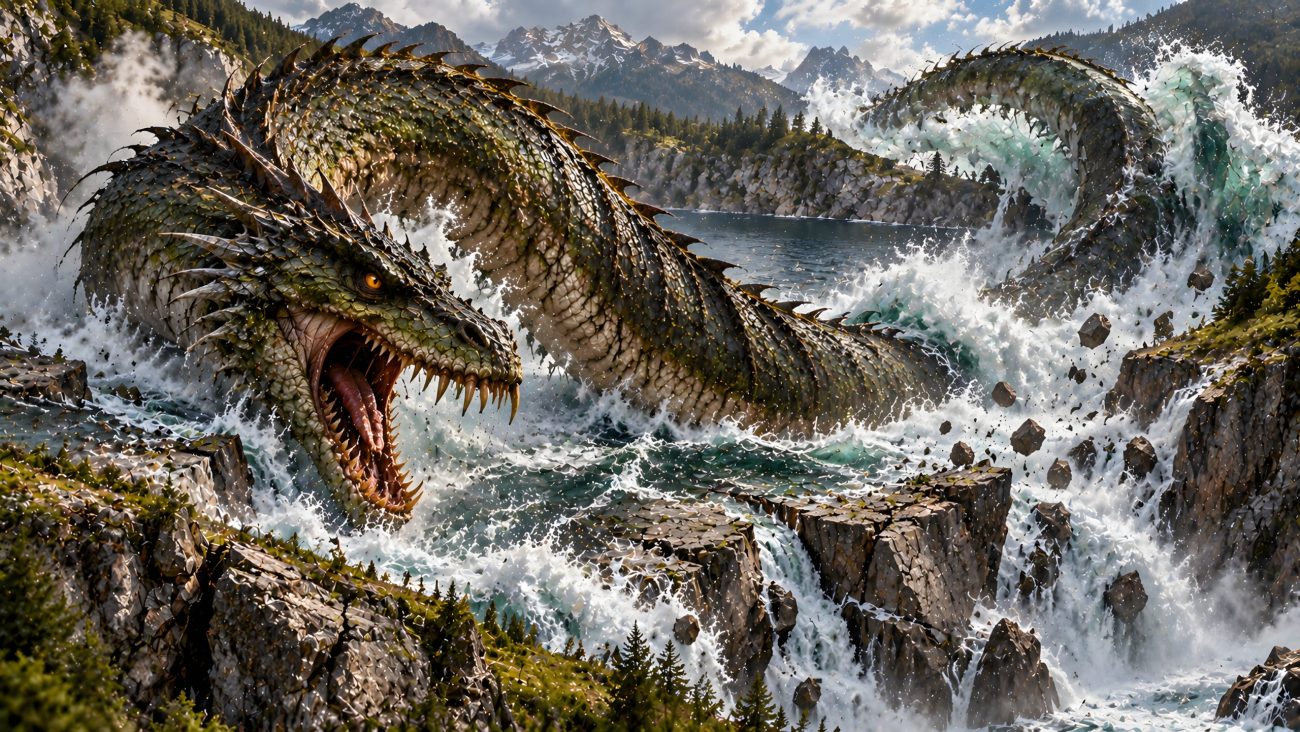
Hong is a strange Chinese dragon associated with the rainbow. It is depicted as a great serpentine or dragon-like creature with a head at each end of its body, forming the arched shape of a rainbow across the sky.

The oldest known representations of the Chinese word for “rainbow” depict an arched serpent or dragon with open-mouthed heads at both ends. Early Chinese tradition therefore connected the rainbow itself with a supernatural dragon. In some early representations, the creature was specifically shown with two dragon heads, one at either end of the arc.

Hong was associated with the changing of the weather. The appearance of a rainbow marked the end of rain and the return of clear skies. The dragon was therefore understood as a being capable of moving between the heavens and the earth: when ascending, the dragon could bring thunder and heavy rain, while its descent was associated with the ending of the storm and the clearing of the sky.

The rainbow thus became a manifestation of the dragon itself. What appeared in the heavens as a brilliant arc was imagined as the body of a supernatural dragon, with its two heads extending beyond the visible ends of the rainbow.


Sources

“Hong (rainbow dragon).” Wikipedia: The Free Encyclopedia. Wikimedia Foundation. Accessed October 3, 2026.
https://en.wikipedia.org/wiki/Hong_(rainbow-dragon)


Azhdarkha

Tradition: Kazakstan Mythology
Alternative Names: Azhdaha, Azhdarkho, Azhydar, Azhydakha, Aydahar, Aydagar, Aydhar, Ezhedar, Ezderha
Category: Dragon


The Myth

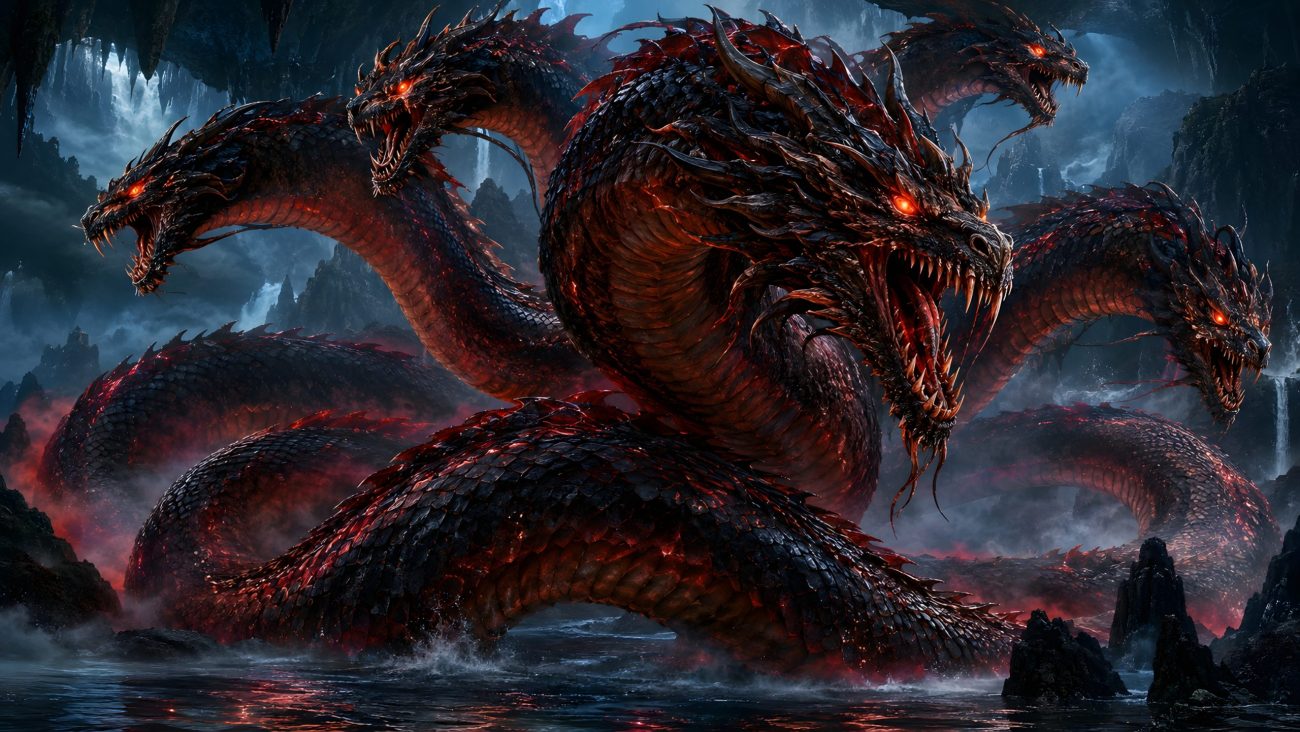
Azhdarkha is a fearsome multi-headed dragon and demonic creature known among Turkic-speaking peoples across Asia Minor and Central Asia, Kazakhstan, the North Caucasus, the Volga region, and Western Siberia. It is associated with enormous size, supernatural power, and the waters and wilderness where such creatures were believed to dwell. Azhdarkhas could also take the form of serpents and, in some traditions, assume other shapes.

The creature was feared as a destructive being that preyed upon humans and animals. Azhdarkhas were said to cause great devastation, sometimes destroying entire settlements and carrying away people. One particularly feared custom attributed to them was the abduction of beautiful young women, especially the daughters of rulers. In some traditions, the creature’s appetite was directed toward children as well.

Azhdarkha could also enter the human world in more deceptive forms. Among the Mishar Tatars, it was said that an azhdarkha could take the form of a serpent and enter a widow’s home disguised as her deceased husband, seeking to approach her without revealing its true nature. Azerbaijani tradition likewise tells of an azhdarkha inhabiting the womb of a pregnant woman and killing the unborn child.

The creature’s nature was not fixed. An azhdarkha could remain a dragon, transform into a snake, or assume the appearance of other living beings. It was believed that an azhdarkha became increasingly powerful as it grew older. One tradition held that if the creature survived for many years—forty, one hundred, or even a thousand—and never encountered a human being, it would eventually transform into a Yūha, an almost perfect supernatural serpent or werewolf-like snake.

In tales of heroes, the Azhdarkha usually becomes the great obstacle standing between a threatened community or princess and salvation. Its defeat follows the familiar pattern of the dragon-slayer: a courageous champion confronts the monster and kills it with a sword, often rescuing a princess or another captive in the process.

The wider tradition also preserves a connection between Azhdarkha and the ancient Iranian dragon Aži Dahāka. In Iranian mythology, Aži Dahāka is a three-headed dragon-like being who rules Iran after the fall of its first king, Yima. He is eventually defeated and chained within Mount Damavand, where tradition holds that he will one day break free. The Turkic Azhdarkha shares this ancient dragon tradition while developing into its own widespread body of folklore.


Sources

“Аждарха (Adzharkha).” New Bestiary (Bestiary.us). Accessed October 3, 2026.
https://www.bestiary.us/adzharha

Broken Lindworm

Tradition: Austrian Mythology
Alternative Names: Griffen Lindworm
Category: Dragon


The Myth

A terrible Lindworm once lived near Griffen, where it became a menace to both people and livestock. Since neither humans nor animals were safe from the monster, the inhabitants devised a plan to destroy it.

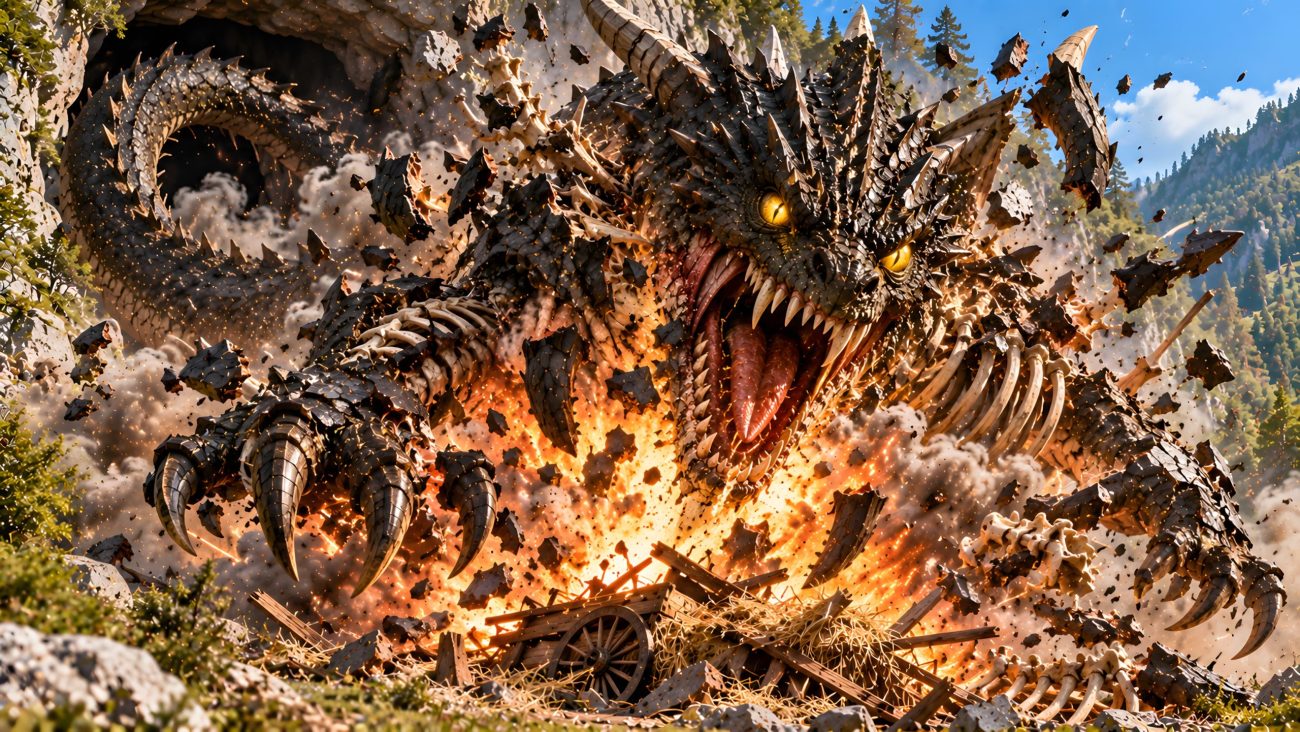
A farmhand was ordered to drive a team of oxen directly toward the Lindworm’s lair. A wagon loaded with hay was placed behind them, but hidden within the hay were gunpowder and a long fuse. The dragon seized the bait, pulling the oxen, the farmhand, and the wagon toward its lair before devouring them all.

At the right moment, a brave man ignited the fuse. The concealed gunpowder exploded inside the dragon, tearing the Lindworm apart.

For a long time afterward, the monster’s enormous skeleton could still be seen. The farmhand who had been sacrificed in the plan was not forgotten, and the people of Griffen prayed for him for many years.


Sources

“Der gesprengte Lindwurm.” SAGEN.at – Traditionelle Sagen aus Österreich (Kärnten). Reproduced by SAGEN.at.
https://www.sagen.at/texte/sagen/oesterreich/kaernten/allgemein/dergesprengtelindwurm.html


Windwurm of Lake Goggau

Tradition: Austrian Mythology
Alternative Names: Goggau Windwurm, Windwurm of Goggau
Category: Dragon


The Myth

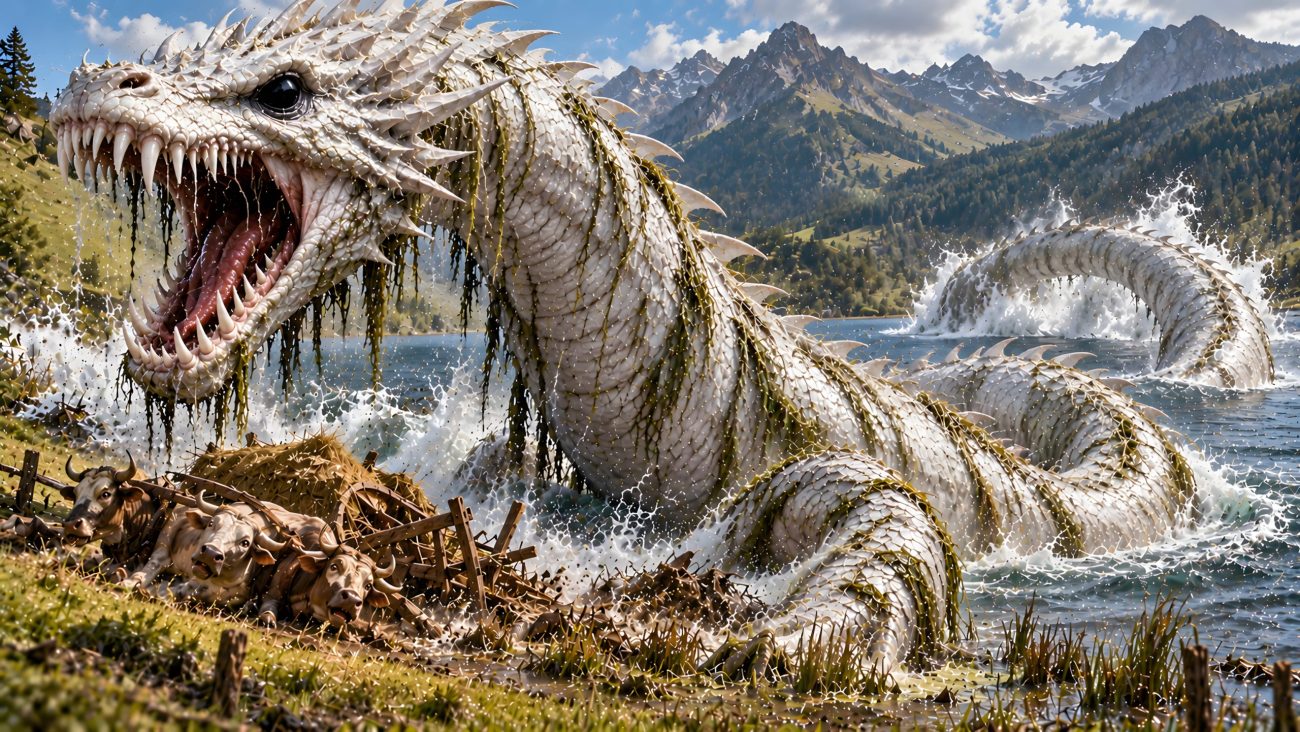
A terrible Windwurm once lived in Lake Goggau. According to the farmers of the surrounding area, the monster began its life in a most unusual way: a seven-year-old rooster laid a red egg in a manure pile, and three years later a dragon hatched from it.

The creature grew with astonishing speed, becoming a gigantic monster that devoured the animals of the surrounding countryside and eventually became a danger to humans as well. For a long time, the farmers could find no way to destroy the beast.

At last, an old man from the Wimitzgraben, who was also said to possess the powers of witchcraft, devised a plan. He concealed a large black lump filled with powerful poison inside a hay wagon and harnessed a pair of oxen to it.

No one was willing to drive the wagon to the lake, so the task was given to a farmhand known as the “Goggau-Togger.” As he passed Lake Goggau, the Windwurm spotted the oxen. With a tremendous leap, the dragon burst from the water and devoured the oxen, the wagon, and the farmhand.

The poison soon began to take effect inside the monster. The Windwurm writhed and strained in agony, until eventually the poison killed it.

Even into the last century, people were said to have seen remnants of the dragon’s bones around Lake Goggau.


Sources

“Der Goggausee.” SAGEN.at – Traditionelle Sagen aus Österreich (Kärnten). Reproduced by SAGEN.at.
https://www.sagen.at/texte/sagen/oesterreich/kaernten/allgemein/goggausee.html


Dragon of Goldkaul

Tradition: Luxembourgish Mythology
Alternative Names: Goldkaul Dragon
Category: Dragon


The Myth

In ancient times, a knight’s castle stood in the area called Burgkopf near Consdorf. A widow lived there with her daughter, and the two were constantly quarrelling. Although the daughter was still underage, she was already eager to marry and demanded her inheritance in gold every day.

The widow refused to give it to her. As their arguments grew more bitter, the mother’s patience finally broke. She took a chest filled with money, threw it at her daughter’s feet, and cursed her into the depths of the earth.

The mother’s curse came true. The greedy girl disappeared into the abyss together with her chest, and the nearby village of Eonsbrück vanished with her. The place is still called Goldkaul.

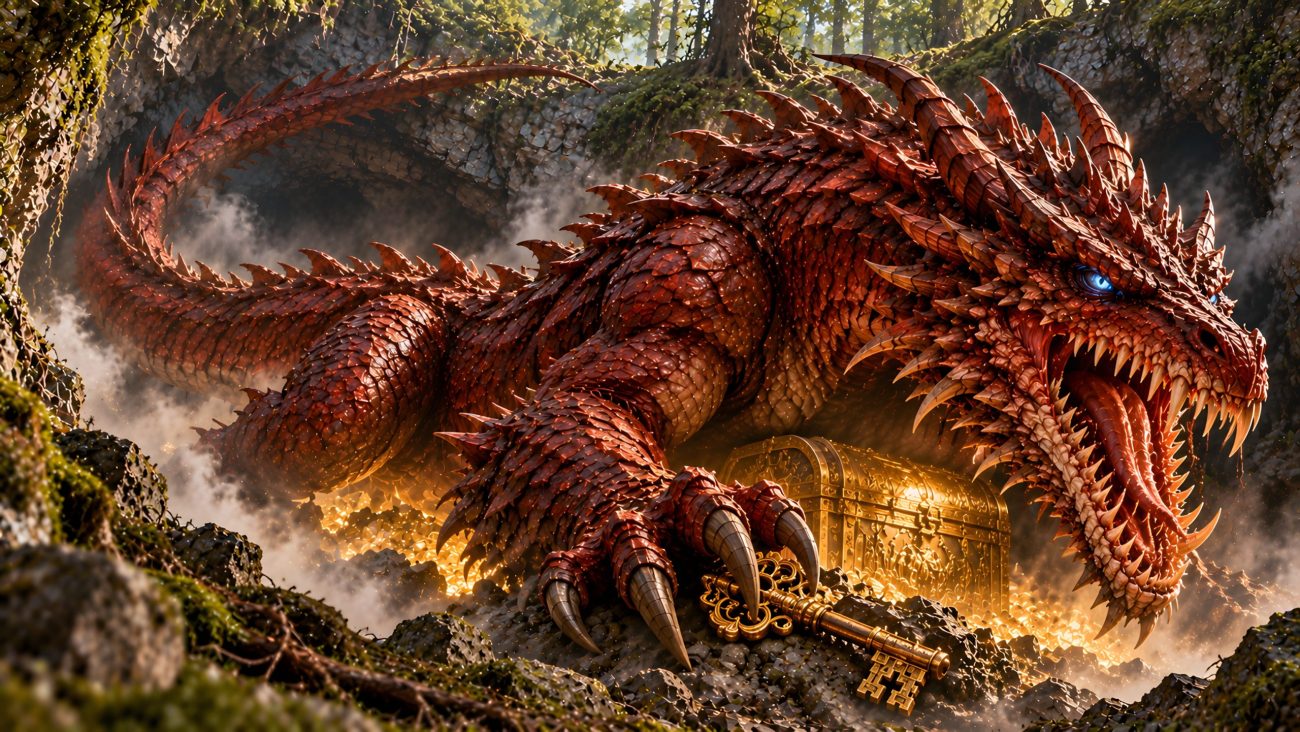
During the day, an eerie mist rises from the pit. It is said to be either the breath of the unfortunate girl or the breath of a fierce dragon whose fiery jaws guard the key to the chest of gold.

When the full moon shines at midnight, the shadowy figure of the cursed daughter can be seen flying from tree to tree. She waits for someone to free her, but only a person in a state of grace and filled with holy courage will be able to approach the dragon and seize the key from its possession.


Sources

“Der Kampf mit dem Lindwurm.” SAGEN.at – Traditionelle Sagen aus Österreich (Kärnten). Reproduced by SAGEN.at.
https://www.sagen.at/texte/sagen/oesterreich/kaernten/franz_pehr/kampfmitlindwurm.html


Linddur of Klagenfurt

Tradition: Austrian Mythology
Alternative Names: Klagenfurt Linddur, Lindwurm of Klagenfurt
Category: Dragon


The Myth

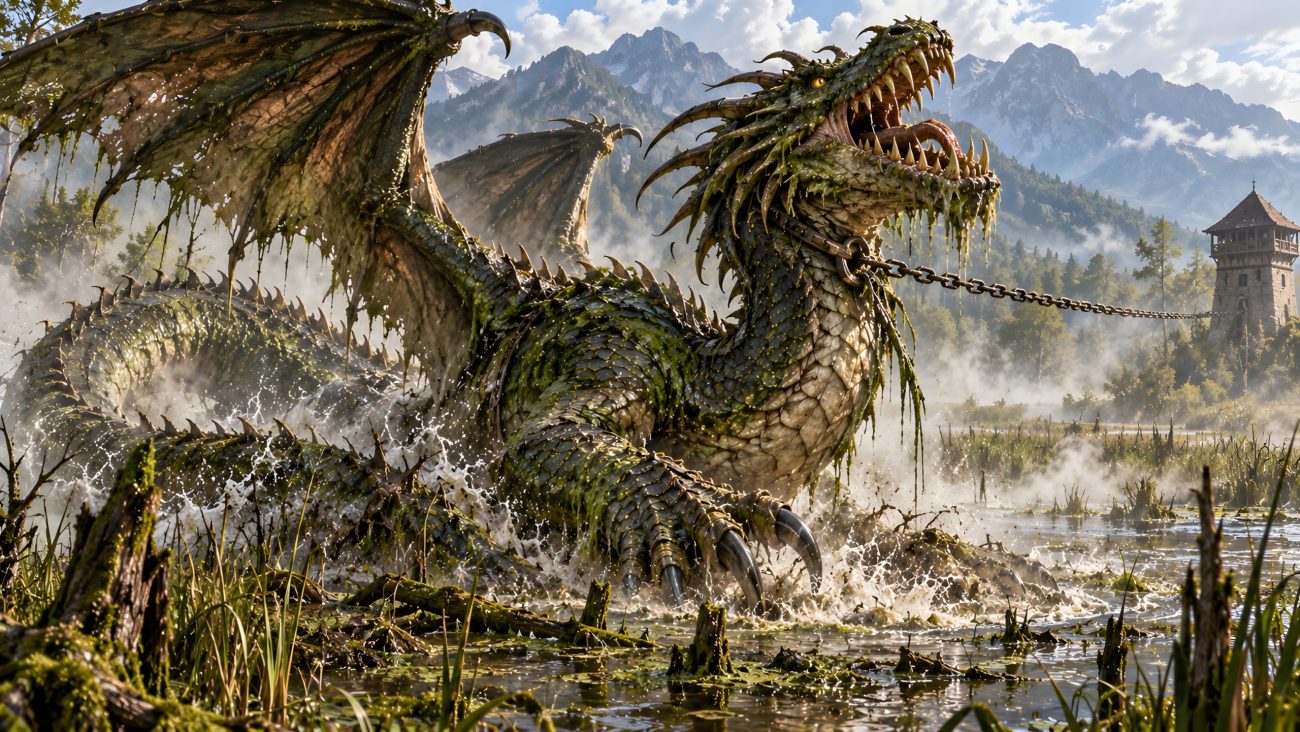
In the time of Duke Karast, the place where Klagenfurt now stands was a wild, swampy wilderness covered in thick thickets. People lived only on the surrounding mountains, for anyone who entered the misty marsh—or sent an animal into it—was unlikely to return. Hidden among the reeds and undergrowth lived a monstrous Linddur that devoured every living thing it could find. Even the bravest men were afraid to venture into the swamp, and shepherds would not dare search for animals that had wandered into it.

To confront the creature, the duke ordered a sturdy tower to be built at the edge of the swamp and summoned brave men from across the land. From the safety of the tower, they were to destroy the monster through cunning or force. He promised freedom, land, and a rich reward to whoever succeeded.

A group of courageous men devised a trap. They fastened a fat bull to a long chain fitted with a barbed hook and concealed themselves inside the tower. The bull’s terrified bellowing echoed across the swamp, drawing the Linddur from its hiding place.

The monster came rushing through the marsh like an arrow. Its wings beat against the water, its body was covered in enormous scales, and its snarling jaws were filled with terrible teeth. It seized the bull with its claws and began to devour it, but suddenly became caught on the barbed hook.

The Linddur thrashed violently, whipping the water with its enormous tail and struggling to escape. Yet every attempt only drove the iron barb deeper into its throat. Unable to free itself, the monster was finally overwhelmed, and the duke’s servants killed it with iron clubs.

With the Linddur dead, the people were finally able to settle the lowlands without fear. The dense undergrowth was cleared, the swamp was drained, and the land was cultivated. The duke eventually replaced the old tower with a castle, and the settlement became the earliest habitation in the Klagenfurt Basin.

The memory of the battle survives in Klagenfurt, where a huge stone dragon stands in New Square and the city’s coat of arms depicts the legendary creature beside the tower.


Sources

“Der Kampf mit dem Lindwurm.” SAGEN.at – Traditionelle Sagen aus Österreich (Kärnten). Reproduced by SAGEN.at.
https://www.sagen.at/texte/sagen/oesterreich/kaernten/franz_pehr/kampfmitlindwurm.html


Amberg Worm

Tradition: Austrian Mythology
Alternative Names: Amberg Lindworm, Worm of Amberg
Category: Dragon


The Myth

In the mountains above the Drava Valley, near the village of Amberg, a great lake once filled the basin where the farmers’ homes now stand. The lake was known as the Black Lake, and deep within its waters lived a hideous dragon that terrorized the surrounding country. Neither people nor animals were safe from the monster.

One day, a tailor came to Amberg and boldly vowed to rid the inhabitants of the dragon. He went to a blacksmith and had a long, pointed needle forged for him. Armed with this strange weapon, he crept into a rocky cave near the dragon and began stabbing and provoking the beast.

The dragon became so furious that it thrashed its enormous tail through the water, whipping the lake into chaos. In its rage, the creature eventually split the surrounding rock, allowing the waters of the Black Lake to rush out toward the Drava River.

The dragon itself was swept away by the rushing water and carried down into the valley, where it perished. Deep cracks and fissures in the rocks are said to remain from the struggle, descending into depths that no one has dared to explore.

The field where the monster finally died is still known as “the Worm.”


Sources

“Der Ambergerwurm.” SAGEN.at – Traditionelle Sagen aus Österreich (Kärnten). Reproduced by SAGEN.at.
https://www.sagen.at/texte/sagen/oesterreich/kaernten/allgemein/ambergerwurm.html


Dragon of Guflina

Tradition: Liechtenstein Mythology
Alternative Names: Guflina Dragon
Category: Dragon


The Myth

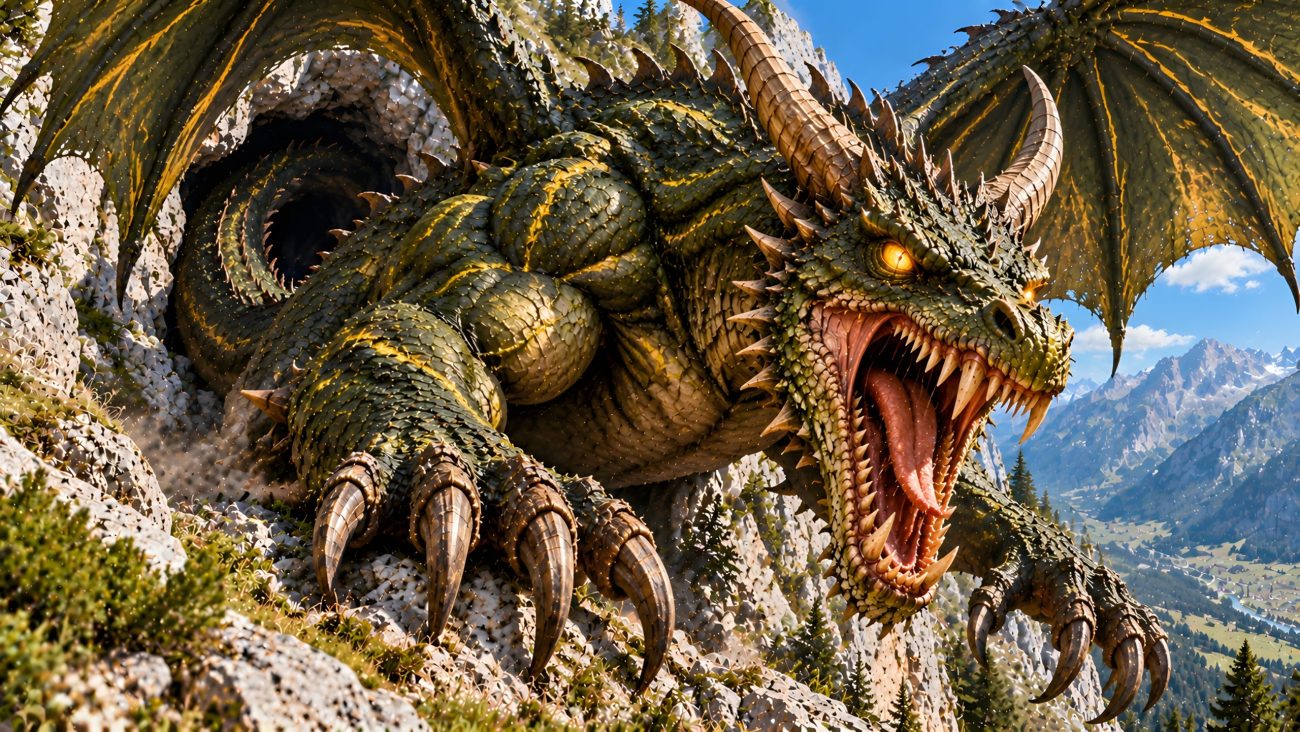
Deep within a rugged cliff on the heights of Silum lived a dragon of terrible size. It was a winged beast with horns upon its head and eyes that burned like two blazing torches.

The dragon was the terror of the miners and mountain folk. Each spring and autumn, when the herds of cattle were driven to the Silum alpine pasture and the Bargella Alp, the monster emerged from its cave at night and attacked the animals, causing great destruction. The attacks brought misery and fear to the people who depended upon the mountain pastures.

At last, the Giant of Guflina dared to face the beast. The dragon emerged from its cave and lunged at the giant, snorting with fury. It struck him heavily across the shoulders and attempted to bury its powerful claws in his flesh and strangle him.

The giant endured the attack. With a sudden movement, he seized the dragon by the neck and drove it against the rocky cliff with both hands. He squeezed with such force that the dragon’s bones cracked, and its throat released a terrible howl that echoed across the mountains.

The miners rushed to the scene and found the dragon lying dead upon the ground. A great cheer rose through the Alpine valleys. With the monster slain, the mountain folk could once again drive their herds safely to the high pastures.


Sources

“Guflina.” SAGEN.at – Traditionelle Sagen aus Liechtenstein. Reproduced by SAGEN.at.
https://www.sagen.at/texte/sagen/liechtenstein/seger/guflina.html


Dragon of Bleika

Tradition: Liechtenstein Mythology
Alternative Names: Dragon of the Bleika
Category: Dragon


The Myth

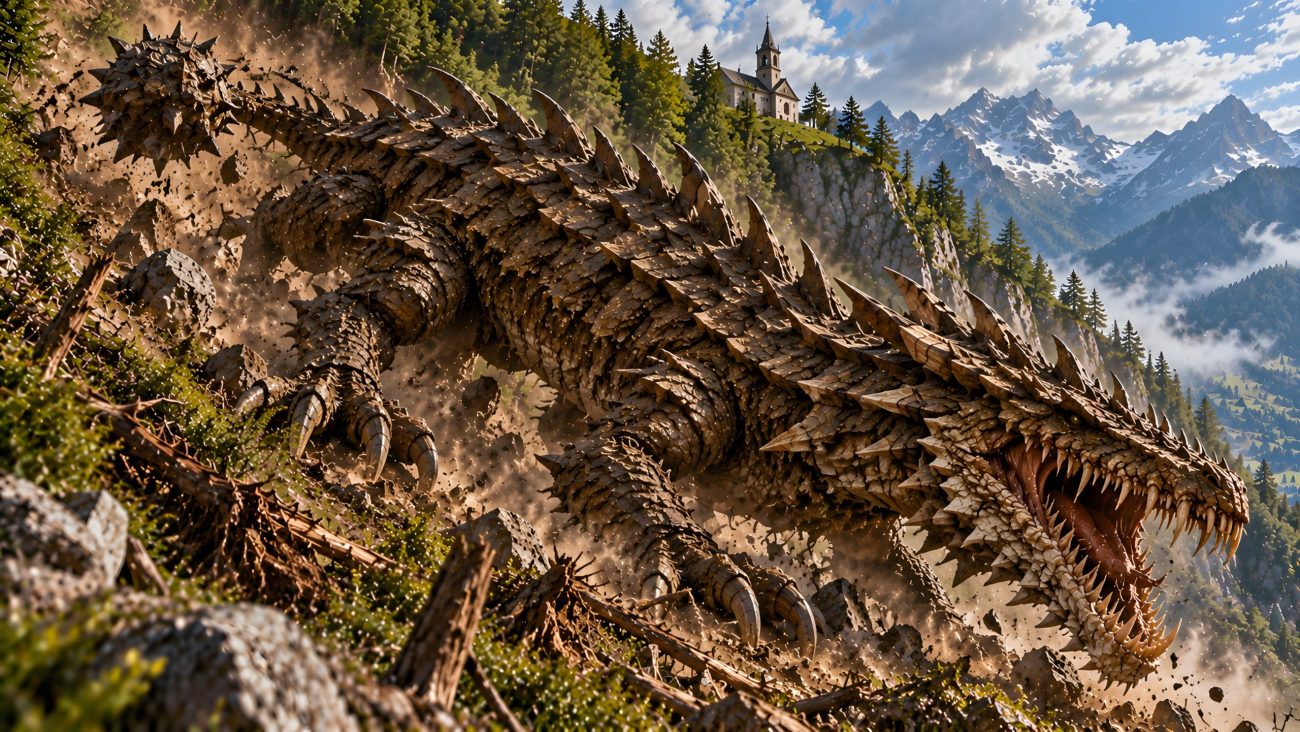
In the Bleika, a tract of land north of the church of Triesenberg covered with beech forest and meadows, a dragon is said to lie hidden beneath the earth.

The dragon will remain there until the stones of the chapels at Litze and St. Wolfgang at Meierhof have all fallen from their places. When not a single stone remains upon another, the dragon will break free, and the entire Bleika will slide down into the valley as a gigantic landslide.


Sources

“Bleika.” SAGEN.at – Traditionelle Sagen aus Liechtenstein. Reproduced by SAGEN.at.
https://www.sagen.at/texte/sagen/liechtenstein/seger/bleika.html