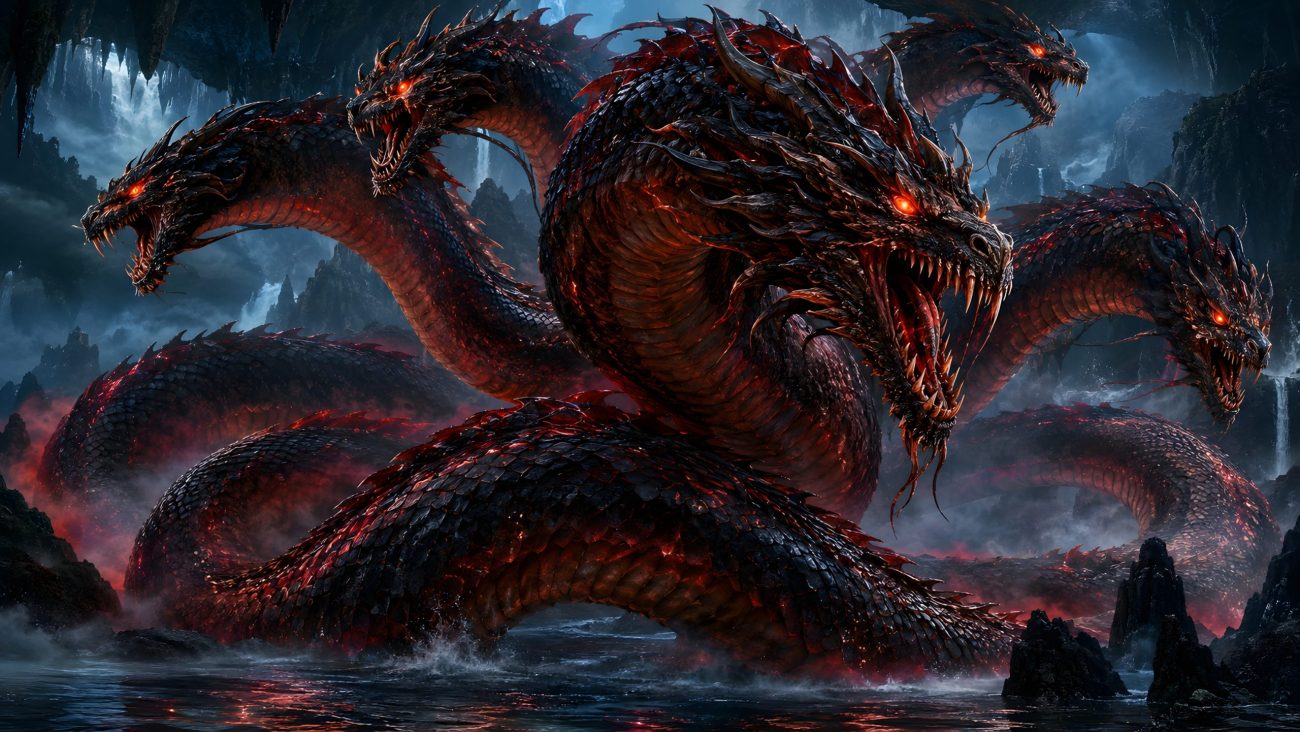
Tradition: Kazakstan Mythology
Alternative Names: Azhdaha, Azhdarkho, Azhydar, Azhydakha, Aydahar, Aydagar, Aydhar, Ezhedar, Ezderha
Category: Dragon
The Myth
Azhdarkha is a fearsome multi-headed dragon and demonic creature known among Turkic-speaking peoples across Asia Minor and Central Asia, Kazakhstan, the North Caucasus, the Volga region, and Western Siberia. It is associated with enormous size, supernatural power, and the waters and wilderness where such creatures were believed to dwell. Azhdarkhas could also take the form of serpents and, in some traditions, assume other shapes.
The creature was feared as a destructive being that preyed upon humans and animals. Azhdarkhas were said to cause great devastation, sometimes destroying entire settlements and carrying away people. One particularly feared custom attributed to them was the abduction of beautiful young women, especially the daughters of rulers. In some traditions, the creature’s appetite was directed toward children as well.
Azhdarkha could also enter the human world in more deceptive forms. Among the Mishar Tatars, it was said that an azhdarkha could take the form of a serpent and enter a widow’s home disguised as her deceased husband, seeking to approach her without revealing its true nature. Azerbaijani tradition likewise tells of an azhdarkha inhabiting the womb of a pregnant woman and killing the unborn child.
The creature’s nature was not fixed. An azhdarkha could remain a dragon, transform into a snake, or assume the appearance of other living beings. It was believed that an azhdarkha became increasingly powerful as it grew older. One tradition held that if the creature survived for many years—forty, one hundred, or even a thousand—and never encountered a human being, it would eventually transform into a Yūha, an almost perfect supernatural serpent or werewolf-like snake.
In tales of heroes, the Azhdarkha usually becomes the great obstacle standing between a threatened community or princess and salvation. Its defeat follows the familiar pattern of the dragon-slayer: a courageous champion confronts the monster and kills it with a sword, often rescuing a princess or another captive in the process.
The wider tradition also preserves a connection between Azhdarkha and the ancient Iranian dragon Aži Dahāka. In Iranian mythology, Aži Dahāka is a three-headed dragon-like being who rules Iran after the fall of its first king, Yima. He is eventually defeated and chained within Mount Damavand, where tradition holds that he will one day break free. The Turkic Azhdarkha shares this ancient dragon tradition while developing into its own widespread body of folklore.
Sources
“Аждарха (Adzharkha).” New Bestiary (Bestiary.us). Accessed October 3, 2026.
https://www.bestiary.us/adzharha