Fairy of Sonnwendjoch

Tradition: Austrian Mythology
Alternative Names: Fairy of the Sonnwendjoch
Category: Fairy


The Myth

The Fairy of the Sonnwendjoch was a proud and beautiful supernatural mistress of the mountain, living deep inside the Sonnwendjoch near Rattenberg. She protected the wild creatures that lived among its slopes and rocky clefts and regarded all the animals of the mountain as her own. Within the mountain lay a magnificent hidden kingdom of glittering palaces, great halls with crystal ceilings and reddish marble walls, gardens whose trees never withered, green meadows filled with peaceful herds, and clear streams winding through the mountain’s depths.

One day, a young knight from Mehrnstein Castle was hunting a chamois near the foot of the mountain when the fairy appeared before him and demanded to know why he was hunting on her land. She warned him that every animal belonged under her protection and commanded him never again to pursue the mountain’s creatures if he wished to have her favor. The knight agreed, and the fairy led him into her hidden kingdom. She fell in love with him and gave him a magical ring as a token of their bond. From then on, the knight continued to ride out as though going hunting, but instead secretly visited the fairy inside the mountain. Although he had once been a famous hunter, he never returned with game, and his friends wondered why he no longer showed interest in hunting or in the noblewomen of the surrounding castles.

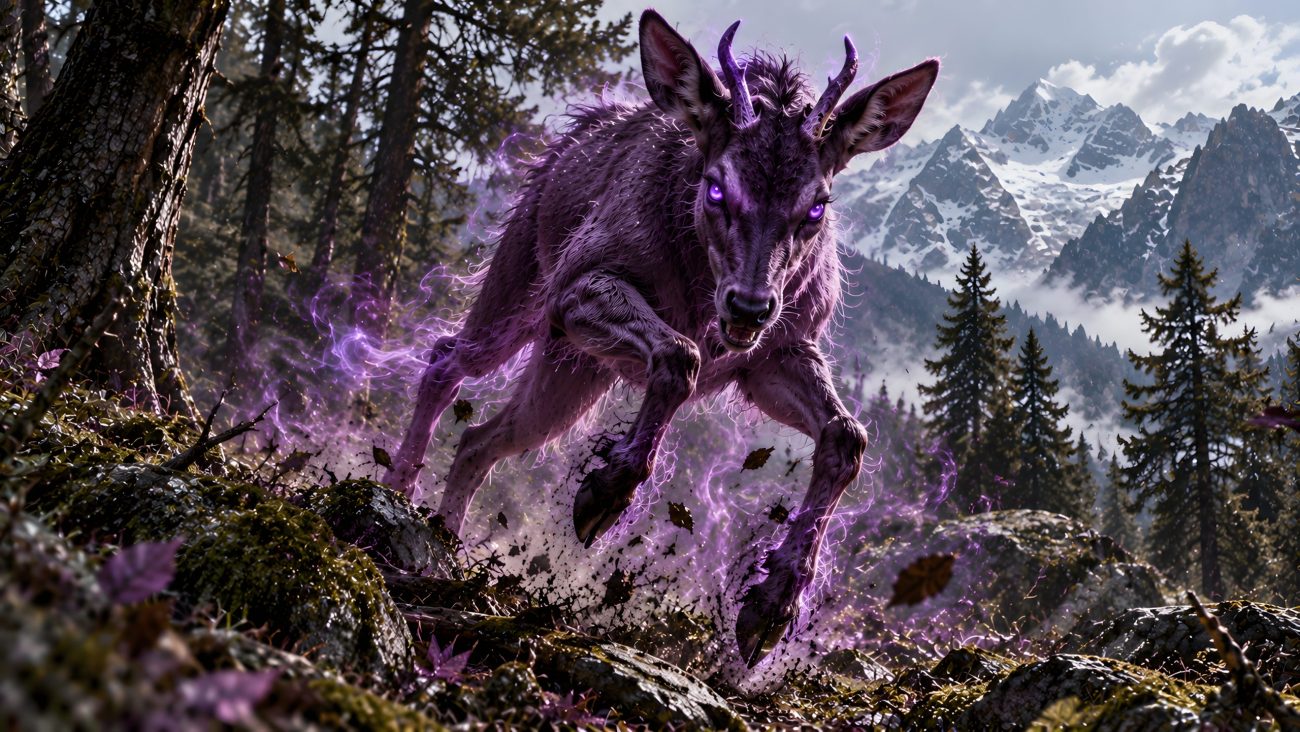
Eventually, the lord of Rattenberg invited the knight to a wedding feast. There he met a beautiful noblewoman from Innsbruck who admired the fairy’s ring and persuaded him to give it to her. The knight immediately regretted his betrayal and hurried back to the Sonnwendjoch the following morning to beg the fairy’s forgiveness. On the way, however, a white deer crossed his path and awakened his old hunting instinct, causing him to pursue it toward the mountain. He reached the rock where he had always entered the fairy’s kingdom by tapping with the ring, but the ring was gone and the entrance would not open. The fairy appeared before him holding the ring and told him that he had broken his promise three times: he had been unfaithful, had allowed the ring to leave his hand, and had once again chased one of her protected animals. She declared that he would suffer for his betrayal and disappeared forever. As the knight departed, a great mudslide thundered down the mountain and buried a wide area. He was never truly happy again, eventually leaving the Inn Valley and undertaking a pilgrimage to the Holy Land, from which he never returned.


Sources

“Die Fee vom Sonnwendjoch.” In Die schönsten Sagen aus Österreich. n.p., n.d., p. 260. Reproduced by SAGEN.at. https://www.sagen.at/texte/sagen/oesterreich/tirol/unterinntal/sonnwendjoch.html
Dwarf of the Koralpe

Tradition: Austrian Mythology
Alternative Names: Mountain Dwarf of the Koralpe
Category: Dwarf


The Myth

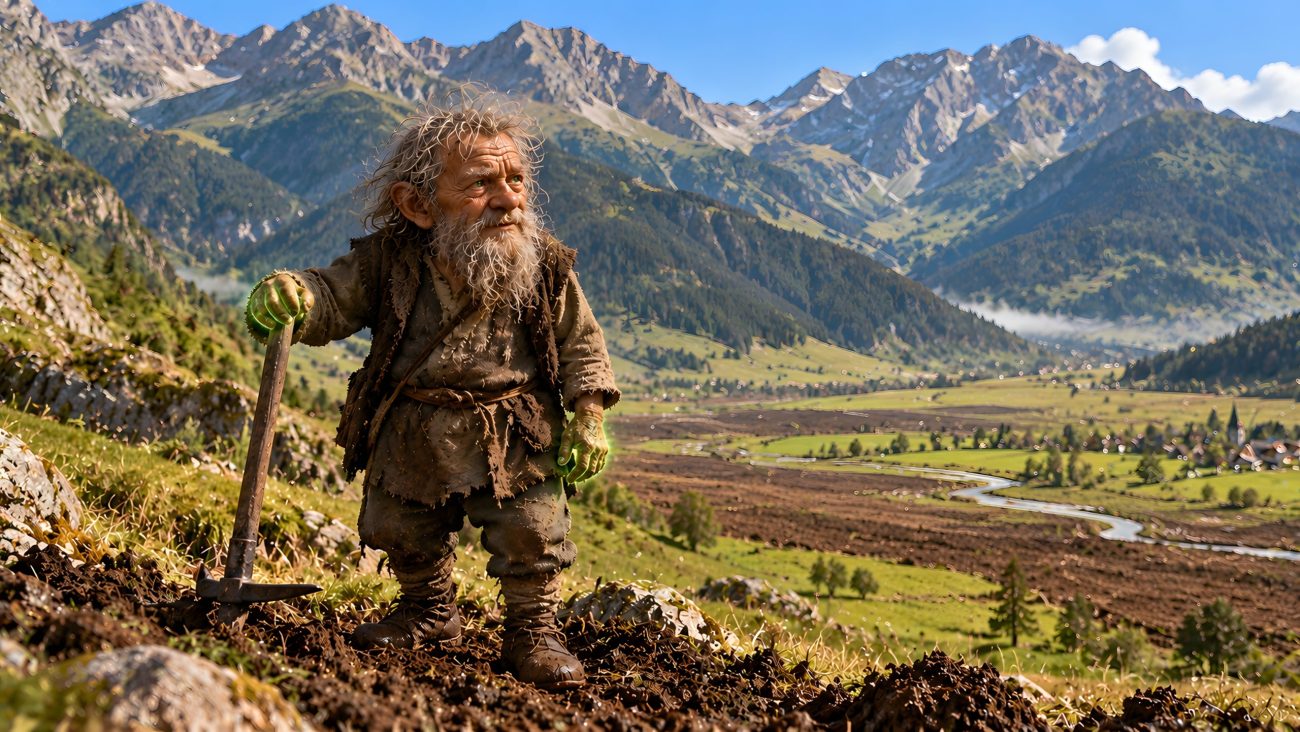
Deep within the Koralpe mountains of Carinthia lived a hidden people of dwarfs. Farmers living around the Lavant Valley could sometimes see the little people moving about in the mountains, apparently busy with some kind of work, although nobody knew what they were doing.

The dwarfs were believed to possess great quantities of gold and other treasures taken from inside the mountains. This rumor eventually made the local farmers greedy. They devised a plan to capture one of the dwarfs and use it to force the others to reveal where their treasure was hidden.

They succeeded in capturing one and kept the little creature prisoner for thirty years. Again and again it insisted that it possessed no treasure, but the farmers refused to believe it. They promised that it would only be allowed to return to its mountain home if it gave them the riches they desired.

After so many years of captivity, the dwarf became overwhelmed by longing for the mountains. At last it told its captors that although it could not give them gold, it could repay them with something that would prove far more valuable to everyone living around the lake.

The people accepted the offer and released the dwarf. A few days later, a tremendous rumbling came from the lake, sounding like distant thunder. The inhabitants rushed toward the water, expecting another disastrous flood.

Instead, they discovered that the lake had vanished.

Where the dark waters had once covered the Lavant Valley lay a broad stretch of rich, muddy earth. The newly exposed land was excellent for fields and meadows, and people soon began settling across it. Villages and settlements gradually appeared throughout the valley, growing prosperous from the fertile ground.

Wolfsberg was eventually built at the place where the lake had once been deepest. The dwarf had given the people something far more valuable than the gold they had sought: an entire valley in which they could live and prosper.


Sources

Franz Pehr. “Der Dank des Bergmännleins.” SAGEN.at – Traditionelle Sagen aus Österreich (Kärnten). Reproduced by SAGEN.at.
https://www.sagen.at/texte/sagen/oesterreich/kaernten/franz_pehr/derdankdesbergmaennleins.html


Dragon of Zirl

Tradition: Austrian Mythology
Alternative Names: Lindworm of Zirl
Category: Dragon


The Myth

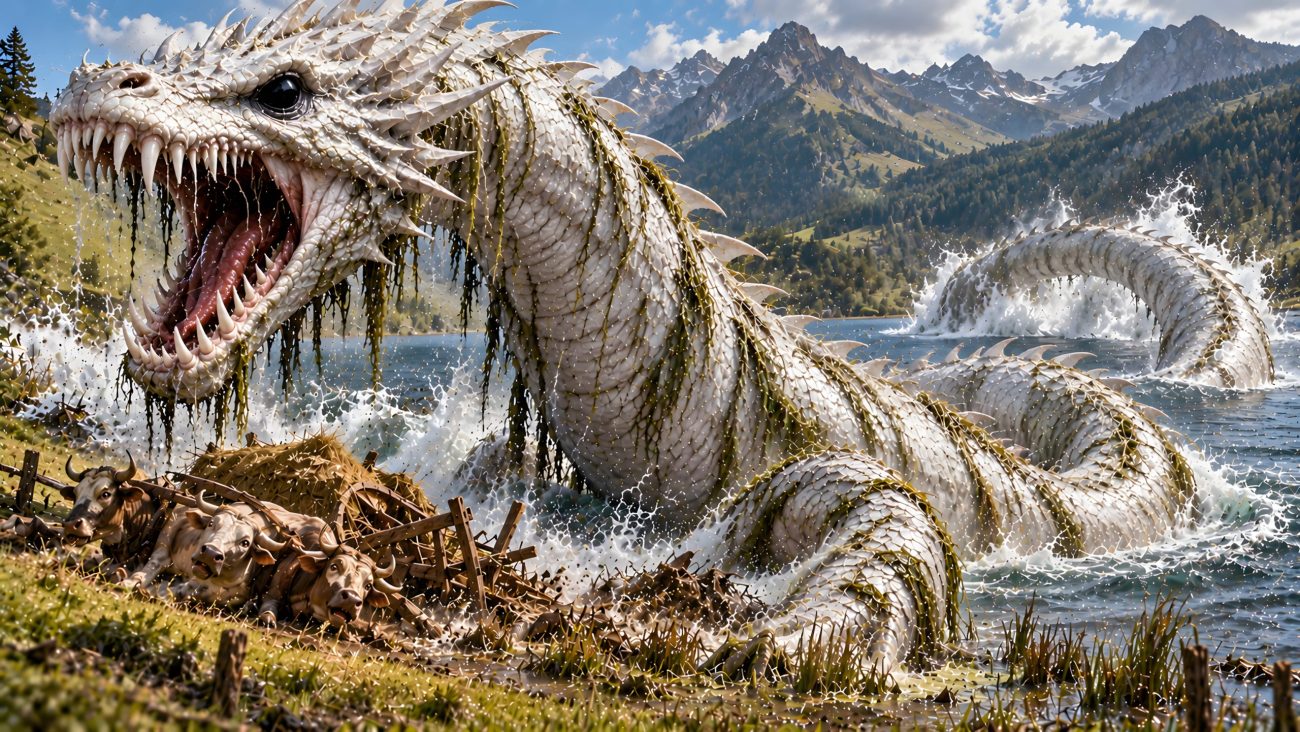
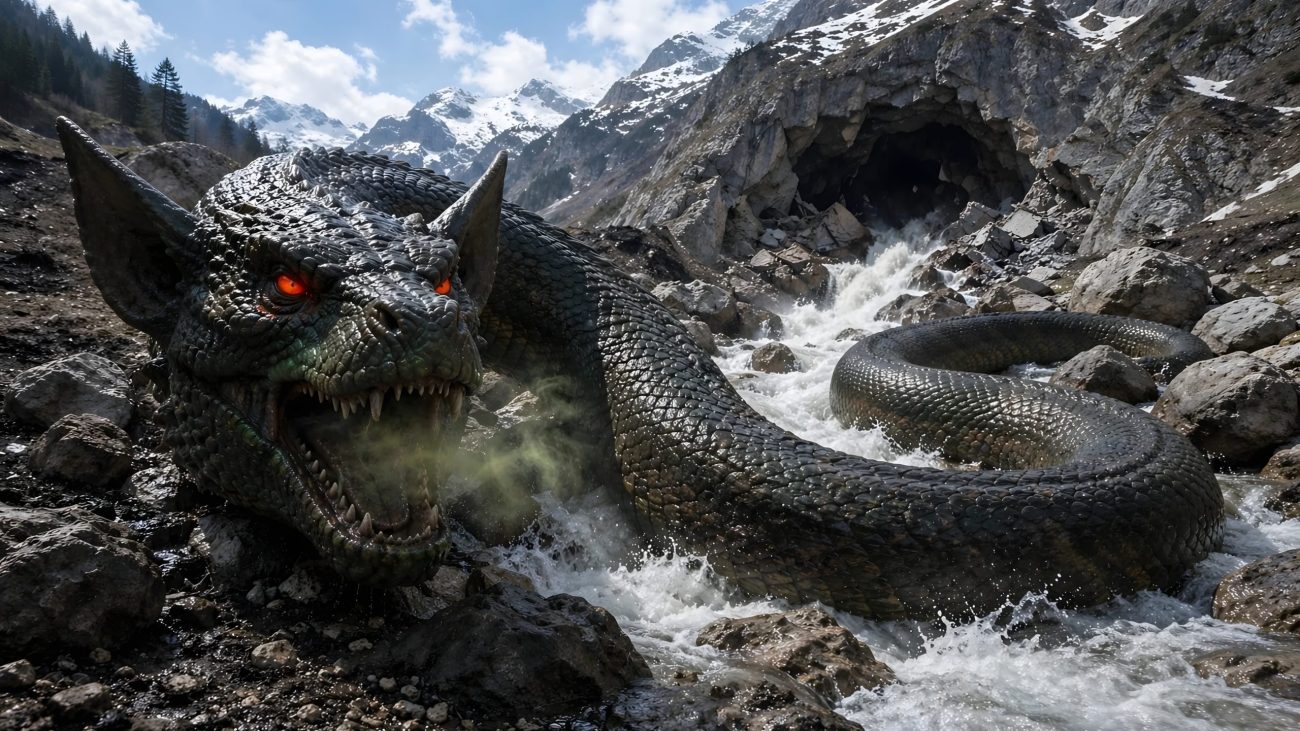
The Dragon of Zirl was a gigantic lindworm, a thick and enormously long serpent with the head of a dragon. It had two large ears and hideous, fiery eyes, and its enormous body was said to be capable of writhing among the rocks even when the creature was nearly dead. It lived for centuries inside a cavern called the Hundstall, near the bridge of Zirl on the road to Inzing.

The monster was feared throughout the surrounding country, for it killed and devoured every living creature that came near its territory. During summer, a small stream flowed through the cavern, though in winter it was almost completely dry. The dragon remained hidden in the Hundstall for generations until a sudden spring thaw changed everything.

When the warm weather arrived and the snow began to melt, the little stream became a tremendous torrent. The rushing water undermined the rocky cavern, tearing enormous pieces of rock from the mountain and sweeping the dragon out with them. The torrent burst into the meadow below, carrying the monster and the shattered rocks with it and flooding the surrounding ground. From then on, the place became known as the Dragon Meadow, and the great breach torn into the mountain by the flood could still be seen.

The dragon was found half dead among the rocks, but it was still writhing and struggling with its enormous body. Nobody dared approach the beast. Instead, the people kept their distance and fired cannons at it until it was finally killed.

Even in its dying state, the lindworm was terrifying. It gasped so violently that those watching from afar were frightened simply by the sound, and there was fear that it might still spit venom. Nothing green was said to grow upon the meadow where the dragon died, leaving the place as a lasting reminder of the creature that had once lurked inside the Hundstall.


Sources

Von Günther, Amalia. Tales and Legends of the Tyrol. London: Chapman and Hall, 1874.


Broken Lindworm

Tradition: Austrian Mythology
Alternative Names: Griffen Lindworm
Category: Dragon


The Myth

A terrible Lindworm once lived near Griffen, where it became a menace to both people and livestock. Since neither humans nor animals were safe from the monster, the inhabitants devised a plan to destroy it.

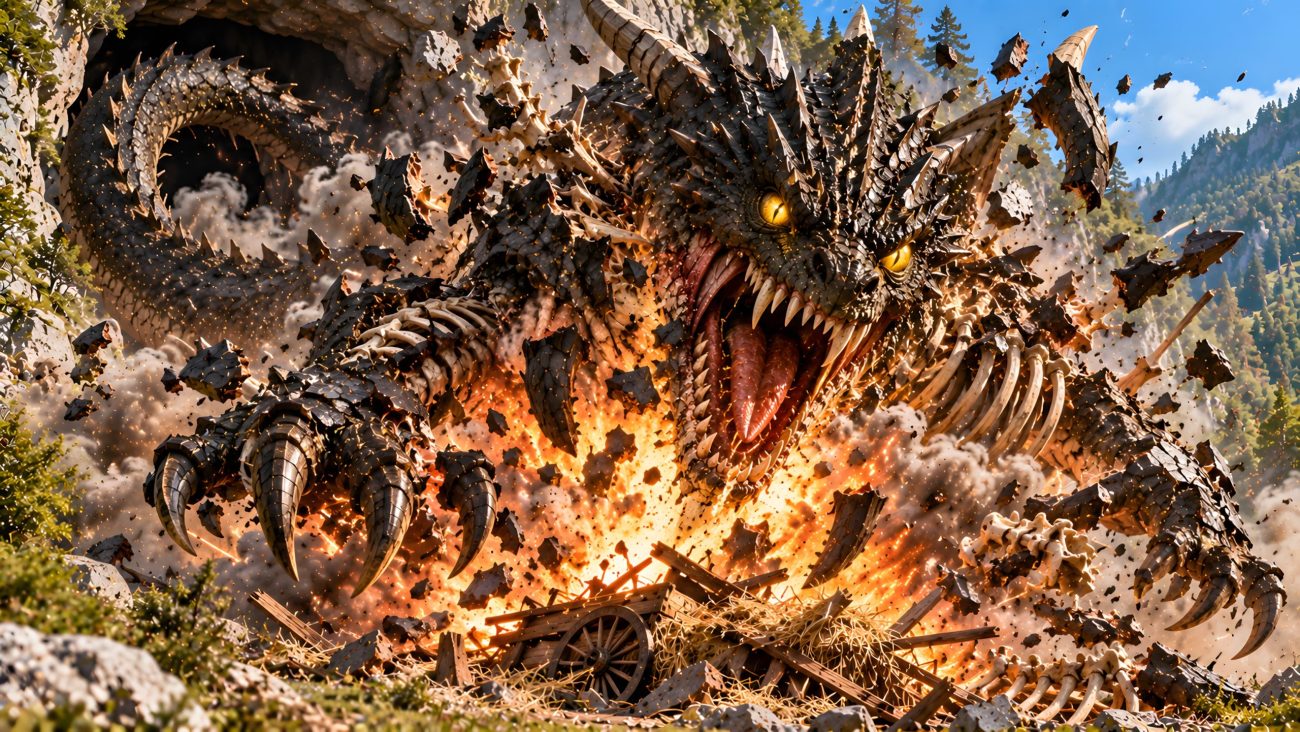
A farmhand was ordered to drive a team of oxen directly toward the Lindworm’s lair. A wagon loaded with hay was placed behind them, but hidden within the hay were gunpowder and a long fuse. The dragon seized the bait, pulling the oxen, the farmhand, and the wagon toward its lair before devouring them all.

At the right moment, a brave man ignited the fuse. The concealed gunpowder exploded inside the dragon, tearing the Lindworm apart.

For a long time afterward, the monster’s enormous skeleton could still be seen. The farmhand who had been sacrificed in the plan was not forgotten, and the people of Griffen prayed for him for many years.


Sources

“Der gesprengte Lindwurm.” SAGEN.at – Traditionelle Sagen aus Österreich (Kärnten). Reproduced by SAGEN.at.
https://www.sagen.at/texte/sagen/oesterreich/kaernten/allgemein/dergesprengtelindwurm.html


Windwurm of Lake Goggau

Tradition: Austrian Mythology
Alternative Names: Goggau Windwurm, Windwurm of Goggau
Category: Dragon


The Myth

A terrible Windwurm once lived in Lake Goggau. According to the farmers of the surrounding area, the monster began its life in a most unusual way: a seven-year-old rooster laid a red egg in a manure pile, and three years later a dragon hatched from it.

The creature grew with astonishing speed, becoming a gigantic monster that devoured the animals of the surrounding countryside and eventually became a danger to humans as well. For a long time, the farmers could find no way to destroy the beast.

At last, an old man from the Wimitzgraben, who was also said to possess the powers of witchcraft, devised a plan. He concealed a large black lump filled with powerful poison inside a hay wagon and harnessed a pair of oxen to it.

No one was willing to drive the wagon to the lake, so the task was given to a farmhand known as the “Goggau-Togger.” As he passed Lake Goggau, the Windwurm spotted the oxen. With a tremendous leap, the dragon burst from the water and devoured the oxen, the wagon, and the farmhand.

The poison soon began to take effect inside the monster. The Windwurm writhed and strained in agony, until eventually the poison killed it.

Even into the last century, people were said to have seen remnants of the dragon’s bones around Lake Goggau.


Sources

“Der Goggausee.” SAGEN.at – Traditionelle Sagen aus Österreich (Kärnten). Reproduced by SAGEN.at.
https://www.sagen.at/texte/sagen/oesterreich/kaernten/allgemein/goggausee.html


Linddur of Klagenfurt

Tradition: Austrian Mythology
Alternative Names: Klagenfurt Linddur, Lindwurm of Klagenfurt
Category: Dragon


The Myth

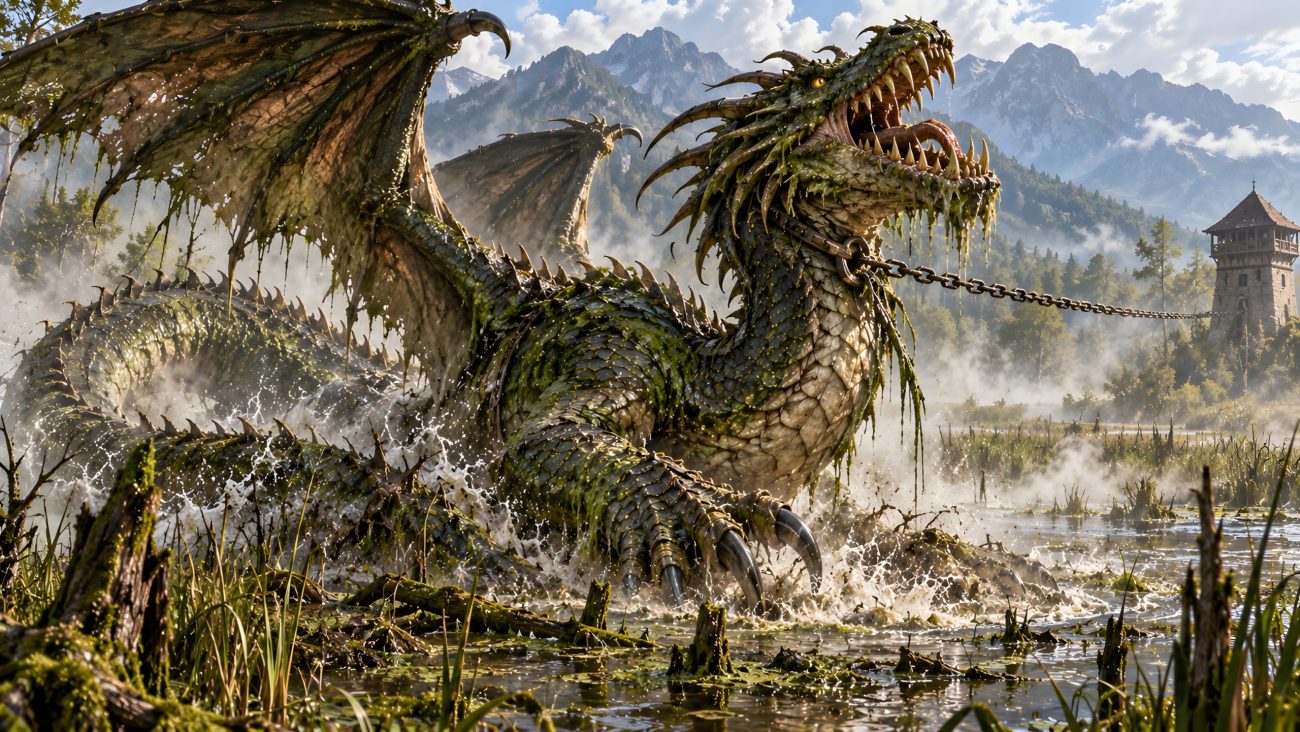
In the time of Duke Karast, the place where Klagenfurt now stands was a wild, swampy wilderness covered in thick thickets. People lived only on the surrounding mountains, for anyone who entered the misty marsh—or sent an animal into it—was unlikely to return. Hidden among the reeds and undergrowth lived a monstrous Linddur that devoured every living thing it could find. Even the bravest men were afraid to venture into the swamp, and shepherds would not dare search for animals that had wandered into it.

To confront the creature, the duke ordered a sturdy tower to be built at the edge of the swamp and summoned brave men from across the land. From the safety of the tower, they were to destroy the monster through cunning or force. He promised freedom, land, and a rich reward to whoever succeeded.

A group of courageous men devised a trap. They fastened a fat bull to a long chain fitted with a barbed hook and concealed themselves inside the tower. The bull’s terrified bellowing echoed across the swamp, drawing the Linddur from its hiding place.

The monster came rushing through the marsh like an arrow. Its wings beat against the water, its body was covered in enormous scales, and its snarling jaws were filled with terrible teeth. It seized the bull with its claws and began to devour it, but suddenly became caught on the barbed hook.

The Linddur thrashed violently, whipping the water with its enormous tail and struggling to escape. Yet every attempt only drove the iron barb deeper into its throat. Unable to free itself, the monster was finally overwhelmed, and the duke’s servants killed it with iron clubs.

With the Linddur dead, the people were finally able to settle the lowlands without fear. The dense undergrowth was cleared, the swamp was drained, and the land was cultivated. The duke eventually replaced the old tower with a castle, and the settlement became the earliest habitation in the Klagenfurt Basin.

The memory of the battle survives in Klagenfurt, where a huge stone dragon stands in New Square and the city’s coat of arms depicts the legendary creature beside the tower.


Sources

“Der Kampf mit dem Lindwurm.” SAGEN.at – Traditionelle Sagen aus Österreich (Kärnten). Reproduced by SAGEN.at.
https://www.sagen.at/texte/sagen/oesterreich/kaernten/franz_pehr/kampfmitlindwurm.html


Amberg Worm

Tradition: Austrian Mythology
Alternative Names: Amberg Lindworm, Worm of Amberg
Category: Dragon


The Myth

In the mountains above the Drava Valley, near the village of Amberg, a great lake once filled the basin where the farmers’ homes now stand. The lake was known as the Black Lake, and deep within its waters lived a hideous dragon that terrorized the surrounding country. Neither people nor animals were safe from the monster.

One day, a tailor came to Amberg and boldly vowed to rid the inhabitants of the dragon. He went to a blacksmith and had a long, pointed needle forged for him. Armed with this strange weapon, he crept into a rocky cave near the dragon and began stabbing and provoking the beast.

The dragon became so furious that it thrashed its enormous tail through the water, whipping the lake into chaos. In its rage, the creature eventually split the surrounding rock, allowing the waters of the Black Lake to rush out toward the Drava River.

The dragon itself was swept away by the rushing water and carried down into the valley, where it perished. Deep cracks and fissures in the rocks are said to remain from the struggle, descending into depths that no one has dared to explore.

The field where the monster finally died is still known as “the Worm.”


Sources

“Der Ambergerwurm.” SAGEN.at – Traditionelle Sagen aus Österreich (Kärnten). Reproduced by SAGEN.at.
https://www.sagen.at/texte/sagen/oesterreich/kaernten/allgemein/ambergerwurm.html


Green Huntsman

Tradition: Austrian Mythology
Alternative Names: Green Huntsman
Category: Demon


The Myth

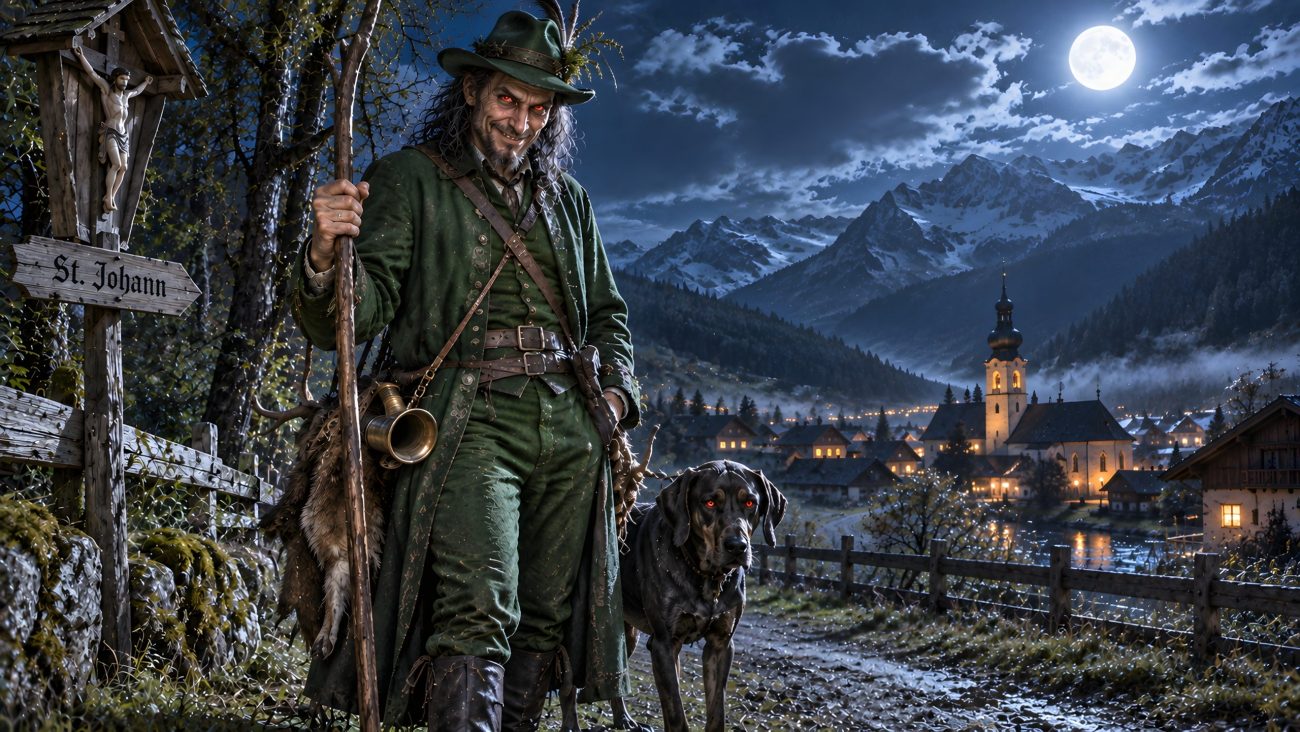
The Green Huntsman appears as a huntsman dressed in green. Although he initially looks like an ordinary man, his appearance is unsettling, with a sly and venomous expression resembling that of a snake. He is actually the Devil in disguise.

In the village of St. Johann in the lower Inn Valley of Tyrol, a young woman was devastated after being rejected by her lover. She refused to attend a wedding where her neighbors were gathering for music and dancing, instead remaining at home in grief and despair.

The Devil appeared before her in the form of a green huntsman and invited her to the dance. She accepted without hesitation, glad that she could attend the wedding and no longer watch her unfaithful lover enjoy himself.

At the wedding, the Green Huntsman danced extraordinarily well and with great energy. He sang, danced faster than anyone else, and became the most spirited person at the celebration. Although everyone admired his dancing, they shuddered whenever they looked at him because of his sinister, snake-like appearance. The young woman, however, paid no attention and enjoyed herself throughout the evening.

When they left the wedding, the huntsman asked whether he could serenade her at her home the following night. She happily agreed.

The next evening, exactly as the church clock struck midnight, someone knocked at the girl’s bedroom window. She opened the lattice to welcome the huntsman, but this time he appeared in the Devil’s most hideous form.

He seized the girl and violently dragged her through the narrow iron bars of the window. Pieces of her skin and flesh were left hanging from the bars, while warm blood streamed down the wall. The Devil then carried the screaming girl away through the air.

The bloodstains were said to remain on the wall and could never be washed or rubbed away. According to the legend, they could still be seen by anyone passing through the village of St. Johann.


Sources

Günther, Amalia von. Tales and Legends of the Tyrol. London: Chapman and Hall, 1874.


Seven Roe Deer

Tradition: Austrian Mythology
Alternative Names: Die sieben Rehe
Category: Deer


The Myth

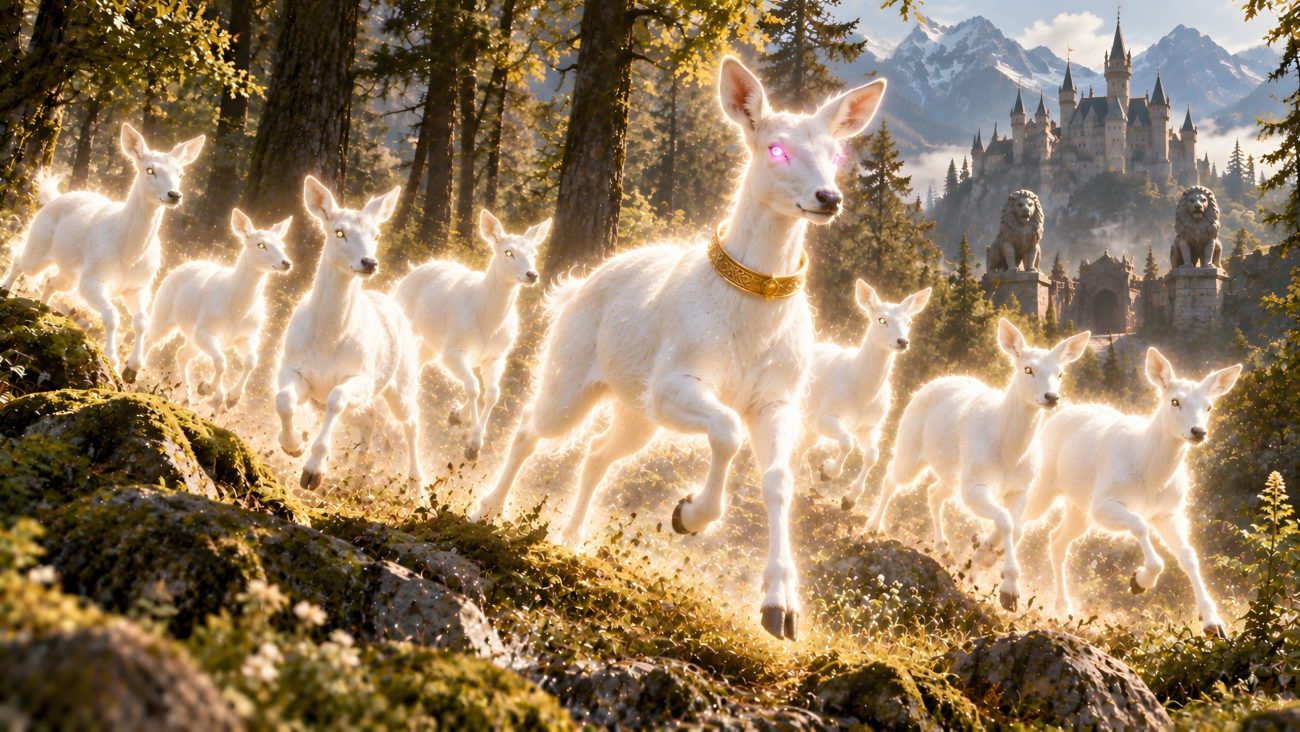
The Seven Roe Deer are seven white roe deer that appear in an old tale from the Austrian Alps. Six of them are ordinary in appearance, while the seventh is slightly larger and wears a golden ring around its neck.

Once there was a count who possessed many forests and a large household of servants. He was very devout and had already won many victories. During times of peace, his greatest pleasure was hunting wild animals, often riding far into the forest with his retinue.

One day, while hunting near the end of May, the count saw a white roe deer running across a meadow in the distance. He immediately rode after it on horseback and pursued it deep into the forest. None of his servants followed him, as he was riding too quickly and soon disappeared from their sight.

The count eventually realized that he had become deeply lost in the forest. Although he repeatedly sounded his hunting horn, which could be heard from far away, nobody came. Nevertheless, he continued following the roe deer.

The animal eventually led him to a large and beautiful meadow. To his astonishment, six other white roe deer were there. One of them was somewhat larger than the others and wore a golden ring around its neck. The count tried several times to shoot it, but every shot missed.

The seven roe deer continued onward, and the count followed them. They led him alternately through dense forests, across beautiful meadows, and over mountains until they finally arrived before a great castle that appeared to be completely uninhabited. On either side of the gate stood two enormous lions guarding the entrance.

When the roe deer reached the gate, it opened. The deer and the count passed through, after which the gate closed by itself. The count found himself inside a large square courtyard with no other exit. He had been trapped within the castle walls.

He explored the upper floors and discovered rooms and halls decorated with extraordinary wealth. The walls were golden, the beds were golden, and golden tables stood throughout the chambers. In a smaller room he found a mirror hanging in a broad golden frame, with a parchment hidden behind it.

The count took out the parchment and read its message:

“Whoever frees the imprisoned princess shall possess an entire kingdom. But he must overcome a terrible monster that comes every night at twelve o’clock beneath a terrifying rattling of chains and devours everything that is on the golden tables.”

The count was filled with horror when he read this, but he decided to face the monster because he was well armed. He ate some food and prepared himself for the night. He lay down in one of the golden beds, placing his sword and two loaded pistols on a nearby table so that they would be immediately within reach.

He had not been asleep for long when he heard the terrifying rattling of chains coming up the staircase. Soon a black man appeared. He had a single enormous eye in the middle of his forehead, shining so brightly that it illuminated the entire room. His body was covered with hair, and chains were wound around his back.

As soon as the count saw him, he leapt toward the monster and fought him with his sword. After a fierce struggle, he managed to cut off the monster’s head. The monster then asked the count to give the golden necklace from the deer to him. The count refused.

After the battle, the count returned to bed and slept peacefully for the remainder of the night.

The following morning, when he entered the courtyard, he saw the same seven roe deer that had led him to the castle. He approached them and kissed the largest deer. The seven white deer then transformed before him into seven beautifully dressed maidens.

The largest deer, the one that had worn the golden ring around its neck, revealed that she was the princess of the kingdom. She and her companions had been transformed into deer by the terrible monster. She explained that she had already led many people to the castle, but none had been fortunate enough to defeat the monster.

The princess then married the count who had freed her, and the two lived happily together. The tale concludes that, if they have not died, they are still living happily to this day.


Sources

Vernaleken, Theodor. “Die sieben Rehe.” In Kinder- und Hausmärchen in den Alpenländern. Vienna, 1863. Reproduced by SAGEN.at. https://www.sagen.at/texte/maerchen/maerchen_oesterreich/allgemein/vernaleken/sieben_rehe.html


Witch as a Roe

Tradition: Austrian Mythology
Alternative Names: Die Hexe als Reh
Category: Deer


The Myth

A hunter once encountered a roe deer on a forest clearing above the “broat’n Rief’n” near Axams. He immediately raised his weapon to shoot it. But the animal suddenly placed its front feet together pleadingly, while tears streamed from its eyes. The hunter noticed that there was something unusual about the creature and could not bring himself to shoot it.

Several months later, the hunter visited the market in Imst and stopped at an inn. To his great surprise, the waitress served him a rich meal and assured him that she herself would pay for everything.

As he prepared to leave, he thanked the waitress and asked whether she knew him. Since the hunter believed that he had never met her before, he was astonished when she told him that she had once been a roe deer in the forest near Axams and that he had been about to shoot her.

She explained that when he had raised his weapon, she had pleaded with him in the form of the deer. Had he shot her then, she said, it would have meant the loss of her soul. From that moment onward, however, she had changed her ways, improved herself, and renounced the Devil.


Sources

Dörler, Adolf Ferdinand, ed. “Die Hexe als Reh.” In Sagen aus Innsbruck’s Umgebung, mit besonderer Berücksichtigung des Zillerthales. Innsbruck, 1895, no. 106. Reproduced by SAGEN.at.
https://www.sagen.at/texte/sagen/oesterreich/tirol/doerler/hexe_reh.html