Gumberoo

Tradition / Region: American Mythology
Alternative names: –
Category: Bear


The Myth

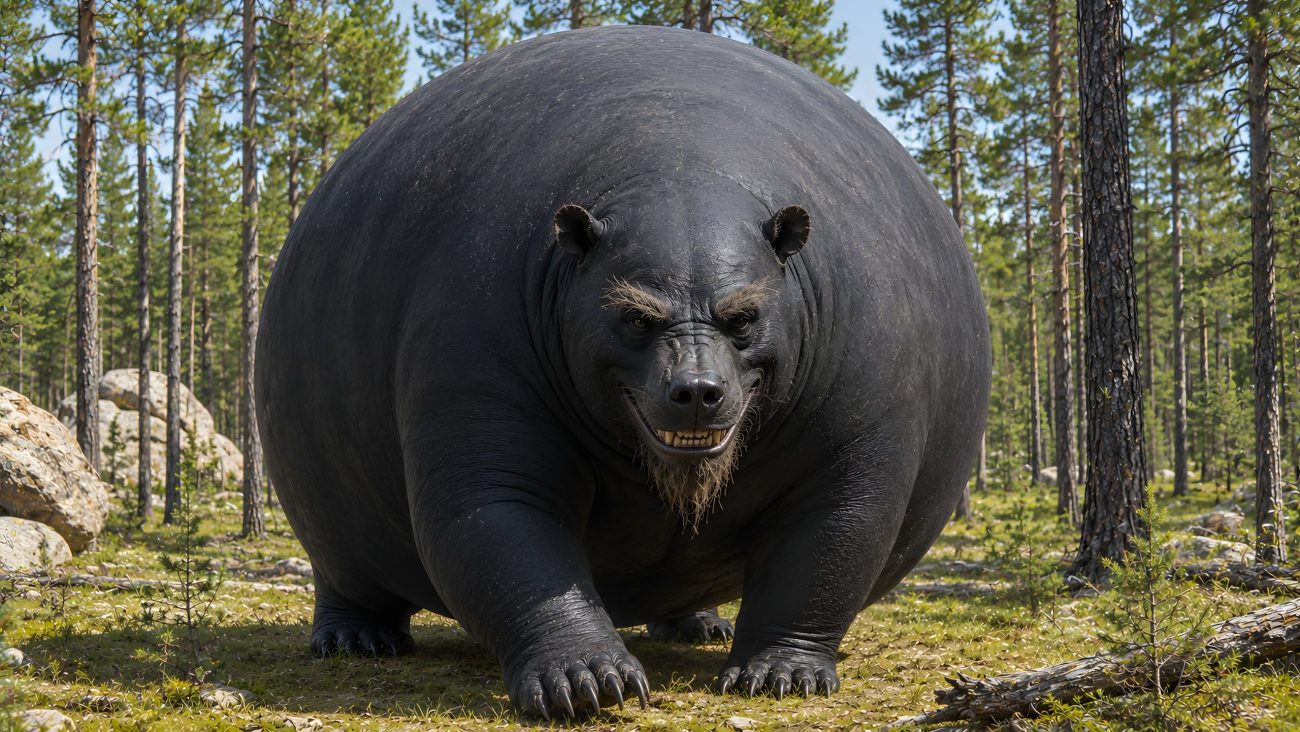
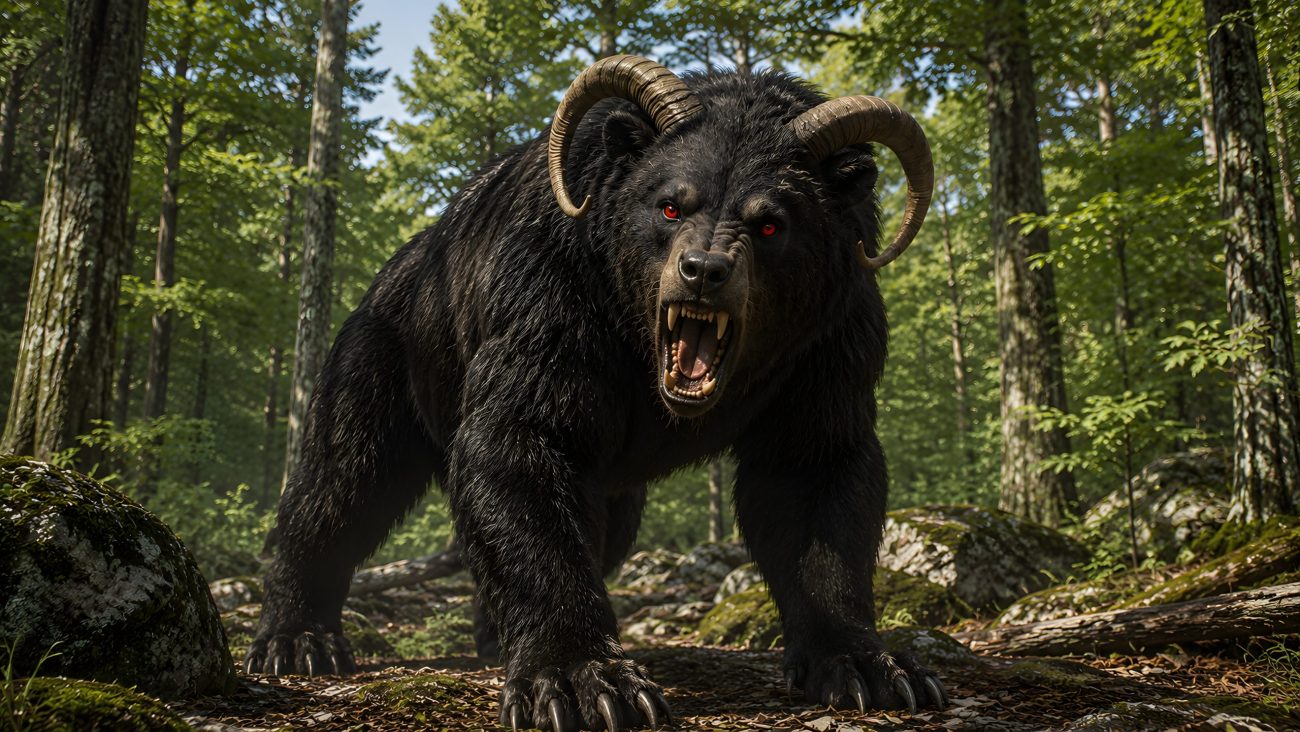
The Gumberoo is one of the legendary fearsome critters of American lumberjack folklore. It resembles an enormous, fat black bear but is completely hairless except for its thick eyebrows and the bristly hairs on its chin. Instead of fur, it possesses a smooth, coal-black hide as tough as leather.

The creature’s skin is said to be completely impervious to harm. Bullets, arrows, rocks, and other projectiles simply bounce harmlessly from its body, making the Gumberoo nearly impossible to kill by ordinary means.

Its only known weakness is fire. Although nothing can pierce its hide, flames ignite the creature instantly, causing it to burn with explosive force. According to lumberjack tales, the rarity of Gumberoos was often explained by the frequent forest fires that swept through the cedar forests, destroying the creatures in spectacular explosions.

One story tells of a man named S. W. Allen who supposedly managed to photograph a Gumberoo. However, the legend claims that even the photographic negative exploded, adding another impossible feat to the folklore surrounding the indestructible beast.


Sources

Wikipedia contributors. (n.d.). Gumberoo. In Wikipedia. Retrieved June 29, 2026, from https://en.wikipedia.org/wiki/Gumberoo
Sasnalkáhi

Tradition / Region: Navajo Mythology, American Mythology
Alternative names: The Bear that Pursues
Category: Bear


The Myth

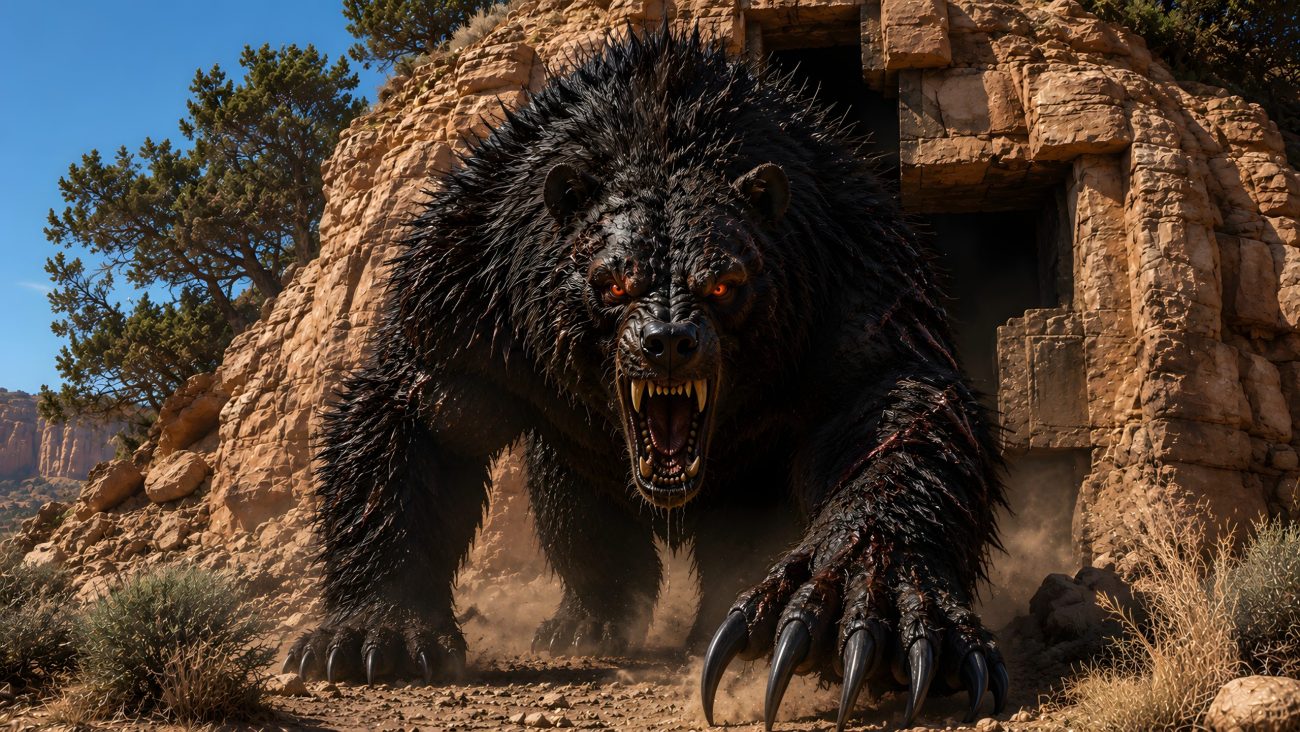
Sasnalkáhi, “The Bear that Pursues,” was a monstrous bear counted among the Anaye, a race of dangerous beings born from unnatural unions. His fathers were said to be a smooth stone and a leg sinew. He lived in a cross-shaped cave within Tse’bahástsit, the “Rock that Frightens,” and once he began hunting, no prey could escape him.

The hero Nayenezgani set out to destroy Sasnalkáhi, carrying yucca fruit in his left hand and hard oak twigs in his right. These sacred medicinal plants protected him from the monster’s supernatural power as he approached the bear’s cave.

Nayenezgani searched each of the cave’s entrances. When he reached the northern opening, Sasnalkáhi withdrew his head and attempted to escape through the southern entrance. Anticipating the monster’s movements, Nayenezgani waited there. As soon as the great bear emerged, the hero struck and severed its head.

After defeating the beast, Nayenezgani declared that although Sasnalkáhi had brought only suffering during its life, it would now become a blessing to the people. He cut the head into three pieces and cast them in different directions. One became tsási (Yucca baccata) in the east, another became tsásitsoz (Yucca angustifolia) in the west, and the third became nóta (mescal) in the south. The creature’s nipples transformed into pinyon nuts, while pieces of fat taken from around its tail became the first bear and the first porcupine. Nayenezgani kept the left forepaw, the gall, and the windpipe as trophies of his victory.


Sources

A Book of Creatures. (2020, June 8). Sasnalkáhi. Retrieved June 29, 2026, from https://abookofcreatures.com/2020/06/08/sasnalkahi/


Ozark Howler

Tradition / Region: American Mythology
Alternative names: –
Category: Bear


The Myth

The Ozark Howler is a legendary cryptid said to inhabit the Ozark Mountains of northern Arkansas and southern Missouri. It is commonly described as a large, bear-like creature with a dark, shaggy coat that roams the remote forests. Although many consider it a myth or a case of mistaken identity, local folklore and reported sightings have kept the legend alive.

Some traditions trace the creature’s origins to the late eighteenth century, when the American frontiersman Daniel Boone reportedly claimed to have killed a large, hairy beast in the region. This account is often cited as one of the earliest stories connected to the Ozark Howler.

Reports of the creature became more common during the twentieth century. Witnesses have described encountering a large, fast-moving animal resembling a bear, though no evidence has confirmed its existence. In one reported incident from 2014, a motorist in Benton County, Arkansas, nearly collided with a large gray animal described as being about the size of a bear, prompting wildlife officials to investigate.

In 2015, photographs claimed to show the Ozark Howler were submitted to a local Arkansas television station. After reviewing the images, state wildlife officials concluded that they were a hoax. Despite the lack of verified evidence, stories of the mysterious bear-like creature continue to be part of the folklore of the Ozark Mountains.


Sources

Wikipedia contributors. (n.d.). Ozark Howler. In Wikipedia. Retrieved June 29, 2026, from https://en.wikipedia.org/wiki/Ozark_Howler


Dungavenhooter

Tradition / Region: American Mythology
Alternative names: –
Category: Crocodile


The Myth

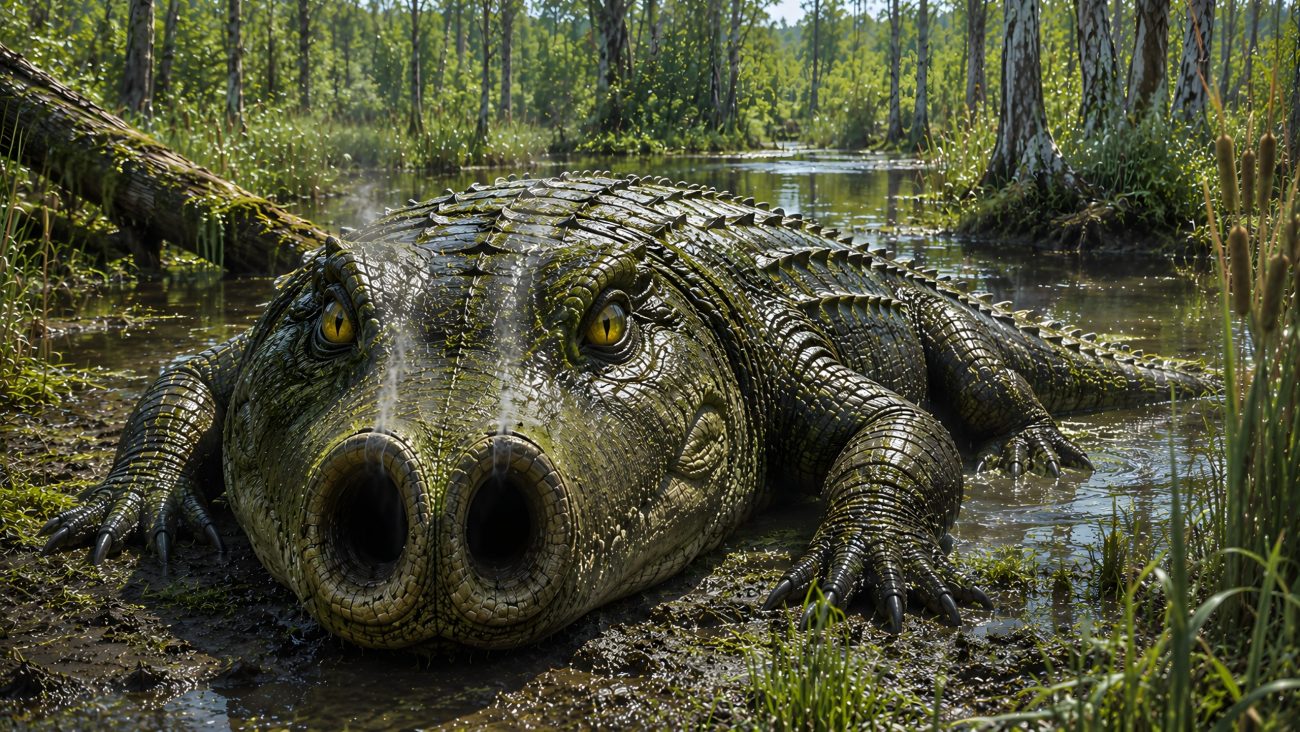
The Dungavenhooter is a legendary fearsome critter of American folklore. It is described as a large crocodilian creature with no mouth and an enormous pair of nostrils through which it feeds.

According to lumberjack tales, the Dungavenhooter lurks in marshes and waits in ambush behind dense brush. It strikes unsuspecting travelers, particularly loggers, with its powerful tail. Rather than biting its victims, it pounds them into a vaporous state before inhaling them through its abnormally large nostrils.

The creature is said to have once inhabited marshlands stretching from Maine to Michigan, though later stories claim it survived only in the Upper Peninsula of Michigan, where it became increasingly rare.

The Dungavenhooter is considered one of the classic fearsome critters of North American lumberjack folklore. It is regarded as a tall-tale creature and is closely associated with stories of the Dungarvon Whooper, although it is portrayed as a monstrous crocodilian rather than a ghost.


Sources

Wikipedia contributors. (n.d.). Dungavenhooter. In Wikipedia. Retrieved June 29, 2026, from https://en.wikipedia.org/wiki/Dungavenhooter


Menehune

Tradition / Region: Hawaiian Mythology, American Mythology
Alternate Names: —
Category: Dwarf, Gnome


The Myth

The Menehune are described as a race of small, dwarf-like people living in the deep forests and hidden valleys of the Hawaiian Islands. They are known as skilled builders and craftsmen who work at night and remain unseen by most humans.

The Menehune are said to have lived in Hawaiʻi before settlers from Polynesia arrived. They dwell far from human settlements, in forests and caves, and sustain themselves on forest plants, bananas, and fish. They are described as being about two feet tall.

They are known for their craftsmanship, building temples, fishponds, roads, canoes, and houses. These works are said to be constructed during the night, and if the work is not completed before dawn, it is left unfinished. They appear only at night, and only their children or humans connected to them are able to see them.


Gallery


Sources

Wikipedia contributors. (n.d.). Menehune. In Wikipedia. Retrieved March 1, 2026, from https://en.wikipedia.org/wiki/Menehune.


Interpretive Lenses

Religious Readings
  • Christian Ascetic Deep Dive
Philosophical Readings
  • Nietzschean Deep Dive
Psychological Readings
  • Jungian Deep Dive
Esoteric Deep Dive
  • Hermetic Deep Dive
Political / Social Readings
  • Marxist Deep Dive

Axehandle Hound

Tradition / Region: American Mythology
Alternate Names: Axhandle Hound, Ax-handle Hound
Category: Dog


The Myth

Among the tall tales of the lumber camps of Minnesota and Wisconsin, woodsmen told of a strange and troublesome creature known as the Axehandle Hound.

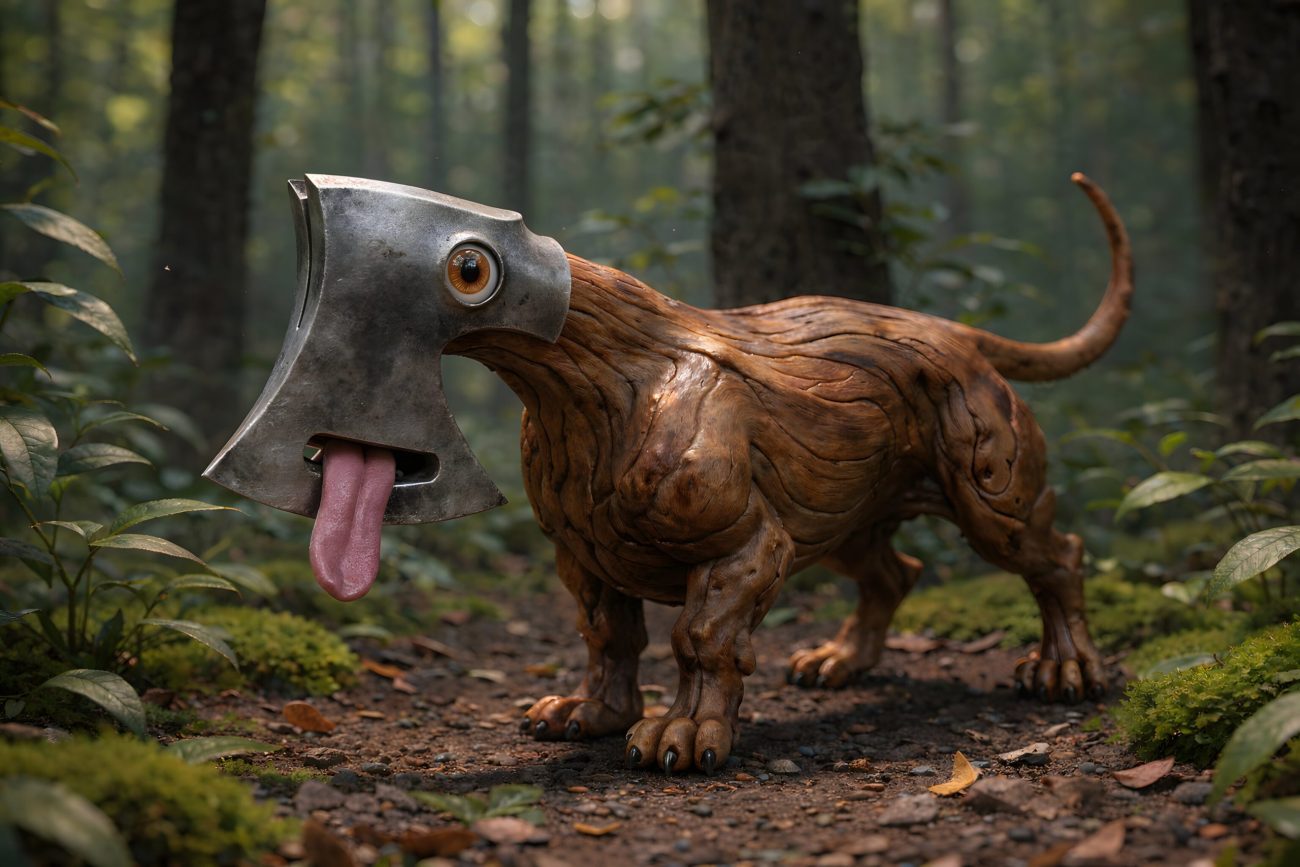
The animal was said to resemble a dog, but its body was shaped like an axe. Its head formed a broad blade, while its long, straight body resembled the handle of a tool set atop short, stubby legs. Because of this strange shape, it moved in an awkward but determined way as it prowled through the forests at night.

The Axehandle Hound did not hunt animals for food. Instead, it lived on axe handles. Whenever a careless woodsman left his tool unattended outside a cabin or camp, the creature might come creeping in the dark. By morning, the handle would be chewed away, leaving only the useless metal head behind.

The hound was said to travel from camp to camp under cover of night, sniffing out wooden handles wherever they could be found. Loggers warned each other to keep their tools close, for once the creature found a camp rich in axes, it would return again and again.

Some believed there was one way to protect against it. Axe handles made from red oak were said to repel the beast, and camps that used them claimed to be left undisturbed.

So the Axehandle Hound became part of lumberjack lore — a strange dog-shaped spirit of the forest, wandering the logging roads in search of forgotten tools and leaving frustrated woodsmen in its wake.


Sources

Wikipedia contributors. (n.d.). Axehandle hound. In Wikipedia, from https://en.wikipedia.org/wiki/Axehandle_hound


Cursed Cow of Emerline Allen

Tradition / Region: American Mythology
Alternate Names: —
Category: Cow


The Myth

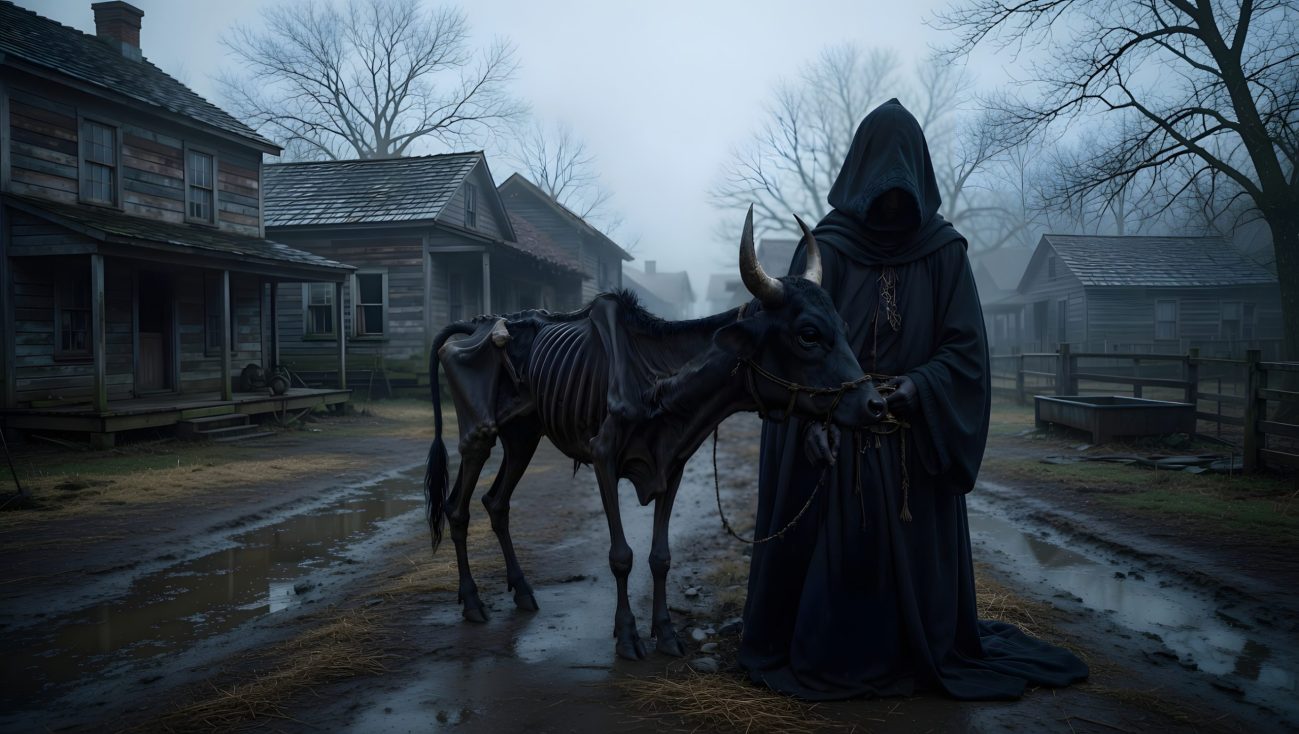
Long ago in the United States there lived an old woman named Emerline Allen, feared among her neighbors for her power to lay spells upon cattle. People said that anyone who angered her might soon see misfortune fall upon their livestock.

One night, some villagers claimed to have seen Emerline working a spell against Grandma Parker’s cow. Not long afterward, the animal stopped giving milk. Each day it yielded only a single small cup, no matter how it was tended.

Grandma Parker was told of a way to break such a curse. She was to take the little milk the cow produced, set it to boil, and cut it with a knife. By doing this, the spell would be severed, and the one who cast it would be forced to come begging.

She followed the instructions exactly. Soon after, Emerline Allen appeared at her door, asking for bread. She promised that if she were given something to eat, the cow would recover. But Grandma Parker refused her request.

With nothing given, Emerline went away in pain, and people said she suffered greatly. From that time on, the cow’s milk returned, and it gave as much as before.

Later, Emerline tried again to seek help, begging others for small things, but no one would give her anything. Left without relief, she endured her suffering alone, while the cow remained healthy and the spell never returned.


Sources

University of North Carolina at Chapel Hill, Folklore Council. (1948–1960). North Carolina Folklore, p. 307.


Water Babies

Tradition / Region: Paiute Mythology, American Mythology
Alternate Names: Paakniwat, Pa’oha’a, Pā’ōna, Paohmaa, Pangam kiktam, Pa’-nawi-s, Pa-nugis, Para Ub, s’o:lmexw; Water-Baby Spirits
Category: Mermaid


The Myth

In springs, quiet pools, and lonely streams of the western lands, people tell of beings called Water Babies. They are small spirits who dwell where water rises from the earth, rarely seen but often heard.

Most often they appear as human infants — tiny, beautiful, and helpless-looking. Sometimes, however, they are said to have fish tails, or strange reptilian bodies, and only imitate the cries of a child. Their voices echo from reeds, from rock pools, or from the dark mouth of a spring, sounding exactly like a lost baby wailing in distress.

Those who hear the crying are warned not to go searching for it. In many traditions, the sound itself is a sign that death is near, a warning carried on the water. In others, the danger comes from pity: anyone who follows the cry and tries to pick up the unseen child may be seized by the spirit, pulled into the water, or struck by misfortune soon after.

Because of this, the cries of Water Babies are feared. They are the voices of the springs themselves — calling, mourning, and luring — and wise people turn away from the sound and leave the waters undisturbed.


Gallery


Sources

native-languages.org contributors. (n.d.). Water Babies. In native-languages.org, from https://www.native-languages.org/water-babies.htm


Interpretive Lenses

Religious Readings
  • Christian Ascetic Deep Dive
Philosophical Readings
  • Nietzschean Deep Dive
Psychological Readings
  • Jungian Deep Dive
Esoteric Deep Dive
  • Hermetic Deep Dive
Political / Social Readings
  • Marxist Deep Dive
Other
  • How to Invite The Water Babies

Nibiinaabe

Tradition / Region: Anishinabe Mythology, American Mythology
Alternate Names: Nibinabe, Nibanaba, Nibanabe, Nibiinaabeg (plural), Nibiinabekwe (female form)
Category: Mermaid


The Myth

In the lakes and rivers of the Anishinaabe lands live the Nibiinaabe, the water people.

They are shaped like human beings from the waist up, but below they bear the tail of a fish. They dwell beneath the surface of deep waters, moving silently through reeds and currents where the light fades into shadow.

The Nibiinaabe are seldom seen. At times, a ripple in still water or a fleeting shape beneath the surface is said to be one of them watching. They are not drawn to villages, nor do they linger near busy shores. Loud noises drive them away, and the crash of drums or shouting will send them retreating into the depths.

Some say that on quiet evenings, when mist lies low over the water, they rise near the surface and sing softly to one another in voices that blend with the sound of waves against the shore.

Among the Ojibwe, the Nibiinaabe are honored as a clan symbol. The Mermaid Clan bears their name, and their totem remembers these beings of the water—guardians of lakes and rivers, neither wholly human nor wholly fish, but belonging to the living spirit of the waters themselves.


Gallery


Sources

native-languages.org contributors. (n.d.). Nibiinaabe. In native-languages.org, from https://www.native-languages.org/nibiinaabe.htm


Interpretive Lenses

Religious Readings
  • Christian Ascetic Deep Dive
Philosophical Readings
  • Nietzschean Deep Dive
Psychological Readings
  • Jungian Deep Dive
Esoteric Deep Dive
  • Hermetic Deep Dive
Political / Social Readings
  • Marxist Deep Dive
Other
  • How to Invite The Nibiinaabe

Ne Hwas

Tradition / Region: Wabanaki Mythology, American Mythology
Alternate Names: Nehwas, Newas, Niwah
Category: Mermaid


The Myth

In the waters of the Passamaquoddy homeland, there is a spirit remembered as Ne Hwas—a being of river and sea, half woman and half fish, moving between the world of people and the deep places beneath the surface.

One story tells of two young girls who wandered too close to the water’s edge. They were drawn by the shimmer of the tide and the distant singing that seemed to rise from beneath the waves. Whether through curiosity, longing, or enchantment, they entered the water—and did not return as they had been.

When they were seen again, it was in the currents. Their bodies had changed. From the waist down, they bore the glistening tails of fish. Their hair flowed around them like riverweed, and their voices carried strangely across the water. They were no longer bound to the shore.

Some say they had become spirits of the water, Ne Hwas, belonging now to the hidden world beneath the surface. They swam through inlets and along rocky coasts, appearing at times to fishermen or children who lingered near the tide pools. They were not cruel, but neither were they fully human anymore. The water had claimed them.

Those who glimpsed them told of sadness in their eyes, as though they remembered the warmth of the land but could never quite return to it. And so their story remained—a warning and a wonder—about the deep waters, and how those who step too far into their mystery may find themselves changed forever.


Gallery


Sources

native-languages.org contributors. (n.d.). Ne Hwas. In native-languages.org, from https://www.native-languages.org/ne-hwas.htm


Interpretive Lenses

Religious Readings
  • Christian Ascetic Deep Dive
Philosophical Readings
  • Nietzschean Deep Dive
Psychological Readings
  • Jungian Deep Dive
Esoteric Deep Dive
  • Hermetic Deep Dive
Political / Social Readings
  • Marxist Deep Dive
Other
  • How to Invite The Ne Hwas