Tenchishindousai

Tradition / Region: Japanese Mythology
Alternate Names: Tenshin Dōsai; Shindōsai
Category: Fish


The Myth

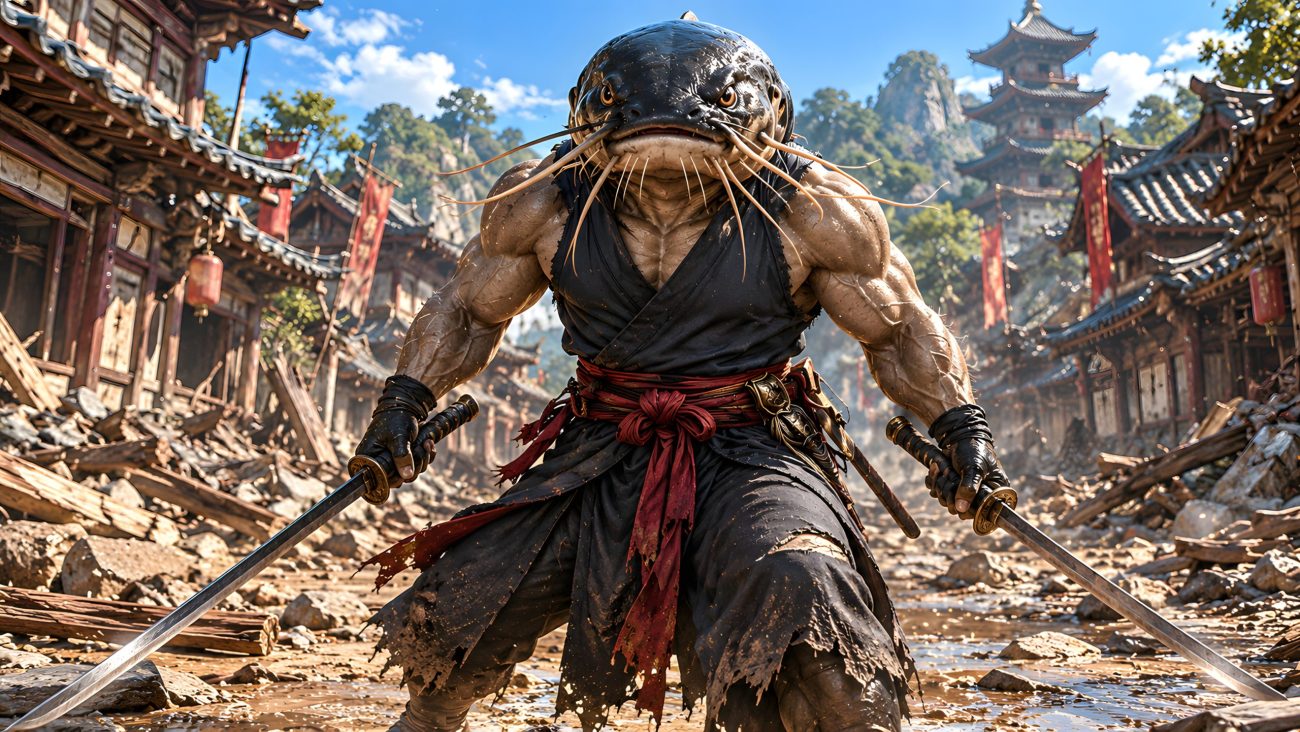
One night, during the Ansei era, a wandering rōnin arrived at a guardhouse in Edo and begged for shelter and food. He was tall, powerfully built, and strange in appearance, like a man hardened by severe training. The guards refused him, saying the guardhouse was not a place for lodging, and told him to seek an inn elsewhere.

At this, the man’s face grew pale.

He declared, “I am Tenchishindousai. There is none who does not know my name. Yet because the land has been calm for many years, people have grown contemptuous. They catch my kin, roast them, stew them, and kill them without cause. I have come to avenge them.”

He spoke of his journey: how he had shaken people to death at temple gatherings, how he had passed through province after province—mountains, capitals, and ports—causing the earth to tremble beneath his feet. Now, he said, he had arrived in Edo.

When the guards realized he claimed to be the Earthquake itself, they tried to seize him. Enraged, Tenchishindousai vanished on the spot.

At once, heaven and earth roared. The ground convulsed violently. Houses collapsed, storehouses fell, fires erupted across the city, and countless people were crushed or burned. Amid the devastation, Tenchishindousai spoke again, saying that the gods were absent from the land—and that if the deity who pins the earth were to arrive, the destruction would grow even greater.

With that, he fled north.

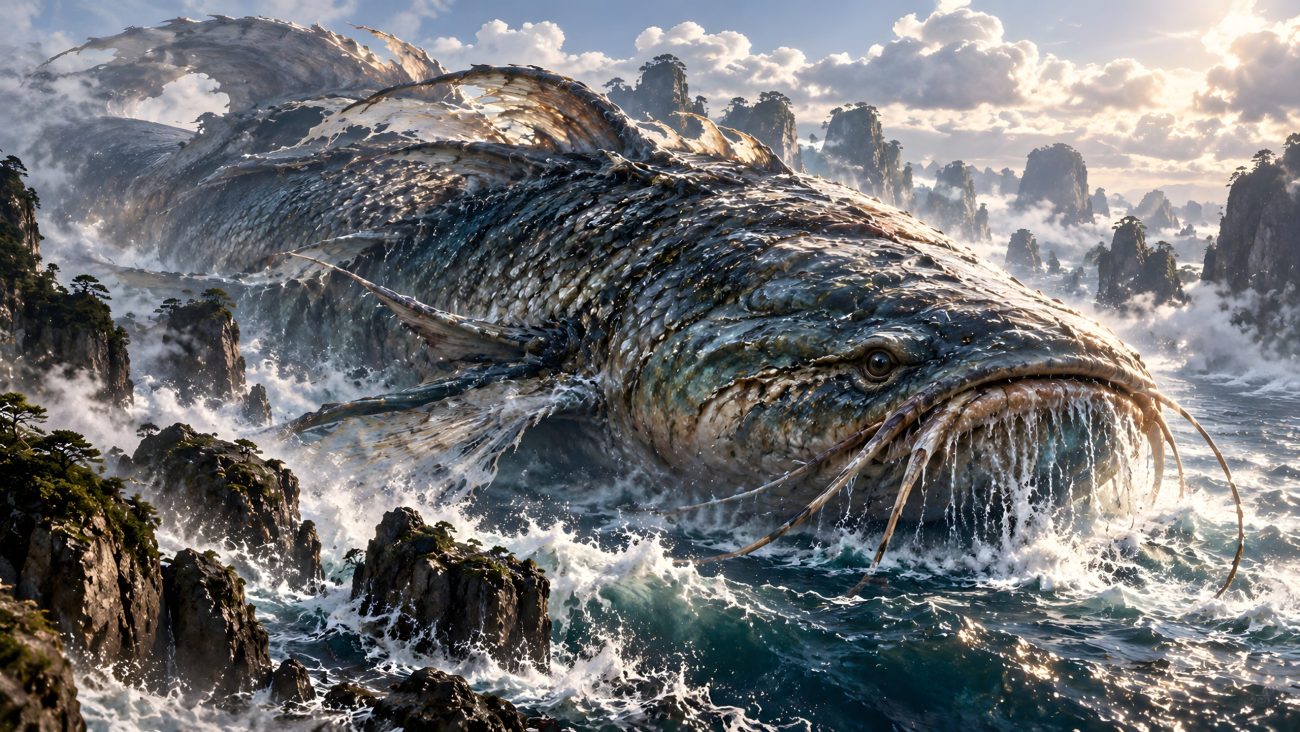
Those who saw his true form said his face was that of a giant catfish, the ancient creature that writhes beneath the land and shakes the world when angered. Thus the people believed the great earthquake was not chance, but revenge—carried out by Tenchishindousai, the living will of the trembling earth.


Sources

TYZ-Yokai Blog contributors. (n.d.). 添地震大歳 (Tenchishindōsai). In TYZ-Yokai Blog, from https://tyz-yokai.blog.jp/archives/1069000650.html
Hyakutou

Tradition / Region: Buddhist Lore, Japanese Mythology
Alternate Names: Hyaku-headed Fish
Category: Fish


The Myth

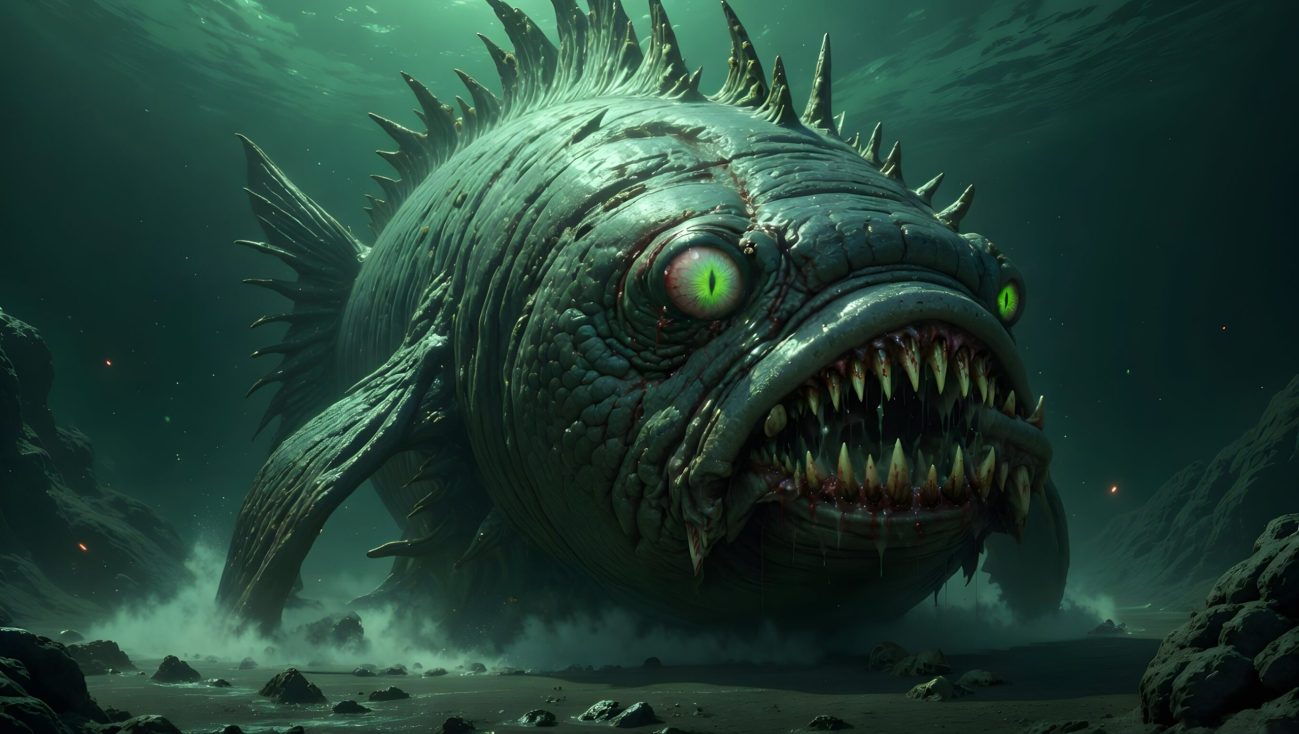
Long ago, Shakyamuni Buddha traveled with his monks along the banks of a great river. There, fishermen hauled up an enormous fish from the water. It was so vast that hundreds of people were needed to drag it ashore. When the crowd gathered, they saw that the fish bore the heads of one hundred beasts—camel, cow, horse, boar, sheep, dog, and many more—each head crying out in suffering.

The Buddha approached the fish and spoke to it. He asked where the one who had guided it now resided. The fish answered that she had fallen into the hell of unending torment. Those who heard this trembled, and Ananda asked the Buddha what sin could have brought such a fate.

The Buddha then told of the fish’s former life.

In an earlier age, there lived a brilliant youth born into a learned family. Though gifted with wisdom, he followed his mother’s urging to deceive his teacher. When he failed to complete his studies, he returned to the monk who had taught him and repaid kindness with cruel words, mocking and humiliating the one who had guided him, likening his teacher’s head to that of an animal.

For these words, heavy karma was formed.

After death, the mother fell into hell, and the son was reborn as a monstrous fish, bearing upon his body the animal heads he had spoken in insult. Each head was the echo of a word once uttered in contempt.

When asked whether the fish could escape this form, the Buddha answered that even across vast ages and countless rebirths, such punishment was not easily shed. Words spoken in cruelty return in kind, and speech, like action and thought, shapes destiny.

Thus the Hyakutou is remembered—a living sermon of flesh and scale, drifting through the waters, bearing one hundred faces of suffering as the weight of its past words.


Gallery


Sources

TYZ-Yokai Blog contributors. (n.d.). ヒャクトウ (Hyakutou). In TYZ-Yokai Blog, from https://tyz-yokai.blog.jp/archives/1022878715.html


Interpretive Lenses

Religious Readings
  • Christian Ascetic Deep Dive
Philosophical Readings
  • Nietzschean Deep Dive
Psychological Readings
  • Jungian Deep Dive
Esoteric Deep Dive
  • Hermetic Deep Dive
Political / Social Readings
  • Marxist Deep Dive
Other
  • How to Invite The Hyakutou

Kun

Tradition / Region: Chinese mythology
Alternate Names: Peng; Dapeng; Pengniao; Kunpeng
Category: Fish


The Myth

In the Northern Sea there lives a fish called Kun. It is so vast that no one knows how many thousands of miles it spans. Its body fills the deep, and when it moves, the waters of the sea are set in motion.

When the time comes, Kun rises from the depths and transforms.

Its scales become feathers, and it becomes the great bird Peng. The Peng’s back is immeasurable, and when it spreads its wings they hang across the sky like drifting clouds. With a single beat of those wings, storms are born and the sea churns below.

When the oceans surge, the Peng takes flight, leaving the Northern Sea behind and journeying toward the Southern Sea, the Heavenly Pool. As it ascends, the small birds of the world laugh and mock it, unable to comprehend a being whose path stretches beyond the horizon. Yet the Peng does not answer them. It rises higher and higher, until earth and sky fall away beneath it.

Thus Kun and Peng are one being—fish and bird, depth and height—moving freely between sea and sky, embodying boundless transformation and the vastness of the world itself.


Sources

Wikipedia contributors. (n.d.). 鯉魚. In Wikipedia, The Free Encyclopedia, from https://zh.wikipedia.org/wiki/%E9%AF%A4%E9%B5%AC


Abarga Zagakhan

Tradition / Region: Mongolian Mythology, Buryat Mythology, Russian Mythology
Alternate Names: —
Category: Fish


The Myth

In the deepest waters of the world lives Abarga Zagakhan, the first of all fish and their eternal king. Vast beyond measure, it is said to dwell at the bottom of Lake Baikal, where no light reaches and no human can follow.

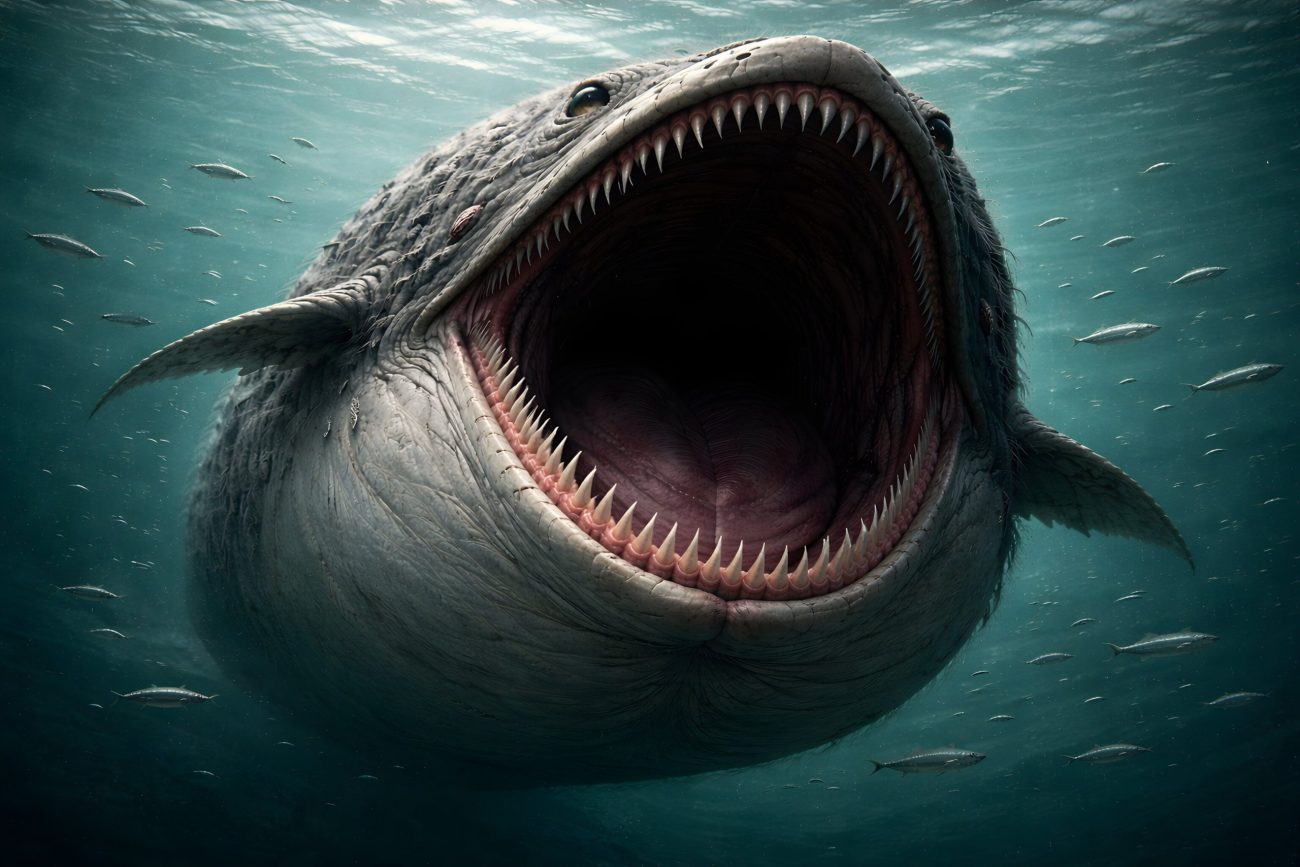
Abarga Zagakhan is shaped like a colossal burbot, yet its size surpasses all creatures of water. Thirteen great fins spread from its body, and its mouth is so immense that it can swallow not only people, but entire herds of animals in a single gulp. Even the fearsome Mangatkhai monsters, terrors in their own right, were devoured by Abarga Zagakhan when they strayed too close to its domain.

From this ancient fish all other fish are said to descend. It rules them silently from the depths, unseen but ever-present, a living force beneath the waters. When currents shift or the lake grows restless, some say it is Abarga Zagakhan turning in its sleep.

Thus the people speak of it with awe and fear, as the ancestor, devourer, and sovereign of all that swims.


Sources

Bestiary.us contributors. (n.d.). Abarga-Zagakhan. In Bestiary.us, from https://www.bestiary.us/abarga-zagakhan/

Slide-Rock Bolter

Tradition / Region: American Mythology
Alternate Names: —
Category: Fish


The Myth

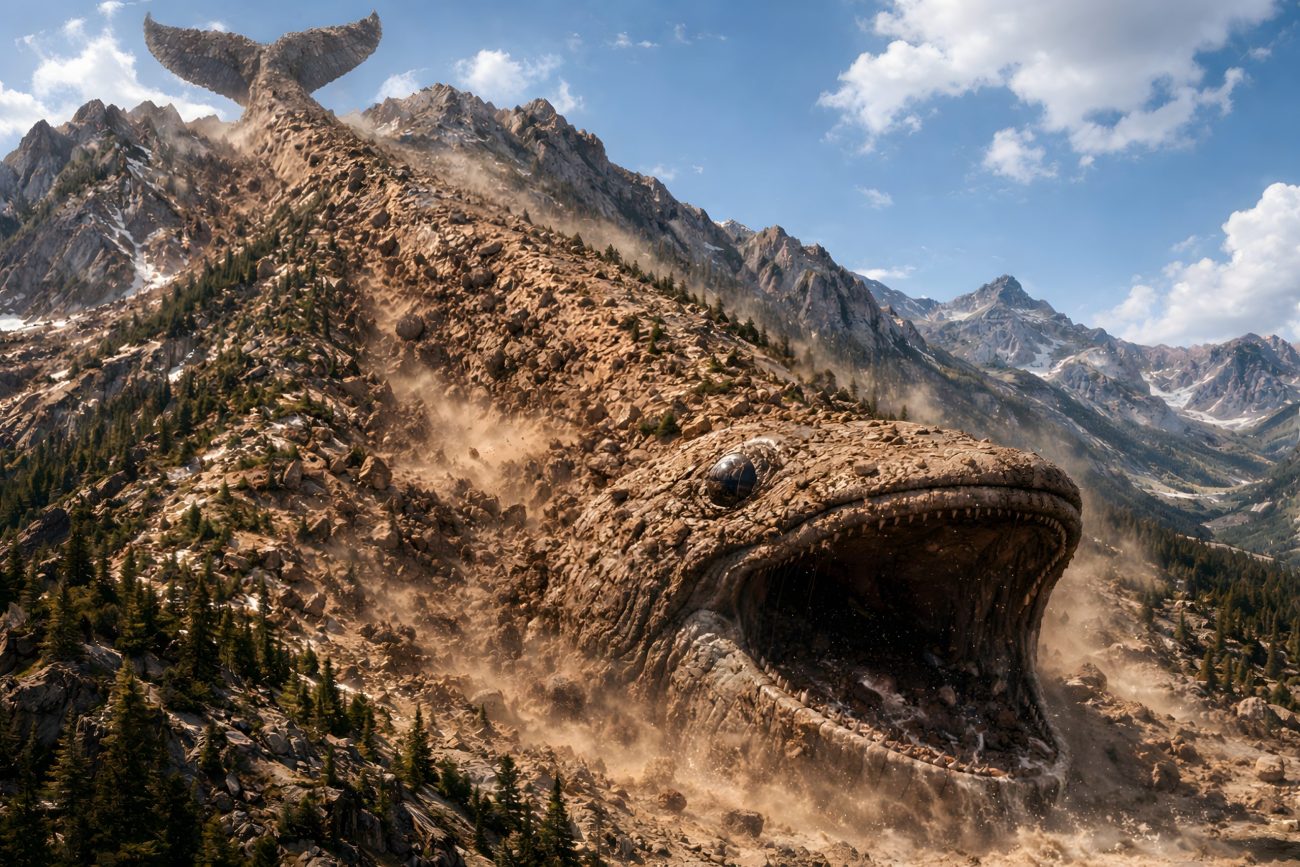
High in the mountains of Colorado, where the slopes are steep and the ground falls away at terrifying angles, there lives a monstrous creature known as the Slide-Rock Bolter. It inhabits only the most dangerous terrain, where the mountainsides tilt sharper than forty-five degrees and a misstep can mean death.

The Slide-Rock Bolter has an enormous head with small, intent eyes and a vast mouth that stretches far back beyond its ears. Its tail ends in a split flipper armed with massive hooks. With these, the creature fastens itself to the crest of a mountain or ridge, clinging there motionless for days at a time while it watches the gulches below.

When a tourist—or any other unlucky creature—wanders into view, the Bolter prepares to strike. It loosens its grip, lifts its hooked tail, and launches itself downhill like a living avalanche. As it slides, thin grease drools from the corners of its mouth, slicking the rock and increasing its speed. In a single roaring descent, it scoops up its victim, gulps them whole, and uses its own momentum to surge up the opposite slope. There it hooks its tail over a new ridge and waits once more.

Some say entire parties of tourists have vanished in a single sweep. Others tell of forested slopes scoured bare, where spruce trees were torn out by the roots or sliced down as cleanly as if by a giant scythe when a Bolter thundered through from the heights above.

One tale tells of a forest ranger who dared to fight the monster with cunning rather than fear. He constructed a lifelike dummy tourist, dressed in plaid jacket and knee breeches, clutching a guidebook to Colorado. The figure was packed with explosives and placed in plain sight on a slope beneath Lizzard Head, where a Slide-Rock Bolter had been waiting for days.

The next day, the Bolter struck.

The explosion that followed was said to flatten half the buildings in the town of Rico, which were never rebuilt. For the rest of the summer, buzzards circled the surrounding hills, feeding on what remained.

And so the Slide-Rock Bolter lives on in mountain lore: a patient predator of slopes and shadows, forever waiting above the trail for the careless step below.


Sources

Cox, W. T. (1910). Fearsome Creatures of the Lumberwoods: With a Few Desert and Mountain Beasts. Press of Judd & Detweiler, Inc.


Flyðrumóðir

Tradition / Region: Icelandic Mythology
Alternate Names: Halibut Mother; Laxamóðir (Salmon Mother); Silungamóðir (Trout Mother)
Category: Fish


The Myth

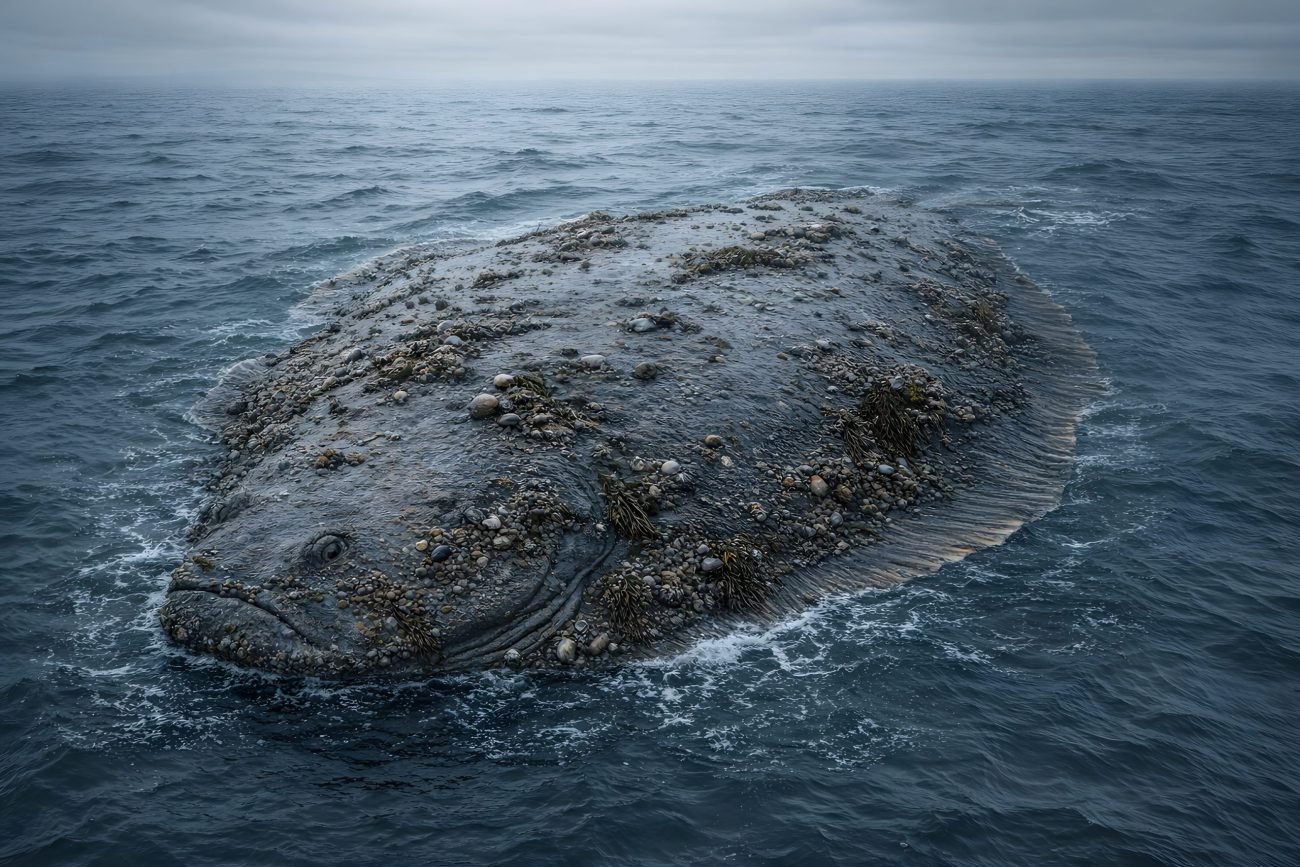
In the cold seas around Iceland there swims a being known as the Flyðrumóðir, the Halibut Mother. She appears as a halibut of monstrous size, so vast that she can rival a fishing boat. With age her body turns grey on both sides, and shells, barnacles, and seaweed cling to her skin, so that when she rises to the surface she resembles a small drifting island.

Though some say she is the mother of all fish in the sea, her true children are the halibut. Far offshore she is followed by entire schools of them, and she watches over them fiercely. When fishermen take too many halibut, the Flyðrumóðir rises in anger.

Once, a schooner in Faxaflói hauled forty halibut aboard. The Halibut Mother appeared and pursued the ship, though it narrowly escaped. Another vessel was not so fortunate. It caught a Flyðrumóðir on a coffin-nail hook, and in her fury she overturned the boat, drowning all who were aboard.

Even when a Flyðrumóðir is successfully killed, her death brings ruin. In Breiðafjörður, a halibut mother was snagged with a golden hook and cut apart. After that, the waters yielded no fish, and the man who caught her never caught another fish for the rest of his life.

Other mothers are known as well. The Laxamóðir, the Salmon Mother, swims down from salmon-rich rivers, tearing through fishing nets as she goes. The Silungamóðir, the Trout Mother, has an enormous head and brings great misfortune to anyone who catches her. Wise fishermen release such beings at once.

Thus the fish-mothers endure in memory as guardians of the waters—vast, ancient, and unforgiving to those who forget that the sea has its own kin to protect.


Sources

A Book of Creatures contributors. (n.d.). Flydrumodir. In A Book of Creatures, from https://abookofcreatures.com/2016/08/28/flydrumodir/


Númhyalikyu

Tradition / Region: Kwakwaka’wakw Mythology, Canadian Mythology
Alternate Names: Númhyělekum
Category: Fish


The Myth

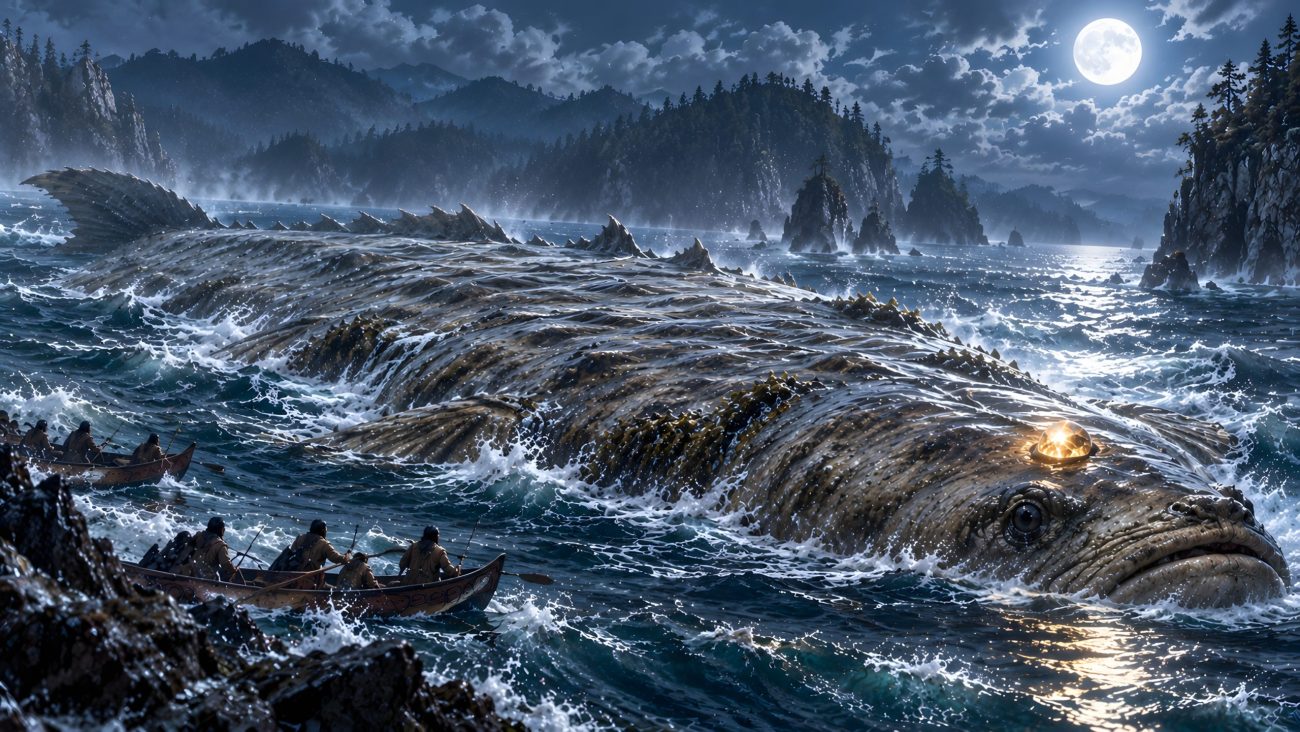
In the waters of the Pacific Northwest there swims a colossal being known as Númhyalikyu, “the one chief one.” It is a monstrous halibut so vast that its back resembles a beach, marked with ripples like those left by retreating waves. Canoes have passed unknowingly over its body, mistaking it for land.

Its head is like that of a seal, and upon it shines a brilliant spot that gleams like fire. When Númhyalikyu moves, it sends a deep humming sound through sea and air alike. The vibration travels through water, echoes through the sky, and trembles in the trees, making it impossible to know where the creature truly lies.

When Númhyalikyu rises toward the surface, storms follow. The sea grows violent, and false shallows form where none should be, wrecking canoes and drowning those who trust the water. Many have been lost after mistaking its rippled back for a small island.

If Númhyalikyu is slain, its head may be pierced, and the shining ornament within removed. This object, hard and crystalline, is called tlúgwi and is greatly prized. Yet killing such a being is dangerous, for its presence shapes the sea itself.

Among the people, Númhyalikyu is remembered not only in story, but in dance. In the númkahl, its spirit leaves the sea and comes ashore in human form. Wearing a great mask, the dancer is caught upon the beach, embodying the moment when the vast power of the ocean reveals itself to the world of people.


Sources

A Book of Creatures contributors. (n.d.). Numhyalikyu. In A Book of Creatures, from https://abookofcreatures.com/2015/12/07/numhyalikyu/


Ahuna

Tradition / Region: Norwegian Mythology
Alternate Names: Ahune; Ahunum; Hahune; Hahanie; Swamfisk
Category: Fish


The Myth

In the depths of the sea lives a creature called the Ahuna, feared not for speed or cunning, but for its boundless hunger. Of all fish, it is the most voracious. It eats without pause, consuming fish after fish until its belly swells larger than its own body, stretched and distended beyond what seems possible.

The Ahuna’s body is strange and ill-formed. Its mouth opens directly into its stomach, with no true neck or throat between, as if it were nothing but hunger given flesh. When danger approaches, the creature does not flee. Instead, it curls inward, tucking its head and limbs into its own body like a hedgehog, folding skin and flesh over itself until nothing vulnerable remains. In this state it lies still, waiting for the threat to pass.

But the Ahuna’s appetite never sleeps.

If hunger seizes it while it is curled tight, the monster turns upon itself. Unable to unfold without exposing itself to danger, it gnaws at its own body, devouring its own flesh to satisfy its need. Thus it survives by consuming itself, only to grow hungry again.

Some say the Ahuna bears a beak like a bird and is marked with wavelike stripes; others describe it as a sea-hedgehog, round and coiled, with a twisted tail. Whatever its shape, all agree on its nature: a creature trapped by endless appetite.

In northern waters it is also called the Swamfisk, a rare monster hunted for its fat and oil. Yet even when slain, the Ahuna is remembered as a warning—that hunger without limit devours not only the world, but itself.


Sources

A Book of Creatures contributors. (n.d.). Swamfisk. In A Book of Creatures, from https://abookofcreatures.com/2019/04/26/swamfisk/


Trollgädda

Tradition / Region: Swedish Mythology
Alternate Names: Jättegädda; Krongädda; Skällgädda; Trollgäddor
Category: Fish


The Myth

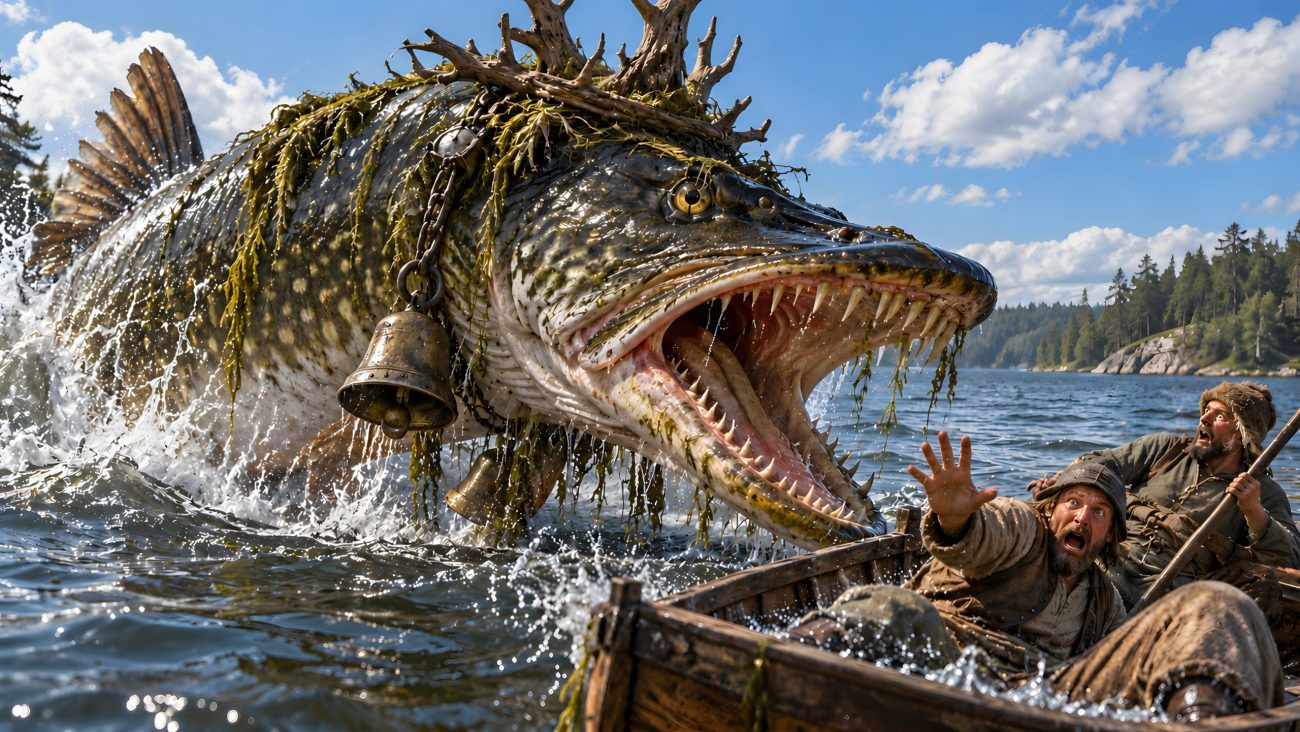
In the lakes and waterways of Sweden there live creatures known as Trollgäddor—troll pike—vast, uncanny fish that dwell beneath dark waters and trouble those who cross their domain. They appear as enormous pike, sometimes merely troublesome, sometimes deadly.

Many Trollgäddor are bound to the Sjörå, the Mistress of the Lake. Some are said to be her servants, others her beloved pets, and a few are believed to be the Sjörå herself in fish form. She adorns certain pike with bells, hanging from them like cattle bells, and these are known as Skällgäddor, the bell pike. If a fisherman catches such a fish and returns it unharmed to the water, good fortune follows and fishing becomes abundant. But those who kill one earn the Sjörå’s anger, and soon their livestock begin to sicken and die.

Among her most treasured creatures is the Krongädda, the crown pike. It bears what appears to be a crown upon its head, though no one can say for certain what this crown truly is. Some believe it to be the talons of a great bird, torn free when the pike dragged its would-be predator beneath the surface and drowned it.

Not all Trollgäddor show signs of their nature at first. In Lake Odensjön, a man once caught a large pike and carried it home. As he walked, the fish grew heavier with every step. By the time he entered his house, it had become so massive that he was forced to drop it. The pike began thrashing, growing until it threatened to tear the house apart. Realizing his mistake, the man opened the door, and the Trollgädda flopped its way back to the lake and vanished.

Across Sweden, the stories differ. In Kvittinge, a monstrous pike is said to claim a human life every year. In Lake Mjörn, a huge, hairy, bearded pike lies bound with an iron chain. In Skåne, pike as thick as wooden beams haunt the waters. In Dalsland, a Trollgädda with eyes like saucers and scales as large as roof tiles barely fits within the coves, and its appearance foretells a day of failed fishing.

The greatest of all is said to live in Lake Bolmen. It is so long that it spans the lake’s width and so old that a willow shrub grows from its head and neck. Its back rises from the water like a rocky island. Once, a daring fisherman attempted to catch it, using a rope as a line and a dead foal as bait. When the Trollgädda bit, the man tied the rope to a barn on the shore and went to fetch help. When they returned, the barn itself had been dragged into the lake.

Thus the Trollgädda remains a warning beneath the water: that some fish are not meant to be caught, and some depths belong to powers older and stronger than men.


Sources

A Book of Creatures contributors. (n.d.). Trollgadda. In A Book of Creatures, from https://abookofcreatures.com/2021/03/29/trollgadda/


Osaba

Tradition / Region: Japanese Mythology
Alternate Names: Big mackerel
Category: Fish


The Myth

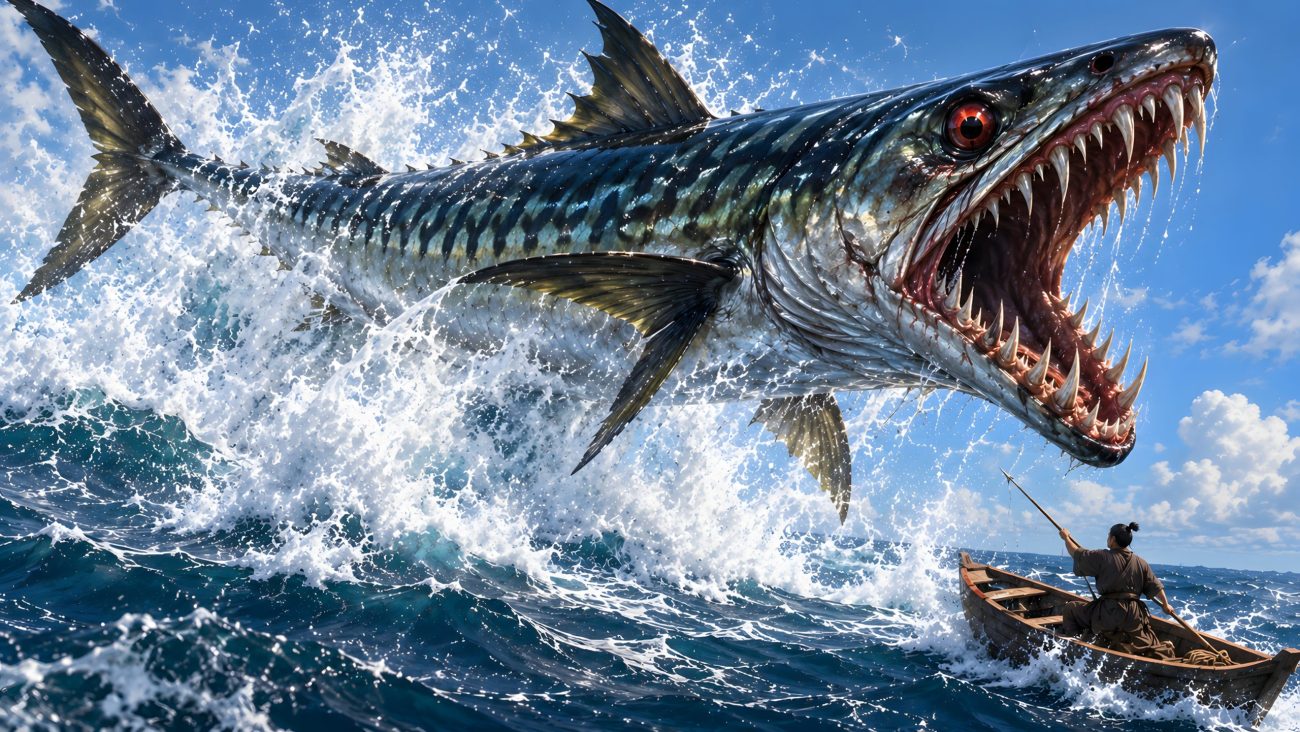
Long ago, in the seas near Irabu Island, there lived a monstrous fish known as the Osaba. Vast and terrifying, it rose from the deep whenever a boat passed, overturning vessels and devouring the people who fell into the water. So great was the fear it inspired that no one dared to sail from Irabu, and the island was left cut off by the sea.

At that time, the village head was a man named Tomomi Ujichika. Seeing his people trapped by terror and loss, he resolved to face the Osaba himself.

After offering prayers to the gods, Ujichika armed himself with a dagger and set out alone in a small boat, sailing far into the open sea. The waters were calm until, without warning, the great Osaba appeared, parting the waves as it opened its enormous mouth and rushed toward him.

Ujichika leapt into the sea and was swallowed whole.

Inside the belly of the beast, he fought desperately, slashing and stabbing until he tore through its entrails. Unable to endure the wounds, the Osaba died, and its blood spread through the surrounding waters.

Ujichika returned to shore victorious and was honored by the villagers, who praised him as their savior. Yet the struggle had drained his life. Not long after, he died from exhaustion, and the people wept for him.

The place where he was buried, Hiyaji, was later revered as a sacred mountain, for there rested the hero who gave his life to free his people from the terror of the Osaba.


Sources

TYZ-Yokai Blog contributors. (n.d.). Osaba. In TYZ-Yokai Blog, from https://tyz-yokai.blog.jp/archives/1059767734.html