Ne Hwas

Tradition / Region: Wabanaki Mythology, American Mythology
Alternate Names: Nehwas, Newas, Niwah
Category: Mermaid


The Myth

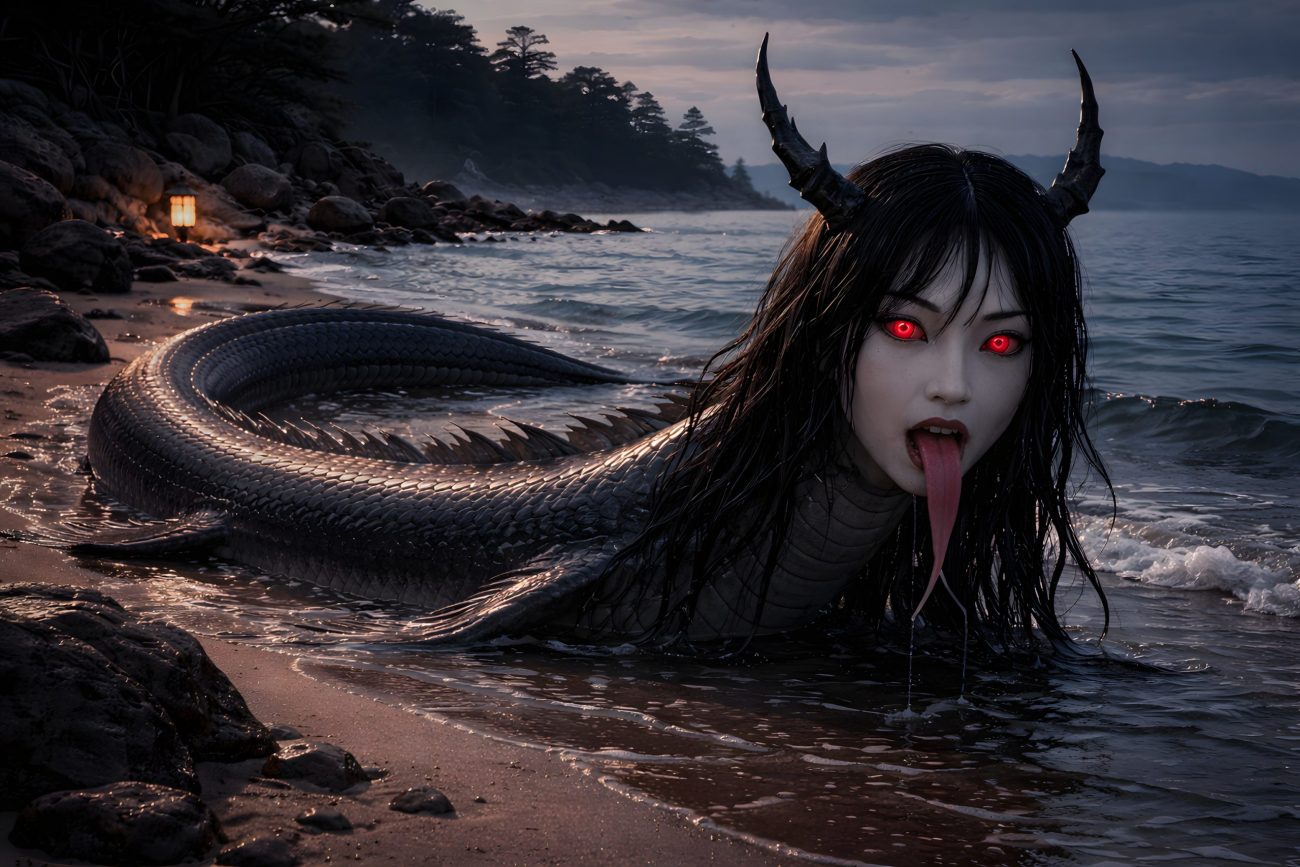
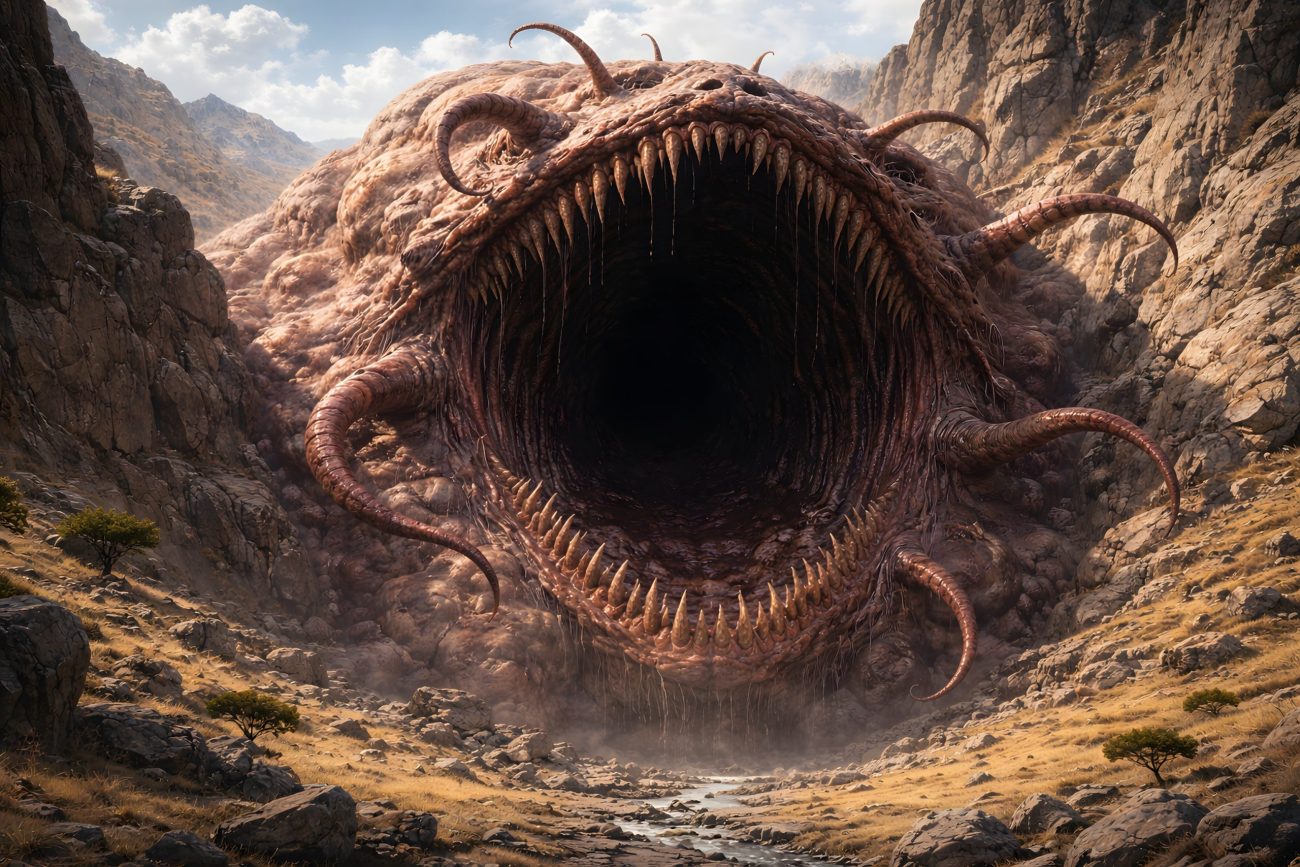
In the waters of the Passamaquoddy homeland, there is a spirit remembered as Ne Hwas—a being of river and sea, half woman and half fish, moving between the world of people and the deep places beneath the surface.

One story tells of two young girls who wandered too close to the water’s edge. They were drawn by the shimmer of the tide and the distant singing that seemed to rise from beneath the waves. Whether through curiosity, longing, or enchantment, they entered the water—and did not return as they had been.

When they were seen again, it was in the currents. Their bodies had changed. From the waist down, they bore the glistening tails of fish. Their hair flowed around them like riverweed, and their voices carried strangely across the water. They were no longer bound to the shore.

Some say they had become spirits of the water, Ne Hwas, belonging now to the hidden world beneath the surface. They swam through inlets and along rocky coasts, appearing at times to fishermen or children who lingered near the tide pools. They were not cruel, but neither were they fully human anymore. The water had claimed them.

Those who glimpsed them told of sadness in their eyes, as though they remembered the warmth of the land but could never quite return to it. And so their story remained—a warning and a wonder—about the deep waters, and how those who step too far into their mystery may find themselves changed forever.


Gallery


Sources

native-languages.org contributors. (n.d.). Ne Hwas. In native-languages.org, from https://www.native-languages.org/ne-hwas.htm


Interpretive Lenses

Religious Readings
  • Christian Ascetic Deep Dive
Philosophical Readings
  • Nietzschean Deep Dive
Psychological Readings
  • Jungian Deep Dive
Esoteric Deep Dive
  • Hermetic Deep Dive
Political / Social Readings
  • Marxist Deep Dive
Other
  • How to Invite The Ne Hwas

Lumpeguin

Tradition / Region: Wabanaki Mythology, American Mythology
Alternate Names: Lampeqin, Lampekwin, Lumpegwen, Lumpeguinuwok (plural)
Category: Mermaid


The Myth

In the rivers and coastal waters of Wabanaki lands dwell the Lumpeguin, small and powerful water spirits. Some say they appear as little people with shining eyes and long hair dripping with river water. Others say they are like tiny mermaids, with human faces and fish tails flashing silver beneath the surface. They move easily between water and shore, belonging fully to neither.

The Lumpeguin are beings of quiet magic. They can multiply food from almost nothing. A scrap of bread may become a feast in their hands. A handful of snow may be baked into warm loaves. Some carry enchanted pots that never empty, feeding those they favor. Their gifts, however, are never given lightly.

Like many nature spirits, a Lumpeguin’s power is bound to a magical garment—an article of clothing that allows them to move between worlds. If that garment is stolen, the Lumpeguin falls under the power of the thief. In old tales, men—and sometimes even animals—have hidden these garments and forced Lumpeguin women to remain on land as wives. Though they may live for a time among humans, their hearts remain with the water. If they ever recover their hidden clothing, they return at once to the rivers and are never seen again.

One tale tells of two Lumpeguin sisters who were captured in this way by Marten, a clever forest being. He hid their magical garments and claimed them as wives. The sisters lived with him, but they did not forget who they were. Through patience and cunning, they eventually regained their garments and set off on journeys of their own, traveling through forest and water alike, neither fully captive nor fully free until they reclaimed their power.

The Lumpeguin remind those who hear their stories that the spirits of the rivers cannot be possessed without consequence. Water gives life and sustenance, but it belongs first to itself. Those who try to bind it may hold it for a while—yet in the end, it always slips back to its own depths.


Gallery


Sources

native-languages.org contributors. (n.d.). Lumpeguin. In native-languages.org, from https://www.native-languages.org/lumpeguin.htm


Interpretive Lenses

Religious Readings
  • Christian Ascetic Deep Dive
Philosophical Readings
  • Nietzschean Deep Dive
Psychological Readings
  • Jungian Deep Dive
Esoteric Deep Dive
  • Hermetic Deep Dive
Political / Social Readings
  • Marxist Deep Dive
Other
  • How to Invite The Lumpeguin

Sabawaelnu

Tradition / Region: Micmac Mythology, American Mythology
Alternate Names: Sapowanilnu, Sapoqwanilnu; Halfway People
Category: Mermaid


The Myth

In the rivers, coves, and ocean inlets of Mi’kmaq lands live the Sabawaelnu—the Water People. They are called the Halfway People because they are neither fully human nor fully fish. From the waist up they appear as men and women, with long hair that flows like currents in the tide. From the waist down they bear the powerful tail of a fish, swift and strong in the water.

They dwell beneath the waves, in places where the water turns dark and green and deep. Sometimes they rest among kelp forests that sway like underwater trees. Sometimes they gather near rocky shores where the sea breathes in and out with the tide.

The Sabawaelnu are masters of storms. When the wind rises suddenly and the waves grow sharp and angry, it is said that the Water People are moving beneath the surface. A flick of a tail can churn the sea. A song rising from the depths can call the clouds together.

Yet they are not wicked spirits. They do not trouble those who honor them. Fishermen who greet the waters with respect, who never mock the sea or boast against it, are left unharmed. Some elders say that if you listen carefully to the wind over the water, you can hear the Sabawaelnu singing. Their songs carry warnings—of coming rain, of shifting winds, of dangerous tides.

Those who understand the meaning hidden in their voices can prepare before the storm arrives.

On calm evenings, when the surface of the water lies smooth as glass, a watcher might glimpse a shape moving just below. A pale arm breaking the surface. A dark head slipping between the swells. Then nothing—only ripples spreading outward.

They are the people of the water, halfway between worlds, powerful and watchful. The Sabawaelnu remind all who live near the sea that the waters are alive, and that respect is the price of safe passage.


Gallery


Sources

native-languages.org contributors. (n.d.). Sabawaelnu. In native-languages.org, from https://www.native-languages.org/sabawaelnu.htm


Interpretive Lenses

Religious Readings
  • Christian Ascetic Deep Dive
Philosophical Readings
  • Nietzschean Deep Dive
Psychological Readings
  • Jungian Deep Dive
Esoteric Deep Dive
  • Hermetic Deep Dive
Political / Social Readings
  • Marxist Deep Dive
Other
  • How to Invite The Sabawaelnu

Stia

Tradition / Region: Macedonia
Alternate Names: Стија
Category: Mermaid


The Myth

In the deep lakes of Macedonia dwell the stia—mysterious female beings who are half woman and half fish. Their long hair flows like river weeds in the water, and their tails shimmer beneath the surface like the scales of a great silver carp.

The stia rarely reveal themselves to humankind. By day they remain in the dark, silent depths, where sunlight cannot reach. There, among sunken stones and drowned branches, they gather and drift like pale shadows. But when the moon rises and lays a path of silver across the lake, they rise closer to the surface.

Fishermen tell of hearing soft singing carried over still water on windless nights. Those who follow the sound may glimpse a pale face rising from the lake, framed in long, wet hair. Some say the stia watch quietly from the reeds, their eyes shining just above the surface before slipping away without a ripple.

They are said to guard the hidden places of the lake—the deepest hollows and coldest springs. Anyone who ventures too far into their waters, whether out of greed or arrogance, risks being drawn downward. A sudden tug at the ankle, a swirl of water where none was before, and the lake closes again as if nothing had happened.

Yet the stia are not always cruel. In some tales, they have been seen weeping beside the bodies of drowned youths, combing their long hair in sorrow. Others say they sometimes guide lost children back toward shore, pushing them gently with unseen currents.

Beautiful, distant, and dangerous, the stia belong to the still waters and moonlit depths, where the boundary between the human world and the hidden world beneath the lake grows thin.


Gallery


Sources

Wikipedia contributors. (n.d.). Macedonian Slavic mythology. In Wikipedia, The Free Encyclopedia. Retrieved February 14, 2026, from https://en.wikipedia.org/wiki/Macedonian_Slavic_mythology


Interpretive Lenses

Religious Readings
  • Christian Ascetic Deep Dive
Philosophical Readings
  • Nietzschean Deep Dive
Psychological Readings
  • Jungian Deep Dive
Esoteric Deep Dive
  • Hermetic Deep Dive
Political / Social Readings
  • Marxist Deep Dive
Other
  • How to Invite The Stia

Namiko

Tradition / Region: Japanese Mythology
Alternate Names: Girl of the Sea
Category: Mermaid


The Myth

During one summer in Kamakura, a clever but willful girl named Namiko went to stay near Yuigahama Beach while her sick mother rested in a hospital nearby. Though she excelled at school, at home she was stubborn and often caused her father trouble with her selfishness.

One day, while playing alone on the shore, Namiko encountered an old woman selling fish. Among the catch was a beautiful striped sea bream, its scales gleaming in the sunlight. Entranced by its natural beauty, Namiko declared that she wished she could be as beautiful as that fish.

The old woman laughed.

“A kimono fades and wears out,” Namiko insisted. “But a fish’s beauty never falls away. If I were as beautiful as that, I would never lose it.”

“Then become a fish,” the old woman said, her eyes sharpening.

“Yes, I would!”

At once the old woman’s laughter ceased. She chanted a strange sutra, and before Namiko could protest, she was transformed into a striped sea bream. The fish-seller’s true form was that of a powerful magician.

Thrown into the sea, Namiko swam bewildered through the underwater world. At first, she was amazed by the shimmering waters and the strange creatures gliding past her. It felt like exploring a living aquarium. But as the currents grew rough and hunger gnawed at her, she was forced to eat small fish she once would have admired. She could not cry; fish have no tears. Loneliness overtook her, and she longed for her parents.

Resting against a rock on the ocean floor, she lamented her foolish words. “All I did was stubbornly wish to be a fish.”

Meanwhile, on the shore, her father and their maid searched desperately. When they found her clothes abandoned on the beach, they believed she had drowned. Their grief was unbearable.

Then the old woman appeared before them.

“Your daughter lives,” she said calmly, and instructed Namiko’s father to take a boat out to sea the next morning.

At dawn, they followed her directions. Pointing to a struggling striped sea bream in the waves, the old woman declared, “That fish is your daughter.”

Understanding that this had been a lesson for his child’s stubborn pride, Namiko’s father fell to his knees and begged the magician to restore her.

As he lifted the sea bream into his arms, the old woman once again chanted her spell. The fish began to grow, its head transforming first, then its body, until Namiko stood once more in human form. Father and daughter embraced in tears, and Namiko vowed never again to let selfish pride rule her heart.

The magician suddenly vanished.

Then a voice drifted down from the sky. The old woman spoke, saying that though she had once used magic to torment many, she had now redeemed herself by correcting Namiko’s ways. Her sins were forgiven, and she would ascend to heaven.

She warned of a coming storm and asked Namiko to send down five-colored thread from the shore.

That afternoon, as winds rose and the sky darkened, Namiko kept her promise. A five-colored thread was cast toward the sea. From the heavens, the old woman—now transformed into a dragon—received it as she ascended.

After that day, Namiko treated her parents with devotion and filial piety. Her mother recovered from illness, and peace returned to their home.

And by the sea at Yuigahama, people remembered the tale of the girl who became a fish—and the dragon who rose to heaven.


Gallery


Sources

tyz-yokai.blog.jp contributors. (n.d.). Namiko. In tyz-yokai.blog.jp, from https://tyz-yokai.blog.jp/archives/1077741623.html


Interpretive Lenses

Religious Readings
  • Christian Ascetic Deep Dive
Philosophical Readings
  • Nietzschean Deep Dive
Psychological Readings
  • Jungian Deep Dive
Esoteric Deep Dive
  • Hermetic Deep Dive
Political / Social Readings
  • Marxist Deep Dive
Other
  • How to Invite The Namiko

Merrow

Tradition / Region: Ireland
Alternate Names: Murdúchann, Muirgheilt, Maighdean mhara
Category: Mermaid


The Myth

Along the rocky coasts of Ireland, where grey waves strike the cliffs and sea-mist hangs in the air, the merrows dwell beneath the waters.

They are sea-people—half human, half fish. From the waist upward, the merrow-maiden appears as a beautiful woman, with pale skin and long green hair that she combs as she sits upon lonely rocks. From the waist downward, she bears the scaled tail of a fish, shimmering with a greenish sheen. Between her fingers lies a delicate webbing, fine as the skin within an eggshell.

But a merrow cannot freely pass between sea and land without her magical cap—the cohuleen druith, a little enchanted hood. With it, she may dive to the deepest waters or rise to the shore. Without it, she is bound to whatever realm she stands upon.

Many tales tell of fishermen who glimpsed a merrow combing her hair at dusk. Some men hid her magic cap and so prevented her return to the sea. Bereft of it, she became their wife. She bore children, tended the hearth, and lived gently among the people. Her nature was said to be affectionate and kind, capable of loving a mortal man.

Yet no matter how long she remained, the sea called to her.

If ever she found her hidden cap, her longing for the deep would overcome all earthly bonds. She would take it, kiss her children, and vanish into the waves, never to return. The sea was her first home, and it would not release her forever.

The merrow-men were another matter. Unlike the maidens, they were said to be grotesque—green-haired, red-nosed, sharp-toothed creatures with pig-like eyes and scaly limbs. Some were known to dwell in houses beneath the sea, where drowned sailors’ souls were kept like treasures in cages. They loved strong drink and strange company, and though fearsome in appearance, they too belonged to the same hidden kingdom under the waves.

The music of the merrows sometimes rises from the ocean depths. It drifts across the surface like a distant song—sweet, haunting, and perilous. Those who follow it may never return.

In older tales, the murdúchann appeared as sea-singers, akin to sirens, whose melodies enchanted sailors. In still other legends, sea-wanderers such as Lí Ban were transformed into fish-tailed beings, destined to roam the waters between worlds.

Thus the merrow stands at the meeting of land and sea—beautiful yet sorrowful, loving yet unbound, forever torn between hearth-fire and tide.


Gallery


Sources

Wikipedia contributors. (n.d.). Merrow. In Wikipedia, The Free Encyclopedia. Retrieved February 14, 2026, from https://en.wikipedia.org/wiki/Merrow


Interpretive Lenses

Religious Readings
  • Christian Ascetic Deep Dive
Philosophical Readings
  • Nietzschean Deep Dive
Psychological Readings
  • Jungian Deep Dive
Esoteric Deep Dive
  • Hermetic Deep Dive
Political / Social Readings
  • Marxist Deep Dive
Other
  • How to Invite The Merrow

Jinja hime

Tradition / Region: Japanese Mythology
Alternate Names: Hime uo (Princess Fish)
Category: Mermaid, Yokai


The Myth

In the year 1819, on a lonely shore in Hizen Province, an unusual creature was seen upon the sand.

It was long and serpentine, nearly six meters in length. Two horns rose from its head. A dorsal fin ran along its back, and flippers lay against its sides. Its tail stretched behind it like that of a great sea serpent. Yet its face was not that of a fish. It was the face of a woman.

The creature spoke.

“I am a messenger from Ryūgū,” she said, naming the palace of the Dragon King beneath the sea. “My name is Jinja hime.”

She declared that for seven years the land would enjoy abundant harvests. Rice would grow thick and heavy; the people would prosper. But after those seven years, a great sickness would spread across the country—an epidemic that would bring suffering and death.

Yet she offered hope.

“Those who look upon my image,” she said, “will avoid hardship and be granted long life.”

Having delivered her prophecy, the shrine princess slipped back into the sea and vanished beneath the waves.

Her likeness was drawn and shown to the people, so that they might gaze upon it and be protected. The image spread from hand to hand. Fishermen, farmers, and townsfolk spoke of the sea princess who foretold both blessing and plague.

From that time on, stories began to circulate across Japan of other strange beings who emerged from the sea or the mountains to warn of disaster and promise protection through their image.

But it was Jinja hime—the shrine princess of the deep—who first rose from the waters, spoke of fate, and returned to the palace of the Dragon King below.


Gallery


Sources

yokai.com contributors. (n.d.). Jinjahime. In yokai.com, from https://yokai.com/jinjahime/

tyz-yokai.blog.jp contributors. (n.d.). Jinjahime. In tyz-yokai.blog.jp, from https://tyz-yokai.blog.jp/archives/1077741611.html


Interpretive Lenses

Religious Readings
  • Christian Ascetic Deep Dive
Philosophical Readings
  • Nietzschean Deep Dive
Psychological Readings
  • Jungian Deep Dive
Esoteric Deep Dive
  • Hermetic Deep Dive
Political / Social Readings
  • Marxist Deep Dive
Other
  • How to Invite The Jinja hime

The Night Folk of the Mountain

Tradition / Region: Swiss Mythology
Alternate Names:
Category: Mountain dweller, Ghost


The Myth

High above the village of Flumserberg, in the dark forests and shadowed slopes of the mountain, there dwelt the Night Folk.

They were seen only at certain times.

When someone in the village lay upon their deathbed, watchers would sometimes glimpse a strange procession descending from the mountain heights. A multitude of black figures moved silently in a long line. Among them strode a towering white man, conspicuous and pale, wearing a wide, floppy hat. He walked at their center, taller than all the rest.

The procession did not enter the village openly. Instead, it halted at an old, crumbling house near the former town hall. There the figures would gather, as if conferring among themselves. From that place came a low, far-reaching murmur—an eerie sound that drifted through the air but could not be understood.

They lingered for a time.

Then, just as silently, the Night Folk turned and made their way back up the mountainside. One by one they disappeared into the darkness of the forest, until no trace of them remained.

Soon after, word would spread that the dying villager had passed.

Because of this, when a body from Flumserberg was carried to burial, the funeral procession would always stop at the old town hall. There the priest would come out to meet it, as though acknowledging the unseen procession that had already come down from the mountain and returned to its hidden realm.


Gallery


Sources

sagen.at contributors. (n.d.). Nachtvolk vom Berg. In sagen.at, from https://www.sagen.at/texte/sagen/schweiz/st_gallen/nachtvolk_berg.html


Interpretive Lenses

Religious Readings
  • Christian Ascetic Deep Dive
Philosophical Readings
  • Nietzschean Deep Dive
Psychological Readings
  • Jungian Deep Dive
Esoteric Deep Dive
  • Hermetic Deep Dive
Political / Social Readings
  • Marxist Deep Dive
Other
  • How to Invite The Night Folk of the Mountain

Orco Mamman

Tradition / Region: Argentine Mythology
Alternate Names: Mother of the Hill
Category: Mountain dweller


The Myth

High in the mountains, where gold and silver sleep in dark veins beneath the rock, there dwelt a radiant woman known as Orco Mamman—the Mother of the Hill.

She was beautiful beyond compare. Her hair fell long and shining down her back, and she would sit upon the heights, slowly brushing it with a golden comb. The metals beneath the earth were under her care—gold, silver, iron, and all the hidden treasures buried deep within the mountain’s bones.

The miners who climbed the slopes knew of her. As long as they took only what they needed and honored the mountain, she allowed them to pass unharmed. The tunnels rang with hammers, and caravans of mules carried ore down winding paths.

But when greed took hold—when men gouged too deeply into the mountains, tearing them open and weakening their heart—Orco Mamman grew wrathful.

She would rise from the heights and move unseen among the ridges. As the caravans descended, heavy with stolen metal, she would push them from behind. Carts, mules, and men alike would tumble into dark ravines, swallowed by the abyss below.

Those who survived spoke in hushed voices of a glimpse—a flash of golden hair in the wind, the glint of a comb, a woman standing silently at the edge of a precipice.

From that time on, the wise miners remembered: the mountain is alive, and its Mother watches.


Gallery


Sources

Wikipedia contributors. (n.d.). Legendary creatures of the Argentine Northwest region. In Wikipedia, The Free Encyclopedia. Retrieved February 14, 2026, from https://en.wikipedia.org/wiki/Legendary_creatures_of_the_Argentine_Northwest_region


Interpretive Lenses

Religious Readings
  • Christian Ascetic Deep Dive
Philosophical Readings
  • Nietzschean Deep Dive
Psychological Readings
  • Jungian Deep Dive
Esoteric Deep Dive
  • Hermetic Deep Dive
Political / Social Readings
  • Marxist Deep Dive
Other
  • How to Invite The Orco Mamman

Khanyapa

Tradition / Region: Basotho Mythology, Lesotho Mythology, South African Mythology
Alternate Names: Kholumolumo; Kgodumodumo
Category: Mountain dweller


The Myth

Long ago, in the valleys and mountains of the Basotho, there arose a monstrous being called Khanyapa.

It had no fixed shape. It was vast, bloated, and ever-growing. Its hunger knew no limit. As it roamed from village to village, it swallowed everything in its path—men, women, children, cattle, wild beasts. The more it devoured, the larger it became. From its body lashed multiple sharp tongues, which it wielded like weapons. Its voice was so terrible that it made the rocks tremble.

Soon there were no towns left standing. The valleys were silent. Humanity had vanished.

Only one woman survived. She had hidden herself in ashes, masking her scent and appearance, and so the monster did not detect her. When Khanyapa had eaten all it could find, its swollen body dragged itself into a mountain pass and became wedged there, too distended to move further.

Alone in the emptied world, the woman wept and prayed that humankind should not end. The gods heard her plea. She conceived and bore a son in an abandoned stable.

When she looked upon the child, she saw around his neck a necklace of divining charms. She named him Ditaolane—the Diviner.

But Ditaolane was no ordinary child. In the time it took his mother to prepare straw for his bed, he had already grown into a full man, wise in speech. Seeing the desolation around him, he asked why the earth lay empty. His mother told him of the monster whose hunger had devoured the world. She pointed to the mountain pass where the great body of Khanyapa lay.

Though she warned him, Ditaolane took up a knife and went alone to confront the devourer.

Khanyapa swallowed him as it had swallowed all others.

But Ditaolane did not die.

Inside the monster’s vast belly, among the swallowed multitudes, he drew his knife and began to cut. He tore at the entrails of Khanyapa. The monster roared, shaking the earth, but at last it collapsed and died.

Still trapped inside, Ditaolane cut his way outward. As the blade pierced flesh, thousands of voices cried out—those who had been swallowed alive. He opened a great wound, and through it poured the nations of the earth, restored to life.

The people rejoiced at first, but soon suspicion took root in their hearts. Who was this man who had survived the beast? What power did he possess? Fearing him, they plotted his death.

But Ditaolane would not be taken. He escaped them by turning himself into stone.

And so the world was freed from the devouring monster, yet the savior who restored humanity withdrew from it, leaving behind the memory of the time when all living things were swallowed and reborn from the belly of Khanyapa.


Gallery


Sources

Wikipedia contributors. (n.d.). Kamappa. In Wikipedia, The Free Encyclopedia. Retrieved February 14, 2026, from https://en.wikipedia.org/wiki/Kamappa


Interpretive Lenses

Religious Readings
  • Christian Ascetic Deep Dive
Philosophical Readings
  • Nietzschean Deep Dive
Psychological Readings
  • Jungian Deep Dive
Esoteric Deep Dive
  • Hermetic Deep Dive
Political / Social Readings
  • Marxist Deep Dive
Other
  • How to Invite The Khanyapa