Jentilak

Tradition: Basque Mythology, Spanish Mythology
Alternative Names: Jentil, Jentilak, Jentilgo, Jentilarri (Giant Stones)
Category: Giant


The Myth

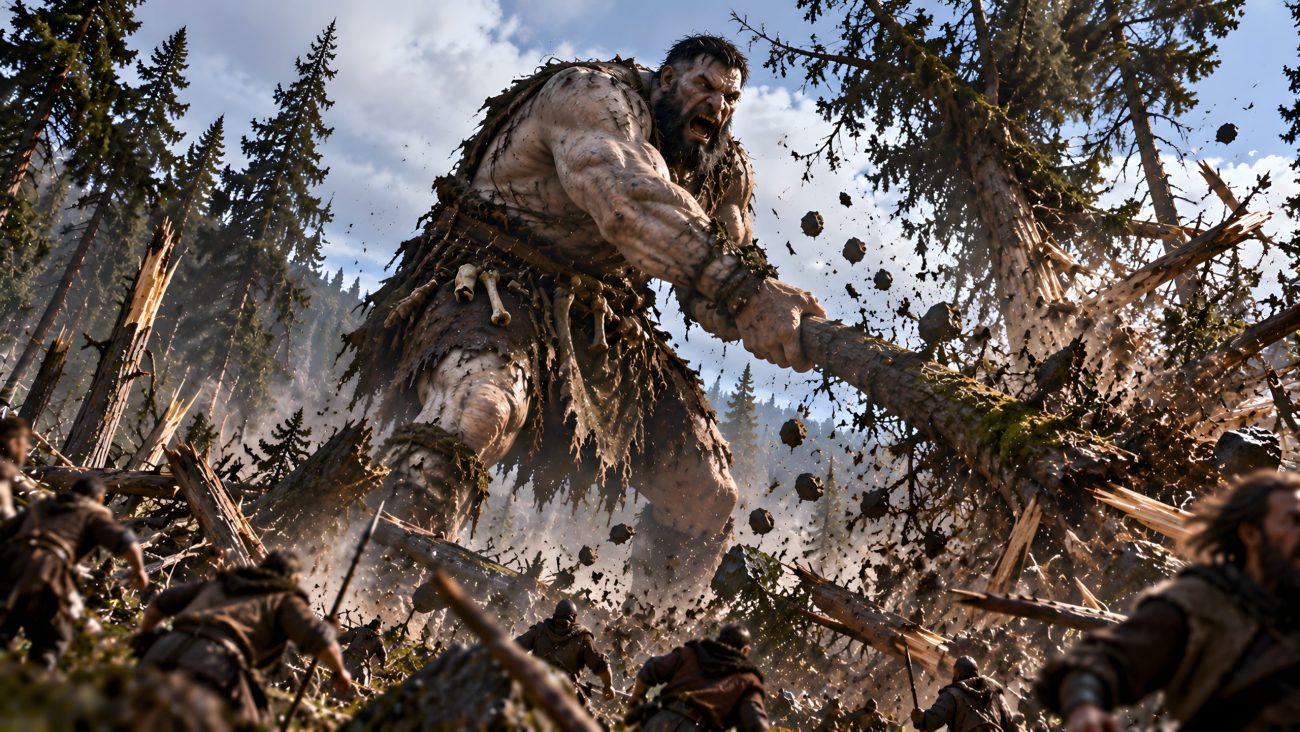
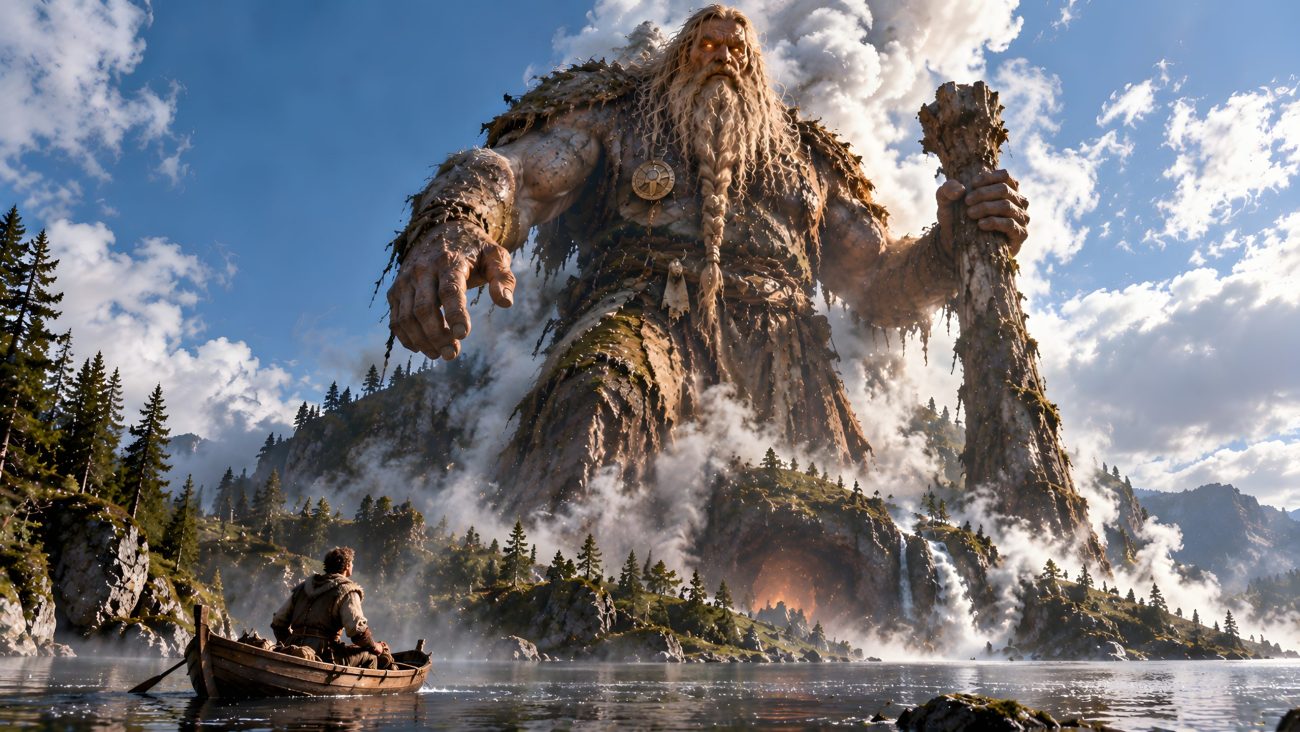
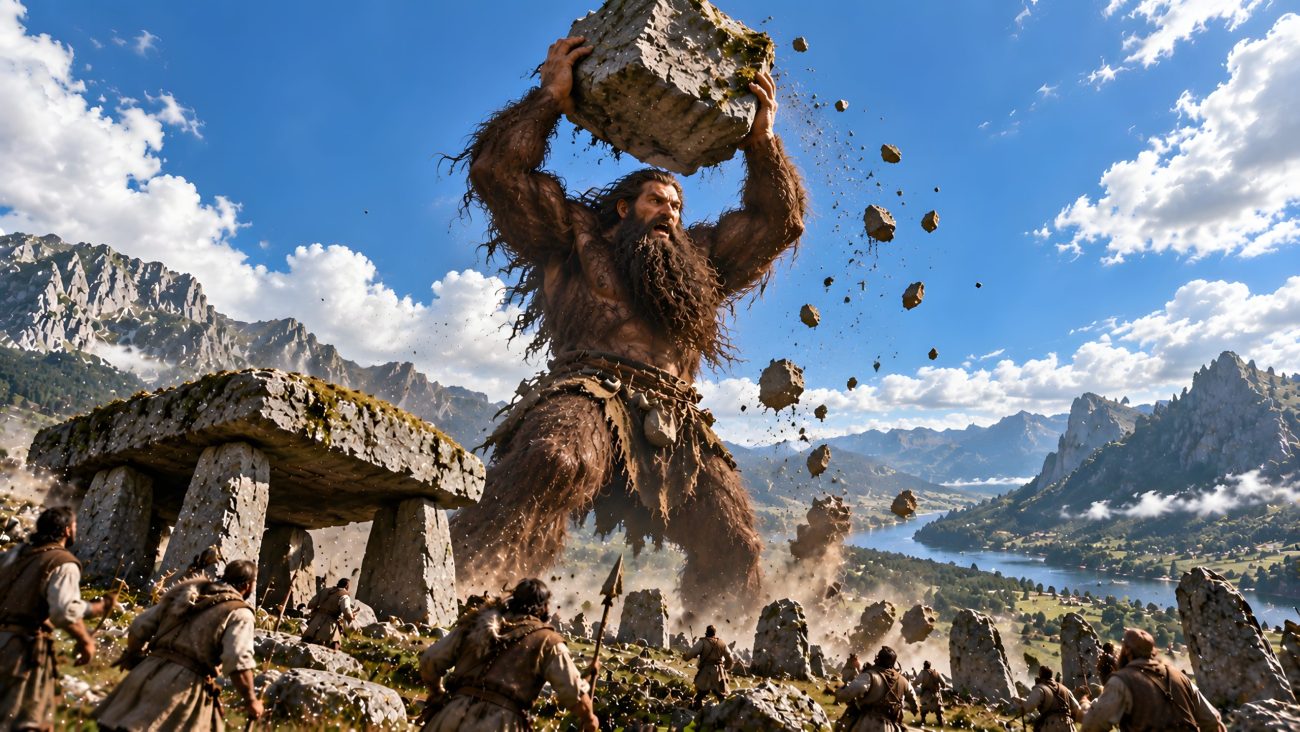
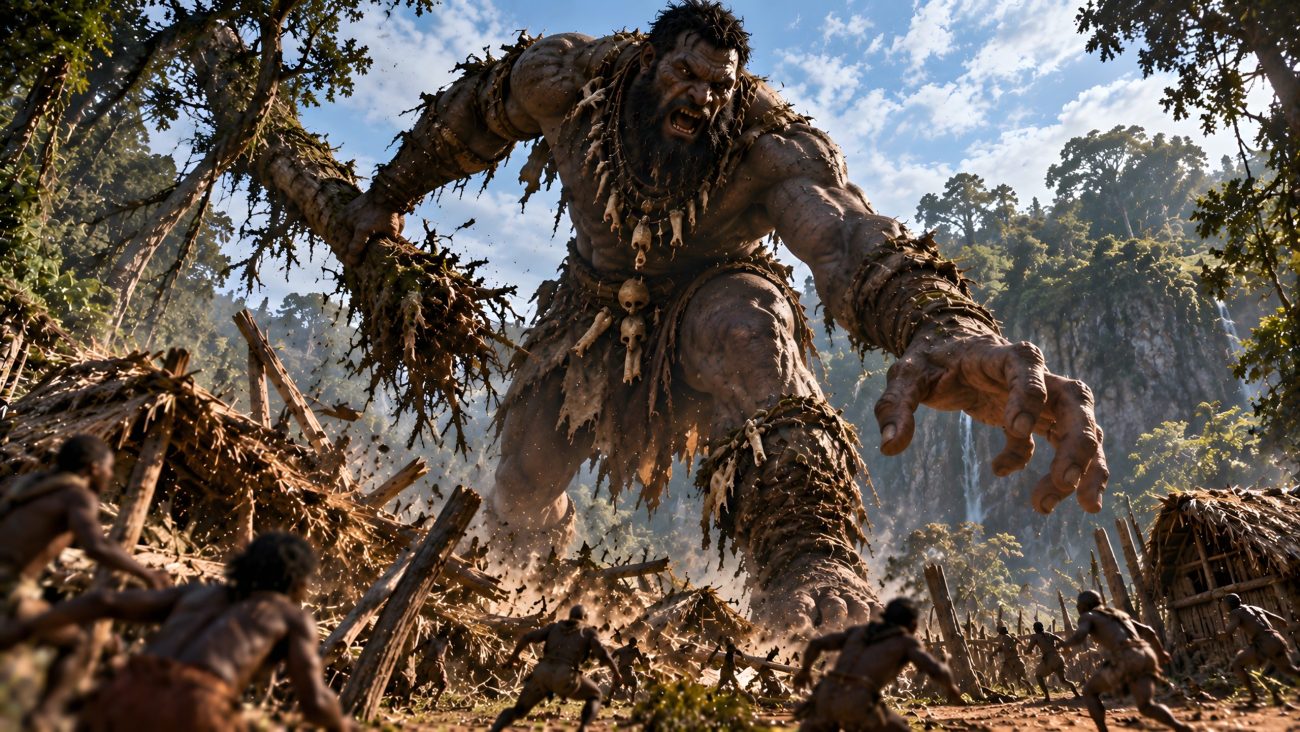
The Jentilak are a race of giants in Basque mythology who were believed to have lived alongside the Basque people in ancient times. They were exceptionally tall and covered in hair, so enormous that they could walk through the sea and throw massive rocks from one mountain to another. Their legendary strength was used to explain the presence of ancient stone monuments, megaliths, and isolated boulders scattered throughout the Basque Country. Some traditions also attributed the origins of Basque pelota, the traditional ball game, to the giants’ stone-throwing contests.

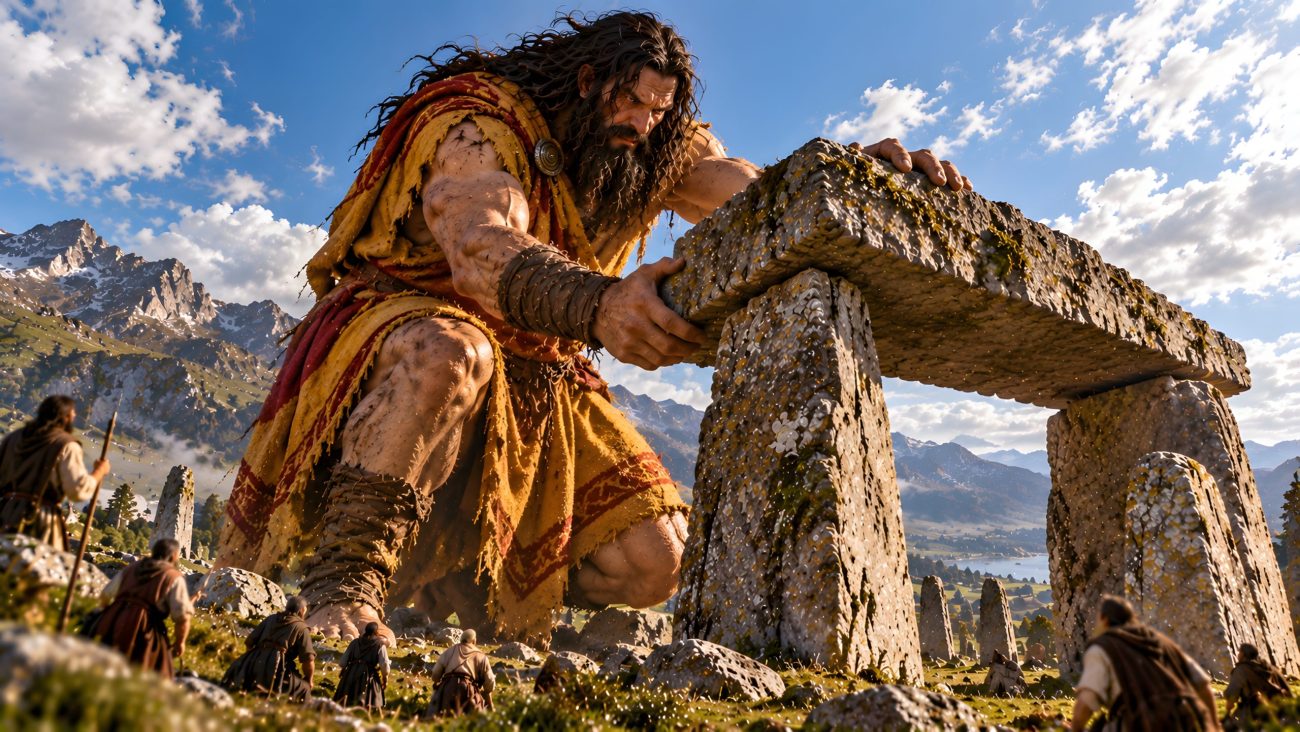
The Jentilak were regarded as builders and inventors who shaped the ancient world. They were credited with constructing Neolithic monuments such as dolmens, as well as inventing metallurgy and the saw. They were also said to have been the first to cultivate wheat and to have taught humans how to farm. Despite these achievements, the giants preferred to remain in the mountains rather than move into the valleys and adopt new ways of life.

Some legends associate the Jentilak with historical battles. One tradition claims that they helped defeat Roland and the Frankish army at the Battle of Roncevaux by hurling enormous rocks at the enemy. Their immense strength and connection with ancient stone structures made them central figures in explanations of the landscape and the distant past.

According to one tradition, the age of the Jentilak ended when a luminous cloud, possibly a star, appeared in the sky, heralding the birth of Christ, whom they called Kixmi. The giants understood this portent as a sign that their era had come to an end. They disappeared beneath the earth under a dolmen in the Arratzaren valley in Navarre. Other versions say that they threw themselves from a mountain. Only Olentzero remained, a giant associated with Christmas who survives in Basque tradition as a figure represented by straw dolls.

The Jentilak’s legacy remains visible in Basque place names and local traditions. Many ancient structures are associated with them: dolmens are called jentilarri or jentiletxe, stone circles known as harrespil are called jentilbaratz, and caves may be known as jentilzulo or jentilkoba. These names preserve the memory of the giants as the legendary builders of ancient monuments and as inhabitants of a world that existed before the Christian era.


Sources

“Jentil.” Wikipedia: The Free Encyclopedia. Wikimedia Foundation. Accessed October 16, 2026. https://en.wikipedia.org/wiki/Jentil
Bergmönch

Tradition: German Mythology
Alternative Names: Bergmönch, Meister Hämmerling, Mountain Monk, Master Hämmerling
Category: Giant


The Myth

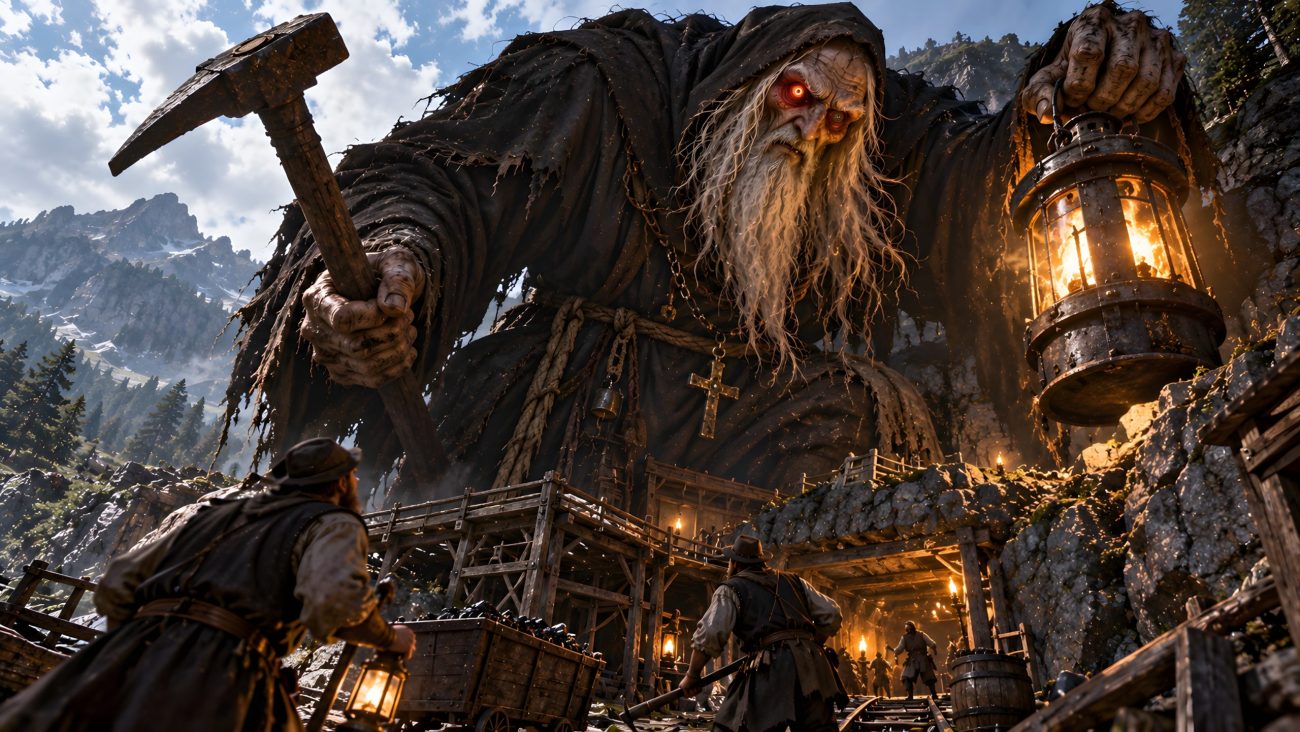
The Bergmönch, meaning “Mountain Monk,” is a giant mountain spirit in German folklore who inhabits mountain pits and mines. He has white hair and enormous, fiery eyes as large as dining plates. He usually wears a black hooded cowl resembling a monk’s habit, which gives him his name. When he appears as a miner, he is known as Meister Hämmerling. He can also take the shape of a horse with a long neck and terrifying eyes, or become invisible.

The Bergmönch is active both deep underground and on the surface, where he is particularly busy on Fridays. During these periods, he transfers excavated ore from one bucket to another, an apparently pointless task that others are warned not to mock or interrupt. The spirit is unpredictable, hot-tempered, and dangerous to anyone who insults or defies him. His breath is poisonous and can kill twelve people at once. He may seize a miner and carry him elsewhere with such violence that the man’s limbs are shattered. He delights in tricks and reacts fiercely to ridicule or refusal.

Despite his frightening nature, the Bergmönch can also be just and helpful. He protects good miners while punishing those he considers wicked, lazy, selfish, unfaithful, or disrespectful. Whistling and cursing are among the behaviors that provoke his anger. In one tale, he kills an evil mining foreman by invisibly crushing the man’s head between his knees.

The Bergmönch sometimes helps miners whose lamps are about to go out by giving them oil from his enormous mine lamp. This oil never runs out and burns steadily for years, provided the recipient keeps its origin secret. He also performs mining work for his favorites, extracting more ore in an hour than ordinary miners can obtain in a week. Occasionally, he reveals hidden veins of gold and silver to favored workers. To secure such a discovery, however, the miner must throw some of his mining tools into the offered vein; otherwise, the lode closes and disappears forever from human sight.

The Bergmönch thus embodies both the dangers and the rewards of mining. He can bring sudden death to those who offend him, yet he may grant extraordinary wealth and protection to miners who earn his favor and respect the rules of his underground domain.


Sources

“Bergmönch.” Wikipedia: The Free Encyclopedia. Wikimedia Foundation. Accessed October 16, 2026. https://en.wikipedia.org/wiki/Bergm%C3%B6nch


Negoogunogumbar

Tradition: Congo Mythology
Alternative Names: Negoogunogumbar
Category: Giant


The Myth

Negoogunogumbar is a child-eating giant in Congo mythology. The creature is identified by its enormous stature and its threat to children, making it a fearsome figure in the supernatural traditions associated with the region.

Beyond its classification as a giant that eats children, the available account provides no further details about Negoogunogumbar’s appearance, origins, abilities, or the stories in which it appears.


Sources

“Mbuti mythology.” Wikipedia: The Free Encyclopedia. Wikimedia Foundation. Accessed October 16, 2026. https://en.wikipedia.org/wiki/Mbuti_mythology


Mairuak

Tradition: Basque Mythology, Spanish Mythology
Alternative Names: Mairu, Maideak, Mairiak, Saindi Maidi, Intxisu
Category: Giant


The Myth

The Mairuak are giants in Basque mythology, traditionally associated with the construction of ancient stone monuments in mountainous regions. They were believed to have built dolmens and harrespil, stone structures found in the mountains of the Basque Country. Their association with these megalithic monuments connects them to the legendary peoples who were thought to have inhabited the region before the arrival of Christianity.

The Mairuak are also known by several regional names. In Lower Navarre, they are called Saindi Maidi, while in the Bidasoa valley they are known as Intxisu. Other names include Maideak and Mairiak. They are frequently associated with the lamia, another supernatural being found throughout Basque mythology.

The name Mairu may derive from a Basque word meaning “Moor.” In traditional usage, the term was associated with non-Christian peoples and earlier civilizations, particularly those credited with constructing megalithic monuments. The Mairuak share similarities with the mouros encantados of Portuguese folklore, or moros encantados in Spanish, supernatural figures believed to preserve the memory of ancient, pre-Roman deities.


Sources

“Mairu.” Wikipedia: The Free Encyclopedia. Wikimedia Foundation. Accessed October 16, 2026. https://en.wikipedia.org/wiki/Mairu


Meteläinen

Tradition: Finnish Mythology
Alternative Names: Metelyäinen, Metelyaiset, Munkkilainen, Metelijäiset
Category: Giant


The Myth

The Meteläinen are enormous giants from Karelian folklore, renowned for their immense size and the incredible noise they make as they move through the forest. Their name is associated with the Finnish word meteli, meaning “noise,” reflecting the disturbance caused by their movements.

According to legend, the Meteläinen lived in Karelia many centuries ago. They were also known as Munkkilainen or Metelyäinen and were distinguished by their enormous stature. As they moved through the forests, they produced such tremendous noise that their presence could be recognized from afar.

The giants were believed to have inhabited areas later occupied by the Lapps and Finns. Although they eventually disappeared, people continued to find enormous bones, ploughs, and boulders that were attributed to them. These remains were regarded as evidence of the giants’ former existence, although their precise origins and purposes remained unknown.


Sources

“Metelilyaineny.” New Bestiary (Bestiary.us). https://www.bestiary.us/metelilyaineny


Orci

Tradition: Italian Mythology
Alternative Names: Orco, Orci
Category: Giant


The Myth

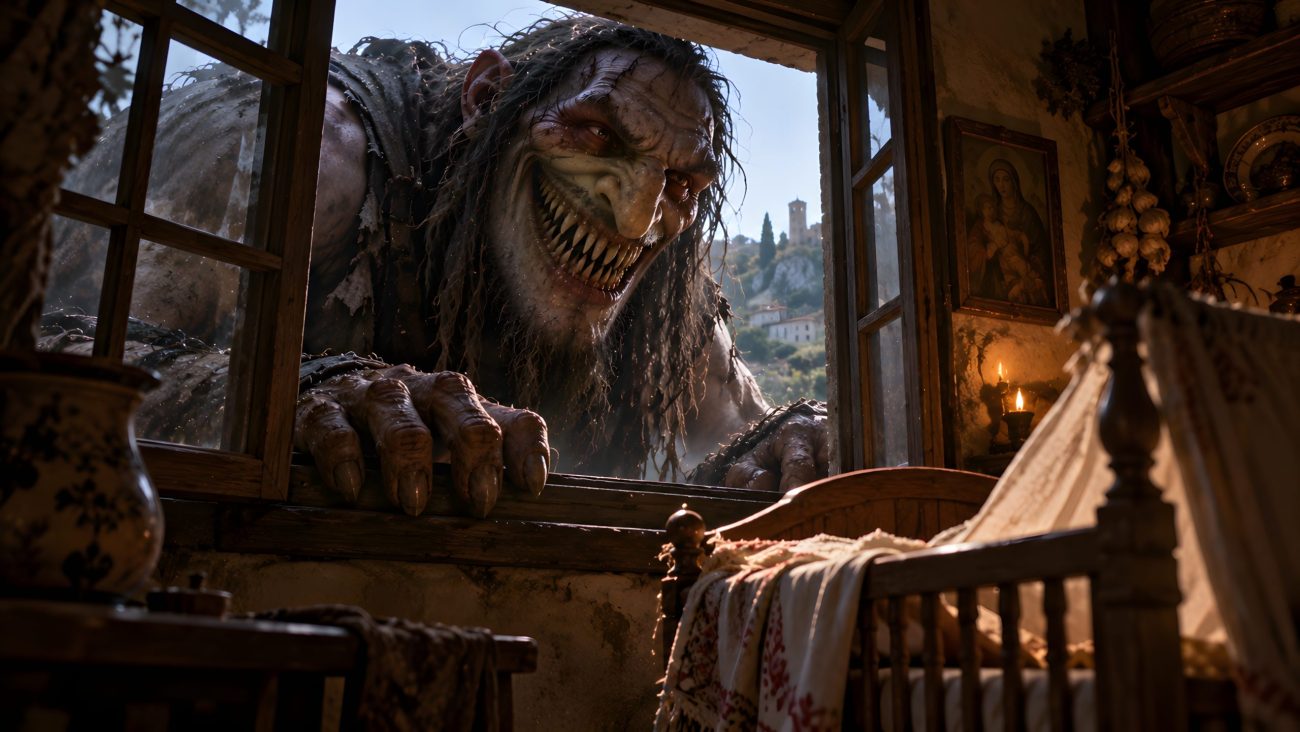
The Orci are bloodthirsty giants from Italian folklore, feared for their monstrous appetite and their preference for human babies. They are depicted as dangerous supernatural beings whose hunger makes them a threat to vulnerable children and their families.

Little further information about the Orci is provided in the available account. Their defining characteristics are their enormous size, their bloodthirsty nature, and their notorious preference for eating human babies.


Sources

“Orchi.” New Bestiary (Bestiary.us). https://www.bestiary.us/orchi


Kangiqsuarmiukpak

Tradition: Inuit Mythology, Canadian Mythology
Alternative Names: Kangiqsuarmiukpak
Category: Giant


The Myth

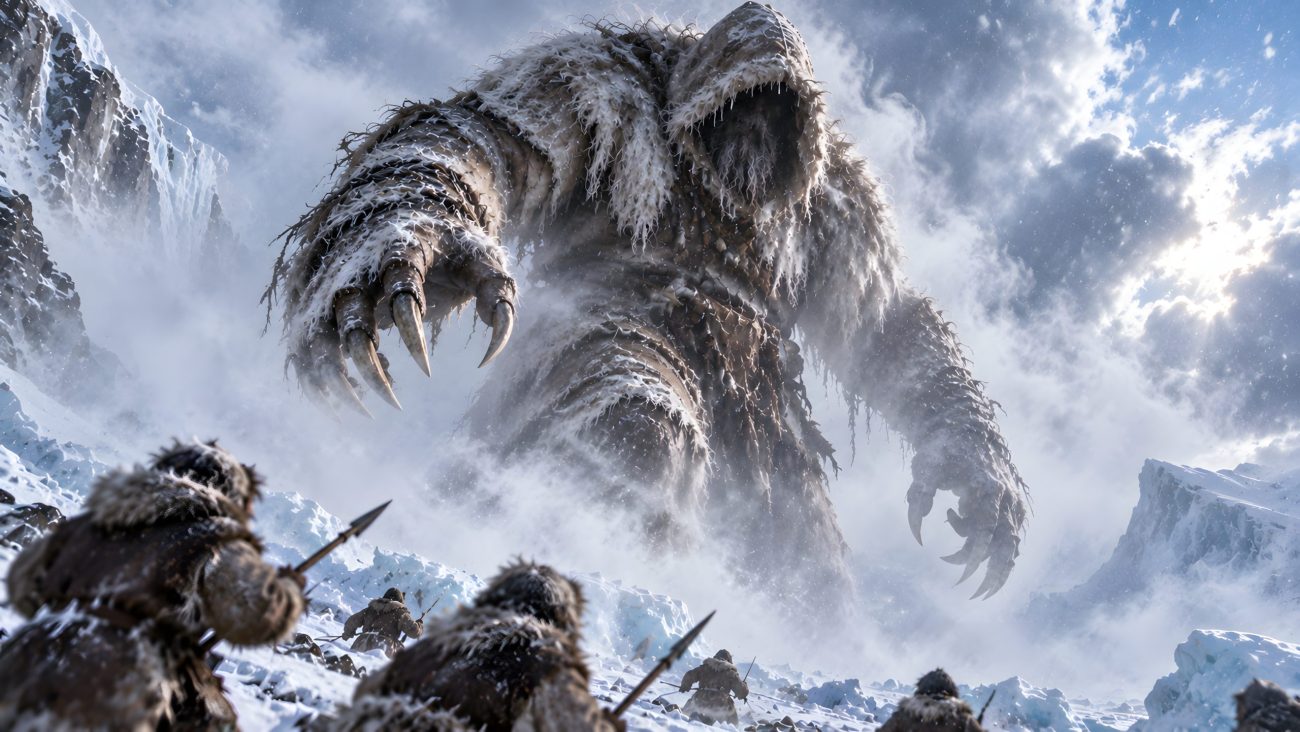
Kang iqsuarmiukpak is a giant from Inuit mythology, described as a formidable humanoid figure. The creature is depicted as a powerful being with a broad, muscular body, long claws, and a thick covering of fur around its shoulders and upper body. Its appearance suggests an imposing figure adapted to the harsh Arctic environment.

Little additional information about Kangiqsuarmiukpak’s mythology or behavior is provided in the available account. It is identified as a giant in Inuit Eskimo tradition, but no specific legends describing its origins, abilities, or encounters with humans are included.


Sources

“Kangiksuarmiukpak.” New Bestiary (Bestiary.us). https://www.bestiary.us/kangiksuarmiukpak


Kawtcho

Tradition: Chilean Mythology
Alternative Names: Kawtcho, El Kawtcho
Category: Giant


The Myth

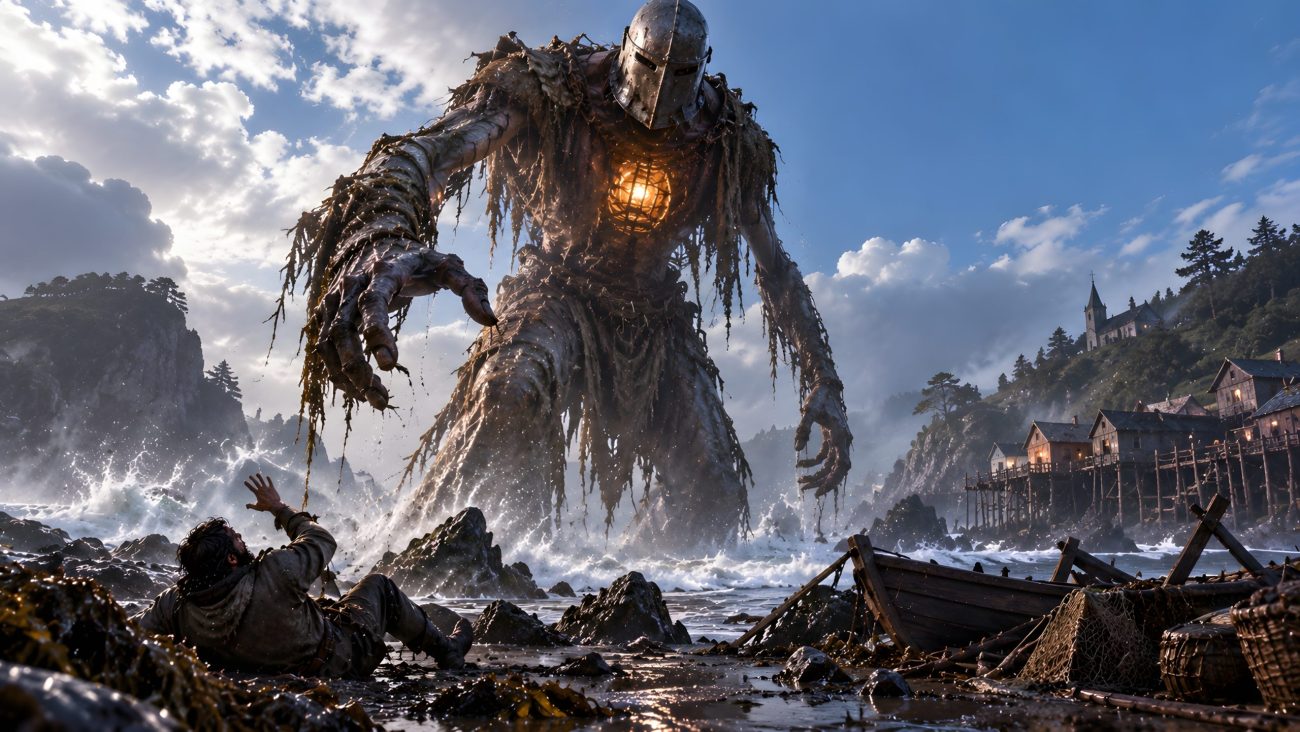
Kawtcho is a giant humanoid monster from the folklore of the fishermen of Chiloé, an island off the coast of Chile. It is described as a strange, frightening creature with a shiny iron helmet on its head and a flickering light that emanates from its chest. It prowls along the shore and through the darkness, hunting lone fishermen who find themselves away from their homes at night.

The Kawtcho is said to emerge from underground and move through the coastal landscape, attacking fishermen from behind as they walk along deserted shores or stormy beaches. Its sudden appearance and unnatural light make it a terrifying presence in the darkness. The creature’s victims are often those who have strayed too far from home or are traveling alone at night.

The Kawtcho’s most distinctive feature is the flickering light that shines from its chest, which gives the monster an eerie and otherworldly appearance. Its association with isolated fishermen and dark coastal paths reflects the dangers and fears connected with traveling along Chiloé’s shores after nightfall.


Sources

“Kavtcho.” New Bestiary (Bestiary.us). https://www.bestiary.us/kavtcho


Finn

Tradition: Swedish Mythology
Alternative Names: Finn the Giant, Finn and the Minster of Lund, Finn Jätten
Category: Giant


The Myth

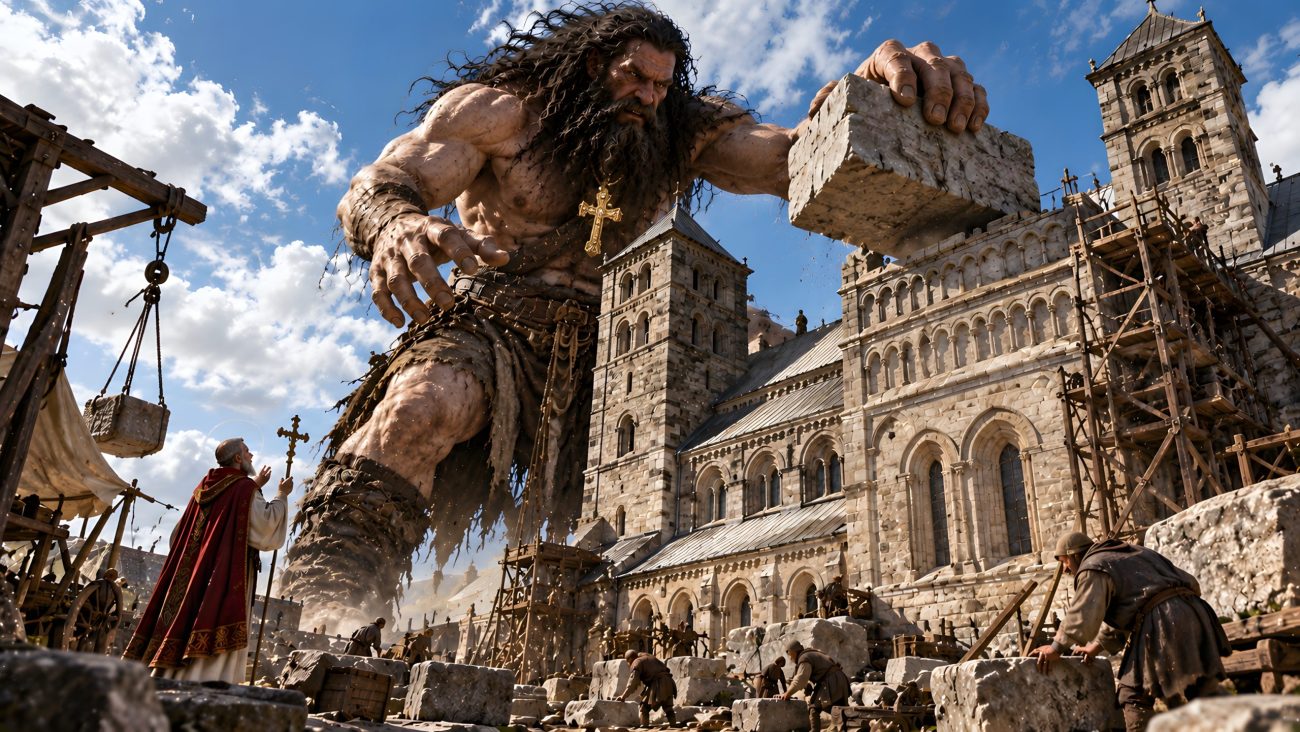
Finn was a giant who, according to a Swedish legend, helped build the great Romanesque minster of Lund in southern Sweden. When Saint Lawrence arrived in Lund to preach the Gospel, he wished to construct a church but lacked the means to do so. A giant appeared and offered to build it for him, demanding only that the saint discover his name before the church was completed. If Saint Lawrence failed, the giant would claim either the sun, the moon, or the saint’s eyes. The saint accepted the bargain, and construction began.

The church rose rapidly, but as the building neared completion, Saint Lawrence grew increasingly anxious. He did not know the giant’s name and feared losing his eyes. One day, while resting on a hill outside the town, he heard a child crying inside the hill. A woman sang to the child that its father, Finn, would return the following day, bringing the sun and moon from the sky as toys—or taking Saint Lawrence’s eyes instead. At last, the saint had discovered the giant’s name.

Saint Lawrence hurried back to the minster, where Finn was sitting on the roof, preparing to place the final stone. Just as the giant was about to finish the building, the saint called out his name and warned him to take care with the stone. Enraged that his plan had been thwarted, Finn flung the stone away, declared that the church would never be completed, and disappeared. According to the legend, something has always remained unfinished or missing from the minster ever since.

Another version of the story claims that Finn and his wife rushed into the crypt in their fury, each seizing a column in an attempt to destroy the church. They were turned to stone before they could carry out their plan and can supposedly still be seen beside the columns they had grasped. The legend thus explains both the minster’s supposedly unfinished state and the mysterious stone figures associated with its crypt.


Sources

Stroebe, Clara, ed. The Swedish Fairy Book. Translated by Frederick H. Martens. Illustrated by George W. Hood. New York: Frederick A. Stokes Company, 1921. https://www.gutenberg.org/ebooks/37193


Smoking hill Giant

Tradition: Swedish Mythology
Alternative Names: The Giant of the Golden Queen’s Mountain, The Giant of the Smoking Hill
Category: Giant


The Myth

The giant of the Mount of the Golden Queen was a colossal man who lived in a smoking hill beyond a vast lake, where he possessed the knowledge needed to guide a young herdsman toward a mysterious princess. He stood twenty-seven yards tall and was the brother of two gigantic women, each living in a smoking earthen mound. Although neither woman knew the way to the Mount of the Golden Queen, they directed the young man onward until he reached their brother’s dwelling.

The young herdsman had begun his quest after repeatedly falling asleep in a forest clearing whenever he followed a rat into a juniper bush. In his dreams, he saw a princess on the distant mountain. On the third day, she appeared to him and placed a letter and a golden band in his pocket. When he awoke, both objects were there. Determined to find the princess, he sold a horse to buy seventy pounds of iron and a pair of iron shoes. He used the iron to make thole-pins for his boat and set out across a great lake, eventually reaching a meadow where he encountered the giant’s sisters.

When the herdsman asked the giant for directions, the giant summoned all the animals of the earth with a whistle, but none knew the mountain’s location. He then called every fish in the waters, yet they too were unable to help. Finally, he summoned the birds of the air. An eagle declared that it knew the way, and the giant instructed it to carry the young man there without treating him unkindly.

The eagle carried the herdsman across fields, forests, hills, valleys, and eventually the open ocean. During the flight, it repeatedly dipped him into the sea, first up to his ankles and later up to his knees, asking whether he was afraid. When the young man admitted his fear, the eagle explained that this was the same fear it had felt when the princess placed the letter and golden band in his pocket. Soon they reached a high mountain with a great iron door. A servant opened it, welcomed the young man, and admitted him, while the eagle returned to its homeland.

Inside, the herdsman was given a refreshing drink. As he returned the beaker, he allowed the golden band to fall into it. The princess recognized the band as her own and asked whether a visitor had arrived. When the young man was brought before her, she asked if he had a letter. He produced the mysterious letter, and after reading it, the princess exclaimed with joy that she was finally delivered.

At that moment, the mountain transformed into a magnificent castle filled with precious objects, servants, and every imaginable convenience. The tale does not explicitly state whether the young herdsman and the princess married, although its narrator remarks that a wedding would be the fitting conclusion to the fairy tale.


Sources

Stroebe, Clara, ed. The Swedish Fairy Book. Translated by Frederick H. Martens. Illustrated by George W. Hood. New York: Frederick A. Stokes Company, 1921. https://www.gutenberg.org/ebooks/37193