Bad Little Jug

Tradition: Swiss Mythology
Alternative Names: The Naughty Little Jug
Category: Object


The Myth

Saint Teutbert was a holy hermit who had travelled from Scotland to spread Christianity. In his old age, he settled among the ruins of the former Roman city of Vindonissa, near present-day Brugg in Aargau, Switzerland. There he built a small chapel and a humble hut beside the River Aare, where he spent thirty years living a life of prayer, humility, and renunciation. One evening, as the setting sun bathed his hut in golden light, Teutbert reflected on his long life of hardship and devotion. Believing that he had overcome his sins and could no longer be tempted into wrongdoing, he imagined that he was ready to enter Heaven peacefully.

His thoughts were interrupted by the arrival of a beautiful young maiden carrying a small earthenware jug. She confessed that her only fault was occasionally teasing people, and Teutbert gently advised her to abandon this mischief. Before leaving, she offered him the jug as a gift, explaining that it might make collecting water from the distant stream easier. Teutbert initially refused, saying that he had served others without payment and had drawn water with his bare hands for thirty years. After the maiden left, however, he found the jug outside his door and decided to accept it. He filled it with water and returned to his hut, delighted by the convenience of his new possession.

The jug soon began to misbehave. Whenever Teutbert placed it on the windowsill, it tipped over and spilled its water. He tried adjusting its position with stones, then hung it from a nail in the wall, but it still fell and flooded his hut during a violent thunderstorm. Frustrated and thirsty, he eventually forgot his morning prayers and Mass in his determination to make the jug stand upright. He gathered clay from the forest and moulded a firm base around it, but the jug shook itself loose and spilled its water once more. Enraged, Teutbert smashed it against the wall, shattering it into pieces.

At that moment, his hut blazed with heavenly light, and a voice rebuked him. Teutbert had believed that pride, anger, and every other vice had been banished from his heart, yet a troublesome little jug had been enough to make him abandon his religious duties and surrender to wrath. Overcome with remorse, the hermit fell to his knees and repented. After a long period of penance, he eventually died in blessed peace, having learned that even a lifetime of devotion cannot make a person immune to pride and anger. The legend teaches that humility must be maintained throughout life and that patience is a virtue tested most clearly by seemingly insignificant frustrations.


Sources

“Schlimme Krüglein” (Bad Little Jug). SAGEN.at. https://www.sagen.at/texte/sagen/schweiz/allgemein/schlimme_krueglein.html
Kege

Tradition: Japanese Mythology
Alternative Names: Kemogen, Kemo Ken, 毛毛現
Category: Object


The Myth

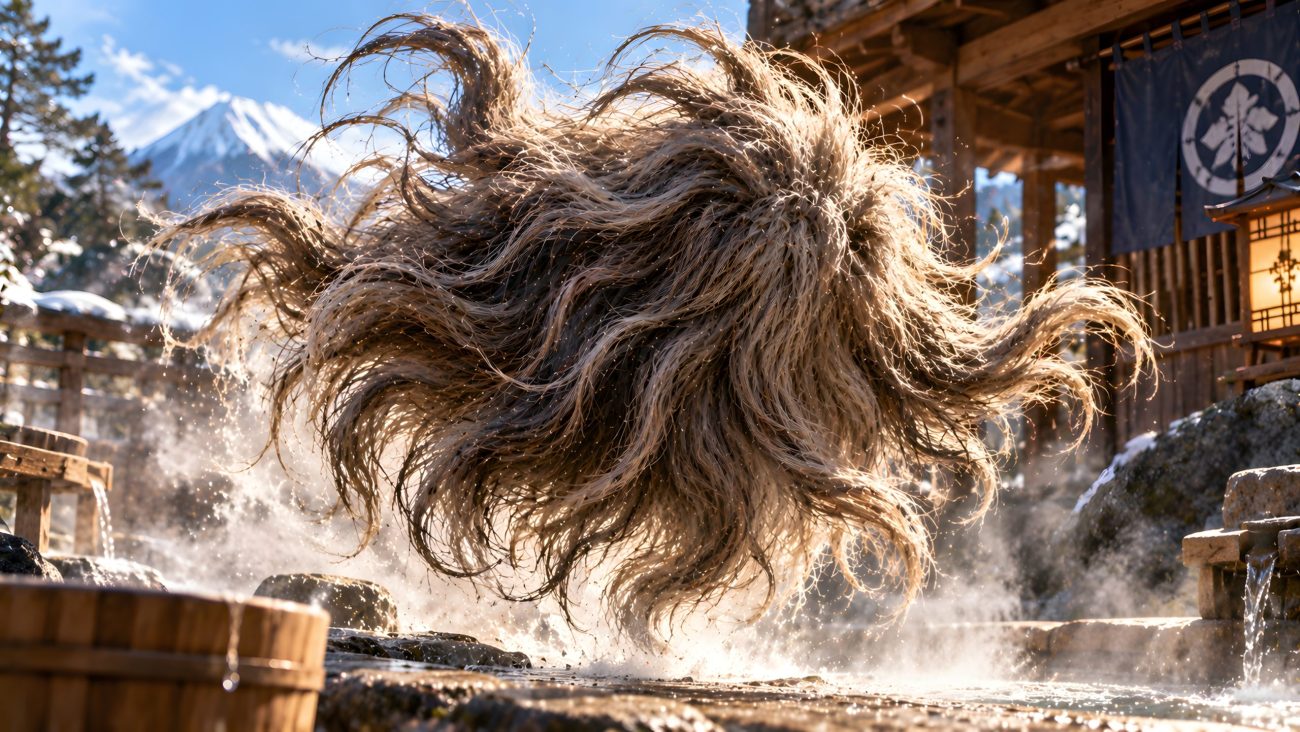
Kege is a strange, hair-covered yokai associated with an encounter described by the Japanese manga artist and yokai researcher Shigeru Mizuki. It appears as nothing more than a lump of fur, with no visible head, legs, or tail. When Mizuki and his family visited a mountain hut on Mount Fuji, they discovered a mysterious mass of hair curled up in the bathhouse. Unable to identify it, the family became frightened and caused a commotion.

Mizuki eventually approached the strange creature and lifted it with a pair of fire tongs. To his surprise, the mass of fur was extremely light and seemed to have no body or stomach beneath its hair. The account suggests that it might have been the remains of an animal that had been eaten, leaving only its fur behind. Its true nature remains uncertain, and it is unclear whether the encounter involved an actual supernatural creature.

Kege has also been listed as a yokai associated with Shizuoka Prefecture in a modern children’s encyclopedia of Japanese supernatural beings. However, the connection appears to derive from Mizuki’s unusual encounter rather than from an established regional tradition. Beyond its peculiar appearance as a creature consisting almost entirely of hair, little is known about Kege’s origins or supernatural abilities.


Sources

“Ke-fu-ke-gen.” 新版TYZ 妖怪図鑑 (New TYZ Yokai Encyclopedia). https://tyz-yokai.blog.jp/archives/1079864645.html


Talking Futon

Tradition: Japanese Mythology
Alternative Names: Tottori Futon, The Futon That Talks, The Futon of God
Category: Object


The Myth

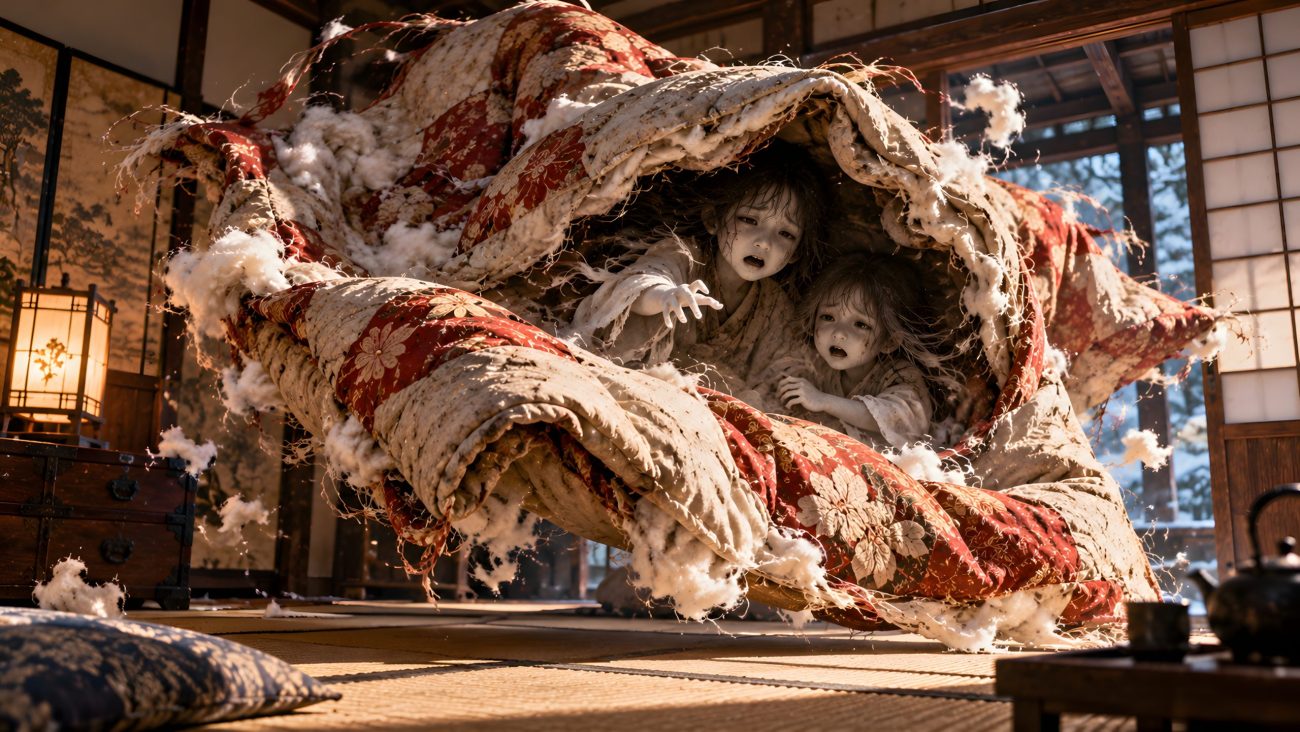
The Talking Futon is a haunted Japanese futon associated with a tragic story from Tottori. The tale tells of a travelling merchant who spends the night at a newly opened inn. As he begins to fall asleep, he hears two children speaking to each other in the darkness. They repeatedly exchange the words, “Brother, it’s cold,” and “You’re cold, aren’t you?” Believing that children from another room have entered by mistake, the merchant calls out to them. The voices briefly stop but soon return. When he lights a lantern and searches the room, he finds nobody. Eventually, he realizes that the voices are coming from the futon itself. Terrified, he gathers his belongings and flees the inn.

When another guest experiences the same phenomenon the following night, the innkeeper investigates and hears the mysterious voices himself. He traces the futon’s history through several antique shops and discovers that it once belonged to a desperately poor family. The father earned very little, while his bedridden wife and their six children struggled to pay the rent. After the father died, the mother also succumbed to illness, leaving the children to survive alone. They gradually sold their possessions until only their futon remained. During a bitter winter, the brothers huddled together beneath it, repeatedly comforting one another with the words, “Brother, it’s cold,” and “You’re cold, aren’t you?”

Their landlord eventually seized the futon because the family could no longer pay the rent and drove the children out into the freezing cold. Wearing only thin clothing, the brothers huddled together outside, but the snow and cold overcame them. Their bodies were discovered several days later, and people built a resting place for them in a nearby Kannon hall, where prayers could be offered for their souls.

Upon learning the truth, the innkeeper took the haunted futon to the temple and arranged for Buddhist sutras to be recited so that the brothers’ spirits might find peace. Afterward, the voices ceased. The story presents the Talking Futon as an object that preserves the suffering and final words of two children, transforming an ordinary household possession into a haunting reminder of poverty, cruelty, and the need to honor the dead.


Sources

“Speaking Futon.” 新版TYZ 妖怪図鑑 (New TYZ Yokai Encyclopedia). https://tyz-yokai.blog.jp/archives/1072878051.html


Dobukara-ja

Tradition: Japanese Mythology
Alternative Names: Dobukara Hebi, 溝から蛇, Straw Snake
Category: Object


The Myth

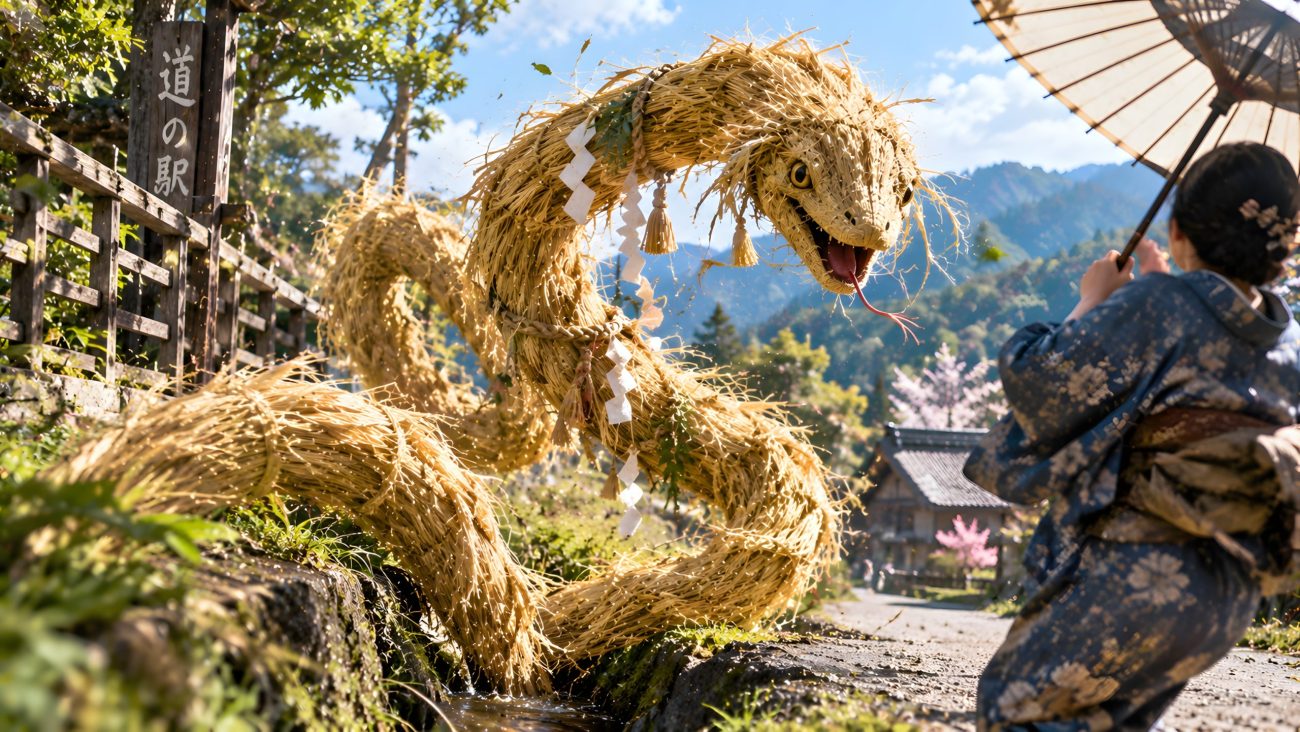
Dobukara-ja is a strange supernatural creature depicted in the Japanese illustrated work Bakemono Wahonso. It appears as a snake made of golden-yellow straw, resembling wheat straw in color. The creatures come in various sizes, make plenty of noise, and wrap themselves around people, but they are described as entirely harmless and not frightening.

According to the account, these straw snakes emerge from the sides of roads every year after the festival held on the first day of the sixth month. One depiction shows them appearing behind people walking with umbrellas in the rain, calling out, “Young lady, come along with me! It’s me, it’s me!” Their appearance closely resembles the straw snakes used in traditional Japanese insect-repelling processions, in which straw figures are carried as part of rituals intended to drive pests away from crops.

The creature’s name comes from the expression dobu kara hebi, meaning “a snake from a ditch.” The saying describes something unexpected appearing from an unlikely place. The Dobukara-ja embodies this idea through its sudden appearance beside the road, turning an ordinary straw object into a peculiar but harmless supernatural being.


Sources

“Dust-Covered Snake.” 新版TYZ 妖怪図鑑 (New TYZ Yokai Encyclopedia). https://tyz-yokai.blog.jp/archives/1010654364.html


Wata Hōshi

Tradition: Japanese Mythology
Alternative Names: Watahoshi, 綿ほうし, Cotton Spirit
Category: Object


The Myth

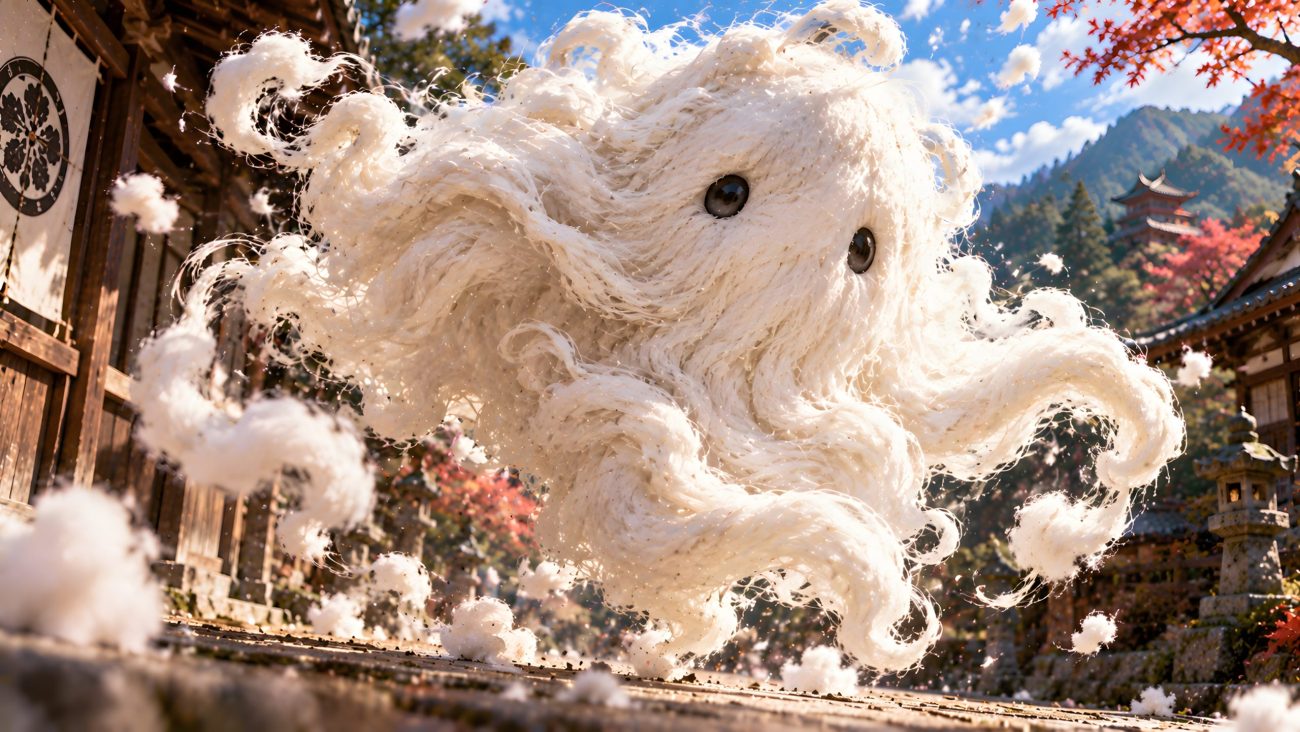
Wata Hōshi is a mysterious yokai depicted in an illustrated collection of supernatural creatures whose author and date of creation are unknown. As its name suggests, it appears as a white, cotton-like being, resembling a soft mass of cotton rather than a clearly defined animal or humanoid figure.

Little is known about the Wata Hōshi beyond its unusual appearance. It has been suggested that it might be related to the Nuppeppō, another strange Japanese yokai, but no comparable depictions or established traditions have been identified. Its origins, behaviour, and supernatural abilities therefore remain unknown.


Sources

“Wataboushi.” 新版TYZ 妖怪図鑑 (New TYZ Yokai Encyclopedia). https://tyz-yokai.blog.jp/archives/1025560341.html


Jatai

Tradition: Japanese Mythology
Alternative Names: Ja-tai, Snake Sash, 蛇帯
Category: Object


The Myth

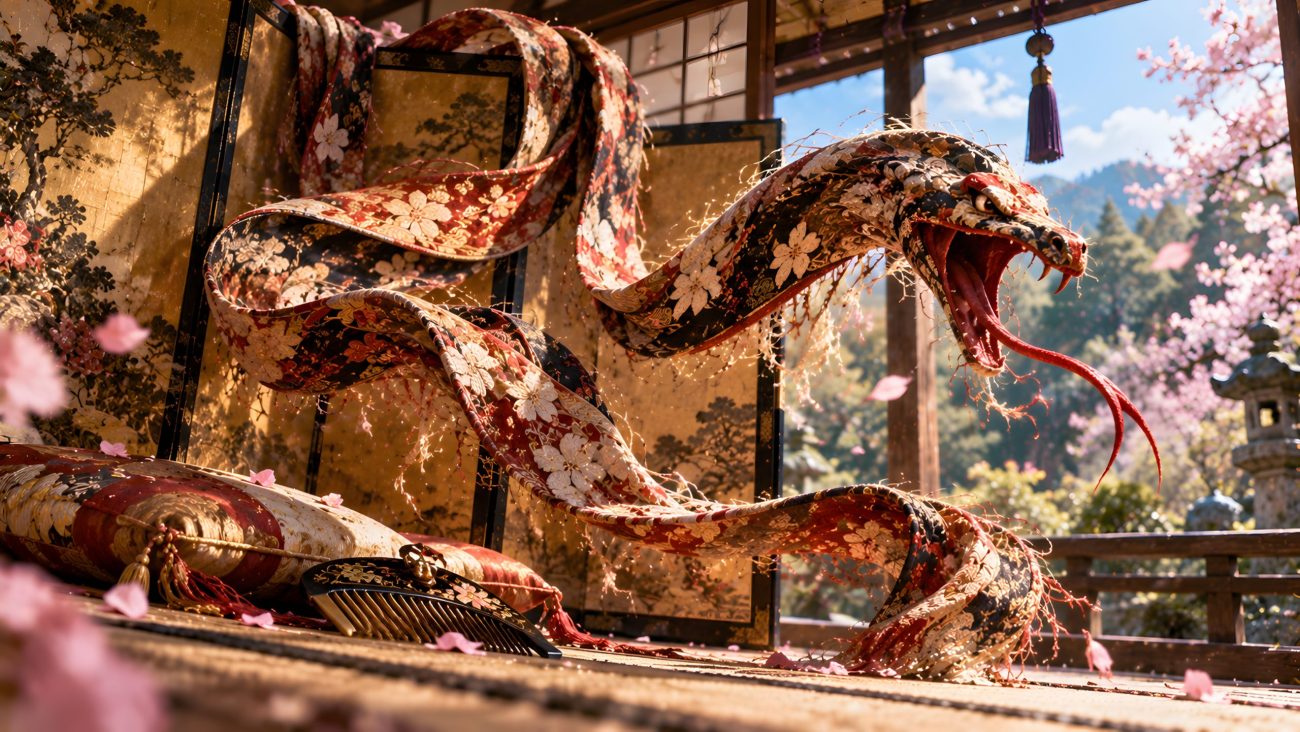
Jatai is a supernatural apparition depicted in Toriyama Sekien’s 今昔百鬼拾遺 (Konjaku Hyakki Shūi). It appears as a sash draped over a folding screen, its shape resembling a snake extending its tongue. A pillow and a comb lie beneath the screen, completing the eerie scene. Rather than describing a creature with a clearly established body or behaviour, the image presents an ordinary clothing accessory taking on the threatening form of a serpent.

The accompanying text connects the Jatai with jealousy and a traditional belief that sleeping with a sash across the body causes dreams of snakes. It suggests that the three-layered sash of a jealous woman may become a venomous serpent winding around her seven times. The image plays on the similarity between the Japanese words for a snake’s body and a sash, linking the ideas of jealousy, serpentine transformation, and poisonous resentment.

The Jatai is generally understood as an artistic creation inspired by this wordplay and by older imagery of snakes emerging from clothing or accessories. Similar motifs appear in depictions of the Night Parade of One Hundred Demons, including a snake-like sash hanging from a clothing rack. The Jatai therefore transforms an everyday object into a symbol of jealousy and the dangerous emotions associated with it.


Sources

“Jatai.” 新版TYZ 妖怪図鑑 (New TYZ Yokai Encyclopedia). https://tyz-yokai.blog.jp/archives/1010654355.html


Nihai

Tradition: Chinese Mythology
Alternative Names: Mud Child, Mud Doll, Mud Figurine, 泥孩, 泥娃娃, 泥偶
Category: Object


The Myth

Nihai, also known as mud dolls or mud figurines, are supernatural beings formed from clay figures. They appear in Chinese accounts of objects that become strange or potentially dangerous after being treated as more than ordinary objects. In traditional Han Chinese customs, women seeking children sometimes tied red or colored threads to clay dolls in temples and brought them home as part of fertility-related practices.

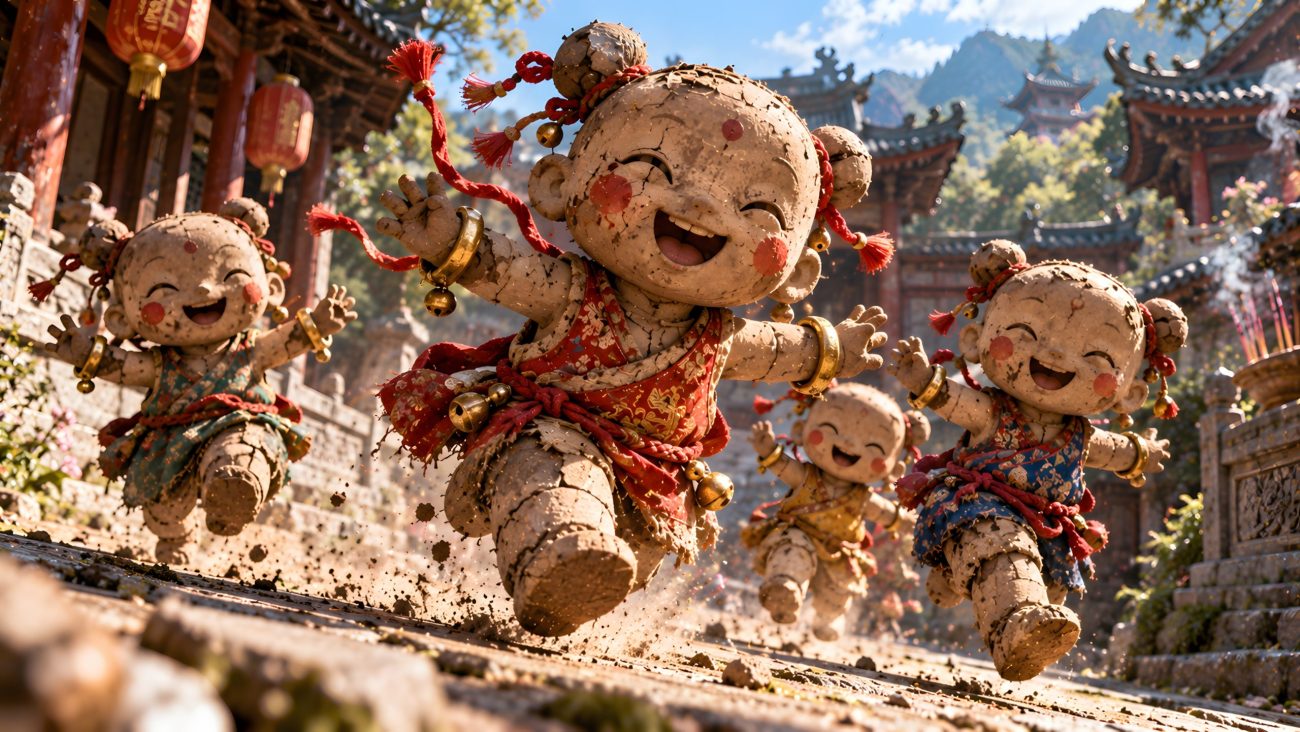
In Yuewei Caotang Biji, Ji Yun recounts a childhood memory of seeing four or five small children dressed in colorful clothes and wearing golden bracelets. They played with him affectionately and called him their younger brother, but as he grew older, they disappeared. When he later told his father about them, his father recalled that Ji Yun’s deceased mother had desperately wanted children. She had repeatedly asked a Buddhist nun to bring clay dolls from a temple, tied them with colored silk threads, given each one a pet name, and placed them in her bedroom. She fed them fruit as though they were her own children. After her death, his father had the dolls buried in an empty courtyard behind the building. He suspected that the mysterious children Ji Yun had seen were these figures, and considered digging them up for fear that they might become troublesome spirits, but the exact burial place had long since been forgotten.

Another account in Jianhu Miji mentions a monster associated with a clay doll used to weigh down bedding. Together, these stories portray clay figures as objects that can acquire a supernatural presence, particularly when they are treated as substitutes for children or become associated with intense human attachment.


Sources

“Clay Dolls” (泥孩; 泥傀儡). Chinese Wikipedia. Wikimedia Foundation. Accessed October 24, 2026. https://zh.wikipedia.org/wiki/%E6%B3%A5%E5%AD%A9 and https://zh.wikipedia.org/wiki/%E6%B3%A5%E5%82%80%E5%84%A1


Suzuri no Tamashii

Tradition: Japanese Mythology
Alternative Names: Suzuri no Tamashii, Inkstone Spirit, 硯の魂
Category: Object


The Myth

The Suzuri no Tamashii is a supernatural spirit associated with an inkstone that has been used for generations to copy the same manuscript repeatedly. Over time, the inkstone begins to absorb aspects of the story it has helped preserve. It can then produce phantom sounds and illusory figures drawn from the manuscript, causing supernatural disturbances across the writing desk.

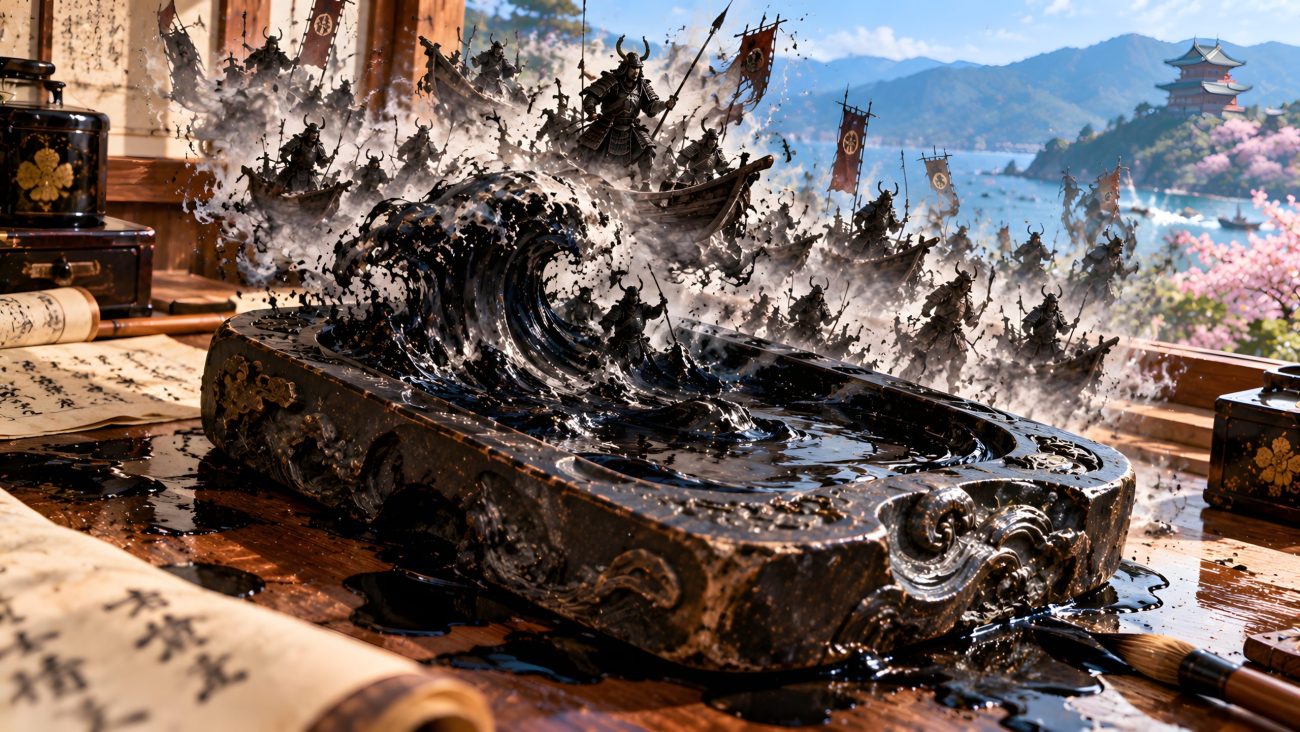
The spirit is particularly associated with the brutal destruction of the Taira clan during the final naval battle of the Genpei War. When the inkstone is used, it produces eerie sounds resembling the roar of the sea, the clash of armies, and the screams of dying warriors. The ink inside begins to ripple and swell like ocean waves, from which tiny boats and soldiers emerge as though the battle were being reenacted within the ink itself.

The Suzuri no Tamashii is connected to the vengeful spirits of the Taira warriors who perished in the conflict between the Taira and Minamoto clans. According to the legend, many of the slain warriors became onryō, spirits driven by resentment and vengeance. Their lingering curse infects inkstones repeatedly used to reproduce the story of their downfall, allowing the tragedy to manifest whenever the ink is disturbed.


Sources

“Suzuri no tamashii.” Yokai.com. https://yokai.com/suzurinotamashii/


Koto Furunushi

Tradition: Japanese Mythology
Alternative Names: Koto Furunushi, Old Koto Master, 琴古主
Category: Object


The Myth

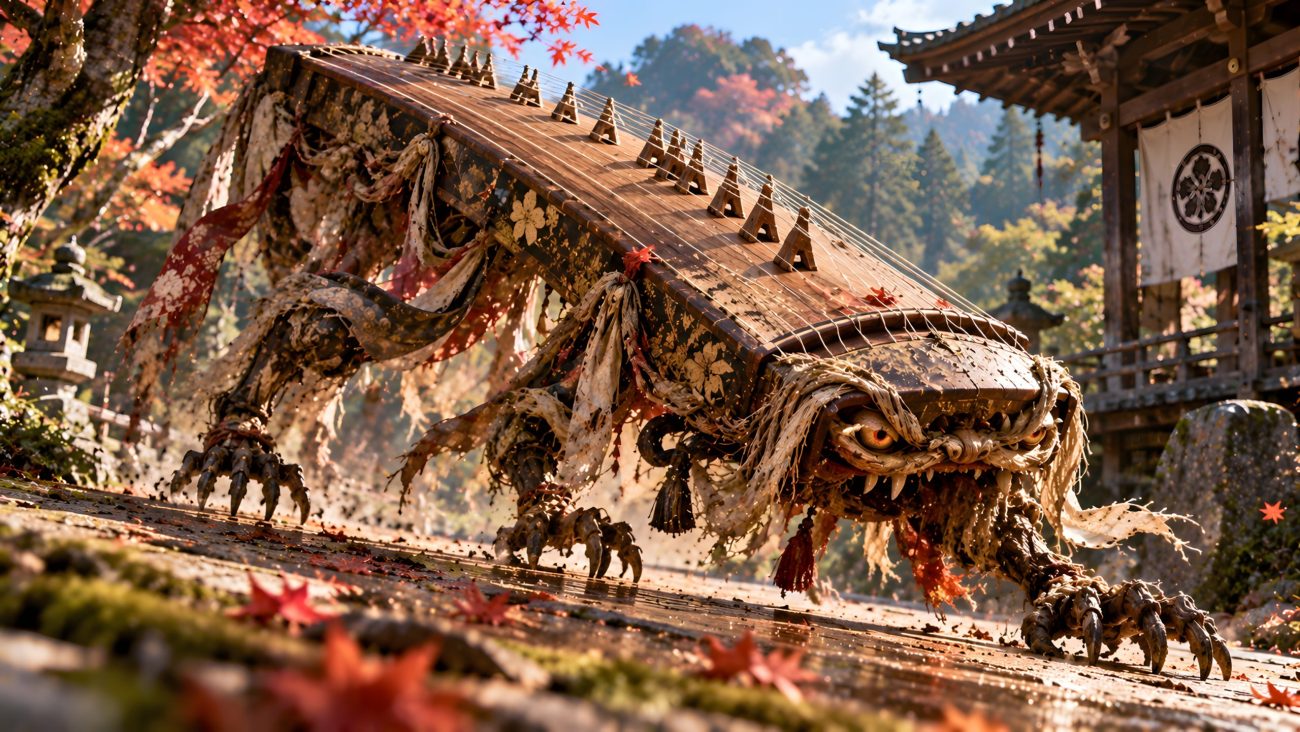
The Koto Furunushi is a supernatural yōkai resembling a koto, a long, harp-like Japanese musical instrument, transformed into a wild beast. It originates from the belief that objects neglected by their owners can develop supernatural life after being used for many years.

A koto that was once played frequently but later forgotten and stored away may transform into a Koto Furunushi. Despite its beast-like appearance, the creature retains the memory of every song ever played on its strings. When nobody is around, it plays music on its own, leaving people puzzled by the mysterious sounds coming from empty rooms.

The Koto Furunushi prefers old melodies that have fallen out of fashion and disappeared from human memory. Through its solitary performances, it preserves forgotten songs long after people have ceased to remember them.


Sources

“Koto furunushi.” Yokai.com. https://yokai.com/kotofurunushi/


Bakezōri

Tradition: Japanese Mythology
Alternative Names: Bake Zōri, 化け草履, Ghost Zōri, Haunted Straw Sandals
Category: Object


The Myth

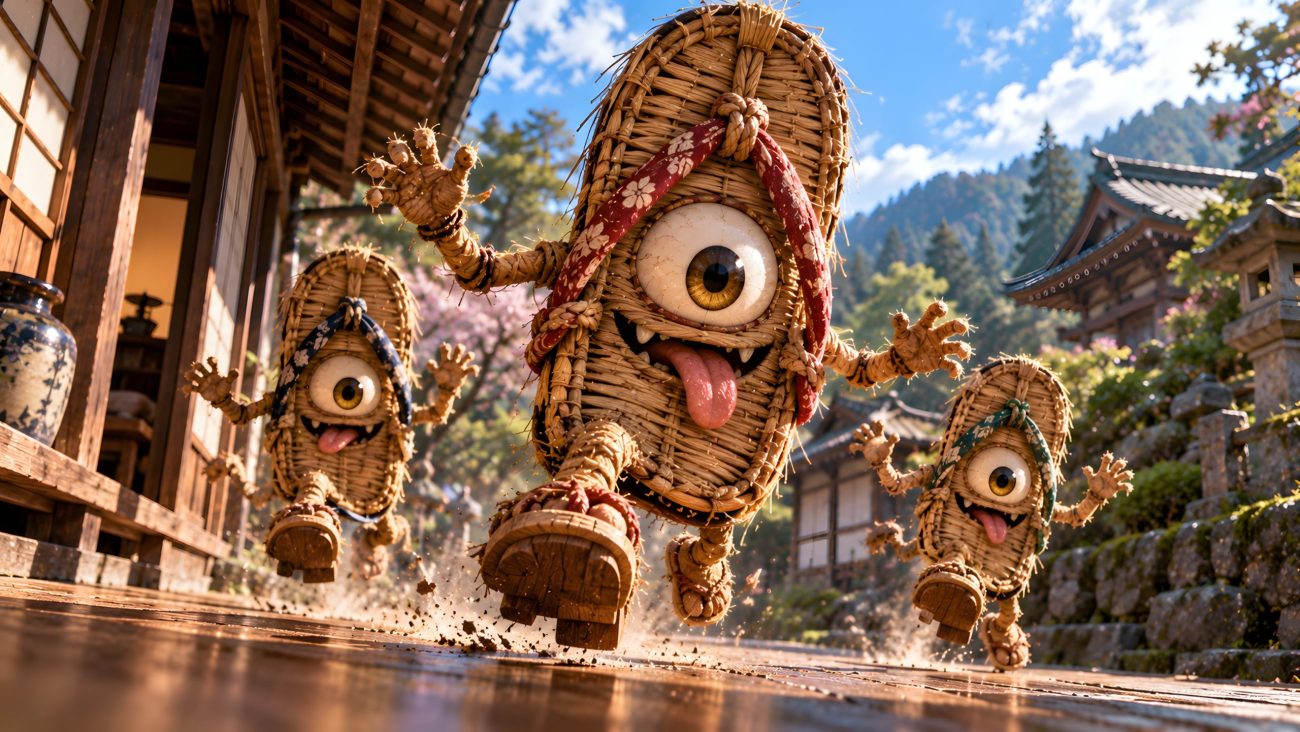
Bakezōri are supernatural sandal yōkai said to emerge when traditional Japanese straw sandals, known as zōri, are mistreated and abandoned by their owners. They take the form of animated sandals with arms and legs growing from their bodies and a single large eye in the center. Once transformed, they become mischievous household spirits that run around the house at night, making noise as their little feet clatter across hard floors.

Bakezōri are known for singing a peculiar chant as they race through the house: “Kararin! Kororin! Kankororin! Managu mittsu ni ha ninmai!” The chant refers to the sandal’s physical features, with “three eyes” representing the three holes where its straps are attached and “two teeth” referring to the two wooden clogs on the underside of Japanese sandals. The remaining words imitate the clattering sound of sandals moving across a hard surface. Through their strange appearance and noisy nighttime antics, Bakezōri embody the idea that neglected everyday objects can acquire a supernatural life of their own.


Sources

“Bakezōri.” Yokai.com. https://yokai.com/bakezouri/