Tradition: Chinese Mythology
Alternative Names: Mud Child, Mud Doll, Mud Figurine, 泥孩, 泥娃娃, 泥偶
Category: Object
The Myth
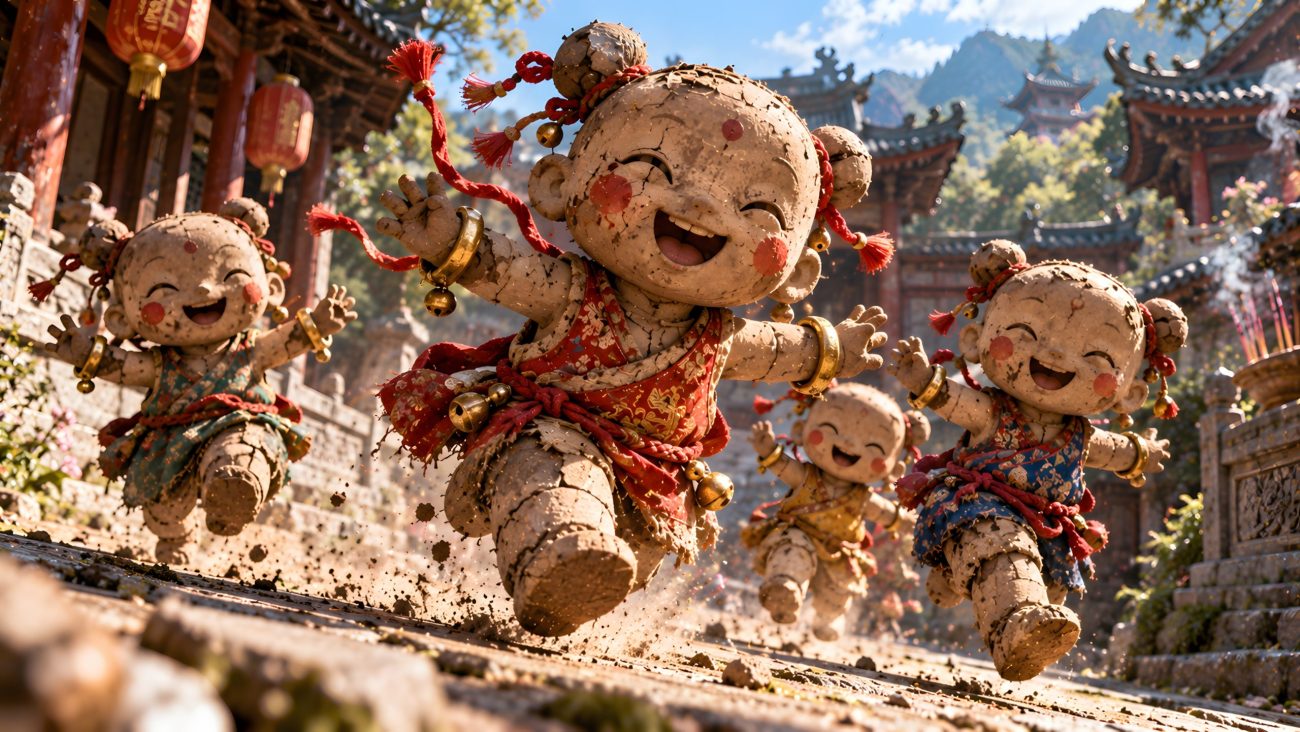
Nihai, also known as mud dolls or mud figurines, are supernatural beings formed from clay figures. They appear in Chinese accounts of objects that become strange or potentially dangerous after being treated as more than ordinary objects. In traditional Han Chinese customs, women seeking children sometimes tied red or colored threads to clay dolls in temples and brought them home as part of fertility-related practices.
In Yuewei Caotang Biji, Ji Yun recounts a childhood memory of seeing four or five small children dressed in colorful clothes and wearing golden bracelets. They played with him affectionately and called him their younger brother, but as he grew older, they disappeared. When he later told his father about them, his father recalled that Ji Yun’s deceased mother had desperately wanted children. She had repeatedly asked a Buddhist nun to bring clay dolls from a temple, tied them with colored silk threads, given each one a pet name, and placed them in her bedroom. She fed them fruit as though they were her own children. After her death, his father had the dolls buried in an empty courtyard behind the building. He suspected that the mysterious children Ji Yun had seen were these figures, and considered digging them up for fear that they might become troublesome spirits, but the exact burial place had long since been forgotten.
Another account in Jianhu Miji mentions a monster associated with a clay doll used to weigh down bedding. Together, these stories portray clay figures as objects that can acquire a supernatural presence, particularly when they are treated as substitutes for children or become associated with intense human attachment.
Sources
“Clay Dolls” (泥孩; 泥傀儡). Chinese Wikipedia. Wikimedia Foundation. Accessed October 24, 2026. https://zh.wikipedia.org/wiki/%E6%B3%A5%E5%AD%A9 and https://zh.wikipedia.org/wiki/%E6%B3%A5%E5%82%80%E5%84%A1