Tradition: Japanese Mythology
Alternative Names: Tottori Futon, The Futon That Talks, The Futon of God
Category: Object
The Myth
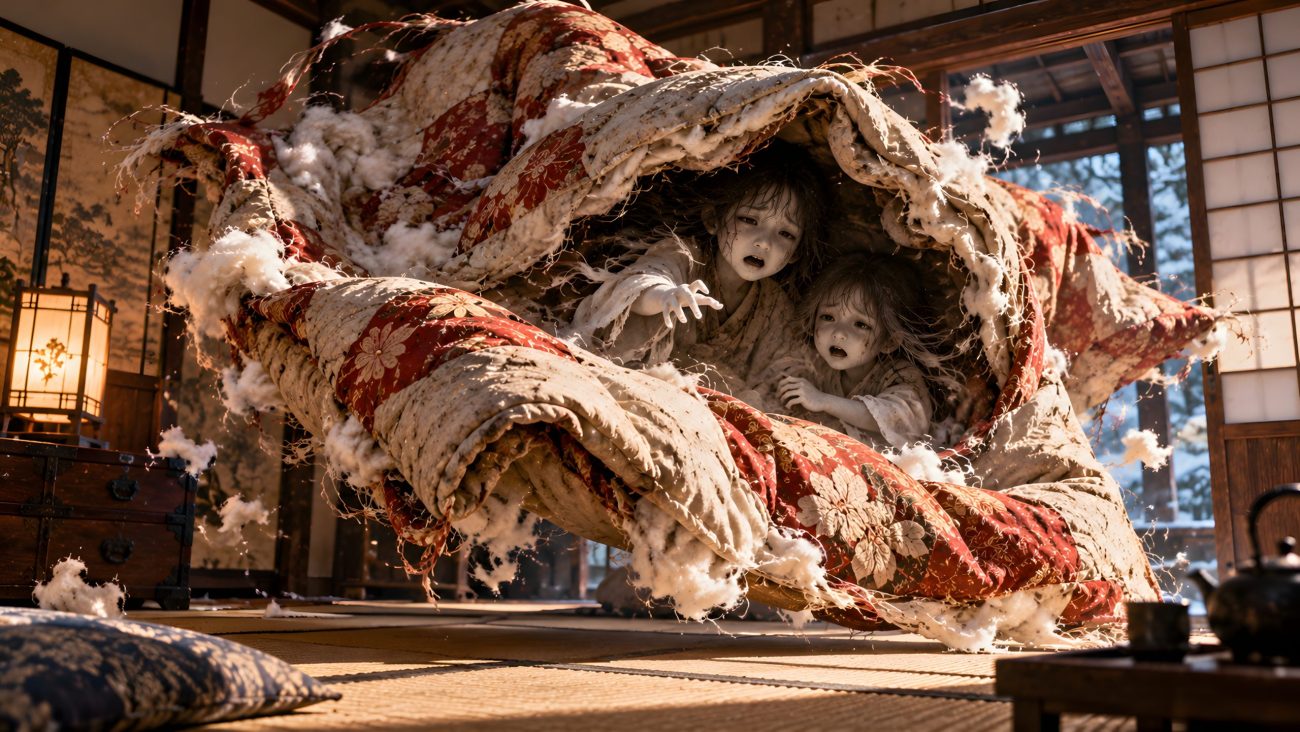
The Talking Futon is a haunted Japanese futon associated with a tragic story from Tottori. The tale tells of a travelling merchant who spends the night at a newly opened inn. As he begins to fall asleep, he hears two children speaking to each other in the darkness. They repeatedly exchange the words, “Brother, it’s cold,” and “You’re cold, aren’t you?” Believing that children from another room have entered by mistake, the merchant calls out to them. The voices briefly stop but soon return. When he lights a lantern and searches the room, he finds nobody. Eventually, he realizes that the voices are coming from the futon itself. Terrified, he gathers his belongings and flees the inn.
When another guest experiences the same phenomenon the following night, the innkeeper investigates and hears the mysterious voices himself. He traces the futon’s history through several antique shops and discovers that it once belonged to a desperately poor family. The father earned very little, while his bedridden wife and their six children struggled to pay the rent. After the father died, the mother also succumbed to illness, leaving the children to survive alone. They gradually sold their possessions until only their futon remained. During a bitter winter, the brothers huddled together beneath it, repeatedly comforting one another with the words, “Brother, it’s cold,” and “You’re cold, aren’t you?”
Their landlord eventually seized the futon because the family could no longer pay the rent and drove the children out into the freezing cold. Wearing only thin clothing, the brothers huddled together outside, but the snow and cold overcame them. Their bodies were discovered several days later, and people built a resting place for them in a nearby Kannon hall, where prayers could be offered for their souls.
Upon learning the truth, the innkeeper took the haunted futon to the temple and arranged for Buddhist sutras to be recited so that the brothers’ spirits might find peace. Afterward, the voices ceased. The story presents the Talking Futon as an object that preserves the suffering and final words of two children, transforming an ordinary household possession into a haunting reminder of poverty, cruelty, and the need to honor the dead.
Sources
“Speaking Futon.” 新版TYZ 妖怪図鑑 (New TYZ Yokai Encyclopedia). https://tyz-yokai.blog.jp/archives/1072878051.html