Q’ursha

Tradition / Region: Georgian Mythology
Alternate Names: Qursha, Kursha
Category: Dog


The Myth

Q’ursha was a mighty and loyal dog remembered in Georgian tales as the faithful companion of heroes.

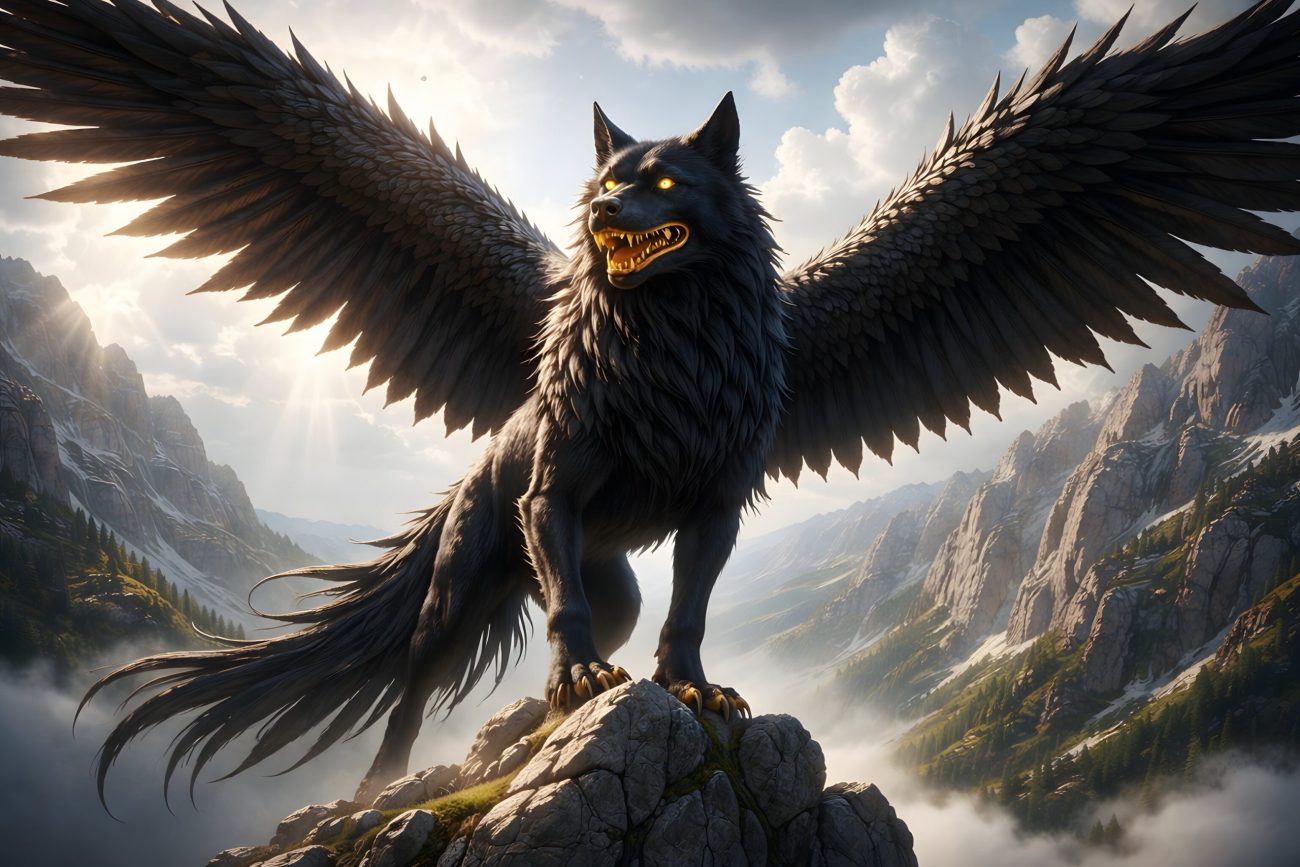
His name meant “Black-Ear,” a common name for dogs, yet the creature himself was far from ordinary. Stories say he was born from a bird, either a raven or an eagle, and in some tellings he possessed wings. He was described as enormous and powerful, with vast paws, golden lips, and eyes as large as sieves. His bark thundered across the land, and he could leap across distances as wide as fields. No prey could escape his tracking.

He is most closely linked with the great hero Amirani. Amirani, the son of a goddess and a mortal hunter, wandered the world fighting monsters and demons. When he finally grew proud enough to challenge God, he was punished and chained inside a mountain. Q’ursha was trapped there with him.

The faithful dog never ceased trying to free his master. He licked the chains day after day, slowly weakening them. Each year Amirani came close to breaking free, yet just before he could escape, the bonds were renewed, and the struggle began again.

Q’ursha also appears in the tale of the hunter Betkil. After Betkil angered the mountain goddess, he was trapped on a high peak with the dog beside him. In some versions, Betkil sent Q’ursha down the mountain for help, and the dog returned with villagers, though they could not save him. In other tellings, when starvation set in, Q’ursha urged his master to kill and eat him to survive. Betkil killed the dog but, unable to bring himself to eat his faithful companion, died soon after.

Thus Q’ursha was remembered as the devoted hound of heroes — a winged, powerful dog whose loyalty endured even in captivity, and whose faithfulness became a lasting symbol in Georgian legend and song.


Sources

Wikipedia contributors. (n.d.). Q’ursha. In Wikipedia, from https://en.wikipedia.org/wiki/Q%27ursha


Conkiajgharuna’s Cow

Tradition / Region: Georgian Mythology
Alternate Names:
Category: Cow


The Myth

There once lived a poor peasant whose daughter was called Conkiajgharuna, the girl in rags. After her mother died, her father remarried, and the new wife treated the child with cruelty. Each day she gave the girl poorly baked bread and sent her out alone to tend the cow, burdening her with harsh and endless tasks.

But the cow was no ordinary animal.

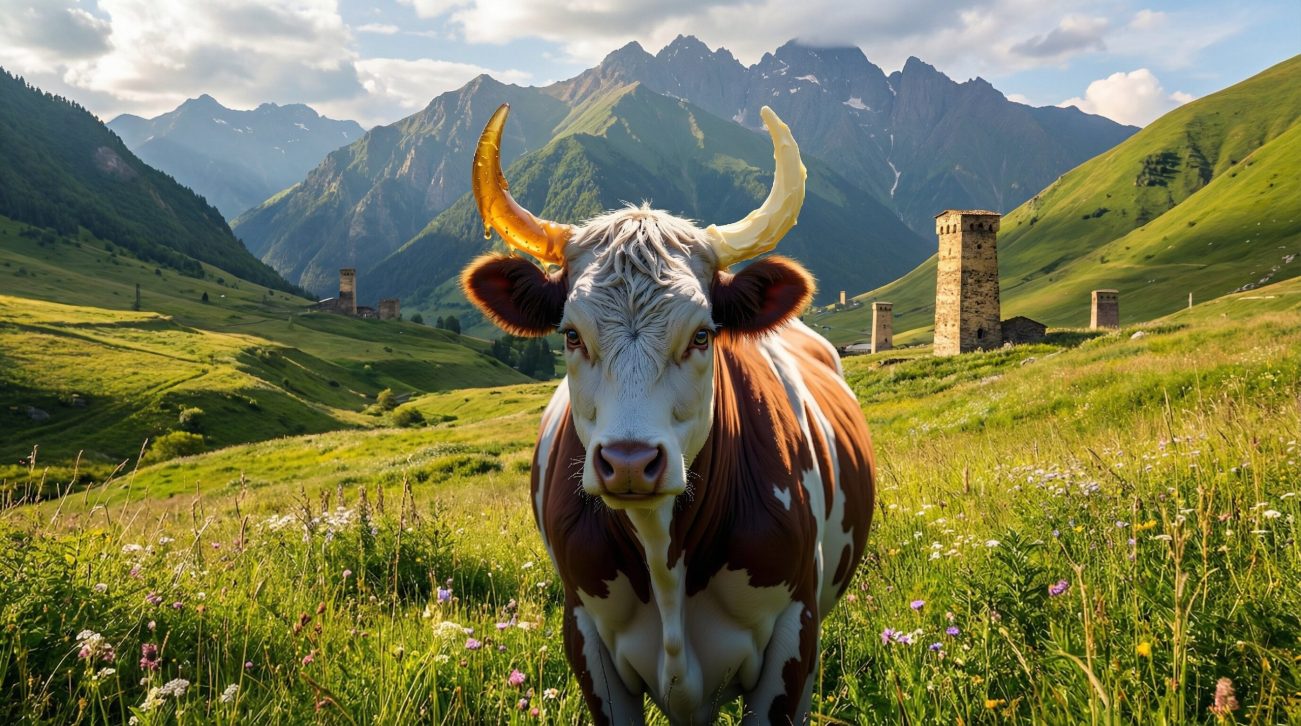
One day, while the girl sat weeping in the fields, the cow spoke and asked why she was sad. When Conkiajgharuna told of her suffering, the cow said, “In one of my horns there is honey, and in the other there is butter. Take from them, and do not grieve.”

From then on, the girl secretly fed herself from the cow’s horns and grew strong and healthy. Her stepmother, seeing this, grew jealous and suspicious. She gave the girl even harder work, yet the cow continued to help her, guiding her and protecting her as best it could.

When the stepmother’s own daughter tried to win the cow’s favor, she failed through harshness and disrespect. Enraged, the stepmother decided that the cow must be killed.

Before its death, the cow spoke once more to Conkiajgharuna. It told her, “When I am dead, gather my bones and bury them. Whenever you are in trouble, come to my grave and cry, ‘Bring my steed and my royal robes.’”

The cow was slaughtered, and the girl buried its bones as instructed.

Later, when her stepmother and stepsister went to church and left her behind in misery, Conkiajgharuna remembered the cow’s words. She went to the grave and cried out. At once, from the buried bones appeared a fine horse and splendid garments. Clothed in beauty, she rode forth, dazzling all who saw her.

Though she returned afterward to her ragged life, the cow’s gift endured. When she lost a golden slipper, it led the king to seek her out. She was revealed, and in time she became his queen.

Thus the cow remained her protector even after death — feeding her in life, guiding her in hardship, and from its buried bones lifting her from rags to royalty.


Sources