Buchis

Tradition / Region: Egyptian mythology
Alternate Names:
Category: Cow


The Myth

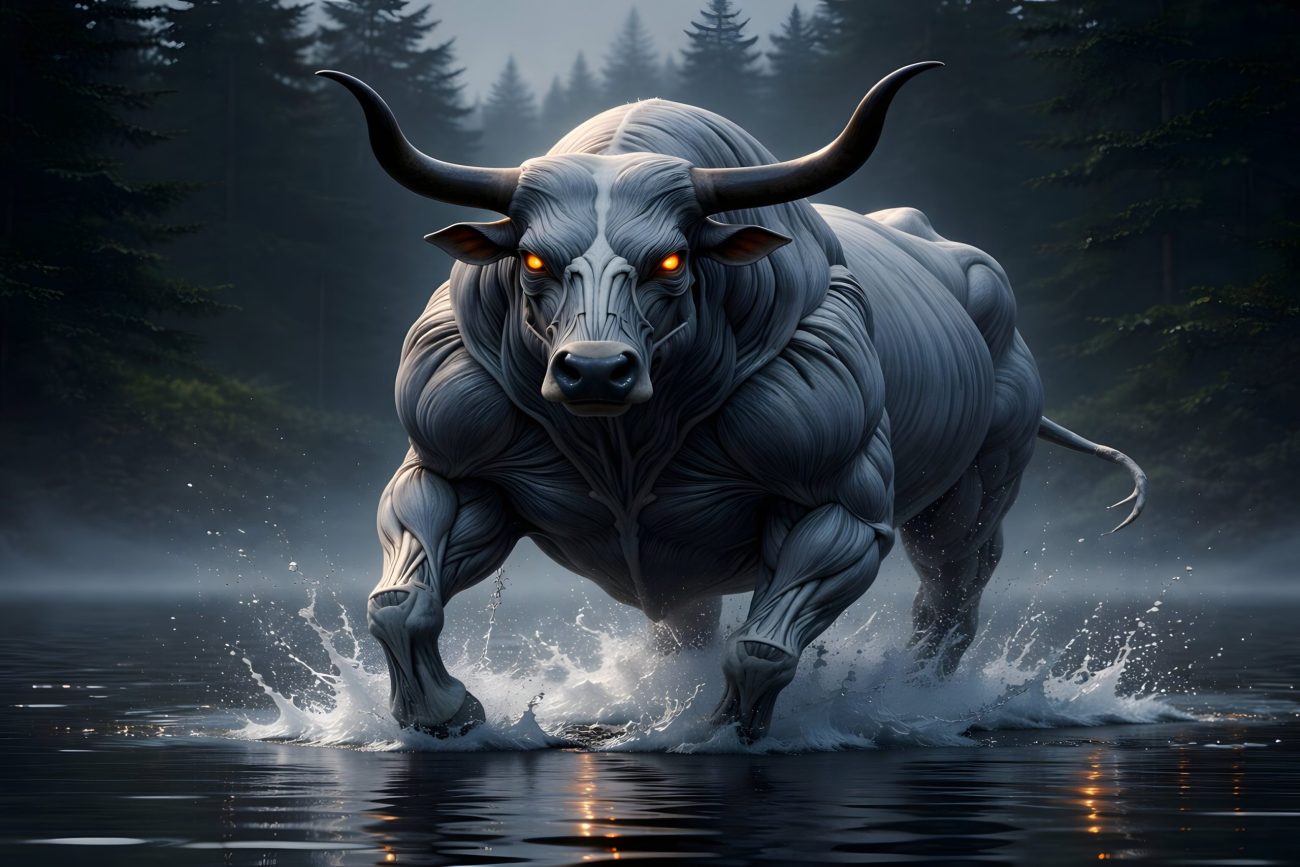
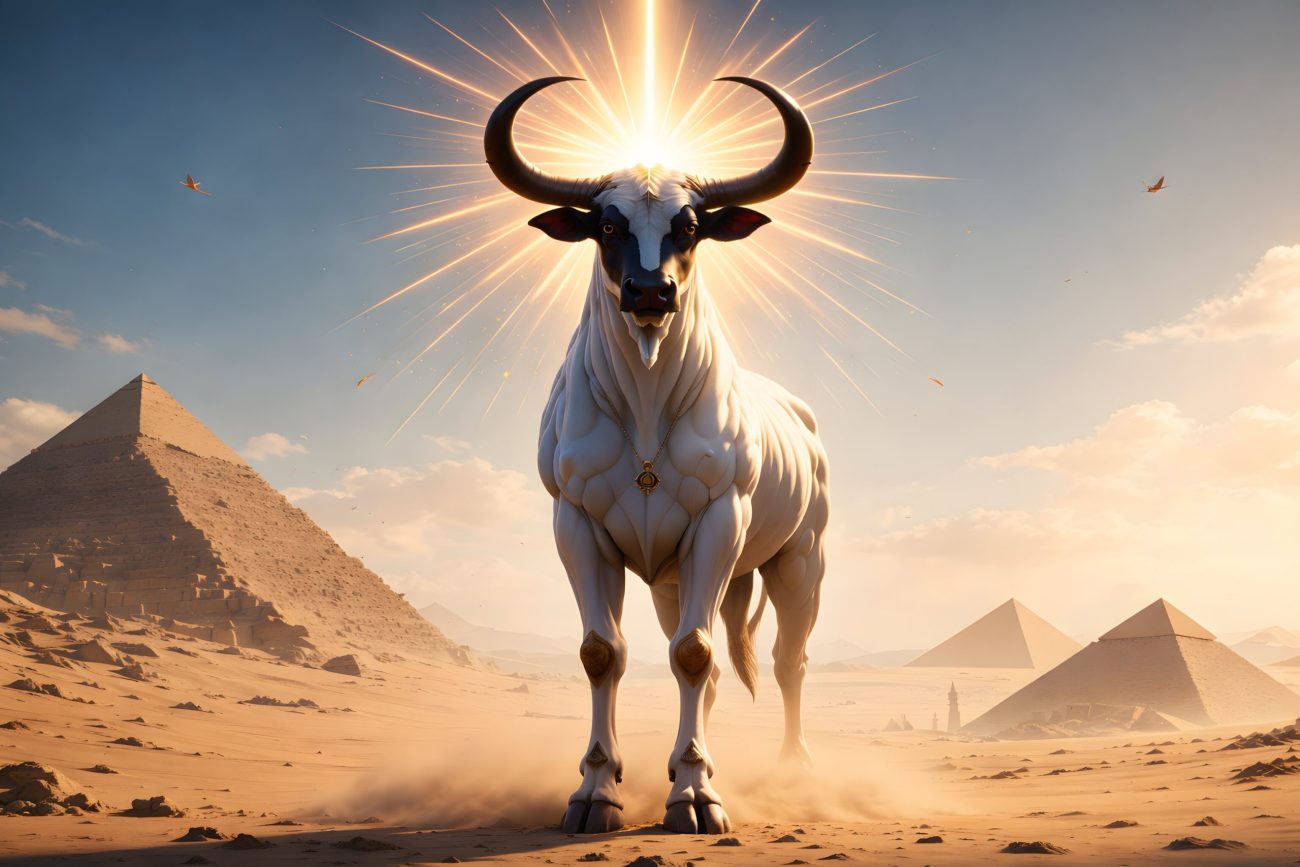
In the city of Hermonthis there appeared a bull unlike any other. Its body shone white as sunlight, while its face was dark as night. The people knew at once that this was no ordinary beast. It was Buchis, the living presence of Montu, god of war and strength, whose life-force had taken flesh.

Buchis was not worshipped as an animal, but as a god walking among humans. Every movement of the bull was watched closely, for within its steps and gestures the will of Montu was believed to be revealed. Priests cared for it with reverence, tending to its needs as one would attend a divine king. Where Buchis lived, Montu himself was thought to be present.

When Buchis died, it did not pass away like common cattle. Its body was prepared with sacred rites, preserved so that the divine force within it would endure beyond death. The bull was laid to rest in a holy place set aside for such beings, and the land mourned as if a god had withdrawn from the world.

Yet Buchis did not end with a single life. Another bull would be born bearing the same signs—white body, black face—and Montu would again walk among mortals. In this way, Buchis embodied the cycle of divine presence, death, and return.

To the people of Egypt, Buchis was proof that the gods were not distant. They could live, breathe, and stand silently among humankind, their power contained within the calm, watchful form of a sacred bull.


Gallery


Sources

Dodson, A. (2005). Bull Cults. In American University in Cairo Press eBooks (pp. 72–102). https://doi.org/10.5743/cairo/9789774248580.003.0004


Interpretive Lenses

Religious Readings
  • Christian Ascetic Deep Dive
Philosophical Readings
  • Nietzschean Deep Dive
Psychological Readings
  • Jungian Deep Dive
Esoteric Deep Dive
  • Hermetic Deep Dive
Political / Social Readings
  • Marxist Deep Dive
Other
  • How to Invite The Buchis

Bucentaur

Tradition / Region: Spanish mythology
Alternate Names:
Category: Cow, Hybrid


The Myth

In the old tales, there is mention of a creature rarely seen and seldom challenged: the Bucentaur.

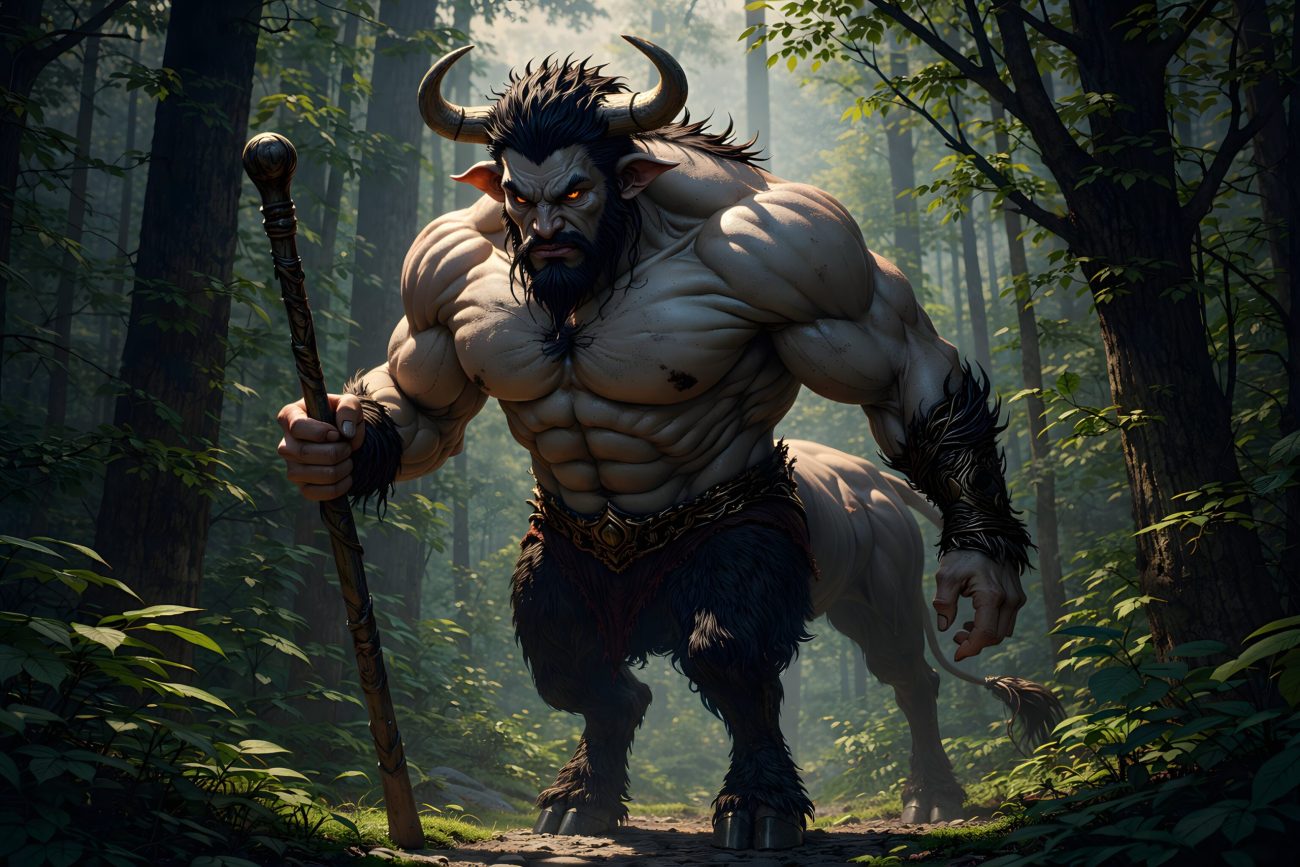
It bears the upper body of a man, broad-shouldered and upright, with human eyes that can glare with anger or dull with indifference. From the waist down, however, its body is that of a massive bull—thick-limbed, heavy, and powerful, with hooves that strike the ground like stone. In its arms lies great strength, and in its bovine form rests an immense weight that anchors it to the earth.

The Bucentaur is ill-tempered and easily provoked. When disturbed, it bellows and threatens, pawing the ground and raising its fists as if to crush whatever stands before it. Yet despite its fearsome appearance, it is slow. Its great body moves with difficulty, and its rage burns hotter than its ability to act upon it. Those who encounter it and keep their distance often find that escape is easy, for the Bucentaur cannot pursue for long.

It does not hunt, nor does it scheme. It lingers in lonely places, half man and half beast, caught between thought and instinct. It is said that its human half knows frustration, while its bull’s body binds it to brute force and inertia.

Thus the Bucentaur remains a creature of warning rather than conquest: powerful, dangerous, yet limited—an image of strength weighed down by its own nature, and of a mind trapped within the body of a beast.


Gallery


Sources

Bestiary. (n.d.). Букентавр — в европейском символизме чудовищная разновидность кентавра: получеловек, полубык. https://www.bestiary.us/bukentavr


Interpretive Lenses

Religious Readings
  • Christian Ascetic Deep Dive
Philosophical Readings
  • Nietzschean Deep Dive
Psychological Readings
  • Jungian Deep Dive
Esoteric Deep Dive
  • Hermetic Deep Dive
Political / Social Readings
  • Marxist Deep Dive
Other
  • How to Invite The Bucentaur

Bonacon

Tradition / Region: Roman mythology
Alternate Names: Bonnacon
Category: Cow


The Myth

The Bonacon is a strange and powerful beast, shaped like a great bull with a broad chest, thick hide, and heavy limbs. Around its neck hangs a mane like that of a horse, and its head is unmistakably bovine. Yet its horns, though impressive in size, are twisted inward and curl back upon themselves, useless for combat.

When threatened, the Bonacon does not charge or fight. Instead, it flees.

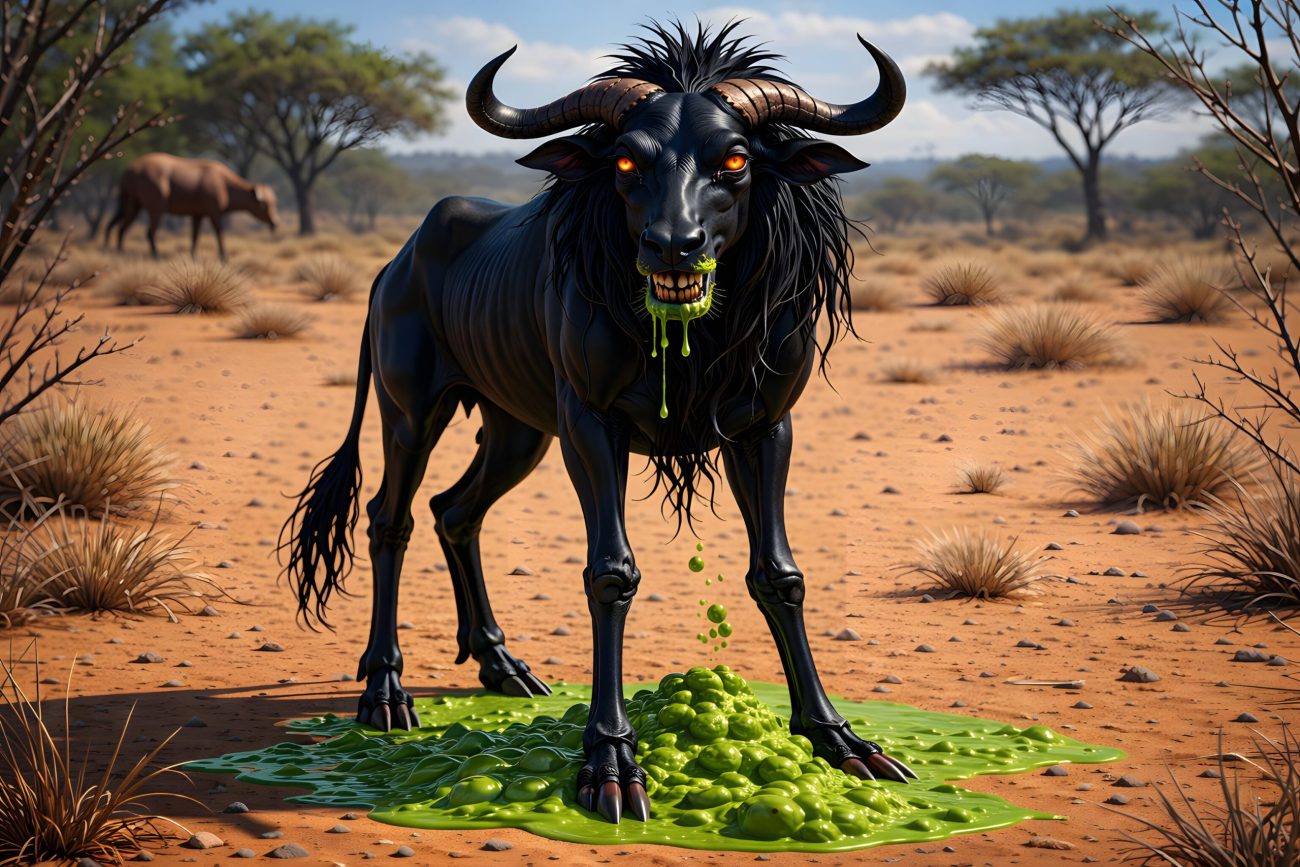
As it runs, the creature unleashes its true defense. From its body pours a vast stream of burning filth, hurled far behind it with astonishing force. The discharge scorches the earth like fire, filling the air with unbearable heat and stench. Anything it touches is seared, and hunters who pursue the beast are driven back in pain and terror, unable to continue the chase.

Thus the Bonacon escapes without ever turning to face its enemies, leaving them burned and humiliated while it vanishes into the distance. Its survival lies not in strength or weapons, but in a defense so foul and overwhelming that no pursuer dares follow for long.


Gallery


Sources

Pliny the Elder. (n.d.). Naturalis Historia, Book 8, Chapter 16.

Wikipedia contributors. (n.d.). Bonnacon. In Wikipedia, The Free Encyclopedia, from https://en.wikipedia.org/wiki/Bonnacon


Interpretive Lenses

Religious Readings
  • Christian Ascetic Deep Dive
Philosophical Readings
  • Nietzschean Deep Dive
Psychological Readings
  • Jungian Deep Dive
Esoteric Deep Dive
  • Hermetic Deep Dive
Political / Social Readings
  • Marxist Deep Dive
Other
  • How to Invite The Bonacon

Boxed Calf

Tradition / Region: German mythology
Alternate Names:
Category: Cow, Familiar


The Myth

It was said that those who wished to possess a brood penny—a coin that multiplied itself each night—had to make a bargain with the devil. On Christmas Eve, while church bells rang for Mass, they went alone to a crossroads. There they laid thirty coins in a circle and counted them forward and backward without a single mistake. If their tongue slipped, their neck would be twisted. If they succeeded, the devil added a thirty-first coin, and the cursed wealth was secured.

Near Wittenberg, a peasant woman was believed to own such a coin. In her house stood a box she guarded closely. One evening, she ordered her maid to boil the milk from the very first cow she milked, pour it over white bread, and place it in the box before doing anything else.

The maid delayed. She milked all the cows first, then boiled the milk and carried the pot to the box.

When she opened it, she saw a small calf inside—pitch black, cramped within the chest, its mouth stretched wide as if waiting to be fed. Terrified, the maid poured the boiling milk straight into its mouth.

At once the calf sprang from the box and raced through the house. Flames erupted in its wake, and the house was set ablaze.

Soon after, the woman was arrested and confessed. From that time on, brood pennies were seized wherever they were found and locked away in public treasuries, so that no boxed calf would ever again be secretly fed in the dark.


Gallery


Sources

AGEN.at contributors. (n.d.). Der Brutpfennig. In SAGEN.at – Grimms Märchen & Sagen, from https://www.sagen.at/texte/sagen/grimm/derbrutpfennig.html


Interpretive Lenses

Religious Readings
  • Christian Ascetic Deep Dive
Philosophical Readings
  • Nietzschean Deep Dive
Psychological Readings
  • Jungian Deep Dive
Esoteric Deep Dive
  • Hermetic Deep Dive
Political / Social Readings
  • Marxist Deep Dive
Other
  • How to Invite The Boxed Calf

Bokeler Bulle

Tradition / Region: German mythology
Alternate Names: Bokel Bull
Category: Cow


The Myth

At the southern edge of the Breitenhees, near the quiet village of Bokel, the Ilmenau River rises from a chain of small ponds and flows eastward, murmuring softly through meadow and hollow. The people say this sound is no ordinary current, but the bathing of a hidden being—the Bokeler Bulle.

Near the village lies a place known as the Bull’s Hollow. Each year, when May arrives and the nights grow long and dark, the bull is said to emerge. At the stroke of midnight, it leaves the waters and moves silently into the village stables, seeking the cows of Bokel. From these secret unions are born calves of extraordinary size and strength, yet they are wild and unruly, never fully tame, and often slaughtered before they can grow dangerous.

The Bokeler Bulle is feared, and few dare to wander the area on May nights. Shepherds keep their distance, knowing the bull can be fierce when angered. Once, a young apprentice shepherd from Günne encountered the creature. The bull lowered its head and charged, its snort shaking the air. In terror, the shepherd cried out to the Holy Virgin Mary, and at that very moment the bull vanished, leaving him unharmed.

In gratitude for his escape, the shepherd later carved a magnificent door and gave it to the chapel in Bokel. Thus the legend endured: of a powerful bull rising from the river, of danger and deliverance, and of a hidden presence that still murmurs beneath the waters of the Ilmenau.


Gallery


Sources

Meyer, C. (1950). Stadt und Kreis Uelzen. Ein Heimatbuch. Uelzen, p.166

SAGEN.at – DER KUHBANNER. (n.d.). https://www.sagen.at/texte/sagen/liechtenstein/seger/kuhbanner.html


Interpretive Lenses

Religious Readings
  • Christian Ascetic Deep Dive
Philosophical Readings
  • Nietzschean Deep Dive
Psychological Readings
  • Jungian Deep Dive
Esoteric Deep Dive
  • Hermetic Deep Dive
Political / Social Readings
  • Marxist Deep Dive
Other
  • How to Invite The Bokeler Bulle

Boi-Vaquim

Tradition / Region: Brazilian mythology
Alternate Names:
Category: Cow


The Myth

On the wide southern plains of Brazil, where cowboys rode beneath endless skies, people told of a bull unlike any other. They called it the Boi-Vaquim.

Its horns shone like gold, and its eyes glittered like diamonds. From its body leapt sparks of fire, flashing as it moved across the grasslands. To glimpse it was to feel both awe and dread, for the creature was as beautiful as it was dangerous.

The Boi-Vaquim was said to have wings like a great bird, spreading wide as it crossed the plains, and hooves of gold that left the ground shimmering where they struck. When it charged, the air itself seemed to burn, and even the bravest rider felt his heart falter beneath its gaze.

Some cowhands dreamed of capturing it, imagining the glory of lassoing such a beast and proving their courage before all others. But only a rider of extraordinary strength, mounted on a horse swift and unshakable, could even hope to face it. Many tested their resolve from afar, measuring their nerve against the bull’s blazing presence.

Yet no tale tells of the Boi-Vaquim ever being mastered. It remained free, untamed, and unconquered—a living emblem of the wild southern lands, inspiring fear, respect, and wonder in all who spoke its name.


Gallery


Sources

Contribuidores da Wikipédia. (2022, May 10). Boi Vaquim. https://pt.wikipedia.org/wiki/Boi_Vaquim


Interpretive Lenses

Religious Readings
  • Christian Ascetic Deep Dive
Philosophical Readings
  • Nietzschean Deep Dive
Psychological Readings
  • Jungian Deep Dive
Esoteric Deep Dive
  • Hermetic Deep Dive
Political / Social Readings
  • Marxist Deep Dive
Other
  • How to Invite The Boi-Vaquim

Boitáta

Tradition / Region: Brazilian mythology
Alternate Names:
Category: Cow


The Myth

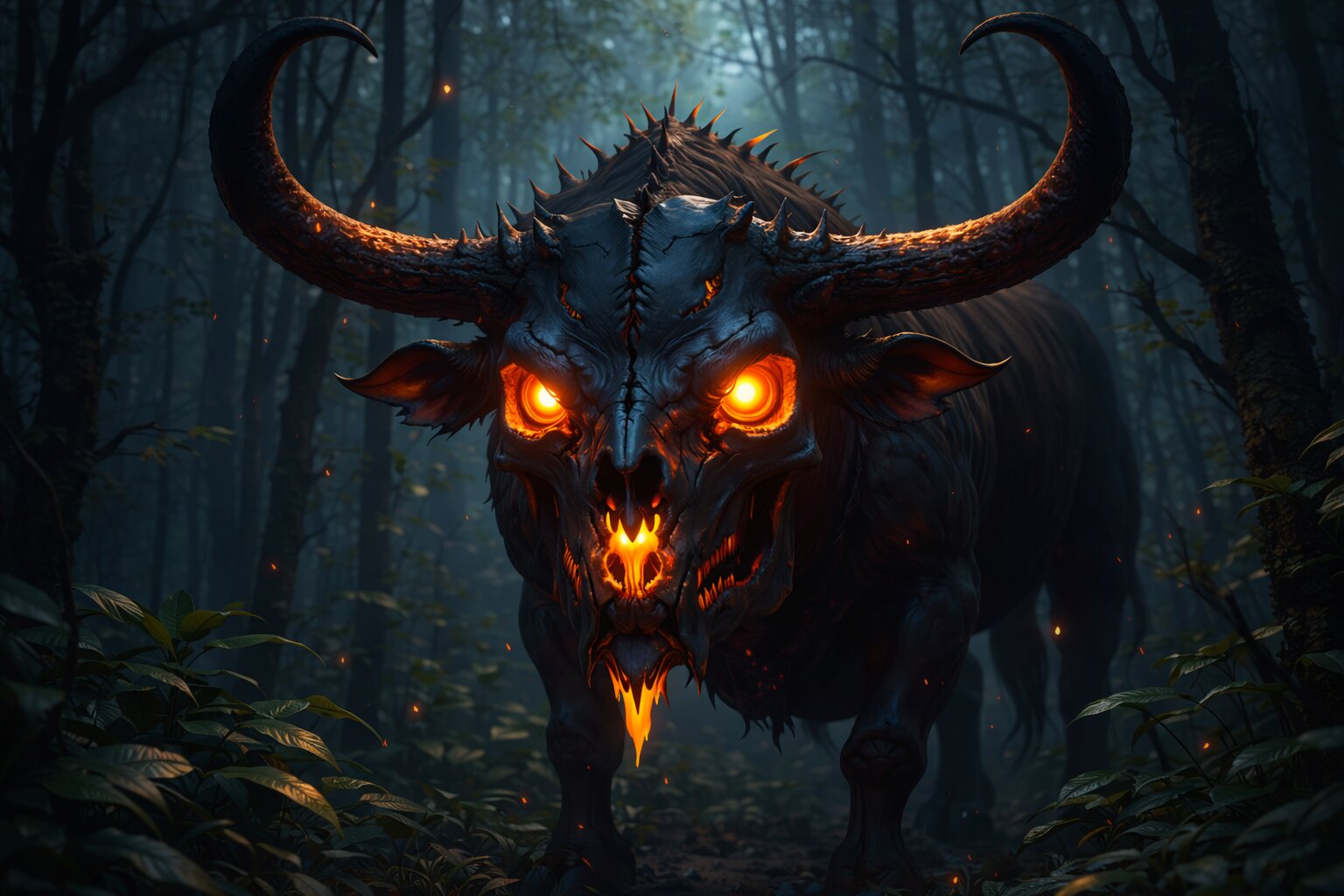
In Santa Catarina, people speak of a Boitáta unlike the ancient serpent of older tales. Here it appears as a bull—vast, unnatural, and terrifying to behold.

Its body is as large as a bull’s, but its limbs end not in hooves, but in massive paws like those of a giant. In the center of its forehead burns a single enormous eye, blazing like living fire, cutting through darkness, mist, and night. No one knows where it dwells, nor what sustains it, and those who see it rarely remain long enough to learn more.

This Boitáta is not bound to the earth. At times it charges into the sea, skimming across the waves like a monstrous seahorse. At other times it rises into the air, flying above forests as if born of flame and shadow. Land, water, and sky offer no refuge from its passage.

Some say its shape was born from confusion and fear, when the fiery serpent of old stories was mistaken for something else and slowly took on horns, bulk, and the form of cattle. Over time, this bull-shape became fixed in the imagination of the people.

In visions and whispered stories, the Boitáta appears with a bovine head, sometimes horned, sometimes winged, sometimes standing upright like a man. Yet one thing never changes: the burning eye that watches without blinking.

To see it is an omen of terror. To follow it is to vanish. And to mistake it for an ordinary bull is to invite destruction, for this Boitáta is not a creature of pasture, but fire given flesh.


Gallery


Sources

Wikipedia contributors. (n.d.). Boitatá. In Wikipedia, The Free Encyclopedia, from https://en.wikipedia.org/wiki/Boitat%C3%A1


Interpretive Lenses

Religious Readings
  • Christian Ascetic Deep Dive
Philosophical Readings
  • Nietzschean Deep Dive
Psychological Readings
  • Jungian Deep Dive
Esoteric Deep Dive
  • Hermetic Deep Dive
Political / Social Readings
  • Marxist Deep Dive
Other
  • How to Invite The Boitáta

Boi Laranja

Tradition / Region: Brazilian mythology
Alternate Names:
Category: Cow


The Myth

They say the Boi Laranja was once an ordinary bull that lived among other cattle in a pasture, alongside beasts such as the Boi Jardim. Yet even in life, it was never truly one of the herd. It kept to itself, standing apart as if it wished no company from animals or people alike.

At night, the land where it stayed became a place of dread. Those who passed nearby felt an unexplainable fear settle over them. Some claimed that a single look from the bull was enough to make their legs tremble and their hearts race, as though its gaze carried a weight no living creature should possess.

When the Boi Laranja finally died, the fear did not fade.

Travelers began to report sightings near the same pasture. In the darkness, a massive shape would appear where the bull once stood. Others felt watched as they crossed the land, certain that something unseen was still there, guarding the ground it had claimed in life.

Even now, people warn against passing too close to that place. They say the Boi Laranja did not depart with its death, and that its presence still lingers in the pasture, silent, watchful, and unwilling to let go of the land it once called its own.


Gallery


Sources

História Jardim contributors. (2022). História e Lenda do Boi Laranja. In HistoriaJardim.blogspot.com, from https://historiajardim.blogspot.com/2022/05/historia-e-lenda-do-boi-laranja-para.html


Interpretive Lenses

Religious Readings
  • Christian Ascetic Deep Dive
Philosophical Readings
  • Nietzschean Deep Dive
Psychological Readings
  • Jungian Deep Dive
Esoteric Deep Dive
  • Hermetic Deep Dive
Political / Social Readings
  • Marxist Deep Dive
Other
  • How to Invite The Boi Laranja

Boi de Conchas

Tradition / Region: Brazilian mythology
Alternate Names: Ratambufe; Shell Ox
Category: Cow


The Myth

Along the shores where rivers meet the sea, the people tell of a wondrous ox born not only of land, but of water and promise. This creature is known as Boi de Conchas, the Shell Ox.

It was said that a calf was born on Saint Peter’s Day, the feast of the fisherman saint. Because of this sacred timing, its owner promised the young ox that one day it would be taken to see the sea. The promise lingered, carried by time and tide, until it became something more than words.

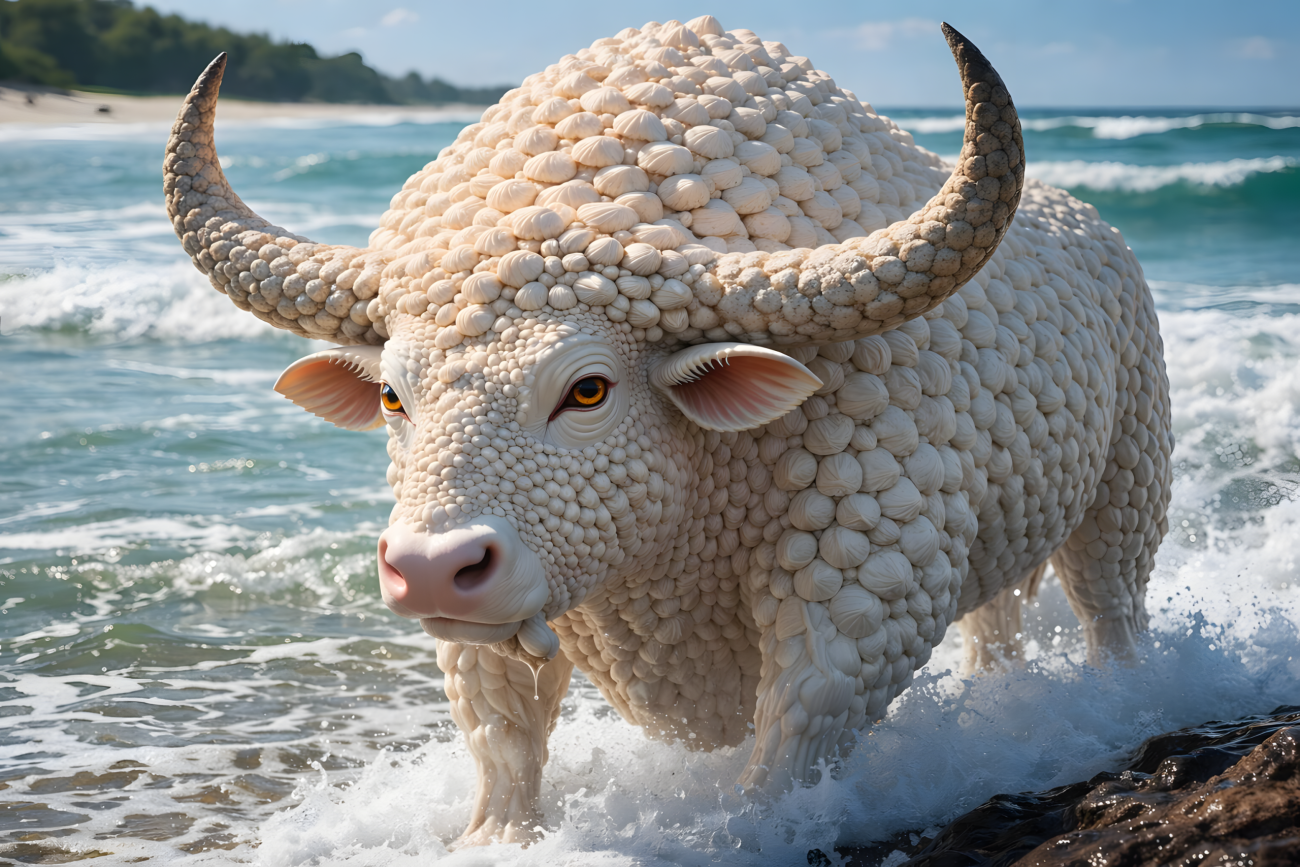
In later years, people along the coast spoke of a vision rising from the water: an ox entirely white, its body covered in gleaming shells, as if the sea itself had clothed it. This was the Shell Ox, born of devotion and fulfilled promise, emerging where waves touch the land.

Those who saw it said the creature was calm and radiant, neither wild nor fearful. It appeared briefly, a living bridge between earth and ocean, before returning to the waters from which it came.

Thus the Boi de Conchas remains in memory as a gentle marvel—an ox shaped by faith, timing, and the pull of the sea, reminding all who hear the tale that promises, once made, may take on lives of their own.


Gallery


Sources

São Pedro da Barra, A. M. Ficha 10–Boi Laranja.

Santos, L. G. D. (2020, March 30). Ratambufe – A lenda do Boi de Conchas – FundArt. FundArt. https://fundart.com.br/ratambufe-a-lenda-do-boi-de-conchas/


Interpretive Lenses

Religious Readings
  • Christian Ascetic Deep Dive
Philosophical Readings
  • Nietzschean Deep Dive
Psychological Readings
  • Jungian Deep Dive
Esoteric Deep Dive
  • Hermetic Deep Dive
Political / Social Readings
  • Marxist Deep Dive
Other
  • How to Invite The Boi de Conchas

Boi da Cara Preta

Tradition / Region: Brazilian mythology
Alternate Names: Black-Faced Ox
Category: Cow


The Myth

In Brazil, when night falls and children resist sleep, a familiar name is sometimes whispered: the Black-Faced Ox.

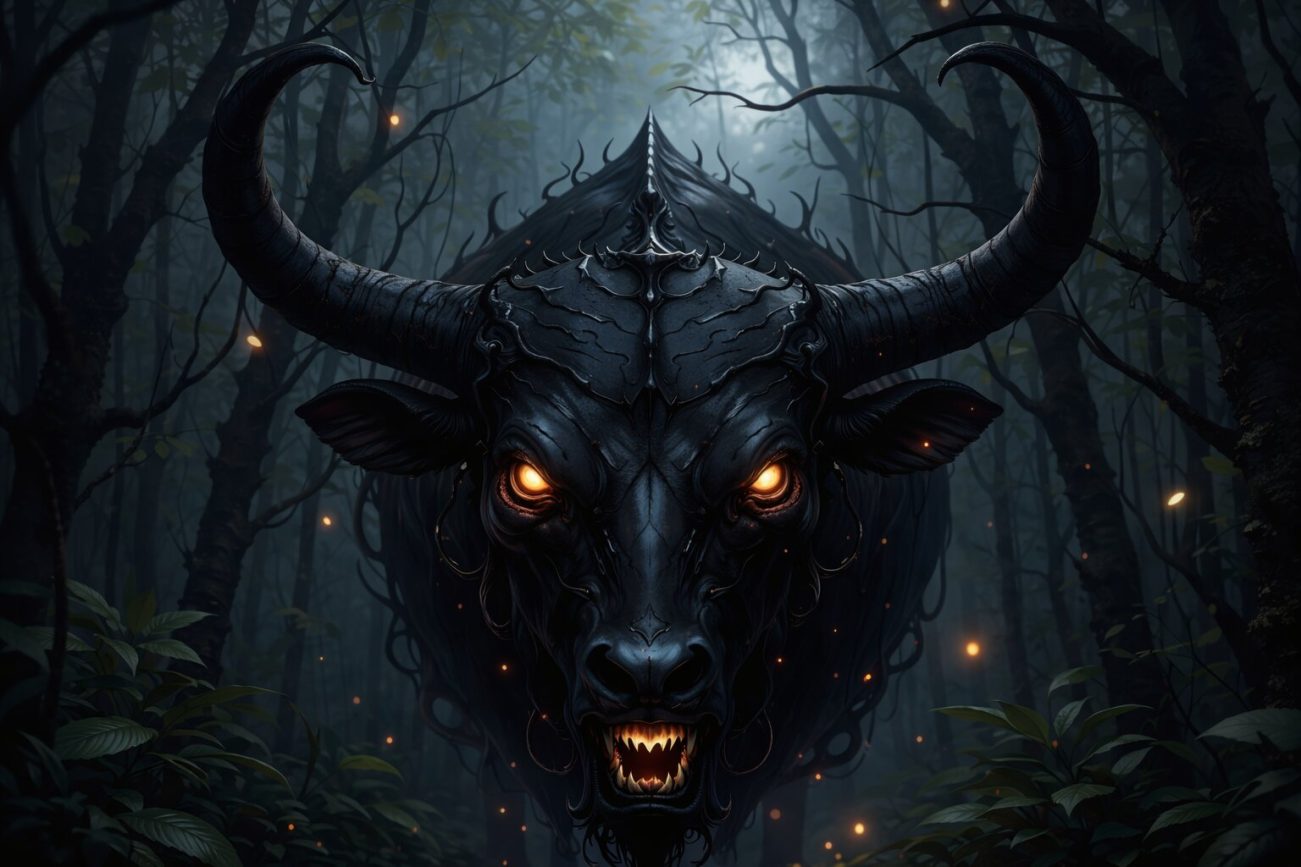
Boi da Cara Preta is imagined as an ox with a darkened face, something both ordinary and unsettling. It is not a beast of fields or farms, but a figure that comes when children refuse to rest or misbehave. Parents sing of it softly, not as a roar or threat, but as a presence that listens from the dark.

In the lullaby, the ox is called upon to come and take the child who will not sleep, especially one who is afraid of silly faces and shadows. The song is gentle, almost playful, yet behind it lingers the idea that something waits just beyond the cradle and the candlelight.

The Black-Faced Ox has no long tale of origins or deeds. It does not rampage or destroy. It exists in the space between comfort and fear, carried by melody rather than story. To children, it is a warning; to adults, a tool; to memory, a shadow shaped like an ox.

And so Boi da Cara Preta endures—not as a monster that acts, but as one that might, lingering in song, rocking back and forth with the rhythm of sleep.


Gallery


Sources

Guerra, D. (2010). Acalantos afro-brasileiros. Revista África e Africanidades, 8, 1-5.


Interpretive Lenses

Religious Readings
  • Christian Ascetic Deep Dive
Philosophical Readings
  • Nietzschean Deep Dive
Psychological Readings
  • Jungian Deep Dive
Esoteric Deep Dive
  • Hermetic Deep Dive
Political / Social Readings
  • Marxist Deep Dive
Other
  • How to Invite The Boi da Cara Preta