Suiton

Tradition / Region: Japanese mythology
Alternate Names:
Category: Mountain dweller, yōkai


The Myth

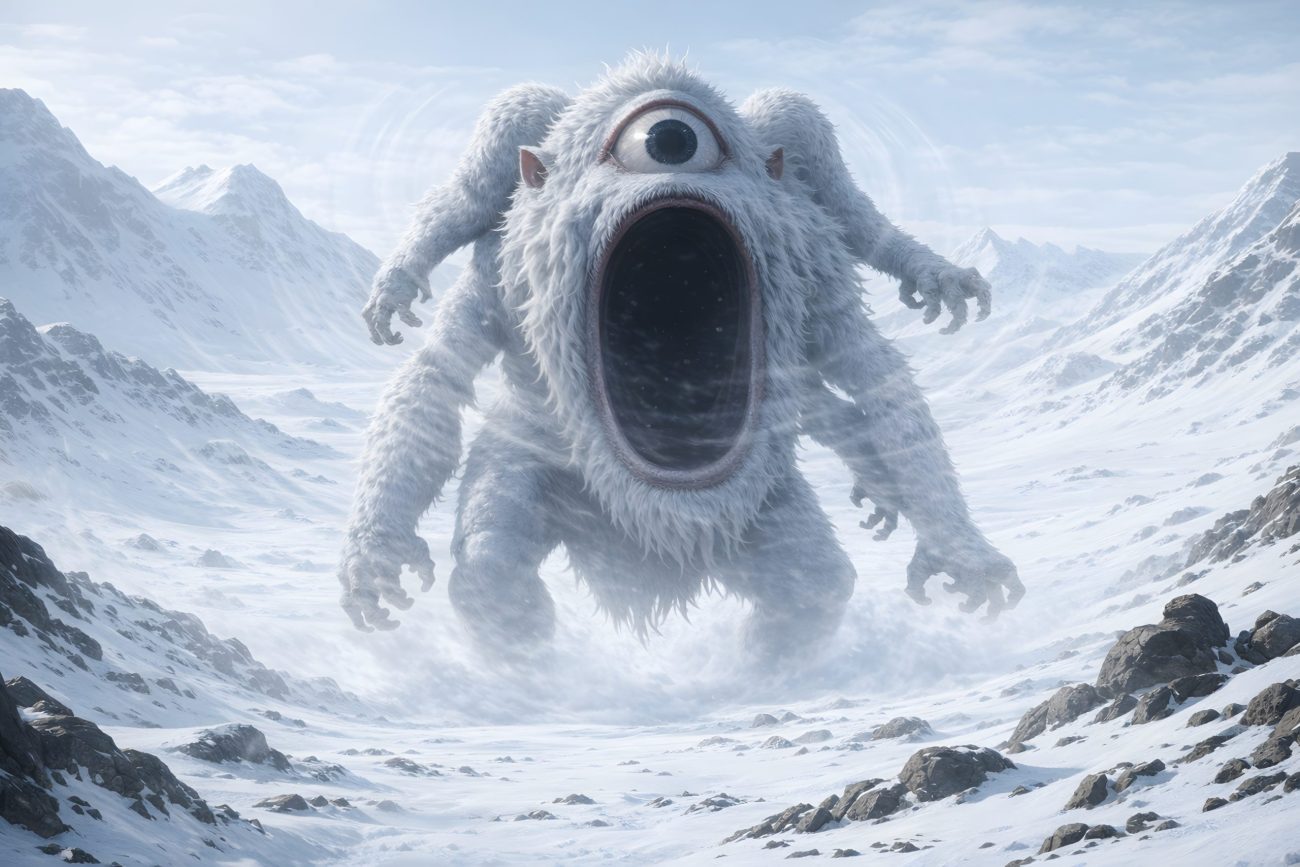
On the wide uplands of the Hiruzen Plateau, where the wind moves across open fields and the mountains stand watch at the border of Okayama and Tottori, there is said to dwell a fearsome being known as the Suiton.

The Suiton does not roam idly, nor does it trouble the innocent. It waits.

It is said that the creature can read the hearts of men. It knows when someone harbors malice, when a traveler plots harm, when deceit or cruelty takes root in the mind. The moment such thoughts grow strong, the Suiton appears.

Without warning it swoops down before the wrongdoer, blocking the path. It stands balanced on a single leg, towering and terrible. Before the guilty can flee or beg for mercy, the Suiton tears them apart and devours them.

There is no escape from it, for one cannot hide one’s thoughts.

Because of this, the people of Hiruzen say that there are no wicked men in their land. For anyone who intends evil knows that the Suiton is listening, and that the mountains themselves will judge them.

Thus the plateau remains peaceful—not by law or by sword, but by the silent vigilance of the one-legged guardian who feeds only on wicked hearts.


Gallery


Sources

TYZ-Yokai Blog contributors. (n.d.). 水遁 (Suiton). In TYZ-Yokai Blog, from https://tyz-yokai.blog.jp/archives/1010653984.html


Interpretive Lenses

Religious Readings
  • Christian Ascetic Deep Dive
Philosophical Readings
  • Nietzschean Deep Dive
Psychological Readings
  • Jungian Deep Dive
Esoteric Deep Dive
  • Hermetic Deep Dive
Political / Social Readings
  • Marxist Deep Dive
Other
  • How to Invite The Suiton

Satori

Tradition / Region: Japanese mythology
Alternate Names: Satoru, Omoi, Yamaoni, Kuronbo
Category: Mountain dweller, yōkai


The Myth

Deep in the mountains of Japan, from Tōhoku in the north to Kyūshū in the south, there are tales of a strange being known as the Satori.

It comes quietly to lonely mountain huts where woodcutters, hunters, or fishermen are spending the night. The fire burns low, the wind moves through the trees, and suddenly the creature appears at the doorway or just beyond the light of the hearth.

The Satori is dark-skinned and long-haired, humanlike yet wild in appearance. But its most terrifying trait is not its shape—it is its voice.

Before the startled traveler can speak, the creature begins to recite his thoughts aloud.

“If I stay still, perhaps it will leave.”
“You are thinking of running.”
“You are wondering if you can strike me with that axe.”

Each secret fear, each hidden plan, the Satori speaks before the human can act. No thought can be concealed from it. It mocks hesitation, anticipates attacks, and laughs at every desperate scheme forming in the mind of its victim.

If it chooses, it will try to seize and devour the traveler. Yet the creature’s power has one weakness: it knows only what is intended.

In many tellings, the human, driven to panic, stirs the fire or tosses wood into the hearth. By chance, a log explodes in the flames, sending sparks and splinters flying. The Satori, unable to foresee this accidental burst, is struck and startled.

“This thing does what I did not expect!” it cries.

And with that, the mind-reading monster flees into the darkness of the mountains.

Thus the Satori lingers in remote forests and high valleys—watching, listening, waiting for stray travelers whose thoughts it can plunder. It does not fear strength, nor weapons, nor clever plans. It fears only the unforeseen—the sudden spark, the accident, the moment beyond intention.

For even a creature that reads every thought cannot guard against what no one meant to happen.


Gallery


Sources

TYZ-Yokai Blog contributors. (n.d.). 猿飛 (Satori). In TYZ-Yokai Blog, from https://tyz-yokai.blog.jp/archives/1010653523.html


Interpretive Lenses

Religious Readings
  • Christian Ascetic Deep Dive
Philosophical Readings
  • Nietzschean Deep Dive
Psychological Readings
  • Jungian Deep Dive
Esoteric Deep Dive
  • Hermetic Deep Dive
Political / Social Readings
  • Marxist Deep Dive
Other
  • How to Invite The Satori

Yamawani

Tradition / Region: Japanese mythology
Alternate Names: Mountain crocodile
Category: Mountain dweller, yōkai, Crocodile


The Myth

In the old illustrated scroll known as the Tosa Obake Zōshi, there appears a strange creature called the Yamawani—the Mountain Crocodile.

It is shown with a grotesquely large mouth, wide and thick-lipped, dominating its face. Its body is less clearly described than its jaws, for it is the mouth that defines it: heavy, fleshy, and capable of swallowing great things in a single gulp.

In the scroll, the Yamawani is said to speak of its kin. “My cousin lives in the sea,” it boasts, referring to the crocodile or shark of the waters. “He too is thick-mouthed and can lick up anything in one bite.” The creature claims a kind of family pride in its devouring nature. Even the crocodile carved or imagined at temples—known for their gaping jaws—is said to share this thick-mouthed likeness.

The Yamawani’s voice is described as making a peculiar sound—“tickle, tickle”—as though it mutters or chuckles through its massive jaws. Whether this is a threat, a laugh, or simply the grinding of its teeth is unclear.

It is not told that it hunts men, nor that it brings disaster like other mountain spirits. Instead, it lingers in the strange borderland between beast and caricature, a mountain echo of the sea’s crocodile, defined by its monstrous mouth and its unsettling presence in the wilderness.

Thus the Yamawani remains in the scrolls: a thick-mouthed being of the mountains, grinning in silence, its jaws large enough to swallow anything in a single bite.


Gallery


Sources

TYZ-Yokai Blog contributors. (n.d.). 転倒お化け (Yamawani). In TYZ-Yokai Blog, from https://tyz-yokai.blog.jp/archives/1010653500.html


Interpretive Lenses

Religious Readings
  • Christian Ascetic Deep Dive
Philosophical Readings
  • Nietzschean Deep Dive
Psychological Readings
  • Jungian Deep Dive
Esoteric Deep Dive
  • Hermetic Deep Dive
Political / Social Readings
  • Marxist Deep Dive
Other
  • How to Invite The Yamawani

Nikusui

Tradition / Region: Japanese mythology (Mie–Wakayama mountain border)
Alternate Names: Meat sucker
Category: Vampire, yōkai, Montain dweller


The Myth

On the lonely mountain roads between Mie and Wakayama, travelers once feared to walk by lantern light. For in those dark passes, the nikusui prowled.

They appeared as young women, no more than eighteen or nineteen years old—beautiful, pale, and smiling softly in the night. They would step from the shadows as if they had been waiting, their laughter a faint “ho ho” that seemed to drift on the wind. Though it was pitch dark, they carried no lantern of their own.

When a young man traveling alone met such a woman, she would speak sweetly and draw closer. She might ask, shyly, to borrow his lantern. If he handed it over, she would snuff the flame at once. In the sudden darkness, before he could even cry out, she would seize him. Her teeth would sink into his body, and she would suck the meat from his bones. By morning, nothing remained but skin and skeleton, collapsed upon the road.

Sometimes the nikusui did not wait in the mountains. They slipped silently into bedrooms, approaching men who slept alone. They used tenderness and desire as their weapon. By seducing and exhausting their victims, they weakened them completely. Then, when the man was helpless, they fed at their leisure, draining his flesh until nothing but a hollow body remained.

Because of these horrors, villagers warned young men never to travel at night without extra light. Those who had no choice carried spare lanterns and burning coals. If a nikusui snatched their light, they could hurl hot embers into the darkness to drive her away.

One hunter named Genzō learned this lesson well. Late one night on Mount Hatenashi, a beautiful young woman appeared before him, laughing softly. She asked for his light. But Genzō felt unease stirring in his chest. He loaded his rifle with a blessed bullet inscribed with a prayer to Amida Buddha and leveled it at her. At once she fled into the dark.

Moments later, the earth shook as a monstrous shape—over six meters tall—charged from the shadows. Genzō fired. The sacred bullet struck true. The creature collapsed.

When he approached, he saw the truth of the nikusui’s form: a loose sack of pale skin draped over a bleached skeleton, empty of all flesh. There was no beauty left—only the hollow remains of what had once devoured others.

And so the mountain roads remained dangerous after dark, where beauty might be only a lantern’s breath away from death.


Gallery


Sources

Yokai.com contributors. (n.d.). Nikusui. In Yokai.com — The Japanese Mythology Database, from https://yokai.com/nikusui/


Interpretive Lenses

Religious Readings
  • Christian Ascetic Deep Dive
Philosophical Readings
  • Nietzschean Deep Dive
Psychological Readings
  • Jungian Deep Dive
Esoteric Deep Dive
  • Hermetic Deep Dive
Political / Social Readings
  • Marxist Deep Dive
Other
  • How to Invite The Nikusui

Igtuk

Tradition / Region: Inuit mythology
Alternate Names: The Boomer
Category: Mountain spirit


The Myth

In the far northern lands, when the mountains echo with deep, hollow booming sounds, the Inuit say it is Igtuk who is moving. The sound rolls across the country without warning, rising from the rocks and valleys as if the land itself were breathing.

No one knows where Igtuk lives. He has no fixed dwelling and no trail that can be followed. He is said to be made unlike any other living thing. His arms and legs grow from the back of his body, twisted in a way no human or animal could endure. His great single eye sits level with his arms, staring outward, while his nose is hidden inside his mouth. Beneath his mouth, on his chin, hangs a thick tuft of hair, and his ears lie strangely aligned with his eye.

When Igtuk opens his mouth, it reveals not teeth or a tongue, but a dark, endless abyss. As his jaws move, the booming begins. The sound spreads across the mountains and tundra, shaking the silence and reminding those who hear it that something vast and unnatural is present, though unseen.

The Inuit do not hunt Igtuk, nor do they seek him out. He is not a creature to be challenged or approached. He is simply there—an unseen force whose voice rolls through the land. When the booming echoes across the mountains, people know it is Igtuk making himself known, even if no one will ever see where he stands.


Gallery


Sources

Rasmussen, K. (1930). Intellectual culture of the Hudson Bay Eskimos.


Interpretive Lenses

Religious Readings
  • Christian Ascetic Deep Dive
Philosophical Readings
  • Nietzschean Deep Dive
Psychological Readings
  • Jungian Deep Dive
Esoteric Deep Dive
  • Hermetic Deep Dive
Political / Social Readings
  • Marxist Deep Dive
Other
  • How to Invite The Igtuk

Kimanaueze

Tradition / Region: Ambundu mythology, Angolan Mythology
Alternate Names: Na Kimanaueze; Na Kimanaueze Kia-Tumb’a Ndala
Category: Mountain dweller


The Myth

Long ago, there lived a man named Kimanaueze, whose name belonged both to a father and a son. The elder Kimanaueze wished to see his son married, but the younger refused all women of the earth. His ambition was greater than that of ordinary men: he declared that he would take as his wife the daughter of the Sun and the Moon, who lived far above the world, in the heavens.

To make this possible, Kimanaueze sought a way to reach her. He first asked the Antelope to carry his message, but the Antelope could not fly. He then asked the Hawk, but the Hawk could not rise high enough to reach the dwelling of the Sun and the Moon. The Vulture tried next, but even he could only fly part of the way. At last, Kimanaueze encountered the Frog, named Mainu. Though small and unimpressive, Mainu claimed he knew a hidden path.

Mainu explained that the servants of the Sun and Moon often visited a well on earth. He swallowed Kimanaueze’s letter and hid himself inside a water jug carried by one of these heavenly attendants. In this way, Mainu was carried straight into the house of the Sun King, where he slipped the letter onto the king’s desk. When a second letter appeared in the same mysterious way, the Sun King realized its importance and sent word back, asking Kimanaueze to present himself with a dowry so his worth could be judged.

Since Kimanaueze could not travel to heaven, Mainu again carried the dowry in secret. Pleased, the Sun King finally agreed to the marriage and ordered that his daughter be brought to earth. But there was still one obstacle: how to remove her from the heavens. This time, Mainu stole the girl’s eyes and hid himself. Chaos broke out among the heavenly beings, and the diviner Ngombo was summoned. Ngombo declared that the girl must be married immediately, or she would perish.

Fearing this fate, the Sun King sent his daughter down to earth with the help of the Spider. Mainu followed and returned her eyes to her once she reached the ground. At last, Kimanaueze received the daughter of the Sun and the Moon and took her as his wife, fulfilling his impossible ambition.

In later times, tragedy struck the family. While the younger Kimanaueze was away, the elder Kimanaueze was killed by fearsome multi-headed monsters called Makishi. Generations later, Kimanaueze’s grandson, the hero Sudika-mbambi, would hunt down and slay the Makishi to avenge his grandfather, ensuring that the name of Kimanaueze endured among the people.


Gallery


Sources

Wikipedia contributors. (n.d.). Tantugou. In Wikipedia, The Free Encyclopedia (French), from https://fr.wikipedia.org/wiki/Tantugou


Interpretive Lenses

Religious Readings
  • Christian Ascetic Deep Dive
Philosophical Readings
  • Nietzschean Deep Dive
Psychological Readings
  • Jungian Deep Dive
Esoteric Deep Dive
  • Hermetic Deep Dive
Political / Social Readings
  • Marxist Deep Dive
Other
  • How to Invite The Kimanaueze

Tantugou

Tradition / Region: French Mythology
Alternate Names:
Category: Mountain dweller


The Myth

In the high valleys of the Pyrenees, where forests press close to pasture and stone outcrops overlook grazing land, there lives an ancient figure known as Tantugou. He is said to appear as a tall old man with a long beard, wrapped in a hooded tunic or dressed in animal skins, carrying a heavy club. He moves quietly through the hills and woods, sometimes sleeping on bare rock, always watching.

Tantugou is the unseen guardian of the land. He keeps watch over crops and herds, driving away thieves, wolves, and any force that threatens the balance of pastoral life. Shepherds believe he knows the hidden laws of nature—the ways of animals, the seasons, and the land itself. Though few have seen him clearly, his presence is felt in the safety of flocks and the steady rhythm of the fields.

When he does appear, it is brief and unsettling. A woman once saw him for three days in a row in the woods, where he spoke to her before vanishing again among the trees. A shepherd who fell asleep while tending his sheep awoke to see Tantugou running back into the forest, as if discovered mid-watch. Encounters like these were spoken of quietly, with respect and a trace of fear.

Though Tantugou was never said to harm honest people, later generations began to speak of him as a figure of warning. Parents told children that he prowled near lakes and lonely places, ready to seize those who wandered too far, carrying them off to his cave. Whether this was truth or a way to teach caution, no one could say.

To the people of the valleys, Tantugou remains a shadow at the edge of the fields: neither cruel nor kind, but ancient, vigilant, and bound to the land itself—a silent watcher ensuring that the old ways of pasture and harvest endure.


Gallery


Sources

Wikipedia contributors. (n.d.). Tantugou. In Wikipedia, The Free Encyclopedia (French), from https://fr.wikipedia.org/wiki/Tantugou


Interpretive Lenses

Religious Readings
  • Christian Ascetic Deep Dive
Philosophical Readings
  • Nietzschean Deep Dive
Psychological Readings
  • Jungian Deep Dive
Esoteric Deep Dive
  • Hermetic Deep Dive
Political / Social Readings
  • Marxist Deep Dive
Other
  • How to Invite The Tantugou

The Snow Woman of the Kintama Curve

Tradition / Region: Japanese mythology
Alternate Names: Snow Woman of Hikoya, Yuki-onna of Kintama Curve
Category: Ghost, Mountain dweller


The Myth

Long ago, on a winter day when the snow fell thick and heavy, the headman of the mountain village of Hikoya was returning home from the town of Hashimoto. The mountain road was narrow and winding, and the snowfall was so fierce that each step felt uncertain. As he climbed a steep S-shaped curve along the path, a flicker of white caught his eye.

Thinking he had found another traveler, he called out. From the snow emerged a young woman dressed in a long white kimono that trailed across the ground. Her face was pale as snow, her obvious lips blood-red, her hair deep black, and her eyes shone with an eerie golden light. She looked at the headman with an expression that was both sorrowful and afraid and softly called to him, “Mayor… come with me.”

Entranced by her voice, the headman followed her barefoot into the snow, unaware of the cold biting into his skin. Step by step, she led him deeper along the curve. Suddenly, snow fell from the branches overhead, striking him and breaking the spell. Terror seized him. Realizing something was wrong, he turned and fled back toward the village as fast as he could.

The next day, the headman returned to the bend in the road. There, he found his discarded sandals and the tree from which the snow had fallen. Hanging from one of its branches was the body of a young woman. She was Kayo, a girl from Akatsuka Village, who had been betrayed by her lover from Osaka and driven to despair. Whether she died before or after the headman’s encounter was never known.

The headman would later recount the story again and again, always ending it by saying that the fear had made his body shrivel with terror. From then on, villagers began calling that sharp bend in the mountain road the “Kintama Curve.” To this day, the Snow Woman of that curve is remembered not only as a frightening apparition, but as a sorrowful figure, caught between the world of the living and the dead, wandering the snow in silence.


Gallery


Sources

TYZ-Yokai Blog contributors. (n.d.). 雪女 (Yuki-onna / Snow Woman). In TYZ-Yokai Blog, from https://tyz-yokai.blog.jp/archives/1084249383.html


Interpretive Lenses

Religious Readings
  • Christian Ascetic Deep Dive
Philosophical Readings
  • Nietzschean Deep Dive
Psychological Readings
  • Jungian Deep Dive
Esoteric Deep Dive
  • Hermetic Deep Dive
Political / Social Readings
  • Marxist Deep Dive
Other
  • How to Invite The The Snow Woman of the Kintama Curve

Kirin

Tradition / Region: Japanese mythology
Alternate Names: Qilin, Lin
Category: Mountain dweller


The Myth

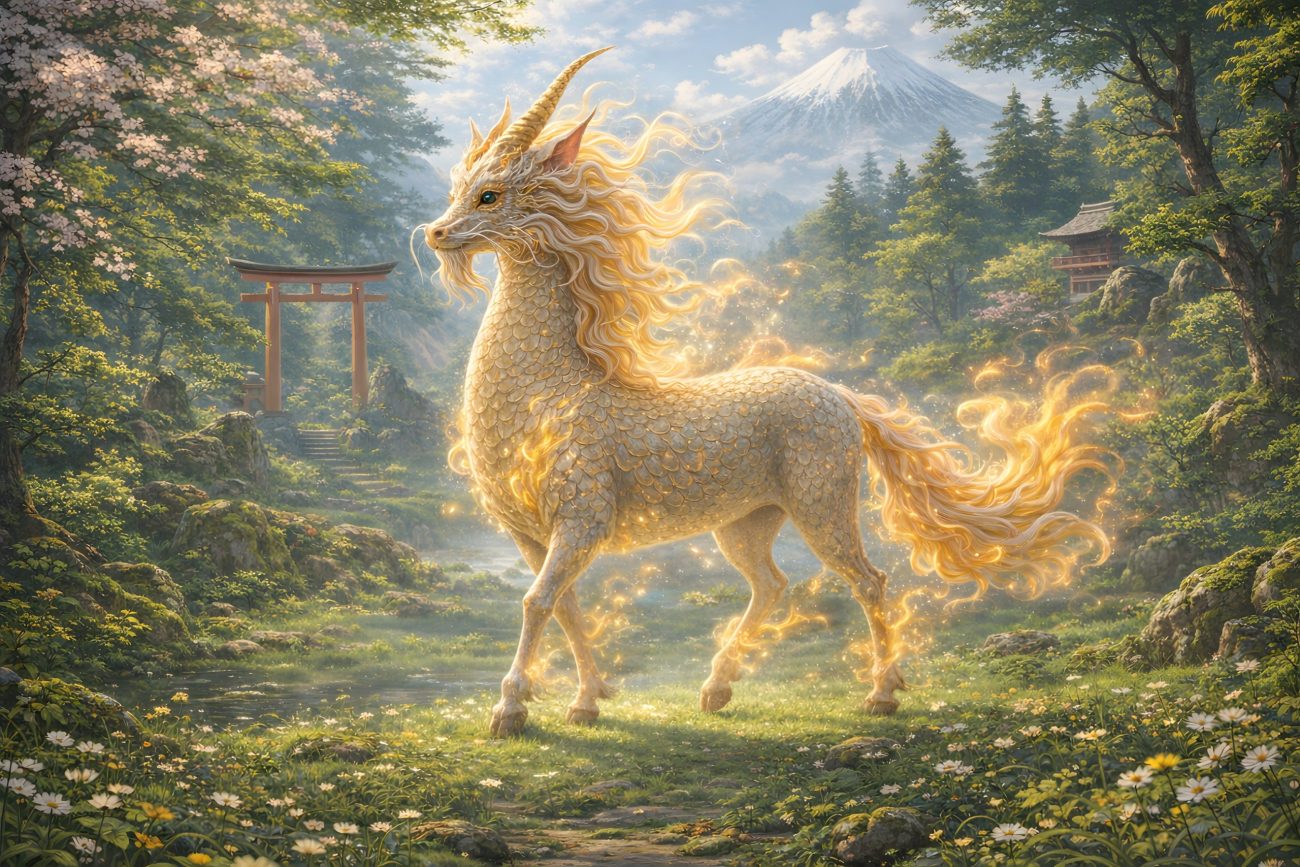
In ages when the world was ruled by wisdom and virtue, a gentle and radiant beast was said to walk the land: the Kirin. It did not appear in times of chaos or cruelty, but only when a ruler governed with benevolence and justice. Its arrival was not announced by thunder or fear, but by quiet wonder, for the Kirin harmed no living thing and carried peace wherever it stepped.

The Kirin was said to resemble no single animal. It bore the body of a deer, the tail of an ox, the hooves of a horse, and a single horn upon its brow. Its voice rang like a bell, clear and solemn. Though powerful, it never trampled grass or crushed insects beneath its feet, and it walked alone, never gathering in herds. Nets could not ensnare it, nor traps catch it, for it came only of its own will.

People believed the Kirin embodied perfect compassion. It would not fight, nor kill, nor even step where life might be harmed. When it appeared, sages rejoiced and kings trembled with humility, knowing its presence judged their virtue. If the ruler was just, the Kirin remained. If corruption spread, it vanished without a trace.

In Japan, the Kirin was known not from sightings, but from signs. Once, a horn said to belong to a Kirin was discovered in the mountains and presented to the imperial court. This alone was taken as a heavenly message: the land was under moral watch, and harmony must be preserved.

Thus the Kirin became a symbol of ideal rule and moral order. It was painted beside the phoenix, carved into robes and banners, and spoken of in stories as a reminder that true power lies not in force, but in virtue. The Kirin still walks only in legend, waiting for a world worthy of its steps.


Gallery


Sources

TYZ-Yokai Blog contributors. (n.d.). 麒麟 (Kirin). In TYZ-Yokai Blog, from https://tyz-yokai.blog.jp/archives/1078433264.html


Interpretive Lenses

Religious Readings
  • Christian Ascetic Deep Dive
Philosophical Readings
  • Nietzschean Deep Dive
Psychological Readings
  • Jungian Deep Dive
Esoteric Deep Dive
  • Hermetic Deep Dive
Political / Social Readings
  • Marxist Deep Dive
Other
  • How to Invite The Kirin

Yamajiji

Tradition / Region: Japanese mythology
Alternate Names: Yamajijii, Yamachiji, Yamajichi
Category: Mountain dweller


The Myth

Deep in the mountains of Shikoku, travelers speak in hushed voices of an old man who belongs not to any village, but to the wilderness itself. He is called Yamajiji—the Mountain Old Man—and those who meet him rarely forget the encounter.

Yamajiji appears as a tall, gaunt elder, sometimes with only a single eye and a single arm or leg, though some say he has two eyes, one so small it is barely visible. He wanders the deep forests, watching those who trespass into his domain. It is said that he can read human thoughts as easily as hearing spoken words, answering questions before they are asked and revealing secrets people believed were hidden in their hearts.

Many tales warn of his cruelty. Yamajiji may harm travelers or horses, mislead them deeper into the mountains, or disguise himself as a spider to slip unseen into a home. In some stories, he lives alongside a Yamauba, and if Yamajiji is defeated or killed, the mountain hag will later appear to avenge him, stalking the one who dared challenge the mountain’s master.

His voice is feared above all. When Yamajiji shouts, leaves fall from the trees as if struck by a storm, stones tremble, and the forest itself seems to recoil. In one well-known tale, a man lost in the mountains was challenged by Yamajiji to a contest of shouting. Knowing he could not match such a voice, the man waited until his turn, raised his gun, and fired it beside Yamajiji’s ear. The thunderous blast sent the mountain spirit reeling, and the man escaped while Yamajiji raged in confusion.

Yet the story does not always end there. In some versions, Yamajiji later returns in another form—often as a spider—seeking revenge for the trick played upon him.

Thus Yamajiji remains a figure of warning and dread: a living embodiment of the mountains themselves, ancient, watchful, and dangerous to those who enter his realm without caution or respect.


Gallery


Sources

TYZ-Yokai Blog contributors. (n.d.). 山爺 (Yamajiji). In TYZ-Yokai Blog, from https://tyz-yokai.blog.jp/archives/1077741578.html


Interpretive Lenses

Religious Readings
  • Christian Ascetic Deep Dive
Philosophical Readings
  • Nietzschean Deep Dive
Psychological Readings
  • Jungian Deep Dive
Esoteric Deep Dive
  • Hermetic Deep Dive
Political / Social Readings
  • Marxist Deep Dive
Other
  • How to Invite The Yamajiji