Xuán Guī

Tradition: Chinese Mythology
Alternative Names: 旋龟, Whirling Turtle
Category: Turtle


The Myth

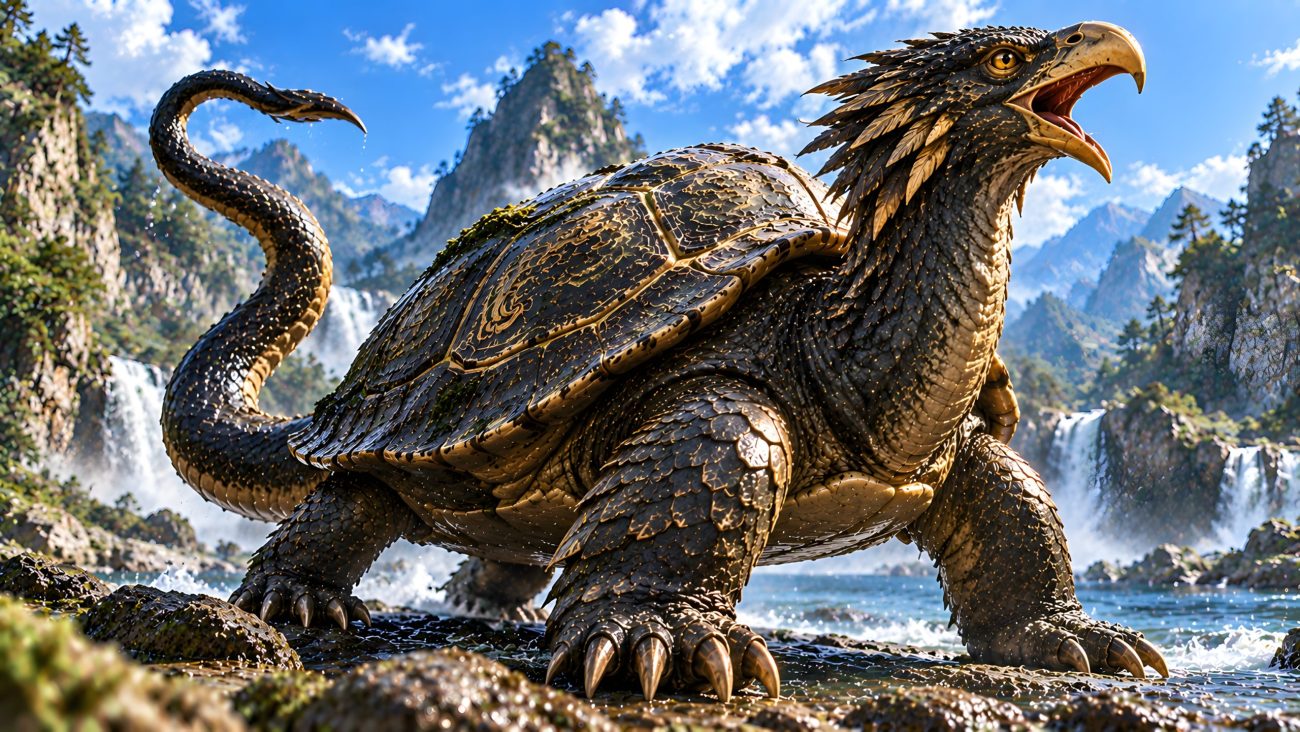
The Xuán Guī is a strange turtle described in the ancient Chinese text Classic of Mountains and Seas. It resembles an ordinary turtle, with a black body, but has the head of a bird and a tail resembling that of a snake. Its cry sounds like wood being struck or split.

The Xuán Guī lives on Niuyang Mountain, where the Guai River originates. According to the Classic of Mountains and Seas, wearing this creature was believed to prevent deafness and could also help treat calluses on the hands and feet.


Sources

“旋龟 (Xuánguī).” Chinese Wikipedia. Wikimedia Foundation. https://zh.wikipedia.org/wiki/%E6%97%8B%E9%BE%9F


Kinki

Tradition: Japanese Mythology
Alternative Names: 金亀, Golden Turtle
Category: Turtle


The Myth

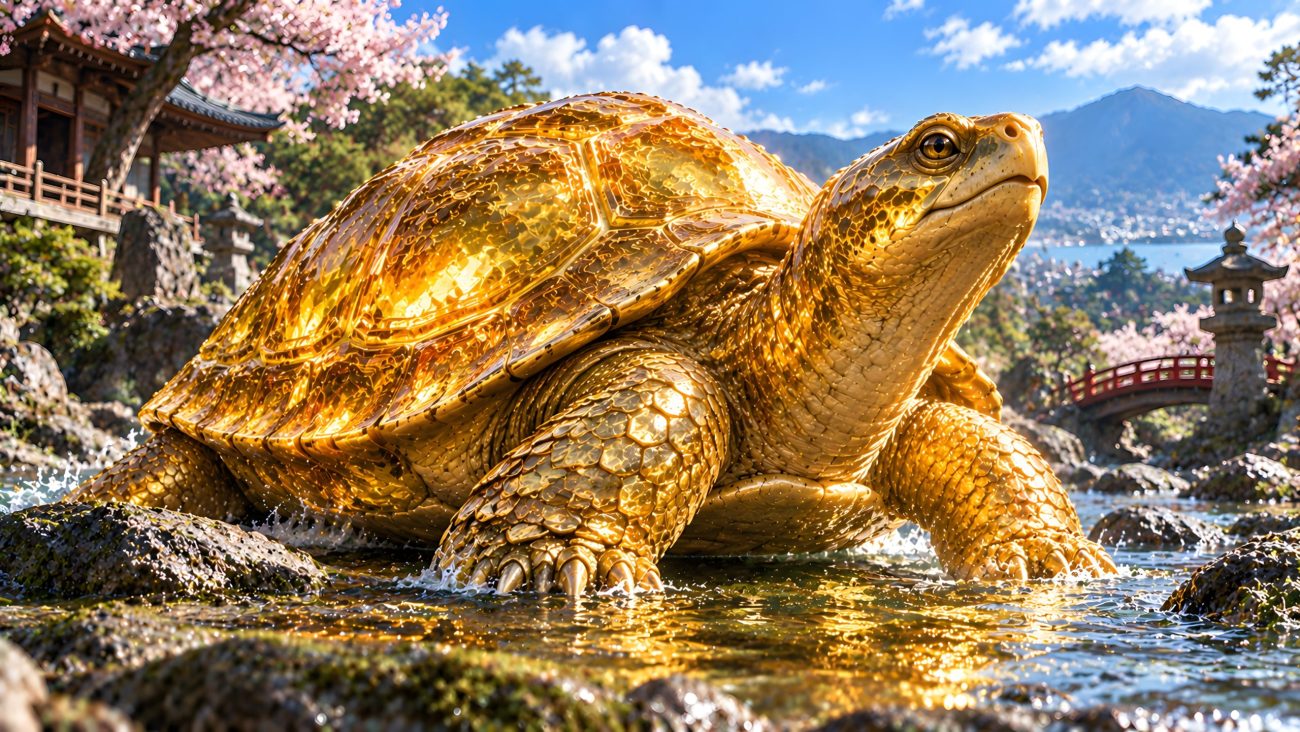
The Kinki is a mysterious golden turtle reportedly discovered in Kōjimachi, Tokyo, in August 1880. It was found by a pet dog belonging to Shib a Shōzō. The dog had a habit of bringing stones to its owner when hungry, but on this occasion it dropped a turtle instead. The creature was approximately four sun in diameter, with a beautiful, translucent golden shell. It was placed in water to keep it alive and later donated to a museum.

A follow-up report in the Tōkyō Nichinichi Shimbun in October 1880 described a dream in which a small turtle appeared beside a person’s pillow and lamented that, had it emerged fifteen or sixteen years earlier, it might have been celebrated as a Kinki and become the inspiration for a new Japanese era name.

The story refers to the historical belief that extraordinary turtles could be regarded as auspicious omens. Rare turtles presented to the imperial court had previously been associated with era names such as Reiki (715–717) and Hōki (770–781).


Sources

“Golden Turtle.” 新版TYZ 妖怪図鑑 (New TYZ Yokai Encyclopedia). https://tyz-yokai.blog.jp/archives/1074264664.html


Oketsu

Tradition: Japanese Mythology
Alternative Names: オケツ
Category: Turtle


The Myth

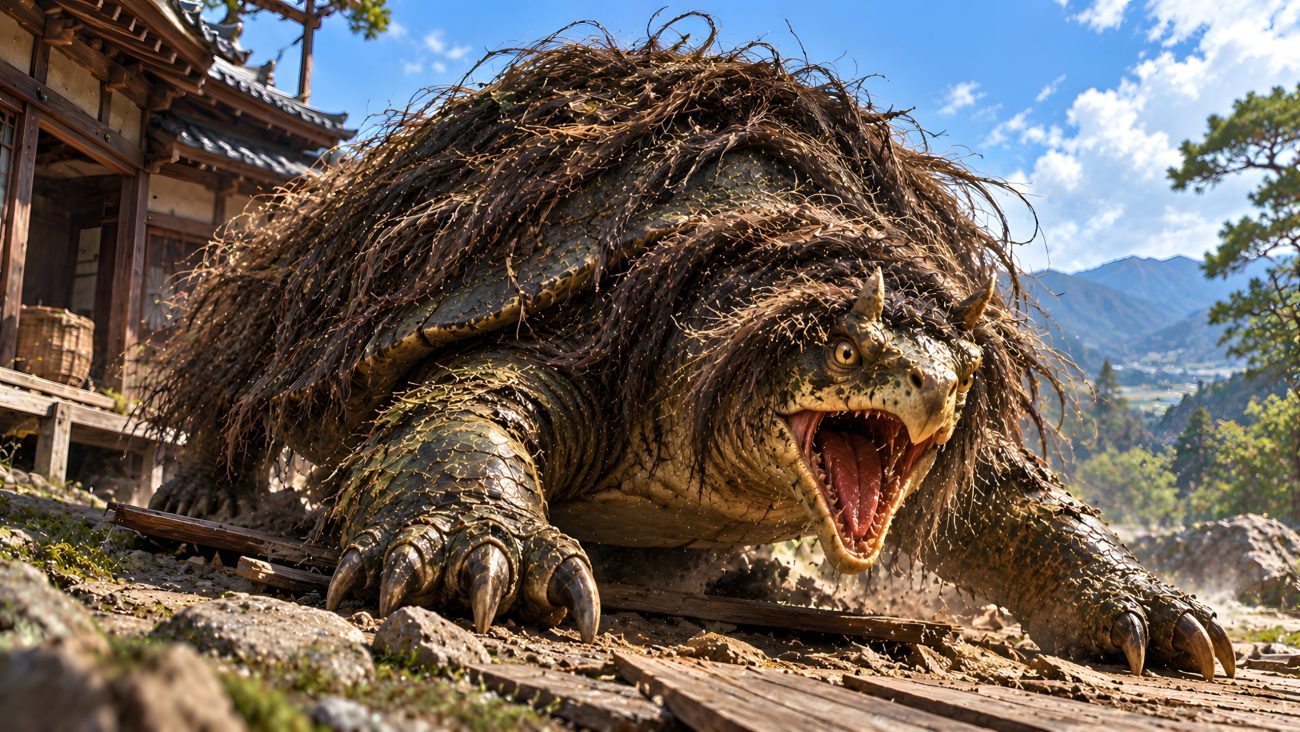
The Oketsu is a monstrous creature from folklore in Okayama Prefecture, Japan, particularly around Okayama City. It is said to sometimes be born during childbirth if proper precautions are not taken. It resembles a turtle with shaggy hair growing across its back and immediately attempts to crawl beneath the floor after birth. If it is not killed quickly, it hides beneath the birthing woman’s bed and kills her.

One tale tells of a woman from Oda District who gave birth to an Oketsu resembling a horned demon. It rushed beneath the floor as soon as it emerged. Another woman from the same district gave birth to an Oketsu in the form of a small snake. When those present attempted to kill it, the creature begged to be spared until the fifth month. It was kept in a box and continued growing larger as the days passed. When the appointed month arrived, a loud noise was heard during a heavy rainstorm, and the snake had mysteriously disappeared.


Sources

“Oketsu.” 新版TYZ 妖怪図鑑 (New TYZ Yokai Encyclopedia). https://tyz-yokai.blog.jp/archives/1067313183.html


San Zu Gui

Tradition: Chinese Mythology
Alternative Names: 三足龟, Three-Legged Turtle, Bèn
Category: Turtle


The Myth

The San Zu Gui is a legendary turtle from Chinese tradition with two legs at the front and only one at the rear. According to the Shan Hai Jing (Classic of Mountains and Seas), three-legged turtles inhabit the Kuang River, which flows southwest into the Yi River. Eating one was believed to prevent serious illness and reduce swelling.

The Erya, an ancient Chinese dictionary, gives the three-legged turtle the alternative name Bèn (贲). It also records a distinction between three-legged softshell turtles and three-legged turtles.


Sources

“三足龟 (Three-Legged Turtle).” Chinese Wikipedia. Wikimedia Foundation. https://zh.wikipedia.org/wiki/%E4%B8%89%E8%B6%B3%E9%BE%9F


Heshangyu

Tradition: Chinese Mythology
Alternative Names: , Monk Fish, Bōzufish
Category: Turtle


The Myth

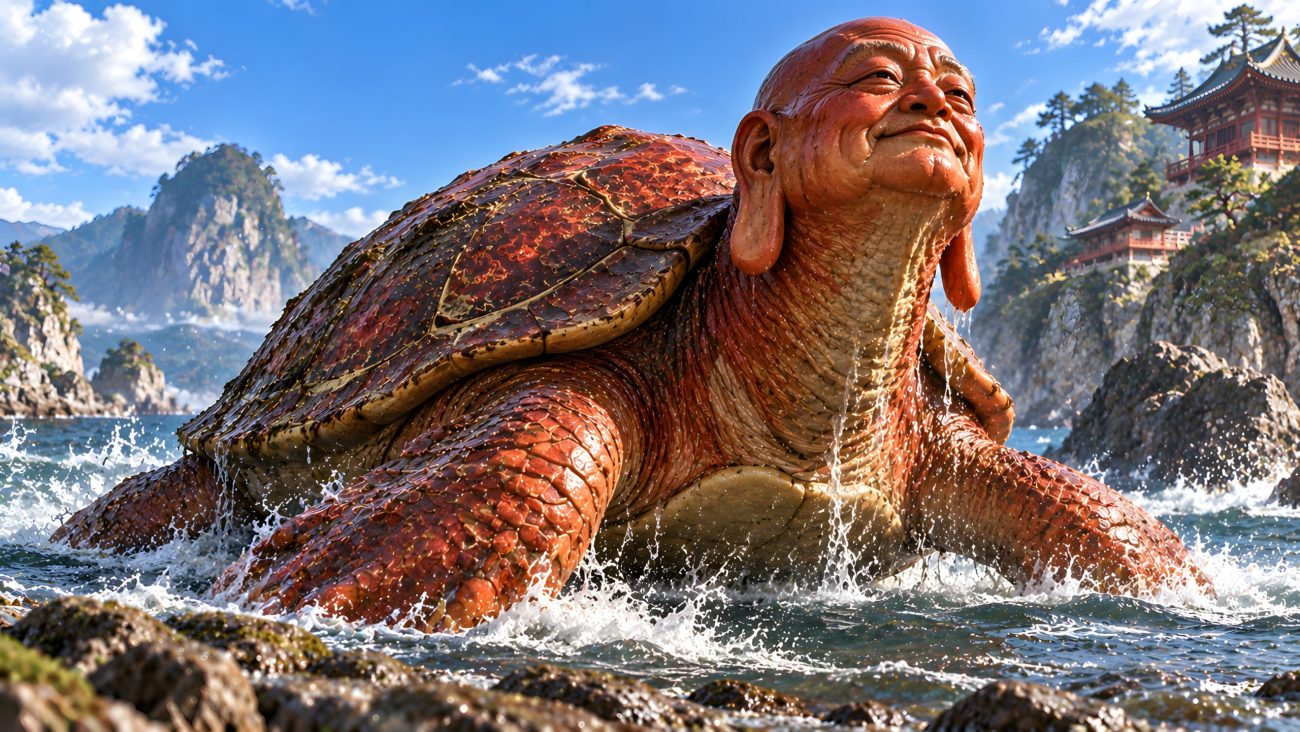
The Heshangyu is a red supernatural creature said to inhabit the East China Sea. It has the head of a Buddhist monk and the body of a turtle. The Ming dynasty illustrated work Sancai Tuhui describes it as having a monk-like head, a turtle-shaped body, and red colouring.

In the Japanese encyclopaedia Wakan Sansai Zue, Terajima Ryōan identified the Heshangyu with the Umibōzu, a supernatural sea spirit associated with Japan’s western seas. In 1709, Kaibara Ekiken’s Yamato Honzō also recorded the name Bōzufish, although it provided little additional description.

The folklorist Kenji Murakami suggested that the creature may have originated from people interpreting sea turtles as supernatural beings.


Sources

“和尚鱼 (Héshàng yú).” Chinese Wikipedia. Wikimedia Foundation. https://zh.wikipedia.org/wiki/%E5%92%8C%E5%B0%9A%E9%B1%BC


Suppon

Tradition: Japanese Mythology
Alternative Names: Suppon, 泥亀, Softshell Turtle
Category: Turtle


The Myth

The Suppon, or Japanese softshell turtle, was regarded as a supernatural creature in various parts of Japan. It was sometimes associated with the Kappa and was believed in places such as Kyoto and Hyōgo to drag people underwater. The Suppon was also known for its vengeful nature, and many tales describe it taking revenge on those who mistreated it.

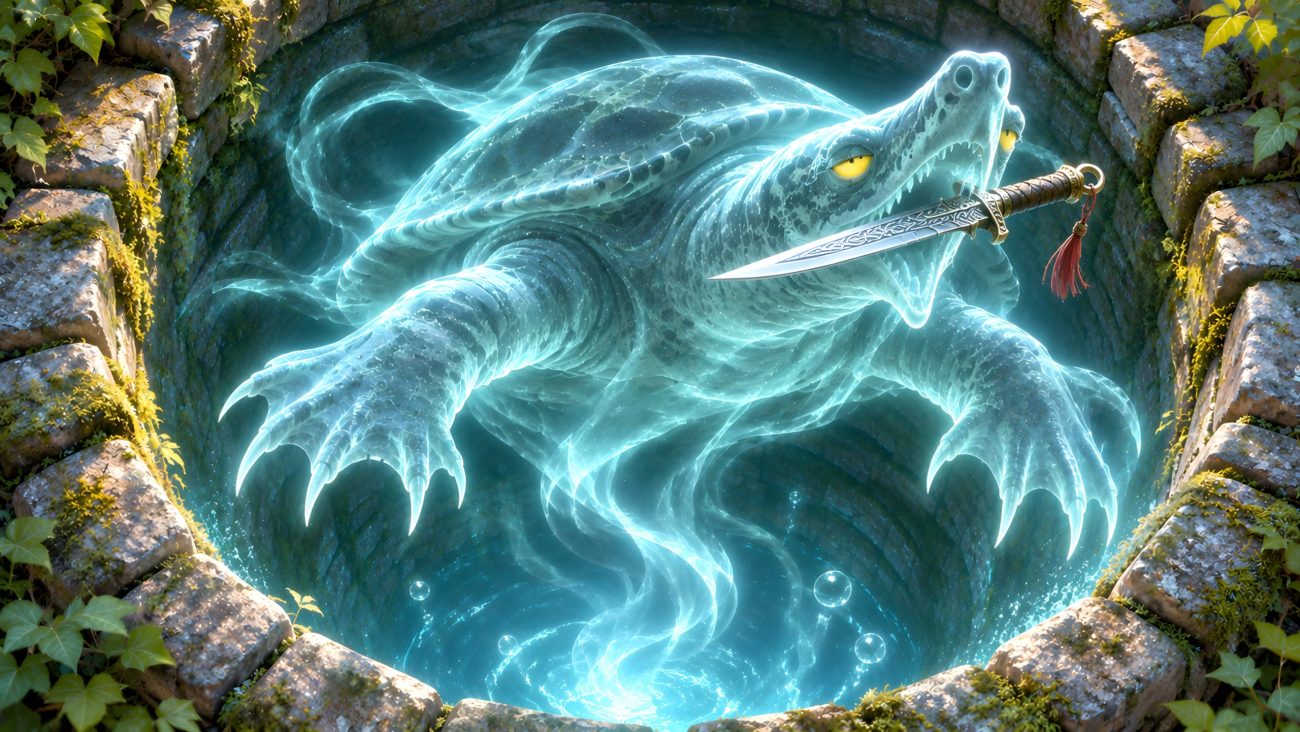
One story tells of a turtle seller in Sakai, Senshū, who accidentally dropped his knife into a well while preparing to butcher a Suppon. He jokingly promised to spare its life if it retrieved the knife. The turtle descended into the well and returned with the knife in its mouth. However, the man immediately broke his promise and cut off its head. The severed head clamped onto his neck and refused to let go, eventually biting him to death.

Another tale tells of Seisuke, a man from Yōida village in Tajima, who caught a large Suppon during the Tenmei era. While attempting to kill it near a temple pond, he dropped his knife into the water and promised to spare the turtle if it retrieved the weapon. The Suppon returned with the knife, but Seisuke killed it anyway and held a drinking feast with its meat. During the meal, he felt something caught in his throat, which developed into severe pain. After nine days, he died raving mad.


Sources

“Suppon.” 新版TYZ 妖怪図鑑 (New TYZ Yokai Encyclopedia). https://tyz-yokai.blog.jp/archives/1010654250.html


Kimyōja

Tradition: Japanese Mythology
Alternative Names: 奇妙蛇, Strange Snake, Deformed Snake
Category: Turtle


The Myth

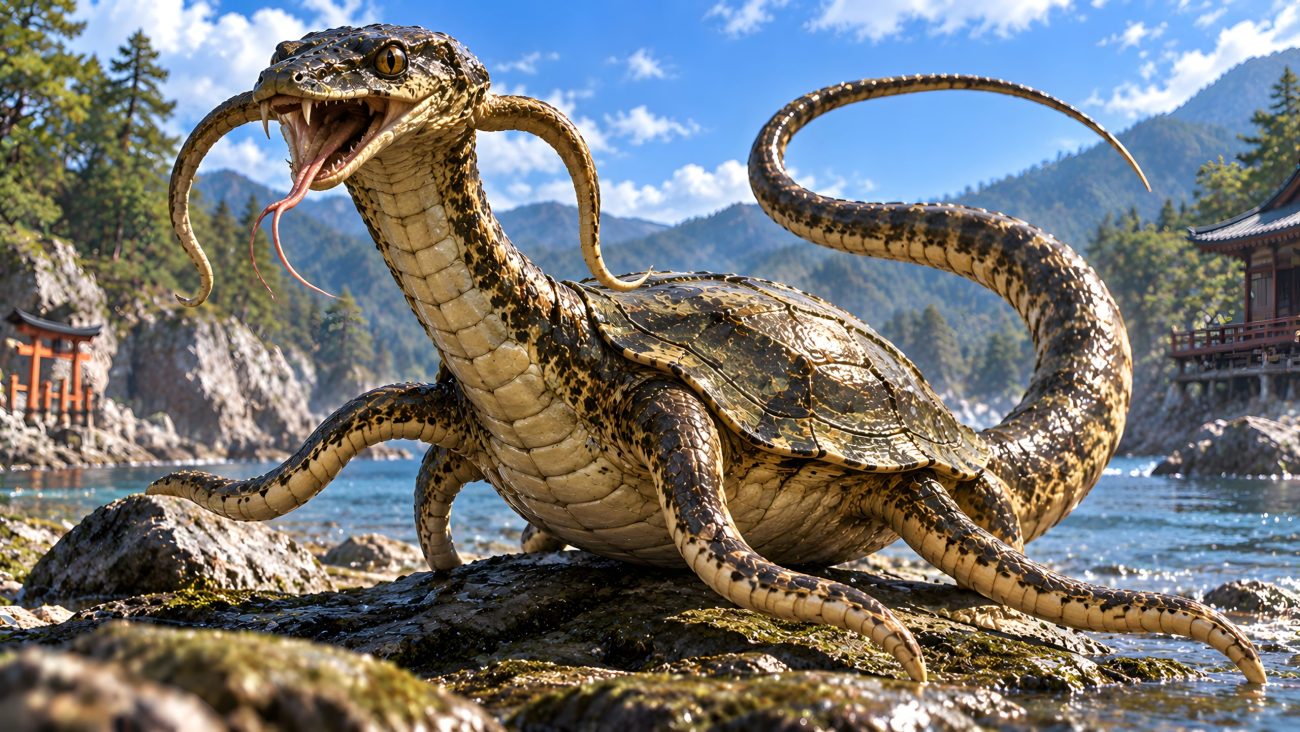
The Kimyōja was a strange snake captured in 1906 in Shichigahama Village, Miyagi District, Miyagi Prefecture, Japan, by a man named Kan tarō Satō. Its body measured approximately two inches long and one inch wide, while its tail measured seven inches. It was covered in snake scales, and the undersides of its body and tail had the segmented appearance of a snake’s belly.

The creature had unusual appendages: tail-like growths on both sides of its neck and additional limb-like tails extending from either side of its body. Local residents speculated that it might be a hybrid between a softshell turtle and a snake. Newspaper reports stated that it remained alive after being captured. The creature was reported under different headlines, including “Kimyōja” in Shin Aichi, “Deformed Animal” in the Yomiuri Shimbun, and “Strange-Shaped Snake” in the San’in Shimbun.


Sources

“Kimyoja.” 新版TYZ 妖怪図鑑 (New TYZ Yokai Encyclopedia). https://tyz-yokai.blog.jp/archives/1010654251.html


Shōgorō

Tradition: Japanese Mythology
Alternative Names: 鉦五郎, Gong-goro, Ghost Gong
Category: Turtle


The Myth

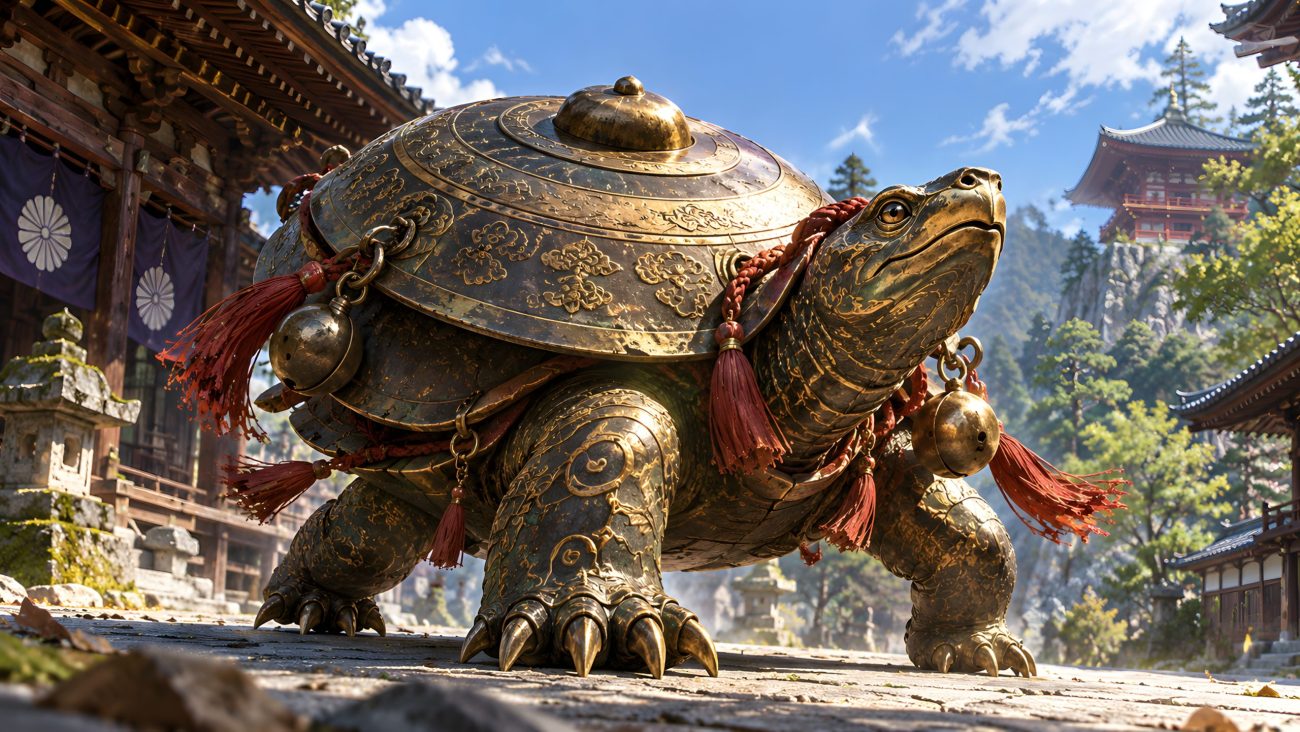
The Shōgorō is a type of tsukumogami, a spirit inhabiting an old household object. It forms when a neglected Buddhist gong called a shōgo, a small, bowl-shaped metal instrument struck with a mallet during religious services, becomes old and worn. The Shōgorō resembles a metal turtle and wanders around at night, striking its body and ringing out its notes. It is generally harmless, although its nighttime noises can disturb people’s sleep.

The creature’s name combines shōgo, meaning gong, with gorō, a common element in boys’ names. It can also be interpreted as a combination of shōgo and goryō, referring to the ghost of a noble or aristocrat.

One legend connects the Shōgorō to Yodoya Tatsugorō, a wealthy Osaka merchant whose family fortune was confiscated by shogunate officials in the early eighteenth century. Tatsugorō lost his possessions, including his beloved golden chicken, and died from grief. Unable to pass on, his spirit attempted to attach itself to the golden chicken but became confused by the similar Japanese readings of “gong” and “golden.” Instead, it entered a nearby Buddhist gong, which became a Shōgorō.


Sources

“Shōgorō.” Yokai.com. https://yokai.com/shougorou/


Yù

Tradition: Chinese Mythology
Alternative Names: 蜮, Duǎnhú (短狐)
Category: Turtle


The Myth

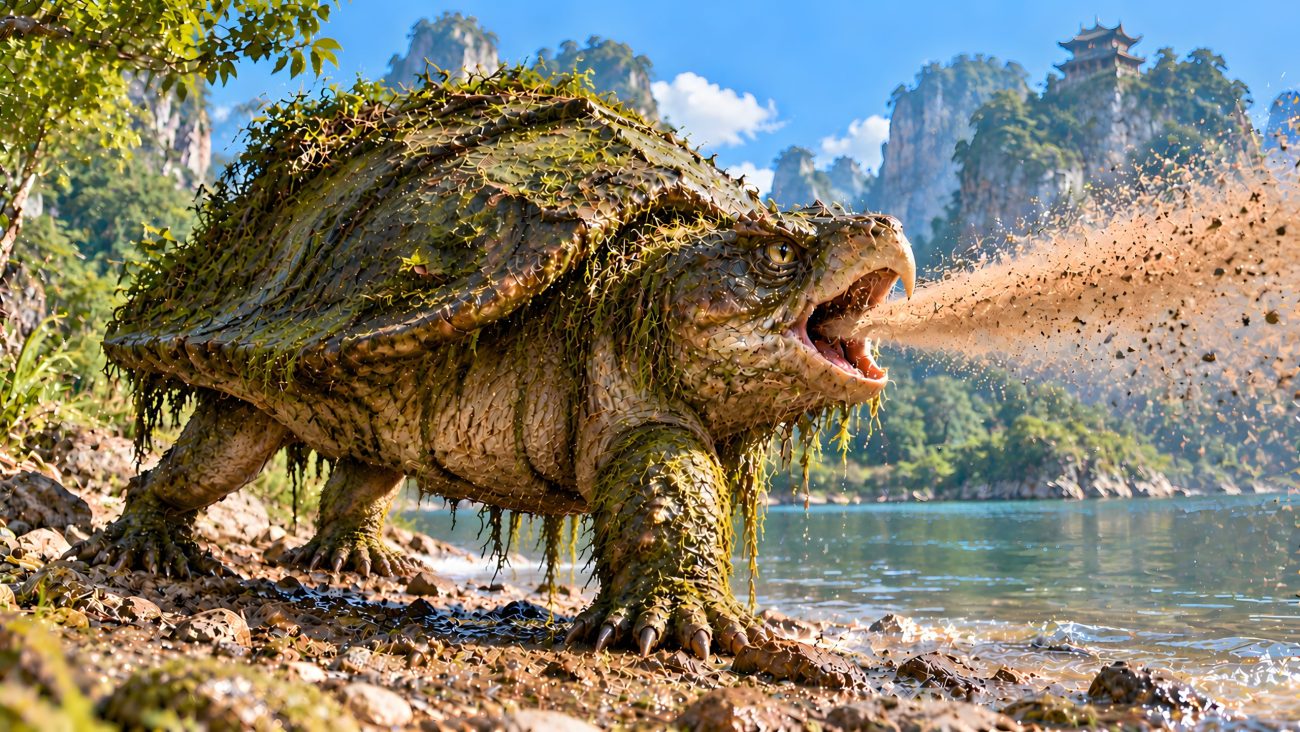
The Yù is a dangerous supernatural creature from Chinese mythology, also known as the Duǎnhú, or Short Fox. It resembles a turtle or soft-shelled turtle, with a strange and threatening nature that makes it feared by those who encounter it. Despite its turtle-like appearance, the Yù possesses a deadly supernatural ability that allows it to attack people from a distance.

The Yù attacks by taking sand into its mouth and shooting it at its victims. Anyone struck by this supernatural sand may suffer violent muscle spasms, severe headaches, and fever. The creature’s attack can cause increasingly serious illness, and those afflicted may die if the effects are severe enough. The Yù is therefore feared as a hidden menace capable of inflicting deadly harm without directly biting or clawing its prey.


Sources

“蜮 (Yù).” Chinese Wikipedia. Wikimedia Foundation. Accessed October 12, 2026. https://zh.wikipedia.org/wiki/%E8%9C%AE


Velue

Tradition: French Mythology
Alternative Names: Velue, Peluda, “The Shaggy One,” “The Hairy One”
Category: Dragon, Turtle


The Myth

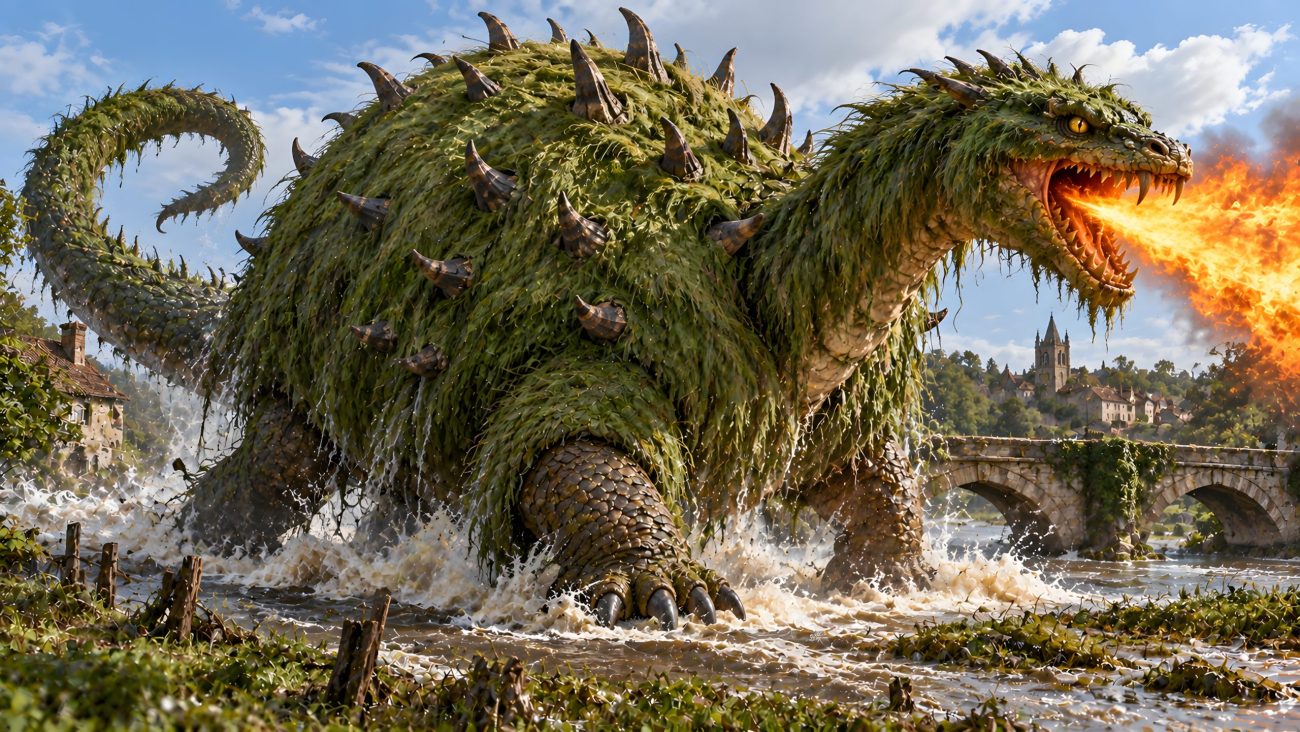
The Velue, whose name means “the shaggy one” or “the hairy one,” was a monstrous dragon said to haunt the Huisne River near La Ferté-Bernard in the Sarthe. Its body was enormous and egg-shaped, roughly the size of a large ox, and covered entirely in shaggy green fur. Sharp spikes protruded from its hairy hide, while its head resembled that of a terrifying serpent. Its immense legs were compared to those of a tortoise, and behind it dragged a powerful serpentine tail capable of killing a man or beast with a single sweep.

The Velue was said to have survived the biblical Flood after being overlooked by Noah. Having escaped the destruction of the world, the creature supposedly carried a grudge against creation and devoted the rest of its existence to destruction and spite.

It breathed fire and laid waste to farms, fields, and crops around the Huisne. Flocks of sheep disappeared down its enormous jaws, with their shepherds sometimes following them as the dragon’s dessert. Walls and moats offered little protection. The Velue was bold enough to enter the streets of the old city itself, terrifying the inhabitants and spreading destruction wherever it went.

Whenever people tried to drive it away, the monster retreated into the Huisne. Its gigantic body displaced so much water that the river overflowed its banks, flooding the surrounding countryside and ruining the fields. The dragon could therefore destroy the land whether it was upon the riverbank or beneath the water.

Women and children were said to be among the Velue’s favorite prey, and it possessed a particular appetite for agnelles, the “she-lambs” of the land—the beautiful and virtuous young women of La Ferté-Bernard. This taste eventually brought about its downfall.

After the Velue seized a young maiden and devoured her, her fiancé set out in pursuit of the monster. He followed its trail to its lair beneath an ivy-covered bridge over the Huisne. There he confronted the beast and struck at its vulnerable tail with his weapon. The blow killed the Velue instantly, bringing an end to the creature that had terrorized the countryside. Its death was celebrated throughout the region.

The story belongs to the tradition of French local dragons such as the Tarasque. Its surviving form is relatively recent: its foundations appear to reach back to the fifteenth century, while the tale was revived and considerably expanded during the nineteenth century. It never developed the major festivals or fixed iconographic traditions associated with some better-known French dragons, although a terracotta fountain sculpture dating from the seventeenth or eighteenth century, discovered in a ditch along the road to La Chapelle-Saint-Rémy, is considered the oldest surviving depiction associated with the Velue.

The association between the Velue and the word agnelles may itself preserve an older local joke. During the sixteenth century, La Ferté-Bernard sided with the Catholic League during the wars of Henri IV. Its governor, Dragues de Comnène, claimed descent from eastern kings and was known for his cunning. During a siege commanded by René de Bouillé, he sent soldiers out of the city disguised as women. The deception nearly succeeded when some of the besiegers approached the apparent damsels gallantly, only to discover that they were walking into an ambush. René de Bouillé’s forces eventually drove the disguised soldiers away, and the incident delighted Henri IV. It gave rise to jokes about the “agnelles de la Ferté“—the “she-lambs of La Ferté”—of whom, as the saying went, only two were needed to strangle a wolf.

The creature is sometimes called Peluda, but this name is a later Spanish rendering of the French Velue. Its popularity as a name for the monster owes much to Jorge Luis Borges, and it is not an original Occitan name for the dragon.


Sources

“Velue.” A Book of Creatures. January 18, 2019. https://abookofcreatures.com/2019/01/18/velue/