Ly Erg

Tradition: Scottish Mythology
Alternative Names: Ly-erg
Category: Fairy


The Myth

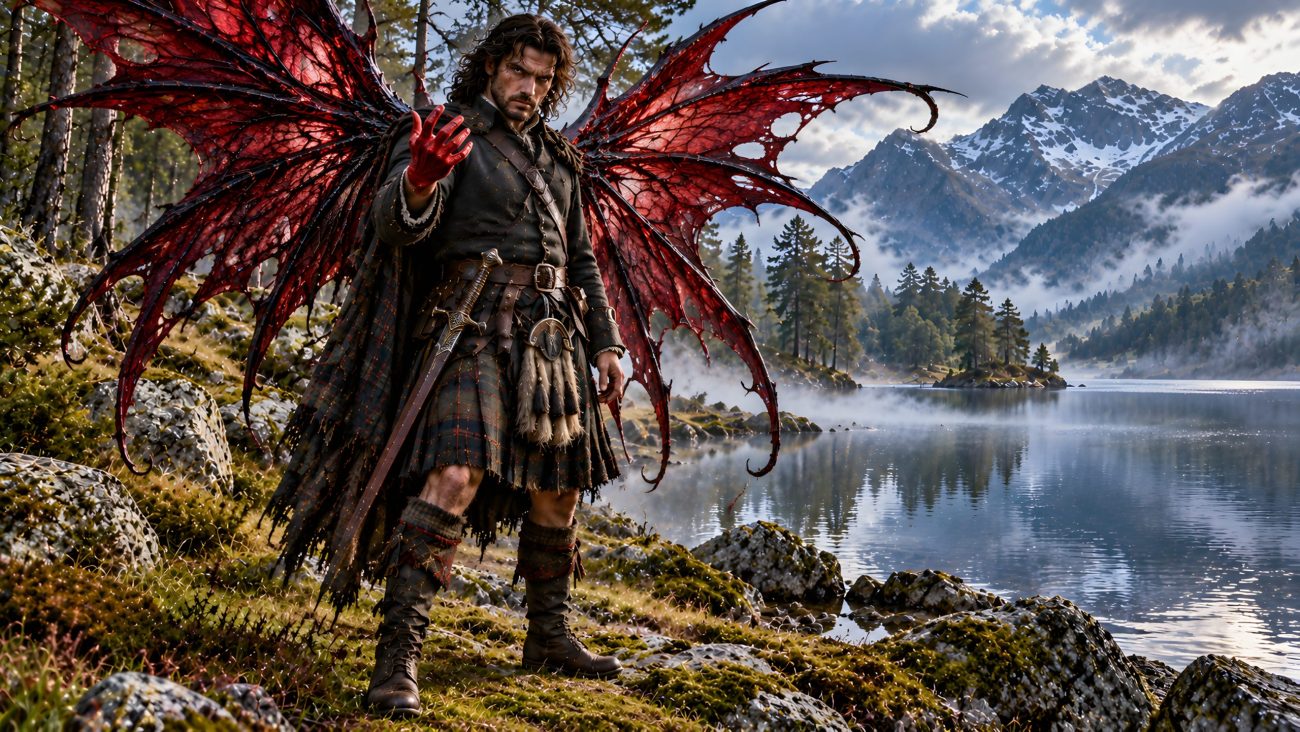
The Ly Erg is a dangerous fairy of Scottish folklore, particularly associated with the Glenmore Forest. It appears dressed as a soldier and can scarcely be distinguished from an ordinary human warrior, except for its right hand, which is permanently red as though stained with the blood of its victims. While wandering through the countryside, the Ly Erg approaches bodies of water and waits for travelers to pass.

When someone comes near, the creature raises its red right hand and challenges them to single combat. The challenge is impossible to survive: anyone who accepts and fights the Ly Erg will die within a fortnight, regardless of whether they defeat the fairy or are defeated themselves. The red hand is therefore a warning of the fate awaiting anyone who accepts its challenge.

One tale tells of three brothers who encountered the Ly Erg and chose to fight it. All three engaged the supernatural warrior in combat, and each died immediately after the encounter. The Ly Erg consequently became a terrifying figure of the Scottish wilderness, appearing like an ordinary soldier until its blood-red hand reveals the supernatural danger behind its challenge.


Sources

“Ly Erg.” Wikipedia: The Free Encyclopedia. Wikimedia Foundation. Accessed October 5, 2026.
https://en.wikipedia.org/wiki/Ly_Erg


Spaewife

Tradition: Scottish Mythology
Alternative Names: Spaewife, Spae-wife, Spey-wife
Category: Fairy


The Myth

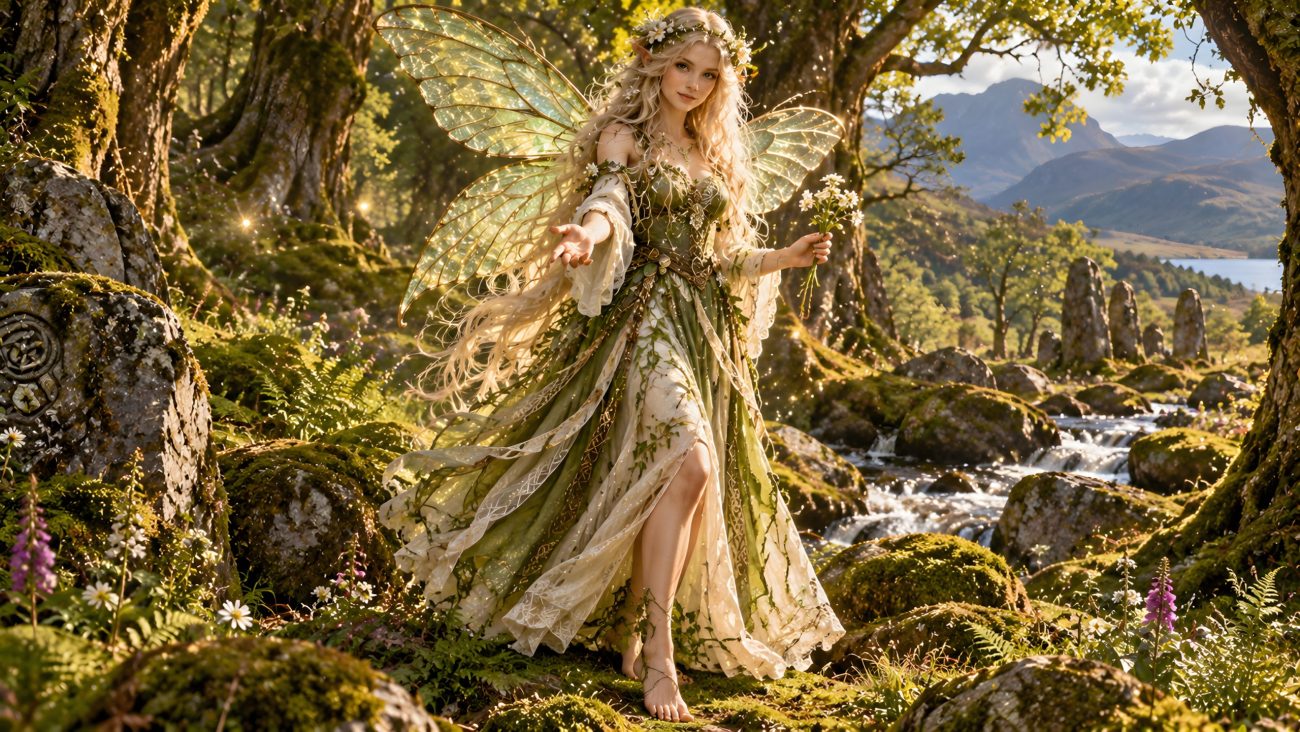
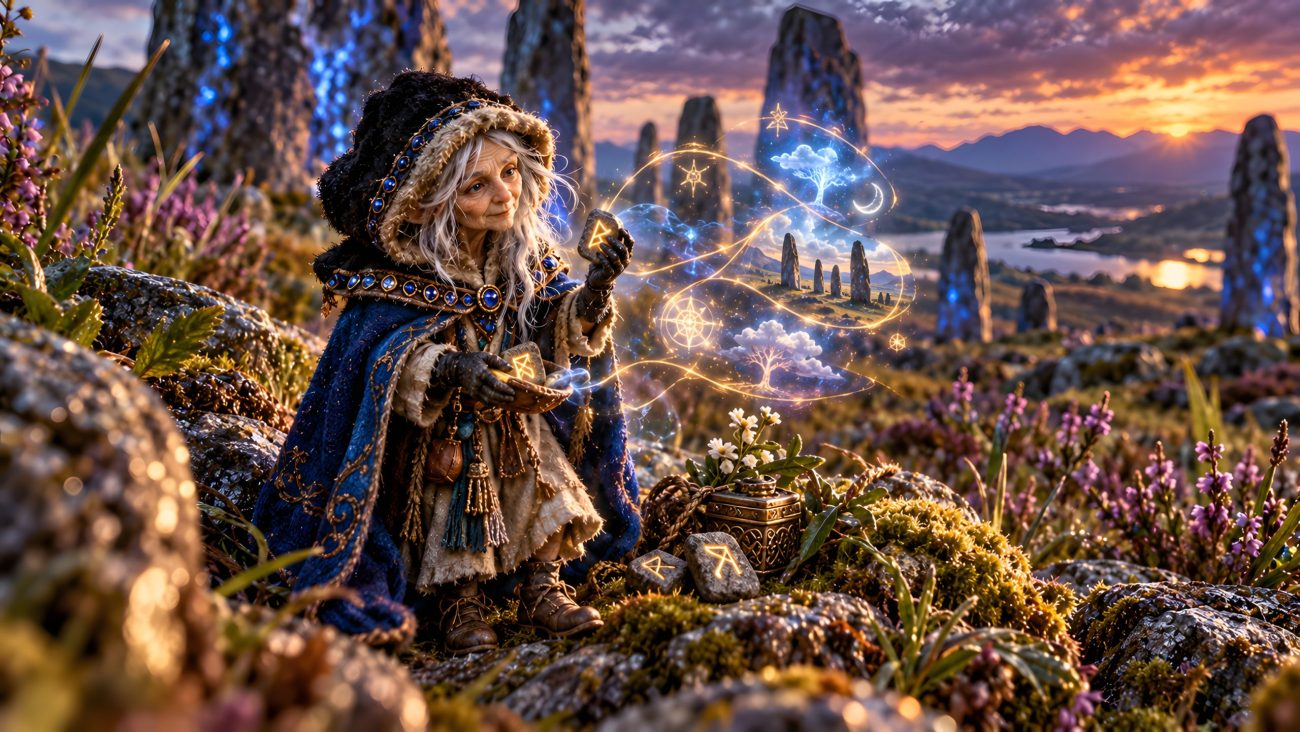
The fairy Spaewives were tiny supernatural women, no taller than a human finger, who were said to possess the gift of prophecy. They usually dressed like ordinary peasant women, but when properly summoned their appearance became magnificent. Their humble clothing was transformed into a blue cloak with a gem-lined collar, a black lambskin hood lined with catskin, calfskin boots, and catskin gloves. They were also skilled healers and could perceive the future through runes, tea leaves, and signs revealed by natural phenomena.

The Spaewives were believed to descend from the supernatural beings who erected the ancient standing stones. Their prophetic abilities therefore belonged to an old and mysterious tradition connected with the landscape and its ancient monuments. Like human fortune-tellers who bore the same name, they could reveal what was yet to come, but their supernatural nature made their knowledge and healing abilities part of the hidden fairy world.

The name Spaewife was also used for human female fortune-tellers in Scots, but the fairy Spaewife was a distinct little supernatural being. She combined the roles of seer and healer with the mysterious powers of an elf, appearing as an insignificant peasant woman until called upon to reveal her true magical nature.


Sources

“Spey-wife.” Wikipedia: The Free Encyclopedia. Wikimedia Foundation. Accessed October 5, 2026. https://en.wikipedia.org/wiki/Spey-wife


Ghillie Dhu

Tradition: Scottish Mythology
Alternative Names: Gille Dubh
Category: Fairy


The Myth

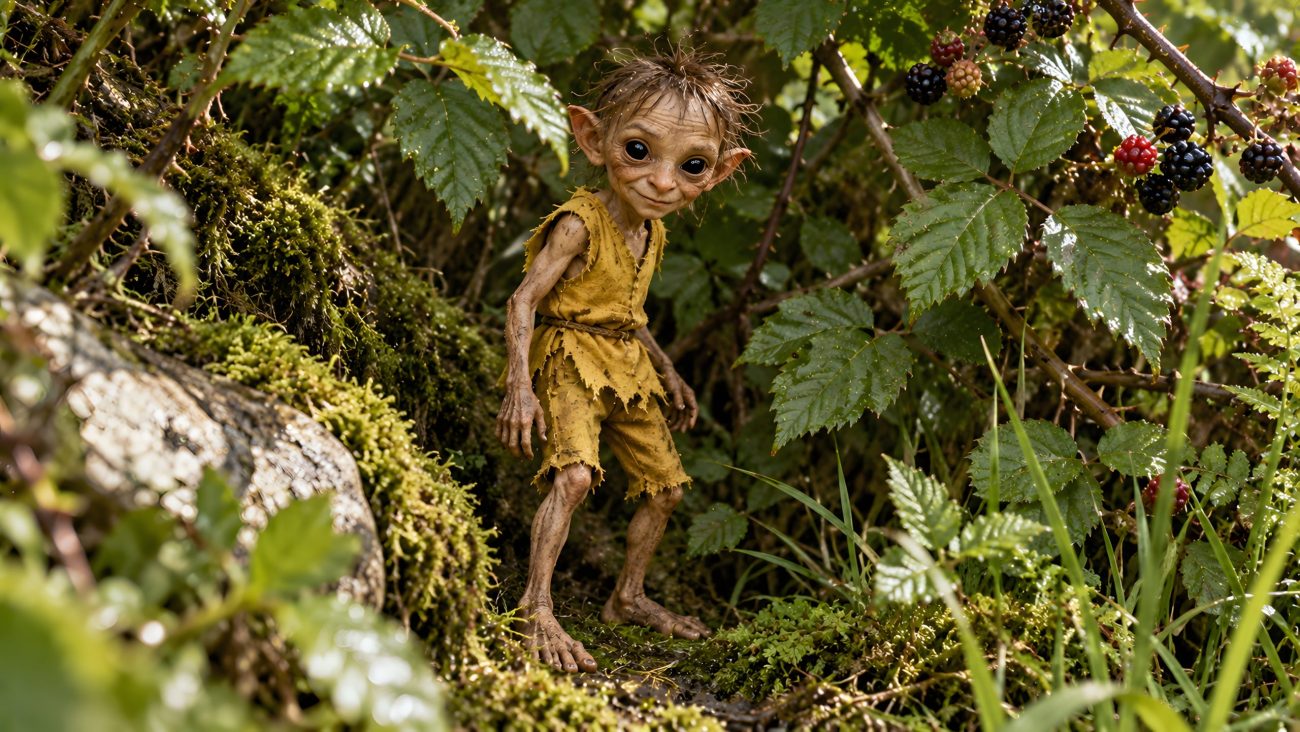
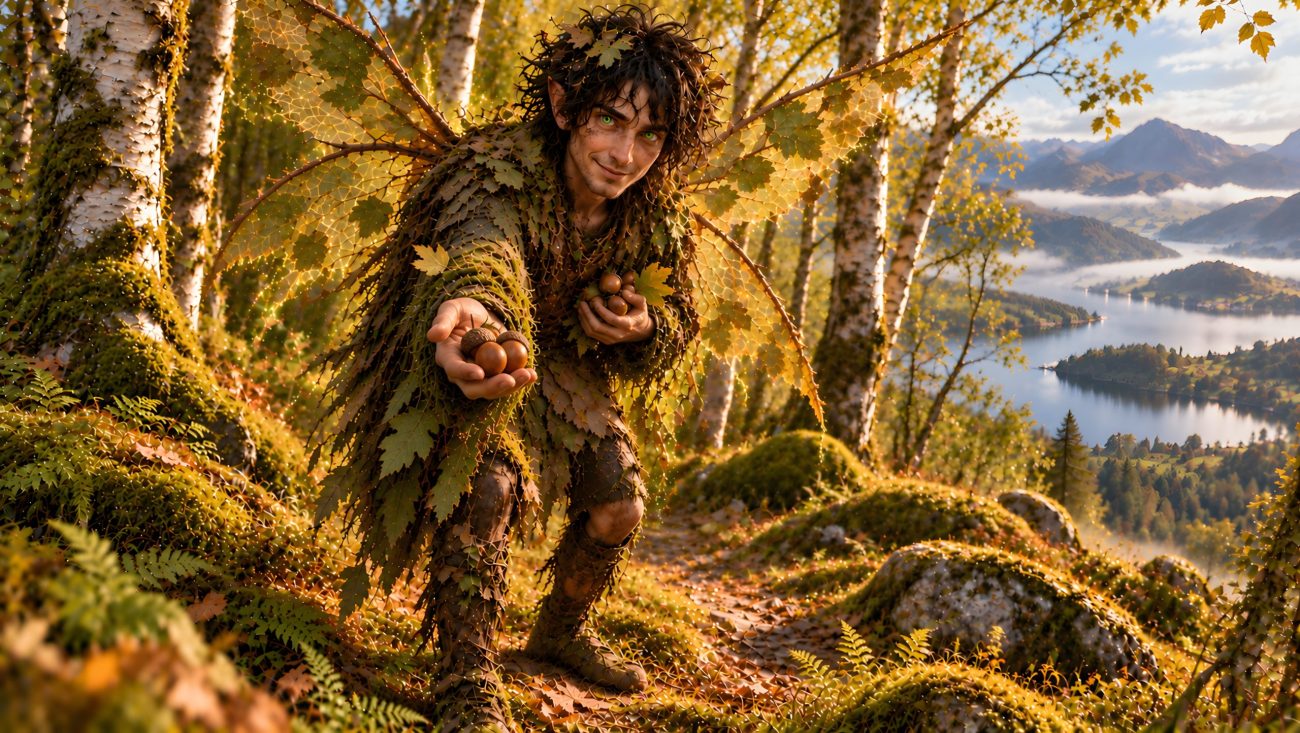
The Ghillie Dhu was a solitary male fairy who lived in a birch wood near Loch an Draing in the north-west Highlands around Gairloch. He was a small, dark-haired and disheveled figure, with black hair and a wild appearance. Rather than wearing ordinary clothing, he covered himself in leaves and green moss taken from the surrounding trees, making him almost indistinguishable from the forest. Although timid and sometimes wild, he was generally regarded as a gentle and kind-hearted nature spirit who fiercely protected his woodland home from outsiders. He was particularly fond of children and was known to treat them with remarkable kindness.

The best-known encounter involved a girl named Jessie Macrae, who wandered into the birch woods and became lost as the sun went down. Her frightened sobs attracted the Ghillie Dhu, who came to comfort her. He either guided her safely home before darkness fell or remained with her through the night and brought her back the following morning. Over the following decades, many people reportedly saw the strange fairy in the woods, but Jessie was the only person known to have spoken with him.

Eventually, Sir Hector Mackenzie of Gairloch decided that the Ghillie Dhu was a threat and organized a hunt to capture him. Five Mackenzie dignitaries searched the woods throughout the night, but despite their efforts they could not find him. After that unsuccessful hunt, the Ghillie Dhu was reportedly never seen again. His story remained that of a solitary forest fairy who lived among the birches, feared outsiders but showed gentleness toward those who were vulnerable, especially children.


Sources

“Ghillie Dhu.” Wikipedia: The Free Encyclopedia. Wikimedia Foundation. Accessed October 5, 2026.
https://en.wikipedia.org/wiki/Ghillie_Dhu


Seelie

Tradition: Scottish Mythology
Alternative Names: Seely, Seelie Wights, Seilie Wichts, Seelie Court
Category: Fairy


The Myth

The Seelie were a host of fairy beings in Scottish folklore, associated with good fortune, blessing, and happiness. They could appear as supernatural nature spirits or as groups of fairies gathering together in courts and troupes. Despite their favourable name, the Seelie were not entirely benevolent. They could help humans who treated them well, warn people who accidentally offended them, and repay kindness with supernatural favours, but they could also become mischievous or seek revenge when insulted. Their name itself could therefore serve as a protective expression, describing them as “blessed” or “good” in the hope of avoiding their anger.

The Seelie Court was regarded as the gathering of the more friendly and less malicious fairies. Its members might approach humans for assistance, reward those who helped them, or intervene on behalf of people they favoured. Their goodwill, however, was conditional. A person who offended a Seelie being could expect punishment or retaliation, even though the creature belonged to the supposedly benevolent court. The Seelie therefore occupied an uncertain position between kindness and danger: they were capable of generosity and friendship, but demanded that humans respect them and their customs.

The Seelie stood in contrast to the darker fairy beings associated with the Unseelie Court, whose members were described as more hostile and capable of attacking humans without provocation. Scottish ballads preserve both sides of the Seelie tradition. In “Allison Gross,” the Seelie Court appears as a benevolent supernatural power, while a fragmentary version of “Tam Lin” presents them in a more threatening light. Thus, the Seelie were not simply “good fairies,” but a supernatural community whose favour could bring help and fortune while whose displeasure could bring mischief and punishment.


Sources

“Yallery Brown.” Wikipedia: The Free Encyclopedia. Wikimedia Foundation. Accessed October 4, 2026. https://en.wikipedia.org/wiki/Yallery_Brown


Bruni

Tradition: Scottish Mythology
Alternative Names: Broonie, Broonie
Category: Fairy


The Myth

Bruni is a type of brownie from the Lowlands of Scotland. The creature belongs to the tradition of small supernatural household beings known for their association with human homes and domestic life.

The name Bruni is given as a variant spelling of Broonie, the original form of the name for this Lowland Scottish brownie. A traditional rhyme associated with the creature warns of its arrival: “Ha! Ha! Ha! Bruni will take you!” Beyond this brief reference, the surviving source provides no further details about Bruni’s appearance, behavior, or particular legends.


Sources

“Bruni.” New Bestiary (Bestiary.us). Accessed October 4, 2026. https://www.bestiary.us/bruni


Beast of the Charred Forests

Tradition: Scottish Mythology
Alternative Names: Beast of the Charred Forests, Beast’s Stone Dragon
Category: Dragon


The Myth

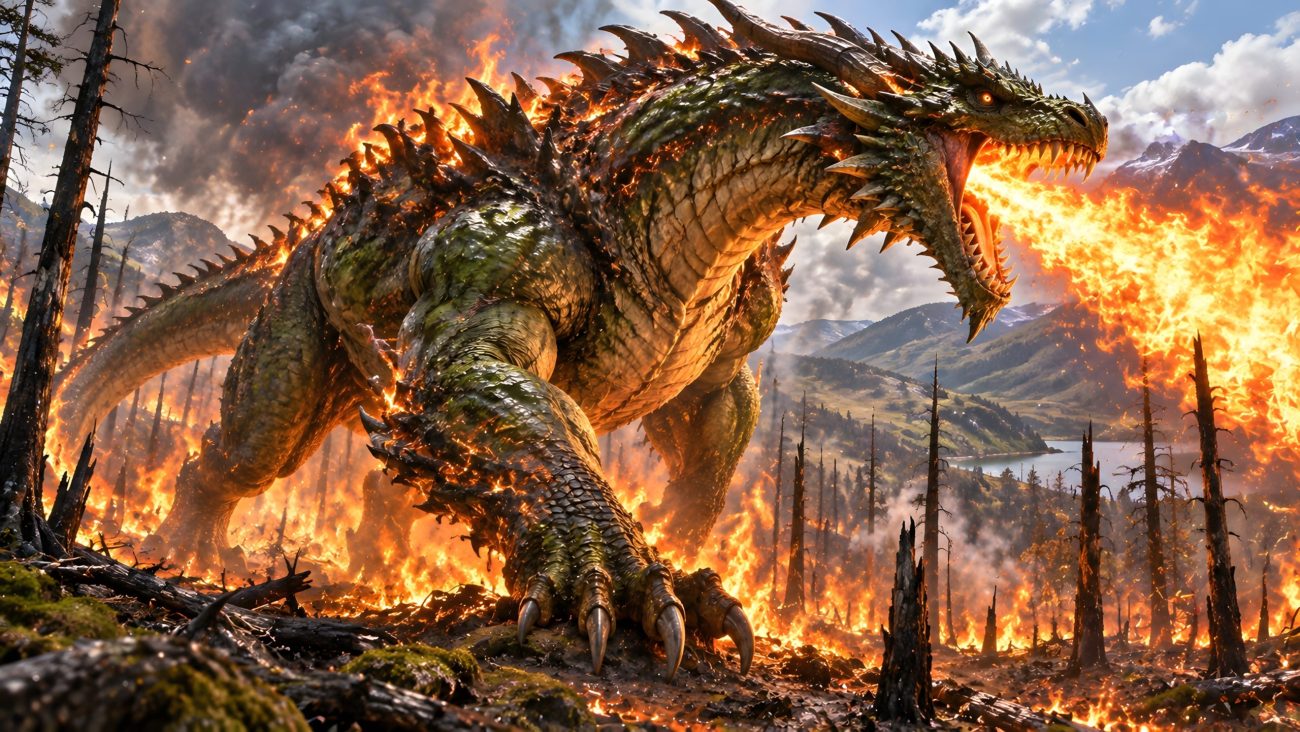
The Beast of the Charred Forests was a terrifying and powerful dragon born from a fire that burned for seven years. It lived within fire and wandered across northern Scotland, breathing flames and burning the forests wherever it went.

Whenever people heard that the Beast was approaching, they abandoned their villages to escape its wrath. It could only be killed by a person who saw the Beast before the Beast saw them.

The Beast eventually came upon St. Gilbert’s Church in Dornoch. Before its arrival, Saint Gilbert had dug a hole and hidden himself so that he could see the monster before it noticed him. When the Beast approached, it roared, “Pity on you, Dornoch!”

Saint Gilbert emerged from his hiding place armed with a bow and arrows and repeated the Beast’s own words to it: “Pity on you, Dornoch!” The Beast prepared to breathe fire upon Dornoch, but before it could do so, Saint Gilbert fired his first arrow. The arrow pierced the Beast and killed it immediately.

The Beast was buried on the moor between Dornoch and Skibo, and a stone known as the Beast’s Stone was placed over its grave. The charred pine stumps found beneath the peat moss of Ross, Sutherland, and Reay were said to be evidence of the devastation caused by the Beast.


Sources

“Beast of the Charred Forests.” A Book of Creatures. January 22, 2021.
https://abookofcreatures.com/2021/01/22/beast-of-the-charred-forests/


White Cow of Lewis

Tradition: Scottish mythology
Alternative Names: Bu-Vinda
Category: Cow


The Myth

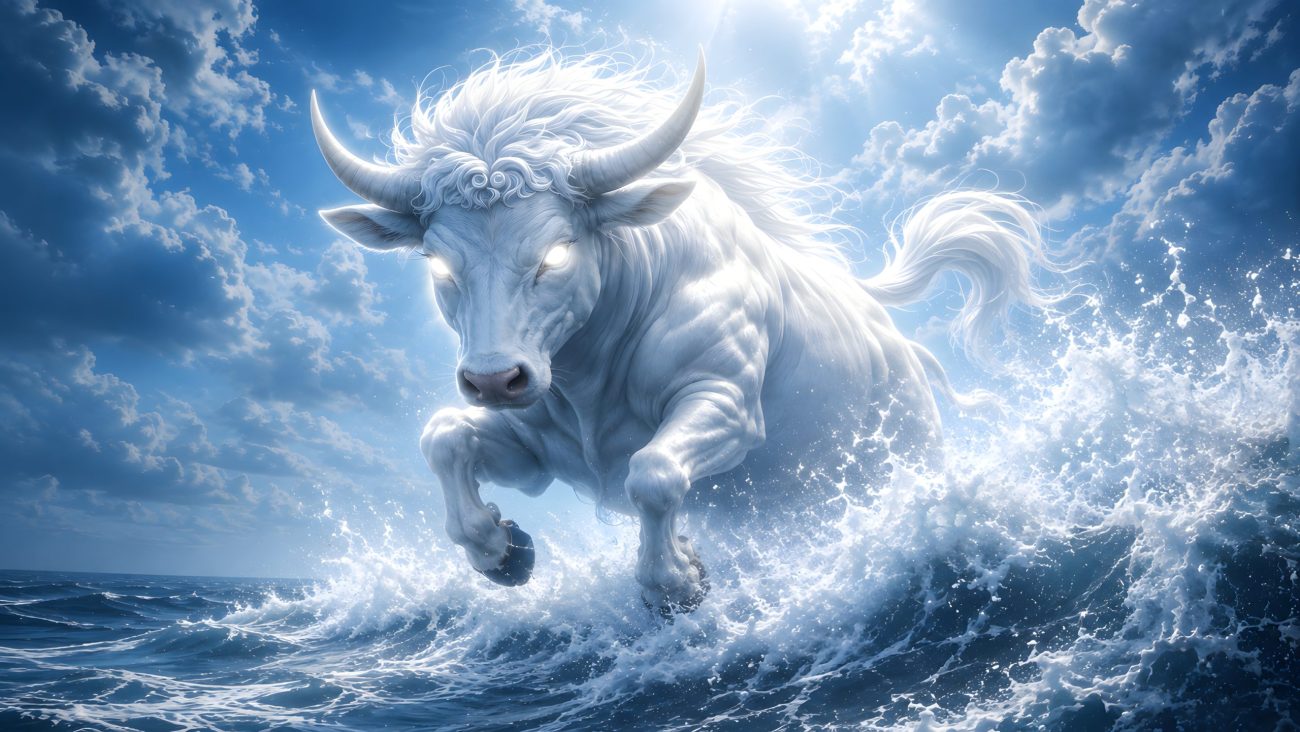
The White Cow of Lewis is a supernatural cow with pure white hair that shines in the moonlight. It can speak like a human being and possesses a miraculous supply of nourishing milk. It is later revealed to be a beautiful woman known as Bu-Vinda, who says that she has many names and is associated with Dagda and Aengus.

During a harsh winter famine on the Isle of Lewis, the harvest had failed and the islanders’ food supplies were running dangerously low. Many people had already been forced to slaughter their cows for food, leaving them without the milk and cheese they depended upon. The people gathered together what remained of their supplies and agreed to share them equally, but the elders soon realized that the food would last only about two weeks, while the growing season was still a month away.

Desperate, the elders led the people to the standing stones, where they prayed to the gods for help and offered special tribute to the father god associated with fertility and the land, whom some called Dagda. As they returned to the village that evening, a storm appeared to be approaching.

Aine, who had been forced to sacrifice her own cow during the famine, noticed something moving near the shore. One of the elders warned her to return home before the storm arrived, but she slipped away and ran toward the sea.

A sudden wind threw Aine onto her back. When she looked up again, the storm had mysteriously vanished. Standing only a few feet away from her was a magnificent white cow, its pure hair shining beneath the moonlight.

The cow spoke to her and told her that it had been sent to help the islanders in their time of need.

Aine led the strange creature back toward the village, where the astonished islanders gathered around it. The White Cow then explained that it had come to help them survive the famine. Each person could receive a pail of milk every day for as long as necessary, and because the milk was a gift from the gods, it would provide all the nourishment they required.

One of the younger elders remained suspicious and asked how they could know that the creature was truly a gift from the gods rather than something evil. The cow told them to meet it at the standing stones at first light. It would fulfill its promise there, and Aine could drink the milk herself to prove that it was genuine.

At first light, Aine stood beside the standing stones with her pail and drank the fresh milk. Her hunger immediately disappeared, and she felt stronger than she had ever felt before.

The other islanders then lined up and received their milk. Each person found that the milk completely satisfied their hunger. Day after day, the White Cow continued to provide its miraculous nourishment, allowing the islanders to survive.

On the final day, the widow who lived in the north came to receive her share. Unlike the others, she was known for keeping herself apart from the community. When she bent down to milk the cow, she placed a sieve beneath it instead of a pail.

The sieve could never become full, and therefore the cow could not fulfill its promise. It realized that the woman was deliberately tricking it and declared that she was a witch who had depleted its strength. Since the pail could not be filled, the cow could provide no more.

The White Cow then told Aine that the islanders had already received enough nourishment to survive the remaining two weeks of winter. They would not starve.

The creature ran toward the ocean and leapt into the sea, disappearing from sight.

That night, Aine saw the White Cow transform into a beautiful woman. The woman thanked her for her help and apologized for having to leave.

When Aine asked who she was, the woman replied that some called her Bu-Vinda, although she had many names. She said that some also knew her as the partner of Dagda and the mother of Aengus, but that she had been many things to many people. To the people of Lewis, she said, she would simply be remembered as the White Cow.

The islanders survived the winter. Soon the crops were growing again, animals emerged from their burrows, lambs were born, fish became plentiful, and food once again filled the islanders’ tables. The White Cow eventually became only a whisper of a legend, but the people remembered the mysterious creature that had appeared from the sea and given them the nourishment they needed to survive.


Sources

White, David. “The White Cow of Lewis.” Folklore Scotland. Accessed August 30, 2026. (folklorescotland.com)
https://folklorescotland.com/the-white-cow-of-lewis/
Tarbh Uirge

Tradition: Scottish Mythology
Alternative names: Tarbh Uirge
Category: Cow


The Myth

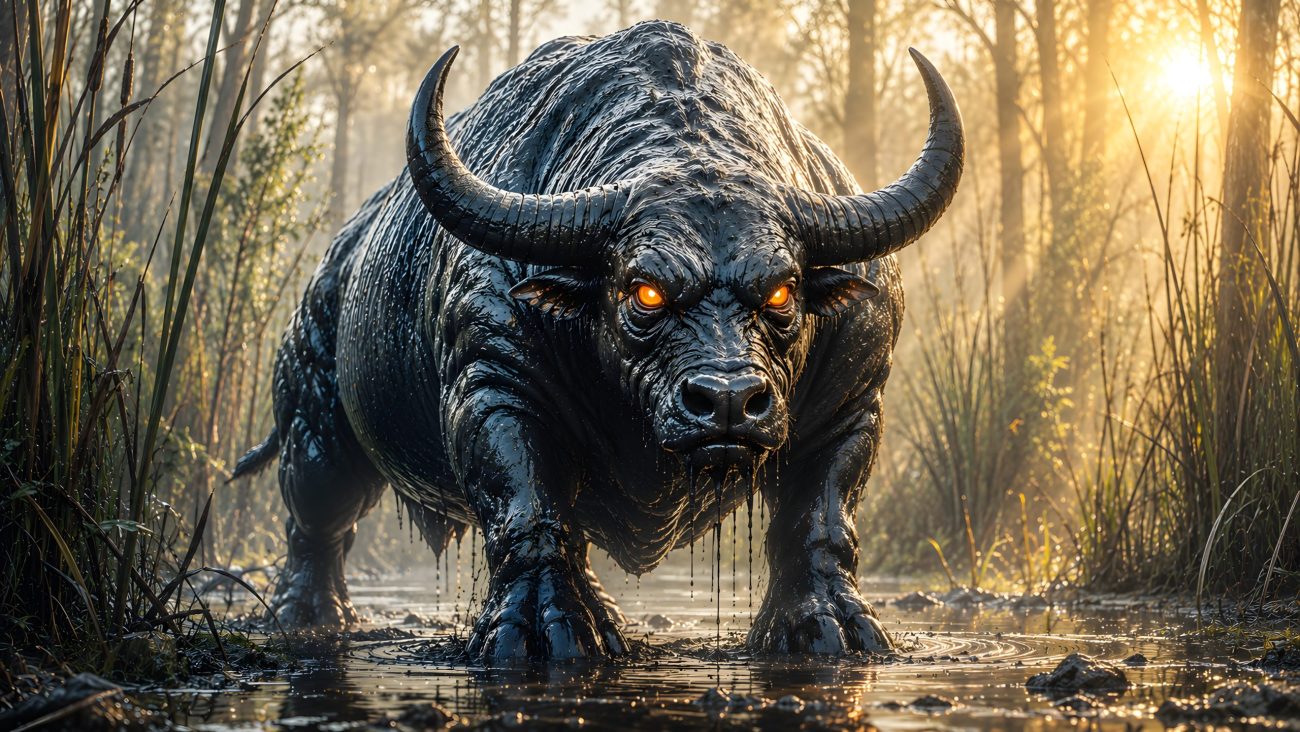
The Tarbh Uirge was a supernatural creature associated with small, lonely moorland lochs. Unlike the Water-horse, it was considered harmless and did not harm people who approached its haunts.

The creature normally remained in the lochs and emerged only at night. It could sometimes be heard lowing near the water before wandering among farmers’ cattle, although it was rarely seen.

Its presence was believed to explain a particular kind of unusual calf. Calves with abnormally short ears, as though the upper part had been cut away with a knife, were said to be the offspring of the Tarbh Uirge. Since the Tarbh Uirge itself was believed to have no ears, its calves supposedly inherited only half-sized ears. In Gaelic these calves were called Carc-chluasach, meaning “knife-eared.”

One account from the district of Lorn tells of a dairymaid and a herdsman who were preparing to leave a cattle fold in the evening. They suddenly saw a small, ugly, extremely black animal moving among the cattle. It had the shape of a bull, but its body was described as soft and slippery and its bellow was unnatural, sounding somewhat like the crowing of a cock.

Terrified, the two fled from the fold. When they returned the following morning, however, they found the cattle lying peacefully inside as though nothing unusual had happened.

The Tarbh Uirge was therefore a strange but essentially harmless creature of the Scottish lochs, associated particularly with nighttime appearances, unusual cattle, and an eerie supernatural bellow.


Sources

Campbell, John Gregorson. Superstitions of the Highlands & Islands of Scotland: Collected Entirely from Oral Sources. Glasgow: James MacLehose and Sons, 1900.


Biasd Na Srogaig

Tradition / Region: Scottish Mythology
Alternative names: Biasd Na Sgrogag, Béist Na Sgrogaig, The Beast of the Lowering Horn
Category: Horse


The Myth

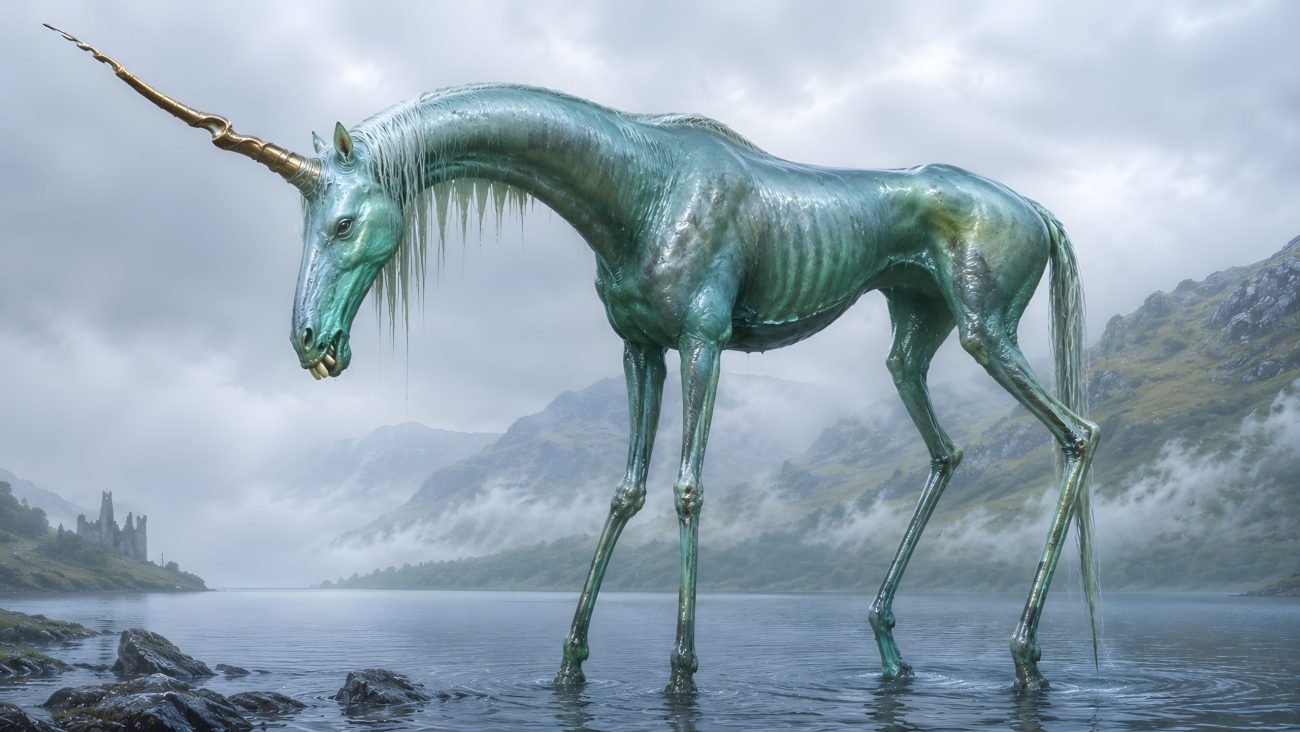
The Biasd Na Srogaig, or “Beast of the Lowering Horn,” is a legendary creature said to inhabit the lochs of the Isle of Skye in Scotland.

Although sometimes described as a unicorn, it bears little resemblance to the graceful unicorn of later tradition. The creature is portrayed as tall and ungainly, with long, gangly legs, an awkward gait, and a single large horn projecting from its forehead.

The Biasd Na Srogaig is believed to have originated as a nursery bogey used to frighten children. Over time, however, the creature became an established figure of local folklore as stories about it continued to be told into adulthood.

Its name is derived from the Gaelic sgrogag, meaning “crumpled horn.” In later usage, the name Béist Na Sgrogaig was also applied to the heraldic unicorn.


Sources

Campbell, J. G. (1900). Superstitions of the Highlands & Islands of Scotland: Collected entirely from oral sources. James MacLehose and Sons. Retrieved June 29, 2026, from https://www.gutenberg.org/ebooks/61728.


Shoopiltee

Tradition / Region: Scottish Mythology
Alternative names: Cabyll-ushtey
Category: Horse


The Myth

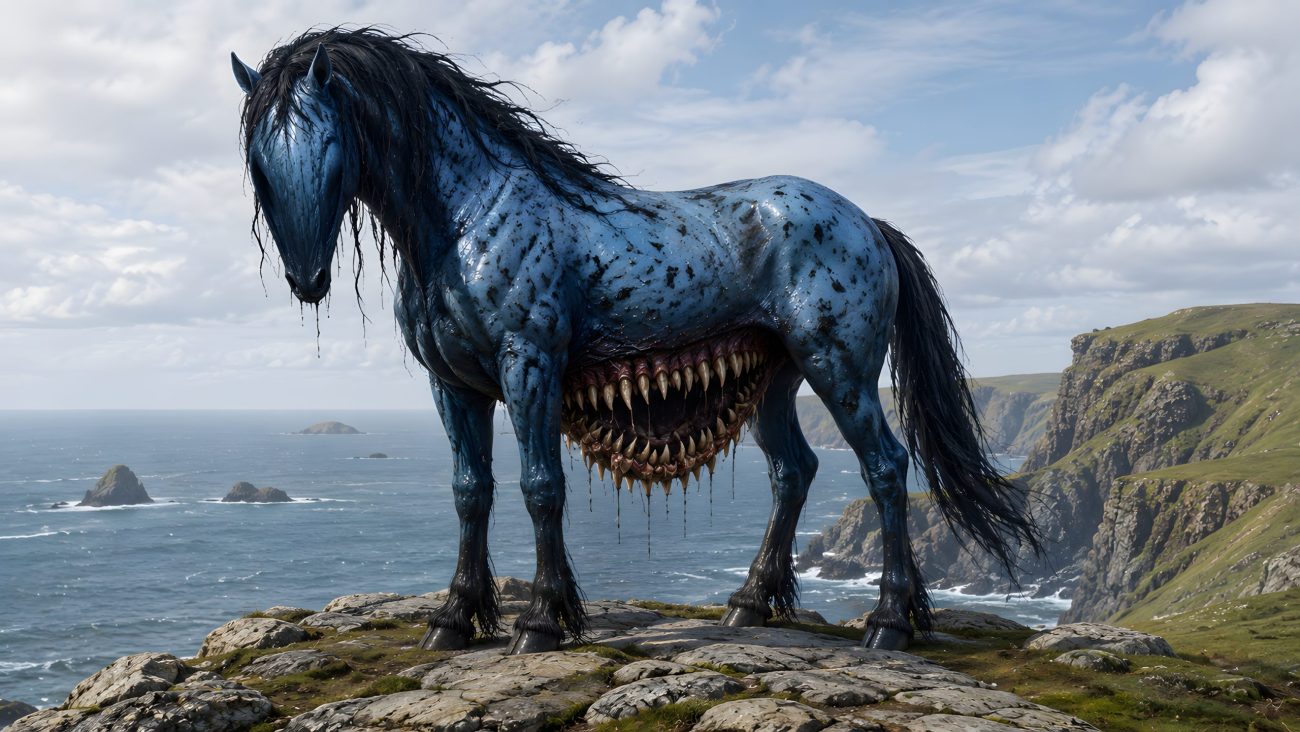
Shoopiltee is a water spirit from the folklore of the Shetland Islands. It appears in the form of a beautiful little horse.

The creature attempts to entice people into mounting its back. Once a rider climbs on, the Shoopiltee suddenly gallops into the sea, carrying its victim with it.


Sources

Bestiary.us. (n.d.). Shupilti. In New Bestiary: Encyclopedia of Imaginary Beings. Retrieved June 29, 2026, from https://www.bestiary.us/shupilti/en